We have a brand new updated website! Click here to check it out!

The high cost of the ‘college unable’

“Look to the left. Look to the right. One of you will not be here at the end of the semester.” That is the urban legend about the hard old professor who warns students on the first day of class that many will fail.

John Richard Schrock is a professor at Emporia State University.

However, with the start of this spring semester, some Kansas professors could tell their freshman classes:  “Look to the left. Look to the right. Oh, there is no one sitting in one of those seats. They are on the class roster. But they aren’t here.”

At Kansas universities, some students enroll but don’t come to classes very often—sometimes not at all.

The serious university student should be concerned. Students who don’t show up soak up state tuition support. Kansas is a state with limited resources. Students who do not attend class waste money that could support the genuinely hard-working college students of Kansas.

Today, for every dollar a student pays in tuition at a public university, Kansas is putting in 92 cents to support the instructional costs.

In the 1980s, barely 40 percent of Kansas high school graduates went to college. Kansas paid about two dollars for every dollar in student tuition. Today, nearly three-fourths of Kansas high school graduates go to tertiary institutions. If you nearly double the students going to school, then the state support per student will be roughly cut in half.

Tuition at public universities has risen over the last two decades for many reasons. But that empty seat in classrooms is one part of that problem. Whether they received their high school diploma based on inflated grades, or have failed to develop the work ethic to show up, they are not “college-able.”

University professors who teach freshman courses can help solve this problem. In most schools, there is provision for “faculty-initiated student withdrawal.” Simply, don’t show up and the professor can drop you from class. Unfortunately, this authority is rarely used.

Some teachers may object that it is not their responsibility to take attendance and treat college students like they are still in high school. But if professors “wash” absentee students from their rosters, the state subsidy could be a little greater for the remaining good students.

But with state universities being pushed to increase their admission, retention and graduation rates, the “system” is working against responsible higher education. In some cases, weak students are advised into easy courses just to keep students in school to keep the retention rate high.

This simple-minded drive to send every high school graduate to college ignores the fact that some students are better served in technical school, a point that President Obama just emphasized in his State of the Union address. And some students just need some time out in the real world to grow up and get serious about life.

When a Kansas college student graduates and walks across that stage to receive his or her diploma, if professors have not culled the college-unable and succumb to the retain-everyone push, that Kansas student will find the degree they earned by hard work has less meaning when the next student to cross the stage receives the same degree but did half the work and showed up half the time.

John Richard Schrock is a professor at Emporia State University. [email protected]


KDOT: Roadways are slick across the state

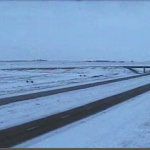
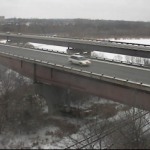
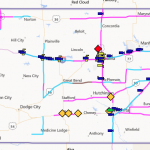
Kansas roads are slick, snow-packed and dangerous in many areas. KDOT reminds you to slow down and drive with caution. Click on the photos for a closer look.

Kansas has big revenue surplus in January

Money - Dollar Sign 001TOPEKA, Kan. (AP) — Kansas collected nearly $17 million more in tax revenues than anticipated in January.

The Department of Revenue reported Friday that the state’s tax collections were $546 million last month. The state’s official forecast predicted collections of $529 million.

The surplus is 3.2 percent.

Since the current fiscal year began in July, the state has collected $3.3 billion in tax revenues. That’s $21 million more than anticipated, or about 0.6 percent.

However, collections during the current fiscal year are lagging behind collections during the previous fiscal year because of massive personal income tax cuts enacted at Gov. Sam Brownback’s urging to stimulate the economy.

During the same period in the last fiscal year, the state collected almost $3.7 billion. This year’s collections have dropped almost $370 million, or 10 percent.


Goodland youth upland hunt is March 1

high plains roosters logoGOODLAND – The High Plains Roosters chapter of Pheasants Forever announces their upcoming youth upland bird hunt, March 1, in Sherman County (Road 67 and 17). The hunt is open to all youth age 10-15, and no previous hunting experience is required.

“Our volunteers pride themselves on the ability to accommodate youth hunters of all experience levels,” said Pheasants Forever, Inc. and Quail Forever Kansas Outreach Coordinator, Brian Schaffer in a news release. “These are very seasoned sportsmen who make every effort to pass on our hunting heritage in a safe, enjoyable environment.”

The event will begin at 8 a.m. on Saturday with a pre-hunt safety seminar. Then hunters and mentors will hunt various species of upland birds including ring-necked pheasants and chukar on the grounds of a local controlled shooting area. Following the hunt, participants can also partake in shotgun shooting, bird cleaning, and a D.A.R.E. program provided by the local sheriff’s office. Lunch and refreshments will be provided and there is no cost to attend. All participants must be accompanied by a parent or legal guardian.

“If your child has an interest in hunting, but maybe doesn’t know where to start, please encourage them to attend this event and experience what it’s all about to be a conservation-minded sportsman,” Schaffer added.

For more information, or to register for this event, contact Melvin Crow at (785) 821-2607 or Jason Artzer at (785) 821-2317. This hunt is open to the first 45 participants, so early registration is encouraged.

DAVE SAYS: Diversification and risk

Dear Dave,
I’m a little worried about investing in the market due to volatility. Are there safer investments?
Matt

Dave Ramsey
Dave Ramsey

Dear Matt,
You’re right; the market is volatile. It’s not a volatile as some things, but you have to remember that anywhere there’s money to be made—including long-term investing—there are ups and downs.

For instance, I like real estate. It’s not as volatile as the stock market, but there are no guarantees. We experienced that big dip over the last few years, and it was probably one of largest dips ever in the real estate market, except for the Great Depression.

Aside from real estate, I also like mutual funds. When it comes to these, one way to smooth out the volatility of the market is through diversification. That means you spread your money around instead of investing in one or two things. That’s how I handle my mutual funds, and I recommend others do the same. Spread your investments across these four types of mutual funds: growth, growth and income, aggressive growth and international.

I can’t say it enough, Matt. There are no guarantees when it comes to long-term investing. But diversification can help make the ride a little bit smoother!
—Dave

Dave Ramsey is America’s trusted voice on money and business. He’s authored four New York Times best-selling books: Financial Peace, More Than Enough, The Total Money Makeover and EntreLeadership. The Dave Ramsey Show is heard by more than 6 million listeners each week on more than 500 radio stations. Follow Dave on Twitter at @DaveRamsey and on the web at daveramsey.com.

LIVING WELL: Be aware of earned income tax credit

Friday was a special day — Earned Income Tax Credit Awareness Day. It is a day to help spread the word about money that workers may have already earned but may not know to claim.

Linda Beech is Ellis County Extension Agent for Family and Consumer Sciences with Kansas State Research and Extension.

The earned income tax credit is a federal tax credit for certain people who work, but don’t earn high incomes. People who earn a moderate income from wages, self-employment or farming may be eligible for the EITC.

A tax credit usually means more money in your pocket. Taxpayers who qualify and claim the credit could pay less federal tax, pay no tax or even receive money back as a refund.

According to the IRS, about 80 percent of eligible taxpayers claim the EITC. But that means 20 percent – or one in five taxpayers – still miss out! This is money that can make a difference.

Last year, the credit returned over $63 billion to more than 27 million workers across the country.  In Kansas alone last year, 213 thousand claims returned $475 million to eligible taxpayers, or an average of about $2,115.

There are millions of workers who miss out on the benefits of EITC each year either because they are newly qualified or don’t otherwise need to file a tax return.  One of the most common EITC errors was among people who were not eligible in the past, but may have had a change in job or family situation which made them eligible without them realizing it.  Could that be you and your family?  Family changes such as job loss, reduction in income, or the birth of a child are things that might change EITC eligibility status.

Workers who qualify for EITC could receive larger refunds. It can mean up to $475 in tax credit for people without children, and up to $5,891 for those with three or more qualifying children. The earned income tax credit varies by income, family size and filing status, so explore your eligibility or ask your tax preparer.

With the exception of some disability income, people must work to qualify for the EITC. There are special EITC rules for members of the military, ministers, other members of the clergy, and those impacted by disasters.

The earned income tax credit is a valuable, but complex, tax break for working families. Details about eligibility for EITC and other refundable tax credits is available at www.eitc.irs.gov or ask your tax preparer for help.

When filing for the EITC, avoid the four most common errors:

1.  Claiming a child who does not meet the criteria as a qualifying child
2.  Married taxpayers who incorrectly file as single or head of household
3.  Misreporting income
4.  Incorrect Social Security numbers

The earned income tax credit is a financial boost for working people and their families, and it returns money to the local economy.  It is money that can make lives a little easier. Check out whether you qualify for the EITC this tax season.

Linda K. Beech is Ellis County Extension agent for family and consumer sciences.

Copyright Eagle Radio | FCC Public Files | EEO Public File