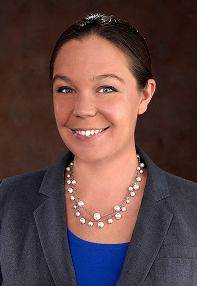
KANSAS CITY, Kan. (AP) — KANSAS CITY, Kan. (AP) — A Lawrence, Kansas, contractor and five other people have been indicted in connection with an alleged scheme to unlawfully pay drywall workers who are illegal immigrants.
U.S. Attorney Barry Grissom announced the indictments during a news conference Thursday in Kansas City, Kansas.
The indictment alleges that as part of the scheme, more than $13 million in payroll checks was converted into cash to pay crews.
WASHINGTON – This week Congressman Tim Huelskamp (KS-01) announced his co-sponsorship of three key bills that protect the Second Amendment rights of Kansans.
First, Huelskamp is co-sponsoring the Firearm Manufacturers and Dealers Protection Act, which prohibits President Obama’s Administration from using financial regulation like Operation Choke Point or similar programs to target the firearm industry. Operation Choke Point is a disruptive tactic used by the Administration to cripple lawful firearms and ammunition manufacturers by placing immense regulatory pressure on the banks and financial institutions to avoid doing business with these legitimate entities. This bill would defund any activities associated with Operation Choke Point and forbid the U.S. Attorney General from restarting a similar program so that these businesses are not snuffed out by anti-2nd Amendment over-regulation and financial restrictions.
Second, Huelskamp is co-sponsoring the Ammunition and Firearms Protection Act, H.R. 1365 to ensure that popular rifle ammunition is still available for citizens to exercise their Second Amendment rights. This legislation would prevent the Bureau of Alcohol, Tobacco, Firearms, and Explosives (ATF) from classifying M855 ammunition as armor-piercing and from instituting any ban on the sale and manufacture of ammunition that is intended, marketed, and sold for rifle use.
Earlier this year the ATF proposed a ban on the ammunition which is used in AR-15 rifles – one of America’s most popular rifles for sportsmen. Huelskamp signed on to a letter authored by House Judiciary Committee Chairman Bob Goodlatte (VA-06) raising concerns about the Administration’s backdoor ban on bullets. After receiving over 80,000 public comments on the ban, ATF rescinded their proposal, but left open the possibility of a future ban on the ammunition. This NRA-endorsed bill prevents ATF from following through on that ban, and protects all ammunition intended and sold for rifles from being reclassified as armor-piercing.
Lastly, the Congressman is co-sponsoring H.R. 131, a bill that would strengthen federal protections for law-abiding Americans traveling with firearms or ammunition. While federal law guarantees the right of Americans to transport firearms between two locations, some states ignore this right and use overly-restrictive state licensing laws to harass and detain travelers who have crossed state lines. H.R. 131 reinforces and protects the rights of American citizens from these overbearing restrictions.
Other legislation the Congressman has supported to defend the Second Amendment in the 114th Session includes the following:
The Recreational Lands Self-Defense Actwhich grants gun owners the ability to exercise their Second Amendment rights when they are legally camping, hunting, and fishing on Army Corps property (Co-sponsored)
The Constitutional Concealed Carry Reciprocity Act of 2015which aims to respect state regulations of place and manner of carry while preserving the eligibility of law abiding Americans to enjoy their Second Amendment rights in all 50 states (Co-sponsored)
Appropriations Lettersto defund the UN Arms Trade Treaty and to prevent the use of the treaty for domestic prosecutions (Signed)
Governor Fred Hall was the 33rd Governor of Kansas, from 1953-57. Governor Hall provided the instigation for the judicial appointment system currently under threat from Governor Brownback and a judicially annoyed state legislature. What Hall did was something that several governors had done before him, just not as flamboyantly. They, like Governor Hall, had used the governor’s judicial appointment powers to serve their political interests.
Dr. Mark Peterson teaches political science at the college level in Topeka.
In Hall’s case, Chief Justice William Smith of the Kansas Supreme Court, an ally of Hall’s, resigned his seat. Hall saved his own voter-rejected skin by resigning which caused Lieutenant Governor John McQuish to become governor. Governor McQuish then appointed the now former Governor Hall to become the new Kansas Supreme Court Chief Justice. It was called, depending on who you read, the “triple jump” or the “triple shift.” These events persuaded the legislature and the people of Kansas that the judicial appointment system had to be de-politicized.
In 1958, the people of Kansas went to the polls to approve our current judicial appointment system. It’s called the “Modified Missouri Plan.” It uses a commission of nine people. Four are regionally peer-selected lawyers; four are citizens chosen by the governor – one from each congressional district; and the last member and chairperson is another lawyer picked by members of the Kansas Bar Association.
The governor’s influence in the process is strong, both in terms of choosing nearly half the commission members, and having final say in the selection of the new appointee from the commission’s list of three nominees. At the same time purely partisan politics is reduced, and the likelihood of pure cronyism largely eliminated.
Why the history lesson?
With Governor Brownback’s urging, the state legislature is considering Concurrent Resolutions (HCR 5004 and 5005) to do away with this less political process in favor of something close to the bad old days. One resolution proposes the governor alone nominate a justice for senatorial confirmation. The other creates a selection commission. The governor, the house speaker and the senate president each get to choose three members who would replace the existing commission and submit their choice to the governor who would in turn make the final selection – no Kansas Bar Association involvement in either case.
There’s also HCR 5003 which if ratified by the voters, would permit the recall of judges, just in case the public gets really upset with a judge in between constitutionally mandated retention elections. The proposed changes significantly increase the partisanship and politics of our appellate courts. Is this a good thing for Kansas, or any state for that matter?
Advocates declare these approaches more democratic and therefore more constitutionally defensible. What is the role of the courts in our system of separated powers and checks and balances? The courts are the least popularly controlled branch of government for a reason. Their job is to hear the complaints of citizens, restrain the power of government, and defend the rights of the accused and the aggrieved. In those capacities our interests are better served by institutions less susceptible to the volatile public, the anger of thwarted governors, and the spite of legislators irritated by judges.
Kansas voters should be reminded, vividly, that 60 years ago they had politically controlled courts. Fred Hall was the last in an inglorious line of elected officials who used the courts to suit their political needs. Kansans had the wisdom to fix the system in 1958. Now, as the legislature has “run the table” to eliminate the existing school finance formula; replaced it with block grants; and challenged the state’s courts on the constitutional question of school funding adequacy, there’s little to suggest that political behavior has undergone a virtuous transformation in the nearly six decades since.
Dr. Mark Peterson teaches political science at the college level in Topeka.
TOPEKA, Kan. (AP) — A Kansas House panel has approved a process for establishing a greenhouse gas reduction plan.
The House Energy and Environment Committee approved the measure Thursday.
The Environmental Protection Agency has directed all states to develop stricter emissions standards by June 2016. States without a suitable plan will have federal regulations imposed upon them.
The EPA estimates Kansas would have to cut emissions 23 percent from 2012 levels by 2030.
The Kansas Department of Health and Environment would have the power to develop an emissions plan under the bill and the Legislature’s energy committees would be required to approve or reject it.
Environmental advocacy lobbyist Rabbi Moti Rieber said he generally supports the measure because alternative proposals might have caused Kansas to miss the deadline and face a federal plan.
TOPEKA, Kan. (AP) — A Kansas House panel has endorsed a resolution that would begin a process for amending the U.S. Constitution.
The House Federal and State Affairs Committee approved the resolution Thursday. It calls on the U.S. Congress to organize a convention of states that would consider amendments to the U.S. Constitution. Thirty-three other state legislatures would have to pass similar legislation for Congress to act.
The resolution says it aims to restrict federal fiscal policy, limit the federal government’s powers and shorten terms of office for federal officials. It must be passed by a two-thirds majority in each chamber of the state legislature.
Republican Rep. Stephanie Clayton from Overland Park said she is interested in requiring the federal government to pass balanced budgets but worries that the movement could lose focus.
DICKINSON COUNTY -The Dickinson County Sheriff is investigating a rural hay bale fire.
Fire crews were dispatched to report of the fire near the intersection of 800 Avenue and Fair Road just after 6:30 a.m. on Thursday.
Saline County Fire District 1 Chief Rod Ade said the cause of the fire is suspicious. “We had bales on fire in four different locations,” he said.
“We saw tire tracks and someone driving around near the bales.”
The first two fires were two and a half miles apart. The third was a mile and a half west and the fourth fire was a mile south and back to the west according to Ade.
The damp conditions from early morning rain prevented the fire from spreading into the surrounding grass.
“If this had been earlier in the week, it would have been a much different fire,” he said. “A couple of farmers used their equipment to help keep the fire from spreading. They lost 50-75 large bales and no acreage.’
TOPEKA, Kan. (AP) — A Kansas Senate committee has approved a bill to limit bargaining between state agencies and public employee unions and to prevent such unions from collecting dues through paycheck deductions.
The bill endorsed by the Commerce Committee on a voice vote Thursday also would keep state and local agencies and school districts from making many other paycheck deductions. The list includes contributions to charities such as the United Way.
The proposal originally would have barred only deductions for union dues, but committee members said it’s fairer not to single out unions.
The bill would limit collective bargaining between state agencies and employees to minimum wages.
Supporters say the bill protects taxpayers. Critics see it as an attack on unions.
HUTCHINSON, Kan. (AP) — A controversial plan to divert Missouri River water from northeast Kansas to western Kansas is unlikely to happen.
Tracy Streeter, executive director of the Kansas Water Office, says the proposed aqueduct from Doniphan County to Utica in western Kansas isn’t feasible because of the estimated $18 billion cost to build it and another $1 billion to operate it every year. Streeter told The Hutchinson News Monday that the water office has no plans to take the proposal further.
The proposal met strong resistance from northeast Kansas and Missouri officials.
However, aqueduct supporters in water-starved southwest Kansas aren’t giving up on some type of water transfer. The Southwest Kansas Groundwater Management District No. 3 has commissioned a $20,000 study of the economic impact if the aqueduct isn’t built.
GREAT BEND – Two people were injured in an accident just before 1 p.m. on Wednesday in Barton County.
The Barton County Sheriff’s office reported a 2005 Jeep Cherokee driven by Addison Westoff, 15, Great Bend, was northbound on Northeast 10th Avenue.
The Jeep entered the intersection at Northeast 100 Road.
A 2007 Peterbilt semi hit the jeep in the passenger side and shoved it into the south ditch. The semi overturned.
The semi driver, Scott Mitchell, 28, Great Bend, and a passenger in the Jeep Elsi Miller, 15, Great Bend, were transported to Clara Barton hospital in Hoisington.
Westoff was cited for failure to yield right of way and another passenger in the Jeep Madison Otter, 15, Great Bend, was cited for not wearing a seat belt according to the Sheriff.
OMAHA, Neb. (AP) — A monthly survey of bankers suggests a weakening economy lies ahead for rural parts of 10 Midwestern and Western states.
The Creighton University Rural Mainstreet Index for March sank to 43.6, its lowest level since February 2010. Last month’s figure was 46.4.
Creighton University economics Ernie Goss oversees the survey, and he says “the stronger U.S. dollar is undermining the farm and energy sectors by weakening agricultural exports, crop prices, livestock prices and energy prices.”
The index ranges from 0 to 100. Any score above 50 suggests growth while a score below 50 suggests decline. Bankers from Colorado, Illinois, Iowa, Kansas, Minnesota, Missouri, Nebraska, North Dakota, South Dakota and Wyoming were surveyed.
Russell has made it to the Elite 8, or Round 4, of the Kansas Hometown Showdown.
The photo of the Russell Veterans Memorial knocked Manhattan’s out of the running, and this week it goes up against Lawrence. The contest is decided by Facebook “likes.”
Click HERE to “like” the Russell photo via Facebook.
By RON WILSON Huck Boyd National Institute for Rural Development
The fire is raging through the building as the firefighters hurry to the scene. They need to identify the location of the fire and determine the safest and most efficient tactics for dealing with it. If only they had a quick, practical way to get an aerial view of the building…that is the thought process which led a Kansas entrepreneur to create an innovative new business using unmanned aerial systems to enhance public safety.
Ron Wilson is director of the Huck Boyd National Institute for Rural Development at Kansas State University.
John Martens is the founder of NMotion UAS, the company which is doing pioneering work with unmanned aerial systems and technologies. John grew up at Hesston and went to K-State. He became a firefighter in Manhattan and then moved back to get closer to family.
John still works as a firefighter. His wife is also from Hesston and teaches financial planning at K-State-Salina. On the side, John started working in digital media, including video production. In order to get aerial views, he began using unmanned aerial vehicles – sometimes referred to as drones – for filming video.
Then commercial uses of these drones were blocked by the FAA as the agency developed drone regulations. John was frustrated, but as he looked into the matter, he found that the use of drones for public safety purposes was still permitted through an authorization process. As a firefighter, he immediately recognized the benefit of using unmanned aerial systems to help at a fire scene or other emergency by using a piece of remote-controlled equipment for recon instead of a human.
John created a business called NMotion UAS, which produces unmanned aerial systems for first responders and other public safety agencies. These are easy-to-launch unmanned vehicles with cameras or sensors that public safety officials can use to help respond to an emergency situation.
There are numerous applications of these systems for public safety, such as for firefighters, search and rescue operations, law enforcement, emergency management, hazmat situations, or remote sensing. The systems can provide emergency personnel a real-time aerial view and even thermal imaging of a disaster scene such as a fire or flood.
Unlike manned systems, the unmanned robots can fly very close to a hazardous location without harm. Information can be instantly transmitted back to firefighters, law enforcement, or rescuers to assist with their operations on-scene.
As the company motto says, this allows public safety officials to “See more. Risk less, and save lives.”
The flying cameras themselves are small, remotely-guided flying devices. The real benefit of these systems comes from the perspective and data which these planes can provide.
“We offer ready-to-fly turnkey systems to public safety officials and first responders,” John said. “Our systems allow us to revolutionize the dull, dirty, dangerous tasks that responders face regularly.”
John knows those tasks firsthand. “I’ve been a firefighter for seven years,” he said. “It’s a rewarding and challenging job. Our systems are like a force multiplier. “They enable emergency responders to better calculate risk and mitigate the emergency more efficiently.”
John started building this equipment in his basement. The company’s main office continues in John’s hometown of Hesston, population 3,531 people. Now, that’s rural.
NMotion UAS was selected by the Center for Entrepreneurship in the K-State College of Business as one of ten up-and-coming businesses to be part of the inaugural class of its Launch A Business program, or L-A-B, in 2014.
“It was a great opportunity,” John said. “It was perfect for what we needed and what many startup companies need.” Applicants are now being sought for 2015. More information can be found at www.k-state.edu/lab.
John Martens has since been featured in UAS Magazine and selected for the prestigious Pipeline Entrepreneurship Program. More information on his business can be found at www.nmotionuas.com.
The fire is raging through the building as firefighters arrive to assess the situation. If only they had a way to get a quick, aerial perspective on the emergency… and now they do. We commend John Martens of NMotion UAS for making a difference with innovative use of technology for public safety. They can’t fight fire with fire, but maybe they can “fight fire with a flyer.”
HUTCHINSON— A former employee of Heartland Credit Union was granted one-year probation on a one-year sentence for a misdemeanor count of conducting a computer crime.
Leeann Marker was arrested on a warrant in the case Tuesday.
She entered a plea in the case on Wednesday and was sentenced.
Marker was convicted for e-mailing customer information to herself, while going to work for a rival financial institution.
In addition to the sentence handed down, she is required to pay $21,217.00 in restitution to Heartland Credit Union.
As part of the sentence, she will pay the court costs and is required serve 100 hours of community service.