SALINE COUNTY – Law enforcement authorities in Saline County are investigating an accident that took the life of a Kansas teen just after 11p.m. on Friday.
The Saline County Sheriff reported a Suzuki Hayabusa motorcycle driven by Dakota Harr, 19, Ellsworth, was traveling with a group of motorcyclists near Airport Road and Water Well south of Salina.
Harr left the group at a high rate of speed, failed to stop at the intersection, struck the lid of a water pump station, lost control of the motorcycle and landed about 600 feet from the road in a cornfield, according to the sheriff.
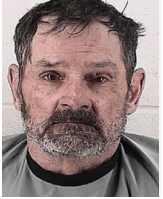
OLATHE, Kan. (AP) — A judge has ejected a white supremacist from a Kansas courtroom after the man objected to jury instructions in his murder trial, saying he doesn’t respect the process.
Frazier Glenn Miller is acting as his own attorney. The 74-year-old repeatedly complained Monday that the court was telling the jurors what to think.
Judge Thomas Kelly Ryan had been preparing the jury for closing arguments.
Miller called the instructions unconstitutional. The judge told him to show some respect and Miller replied that he had none, prompting his ejection.
Miller has admitted he fatally shot three people at two Jewish sites in the Kansas City area in April last year, but pleaded not guilty, calling the death of Jews necessary.
He could face the death penalty if convicted.
——————–
OLATHE, Kan. (AP) — Jurors are set to hear closing arguments in the case of a white supremacist charged with killing three people at two Jewish sites in Kansas.
Deliberations are to begin after closing arguments conclude Monday in the capital murder trial of Frazier Glenn Miller. The 74-year-old Missouri man is acting as his own attorney and told jurors Friday that the prosecutor had a “slam dunk.”
Miller has admitted that he drove to two Jewish sites in Overland Park, Kansas, in April 2014 with the intent of killing Jews. He has pleaded not guilty because he says Jewish people are committing genocide against the white race and it was his duty to stop them. None of the victims was Jewish.
TOPEKA–The federal Supplemental Nutrition Assistance Program (SNAP) has issued a warning regarding impostors utilizing what appears to be the federal SNAP toll-free information hotline number, 1-800-221-5689, to solicit private information from individuals.
The statement issued by the Food and Nutrition Service (FNS), which operates under the United States Department of Agriculture, reported that unsolicited callers are requesting personal information by offering assistance for filling out a SNAP application or other non-SNAP related services such as home security systems. These imposters utilizing the federal SNAP toll free information hotline number are not affiliated with either FNS or SNAP.
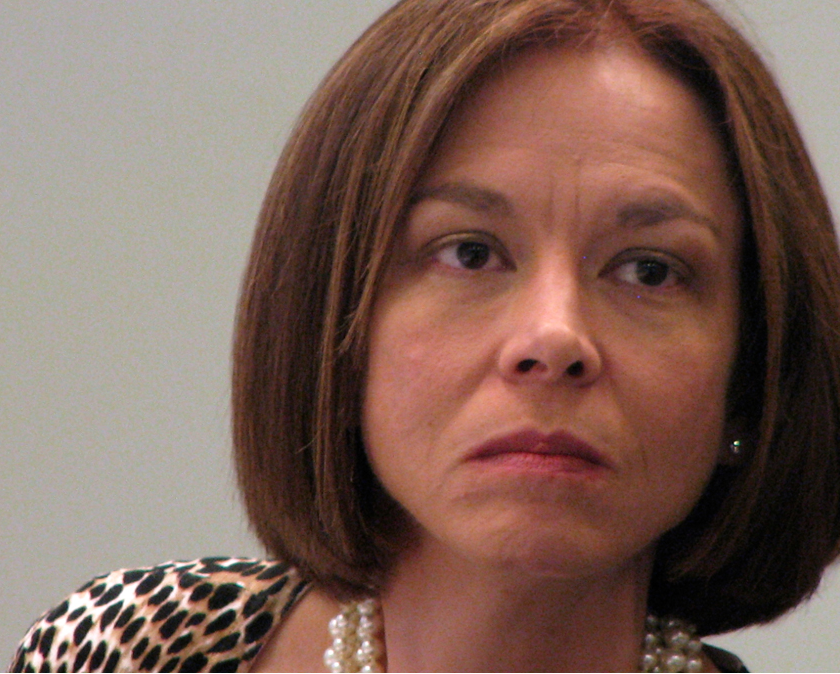
The Kansas Department for Children and Families (DCF) administers the food assistance program in Kansas. DCF has not been made aware that any clients in Kansas have been victimized by this scam. DCF Secretary Phyllis Gilmore reminds all Kansans that they should never provide personal information or credit card numbers over the phone to unsolicited callers.
“Although this scam did not originate in Kansas, our clients could be impacted,” Secretary Gilmore said. “If you have any concerns, please contact your local DCF service center right away.”
FNS said in its statement Thursday, that if anyone suspects they are receiving illegitimate calls from 1-800-221-5689, they may file a complaint with the FCC. If anyone has already fallen victim to this or a similar scam, they can visit https://www.ftc.gov/bcp/edu/microsites/idtheft/ for more information on identity theft.
If you suspect a person is receiving public assistance in Kansas to which they are not entitled, please call the DCF Fraud Hotline at 1-800-432-3913. We will take the information provided and investigate. Reporters to this hotline can choose to remain anonymous, but they should provide as much detailed information as possible, including the location of the individual who is allegedly committing fraud.
KANSAS CITY, Mo. (AP) — Nearly 1,000 people are gathering in Kansas City to celebrate the 10th anniversary of an Animal Health Corridor that stretches from Manhattan, Kansas, to Columbia, Missouri.
The Kansas City Star reports the corridor has become a business site for more than 300 companies devoted to animal health. The companies’ projects include such things as earlier identification of sick cattle and developing drugs and diagnostics for animals.
A 10th anniversary dinner is scheduled for Monday night, with an investor showcase on Tuesday.
A consultant found last year that companies with a business location in the corridor represent 75 percent of the worldwide sales of animal health products and diagnostics. That’s about $19 billion of total global sales of $25.2 billion.
As we move into September we realize that the fall season will soon be upon us.
While it seems it is about time to put summer yard work to rest till next spring, mid-September through mid-October is an ideal time to plant trees in our area. The rains this year enabled the City of Hays to allow watering any time except from noon until 7 p.m. daily. This makes it reasonable to consider planting trees in Hays.
Growing trees in northwest Kansas can be a challenge due to the summer heat and recurring drought conditions; therefore it is important to choose trees that have been shown to tolerate just such conditions.
K-State Research and Extension has compiled a list of drought tolerant trees. That list includes but is not limited to: Large Deciduous Trees (over 45’) such as American Elm, Bur Oak, Chinkapin Oak, Hackberry, Thornless Honey Locust, and Kentucky Coffeetree: Medium Deciduous Trees (30-45’) such as Golden raintree, Lacebark Elm, Osage Orange (thornless & fruitless), and Sawtooth Oak: and Small Deciduous Trees (under 30’) such as Flowering Crabapple (disease resistant), Redbud, and Thornless Cockspur Hawthorn. More information can be found by talking to the local green houses, the Ellis County K-State Extension Office, and the City of Hays Parks Dept. or at https://www.hfrr.ksu.edu/doc1466.ashx.
If you decide to plant a tree, the City of Hays has a Tree Rebate Program. A project of the Hays Beautification Committee is to tag trees that qualify for the City of Hays rebate program at the various nurseries and stores that offer trees in Hays. The trees that are tagged are most appropriate for planting in Hays. Residents of the city of Hays who plant these tagged trees are eligible for the reimbursement of up to ½ the cost of a newly planted tree (including tax) with the maximum reimbursement of $50.00. There is a limit of two rebates for newly planted trees per property per calendar year. To be eligible for the rebate the trees must be purchased from an established dealer in Ellis County. Qualifying trees planted in either the front or back yard are eligible for the rebate.
For a newly planted tree to have a better chance of growing and thriving several steps are necessary including proper planting, appropriate mulching, and appropriate watering.
There are several sources from which to find appropriate methods of planting trees including the local library and The Ellis County K-State Extension office. Some of the things to consider are to dig a hole 2 to 3 times the diameter of the tree ball or the container which the tree has been grown. A newly planted tree’s best friend is mulch made of chipped wood, bark, or similar material. Mulch insulates the soil helping to provide a buffer from heat and cold temperatures, retains water helping to keep the roots moist, keeps weeds out to help prevent root competition, prevents soil compaction, and reduces lawn mower damage. The mulch does need to be kept 2 to 3 inches away from the tree trunk. Free mulch is available at the City of Hays Parks Department. Also remember, drought tolerant does not mean plant it and forget it. All plants require moisture to become established! The soil a few inches below the surface should be damp BUT NOT waterlogged.
With appropriate planting and care a tree will bring pleasure to your yard and your neighborhood for many years.
For questions or comments regarding anything discussed in this article please contact the Parks Dept. at (785) 628-7375.
Janis Lee is vice-chairperson of the Hays Beautification Committee.
Gella’s Diner and Lb Brewing will feature live folk-rock music next month in Hays.
Von Strantz, whose music is described as folk ’n’ roll, will perform at the downtown Hays establishment, 1117 E. 11th, at 8 p.m. Sept. 17. There is no cover.
“The sound of Von Strantz is described simply as folk n’ roll, akin to the tradition of Over the Rhine and the sacredness of The Vespers; the instrumentals stir the soul much like Mumford and Sons,” according to a news release.
Utilizing a variety of instruments such as the mandolin, violin, bass and cello, Von Strantz unites harmonies strung together by commanding and soulful lyrics. With story-sharing as their passion, Von Strantz invites their audience into the emotion of each piece. Von Strantz is storytellers, an ebb and flow of two different musicians, exploring the dark and emerging with hope.
Gene Policinski is senior vice president of the First Amendment Center
Murder. Real. Live.
The shooting of two television journalists. Viewable from two perspectives, including that of the gunman himself.
We saw — or could see if we wished, and apparently millions of us did — the awfulness of it, immediately. And over and over and over again, on TV and online.
The news was that WDBJ7 reporter Alison Parker and photographer Adam Ward were dead, and interviewee Vicki Gardner wounded, during one of those all-too-familiar morning news “live shots.” Shot multiple times by a man identified by police as a former colleague of Parker and Ward, Vester Lee Flanagan II, who later fatally wounded himself as police closed in on his car.
And then there were the videos. First, from Ward’s own camera, airing ”live” in all its stupefying, banal-to-shocking 40 seconds or so as the interview turned into horror. Later, in truncated bits and pieces, as networks and online news operations made individual decisions.
CNN didn’t show it, and then showed it with ample warning to viewers, and later not at all. Other news operations stopped the videos just before the shooting started, or showed still images taken from WDBJ7’s video.
Not so online, where for hours — and very likely, still, as you read this — the entire ghastly episode played on.
And then, two videos posted on social media, apparently by the gunman himself, showing the murders as he must have viewed them. They were taken down quickly by Twitter and Facebook — as soon as eight minutes after posting on Twitter, one news account said. But a copy posted on Facebook was reported to have 3,000 views “a few hours after the shooting.”
Once again, the questions arise: When does responsible journalism mutate into sensationalism and voyeurism? When does a free press need to show — and society need to see — reality in all its awfulness? And when is it just “what we do because we can?” For online sites, when does “a right to do” lose its connection with “the right thing to do?”
Wednesday certainly was not the first time shocking images of violent death, often obtained for the first time through new technology of the era, have dominated the news media — and both stunned and fascinated the nation.
While Wednesday’s drama played out on social media and on the Web, it was a newspaper that provoked criticism the next day. The New York Daily News cover showing Parker being shot from the killer’s perspective drew a description of “death porn” from one media critic.
But Justin Fenton, a crime reporter at The Baltimore Sun, told The Washington Post that “the Daily News cover offered insight into a crime that prose can’t.” On his Twitter account, he wrote, “NY Daily News cover is frightening but not gory. … Reaction at least on my timeline is uniform outrage. … Personally … covering gun violence daily, I don’t think the words convey the horror the way these images do.”
Early Thursday, a new tweet topped his posts: “Reports of 6 shot overnight, from 9 pm-12:30am, including a double (non fatal) in Cherry Hill.”
A 1928 Daily News photo cover is a landmark item in the debate over what should or should not be shown. Surreptitiously taken by a photographer who had hidden an ankle-camera under his pants leg, the photo is said to show convicted murderer Ruth Snyder straining against her bonds in the Sing Sing Prison electric chair as the current took her life. The result: nationwide bans on photographers at executions that continue today.
Magazine photos of racially motivated lynchings brought that terrible practice into subscribers’ homes. And the then-new media of the 1950s and 1960s, by airing film of snarling dogs, burning buses and fire hose streams blasting children, turned the conscience of a nation. Even as the nation in 1963 mourned a president, midday TV showed us “live” the killing of his assassin — 50 years later still an indelible moment for those who watched it.
In this newly interconnected global media hothouse, live images of violent death seem ever more frequent; it was just one year ago that ISIS terrorists used social media to show video of the beheadings of journalists James Foley and Steve Sotloff. Not long after, it was a hostage being burned alive. On April 4, in North Charleston, S.C., a citizen video recorded the shooting by a police officer of a man fleeing in a park after being stopped for a traffic violation.
Wednesday’s on-camera tragedy should bring a new level of concern and discussion over what we can see, and whether we should see it — and how new technology may not only record and distribute, but invite.
A few decades ago, TV journalists once debated whether to show recorded images of violence and death, and then whether to build in several-second delays on “live” reports to allow for such screening.
In 1987, when a Pennsylvania state official shot and killed himself at a news conference, editors and news directors were in charge of deciding what we would see. And to a large degree, we didn’t.
In contrast, within 60 minutes of the first reports of Wednesday’s killings, a network commentator apologized online for not being able to describe in more detail the Roanoke, Va., station’s own video. As he explained, he was watching a blurry cellphone video of a TV image showing a replay. But he, and we, could hear the shots being fired and the victims’ screams.
Online, the immediacy was entangled with the bizarre circumstance that the gunman’s own cellphone video of the killing was posted. Reports are that, using his on-air ID, “Bryce Williams,” Flanagan invited an online audience by tweeting, “I filmed the shooting See Facebook.”
USA Today reported that “at 11:14 a.m., Flanagan tweeted two short videos and posted a 56-second video to Facebook” that showed him approaching Parker, Ward, and the person being interviewed. The gun, in his right hand, comes into view — unnoticed by the trio until the gunman fires. The Twitter text posts are updated six times in 20 minutes, according to The New York Times.
In “frame grabs” that appear to be from one of those videos, published online by the British newspaper the Daily Mail, Parker is shown reacting in shock as the gunman fires.
To be sure, as history demonstrates, there are times we need to see — and remember for generations — what real terror and horrific events are like. Holocaust deniers can never overcome the truth carried by stark images now preserved for the ages.
After the violence earlier this year in Baltimore that followed the death of an unarmed African American man in police custody, a veteran journalism educator was critical of news coverage “live” from the city streets that he felt misrepresented the scope of what some called “riots.” “Live,” he said, “was no longer journalism, but just marketing” — a ploy to attract viewers, but which added nothing to understanding the news.
There’s some theorizing already that each of these deadly real-reality shows prompt copycats who are encouraged by the resulting media exposure, and then are driven to find new and even more dramatic methods to capture the world’s attention. And then there are those in the media who would rather shock than inform, valuing “click-bait” over information.
Once again, the challenge for journalists reporting on our behalf — and now for those re-tweeting and repeating the killer’s cold-blooded social media posts — is to find the balance that lets us both see to understand and to understand what we need to see. And what we do not.
Gene Policinski is chief operating officer of the Washington-based Newseum Institute and senior vice president of the Institute’s First Amendment Center. [email protected]
Photo by Dave Ranney Shannon Cotsoradis, president and CEO of Kansas Action for Children, says her agency is hosting a meeting on federal child care grant changes at the request of stakeholders.
People involved in Kansas child care are meeting on Monday to discuss a plan for moving the state in line with new federal regulations — without the state agency that will have to implement the plan.
Shannon Cotsoradis, president and CEO of a Topeka-based nonprofit called Kansas Action for Children, said her organization is hosting the event at the request of child care workers, associations and continuing education specialists.
Cotsoradis said those groups are eager to get started on discussions about the reauthorization of the federal Child Care and Development Block Grants (CCDBG), because a final state compliance plan is due in March.
It’s the first change to the federal program since 1996 and Cotsoradis said it’s a rare and exciting opportunity to decide how to best allocate millions in state and federal funds for day care, after school programs, Early Head Start and other child development and workforce initiatives.
“I don’t think this is coming around again any time soon,” Cotsoradis said Thursday. Monday’s meeting is scheduled for 11 a.m. to 3 p.m. at the Topeka and Shawnee County Public Library. Two national child care experts are slated to attend.
Cotsoradis said officials from the Kansas Department for Children and Families were invited to attend and offered a chance to help shape the agenda. She said she was disappointed they declined and that they have yet to shed any light on what plans the agency may be forming internally.
“We’ve made repeated attempts, as have other stakeholders, to reach out to the agency and get some sense of where they’re headed,” Cotsoradis said.
“Their last response to me was simply that they would be engaging stakeholders when they felt it was appropriate.”
Sandra Kimmons, DCF’s director of economic and employment services, confirmed the agency would not be sending a representative to Monday’s meeting.
“We have a very similar one in a couple weeks, so it seemed a little duplicative,” Kimmons said. Kimmons said DCF officials will be discussing the block grant reauthorization Sept. 8 with members of the Kansas Department of Health and Environment’s Child Care Licensing Systems Improvement Team, an advisory group made up of industry experts. She said she believes the meeting is open to the public.
A representative of Kansas Action for Children said the meeting has not been previously announced. The child care block grants fund almost $79 million in Kansas programs annually — $16 million from state funds, $42.2 million in direct federal funds and $20.4 million in funds transferred from the state’s Temporary Assistance for Needy Families allotment, which also comes from the federal government.
The federal government originally proposed to have states submit new plans for the block grants by June 2015 but pushed that back to March 2016 because federal administrative guidelines were late in coming. In fact, the final guidelines are not yet published, though Cotsoradis said she expects them “any day.”
Her group and the other stakeholders are working off preliminary guidelines released in April. Cotsoradis said that, in fairness to DCF, federal officials have been slow in providing guidance, especially considering the March 2016 deadline and the public comments the states will be required to take in the interim.
“I don’t underestimate the challenge for the agency,” Cotsoradis said. But that’s all the more reason to get started immediately in talking with stakeholders about potential plans, she added.
Cotsoradis said there’s also a possibility that some of the new federal guidelines surrounding child care subsidies for low-income families will conflict with a state law Kansas Republicans passed in June that enacted a raft of new welfare restrictions.
“I feel pretty comfortable in saying that there will have to be some changes (to the state law) as a result of reauthorization,” Cotsoradis said, if the state wants to keep the $42 million in federal money.
Earlier this summer federal scrutiny caused DCF to scrap a $25 ATM withdrawal limit for TANF recipients that lawmakers had originally mandated in the bill, then changed to give the agency discretion. DCF spokeswoman Theresa Freed said the agency is not aware of any conflict between the new state law and the pending federal regulations that would jeopardize the state’s block grant.
“The Kansas Department for Children and Families has received no guidance from its federal partners that the Kansas HOPE Act would need revision related to the Child Care Development Block Grant,” Freed said.
Andy Marso is a reporter for Heartland Health Monitor, a news collaboration focusing on health issues and their impact in Missouri and Kansas.
Tammy Wellbrock, Hays Chamber of Commerce Executive Director
After two years of planning, the Hays Area Chamber of Commerce is pleased to facilitate the first ever Community Cruise, a unique tour of Hays highlighting future development projects and opportunities for our elected officials.
Partnering with the Hays Convention and Visitors Bureau, Downtown Hays Development Corp., Ellis County Coalition for Economic Development, we are excited to share more information about how we four Welcome Center entities work together for the betterment of our community.
Many of you are aware that one of the Chamber’s roles is to advocate on behalf of our local businesses. However, advocating doesn’t always equal lobbying. Taking firm stances can be polarizing with our members, and our resources don’t allow for us to financially support trips to Topeka or Washington.
This is why we at the Chamber believe so strongly in providing quality and timely information, whether through election forums or seasonal Eggs and Issues. With this year’s Community Cruise, we hope to aid those high-level community decision-makers with important information and awareness of various happenings throughout the city.
So, on Sept. 23, we will be connecting city and county commissioners with Hays USD 489 Board of Education members along with key representatives from Fort Hays State University and North Central Kansas Technical College. Our tour through Hays will show current and future development projects and opportunities.
This event might seem simple in nature, but we believe it will be beneficial to our guests as well as fruitful to all of our Chamber members.
We are always exploring ways to provide more value to our area businesses, so please let us know if there are other ways we can work harder, smarter and more effectively for you.
Tammy Wellbrock is executive director of the Hays Area Chamber of Commerce.
TOPEKA, Kan. (AP) — Kansans who owe back taxes to the state should consider paying them in the next few weeks.
The state is waiving interest and penalties on back taxes, starting Tuesday through Oct. 15.
The amnesty program is available to Kansans who owe individual and business tax debt that accrued before Dec. 31, 2013. The taxes must be repaid in full.
Officials with the Kansas Department of Revenue estimated the tax amnesty program could bring in up to $30 million.
Applications forms and eligibility information are on the department website. The taxpayer assistance phone number is 785-296-6121.
LAWRENCE — The University of Kansas Alpha chapter of Phi Beta Kappa academic honor society has initiated 76 new members.
Jeffrey Moran, president of KU’s Phi Beta Kappa chapter and professor of history, presided at the spring ceremony, immediately before KU Commencement. Laura Mielke, vice president of the chapter and professor of English, welcomed and congratulated the new initiates as they received their Phi Beta Kappa certificates.
Ann Cudd, former distinguished professor of philosophy and vice provost and dean for undergraduate studies, was inducted as an honorary member of the chapter. She gave an address titled “The Liberal Arts and Sciences in Contemporary Society.”
Emma Halling, senior in American studies and women, gender and sexuality studies, who was inducted last year as a junior, gave the student response address.
Election to Phi Beta Kappa recognizes a student¹s high academic achievement while pursuing a broad and substantive liberal arts curriculum, including language study. To be eligible for consideration for membership, most students must have senior status and a minimum grade-point average of 3.65 on a 4.0 scale. Students elected as juniors must have a 3.8 grade-point average.
Phi Beta Kappa, the oldest national academic honorary society, was founded Dec. 5, 1776, at the College of William and Mary in Williamsburg, Va. KU’s Alpha chapter, founded in 1890, was the first chapter west of the Mississippi and is one of 280 Phi Beta Kappa chapters nationwide. About 10 percent of institutions of higher learning in the United States have Phi Beta Kappa chapters. Secretary-Treasurer of the KU Chapter is Anne Wallen of the University Honors Program, and Historian is David Slusky of economics.
The names and hometowns of area honorees are listed below by county: Norton
Matthew Miller, Norton Osborne
Jessica Gregory, Osborne Trego
Deven Schoenthaler, WaKeeney
John Richard Schrock is a professor at Emporia State University.
From 60 to 75 percent of college students change major at least once, depending on the region of the country and the schools they select. This greatly undermines the expectations that students should graduate in four years as well as public school beliefs that career tracks are important.
“G-O-T” or graduate-on-time is a common expectation of legislators and administrators. For several years, we have seen proposals across the United States for only providing state support for four years of public university education (in those states that are still providing some support to higher education). The presumption is that college students who take longer are malingering or partying down.
The fact that more students must now work while going to college has convinced some lawmakers that maybe we must allow students 5-and-a-half or six years to graduate. Use of the 6-year average generates graduation rates of roughly 75 percent for the selective private liberal arts colleges and 50 percent for public universities.
Community colleges graduate about 25 percent of students who wanted to pursue an Associate degree over any time period. And according to The National Student Clearinghouse Research Center’s Annual Report released in March, Kansas does have the highest rate of all states of students who complete a community college AA degree and then go on to finish a 4-year bachelors degree: 25.2 percent of the one-fourth.
In a second report released in July, The National Student Clearinghouse Research Center followed
3.6 million students who entered college in 2008 through 2014. Two-thirds or 2.4 million had transferred between colleges, and often more than once. Some sought easier or cheaper courses and some changed career paths.
Most states are now using retention and graduation rates to evaluate higher education institutions.
This migration of students and changes in major completely undermines these “performance-based funding” schemes and turns this system of rewards and penalties into nonsense.
What is not discussed in academia is the difficulty students face in deciding on a career.
The youngster who strolled down the streets of Laredo in the 1800’s could easily walk among and observe the handful of jobs that were available in a Western town. Today the variety of job specialties numbers in the tens of thousands. Some children do not really know what their parent’s do at work.
Society is far more complex today. We isolate students in schools and few ever really know what goes on inside a hospital, courtroom, auto garage, factory, etc. In this aspect, our K-12 schools have become prisons, isolated from the world of work. Farm kids are probably the one significant exception, but they now make up less than one percent of the population.
Educators who assert that there are plenty of classroom materials and media on occupations, not to mention television shows, fail to recognize the ineffectiveness of these abstractions compared to real life experiences. Media images of police focus on the few minutes of adrenalin and ignore the hours of paperwork and routine interactions. The fact that most police retire without ever having fired their gun at a criminal does not match the false media image.
Henry David Thoreau observed in his time that: “The mass of men lead lives of quiet desperation.” Far too many people are stuck in jobs that they do not like. The “60-75 percent change majors” figure indicates how important it is for all universities to have a wide range of talented professors, each one promoting their subject as the most important discipline.
Universities are the setting where our students are mature enough to explore and discover their “goal in life.” Here is where you hear teachers advocate to students: find the job you love and you will never work a day in your life. You will want to go to work every day. And the paycheck is incidental.
Unfortunately, we are imposing career tracks in the K-12 curriculum in an attempt to leverage more student motivation to study. Ask little children what they want to be when they grow up and they may likely say princess or doctor or batman. “Career tracks” that attempt to channel students starting in middle school are well-intentioned but premature and destined to be ineffective. That is why 60-75 percent of college students change majors at least once.