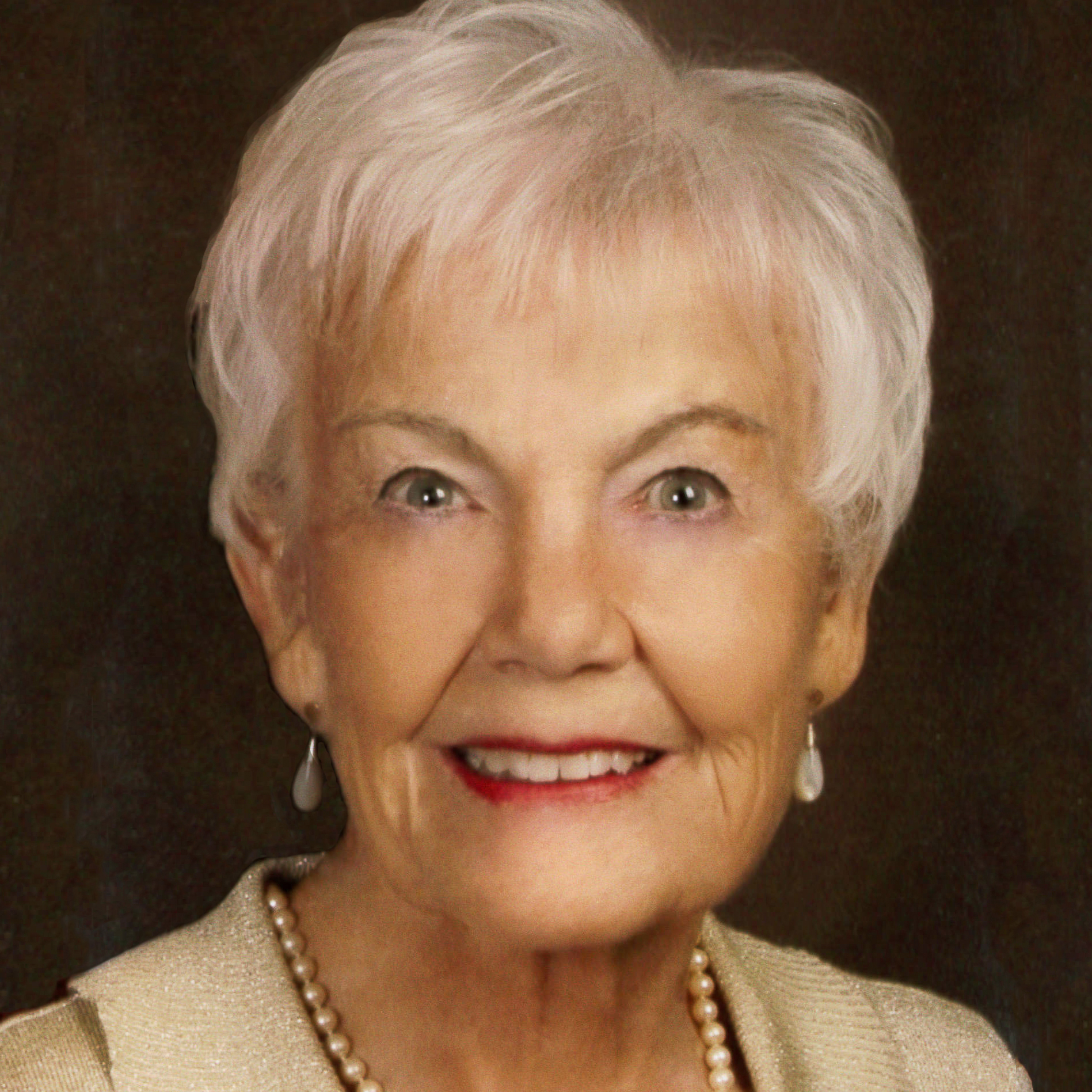
Gove resident Gladys (McClellan) Anglin passed away Thursday, August 27, 2015 at Gove County Medical Center. She was 104 years of age. Gladys was born June 29, 1911, in Willow Springs, Missouri, to Charles Samuel and Sarah Elizabeth (Lochmiller) McClellan.
Gladys was a graduate of Willow Springs High School. On October 21, 1939, she was united in marriage to Clarence Luke Anglin, in Cabool, Missouri. The couple moved to Gove County in the early 1940’s, where they farmed and raised cattle for many years. Luke passed away on November 19, 2003. They had enjoyed 64 wonderful years of marriage together. Gladys was very active in her church, volunteering her time for anything that was needed. She loved her garden, and was known in her family as an expert markswoman. Any varmint that threatened her garden didn’t stand a chance! She loved to spend time watching and listening to different types of birds. One of the fondest memories family has of Gladys is the time spent gathered around the piano singing. Gladys adored her family. She was blessed with the gift of longevity, as she lived at home, independently, up until just shortly before her passing. She will be dearly missed.
Survivors include her daughter, Judy Tucker of Gove; three grandsons, Whitney and wife Wendy of Gove, Lincoln and wife Becky of Gove, and Jesse and wife Jen of Gove; and four great-grandchildren, Mary, Marsha, Larsen, and Westen. She was preceded in death by her parents; her husband; son-in-law, Leonard; eleven siblings; and two half siblings.
Funeral services will be 10:30 a.m., Monday, August 31, 2015 at Gove Community Bible Church, Gove. Burial will be in the Gove Cemetery.
Memorial contributions are suggested to Gove Community Bible Church or Gove County Medical Center. Checks made to the organization may be sent in care of Schmitt Funeral Home, 901 South Main, Quinter, KS 67752.
KU’s Prairie Acre (Photo by Chuck France / University Relations)
LAWRENCE, Kan. (AP) — A small piece of native prairie tucked away on the University of Kansas campus will be restored this year.
The Prairie Acre, which is actually only one-third of an acre, has never been tilled, plowed or shoveled. It sits behind Blake Hall.
The Lawrence Journal-World reports the land has been a campus landmark since 1932. But it is overrun with non-native and invasive plants.
The school hopes a project led by Kelly Kindscher of the Kansas Biological Survey will restore the prairie to its original state. The goal is to restore the native species, maintain the prairie and eventually expand it.
Volunteers will begin removing the non-native plants and collecting seeds of native plants from other prairies this fall. They plan to begin planting this spring.
COLUMBUS, Kan. (AP) — A southeast Kansas man has been sentenced to almost 10 years in prison in the shooting death of a 20-year-old man.
The Joplin Globe reports that 20-year-old Skyler Gurnee, of Columbus, heard from the family of William “Joey” Stephens before he was sentenced Friday for second-degree murder.
Stephens’ mother, Johna Pillars, said her son had “so much to live for” and asked Gurnee why he was killed.
When Gurnee had a chance to speak, he said he realized there was nothing he could tell Stephens’ family that would ever be adequate as an explanation or apology. But he tried anyway, saying, “I’m sorry.” Authorities have said the men had a dispute before the shooting.
Gurnee was suffering from serious injuries when he was found several blocks away.
Kansas officials participating in a listening tour on proposed changes to Medicaid waivers for people with seven categories of disabilities included, from left, Mike Randol, director of the division of health care finance at KDHE; KDHE Secretary Susan Mosier; and Kevin Bomhoff, director of strategic development at Wichita State University’s Center for Community Support and Research. CREDIT ANDY MARSO / HEARTLAND HEALTH MONITOR
Cabinet officials say Kansas’ quest to combine Medicaid waivers for people with seven categories of disabilities is intended to provide better care and outcomes, not cost savings.
But costs will go down if care improves as intended, they say.
Officials from the Kansas Department of Health and Environment and the Kansas Department for Aging and Disability Services are beginning a statewide listening tour on the proposed changes after briefing a legislative committee on them Friday.
“What we want to be able to do with waiver integration … is really look at always providing services around the individual and the individual’s needs and not be specifically tied to limitations or restricted by limitations that may be in the individual waivers,” KDADS Secretary Kari Bruffett told the Robert G. (Bob) Bethell Joint Committee on Home and Community Based Services and KanCare Oversight.
Susan Mosier, the secretary of KDHE, stated similar goals to a group of about 75 people who showed up Tuesday for the first stop on the listening tour, the Capitol Plaza Hotel in Topeka.
Mosier said it was time to ditch “disability-defined boxes” in favor of home and community-based services tailored to each individual Kansan, no matter their disability or disabilities.
“Services should be based on a personalized plan of care and centered on an individual’s needs,” Mosier said.
The waiver services are intended to give Kansans with disabilities the support they need to live in their homes and communities rather than institutions.
Waivers services are divided into seven groups: autism, frail/elderly, intellectual/developmental disability, physical disability, serious emotional disturbance, technology-assisted and traumatic brain injury. All offer different types of support services and different limitations on the amount of those services, though there is frequently overlap among the waivers.
The state’s integration plan would merge those seven categories into two pools of services: one for children and one for adults.
After gathering feedback at more than a dozen meetings on the listening tour, state officials plan to post the details of the proposed change Sept. 30. Then there will be a formal public comment period on the proposal through November.
The final language is to be submitted to the federal Centers for Medicare and Medicaid Services on Jan. 4, 2016. Stakeholders then would have another opportunity to deliver public comments directly to federal CMS officials reviewing the proposal.
The changes would go into effect July 1, 2016, pending CMS approval.
‘Cautiously optimistic’
Advocates for people with disabilities on Medicaid have encouraged them to speak up with concerns about changes to their services.
But the people who attended the first listening tour meeting Tuesday were mostly service providers.
One of them was Jamie Price, chief operating officer of Community Living Opportunities, a Lawrence nonprofit that serves people with intellectual or developmental disabilities.
Price said she was “cautiously optimistic” about the waiver integration plan but emphasized that state officials need input from Kansans with disabilities to ensure they “develop the right system that makes sense and affects people positively.”
“I certainly think it brings promises for the beneficiaries to get more fluid, correct services at the right time from the right service provider,” Price said. “It’s a little early to totally understand all the pros and cons.”
Becky Ross, director of Medicaid initiatives for KDHE, told Price and the rest of the audience that the proposed changes were not tied to the state’s ongoing budget problems.
She said combining the waivers was something state officials had intended to do since moving Medicaid to a privatized managed care system called KanCare in 2013.
“This is just something we wanted to do, and now is the right time to do it,” Ross said. “We do believe waiver integration will allow us to save some money and maybe offer services to more people.”
Ross said Medicaid beneficiaries will not lose services in the switch and indeed may gain services that currently fall under a waiver separate from the one tied to their specific disability.
Reduced waiting lists
Ross, Mosier and Bruffett all said that cost savings from combining the waivers ultimately could allow the state to offer services to more people and eliminate waiting lists that some Kansans — particularly those with intellectual disabilities — remain on for years.
The timeline for seeing any cost savings from the change is murky.
During Friday’s hearing, Sen. Laura Kelly, a Topeka Democrat, asked Bruffett where savings would come from if the state serves the same number of people and offers new services to some of them.
“I’m having a hard time figuring out how you’re going to save money,” she said. “The integration actually sounds like it could be a good idea, but I don’t understand how you’re going to save money if you’re going to be providing all of the services to more people.”
Bruffett said it was “certainly a challenge,” but said savings could be seen in the long-term through better coordination of care.
“It is not put forth as a proposal in order to reduce costs,” she said. “It’s actually put forth as a proposal to improve outcomes, which from the beginning of KanCare is how we’ve said we’ll actually reduce costs in time.”
Bruffett said some short-term savings could result from shifting people from more expensive support services to more affordable services they previously weren’t eligibile for but are a better fit for their needs.
Mosier said Tuesday that in addition to allowing the KanCare companies to provide better-fitting services, the waiver change also would reduce duplicative paperwork and allow for a more seamless transition when KanCare members go from one waiver to another.
“We think this approach will result in some efficiencies and some savings that will help us to reduce or eliminate the waiting list,” Mosier said.
Andy Marso is a reporter for Heartland Health Monitor, a news collaboration focusing on health issues and their impact in Missouri and Kansas.
TOPEKA, Kan. (AP) — The Kansas Supreme Court is allowing businesses and trade groups to go forward with a lawsuit challenging a financial maneuver used by the state in 2009 to help balance its budget.
The court issued its ruling Friday. The case received widespread attention after it was filed in 2010 because one of the suing parties’ attorneys was then-House Speaker Mike O’Neal.
The lawsuit challenged a decision by legislators and former Gov. Mark Parkinson to divert fees paid by businesses to finance their state regulators to general government programs instead.
The lawsuit argued the state exceeded its police powers in sweeping the funds and sought to prevent a future repeat.
A Shawnee County judge dismissed the lawsuit, but the state Court of Appeals reinstated it. The Supreme Court upheld the reinstatement.
TOPEKA–Seventh and eighth grade students across Kansas can showcase their creativity and win an education savings account in the 14th annual Learning Quest Make Your Mark Contest. The Learning Quest 529 Education Savings Program is Kansas’ state-sponsored 529 plan, designed to help families invest for their child’s continued education after high school.
This year’s theme is “your future is a clean slate where anything is possible.” Students are being asked to think ahead 20 years from now and explain how they’d be introduced and what they’d discuss if asked to give a commencement speech to the class of 2035 at their former high school. They can choose to respond in one of two categories: the written where they can submit a traditional essay format (up to 350 words) or the creative where they can articulate themselves with a drawing, poetry, collage, video or any other sort of visual response.
“This contest is a perfect fit for our Learning Quest program,” said Kansas State Treasurer Ron Estes, who administers the Learning Quest 529 Program. “It encourages Kansas youth to reflect on future career goals they’ve set for themselves, and consider the training or education they’ll need to achieve those dreams.”
The contest, open to all seventh and eighth grade students in Kansas, begins mid-August, and all entries must be postmarked or submitted electronically at https://essay.LearningQuest.com/ by Oct. 9, 2015.
Prizes include $2,000 Learning Quest accounts for the first-place winner in each of the two categories. Learning Quest judges will also select up to five entries per category to be posted online for public voting for the chance to win the People’s Choice prize of $1,000 per category. Additionally, each of the schools attended by the four winners (the two winners selected by the judges and the two winners by public voting) will receive a $1,000 prize from Learning Quest. Prizes are provided by American Century Investments.
“Since beginning this contest 14 years ago, we’ve had schools continue to support the contest year after year, encouraging students to plan ahead and prepare for their future,” said Estes. “Giving a prize to each of the winning students’ schools is our way of thanking the teachers, principals and school administrators of our Kansas schools for their commitment towards the education of our state’s next generation.”
The Learning Quest 529 Education Savings Program was created to help families invest for their child’s continued education after high school, whether at a traditional four-year college, community college, or technical school. Learning Quest investors benefit from tax-deferred growth and tax-free withdrawals when used for qualified education expenses (tax benefits may be conditioned on meeting certain requirements). Kansas taxpayers can receive a Kansas tax deduction up to $3,000 per child ($6,000 if married, filing jointly) on contributions to Learning Quest or any other 529 plan sponsored by another state.
It sometimes takes a tragic event to remind us to use proper food safety practices. Once again, this holds true.
In April, a church in an Ohio community held a potluck dinner for members of the congregation. Unfortunately, because of a food safety mistake, one person died from consuming food at this church dinner.
The victim became ill with botulism, a food-borne illness that causes nerve damage and paralysis. Twenty others were hospitalized with serious complications. The source was identified as improperly home-canned potatoes made into a potato salad.
Community meals, such as church suppers and hunters’ breakfasts, are vital in every community big or small. They provide a time to get together with friends and neighbors and sometimes to raise needed funds. But, proper food handling is imperative to prevent tragedy from ruining the event.
Preparing food for the public, whether at a volunteer group fund-raiser, at a restaurant or concession stand, often means dealing with larger quantities of food than those used at home. With larger amounts of food, different food practices and special attention to detail become critical.
A basic food handler short course for food service employees and volunteer groups will be held on Thursday, September 10, from 1:30 to 4:00 pm at the Ellis County Extension Office, 601 Main Street in Hays. The cost is $7.00 per person and includes the Servsafe Food Handler Guide, a nationally-recognized food safety training resource.
The class covers food safety basics, personal hygiene, preventing cross-contamination, food allergens, time and temperature controls, and cleaning and sanitation. A certificate of attendance will be provided to each participant.
REGISTER AND PAY FEES by Thursday, September 3 at the Ellis County Extension Office to ensure adequate training materials and class supplies. Obtain a registration form at www.ellis.ksu.edu in right box under “Events.”
Please enroll for the Servsafe Food Handler Course at the Ellis County Extension Office this week. Drop-ins cannot be accommodated for this class. Enrollment is considered complete when fees are paid. For more information, call the Ellis County Extension Office, 785-628-9430.
The Top Five Causes of Food Poisoning
The US Centers for Disease Control list these top five causes of food poisoning as the food handling mistakes most likely to lead to illness:
· Inadequate Cooling and Cold Holding
More than half of all food poisonings are due to keeping foods out at room temperature for more than two to four hours, or not cooling the food quickly enough to chill a large quantity of food to a safe temperature.
· Preparing Food Too Far Ahead of Service
Food prepared 12 or more hours before serving increases the risk of temperature abuse. Preparing food just before serving reduces the need to cool and reheat foods, prime times for bacterial growth to occur if not done properly.
· Poor Personal Hygiene and Infected Personnel
Poor hand-washing habits and foodhandlers working while sick are implicated in one out of every four food poisonings.
· Inadequate Reheating
When leftovers are not reheated quickly enough or do not reach a high enough temperature, illness can result. All reheated foods should reach 165 degrees or higher before being served.
· Inadequate Hot Holding
The danger zone for bacterial growth is 40 degrees to 140 degrees. Hot foods must be kept at a temperature above 140 degrees to stay safe. Cooked foods which slip below 140 degrees can become contaminated with bacterial growth.
Linda K. Beech is Ellis County Extension Agent for Family and Consumer Sciences.
Patricia A. “Pat” Schmidt, 85, Hays, died Friday, August 28, 2015, at her home in Hays.
She was born August 30, 1929, in Oklahoma City the daughter of Charles and Sylvia (Winters) Everton. At age 6, Pat’s family moved to Kinsley, KS, where she lived until graduating from high school in 1947.
Patricia A. “Pat” Schmidt
In the fall of 1947, she enrolled in college at Fort Hays State, where she met Bob. They were married in LaCrosse, KSm on December 28, 1949. Pat’s interests and activities have centered on family, community and the arts. She has twice served as President of the Hays Arts Council and was appointed by the Governor to serve on the Board of Directors of the Association of Arts Councils of Kansas. She was a graduate of Leadership Hays Class of 1995. She was a member of St. Joseph Catholic Church, was President of local school PTA’s, served on the Hays Beautification Committee, and for several years was Chairman of the Crafters Group of volunteer workers at Hays Medical Center.
Pat received the “Point of Life” award from Thomas More Prep–Marian High School in 2008. With a special interest in the development of downtown Hays, she gave generously to the Downtown Hays Development Association, The Hays Arts Council, Ellis County Historical Society, Fort Hays State University, Hays Medical Center, St. Joseph Catholic Church, TMP–Marian, and other related entities in neighboring communities.
Survivors include her husband, Robert E. Schmidt of their home, a son Anthony Schmidt and wife Loreta of Lawrence, KS and their four children Andrew, Lexie, Zach, and Olivia, two daughters; Ann Onymous of Lewiston, ID and Sue K. Schmidt of Boynton Beach, FL, an Aunt, Mrs. Kenneth Dupree of Kinsley, KS, a niece Kim Brown and a nephew Scott Everton.
She was preceded in death by her parents and her brother, Jack Everton.
Funeral services will be at 10:30 am on Wednesday, September 2, 2015 at the St. Joseph Catholic Church, 215 W. 13th. Private family burial will take place at their Sweetwater Ranch in Ellis County at a later date. The family will receive friends from 5:00 until 8:00 pm on Tuesday and from 9:30 am until 10:15 on Wednesday, all at the Hays Memorial Chapel Funeral Home, 1906 Pine. A parish vigil service will be at 7:00 pm on Tuesday at the funeral home.
Memorials are suggested to The Hays Arts Council, TMP–Marian High School, or to Hospice of Hays Medical Center, in care of the funeral home. Condolences may be left for the family at www.haysmemorial.com.
ST. JOHN- Two Kansas men were injured in an accident just before 2a.m. on Saturday in Stafford County.
The Kansas Highway Patrol reported a 2000 Ford Mustang driven by Callum D. Borthwick, 20, Stafford, was eastbound on NE 20th three miles southeast of St. John when it left the roadway.
The driver overcorrected and the Mustang slid back across the roadway, struck a fence, went airborne over a driveway, and struck a utility pole.
The vehicle came to rest after striking another fence.
Borthwick, and a passenger Jan A. Duplessis, 23, Stafford, were transported to the Stafford County Hospital and then flown to Wesley Medical Center.
They were not wearing seat belts, according to the KHP.