We have a brand new updated website! Click here to check it out!

Wetlands Center now selling Duck Stamps

duck stampFHSU University Relations and Marketing

Hunters and nature enthusiasts can now purchase Federal Duck Stamps at the Kansas Wetlands Education Center gift shop.

The Wetlands Center, managed by Fort Hays State University’s Sternberg Museum of Natural History, is located at 592 NE K-156 Highway, on the edge of Cheyenne Bottoms Wildlife Area about 10 miles northeast of downtown Great Bend.

Waterfowl hunters over 15 years old must purchase federal duck stamps in addition to yearly hunting licenses. Ninety-eight percent of each $25 stamp is used to acquire and protect wetlands areas.

Curtis Wolf, KWEC manager, said that more than 91 percent of the 22,135-acre Quivira refuge was bought with funds raised by Duck Stamps.

“It’s one of the most efficient ways to donate,” he said.

The stamps are popular among bird watchers, nature-lovers and stamp collectors. Each year, the U.S. Fish and Wildlife Service sponsors the Federal Duck Stamp Art Contest, and the winning design is used for the following year.

The Wetlands Center will also sell key chains to display the stamps. Visitors can also find field guides, work from local artists and photographers and a variety of other items made in Kansas.

ks wetlands ed center fhsuThe KWEC educates the public about the importance of wetlands and the need for their conservation using interactive exhibits and outreach programs focusing on Cheyenne Bottoms and the Quivira National Wildlife Refuge, both of which are popular among waterfowl hunters.

For more information, visit www.wetlandscenter.fhsu.edu.

Many Kan. hospitals fail again to escape Medicare’s readmission penalties

By Jordan Rau, KAISER HEALTH NEWS

Once again, the majority of the nation’s hospitals are being penalized by Medicare for having patients frequently return within a month of discharge — this time losing a combined $420 million, government records show.

In the fourth year of federal readmission penalties, 2,592 hospitals will receive lower payments for every Medicare patient that stays in the hospital — readmitted or not — starting in October.

The Hospital Readmissions Reduction Program, created by the Affordable Care Act, was designed to make hospitals pay closer attention to what happens to their patients after they get discharged. Since the fines began, national readmission rates have dropped, but roughly one of every five Medicare patients sent to the hospital ends up returning within a month.

Some hospitals view the punishments as unfair because they can lose money even if they had fewer readmissions than they did in previous years. All but 209 of the hospitals penalized in this round were also punished last year, a Kaiser Health News analysis of the records found.

The fines are based on readmissions between July 2011 and June 2014 and include Medicare patients who were originally hospitalized for one of five conditions: heart attack, heart failure, pneumonia, chronic lung problems, or elective hip or knee replacements.

For each hospital, Medicare determined what it thought the appropriate number of readmissions should be based on the mix of patients and how the hospital industry performed overall. If the number of readmissions was above that projection, Medicare fined the hospital.

The fines will be applied to Medicare payments when the federal fiscal year begins in October. In this round, the average Medicare payment reduction is 0.61 percent per patient stay, but 38 hospitals will receive the maximum cut of 3 percent, the KHN analysis shows. A total of 506 hospitals, including those facing the maximum penalty, will lose 1 percent of their Medicare payments or more. Overall, Medicare’s punishments are slightly less severe than they were last year, both in the amount of the average fine and the number of hospitals penalized.

Still, they will be assessed on hospitals in every state except Maryland, which is exempt from these penalties because it has a special payment arrangement with Medicare.

These lower payments will affect three-quarters of hospitals or more in Alabama, Connecticut, Florida, Massachusetts, New Jersey, New York, Rhode Island, South Carolina, Virginia and the District of Columbia.

KHN found that fewer than a quarter of hospitals face punishments in Idaho, Iowa, Kansas, Montana, Nebraska, North Dakota and South Dakota.


See Readmission penalties by Hospitals

See Readmission penalties by State


Most of the 2,232 hospitals spared penalties this year were excused not because Medicare found readmissions to be sufficiently infrequent, but because they were automatically exempted from being evaluated — either because they specialized in certain types of patients, such as veterans or children, because they were specially designated “critical access” hospitals, or because they had too few cases for Medicare to accurately assess.

The readmission penalties are not the only fines hospitals face this year. As it did last year, Medicare is also giving out bonuses and penalties based on a variety of quality measures. The government has not yet announced those, but they also begin in October. Those financial incentives will total about $1.5 billon.

Medicare will also punish hospitals with high rates of infections and other avoidable occurrences of patient harm. The KHN analysis found that four hospitals have received the maximum readmission penalty every year. Two are in Kentucky: Harlan ARH Hospital, which is in the heart of the Appalachian coalfields, and Monroe County Medical Center in Tompkinsville. The other hospitals are the Livingston, Tenn., Regional Hospital — also in Appalachia — and Franklin Medical Center in Winnsboro, La.

None of the hospitals immediately returned phone calls Monday. Hospitals have been lobbying both Medicare and Congress to take into account the socio-economic background of patients when assessing readmission penalties. They argue that some factors for readmissions — such as whether patients can afford medications or healthy food — are beyond their control.

The Medicare Payment Advisory Commission, which advises Congress, has recommended altering the readmission penalties. The National Quality Forum, a nonprofit that Medicare looks to when creating quality metrics, is examining whether socio-economic factors should be included when calculating readmission measurements as well as other barometers of hospital quality. But that experiment will take two years to complete.

“Hospitals should not be penalized simply because of the demographic characteristics of their patients,” Sens. Joseph Manchin III, D-W.Va., and Roger Wicker, R-Miss., wrote last week in the Journal of the American Medical Association.

The senators have introduced a bill to consider socio-economic factors when calculating the penalties. Their essay, co-written by Dr. Andrew Boozary, a health policy analyst, pointed to a study that found safety net hospitals were nearly 60 percent more likely than other hospitals to have been penalized in all of the first three years of the penalties.

Hospitals with the lowest profit margins were 36 percent more likely to be penalized than those in better financial shape, the essay said. In regulations released Friday, the Centers for Medicare and Medicaid Services reiterated that it would not unilaterally make such changes in the program, noting that some safety net hospitals have been able to keep their readmission rates low.

“While we appreciate these comments and the importance of the role that sociodemographic status plays in the care of patients,” the agency wrote in the rule, “we continue to have concerns about holding hospitals to different standards for the outcomes of their patients of low sociodemographic status because we do not want to mask potential disparities or minimize incentives to improve the outcomes of disadvantaged populations.”

Jordan Rau is a reporter for Kaiser Health News in  conjunction with Heartland Health Monitor, a news collaboration focusing on health issues and their impact in Missouri and Kansas.

4 hospitalized after Scott County collision

SCOTT CITY – Four people were injured in an accident just before 10:30 p.m. on Friday in Scott County.

The Kansas Highway Patrol reported a 2001 Honda Civic driven by Casey Jay Burge, 29, Grain Valley, MO., was westbound on Kansas 96 at Kansas Avenue.

The Honda attempted to pass both a 2008 Pontiac G6 driven by Patricia Nicole Herndon, 18, Scott City, and another vehicle.

The Pontiac made a left turn onto Kansas Ave to go southbound. The Honda struck the Pontiac on the driver’s side.

Herndon and passengers in the Honda James Noland, 37, and Matthew Gilland, 44, both of Blue Springs, MO., were transported to Scott County Hospital.

Life flight transported Burge to Wesley Medical Center.

All were properly restrained at the time of the accident, according to KHP.

KDHE reminds parents, caregivers of required vaccines for students K-12

TOPEKA, Kan. – Kansas immunization school requirements are designed to protect all children against vaccine-preventable diseases. The 2015-2016 kindergarten through grade 12 school immunization requirements and recommendations are based on the Advisory Committee on Immunization Practices (ACIP) recommendations and the consensus of the Governor’s Child Health Advisory Committee Immunization Workgroup.

The 2015-2016 school required immunizations are:

Diphtheria, Tetanus, Pertussis (DTaP): Five doses required. A single dose of Tdap is required for grades 7-12 if there is no previous history of Tdap vaccination, regardless of interval since the last Td.
Poliomyelitis (IPV/OPV): Four doses required. One dose required after age 4 regardless of the number of previous doses, with a 6 month minimum interval from the previous dose.
Measles, Mumps, Rubella: two doses required.
Hepatitis B: three doses required for grades K-12.
Varicella (chickenpox): two doses required for grades K-12 unless history of Varicella disease documented by a licensed physician.
“Vaccination saves the lives and prevents others from suffering from diseases and permanent disabilities,” said Brenda Walker, director of disease control and prevention at the Kansas Department of Health and Environment. “If children aren’t vaccinated, they can spread disease to other children who are too young to be vaccinated or whose medical condition prevents them from being vaccinated.”

In addition to the immunizations required for school entry listed above, ACIP also recommends the following vaccinations:

Meningococcal (MCV4): one dose recommended at 11 years with a booster dose at 16 years of age; not required for school entry.
Human Papillomavirus (HPV): three doses recommended for males and females at 11 years of age; not required for school entry.
Influenza: yearly vaccination recommended for all ages 6 months and above; not required for school entry.
For more information, visit the Kansas Immunization Program website at kdheks.gov/immunize.

Hays Monarchs season comes to an end with loss

The Hays Monarchs season came to an end early Saturday morning with a 7-1 loss to Foley, Minn. in the quarterfinals of the Central Plains Division II tournament in Le Seuer Minn.

Foley got on the board first scoring a single run in the first and second innings to go up 2-0. In the first the Falcons got three straight singles and scored the game’s first run on a sac fly. An RBI single in the second put Foley up 2-0.

The big inning for Foley came in the third. The Falcons sent nine guys to the plate and scored five runs, chasing Monarchs starter Kameron Schmidt. Schmidt, in his second start of the tournament, allowed six runs on seven hits in two and two-thirds innings and suffered the loss.

The Monarchs lone run came in the fifth inning on an error that scored Braiden Werth who led off the inning with a double.

Hays finished the year 28-9 and earned their first ever AA Kansas State Championship and their first trip to the regional tournament.

Suspect in Thursday vehicle burglary captured on film is ID’d by police

The Hays Police Department has identified a suspect in the Thursday evening burglary of a vehicle that was captured on security tape.

Lt. Brandon Wright said additional details will be released next week, but that tips were still coming into the HPD.

The incident involved a purse and bag being stolen from a vehicle parked outside the former Home Party Club in the 200 block of West 10th at approximately 7:20 p.m. Thursday.

Click HERE for the original story.

Sedgwick County makes $1.38M selling rural land parcels

WICHITA, Kan. (AP) — Sedgwick County has garnered more than $1 million from the recent auction sales of four parcel of land.

The Wichita Eagle reports four parcels of land owned by Sedgwick County were sold at auction Thursday, generating more than $1 million in county revenue.

Three parcels totaling about 317 acres were sold together for $1.43 million, and a fourth 43-acre parcel was sold for $94,600, totaling $1,524,600. The land was most recently used for agriculture.

After costs of sale and closing expenses are subtracted, the county is expected to net about $1.38 million.

There were 15 registered bidders for the auction.

Catholic groups lose another contraceptive court ruling

NEW YORK (AP) — Another federal appeals court has ruled against Catholic church-affiliated groups who oppose being required to provide contraceptive care to employees through a third party.

The 2nd U.S. Circuit Court of Appeals Friday overturned a Brooklyn judge’s 2013 decision. The appeals court said an Affordable Care Act provision that lets religion-related entities put the burden for providing contraceptive care services on third parties does not erode religious rights.

In a decision written by Judge Rosemary Pooler, the 2nd Circuit noted that six other appeals circuits have rejected similar cases brought for religious reasons since Judge Brian Cogan ruled in Brooklyn in December 2013. Four of those cases have been appealed to the Supreme Court.

No death penalty for Colorado theater shooter

CENTENNIAL, Colo. (AP) —
Colorado theater shooter James Holmes has been sentenced to life after a jury failed to agree on a death penalty.

The jurors returned the sentence Friday. The same jury had rejected his insanity defense, finding Holmes capable of understanding right from wrong when he murdered 12 people and tried to kill 70 others in 2012.

Prosecutors argued that the former neuroscience graduate student deserved death for methodically planning the massacre.

But the previously decisive nine women and three men didn’t agree on death for Holmes, whose lawyers blamed the attack on mental illness.

Police investigate fatal Salina shooting

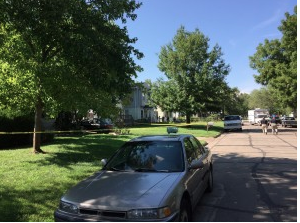
Police tape at the scene of Friday's shooting in Salina
Police tape at the scene of Friday’s shooting in Salina

SALINA -Law enforcement officials in Salina are investigating a Friday afternoon shooting.

Officers were called to the scene of a domestic disturbance in the 1100 block of N. 10th just after 3:30 p.m. Friday afternoon, in which three people had been shot.

Salina Police Capt. Chris Trocheck reported at the scene that three people were shot and one person had died.

Based on preliminary information, Salina Police Chief Brad Nelson said he was confident that the shooter was deceased at the scene. Trocheck indicated the deceased individual was a 40 year old male.

The deceased individual was a 40 year old male, according to Trocheck, who also indicated that the man was related to the female victim. Trocheck indicated there was a possibility that the man was the estranged husband of the female victim.

Two other victims have been transported to Salina Regional Health Center with critical injuries. Capt. Trocheck said the two victims, a male and female, were last known to be in surgery. He had no further details on their condition.


Check Hays Post for additional details as they become available.

Suspect in Kan. police shooting released from the hospital

HUTCHINSON -The suspect shot by Hutchinson Police on Wednesday is in custody.

Police say Joseph Roman, 23, Hutchinson, was released from the hospital and taken to jail Thursday afternoon.

Roman faces 15 counts of aggravated assault of a law enforcement officer and one count of aggravated assault.

Police shot Roman after he pointed a shotgun at them during a stand off that lasted over four hours.

Roman suffered a gunshot wound to the hand in the incident.

There were no injuries to anyone else including officers.

According to Capt. Troy Hoover, five officers have been placed on administrative leave as per normal procedure.

A full investigation of this incident is underway by the Kansas Bureau of Investigation.

Copyright Eagle Radio | FCC Public Files | EEO Public File