We have a brand new updated website! Click here to check it out!

Judge denies temporary injunction to prevent new Kan. casino

TOPEKA, Kan. (AP) — A Kansas judge has denied Cherokee County’s request for a temporary injunction to stop construction of a casino in Crawford County.

Cherokee County sued last month after the state awarded a contract for a state-owned casino in southeast Kansas to Kansas Crossing Hotel & Casino, to be built south of Pittsburg. Cherokee County supported a competing proposal for a casino that would have been built in their county.

The Joplin Globe reports District Court Judge Larry Hendricks ruled Friday that the board that recommended the Crawford County Casino did so after having numerous hearings and based on advice from independent experts.

Richard Hilderbrand, chairman of the Cherokee County Commission, said commissioners still want to block the Crawford County casino and are evaluating their next move.

Where’s all the GOP outrage over attacks on Democrats’ war records?

Donald Kaul
Donald Kaul

At long last, Republican presidential hopefuls crept out of their foxholes, where they’d been cowering and maintaining radio silence, to attack Donald Trump.

With one or two exceptions, the field went AWOL as Trump trashed immigrants, calling them drug runners and rapists. But as soon as Trump said “I like people who weren’t captured,” suggesting that Senator John McCain was less than a hero, they pounced.

Senator Lindsey Graham fumed that Trump’s had “crossed a line.” Former Florida Governor Jeb Bush condemned his “slanderous attacks.” Former Texas Governor Rick Perry called on Trump to exit the race altogether.

How noble of them.

Of course, it helped having some truth on their side. As a Navy pilot, McCain was shot down and wounded during a bombing mission in the Vietnam War. The future Arizona senator spent five and a half years in a Hanoi prison, two of them in solitary confinement.

He was tortured and beaten and his injuries were allowed to go untended. Yet when his captors offered him release after discovering that his father commanded the entire Vietnam theater of the war, he refused. He was bound by military code to wait until everyone captured before him had been released.

That should settle the argument. Whatever you think of the Vietnam War, McCain showed tremendous integrity. Trump is an idiot.

But I wonder where these Republicans and their ilk were in 2004, when John Kerry was the Democratic Party’s presidential nominee. He was another hero whose patriotism was assailed. The only difference: He was a Democrat and his assailants Republicans.

The GOP built a well-financed machine to tell lies about Kerry’s war record. His opponent, President George W. Bush, raised not a hand in protest at this slander.

As a matter of fact there was only one prominent Republican who spoke out in protest of the scummy Republican campaign: John McCain.

What’s happened to Republicans? They used to be such nice people. Sure, they favored the moneyed interests and disliked unions and taxes, but they supported good causes too — like public schools.

Some Republicans were environmentalists and internationalists. And, never forget, it was under a Republican president, Dwight Eisenhower, that we undertook the greatest public works project in our history — the interstate highway system.

And it was another Republican, Teddy Roosevelt, who inaugurated our national parks system.

That kind of Republican either doesn’t exist anymore or is sheltered in a witness protection program.

Your current brand of Republicans wouldn’t pave a road unless it ran in front of their houses. Even then they’d pay for it by cutting Social Security payments.

They’re against opening up relations with Cuba, negotiating with Iran, cutting the military budget to bring it more in line with our needs, and raising the minimum wage. They don’t believe in climate change because to do so would mean going against the oil interests that generously fund their electoral campaigns.

Look at the gang that’s running for the Republican nomination: The worst of them seem deranged and the best appear fearful that they’ll do something to raise the ire of the party’s tea party wing. Like criticize Donald Trump when he slanders immigrants.

It’s not like the Democrats are white knights. They have more than their share of hypocrisy and cowardice. But the Republicans are talking it to a whole new level.

Even Ronald Reagan must be spinning in his grave.

OtherWords.org columnist Donald Kaul lives in Ann Arbor, Mich.

Kan. man hospitalized after rear-end truck crash

EL DORADO – A Kansas man was injured in an accident just before 10a.m. on Tuesday in Butler County.

The Kansas Highway Patrol reported a 2007 Ford pickup driven by Jordan Ryan Hooper, 21, Goddard, was traveling on U.S. 54 two miles east of El Dorado.

The truck rear-ended a 1996 Chevy pickup driven by Steven C. Beaumont, 61, El Dorado, that was stopped to make a left turn.

Beaumont was transported to Susan B. Allen Hospital.
Hooper was not injured.

Both drivers were properly restrained at the time of the accident, according to the KHP.

MOVIE REVIEW: ‘Mission Impossible: Rogue Nation’ is a stunt

James Gerstner reviews movies for Hays Post.

There’s a difference between having a movie that contains big action set-pieces and big action set-pieces that have a film built around them. The former is how you get something like “The Dark Knight” or “Avatar” and the latter is how you get “Mission Impossible: Rogue Nation.”

These types of reviews for good films that are not great films are sometimes hard. There’s a great many things to like about “Rogue Nation,” but my opinion is not as favorable as the general consensus which makes this review sound more negative than it really is.

MV5BMTQ1NDI2MzU2MF5BMl5BanBnXkFtZTgwNTExNTU5NDE@._V1_SX640_SY720_

“Rogue Nation” is a fine action movie with some absolutely incredible set-pieces, but it’s not an absolutely incredible movie. It has a very passable story that motivates its characters well, and has some intense action moments, but the resulting mixture is expendable fuel, not the self-generating kind that makes masterpieces. For example, oil is a good and profitable fuel, but wouldn’t we all prefer the self-sustaining Arc Reactor that powers Iron Man’s suit? I know I would.

“Rogue Nation” relies on its stunts, to a fault. Even the pre-movie advertisements for “Rogue Nation” were not standard trailers. Some of the advertisements were behind-the-scenes looks at the movie’s signature stunt – Tom Cruise dangling outside an airplane as it takes off. As an action-movie aficionado, I love that stunt and love that Tom Cruise really did it. As a critic, it leads credence to my stance that this movie was about its stunts and action and not about making a movie with stunts and action.

The latest “Mission Impossible” movie is a strong entry in a strong franchise and is miles better than the lunacy of “Furious 7,” but, to this reviewer, it cannot touch “Mission Impossible 3”, the best of the series, or other Tom Cruise action flicks such as the still-delightful “Edge of Tomorrow.” “Rogue Nation” didn’t go rogue on its franchise, it supports its own weight with no added elevation.

4 of 6 stars

Power plant emissions proposal faces uncertain future in Kansas

By BRYAN THOMPSON

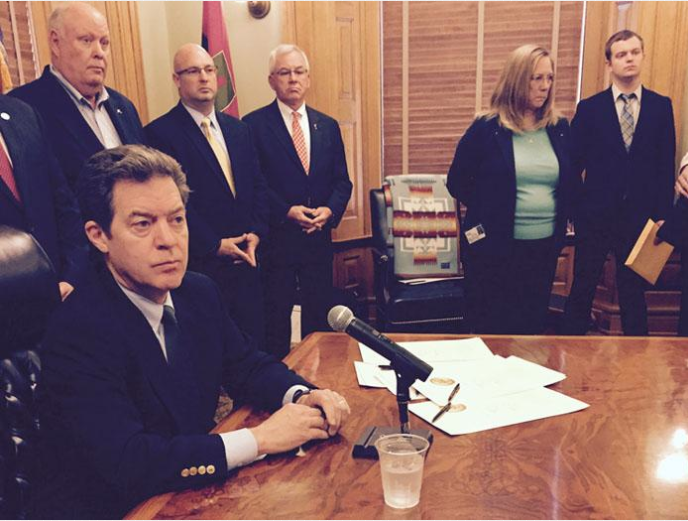
Photo by Jim McLean Gov. Sam Brownback in May signed a bill asserting state authority over new U.S. Environmental Protection Agency power plant rules. -
Photo by Jim McLean Gov. Sam Brownback in May signed a bill asserting state authority over new U.S. Environmental Protection Agency power plant rules. –

The Clean Power Plan that President Barack Obama announced Monday is designed to reduce carbon dioxide emissions from power plants — the largest source of those emissions — by almost a third by the year 2030, compared to 2005 levels. How that will play out in Kansas remains to be seen. Gov.

Sam Brownback issued a statement Monday criticizing the president’s proposal regarding U.S. Environmental Protection Agency rules. “The EPA failed to adequately consider the negative impact this overreaching regulation has on Kansas rate payers, resulting in higher electricity rates and greater uncertainty in grid reliability,” Brownback said in the statement.

“The final rule released today is twice as bad for Kansas as the proposed rule released last summer and requires us to review not only the rule itself but reconsider the state’s overall approach to the Clean Power Plan.”

In May, the governor signed a bill that stipulates how Kansas will comply with the new federal regulations. The bill requires the secretary of the Kansas Department of Health and Environment to submit a compliance plan by the first week of November for approval by a committee of legislators.

It also requires the Kansas Corporation Commission — the agency that regulates the state’s utility companies — to advise the committee on the costs of each plan. The Kansas Attorney General’s Office would determine whether the state implementation plan would affect the state’s legal position in a multi­state lawsuit against the EPA for instituting the rule.

If it would undermine litigation against the Clean Power Plan, the KDHE secretary would not be allowed to submit the plan to EPA. The Clean Power Plan sets individual reduction targets for each state, but leaves it up to the states to decide how to meet those targets. Any state that fails to submit a plan that meets with EPA approval will be regulated under a federal plan developed by the EPA.

The largest utility company in Kansas, Westar Energy, hopes it won’t come to that. “Westar has been supportive from the beginning of putting together a state implementation plan,” Westar spokeswoman Gina Penzig said.

“We think that … a common-sense Kansas approach would be a better solution than to wait and see what implementation plan the federal government might come up with.”

Penzig said Westar is pleased that EPA has kept 2005 as its initial benchmarking point, because Westar has reduced its carbon dioxide emissions by approximately 15 percent over the past 10 years. “One of the things that was immediately notable with the release today was that the 2030 target for carbon reduction was higher than in the draft bill,” Penzig said.

“So we’ll be examining the rule, and really looking at what it will take to meet the requirements, what impact that will have on our customers as far as cost and reliability, and whether or not we would be among those who have talked about challenging the rule.”

The Kansas Sierra Club wishes the president and the EPA had gone even further toward limiting power plant emissions. “By the year 2030, we need to have an 80 percent reduction,” said Bill Griffith, energy chair of the Kansas Sierra Club. “It’s a good start, but there’s going to be a lot of work that needs to be done down the road.”

If Kansas allows the EPA to impose a federal plan rather than submitting a state plan, Griffith said it will make life more difficult for utilities that rely heavily on coal. “The onus really will be on Westar at that point,” he said. “If the state leaves them out hanging and has the EPA come in and just do it by each particular smokestack, they’re going to be coming down on Westar fairly hard.”

 Bryan Thompson is an editor-reporter for Heartland Health Monitor, a news collaboration focusing on health issues and their impact in Missouri and Kansas.

KFIX Rock News: ZZ Top’s Billy Gibbons Readies Solo Debut

gibbonsperfinAfter fronting ZZ Top for nearly 45 years, Billy Gibbons will release his solo debut, Perfectamundo, on October 23.

The album was recorded in Spain, Los Angeles and Gibbons’ native Texas and as its title suggests, will have more of a Latin feel than his work with ZZ Top. Gibbons co-produced the disc with Joe Hardy.

In addition to the title track, Perfectamundo includes originals like “Pickin’ Up Chicks on Dowling Street” and “Quiero Mas Dinero” plus covers of “Baby Please Don’t Go” by Lightnin’ Hopkins and “Treat Her Right” byRoy Head.

Here’s the Perfectamundo track list:

“Got Love If You Want It”
“Treat Her Right”
“You’re What’s Happenin’, Baby”
“Sal y Pimiento”
“Pickin’ Up Chicks On Dowling Street”
“Hombre Sin Nombre”
“Quiero Mas Dinero”
“Baby Please Don’t Go”
“Piedras Negras”
“Perfectamundo”
“Q-Vo”

Copyright © 2015, ABC Radio. All rights reserved.

“Like” KFIX on Facebook.

Images courtesy Concord Records

New Hays boutique promises big-city shopping, small-town atmosphere

By JAMES BELL
Hays Post

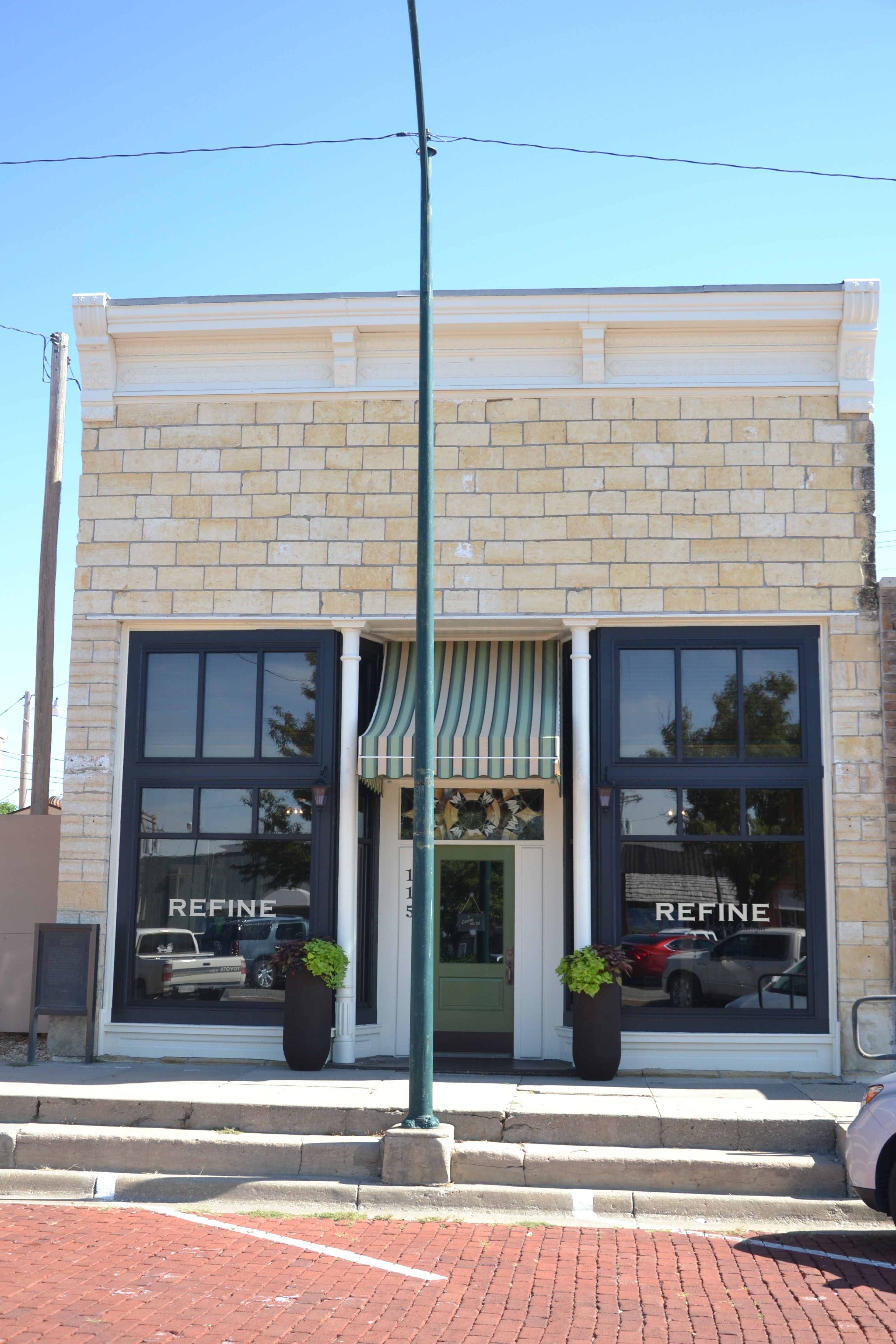
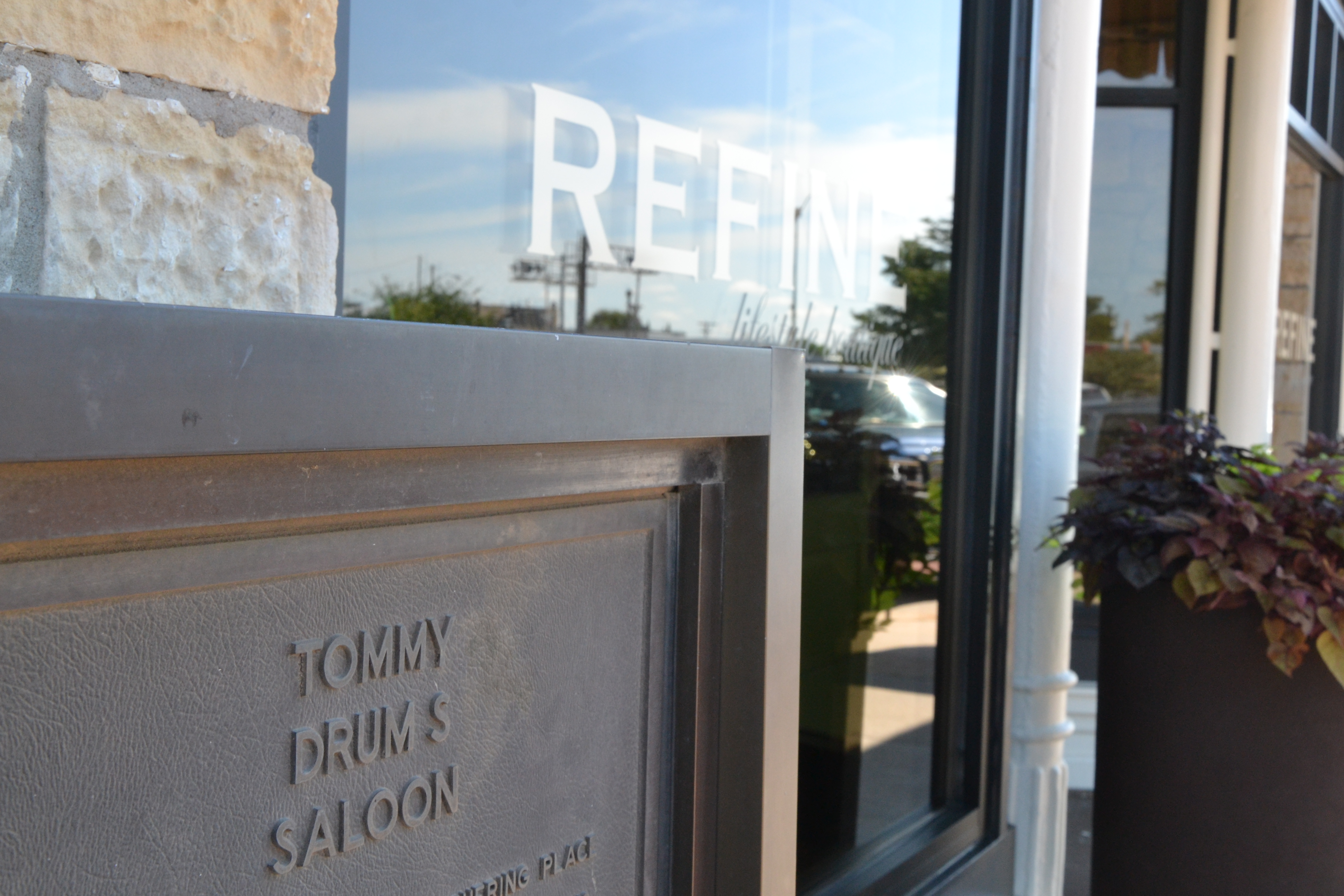
Refine, 115 W. 10th, officially opened for business Saturday, but while shoppers will get a unique experience, they will also see something familiar.

“We have a lot of great stores in downtown Hays and throughout Hays,” said Brianne Sultzer, co-owner, “but this brings in a whole new atmosphere.”

The idea behind the shop was to bring something to Hays that isn’t currently offered.

“Big-city shopping in a small-city atmosphere,” she said. “That was my whole goal all along.”

While the shop is new, Sultzer has a long history in the industry and knows the local clientele.

Her mother and co-owner of Refine – Tonya Staab – currently operates Mam’Zelles, 2512 Vine.

“I started the business with my mother, we’re partnering together,” Sultzer said. “She has owned Mam’Zelles for a little under 30 years, and I’ve grown up with it my whole life.”

But shop ownership isn’t limited to just two generations.

“My grandmother and her started that business, so it’s been kind of grown into me,” Sultzer said.

Opening the new shop wasn’t a quick process either, as Sultzer had been looking for the right location to open at the right time.

“I’ve been putting things together for the last couple of years,” she said.

Hays photographer Leon Staab was the previous tenant of the building, but hadn’t been working out of the location, according to Sultzer.

“We always really loved the building and I liked the location and we just kind of went to him and asked him ‘What are your thoughts?’ — and he was all for it,” she said.

He helped Sultzer keep the look in the building, with only minor adjustments made.

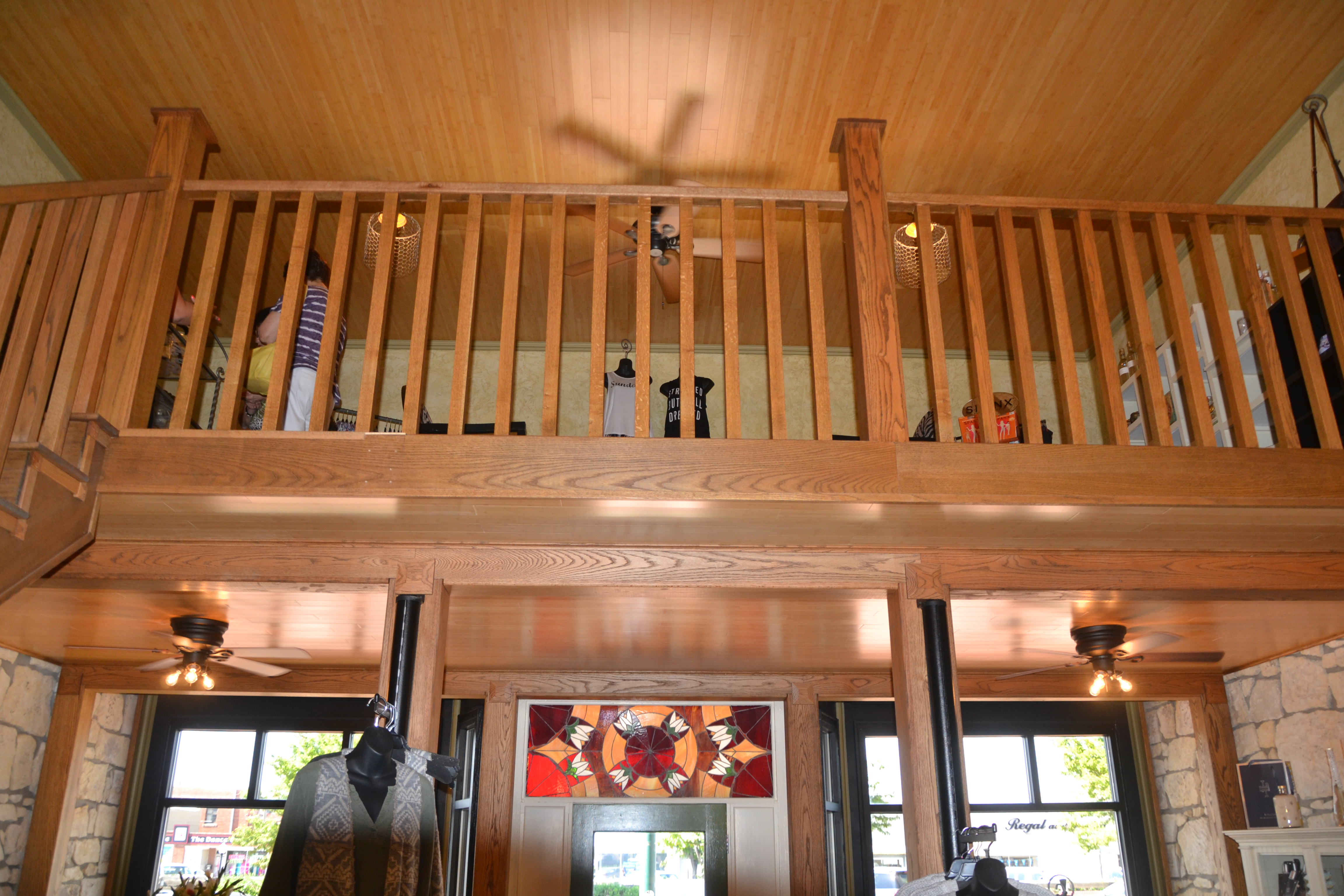
“The limestone all was here. We just did an all new front facade, new windows, new paint,” she said. “Pretty much the interior we kept the same except little touches like lighting.”

With the location Sultzer hopes to bring something to Hays akin to larger cities, bringing in items that can’t be found anywhere else.

“I’d always wanted something that was more unique and more like a big-city style boutique,” she said. “I’ve always liked that idea and Hays didn’t have anything like that.”

A big part of setting up the shop included finding the right collections to offer customers.

“As far as clothing we carry favorite lines,” Sultzer said. “Not only clothing but everything else they would like too.”

And with the recent opening, the shop is receiving new items frequently and, as the year draws to a close, the shop will continue to offer something new to Hays.

“We have a lot of fun holiday stuff coming in,” she said.

“I’m excited,” Sultzer said. “It’s gonna be awesome.”

The location is open from 10 a.m. to 6 p.m. Monday to Friday and 10 a.m. to 5 p.m. Saturday.

Police search for missing Salina teen

Colten Miller (Courtesy Photo)

SALINA – A family in Salina is searching for a missing teenager.

13-year-old Colten Miller went missing from Salina on Friday, July 31st. He was last seen at 5:30 p.m. that evening.

According to his family, Colten left his dad’s house after a dispute and has not been seen since. It is believed that Colten is with a group of Hispanic adolescents and adults. Colten suffers from asthma and is currently without his rescue inhaler.

Colten Miller is 5’8″ tall and weighs about 140 to 145 pounds. He has brown hair and brown eyes. He has a large scar on his right eyebrow from receiving stitches in the past.

Anyone with information regarding Colten’s disappearance or his whereabouts is asked to call the Salina Police Department at 785-826-7210.

ColtenMiller

Liberal mourns: When life and sports collide

By EARL WATT
Leader & Times

If there was a fan favorite at Brent Gould Field this year, it would have been Kaiser Carlile.

Late in the games it was commonplace for Bee Jay PA announcer Guy Rice to say, “Look at Kaiser hustling down there. Let’s give him a hand.”

Earl Watt
Earl Watt

And the crowd would respond favorably every time.

Kaiser was very familiar with the game, his team and his job.

He was efficient, and I can’t remember a time when he had to be asked to go get a bat. It was almost instinctual for the little guy.

The dreams of a 9-year-old are to hang around with players like the Bee Jays, and Kaiser was truly living that dream.

Over the years there have been batboys and batgirls in the Bee Jay dugout, and perhaps a relationship was formed here or there, but this one was truly unique.

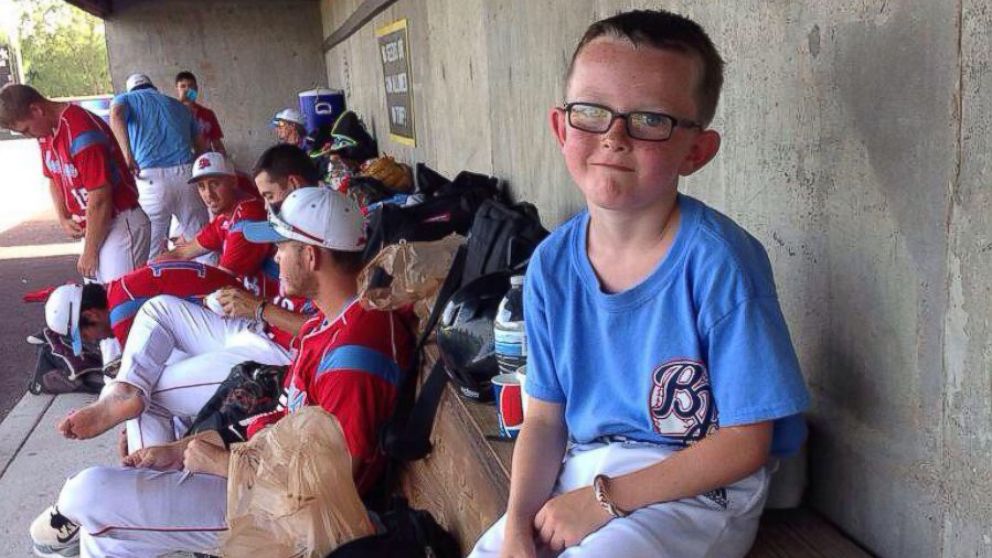
9-year old Liberal bat boy Kaiser Carlile in the Bee Jays dugout at Larks Park in mid July. (Courtesy Liberal Bee Jays)

Kaiser was like the entire team’s little brother, and he was more than a kid assigned to the dugout for the night.

Kaiser, like the rest of the Bee Jays, had made it to the NBC World Series, and he was busy Saturday doing what he had done all summer long.

There was no lack of familiarity on anyone’s part. This was simply a case of being in the wrong place at the wrong time.

When Kaiser was accidentally hit, Lawrence Dumont Stadium went silent for about 30 minutes.

I was standing down the first base line taking pictures of the game, and I was the only adult around a group of Wichita kids that were about the same age as Kaiser.

When I showed them a picture of Kaiser that I had taken earlier in the day, one of them said, “I know that kid. I played with him before the game.”

That’s what baseball is supposed to be. Kids come out, play with their buddies, dream of one day making that game-winning play and being inspired by what they see on the field.

But there are always risks — foul balls in the stands, bats that slide out of a batter’s grasp, and even the players, umpires and batboys are at risk.

We can either accept the risks and live the dream, or we can shy away and never experience the thrill that comes with being at the ballpark.

We can drive a car and accept the risks that come with it, or we can sit at home and go nowhere.

Kaiser’s loss hurts so much because Kaiser chose to live. He chose to participate in life rather than be a bystander.

We respect and appreciate Kaiser because of his willingness to live, to be a part of the game, and to serve his team.

Kaiser touched the lives of his community as well as baseball players from coast to coast that came to Liberal this summer to chase their dream.

They, like Kaiser, chose to live, to be a part of the game.

At this time, what is shown on the scoreboard pales in comparison to the loss Kaiser’s family has suffered, and the emotions for the Bee Jays and all the teams participating in the NBC World Series have been affected by the tragedy.

How do I write a story about a game when a little boy has paid the ultimate price just running down bats?

How do games continue?

We continue because we have to. We still have to make the choice to be a part of the game and to live, just like Kaiser.

What is much smaller is whether we win or lose. What is enormous is having the same courage to take the risk, to be inspired by a 9-year-old boy who won the hearts of a community long before a tragic accident in a game.

Kaiser showed us how to live.

Earl Watt is publisher of the Leader & Times in Liberal. Reprinted with permission.

Tigers picked 6th in MIAA preseason polls

MIAA Media Relations
KANSAS CITY, Mo. – Defending MIAA Co-Champion Northwest Missouri received 36 first place votes between two polls as they topped both the coaches and media poll for 2015. 2014 MIAA Co-Champion Pittsburg State earned 17 first place votes between the two polls as they finished second in both the media and coaches poll.

The polls could not agree in the third place spot as Central Missouri edged Central Oklahoma by just one point for third place in the coaches poll while the Bronchos were third for the media. Missouri Western racked up 350 points to be picked fourth by the media while UCM was six points behind them in the fifth spot in the media poll with the Griffons earning the fifth spot in the coaches opinion.

Sixth place was agreed upon by both polls as Fort Hays State earned 284 points from the media and 71 points from the coaches. Their was a tie in the poll for the coaches at seventh place as Turnpike Tussle Rivals Emporia State and Washburn each earned 59 points. In the media poll the Hornets edged the Ichabods by just 13 points.

Earning the ninth spot in both polls was Nebraska-Kearney grabbing 39 points from the coaches and 153 points from the media. Lindenwood earned the tenth spot in the coaches poll ahead of the 11th pick MIssouri Southern with the two teams swapping roles in the media poll. Northeastern State was picked 12th by both the coaches and media in third year’s poll.

All of the MIAA football schools are scheduled to kick off the season on Thursday, Sept. 3 with Fort Hays State traveling to Central Oklahoma in the MIAA Television Network game of the week.

2015 MIAA Preseason Coaches Poll
1. Northwest Missouri (8) 118
2. Pittsburg State (4) 114
3. Central Missouri 92
4. Central Oklahoma 91
5. Missouri Western 82
6. Fort Hays State 71
T7. Emporia State 59
T7. Washburn 59
9. Nebraska-Kearney 39
10. Lindenwood 34
11. Missouri Southern 17
12. Northeastern State 16

2015 MIAA Preseason Media Poll
1. Northwest Missouri (28) 478
2. Pittsburg State (13) 455
3. Central Oklahoma 382
4. Missouri Western 350
5. Central Missouri 344
6. Fort Hays State 284
7. Emporia State 226
8. Washburn 213
9. Nebraska-Kearney 153
10. Missouri Southern 144
11. Lindenwood 122
12. Northeastern State 47

Oil prices sliding amid soft US economic data

ALEX VEIGA, AP Business Writer

The price of oil is sliding as traders brace for softer demand amid an increase in the number of active rigs and weak U.S. economic reports on construction spending and manufacturing activity.

U.S. crude was down $1.80, or 3.8 percent, to $45.32 a barrel in trading in New York Monday, the lowest price in more than four months.

Benchmark U.S. crude has been declining since reaching a high this year of $61.43 a barrel on June 10. It’s down 15 percent so far this year.

Brent crude, a benchmark for international oils used by many U.S. refineries, was down $2.38, or 4.6 percent, to $49.83 a barrel in London. It’s down 13.percent this year.

Susan Schlicting: At the End of Your Rope

A chance to strengthen your leadership team with team building initiatives and rope challenges with Jim Cain, Ph.D. is the goal behind “At the End of Your Rope” to be held August 28 & 29 at the KSU Agricultural Research Center, in Hays.

Remarks by president on Clean Power Plan

REMARKS BY THE PRESIDENT
IN ANNOUNCING THE CLEAN POWER PLAN

East Room

2:15 P.M. EDT

THE PRESIDENT: Thank you, everybody. (Applause.) Thank you so much. Everybody, please have a seat. Thank you.

Well, good afternoon, everybody.

AUDIENCE: Good afternoon.

THE PRESIDENT: Gina, I want to thank you not just for the introduction, but for the incredible work that you and your team have been doing — not just on this issue, but on generally making sure that we’ve got clean air, clean water, a great future for our kids.

I want to thank all the members of Congress who are here, as well, who have been fighting this issue, and sometimes at great odds with others, but are willing to take on what is going to be one of the key challenges of our lifetimes and future generations. I want to thank our Surgeon General, who’s just been doing outstanding work and is helping to make the connection between this critical issue and the health of our families.

Over the past six and a half years, we’ve taken on some of the toughest challenges of our time — from rebuilding our economy after a devastating recession, to ending our wars in Iraq and Afghanistan and bringing almost all of our troops home, to strengthening our security through tough and principled diplomacy. But I am convinced that no challenge poses a greater threat to our future and future generations than a changing climate. And that’s what brings us here today.

Now, not everyone here is a scientist — (laughter) — but some of you are among the best scientists in the world. And what you and your colleagues have been showing us for years now is that human activities are changing the climate in dangerous ways. Levels of carbon dioxide, which heats up our atmosphere, are higher than they’ve been in 800,000 years; 2014 was the planet’s warmest year on record. And we’ve been setting a lot of records in terms of warmest years over the last decade. One year doesn’t make a trend, but 14 of the 15 warmest years on record have fallen within the first 15 years of this century.

Climate change is no longer just about the future that we’re predicting for our children or our grandchildren; it’s about the reality that we’re living with every day, right now.

The Pentagon says that climate change poses immediate risks to our national security. While we can’t say any single weather event is entirely caused by climate change, we’ve seen stronger storms, deeper droughts, longer wildfire seasons. Charleston and Miami now flood at high tide. Shrinking ice caps forced National Geographic to make the biggest change in its atlas since the Soviet Union broke apart.

Over the past three decades, nationwide asthma rates have more than doubled, and climate change puts those Americans at greater risk of landing in the hospital. As one of America’s governors has said, “We’re the first generation to feel the impact of climate change and the last generation that can do something about it.”

And that’s why I committed the United States to leading the world on this challenge, because I believe there is such a thing as being too late.

Most of the issues that I deal with — and I deal with some tough issues that cross my desk — by definition, I don’t deal with issues if they’re easy to solve because somebody else has already solved them. And some of them are grim. Some of them are heartbreaking. Some of them are hard. Some of them are frustrating. But most of the time, the issues we deal with are ones that are temporally bound and we can anticipate things getting better if we just kind of plug away at it, even incrementally. But this is one of those rare issues — because of its magnitude, because of its scope — that if we don’t get it right we may not be able to reverse, and we may not be able to adapt sufficiently. There is such a thing as being too late when it comes to climate change. (Applause.)

Now, that shouldn’t make us hopeless; it’s not as if there’s nothing we can do about it. We can take action. Over the past several years, America has been working to use less dirty energy, more clean energy, waste less energy throughout our economy. We’ve set new fuel economy standards that mean our cars will go twice as far on a gallon of gas by the middle of the next decade. Combined with lower gas prices, these standards are on pace to save drivers an average of $700 at the pump this year. We doubled down on our investment in renewable energy. We’re generating three times as much wind power, 20 times as much solar power as we did in 2008.

These steps are making a difference. Over the past decade, even as our economy has continued to grow, the United States has cut our total carbon pollution more than any other nation on Earth. (Applause.) That’s the good news. But I am here to say that if we want to protect our economy and our security and our children’s health, we’re going to have to do more. The science tells us we have to do more.

This has been our focus these past six years. And it’s particularly going to be our focus this month. In Nevada, later in August, I’ll talk about the extraordinary progress we’ve made in generating clean energy — and the jobs that come with it — and how we can boost that even further. I’ll also be the first American President to visit the Alaskan Arctic, where our fellow Americans have already seen their communities devastated by melting ice and rising oceans, the impact on marine life. We’re going to talk about what the world needs to do together to prevent the worst impacts of climate change before it’s too late.

And today, we’re here to announce America’s Clean Power Plan — a plan two years in the making, and the single most important step America has ever taken in the fight against global climate change. (Applause.)

Right now, our power plants are the source of about a third of America’s carbon pollution. That’s more pollution than our cars, our airplanes and our homes generate combined. That pollution contributes to climate change, which degrades the air our kids breathe. But there have never been federal limits on the amount of carbon that power plants can dump into the air. Think about that. We limit the amount of toxic chemicals like mercury and sulfur and arsenic in our air or our water — and we’re better off for it. But existing power plants can still dump unlimited amounts of harmful carbon pollution into the air.

For the sake of our kids and the health and safety of all Americans, that has to change. For the sake of the planet, that has to change.

So, two years ago, I directed Gina and the Environmental Protection Agency to take on this challenge. And today, after working with states and cities and power companies, the EPA is setting the first-ever nationwide standards to end the limitless dumping of carbon pollution from power plants. (Applause.)

Here’s how it works. Over the next few years, each state will have the change to put together its own plan for reducing emissions — because every state has a different energy mix. Some generate more of their power from renewables; some from natural gas, or nuclear, or coal. And this plan reflects the fact that not everybody is starting in the same place. So we’re giving states the time and the flexibility they need to cut pollution in a way that works for them.

And we’ll reward the states that take action sooner instead of later — because time is not on our side here. As states work to meet their targets, they can build on the progress that our communities and businesses are already making.

A lot of power companies have already begun modernizing their plants, reducing their emissions — and by the way, creating new jobs in the process. Nearly a dozen states have already set up their own market-based programs to reduce carbon pollution. About half of our states have set energy efficiency targets. More than 35 have set renewable energy targets. Over 1,000 mayors have signed an agreement to cut carbon pollution in their cities. And last week, 13 of our biggest companies, including UPS and Walmart and GM, made bold, new commitments to cut their emissions and deploy more clean energy.

So the idea of setting standards and cutting carbon pollution is not new. It’s not radical. What is new is that, starting today, Washington is starting to catch up with the vison of the rest of the country. And by setting these standards, we can actually speed up our transition to a cleaner, safer future.

With this Clean Power Plan, by 2030, carbon pollution from our power plants will be 32 percent lower than it was a decade ago. And the nerdier way to say that is that we’ll be keeping 870 million tons of carbon dioxide pollution out of our atmosphere. (Applause.) The simpler, layman’s way of saying that is it’s like cutting every ounce of emission due to electricity from 108 million American homes. Or it’s the equivalent of taking 166 million cars off the road.

By 2030, we will reduce premature deaths from power plant emissions by nearly 90 percent — and thanks to this plan, there will be 90,000 fewer asthma attacks among our children each year. (Applause.) And by combining this with greater investment in our booming clean energy sector, and smarter investments in energy efficiency, and by working with the world to achieve a climate agreement by the end of this year, we can do more to slow, and maybe even eventually stop, the carbon pollution that’s doing so much harm to our climate.

So this is the right thing to do. I want to thank, again, Gina and her team for doing it the right way. Over the longest engagement process in EPA history, they fielded more than 4 million public comments; they worked with states, they worked with power companies, and environmental groups, and faith groups, and people across our country to make sure that what we were doing was realistic and achievable, but still ambitious.

And some of those people are with us here today. So, Tanya Brown — Tanya, wave, go ahead — there’s Tanya. (Applause.) Tanya Brown has joined up with moms across America to spread the word about the dangers climate change pose to the health of our children — including Tanya’s daughter, Sanaa. There’s Sanaa, right there.

Dr. Sumita Khatri has spent her career researching the health impacts of pollution at the Cleveland Clinic, and helping families whose lives are impacted every single day. Doctor, thank you. (Applause.)

Sister Joan Marie Steadman has helped rally Catholic women across America to take on climate. Sister, thank you so much for your leadership. (Applause.) And she’s got a pretty important guy on her side — as Pope Francis made clear in his encyclical this summer, taking a stand against climate change is a moral obligation. And Sister Steadman is living up to that obligation every single day.

Now, let’s be clear. There will be critics of what we’re trying to do. There will be cynics that say it cannot be done. Long before the details of this Clean Power Plan were even decided, the special interests and their allies in Congress were already mobilizing to oppose it with everything they’ve got. They will claim that this plan will cost you money — even though this plan, the analysis shows, will ultimately save the average American nearly $85 a year on their energy bills.

They’ll claim we need to slash our investments in clean energy, it’s a waste of money — even though they’re happy to spend billions of dollars a year in subsidizing oil companies. They’ll claim this plan will kill jobs — even though our transition to a cleaner energy economy has the solar industry, to just name one example, creating jobs 10 times faster than the rest of the economy.

They’ll claim this plan is a “war on coal,” to scare up votes — even as they ignore my plan to actually invest in revitalizing coal country, and supporting health care and retirement for coal miners and their families, and retraining those workers for better-paying jobs and healthier jobs. Communities across America have been losing coal jobs for decades. I want to work with Congress to help them, not to use them as a political football. Partisan press releases aren’t going to help those families.

Even more cynical, we’ve got critics of this plan who are actually claiming that this will harm minority and low-income communities — even though climate change hurts those Americans the most, who are the most vulnerable. Today, an African-American child is more than twice as likely to be hospitalized from asthma; a Latino child is 40 percent more likely to die from asthma. So if you care about low-income, minority communities, start protecting the air that they breathe, and stop trying to rob them of their health care. (Applause.) You could also expand Medicaid in your states, by the way. (Laughter.)

Here’s the thing. We’ve heard these same stale arguments before. Every time America has made progress, it’s been despite these kind of claims. Whenever America has set clear rules and smarter standards for our air, our water, our children’s health, we get the same scary stories about killing jobs and businesses and freedom. It’s true.

I’m going to go off script here just for a second. (Laughter.) Because this is important — because sometimes I think we feel as if there’s nothing we can do. Tomorrow is my birthday, so I’m starting to reflect on age. And in thinking about what we were doing here today, I was reminded about landing in Los Angeles to attend a college as a freshman, as an 18-year-old. And it was late August. I was moving from Hawaii. And I got to the campus, and I decided — I had a lot of pent-up energy and I wanted to go take a run. And after about five minutes, suddenly I had this weird feeling, I couldn’t breathe. And the reason was, back in 1979, Los Angeles still was so full of smog that there were days where people who were vulnerable just could not go outside. And they were fairly frequent.

And folks who are older than me can remember the Cayuga River burning because of pollution, and acid rain threatening to destroy all the great forests of the Northeast. And you fast-forward 30, 40 years later, and we solved those problems. But at the time, the same characters who are going to be criticizing this plan were saying, this is going to kill jobs, this is going to destroy businesses, this is going to hurt low-income people, it’s going to be wildly expensive. And each time, they were wrong.

And because we pushed through, despite those scaremongering tactics, you can actually run in Los Angeles without choking. And folks can actually take a boat out on that river. And those forests are there.

So we got to learn lessons. We got to know our history. The kinds of criticisms that you’re going to hear are simply excuses for inaction. They’re not even good business sense. They underestimate American business and American ingenuity.

In 1970, when Republican President Richard Nixon decided to do something about the smog that was choking our cities, they warned that the new pollution standards would decimate the auto industry. It didn’t happen. Catalytic converters worked. Taking the lead out of gasoline worked. Our air got cleaner.

In 1990, when Republican President George H.W. Bush decided to do something about acid rain, they said the bills would go up, our lights would go off, businesses would suffer “a quiet death.” It didn’t happen. We cut acid rain dramatically, and it cost much less than anybody expected — because businesses, once incentivized, were able to figure it out.

When we restricted leaded fuel in our cars, cancer-causing chemicals in plastics, it didn’t end the oil industry, it didn’t end the plastics industry; American chemists came up with better substitutes. The fuel standards we put in place a couple of years ago didn’t cripple automakers. The American auto industry retooled. Today, our automakers are selling the best cars in the world at a faster pace than they have in almost a decade. They’ve got more hybrids, and more plug-ins, and more high fuel-efficient cars, giving consumers more choice than ever before, and saving families at the pump.

We can figure this stuff out as long as we’re not lazy about it; as long as we don’t take the path of least resistance. Scientists, citizens, workers, entrepreneurs — together as Americans, we disrupt those stale, old debates, upend old ways of thinking. Right now, we’re inventing whole new technologies, whole new industries — not looking backwards, we’re looking forwards.

And if we don’t do it, nobody will. The only reason that China is now looking at getting serious about its emissions is because they saw that we were going to do it, too. When the world faces its toughest challenges, America leads the way forward. That’s what this plan is about. (Applause.)

Now, I don’t want to fool you here. This is going to be hard; dealing with climate change in its entirety, it’s challenging. No single action, no single country will change the warming of the planet on its own. But today, with America leading the way, countries representing 70 percent of the carbon pollution from the world’s energy sector have announced plans to cut their greenhouse gas emissions. In December, with America leading the way, we have a chance to put in place one of the most ambitious international climate agreements in human history.

And it’s easy to be cynical and to say climate change is the kind of challenge that’s just too big for humanity to solve. I am absolutely convinced that’s wrong. We can solve this thing. But we have to get going. It’s exactly the kind of challenge that’s big enough to remind us that we’re all in this together.

Last month, for the first time since 1972, NASA released a “blue marble,” a single snapshot of the Earth taken from outer space. And so much has changed in the decades between that first picture and the second. Borders have shifted, generations have come and gone, our global population has nearly doubled. But one thing hasn’t changed — our planet is as beautiful as ever. It still looks blue. And it’s as vast, but also as fragile, as miraculous as anything in this universe.

This “blue marble” belongs to all of us. It belongs to these kids who are here. There are more than 7 billion people alive today; no matter what country they’re from, no matter what language they speak, every one of them can look at this image and say, “That’s my home.” And “we’re the first generation to feel the impact of climate change; we’re the last generation that can do something about it.” We only get one home. We only get one planet. There’s no plan B.

I don’t want my grandkids not to be able to swim in Hawaii, or not to be able to climb a mountain and see a glacier because we didn’t do something about it. I don’t want millions of people’s lives disrupted and this world more dangerous because we didn’t do something about it. That would be shameful of us. This is our moment to get this right and leave something better for our kids. Let’s make most of that opportunity.

Thank you, everybody. God bless you. (Applause.) God bless the United States of America.

Copyright Eagle Radio | FCC Public Files | EEO Public File