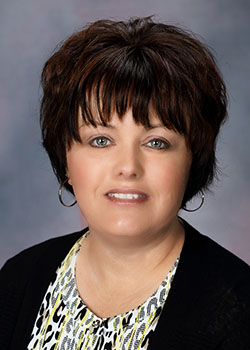
Janette Meis, Hays, recently joined the Fort Hays State University Alumni Association as the program coordinator for alumni and chapter programs. Meis will work with existing chapters to increase involvement and assist with the expansion of the FHSU alumni chapter systems through the United States and beyond.
Meis, a 1993 FHSU graduate, will also develop programs to better engage alumni and increase their involvement with the university, including working with current students.
Prior to joining the FHSU Alumni Association staff, Meis worked as the state director for the Kansas Court Appointed Special Advocate programs for more than 15 years, providing technical assistance, training and support to the 23 CASA programs in Kansas. She has experience with project management, communication, grant writing, public relations and program development.
Meis is a second generation Tiger, following her mother, Janice Dreiling, a 1967 graduate. She lives in Hays with her husband, Tom, a 1993 graduate, and two children, Nick and Zach.
FHSU has more than 61,000 alumni living throughout the United States and 73 foreign counties. For more information, contact the Alumni Association, (785) 628-4430 or toll free at 1-888-351-3591, email [email protected] or visit www.goforthaysstate.com.
Los Angeles-based actor David Dastmalchian returned to Kansas with a message he said should transcend politics: We can’t give up on people who struggle with substance abuse and mental illness.
Actor David Dastmalchian spoke Friday outside the Statehouse at a rally highlighting mental health and addiction treatment options in Kansas. SUSIE FAGAN HEARTLAND HEALTH MONITOR
Dastmalchian is now a budding Hollywood star, with roles in blockbusters like 2008’s “The Dark Knight” and 2015’s “Ant-Man.” But 15 years ago he was a self-proclaimed “full-time heroin addict” living out of a car near Shawnee Mission Parkway.
Dastmalchian headlined the Kansas Recovery Rally on Friday outside the Statehouse, speaking about his experience getting clean and turning his life around.
“You never give up on the men and women who are suffering from addiction and mental health (problems),” he said. “Within each of them is a human being just like me.”
The rally was sponsored by the Kansas Department for Aging and Disability Services and various mental health and addiction treatment service providers.
‘More people in need’
Kansas has had one of the lowest rates of drug overdose deaths in the nation in recent years, but abuse of prescription painkillers and methamphetamines are on the rise in the state.
Dulcinea Rakestraw, former president of the Kansas Association of Addiction Professionals, said there are a variety of substance abuse treatment programs in Kansas, funded through a mix of local, state, federal and charitable dollars.
State-funded treatment programs have been largely unable to take on more patients lately, she said.
“The funds for all of those have been very stagnant over the years,” Rakestraw said. “We’ve been very lucky to not be a part of recent budgetary cuts, but certainly rates as well as services have not increased.”
When lawmakers approved state-run casinos in 2007, they also established a Problem Gaming and Addiction Fund that funnels millions of dollars from the casinos to treatment programs every year.
Programs to treat addictions other than gambling were made eligible for money from the fund because research showed that problems like substance abuse increased in areas that added gaming.
But Rakestraw said the casino money — instead of being used to supplement state general fund treatment dollars — has been used as a substitute for those funds, leaving the overall amount available for treating substance abuse largely unchanged.
Friday’s rally on the south side of the Statehouse was sponsored by the Kansas Department for Aging and Disability Services and various mental health and addiction treatment service providers. CREDIT SUSIE FAGAN / HEARTLAND HEALTH MONITOR
“There continue to be more people in need of treatment than we’re able to treat,” she said.
The result, she said, is that Kansans who struggle with substance abuse ultimately are costing taxpayers more because of preventable stays in hospitals and prisons. A legislative post audit cost-benefit analysis on drug treatment programs is expected to be released soon.
The rally is important, Rakestraw said, because it renews the commitment to helping more Kansans emulate Dastmalchian’s successful turnaround.
“The important message is that recovery is possible, that treatment works,” she said. “People are able to recover and are able to be contributing members of society that are able to make a big difference. When we put dollars into treatment, then we’re able to have individuals on the other side that are able to contribute to society instead of needing services.”
Quieting the voice
Dastmalchian made that journey over the course of years.
He grew up in Johnson County, in what he described as a loving, solidly middle-class family that kept a history of depression and substance abuse well-hidden.
By his early teens he was experimenting with alcohol and found that getting drunk could quiet a persistent voice in his head telling him “You are alone” — a voice he later recognized as a symptom of depression. By high school he was regularly abusing alcohol and marijuana but still managed to be a good student, a skilled athlete and a promising member of local theater productions.
He credited his teachers and coaches with helping him excel and encouraging him to pursue a career in acting that seemed out of reach for a kid from Kansas.
Dastmalchian earned a scholarship to a prestigious theater school at DePaul University in Chicago. He excelled there as well, even as the voice in his head kept “tapping” at him and he turned to a new drug to quiet it: heroin.
“For certain people, one taste is all it takes,” he said of opiates. “And that’s all it took for me.”
Dastmalchian graduated from DePaul and had opportunities to audition for television roles. But within six months he was living in his car back in Kansas, scamming relatives for money to get his next fix, his life revolving around heroin.
After his family cut him off financially, he spent years shuttling between Kansas City and Chicago, strung out and not working. He walked into a church looking for things to steal and wound up swiping wedding gifts from a couple getting married. He contemplated using a dirty needle to mug a young mother in the park.
All the while, the voice in his head got louder and more persistent.
So one day he took all the heroin he had and tried to overdose. When that didn’t kill him, he went into the bathtub and cut himself.
At that point Dastmalchian had what he calls “a spiritual awakening” in which he saw all of the country “in the palm of God’s hand.”
The vision led him to seek help, starting a years-long recovery process that included stays in a state hospital in Illinois and a treatment facility in Atchison and several relapses.
“My family never gave up on me,” Dastmalchian said. “Nor did all these strangers in the public health hospital I was at. Nor the law enforcement officers who had to transfer me to all these places. All these people didn’t give up on me.”
After he spent five years clean — working as a telemarketer and sweeping out movie theaters — Dastmalchian got back into acting when a friend offered him a part in a theater production.
His resurrected career took off from there.
Dastmalchian’s recovery included writing a screenplay for a movie called “Animals” that mirrored his experience with drug abuse. It was released last year. While doing media interviews for the movie, he went public for the first time about his addiction and recovery.
Before going into the crowd Friday to offer hugs for others going through similar journeys, Dastmalchian talked about the triumphant feeling of getting his life back, which was crystallized in a single moment last year.
His son was newly born. He had just accepted the award for Courage in Storytelling at the 2014 SXSW Film Festival for writing “Animals.” And then he got the call offering him a substantial role in “Ant-Man.”
“This is an extreme example,” Dastmalchian said. “This is an extreme, incredible life moment. But I really feel it’s that incredible for everyone who can get to that place.”
Andy Marso is a reporter for KHI News Service in Topeka, a partner in the Heartland Health Monitor team.
TOPEKA, Kan. (AP) — Gov. Sam Brownback says if Kansas ever faces a zombie apocalypse, he might use a farm combine to mow them down.
Brownback had a short Statehouse ceremony Wednesday to sign a proclamation designating October as “Zombie Preparedness Month.” He told reporters that he and youngest son Mark, a high school student, have discussed how best to dispatch the walking dead.
The governor’s proclamation has the serious purpose of encouraging Kansas residents to prepare themselves for natural disasters and other emergencies.
His event with emergency preparedness officials included an appearance by 15-year-old Valley Falls student Faith Tucking portraying a zombie.
As for destroying zombies, Brownback said he and his son have discussed going to his parents’ farm in Linn County and firing up a combine, assuming they had enough fuel.
TOPEKA, Kan. (AP) — An oral history archive of Republican and Democratic legislative leaders is in the works in Kansas.
The Topeka Capital-Journal reports that former Kansas Sen. Robert Storey is among 10 former Kansas legislators to participate in a pilot project. Storey, now a Topeka attorney, shared his thoughts about the current batch of lawmakers Tuesday at the Capitol. He says they appear to lack the dedication to dig deeply into issues.
Also participating is Rochelle Chronister, the first woman to chair the House budget committee and who was assistant majority leader for three years. She says compromise “is not a dirty word” and “is the way you accomplish things for people.”
The Kansas Humanities Council and Shawnee County Historical Society are sponsoring the project. Interviews are recorded, transcribed and archived.
TOPEKA–Kansas has been awarded a $5,597,365 grant from the U.S. Department of Labor as part of the third round of Workforce Innovation Fund awards. The Kansas Department of Commerce will oversee the implementation of the grant to provide job seekers with seamless access to multiple workforce development programs. The grant will expand and enhance strong workforce development partner collaboration and improve the employment outcomes of job seekers with multiple barriers to employment. In addition, funding will integrate workforce service delivery.
“The Workforce Innovation Fund grant will allow us to reach more job seekers efficiently and help them transition into training and employment,” Kansas Commerce Interim Secretary Michael Copeland said in a news release. “We’re looking forward to collaborating with our partners to implement this grant and help more Kansans find rewarding career opportunities.”
The Department will join forces with the Kansas Department for Children and Families, the Kansas Board of Regents, Wagner-Peyser partners and the Registered Apprenticeship program to develop and implement a comprehensive staff training program to be delivered by Workforce Innovation and Opportunity Act (WIOA) Core Partners to all partner staff members who provide workforce development services.
The partners will also work to recruit job seekers with multiple barriers to employment, assess them for training participation and place them in on-the-job training. Commerce and WIOA Core Partners will implement a web-based intake and registration portal that will provide job seekers with convenient access to services from providers of all WIOA Core programs. The portal, which will be called START HERE, will gather intake and initial program eligibility data and will also connect users with performance data of the programs for which they may be eligible.
WASHINGTON – Congressman Tim Huelskamp (KS-01) spent many days enjoying the Kansas State Fair in Hutchinson. His staff oversaw a Congressional booth throughout the entire Fair. As part of the outreach, constituents were surveyed on four questions. The results closely match the sentiment among the American people that culminated in Speaker John Boehner announcing his resignation,
Huelskamp issued the following statement:
“These survey results match what dozens and dozens of Kansans told me at the Fair: they are frustrated with Washington insiders, whether it be Republican leaders, President Obama or his bureaucrats. Rest assured, I will continue to represent the will of Kansans over the desires of the Washington political elites.”
Survey Results
Should John Boehner be replaced as Speaker of the House?
Total Responses – 328
· Yes – 285 (86.9%)
· No – 43 (13.1)
Should Tim continue to vote to repeal Obamacare?
Total Responses – 341
· Yes – 299 (87.7%)
· No – 42 (12.3%)
Do you think Tim should vote to reduce the EPA budget?
Total Responses – 332
· Yes – 288 (86.7%)
· No – 44 (13.3%)
Should Planned Parenthood receive taxpayer dollars?
Total Responses – 338
· Yes – 49 (14.5%)
· No – 289 (85.5%)
October is filled with fun and festivities in Hays. Convention and Visitors Bureau Director Rick Rekoske has some of the highlights, plus Tuesday Trivia for October. Deadline to enter your guess is Friday, Oct. 2, by noon. The winner will receive Hays-branded promotional items and Hays Area Chamber of Commerce Chamber Cheques.
A complete list of activities in Hays is available on the CVB website, www.haysusa.net.
MANHATTAN – Law enforcement authorities in Riley County are investigating a reported aggravated kidnapping.
Police say it took place in the 300 block of North Sunset Avenue in Manhattan on just before 3 p.m. on Tuesday.
Police say they were informed of an incident in the 300 Block of North Sunset Avenue in Manhattan just before 3p.m. on Tuesday involving a 16-year-old male victim.
He was taken in a vehicle and later dropped off near the Sunset Zoo by several unknown males.
The suspects also took the victim’s backpack containing cologne and various binders, according to police.
Charles “Cy” Moyer admits he doesn’t have much cause to use an umbrella very often, and he doesn’t mind if he has to bring one along on his trip to Hays on Saturday.
Moyer, a longtime trustee of the Dane G. Hansen Foundation in Logan, will be on hand for a historic groundbreaking on the Fort Hays State University campus.
As one of the activities for Homecoming 2015, FHSU will break ground on a new scholarship hall funded mostly by the Hansen Foundation. The FHSU family, Hays community and general public are all invited to the ceremony, set for 11 a.m. Saturday just north of Wiest Hall.
Construction on the Dane G. Hansen Scholarship Hall is scheduled to begin in October, with completion planned in time for the start of the 2016 fall semester.
First things first, though. Rain is predicted for the Hays area Saturday. But rain or shine, there is going to be a groundbreaking ceremony.
“I haven’t used an umbrella in so long,” said Moyer, retired president of the First National Bank and Trust in Phillipsburg and co-chair of the Dane G. Hansen Board of Trustees. “I carry one in my car. I guess I’ll have to dig it out.”
Moyer and others attending the ceremony won’t have to worry about getting too wet if it’s raining because an alternate location has been set. In case of bad weather, the ceremony will be held in Heather Hall, located across the street north of the Wiest Hall parking lot.
Moyer will speak at the ceremony, along with FHSU President Mirta M. Martin, Student Government Association President Ulises Gonzalez and Mark Bannister, dean of the College of Business and Entrepreneurship.
Groundbreakings can sometimes be somewhat pedestrian. But this one is of special historical significance.
The Hansen Foundation, celebrating its 50th anniversary this year, is well known for its philanthropic efforts toward the betterment of communities and has been especially generous toward educational endeavors.
Since 1965, the foundation has awarded more than $15 million in scholarships to students in the 26 counties in which Hansen conducted his road and bridge construction and oil business.
Moyer said the foundation has partnered with other schools and groups for remodeling projects on buildings in the past, but this will mark the first scholarship hall the foundation has been a part of. The $3.95 million building will be funded by the $3 million donation from the Hansen Foundation and other private donations.
“This is definitely a historic event for Fort Hays State University, to have the first scholarship hall at our university,” Martin said. “We are humbled by the support of the Dane G. Hansen Foundation, which has embraced the new-beginnings vision of our university.”
The 12,775-square-foot, three-story building will provide individual bedrooms for 32 entrepreneur-minded students and a resident assistant.
“We welcome students ranging from agriculture to zoology and every major in between alphabetically to apply,” Bannister said.
Bannister said the Hansen Foundation “has been following our entrepreneurship curriculum development and is interested in the many entrepreneurship extracurricular activities we are offering students.”
“Both the Hansen Foundation and Fort Hays State are aware how important entrepreneurship is to the future of northwest Kansas, to the state of Kansas and to America,” Bannister said. “For northwest Kansas to have population growth and economic opportunities, we need to prepare students who are capable of starting their own businesses.”
Moyer agreed.
“We have found that most of the young people who graduate from Fort Hays State have a higher percentage to go back to northwest Kansas,” Moyer said. “So we wanted to do something to spur on the economy of northwest Kansas in the 26 counties which we do most of our granting in.”
Bannister chaired the committee that drew up the proposal that was presented to the Hansen Foundation, whose mission is “to provide opportunities for the people of northwest Kansas to enjoy the highest possible quality of life.”
One of the opportunities on the list is education. The foundation wants a proposal to show how it will “enhance the learning environment and expand opportunities of the public school system.”
Bannister thinks the new scholarship hall at FHSU fits that description to a “T.”
“Our expectations are that this will help us attract students who are very interested in entrepreneurship, who will likely be highly successful in their careers,” Bannister said.
Not surprisingly, Bannister — a graduate of FHSU himself — is excited about the opportunities such a living arrangement will offer students.
“My goal,” Bannister said, “is that with this facility we will become one of the top entrepreneurship universities in the nation.”
GREAT BEND -The trial of a central Kansas man charged with two counts of involuntary manslaughter after his trailer detached on 10th Street in Great Bend and killed a Reno County couple has been continued for a later date.
The trial for William Baker, Great Bend, on Wednesday morning at the Barton County Courthouse was postponed.
Baker is charged with two counts of involuntary manslaughter and four traffic infractions.
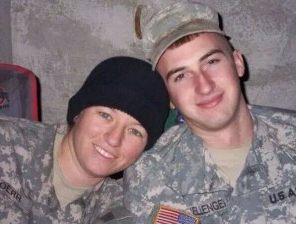
Prosecutors say 27-year-old Reno County Jail Deputy Shawn Schellenger and his 33-year-old wife, Danielle, died last August when a trailer came loose from a truck Baker was driving.
The trailer, hauling a lawn mower, hit a motorcycle the Schellengers were riding just outside Great Bend. They later died at a Wichita hospital.
Most Kansans who work for the state are facing increases in their insurance premiums next year, especially if they have their spouse and children on the state employee health plan. As the open enrollment period for 2016 nears, information about employee options published online this week showed hikes of 23 percent and 19 percent for families in the state’s two low-deductible plans and 166 percent and 152 percent for families in the two high-deductible plans.
Laura Calhoun, who works in corrections, said the premium increases will be especially hard to absorb for state workers who haven’t seen many pay raises in the last decade.
Calhoun said she has cut her cable television and carpools to work to save money, but the cost of necessities like water and electricity continues to rise, along with the health care premiums.
“That’s a large increase for a lot of us,” Calhoun said. “How are we going to fit that into (personal) budgets that don’t increase? The numbers don’t lie: I’m basically taking a pay cut to stay working for the state.” The State Employee Health Plan covers workers at public colleges and universities as well as those in state government.
Eligible employees may choose between plans from Aetna and Blue Cross and Blue Shield of Kansas.
Both companies offer a “Plan A” with a lower deductible and a “Plan C” that combines a higher deductible with a health savings account. All state employee plans are administered under the Kansas Department of Health and Environment.
According to a KDHE presentation posted online, in past years the state employee health plan had used reserve funds to reduce cost increases for members.
But the reserves are approaching their target floor of approximately $59 million, so increased expenses now must be paid through new plan revenue.
Sara Belfry, a spokesperson for KDHE, said in an email that the premium increases were the result of higher premiums to the state and projected growth rates in health care costs.
“The Health Care Commission and its actuary believe reserve funding now is at an appropriate level to maintain the financial stability of the health plan,” Belfry said.
“But the excess funds that had been used to protect state employees from growing costs associated with health are no longer available, resulting in the premium rate increases in the current plan year.”
Expenses rose more than expected last year, due to more demand for health care and higher costs. The major cost drivers included increased use of emergency rooms, inpatient care and physician services, and higher prescription drug costs. Sky-high price tags for new prescription drugs, especially those that treat hepatitis C, are contributing to premium increases across the health insurance industry.
Premium costs for state employees who enroll only themselves, themselves and their children or themselves and their spouse are all increasing some or staying the same in 2016. But the largest increases will be for family plans that cover the state employee, his or her spouse and their children.
Aetna’s low-deductible family plan will go from $212.93 per pay period (every two weeks) to $261.56. The low-deductible plan from BCBS of Kansas will go from $192.15 per pay period to $229.50. The increases are even more dramatic in the high-deductible family plans, with Aetna’s plan going from $49.67 to $132.25 and the BCBS of Kansas plan going from $45.73 to $115.25.
Calhoun said she understands health care costs may be rising but doesn’t think it justifies the increased burden on state workers. She said she does her best to keep her medical costs low, but she and others who work in 24-hour residential facilities like state prisons and hospitals are exposed to a lot of germs and have shifts that sometimes mean they must seek care in emergency rooms because nothing else is open.
Andy Marso is a reporter for Heartland Health Monitor, a news collaboration focusing on health issues and their impact in Missouri and Kansas.
OtherWords columnist Jim Hightower is a radio commentator, writer and public speaker.
In 1992, independent candidate Ross Perot chose Admiral James Stockdale, a complete unknown, as his presidential running mate. In his first debate, the VP candidate began by asking two good questions: “Who am I? Why am I here?”
Carly Fiorina, the Republican presidential contender who’s surged in recent polls of GOP primary voters, ought to ask those questions, too. For now, she’s positioning herself as a no-nonsense, successful corporate chieftain who can run government with business-like efficiency.
In a recent debate, Fiorina rattled off a list of her accomplishments as CEO of tech conglomerate Hewlett-Packard: “We doubled the size of the company,” “quadrupled its top-line growth rate,” “quadrupled its cash flow,” and “tripled its rate of innovations,” she declared in PowerPoint style.
Brandishing statistics, however, can be a sophisticated way of lying.
In fact, the growth Fiorina bragged about was mostly the result of her buying Compaq, another computer giant, in a merger that proved to be disastrous. Hewlett-Packard’s profits declined 40 percent in her six years, its stock price plummeted, and she cut loose 30,000 workers — even saying publicly that their jobs should be shipped overseas. Finally, she was fired.
Before we accept her claim that “running government like a business” would be a positive, note that the narcissistic corporate culture richly rewarded Fiorina for failure. Yes, she was fired, but unlike the thousands of HP employees she dumped, a golden parachute let her land in luxury: Counting severance pay, stock options, and pension, she pocketed $42 million to go away.
But, here she comes again. Lacking even one iota of humility, this personification of corporate greed and economic inequality is now throwing out a blizzard of lies to hide who she is — and to bamboozle Republicans into thinking she belongs in the White House.
OtherWords.org columnist Jim Hightower is a radio commentator, writer and public speaker.