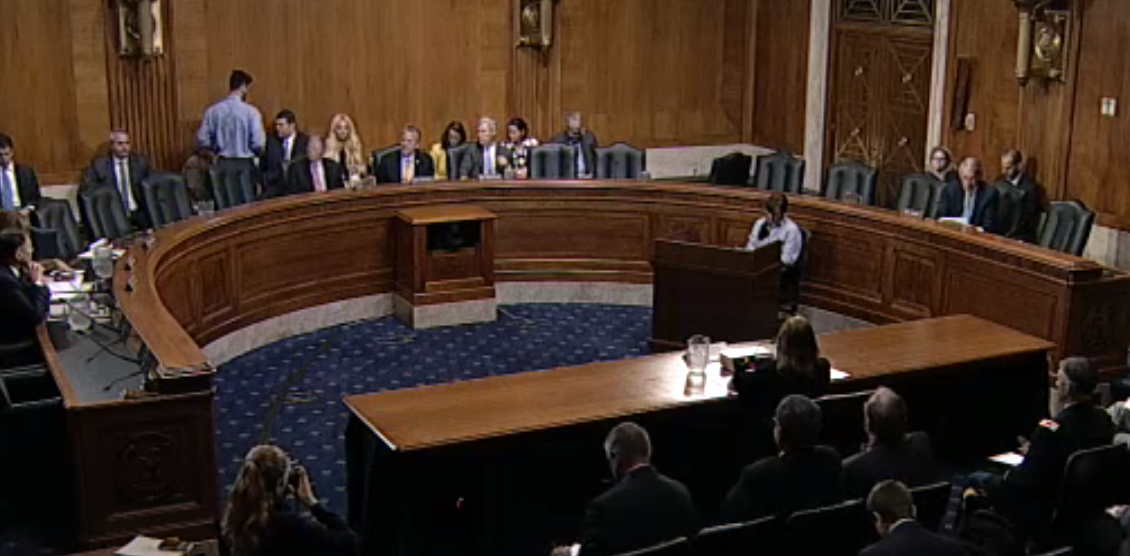
WASHINGTON – U.S. Senator Jerry Moran (R-Kan.) issued the following statement after the U.S. Senate Committee on Environment and Public Works held a hearing this week to review the Army Corps of Engineers’ participation in the Environmental Protection Agency’s (EPA) development of the new regulatory definition of “waters of the United States” (WOTUS):
“It is disturbing to hear that input from the Army Corps of Engineers was ignored by the Obama Administration in their latest regulation to expand the definition of WOTUS,” Sen. Moran said. “This news comes along with the EPA’s dismissal of the concerns voiced by Americans across the country, and selective enforcement of a U.S. District Court’s order to halt implementation of the rule. Never has the disconnect between Washington and Kansas been more evident than with this attempt by the EPA to run roughshod over whoever and whatever obstacle stands in its way. Unfortunately, this rule will bring millions of privately held acres under EPA’s regulatory control, creating burdens and costs for producers that threaten their very livelihood.”
EPA overlooked qualified opinions that may have slowed down or derailed the implementation of the rule despite internal memos showing that career experts at the Army Corps of Engineers voiced concerns. The concerns include a lack of evidence by science or law and go far beyond the legal jurisdiction of the Clean Water Act.
As a member of the Senate Appropriations Committee, Sen. Moran supported the inclusion of a provision in the FY2016 Interior and Environment Appropriations Bill to block funding for the implementation of the WOTUS rule. Sen. Moran is also a sponsor of the Federal Water Quality Protection Act, a bill that would stop the implementation of the WOTUS regulations and force the agency to redraft it in a clear, legal manner that truly protects our nation’s waters without infringing on private property rights.
JACKSON COUNTY- A Kansas woman died in an accident just after 8a.m. on Friday in Jackson County.
The Kansas Highway Patrol reported a 2005 Chevy Astro Van driven by Phyllis S. Martin, 59, Berryton, was northbound on U.S. 75 at 134th Road. The van struck the left rear corner of a semi’s trailer that was westbound on 134th Road.
The Volvo semi had attempted to cross the highway and the trailer was still blocking the inside and half of the outside lane of northbound U.S. 75 at the time of the accident.
Martin was pronounced dead at the scene and transported to Frontier Forensics.
The semi driver Gooderl, Roger W. Gooderl, 70, Hoyt, was not injured.
Both drivers were properly restrained at the time of the accident, according to the KHP. The accident caused KDOT to close the intersection for a couple of hours on Friday morning.
———————-
JACKSON COUNTY – First responders are on the scene of a fatality, multi-vehicle crash on U.S. 75 at 134th Road in Jackson County, according to the Kansas Department of Transportation.
The crash involving a semi and a van closed the intersection. All northbound U.S. 75 traffic is detoured to the southbound lanes.
KDOT hopes to have lanes reopened before noon on Friday.
Check Hays Post for additional details as they become available.
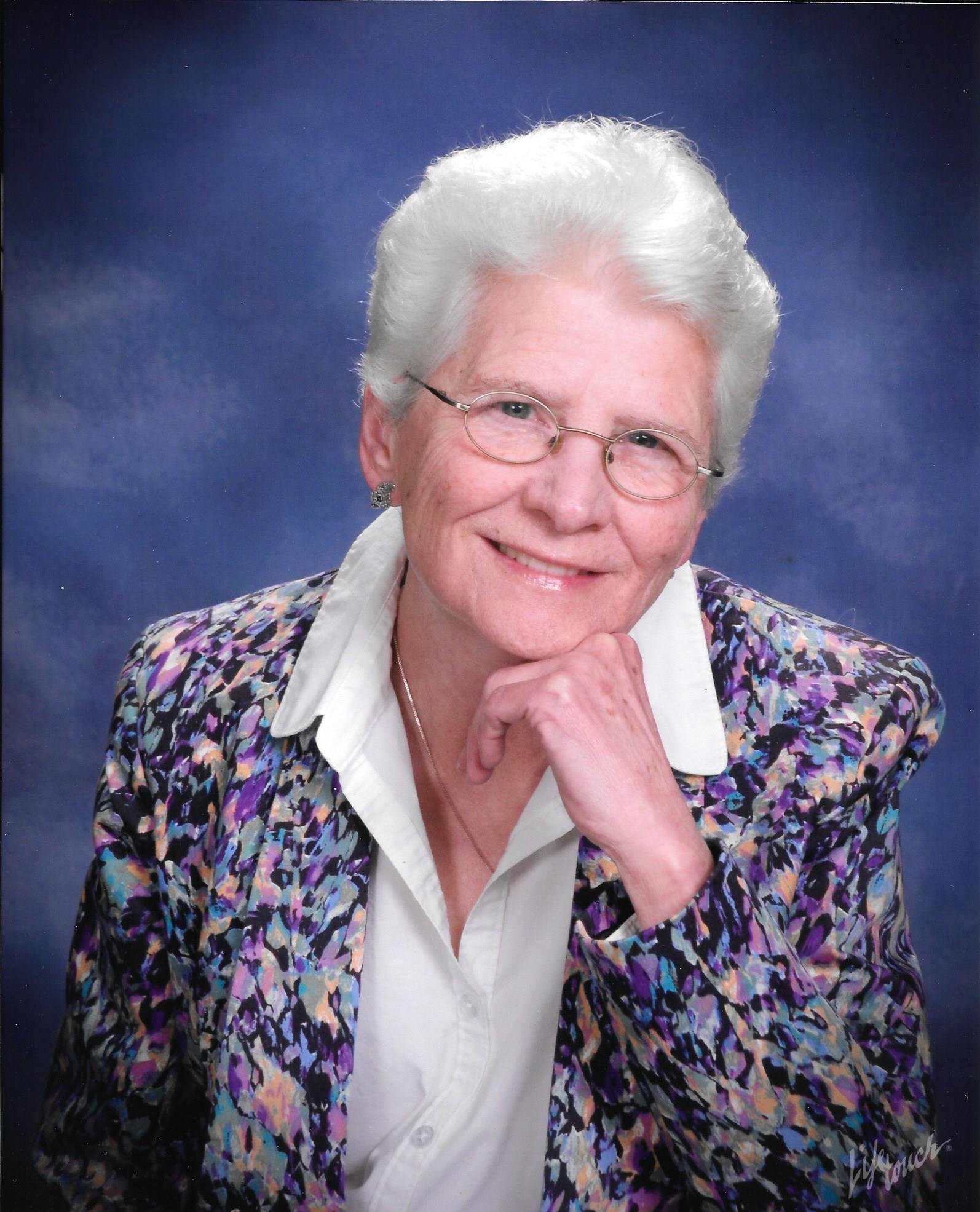
Mary Kay Stenger, 70, Topeka, died Friday, September 25, 2015 at her home.
She was born January 5, 1945 the daughter of Paul and Margie (Wolf) Stenger. She was a school psychologist. Prior, she worked in the juvenile justice field and was a pioneer in the studies of linking delinquency and learning disabilities.
Mary Kay retired from Seaman USD 345. She loved her family, her faith, and her friends.
She is survived by her brothers and sisters, Paul Stenger and wife Anne of Arlington, VA, Vicki Willenborg and spouse Karen Hyland of Kansas City, MO, Mike Stenger and Pat Stenger of Topeka, Steve Stenger of Holton, Kansas, David Stenger of Topeka, and Suellyn Stenger of Hays, many nieces, nephews, great nieces and nephews, and many friends.
She was preceded in death by her parents, and a brother, Donnie Stenger.
Her body was donated to The University of Kansas Medical Center.
Mary Kay’s life will be celebrated with Mass of Resurrection at 11:00 am on Saturday, October 10, 2015 at Mater Dei (Holy Name) Church, 1114 SW 10th, Topeka. Interment will be at a later date in St. Joseph Cemetery, Hays, Kansas. Memorials are suggested to the Mater Dei parish or to family wishes.
Condolences may be left for the family at www.haysmemorial.com.
Once upon a time Kansas was a national leader in public health. Credit largely goes to Dr. Samuel Crumbine, who early in the 20th century created and led what is now the Kansas Department of Health and Environment.
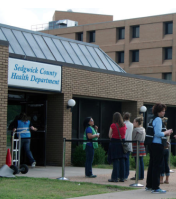
A debate over the size and role of government was at the center of a recent dispute over funding for the Sedgwick County Health Department. Credit -ABIGAIL WILSON KMUW
He convinced Kansans to stop spitting on sidewalks. And he pushed state lawmakers to pass food purity laws and to ban the public drinking cup.
But times have changed.
While it may be an exaggeration to say that public health is now under attack in Kansas, it’s fair to say there is growing concern among public health advocates about what recent budget cuts in the state’s largest city and county may portend.
Social and fiscal conservatives now control the five-member Sedgwick County Commission in Wichita. And Chairman Richard Ranzau says the new majority is attempting to restore what he calls “core American values” to county government.
“I would argue that the country, state and county have moved so far left we don’t recognize core American values,” Ranzau said in a recent speech to Republicans at the Wichita Pachyderm Club. “I’m talking about things like fiscal responsibility, individual freedom, property rights, individual responsibility and limited government.”
An attempt by the commission’s conservative majority to cut approximately $3 million from the county’s 2016 budget was an indication of their determination to restore those values, Ranzau said.
“I think we’re starting to do that in the county, and some people don’t like it and some do, and we’ll continue to have that debate,” he said.
Holding the line
The proposed budget cuts were aimed mostly at arts, culture and public health programs. The Division of Health and Human Services and the Sedgwick County Health Department were targeted for nearly $1 million in cuts.
Conservatives argued that it was more important to fund infrastructure improvements without incurring additional debt and to hold the line on property taxes than to continue to support nonessential programs.
In response to a coalition that sprung up to oppose the cuts, commissioners agreed to maintain some funding for health programs that in their estimation directly benefited people. They restored $175,000 of the $200,000 requested by Project Access, a program that helps connect low-income residents to health care services. And they provided $91,000 for a health navigator program.
But when the final vote was taken in late August, the commission’s conservative majority held the line on most of the cuts to public health programs, including initiatives aimed at improving the county’s immunization and infant mortality rates. Also cut was $48,634 earmarked for a county health assessment. The assessment and the data collected for it are used by many non-governmental groups to seek grants. It is also used to track progress toward goals in a Community Health Improvement Plan.
A conservative majority on the five-member Sedgwick County Commission attempted to cut about $3 million from the county’s 2016 budget, aimed mostly at arts, culture and public health programs. CREDIT SEAN SANDEFUR / KMUW
Commissioner Tim Norton opposed the cuts, fearing they could jeopardize the health department’s recent accreditation by the national Public Health Accreditation Board. The Sedgwick County department is one of three in Kansas to achieve the quality designation, joining the Johnson County Department of Health and Environment and the Lawrence-Douglas County Health Department.
“I’m just hoping that the dominos won’t fall again next year and that we start dismantling our public health system in Sedgwick County,” Norton said.
Jeff Willett, vice president for programs at the Kansas Health Foundation in Wichita, helped lead the opposition to the public health cuts. It was among the first battles taken on by the foundation since obtaining a change in tax status that allows it to lobby on policy issues.
“Communities that have strong public health systems are going to be healthier communities, they’re going to be more vibrant communities,” Willett said. “So, as we look ahead, I think it’s important to know that we have to do a better job of making the case for public health.”
Role of public health grows
Since the days of Crumbine, public health has focused on preventing communicable diseases.
Local public health departments still focus on preventing communicable disease. They’re still where most Kansas children are immunized, for instance. But more and more they’re also working to prevent chronic conditions, such as Type 2 diabetes.
The number of Kansans with the obesity-related disease has exploded in the last decade. Treatment costs now exceed $1.5 billion a year, according to KDHE.
Local health departments are at the forefront of efforts to reduce that cost and the suffering associated with the disease by helping to educate Kansans about how to prevent it through healthier eating and exercise.
But it is precisely those kind of “collective” initiatives that Ranzau objects to. In his address to the Pachyderm Club, Ranzau acknowledged being overweight. But he said it’s up to him alone — not the government — to do something about it.
“There is no collective solution to my health problems, either I do it or nobody will,” he said. “And we need to stop acting like there are. We need to have the courage to stand up and say, ‘It’s about the individual.’”
Government involvement, he said, leads to overreaching initiatives like the one launched by former New York City Mayor Michael Bloomberg to limit soda servings, Ranzau said. He also criticized a University of Kansas professor, whom he didn’t name, for remarks she made at a meeting he attended. According to Ranzau, the professor said the problems of obesity and high blood pressure “were all society’s fault.”
“She said we need to think less about the individual, more about the collective,” Ranzau said, adding that the professor in question had a degree in community psychology.
“Think about that. Do communities have psychologies?” he said to laughter. “No. How can you get a degree in community psychology and the taxpayers are funding that stuff. It’s absurd.”
Ranzau and other conservative commissioners also were highly critical of an analysis done by the Kansas Health Institute that said the health cuts — as originally proposed — could contribute to as many as 65 preventable deaths per year. The analysis localized the results of a national, peer-reviewed study published in the journal Health Affairs that linked decreases in public health spending to increases in preventable deaths.
Influences on behavior
Dan Partridge, director of the Lawrence-Douglas County Health Department, said he understands Ranzau’s concerns about government overreach. But he said the research is clearly on the other side of the argument. Interventions must target both individuals and entire populations if their goal is to reduce the incidence of both communicable and chronic diseases.
“When you look at the research, you cannot deny that the things that public health does impact our health,” Partridge said. “Individual responsibility and individual freedom alone is not going to cut it. People need help.”
The behaviors that affect our health are heavily influenced by powerful cultural and social forces, he said. People often need help to make healthy choices. That is especially true, he said, for people with limited education and those living in poverty.
“We can’t just create this clean intellectual divide and wash our hands of our neighbors’ health outcomes, because the reality is the data says they’re interconnected,” Partridge said.
To emphasize his point that social and environmental factors matter, Partridge cited a 2012 study that focused on people who moved from high-poverty areas to more affluent neighborhoods but did nothing else to improve their health.
Just moving, Partridge said, “added 10 to 15 years onto their lives.”
Partridge and other public health officials fear that without an all-out education effort, more health departments could face cuts as state budget shortfalls and shrinking tax bases conspire to put more pressure on county budgets.
Editor’s note: The Kansas Health Institute is the parent organization of KHI News Service, which is editorially independent.
Jim McLean is executive editor of KHI News Service in Topeka, a partner in the Heartland Health Monitor team.
BUNKER HILL–Smoky Hills Public Television is recognizing three individuals for their efforts to keep kids in school and on the path to graduation.
“Stories of Champions” is a national campaign supported by the Corporation for Public Broadcasting. American Graduate Champions are influencing young people in our communities across the country each and every day.
Wendy Walker, Oakley (Photo courtesy SHPTV)
Smoky Hills Public Television requested nominations for those meeting the “Champions” criteria in June. From those nominations, three were selected; Kipp Keffel of Salina, Wendy Walker of Oakley and Jean Cavanaugh of Great Bend.
Jean Cavanaugh, Great Bend (Photo courtesy SHPTV)
Watch the stories of how these three are making an impact on Kansas youth during American Graduation Day on Saturday, October 3, beginning at 10 a.m. The local stories also are available to view at smokyhillstv.org.
SALINA-Law enforcement authorities in Saline County are investigating a case of sexual exploitation of a child.
Austin Cart, 21, Salina, allegedly exchanged sexually explicit pictures and messages with a 17-year-old girl between April 29 and June 18, over a social media site on the Internet, according to Salina Police Captain Chris Trocheck.
Cart was arrested on requested charges of sexual exploitation of a child, and promoting obscenity to a minor.
He was booked into the Saline County Jail Thursday evening.
MINNEAPOLIS (AP) — Ben Zobrist put a major dent in Minnesota’s postseason bid with an RBI double in the eighth inning against struggling All-Star Glen Perkins, and the Kansas City Royals topped the Twins 3-1 on Friday night.
Perkins, hampered by neck and back trouble that led to him losing the closer role, spoiled a stellar start by Ervin Santana (7-5) with a first-pitch fastball that Zobrist drove off the wall in right-center field. Zobrist then scored when right fielder Torii Hunter fumbled a single by Mike Moustakas.
The Twins entered the night trailing Houston by one game and tied with Los Angeles in the AL wild-card race. The Angels beat Texas, and the Astros played later at Arizona.
Chris Young gave the defending AL champion Royals another reason to consider him for the postseason rotation, giving up four hits in 6 1-3 innings.
Louis Coleman (1-0), Ryan Madson and Wade Davis wrapped up the win, with Davis notching his 16th save in 17 attempts.
NEW YORK (AP) – Jose Cuervo tequila is paying tribute to the Rolling Stones 1972 North American tour with a pair of commemorative bottles.
That tour was known as the “Tequila Sunrise” tour because the Stones had just discovered the drink in a San Francisco bar.
Both commemorative bottles feature the Rolling Stones tongue-and-lips logo.
The Rolling Stones Jose Cuervo Especial version sells for $17, while the Ultra Premium Rolling Stones Reserva de la Familia Collectors Edition goes for $150.
TOPEKA, Kan. (AP) — Hundreds of state workers have been shuffled into news positions at the Kansas Department of Health and Environment and other agencies.
The Topeka Capital-Journal reports that documents show Gov. Sam Brownback ordered the moves based on a study the effected workers haven’t seen. Kansas Organization of State Employees director Rebecca Proctor says that without seeing the study, workers are left in the dark.
An executive directive signed last week by Brownback abolishes 18 job classifications and replaces them with 16 new classifications. The positions affected range from environmental technicians to geologists and program services managers.
KDHE spokeswoman Sara Belfry says the changes were made in response to a study by the Department of Administration over the past two years to determine whether changes to job classifications were necessary.
TOPEKA – A series of public forums to solicit feedback from stakeholders on the requirements and procedures for batterer Intervention program certification begins today, Kansas Attorney General Derek Schmidt said.
The Batterer Intervention Program Certification Act was passed by the Legislature in 2012, and gave the attorney general the authority to certify and inspect batterer intervention programs in Kansas. The act also directed the attorney general’s office to develop tools and methodologies for the domestic violence offender assessment. The office is currently reviewing the standards and process for certifying batterer intervention programs, and is seeking feedback at five regional meetings.
“After operating under this new law for three years, we’re asking stakeholders for feedback,” Schmidt said. “As we mark Domestic Violence Awareness Month in October, we look forward to hearing how we can improve these programs and continue working to reduce domestic violence in Kansas.”
The western Kansas public forum will be from 10 a.m. to noon Tuesday, Oct. 27, at the Kansas Highway Patrol Center, 1821 Frontier Road, Hays.
More information on the batterer intervention program and the upcoming forums can be found on the attorney general’s website at www.ag.ks.gov/bip.
In early September, the governor’s communications office issued a “Fellow Kansans” essay renewing the administration’s vigorous claim that everything associated with providing funding to the state’s K-12 public education system must count as money that affects children in the classrooms.
Dr. Mark Peterson teaches political science at the college level in Topeka.
Instead, the essayist complains, $456 million of the $3.2 billion the state is currently funding for K-12 must go for debt service support, capital outlays and KPERS funding. These expenditures allegedly demonstrate the badness of the school funding system the governor and the legislature replaced with block grants this spring. A state supreme court appeal is pending that will determine if the block grant system will be implemented. In the time, before that decision is reached, it’s worthwhile to examine the essay’s claims.
They don’t elicit an outright shout of “Liar, liar, pants on fire,” but perhaps the famous Reagan versus Carter quip, “There you go again” works.
Currently Kansas law requires assistance to low property valuation districts with interest and principal payments (debt service) on their school bond issues. There’s a good chance most Republican legislators believe this probably only encourages voters in those poorer districts to think their kids deserve facilities that at least resemble what wealthier districts can afford.
Nevertheless, debt service support, like the true operating support money known as Base State Aid per Pupil, helps equalize resources for districts with low property tax resources. Without the support, a lot of rural, relatively economically underdeveloped communities would unquestionably have dated, down-at-the-heel facilities. Not exactly great environments for instruction or the sort of facilities likely to attract and hold the brightest young sparks in the teaching profession.
Capital outlay covers the physical stuff that goes into classrooms, auditoriums, libraries, cafeterias, bus barns and athletic facilities. Existing statutes requiring districts to segregate and account for capital outlays differently from operating funds, although a national standard of good accounting practices, are apparently bad for Kansas school children. Setting aside funds in this way leads to funding such things as that horrendous $47,000 grand piano that Kansas City’s Sumner Academy was called out for last February. When the purchase was disclosed, it seemed that some educational administrator soon would be headed for a beheading.
Critics, including the governor’s communications office note that the price would pay a teacher’s salary and benefits for a year. It begs the response, “Yes. Then what happens the next year?” The piano has a half century of useful life. That is fifty years of enlightenment, transcendence and instruction for certainly hundreds if not thousands of school children, teachers, parents and community members at an amortized cost of less than $1,000 per year.
Statutes regarding the public pension system, KPERS, require that the state contributes to teacher pensions. The communications office views this as another unwarranted pigeon-holing of resources block grants would eliminate. Certainly, some will point out, education is a young person’s calling. It’s not the public’s or the state’s responsibility to create homesteaders in the state’s school districts. But where do these critics expect to find ambitious senior mentors, competent experienced administrators, and seasoned personnel who have seen the myriad problems and behaviors that children and parents manifest? Just how long does the current regime of short term thinkers expect to keep competent, inspired and inspiring instructional personnel if the state’s legal dedication to its statutory pension obligation is repealed?
The punchline to the Communications Office essay was that block grants change the restrictions on state school support so that now it can be used to pay teachers – “the most important asset in any classroom.” But then, what happens next year?
Dr. Mark Peterson teaches political science at the college level in Topeka.
NOTICE OF CORRECTION: An earlier version of this story contained information from the Salina Police Department that incorrectly identified Scotty LaFleur as the son of Barbara Thayer. LaFleur is actually the nephew of Thayer. The information in this story has been corrected.
SALINA – Law enforcement authorities in Saline County are investigating a reported theft at a local motel.
Police say a North Carolina woman reported she left her purse in her room when she checked out of the Econo Lodge Inn and Suites at 1846 N. 9th Street on Monday morning. The purse contained at least $368 in cash.
A check of security video determined the purse had been taken by a housekeeper at the motel Barbra Thayer, 67, and her nephew Scotty LaFleur, 44, both of Salina.
They were arrested and booked into the Saline County Jail Tuesday morning on requested charges of burglary and theft.