We have a brand new updated website! Click here to check it out!

Chiefs crush Manning, Broncos

By ARNIE STAPLETON
AP Pro Football Writer

KC Chiefs LogoDENVER (AP) — The Kansas City Chiefs prevented Peyton Manning from getting the one record he really wanted, trouncing the Denver Broncos 29-13 Sunday on the strength of five interceptions and five field goals.

Manning entered the day with 71,836 yards through the air, 2 shy of Brett Favre’s record and tied with Favre with 186 victories.

He finished the day with just 35 yards on 5-of-20 passing, four interceptions, two sacks and an almost unheard-of zero passer rating before being benched late in the third quarter.

The only highlight for Manning was his milestone: a 4-yard pass to running back Ronnie Hillman. Even that didn’t come until he’d thrown his first interception, gotten sacked and


FHSU football accepts Mineral Water Bowl invitation

FHSU Athletics

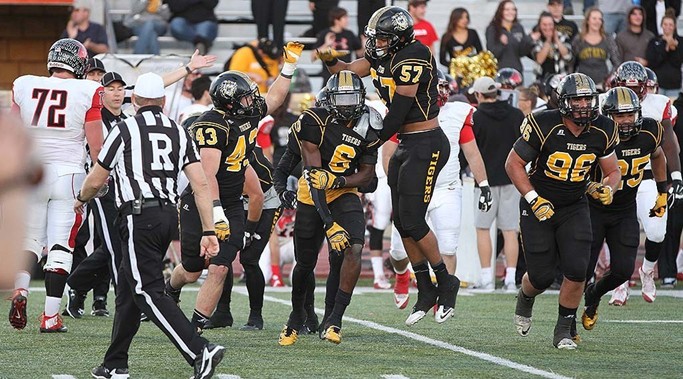
Mineral Water Bowl LogoEXCELSIOR SPRINGS, Mo. – With their 28-14 win over No. 20 ranked Central Missouri on Saturday, Fort Hays State locked up the bid to the Mineral Water Bowl on December 5, 2015. The Tigers will face Minnesota-Duluth from the Northern Sun Intercollegiate Conference.

Both teams enter the game at 8-3 overall. Minnesota-Duluth was the champion of the North Division in the Northern Sun Intercollegiate Conference. This will be the 50th Mineral Water Bowl Game. Tickets are $10.00 and can be purchase at the gate or by calling 816-519-5627. For more information visit www.mineralwaterbowl.net.

Fort Hays State reaches the postseason for the first time in 20 years. The last postseason game occurred in 1995 when the Tigers were selected to the NCAA Division II Playoffs. Although the Tigers came up just short of the playoffs this year, they were the top finishing team in the MIAA outside teams selected to the NCAA Playoffs. Northwest Missouri State (No. 1 seed) and Emporia State (No. 6 seed) will represent the MIAA in the playoffs.

Fort Hays State tied Central Missouri for third in the MIAA, but takes the automatic bid to the Mineral Water Bowl by virtue of defeating Central Missouri head-to-head. The Tigers will now be looking for their first-ever postseason win at the NCAA Division II level.

The only two postseason games the Tigers have ever played as members of NCAA Division II occurred in 1993 and 1995. Both were in the NCAA Division II Playoffs. In 1993, FHSU fell at California-Davis 37-34, and then in 1995, fell at Texas A&M-Kingsville 59-28.

The Tigers also have a chance to do something no other team in Fort Hays State football history has done, and that is reach nine wins. This year’s team has already matched the school record for wins in a season with eight. The feat has now been accomplished seven times (1935, 1983, 1990, 1991, 1993, 1995, 2015).

The University of Minnesota Duluth Bulldogs will be making their second appearance in the Mineral Water Bowl. Head coach Curt Wiese in his third year as UMD’s head coach brings a 32-6 record into the game. Coach Wiese has guided the Bulldogs to two NCAA Division II Playoff appearances, one NSIC Championship and two NSIC North division titles.

Majority of Kansas precinct seats empty for both parties

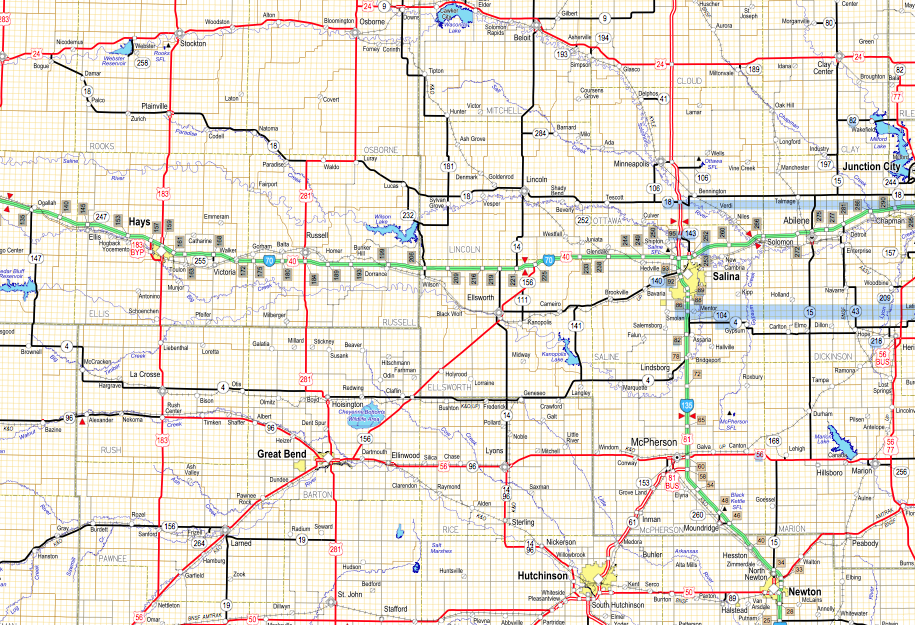
KDOT image
KDOT image

TOPEKA, Kan. (AP) — Kansas has more than 7,000 precinct seats per party, but fewer than a fifth of Democratic seats are occupied and less than half of Republican seats are filled.

Precincts are geographical units within the electoral system. Each Kansas precinct has two seats per political party.

The Topeka Capital-Journal tallied precinct seats for all of Kansas’ 105 counties using data from election offices and political parties. The data showed 51 percent of Republican precinct seats appear to be vacant, as well as 83 percent of Democratic seats. Forty counties have no Democratic precinct leaders.

Political scientists and party leaders cite several reasons why precinct seats remain unfilled, ranging from apathy to awkward boundary lines that sometimes result in precincts with few or no residents.

KU Student Exec Committee demands top student leaders resign

KU students at last week's forum on alleged racism
KU students at last week’s forum on alleged racism

LAWRENCE, Kan. (AP) — Racial tensions are growing at the University of Kansas with a call for three top Student Senate leaders to resign and a recent graduate initiating a hunger strike.

The Lawrence Journal-World reports that the Senate’s Student Executive Committee is demanding that Student Body President Jessie Pringle, Student Body Vice President Zach George and Chief of Staff Adam Moon step down by Wednesday.

The committee took up the issue Friday, voting 6-3 that it had no confidence in the three leaders. One member abstained from the vote.

The three embattled leaders released a statement Saturday, saying they plan to continue serving and professing support for minority groups.

Meanwhile, a white 2014 University of Kansas graduate began a hunger strike on campus Friday morning in solidarity with student group movements.

Police investigate fatal shooting in Great Bend

policeGREAT BEND- Law enforcement authorities in Barton County are investigating a shooting in Great Bend.

Police in a media release reported officers responded on Sunday morning to a home on Lakin Street where a man had been shot.

The victim was treated by emergency medical staff at the scene and transported to Great Bend Regional Medical Center where he died.

The name of the victim has not been released.

The Kansas Bureau of Investigation is also involved in the investigation, according to police.

No additional details have been released.

Kansas court’s approval of death sentence not seen as shift

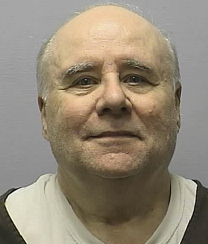
John E. Robinson
John E. Robinson-photo Kan. Dept. of Corrections

JOHN HANNA, AP Political Writer

TOPEKA, Kan. (AP) — Kansas isn’t likely to see executions soon or a shift in how its Supreme Court handles capital murder cases after it recently upheld a death sentence for the first time under the state’s 1994 capital punishment law.

Several prosecutors are encouraged by the court’s decision in the case of John E. Robinson Sr. He was sentenced to die for killing two women in 1999 and 2000 and tied by evidence or his own admissions to the murders of seven women and a teenage girl in Kansas and Missouri, starting in 1984.

But two Kansas law professors said the 415-page decision in Robinson’s case earlier this month suggests the Supreme Court will keep scrutinizing capital cases thoroughly.

A national expert said he doesn’t read too much into a death sentence standing.

Police suspect abuse in death of 17-month-old Kan. girl

police emergencyWICHITA, Kan. (AP) — A 17-month-old girl has died from injuries that Wichita police suspect are the result of child abuse.

The Wichita Eagle  reports that the girl was pronounced dead around 8:10 a.m. Saturday. Her mother’s boyfriend has been charged with child abuse and aggravated battery.

Wichita police Capt. Jeff Weible says that when emergency crews arrived Monday, they were told the girl had fallen about 30 minutes earlier. The boyfriend had been caring for the girl and her 4- year-old sister while their mother was working.

Weible says the baby had multiple bruises and other internal injuries that are “indicative of child abuse.”

USGS: 4.3 magnitude Oklahoma earthquake, felt across Kansas

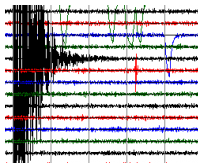
FAIRVIEW, Okla. (AP) — The U.S. Geological Survey has recorded a 4.3 magnitude earthquake near Fairview in northwestern Oklahoma, about 60 miles south of the Kansas state line.


The quake was recorded at 3:45 a.m. Sunday, 18 miles northwest of Fairview — about 155 miles northwest of Oklahoma City.

Fairview police say there are no reports of injury or damage.
A recent paper by the Geological Survey singled out Oklahoma, concluding that quakes are induced by injecting deep into the earth massive amounts of wastewater that are the byproduct of oil and gas production.

Police: Bicyclist killed in 3-car Kansas collision

fatal crash accidentWICHITA, Kan. (AP) — Authorities say a bicyclist has been killed in a three-vehicle crash in Wichita.

The Wichita Eagle reports that the crash happened around 4:40 p.m. Saturday. Wichita police Sgt. Troy Nedbalek says a man on a bicycle was attempting to cross a street when two cars collided head-on. A third car then turned into the two cars.

Nedbalek says the bicyclist was caught in the middle of the wreck and was pronounced dead at the scene. The man’s name wasn’t immediately released. Nedbalek says three other people sustained non-life-threatening injuries in the collision.

Kansas attorney gets jail time for attempting to cheat the IRS

Reno County JailWICHITA, KAN. – A Wichita attorney was sentenced Thursday to 30 months in federal prison for evading federal taxes, according to U.S. Attorney Barry Grissom.

In July, U.S. District Judge Eric Melgren found Eldon L. Boisseau, 67, Wichita, Kan., guilty on one count of tax evasion.

In a written decision, the court found that during 1998 through 2000, 2002 through 2005 and 2007 through 2008 Boisseau attempted to evade paying federal income taxes, as well as a trust fund recovery penalty from 1999. He interfered with the government’s efforts to collect the taxes he owned by putting his law firm in the name of a nominee, terminating his own pay agreement with the law firm and then having the firm pay for his personal expenses.

Grissom commended the Internal Revenue Service, Assistant U.S. Attorney Alan Metzger and Sean Green, Trial Attorney with Justice Department’s Tax Division, for their work on the case.

GM, government actions questioned in car fire recalls

Screen Shot 2015-11-11 at 10.36.40 AMTOM KRISHER, AP Auto Writers
DEE-ANN DURBIN, AP Auto Writers

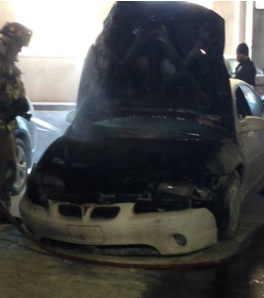
DETROIT (AP) — Shortly after Elizabeth Berry parked her bright yellow 2003 Chevrolet Monte Carlo SS on the street in front of her family’s home in May 2014, flames engulfed the engine, destroying the car and scorching her mailbox.

“I was hysterical. That was like my third baby,” she says of the car.

Compounding the shock was the fact that five years earlier, Berry had answered a recall notice from General Motors for a repair that was supposed to prevent engine fires.

Two weeks ago, Berry learned that she is one of 1,345 car owners in towns across the U.S. whose cars caught fire even after getting the repair called for in the recall. GM acknowledged the fix didn’t work and issued a new recall involving 1.4 million older cars, some for a second time.

GM advised drivers to park the cars outside until the repairs are done, for fear of flames spreading to nearby structures.

The post-recall fires raise questions about whether GM should have acted sooner, whether the government should have taken notice and stepped in, and whether the ineffective fix should have been approved in the first place.

After a series of mishandled recalls that involved deaths and injuries, criminal investigations, class-action lawsuits and costs running into the billions of dollars, the auto industry has improved its spotting and reporting of safety troubles. Over the past two years, automakers have recalled about 100 million cars and trucks in an effort to clean up lingering safety issues and catch new ones before they escalate to millions of vehicles. Of GM’s 41 recalls this year, the company says about half cover fewer than 10,000 cars or trucks.

But cases such as the GM fires, and the government’s recent punishment of Fiat Chrysler for numerous delayed recalls show that an old culture of resistance and procrastination can still haunt the industry and car owners. It also shows that despite reforms that have made the National Highway Traffic Safety Administration more aggressive, problems can still go undetected.

“Over 1,000 fires is a huge number that should have generated a safety recall by GM before now,” says Clarence Ditlow, head of the nonprofit Center for Auto Safety, a watchdog group. “To make matters worse, NHTSA missed the defect in its complaint database.”

Problems with the cars, including the Monte Carlo, Pontiac Grand Prix, Chevy Lumina and Impala, Buick Regal and Oldsmobile Intrigue from the 1997 to 2004 model years, surfaced as early as 2006. In one North Carolina case, flames spread from a Pontiac and damaged two houses. Overall, GM has reported 19 minor injuries and at least 17 structure fires.

The problem: oil seeping through valve cover gaskets designed to keep it inside the engine. The gaskets can deteriorate over time, and inertia from hard braking can cause oil to drip onto the hot exhaust manifold on the 3.8-liter V6 engines, where it could ignite.

In 2008 and 2009, GM issued separate recalls for two versions of the V6, covering 1.7 million cars. In some cars the gasket was replaced, but in the majority, only flammable plastic parts near the manifold were replaced.

GM spokesman Alan Adler said two weeks ago that if any oil dripped and caught fire, it would cause a small “pilot flame,” that company tests showed would burn out on its own. “We were trying to remove anything that would allow the flame to spread,” he said.

But Jake Fisher, a former GM engineer who now is Consumer Reports’ director of auto testing, says the recall should have addressed the oil leak on all the cars. He was surprised GM would allow an open flame under the hood. “I can’t imagine a scenario where that would be acceptable,” he says.

Erik Gordon, a lawyer and University of Michigan business professor, says the decision not to fix the leak shows that GM’s culture was to find the cheapest, easiest repair. “This is a ‘we’ll get out the duct tape’ kind of approach,” he says. “We’re not going to replace the gaskets because that’s too expensive.”

Valve cover gaskets are relatively cheap, but the labor to do the repairs is where the cost lies. It takes about 48 minutes to replace the gasket and do the other recall repairs, according to documents. At a labor rate of around $100 per hour, fixing 1.4 million cars would cost GM roughly $112 million.

It’s unclear why NHTSA didn’t act sooner or whether GM could be fined for not reporting the post-recall fires faster. NHTSA spokesman Gordon Trowbridge wouldn’t comment on either issue. Automakers are required by law to report safety defects within five days of discovery.

A review by The Associated Press of NHTSA’s complaint data on just one model, the 2001 Grand Prix, shows 466 complaints of engine fires, including 33 concerning fires after recall repairs were made. Complaints of fires on recall-repaired cars started in June of 2009, more than six years ago.

Elizabeth Berry says that after her Monte Carlo burned last year she called GM and a representative told her that recall repairs hadn’t fixed the problem. She says GM offered her $2,000 and asked her not to have the car towed or to contact insurance. But her insurance company offered her four times more, so she took that offer and bought a Mazda6.

The fires are still occurring. On Sept. 9, freshman Joe Jarmoluk’s white 2004 Grand Prix caught fire after he left it in a parking lot at Grand Valley State University near Grand Rapids, Michigan. By the time the fire was out, the car was totaled. It damaged four nearby vehicles, melting tires, a bumper and a tail light.

Other drivers, Jarmoluk says, were mad at him, with one complaining he’d been left stranded by the fire. Jarmoluk had to buy a new car, and GM has turned down his claim for compensation.
Kansas woman dies after crash with a semi

fatalELLSWORTH COUNTY – A Kansas woman died in an accident just before 4p.m. on Saturday in Ellsworth County.

The Kansas Highway Patrol reported a 2003 Dodge passenger car driven by Fern M. Zajic, 89, Holyrood, by was traveling northeast on Kansas 156 two miles north of Holyrood.

The vehicle pulled to the right hand shoulder to allow a car to pass.

The driver attempted to turn left onto 6th Road. As the vehicle was turning left, it was struck by a semi.

Zajic was pronounced dead at the scene and transported to Parsons Funeral Home.

The semi driver from Florida was not injured. Both drivers were properly restrained at the time of the accident, according to the KHP.

Kan. lifetime hunting, fishing licenses to increase Jan. 1

ks hunting license lifetimeKDWPT

PRATT–If you’ve been thinking about buying a lifetime license for yourself or giving one as a special Christmas gift to a lucky young hunter or angler, buy it before the end of the year and save. The price of a lifetime hunting or fishing license will go from $440 to $500 and a lifetime combination hunt/fish license will increase from $880 to $960 on January 1, 2016.

Kansas lifetime hunting and fishing licenses are available to Kansas residents who have lived in Kansas for at least a year before making application. Domiciliary intent is required to establish that the applicant is maintaining their place of permanent abode in Kansas. Mere ownership of property is not sufficient to establish domiciliary intent. Evidence of domiciliary intent includes, but is not limited to, the location where the person votes, pays personal income taxes or obtains a driver’s license.

Depending on your age, a lifetime license is a bargain. At the current price of $880 for a lifetime hunt/fish combination license, the initial investment will pay off in less than 20 years, and that’s not accounting for future license fee increases. The holder of a lifetime hunting license is eligible to purchase resident big game and turkey permits even if they move out of the state. And the holder will never again have to worry about buying a new license after the first of the year.

The Kansas Wildlife, Parks and Tourism (KDWPT) Commission approved a proposal to raise fees for fishing and hunting licenses at their public meeting in Burlington on October 22, 2015. The new fees will be effective January 1, 2016.

Basic hunting and fishing license fees hadn’t increased since 2002, and the price of resident deer and turkey permits haven’t increased since 1984. Inflation has increased the cost of doing business by almost 30 percent since 2002, and the uncommitted balance of the Wildlife Fee Fund was beginning to decline. Fee increases were deemed necessary to ensure pivotal programs important to hunters and anglers could be maintained and enhanced. License and permit revenues go into the Wildlife Fee Fund to pay for wildlife and fisheries programs, which receive no State General Fund money.

Copyright Eagle Radio | FCC Public Files | EEO Public File