WICHITA, Kan. (AP) — A report from the Kansas Association of School Boards shows that the state’s performance on national tests rose and fell with funding.
The Topeka Capital-Journal reports the board says student performance on national math and reading tests improved between 2003 and 2007 before leveling off until 2011, when it began to fall.
The board’s analysis, which was presented to lawmakers by association advocacy director and lobbyist Mark Tallman during a meeting, says the performance trend follows funding patterns. The report says auditors were more than 99 percent confident a relationship exists between spending and performance outcomes.
Kansas State Department of Education deputy commissioner Brad Neuenswander expressed concern over the direction of Kansas test scores, and said that the state is seeing the performance gap widening again between students who can pay for lunch and students who cannot.
TOPEKA, Kan. (AP) — Secretary of State Kris Kobach’s office has registered two prospective northeast Kansas voters and is asking a judge to dismiss their federal lawsuit against the state’s proof-of-citizenship requirement.
The Wichita Eagle reported that an attorney for Kobach’s office asked Tuesday to have the lawsuit dismissed, arguing that the two young men no longer have grounds to sue.
The men did not comply with a 2013 law requiring new voters to document their U.S. citizenship when registering. But Kobach said his office regularly checks records from other state agencies for proof of citizenship.
Attorneys for the two men say Kobach’s office acted simply to prevent court scrutiny of the law.
Kobach’s office also registered two other men who filed a separate state-court lawsuit, and the judge refused to dismiss it.
Eagle TV will rebroadcast the Hays Veterans Day ceremony, which was held Wednesday, several times over the coming days.
The ceremony will premiere at 11 a.m. and 4 p.m. Friday on Eagle Cable Channels 14 and 614.
Encore showings will be:
• Saturday Nov 14 at 2pm & 7pm
• Sunday Nov 15 at 2pm and 7pm
• Monday Nov 16 thru Friday Nov 20 11am & 4pm
• Saturday Nov 21 @ 2pm & 7pm
• Sunday Nov 22 @ 2pm and 7pm
• Monday, Nov 23 @ 11am & 4pm
In a letter sent to the Hays USD 489 Board of Education on Wednesday, the O’Loughlin Parent Teacher Association is seeking further action on their request for the return of 40 iPads that were purchased by the association for use by kindergarten and first-grade classes at the school.
The subject was brought the board’s attention at last week’s work session, but was decided that district policy should not be changed in order to accommodate the request.
Further, the topic was not put onto the agenda for next Monday’s board meeting.
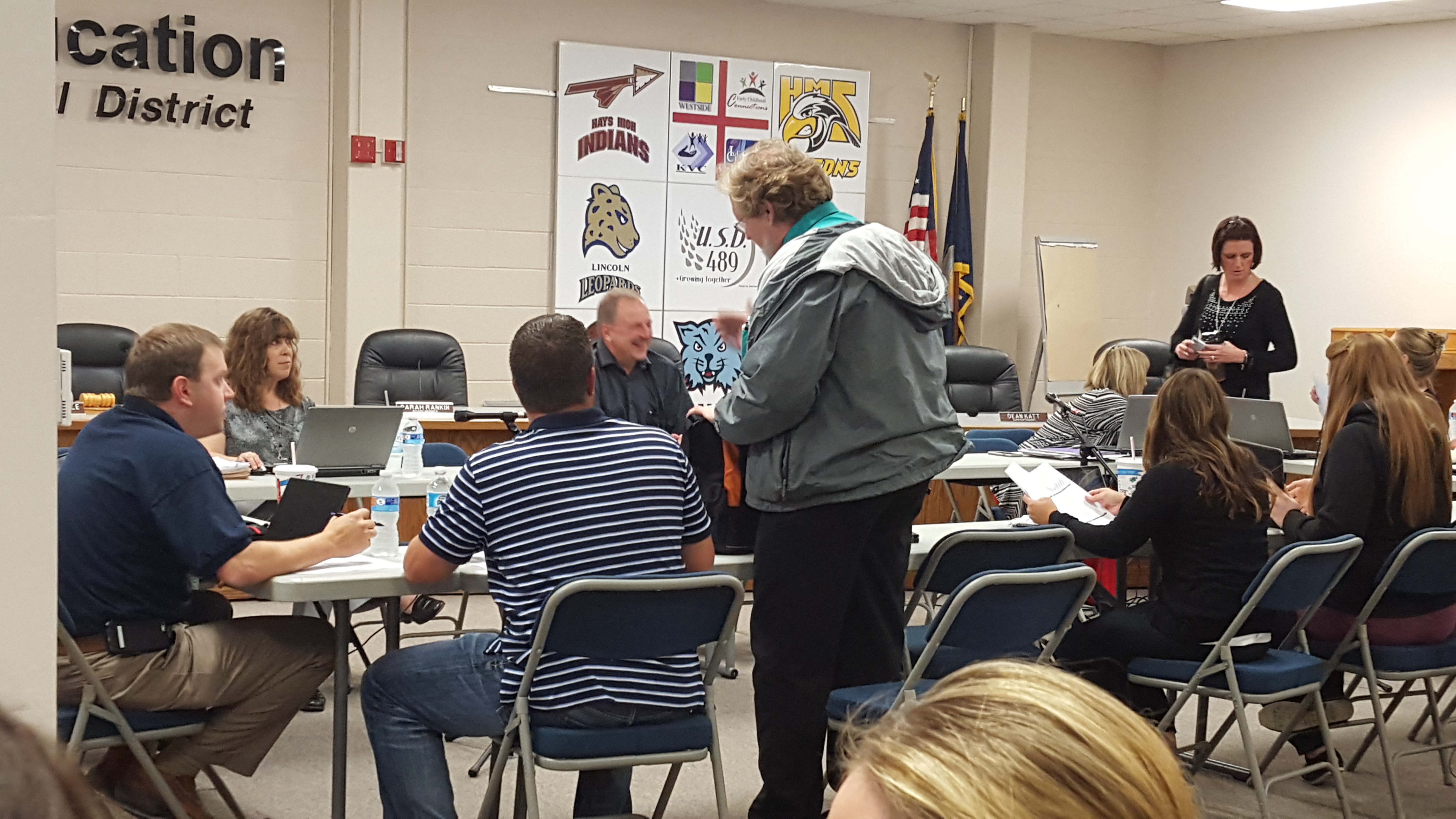
Members of the USD 489 Board of Education settle in Monday in preparation of discussions on an upcoming $93 million bond issue.
“Every other time that we have had a gift or anything the PTA or Home and School given to the school, it becomes school property,” said Dean Katt, USD 489 superintendent, during the work session.
Following the iPads being given to the district, the district enacted a 1-to-1 technology policy, putting mobile computing systems in the hands of every student.
“As we went through and decided to go 1-to-1, all of these devices from here, Washington, Roosevelt, anyplace that we had them, that were compatible to a new one, that we were going to use were figured into district numbers,” Katt said last week.
The PTA suggested the iPads were given to the district on loan and should now be returned now that the district is funding devices for each student.
“We feel you are working under an assumption that these 40 mini iPads were gifted to the school, which in turn become district property, without any documentation to say such,” Alaina Cunningham, PTA co-president, wrote in her letter to the board.
Without written documentation, district policy is clear for items bought for district use, district officials said.
“The board policy actually states currently that anything that is purchased by any asset organization that is distributed is district property.” said Sarah Wasinger, USD 489 board clerk.
Further, Katt said the PTA had never indicated their desire for the items to be loaned rather than given to the district.
“We don’t do on loans,” Katt said. “We never talked about any of that. … Our board policy … is very specific about becoming district property.”
Cunningham noted in her letter the lack of communication was the fault of the district and, as such, the PTA should not be held liable for the misunderstanding.
“It was discussed at our meetings when we purchased them that it would be our responsibility to maintain them,” Cunningham said. “That this would not be an expense the district would take on or nor would we ask them to. With that being said, it is clear to us these iPads were not purchased and gifted to the school.”
The PTA further stated the district failed to fully inform the PTA of its policies.
“No one offered to speak with us about our technology purchases and the district’s intent,” Cunningham wrote. “The new policy put in place in February 2015 was not officially brought to our attention until this matter was being addressed. We feel this has set a precedent as to future purchases by the PTA. It has made us aware of how to protect our students and ourselves. It has shown us the proper documentation we need in place, but above all else it has hindered the relationship with our PTA and the school board.”
After the iPads were given to the district they have been maintained under the assumption they had become district property.
“In essence, the district assumed responsibility of property protection, maintenance, purchase of software all of the things that would make it a useful functional device?” Paul Adams asked during the work-session.
The answer was a simple “Yes” from Katt.
The board’s legal counsel also sided with the assumption that, without a prior agreement, board policy should be upheld.
“With your policy and no understanding or any documentation saying it’s a loan, I don’t see why it wouldn’t be a straight-up gift,” said Michael Baxter, board legal council.
Gifts are often given to the school by the PTA and Home and School groups, for use by the district.
“Every school has purchased those types of items,” Katt said. “This could come back to playground equipment. Home and Schools have purchased all kinds of equipment, from water fountains to carpet to you name it. That’s the dilemma we’re in, if we say, OK, we’ll buy those back, or give them back, playground equipment anything else then it’s the same thing.”
After discussion, the board decided that no further action is required.
“I don’t see any reason to vote on this, it’s board policy and I don’t see any reason to change it,” said Lance Bickle, USD 489 board president.
However, the PTA wants further action on the issue.
“We would like to request that this issue be fully addressed,” Cunningham wrote.
But after the lack of action by the board at the work session, the decision seems settled as far as the board is concerned.
“Whether it is bitter or not, it is policy,” Adams said.
The text of the PTA letter follows:
November 11, 2015
To Whom It May Concern:
I am writing to you on behalf of the O’Loughlin PTA. We recently raised concern regarding the 40 mini iPads that the PTA purchased last year. These iPads were purchased with funds raised by O’Loughlin families in order to better the education of their children. There is a lot of time and effort spent by the O’Loughlin parents and students to raise these funds. The iPads were purchased with the intent for the PTA to own, maintain and determine use as needed by staff request. The PTA feels this letter is necessary to better inform you of our stand. We do not feel all of our points were presented at the recent work session.
It was the kindergarten teachers whom brought the initial request for 20 mini iPads to us last year. The request was brought to us because the current iPads that the district owned and that were in use at O’Loughlin were outdated. They were unable to do any more system upgrades to them due to their age. The staff was unable to use them as a learning tool and unable to load new programs due the lack of new technology. Over the next several months there was much discussion and debate as to what the PTA should do. It was a large sum of money, but we felt it was a much-needed learning tool that would facilitate the education of our children. Some of the staff had attended classes over the summer to aide in classroom use of technology; the purchase of these iPads would allow them put this in place in the classroom. The PTA then decided to purchase 40 mini iPads for the kindergarten and first grade teachers to use for centers and other such classroom learning. The thought behind doubling the requested purchase amount was so that if the need should arise for use in other grade levels we would have these available. Purchasing the iPads in bulk gave us a better rate, as we are sure you are well aware.
These iPads were purchased with the intent for the O’Loughlin PTA to own and maintain. The iPads were invoiced to the O’Loughlin PTA and a check was issued by the PTA payable to Apple. The iPads were so kindly set-up by Brian Drennon, but not at our request, if this is a service we should have been billed for then we would appreciate a late invoice. It was discussed at our meetings when we purchased them that it would be our responsibility to maintain them. That this would not be an expense the district would take on or nor would we ask them to. With that being said it is clear to us these iPads were not purchased and gifted to the school.
It was brought to our attention early this fall that the O’Loughlin staff was unable to locate the PTA purchased iPads upon the start of the new school year. After several weeks of unanswered questions as to the where a bouts of the 40 mini iPads it was brought to our attention by an outside source that the district had included them in their 1:1 K2 ratio count. This is when we contacted superintendent, Dean Katt to discuss the dispursement of the iPads throughout the district. We feel you are working under an assumption that these 40 mini iPads were gifted to the school, which in turn become district property, without any documentation to say such. We raise the question that if the district had not gone paperless and we still had our 40 mini iPads would they have been willing to repair or replace them due to damage if they were working under their assumption of them being a gift.
We want to share, that even more importantly, than the money lost by O’Loughlin PTA, due to this assumption, that there is a lack of communication from the school board to the home and school associations within our district. No one offered to speak with us about our technology purchases and the districts intent. The new policy put in place in February 2015 was not officially brought to our attention until this matter was being addressed. We feel this has set a precedence as to future purchases by the PTA. It has made us aware of how to protect our students and ourselves. It has shown us the proper documentation we need in place, but above all else it has hindered the relationship with our PTA and the school board. It has made the PTA rethink future purchases of tangible items. We hope you will see our stance as we have listened and heard yours. We would like to request that this issue be fully addressed.
More than 661 high school students from 50 schools will be on the Fort Hays State University campus on Thursday, Nov. 12, competing in the 37th annual Math Relays.
Students in grades nine through 12 will fill the Memorial Union and compete in various events such as using number sense, trigonometry, algebraic manipulations, informal geometry and measurement, applications of algebra, and calculation with calculators.
Students will begin arriving around 8 a.m. The competition is from 9:30 a.m. to 12:30 p.m.
Last year, TMP-Marian High School took third place in the 4-6A division. Hays High School placed fifth.
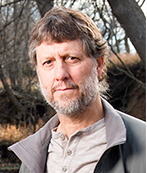
By gathering large-scale information on rivers, Kansas State University biologist Walter Dodds is creating a better biological picture of river systems across North America and Asia. Photo courtesy ksu.edu.
MANHATTAN — A Kansas State University researcher is creating a better biological picture of river systems across North America and Asia.
Walter Dodds, university distinguished professor of biology, is part of a collaborative five-year, $4.2 million National Science Foundation project to better understand how climate change affects river systems. The research team — which includes more than 11 researchers from more than nine institutions — wants to study how changes in precipitation and temperature as well as human activities influence river systems in the U.S. and Mongolia.
For his portion of the project, Dodds will gather large-scale biological information on rivers. He will measure the metabolism of nine rivers across the U.S. Great Plains, Great Basin and Mountain Steppes — including the Platte, Niobrara, Humboldt, Bear and Snake rivers — as well as nine similar rivers in Mongolia. River metabolism includes oxygen production and consumption from bacteria, algae, plants and animals in the rivers.
“We really don’t know a lot about how rivers function and their biological communities,” Dodds said. “What is feeding these rivers? Is it leaves falling or is it algae growing and feeding insects and fish? We hope to find out by gathering these measurements.”
While Dodds is measuring the river metabolism, other researchers will study food webs, biodiversity traits of fish and invertebrates, and physical and biological characteristics of the riparian zone and basin.
The measurements will provide comparisons between U.S. and Mongolian rivers, Dodds said. Mongolian rivers are relatively pristine with few dams and little agriculture around them. By comparison, North American rivers have been affected by non-native fauna, dams and other human activities.
The large-scale measurements also will provide valuable information about different river ecosystems, including mountains, drylands, grasslands and forests.
“A lot of research has been performed on forest systems, but not so much on grassland and dryland streams and rivers,” Dodds said. “We’re going to look at a global sense of these grassland and dryland rivers and see if they are functionally different than the ones in forest and temperate areas.”
Dodds- photo KSU
To gather data, Dodds will use two new forms of equipment. One type uses sound waves to measure river depth and water flow speed. The equipment can map the bottoms of rivers and measure how much water is present and how fast it is moving. The second equipment type involves oxygen electrodes that can measure oxygen dissolved in water and how it changes throughout the day.
“There are only a moderate number of these measurements in many rivers around the world,” Dodds said. “It is only recently that technological advances have made it possible and now we can gain useful information on the biological activity of rivers.”
James Thorp, University of Kansas professor of ecology and evolutionary biology and senior scientist with the Kansas Biological Survey, is leading the National Science Foundation project. Co-principal investigators include Mark Pyron, Ball State University; Jon Gelhaus and Alain Maasri, Academy of Natural Sciences of Drexel University; Bazartseren Boldgiv, National University of Mongolia; Olaf Jensen, Rutgers University; Scott Kenner, South Dakota School of Mines and Technology; Dan Reuman, University of Kansas; Sudeep Chandra, University of Nevada Reno; and Barbara Hayford, Wayne State College.
Kansas State University’s Division of Biology is in the College of Arts & Sciences.
The Hays High Indians placed two on the Western Athletic Conference First Team. Senior Brayden Delzeit was named first team offensive line. Junior Shane Berens was named first team defensive line.
Delzeit a three year starter at center was the only returning starter along the offensive line for the Hays High Indians. He helped the Indians rush for 1585 yards in 2015. Delzeit received honorable mention from the WAC his junior season.
Berens earned first team defensive line honors for a second consecutive year. He finished in the top 20 in the WAC for tackles on the season and top 5 for each sacks, tackles for loss and fumbles caused.
Seniors Isaiah Blackmon and Maddux Winter along with sophomores Hunter Brown and Logan Clark each earned honorable mention status.
After winning the Western Athletic Conference with a 4-0 mark, Dodge City head coach Dave Foster was name WAC Coach of the Year and Red Demon Senior Eric Reid was name Player of the Year.
SEATTLE (AP) — The New York attorney general’s decision that daily fantasy sports betting sites FanDuel and DraftKings are illegal gambling operations is a blow to the companies, but the industry could have more legal headaches yet to come.
The sites have been doing business in a number of states where they’re legally dubious. Several states in which the companies are operating have laws similar to New York, while a few have even stricter prohibitions.
That could pose more risk than the companies or their backers have let on. Federal law criminalizes gambling businesses that operate in violation of state law, with penalties that can include prison time and fines.
Florida sports and gaming attorney Daniel Wallach says that by his count the sites are on shaky legal ground in about a dozen states.
Cerner Corp.’s headquarters in North Kansas City. CREDIT ELANA GORDON / KCUR
About two dozen community hospitals in Kansas and Nebraska have signed up to use Cerner Corp.’s electronic health technology.
The hospitals are members of the Great Plains Health Alliance, which provides management services to critical access hospitals in both states.
Critical access hospitals focus on outpatient care and are limited to no more than 25 inpatient beds. Under federal Medicare guidelines, they are required to be at least 35 miles distant from any other hospital.
“For the small community hospitals in Kansas and Nebraska that are medically underserved and financially unstable at times, I think it really gives them a good stepping stone to be financially viable for the long-term future,” says Aaron Miller, a spokesman for Great Plains, referring to the agreement with Cerner.
Many of these hospitals, faced with Medicare reimbursement cuts, reduced payments for the uninsured and both states’ refusal to expand Medicaid, are struggling. The National Rural Health Association, which is based in Leawood, Kansas, says 57 rural hospitals have closed in the last five years.
“We’ve identified about 283 facilities nationwide that are rural hospitals, out of about 2,000, that are at what we call high risk for closure,” says Brock Slabach, senior vice president of the association.
While not a panacea, Slabach says the ability of such hospitals to adopt sophisticated electronic medical record systems is “terribly important to any strategic plan to be able to navigate the changes that have come and will be coming down the road in terms of where our health system is going.”
“Data, and the ability to manage data, through health information technology is incredibly important to that process in the long term,” he says.
Cerner began focusing on rural hospitals about six years ago with the establishment of a self-contained organization within the Kansas City-based health technology giant called Cerner CommunityWorks.
Mitchell Clark, president of Cerner CommunityWorks, says about 125 rural facilities in 34 states are now using Cerner technology. Many of them, he says, had been using paper records.
Now they have “the same cutting-edge technology that would be available to a very large provider such as Via Christi (in Wichita) or Saint Luke’s in Kansas City,” he says.
The agreement with Great Plains gives Cerner a foothold in more than half the critical access hospital locations in Kansas, Clark says.
“Rural health is a very, very critical part of the health care spectrum across the country and we’re excited about being able to be a part of that and grow that, especially here in our backyard,” he says.
Clark did not say how much the contract with Great Plains is worth, but health information technology is expensive and takes time to adopt and learn. Slabach says the economies of scale achieved through group purchasing will also make it easier for the hospitals to implement the technology.
“If you can have learning collaborations that are basically set up locally that can be used to leverage best practices among facilities, then you can spread that information more quickly and hopefully get better utilization of these technologies,” Slabach says.
“In the short term, obviously facilities have to be able to afford these systems, and they’re expensive and they’re very time-intensive in terms of set-up and training and being able to use it,” he says. “So therein is the complication. Rural hospitals have to do it, but making it happen is a challenge, no doubt.”
Dan Margolies, editor of the Heartland Health Monitor team, a news collaboration focusing on health issues and their impact in Missouri and Kansas. You can reach him on Twitter @DanMargolies.
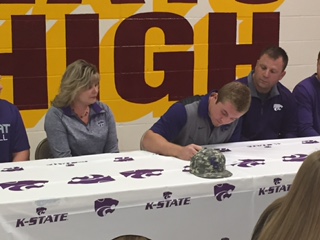
Most kids are relieved to have their college choice made sometime during their senior year sports season. Connor Rule knew before his junior season in the spring of 2015. Early in 2015 Rule attended a baseball camp at Kansas State University and the rest as they, say is history. Rule performed well enough to earn a scholarship offer from the Wildcats, an offeer he accepted. After verbally committing in the spring of 2015, Rule made it official by signing his National Letter of Intent on Wednesday.
Connor Rule
Frank Leo
Rule is a multi-year starter for the Indian baseball program and saw his first varsity action as a freshman appearing in ten games. He struck out only twice in 74 plate appearances as a sophomore. The career .383 hitter, batted .474 his junior season for his best season yet. He also had on on base percentage of .595 in 2015, which is the 4th best in a single season at Hays High.
By Sophia Rose Young FHSU University Relations and Marketing
Before Dr. Daniel Kulmala left the country for the 2015-2016 academic year, leaving behind his three kids and a wife, he opened up in a personal interview about Fort Hays State University’s intentions in China.
“Students here and alumni know about our connection to China, but now we are going to expand,” said Kulmala. “I think we have a lot of opportunities in Southeast Asia. We are looking at Cambodia, and I have some connections in Malaysia and Taiwan. ”
Kulmala recently accepted a position as interim special assistant to the provost for academic affairs in China. He will live on FHSU’s partner campuses at Sias International University and Shenyang Normal University and work closely with the university presidents and various deans to improve FHSU’s international programs.
Kulmala has been with FHSU since 2001. He has served as assistant dean of the Graduate School, director of the Master of Liberal Studies programs and chair of the Department of Modern Languages. He is currently a professor of communication studies and often refers to himself as a professor of Global English.
What follows is a partial transcript of the conversation with Kulmala, slightly edited for clarity.
Q. Why China?
A. FHSU kind of just fell into the opportunity. There is political history that is problematic with China, but they are very eager to work with the United States and a highly educated culture.
For example, Sias was looking for a partnership with a United States university, and by good fortune, the connection was made with FHSU. It was not something that FHSU was seeking or looking for but heard about and jumped into the opportunity.
There is potential for more growth. I had heard that the founder, Shawn Chen, is currently in the process of hiring 400 more professors. Sias started off small in 1998, but it has grown, and I think they might be up to 30,000 students, and they are anticipating even further growth.
Q. Do you have specific goals?
A. The main goal is to expand our program offerings and recruit more students. Other goals involve problem solving, but extending our global reach is something that we want to do, and I think it creates more opportunities for American students and Chinese students.
Q. Why is global reach important?
A. What I see happening for the future, in terms of how we are all becoming very global–the impact of the internet and social media networking and the ways in which mobile technology and other technology has made us more connected–is that it’s never going to end. It will only continue to grow. So for me, thinking globally is the direction we must go in and avoiding it or resisting it isn’t going to work.
Q. What kind of students will you be working with?
A. I’ll be primarily working with students who are studying English and want an American degree. I have given recruitment presentations in China before, so I’ve had the chance to work with a variety of students.
Q. Why make changes to the international program?
A. We are looking at an integrative approach that is more connected with global learning rather than seeing the programs as strictly international learning between China and the United States.
Q. Will you only be spending time in China?
A. I am going to Taiwan first before I go to China.
Q. What will you do in Taiwan?
A. I will be visiting with a new possible partnership at the Wenzao Ursuline University of Languages. They are a very tech-friendly and U.S.-friendly nation, and we are looking for not only student exchanges, but also some boarder partnerships.
I will fly into Taipei, take the high-speed rail down to Koahsiung, visit the university, and then spend the night in Taipei before flying to China.
Q. Who will you meet in Taiwan?
A. Some delegates from the university, people who are deans and professors in charge of the programs. They visited FHSU last August and met with President Martin and the provost.
Q. You created the Global Business program at Fort Hays. What motivated you to do that?
A. There is a degree program that international students recognize, which is Business English. It’s something we don’t teach in the United States, unless you go through business communication. I really just see it as a great opportunity. It was something new, and I could see how it could grow.
Q. How many times have you visited SIAS and SNU?
Four times.
Q. What was the experience like?
A. I personally and professionally enjoy China. I really enjoy Chinese culture, and I think that explains why I have such a good relationship with my students and why I have good relationships with the administrators in China. The relationship I have with them is genuine. I love the food. I feel extremely comfortable around the people, and I enjoy the feel of the atmosphere.
Q. Will you be traveling alone?
A. Yes. If I keep traveling in this capacity, I would like to take my family. My daughters would definitely like to go, but I don’t know what I will be doing a year from now.
Q. How old are your children?
A. I have a 14-year old son named Jonah, a 10-year-old daughter named Spenser and a daughter named Ripley, who is 6.
They understand my reasons for going. The teenager will survive while I’m gone because he is into his video games, his laptop and Facebook. The two girls will miss me the most, but we will Skype and communicate as much as possible. I will miss my wife as well, but she’s an adult, you know we can survive, but the children are always something very hard to be separated from.
Q. Do you know how long your interim position is planned?
A. I’ll be working at least until the end of June or early July of 2016.
Q. Do you speak any Mandarin?
A. I know enough Mandarin to make my way through airports and order food. I anticipate expanding my Mandarin skills by the time I return to Hays in late June. Mandarin is the primary language in China, yet a sizable portion speaks Cantonese.
Q. Where will you stay in China?
A. I will find out when I get there. I know I will be staying on campus at Sias in Peter Hall, but I am not quite sure where I will be staying at in SNU. They will have some quarters for me, and they will have a FHSU office for me.
Q. Where did you grow up?
A. Northern Ohio in the Great Lakes area. I was born in Cleveland but grew up on a small farm south of Cleveland.
Q. What did you do on the farm?
A. It was just a small farm with goats and chickens, and we grew hay and oats. I mostly worked at the large surrounding dairy farms.
Q. Since there are a lot of agricultural students at FHSU, what would you say to one of those students wanting to go to China?
A. It is a very fertile area. From time to time I have taken scooter rides outside of the city, and especially where Sias is, there are a tremendous amount of farms. When you walk the streets of the city, fresh food is everywhere, and the restaurants themselves usually have farm-fresh foods.
I’m surprised we don’t do more with agribusiness or agriculture in China, and maybe that is something that we can really explore when I am there this time, because one of the objectives of my position is to expand our academic delivery.
Three students and one instructor from Fort Hays State University are flying to Chile over fall break to study sustainability, green energy, mythology, agritourism, biodiversity and rural elementary education.
Maxim Maximov, instructor of modern languages, is coordinating the study-abroad program to Chiloé, Chile, for the second time. This program is the only faculty-led Department of Modern Languages program this semester.
“It is both service learning and academic learning,” said Maximov. “Students receive course credit through the department.”
The FHSU group will spend two days doing a service-learning project at Escuela Rural Punta Chilen, a rural grade school of about 12 students in grades first through sixth.
“The grade school is upgrading to a new building, so there are projects we will help with. They asked us to help paint and build new benches,” said Maximov.
The three FHSU students, McLaine Whalen, a senior technology studies major from Omaha, Shaelin Sweet, a sophomore history major from Salina, and Sophia Young, a senior communication studies major from Lenexa, are putting together an educational presentation about Kansas for the children and preparing hands-on activities.
While visiting the grade school, the FHSU group will also meet with Chilean native and FHSU graduate Max Alonso. Alonso holds the current shot put record for FHSU men’s track and field and is a Chilean national discus thrower.
“We haven’t left yet and I’ve already learned so much about Chile and the island of Chiloe from our meetings,” said Young. “I’ve been assigned to do research on sustainability and farming in Chile, and it has enlightened me on a lot of political and social issues that are going on in other countries.”
Young has a 1-year-old son, Theodore, who has family in Chile.
“The main reason I applied for this program was because my son’s father and grandparents were born in Chile,” she said. “I want to teach Theodore about his family heritage. I don’t want to guess, I want to teach him authentically and eventually take him to Chile myself.”
Maxim Maximov, FHSU instructor of modern languages
“Learning happens before, during and after the program,” said Maximov.
Maximov encourages his students to make the most of the program by designing a project that relates to their study.
“For example, one of the students is a construction management major and if he decides he wants to see construction sites in Chile, I am willing to make arrangements to try and make that happen,” he said.
The FHSU group will depart from the Wichita airport on Wednesday, Nov. 18, and arrive in Santiago on Thursday for a short layover before flying to Puerto Montt, Chile. From there they will take a ferry to the island of Chiloé where they will spend 10 nights at hostels, farms and cabins.

 WICHITA, Kan. (AP) — A report from the Kansas Association of School Boards shows that the state’s performance on national tests rose and fell with funding.