MANHATTAN–The Kansas Department of Agriculture is a recipient of a U.S. Department of Agriculture Farmers Market Promotion Program Grant for the amount of $98,549. This award will help KDA increase consumer awareness about farmers’ markets in Kansas in an effort to boost the number of consumers who visit the markets.
In the last decade farmers’ markets have increased significantly, across the U.S. and Kansas allowing specialty crop farmers to gain more of the consumer market. There are currently 56 registered farmers’ markets in Kansas.
“Our goal is to enhance existing farmers’ markets by creating a toolkit that these groups can use to promote their markets locally and help connect consumers and producers,” said Julie Roller, agriculture marketing specialist.
The purpose of the Farmers Market Promotion Program is to increase access to locally produced agricultural products and develop new market opportunities for producers serving local markets. The grant will help enhance farmer sales at Kansas farmers’ markets by creating marketing and promotional materials, including signage. The program will also provide hand-washing stations to enable farmers’ markets to offer chef demonstrations and sampling to highlight to consumers how to use the fresh items available at the market.
KDA is committed to providing an environment that encourages economic growth of the agriculture industry and serving Kansas farmers, ranchers, agribusiness and the consumers they serve. The Farmers Market Promotion Program will help provide support and educational resources that will expand farmers’ markets across the state.
TOPEKA, Kan. (AP) — Kansas Attorney General Derek Schmidt is asking all Kansas Supreme Court justices to recuse themselves from a lawsuit involving the court system’s budget.
Schmidt announced Tuesday that the state filed a motion seeking the recusal because the justices have publicly opposed the law in question.
Legislators approved a budget measure this year protecting a law that allows local judges to appoint chief judges in the state’s 31 judicial districts, rather than the state Supreme Court. The budget measure says if that law is struck down, the judiciary’s entire budget is “null and void.”
Supreme Court spokeswoman Lisa Taylor says the justices will consider the recusal motion after District Court Judge Larry Solomon, who filed the lawsuit, responds.
Schmidt also argues Kansas Court of Appeals judges should hear the case.
TOPEKA, Kan. (AP) — A spokesman for the Kansas Department of Commerce says it is working on initiatives for keeping the state from losing all of its federal arts funds.
Agency spokesman Dan Lara said Tuesday that the agency is looking at partnering with other state agencies on arts-related projections.
He said doing so would allow the department and its Creative Arts Industries Commission to count the spending on those projects — or even a contribution of employee time on them — as part of the state arts funding needed to qualify Kansas for federal funds.
A National Endowment for the Arts official told state officials in a September letter that Kansas must boost its state arts funding by nearly $225,000 by Jan. 15 or forfeit its $591,000 in federal arts dollars.
WICHITA, Kan. (AP) — Two downtown Wichita developers deny allegations that their investors were defrauded.
The Wichita Eagle reports that David Lundberg and Michael Elzufon, proprietors of Real Development Corp., are in Sedgwick County court for a preliminary hearing this week on dozens of counts of fraud alleged by the Kansas securities commissioner.
Judge Ben Burgess says six days have been reserved for the proceedings before Burgess decides if the case will move to trial.
The charges were brought by the state Securities Commission, which says investors in the development company claim they’ve been defrauded. A commission official testified that the developers “misused” investors’ money.
But lawyers for Elzufon and Lundberg told the judge that investors were not defrauded, and that real estate investments are inherently risky.
A Washington man has been charged with meth distribution after an incident alleged to have occurred last month in Ellis County.
According to U.S. Attorney Barry Grissom, Hector M. Birrueta, 31, Pasco, Wash., has been charged with one count of possession with intent to distribute approximately 57 pounds of methamphetamine. The crime is alleged to have occurred Oct. 17.
If convicted he a penalty of not less than 10 years and a fine up to $4 million. The Drug Enforcement Administration investigated. Special Assistant U.S. Attorney Michelle Jacobs is prosecuting.
TOPEKA, Kan. (AP) — The Kansas State Board of Education says it will oppose a bill that would allow high schools to recruit athletes from home schools and private schools.
The Lawrence Journal-World reports Senate Bill 60 was introduced in the state Legislature last year. The bill states any student who is a resident of a school district must be allowed to participate in any activities the district offers, regardless of whether the student attends a school in that district full time.
Gary Musselman, executive director of the Kansas State High School Activities Association, argues that the bill is similar to requiring universities to allow any college-age student play on their sports teams, even if they are not enrolled at the school.
The bill was passed in the Senate and has been sent to the House for consideration.
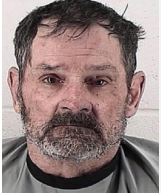
OLATHE, Kan. (AP) — A Missouri man convicted of fatally shooting three people at Jewish sites in Kansas has been sentenced to death.
A jury convicted Frazier Glenn Miller Jr. in August of one count of capital murder, three counts of attempted murder, and assault and weapons charges. The same jury recommended that Miller be sentenced to death.
On Tuesday, Judge Thomas Kelly Ryan followed that recommendation and ordered the death penalty.
Miller is an avowed anti-Semite who admitted that he shot the three in April 2014 because he wanted to kill Jews before he died. He has chronic emphysema and has said he doesn’t think he has long to live. All of his victims were Christians.
TOPEKA, Kan. (AP) — A new report by the Center for Public Integrity and Global Integrity gives Kansas a failing grade for government transparency.
The Topeka Capital-Journal reports the Washington, D.C.-based nonprofit news organization ranked the state 42nd in the nation for openness in its report released Monday.
The report cited the centralization of power in the executive branch, the Governmental Ethics Commission’s inability to audit lawmakers’ financial disclosures and use of private email addresses by Gov. Sam Brownback and administration officials.
The commission’s executive director, Carol Williams, says her seven-person staff is large enough to ensure lawmakers are filling out the forms, but not large enough to audit the roughly 6,000 forms it receives each year.
Kansas Secretary of State Kris Kobach says the report “contains errors,” and the report’s assertions that officials are not transparent are disingenuous.
——-
The state of Kansas is at the bottom of the class when it comes to public integrity, according to a new study.
The Center for Public Integrity released grades for each state Monday, finding Kansas scored an “F.”
The Center studied laws and systems used by each state to deter corruption, ranging from executive and judicial accountability to lobbying disclosure.
Six years ago Kris Kobach and myself were on strikingly different warpaths. Kobach had just launched his campaign for Kansas Secretary of State. I was earning my combat stripes and Afghan Campaign Medal in the desert valleys of Kandahar. There, I was fighting the Taliban, an enemy that – ironically – as a young man, Kris Kobach had advocated arming. An ambitious college kid, Kobach told his student newspaper “the Afghan rebels’ cause gets the least amount of attention and support in this country”. Many of those rebels soon became the Taliban – and are still at war with America today after training and harboring the terrorists that attacked us on September 11th killing more than 3,000 and sparking the longest war in American history.
But in 2009, my first mission in Afghanistan was straightforward, if not a simple task. We were there to foster the safe and free elections of the Afghan people. To give them a shot at enjoying the democracy that we treasure. Meanwhile, the mission Kris Kobach took on back here in Kansas was neither straightforward nor simple – he was out convince Kansans that voter fraud was common, rampant, and widespread, despite the lack of any evidence suggesting it.
It was startling to return home to Kansas in 2012 and learn what our new Secretary of State was up to. He wasn’t expanding access to democracy, or empowering people to vote, as we’d been fighting the Taliban to do in Afghanistan. Instead, he’d embarked on a campaign of intimidation and suppression.
Unfortunately, this only accelerated this past summer, when Governor Brownback signed into law everything that Kobach asked for. Senate Bill 34 gave the Kansas Secretary of State authority to prosecute voters. Kobach has pursued only three alleged cases of fraud to date, hardly the massive epidemic of fraud that he claimed was marring our elections. But in addition to his use of this the prosecutorial authority, Secretary Kobach has begun purging over 37,000 Kansans from the books who have failed to obey his rules – Kansans who in fact should have every right to vote. But instead of working to expand the access of Kansans to their right to vote, Kris Kobach is on the warpath to deny it to them.
According to recent news reports, many of these folks are active military personnel and veterans. And when contacted, they had no idea they were being denied their right to vote – or what they needed to do to maintain that right. It’s not the first time Kobach has used his office in a way that undermines the vote of our service members. Just last fall Kobach mailed out a letter to military members overseas, claiming their votes may not count due to pending lawsuits about Chad Taylor withdrawing from the U.S. Senate race. There was really no reason to do that mailing, except to try and diminish their likelihood of voting by making them feel like their votes wouldn’t count.
In only 6 years Kobach has transformed an effective, transparent Kansas Elections Office into one constantly marred by controversy. Data on election results has never been harder to come by. Free and fair elections have always been what makes American democracy exceptional – so sacrificing 37,000 voter registrants to try to prosecute 3 Kansans who may have accidentally voted in multiple states out of confusion or negligence is jarringly at odds with the foundations of our democracy. And while those three votes certainly didn’t change the outcome of any elections, unfortunately, Secretary Kobach’s voter intimidation tactics just might.
It’s relevant and important this Veterans Day. Kansans who have fought for freedom abroad – and who have monitored elections in parts of the world that had never voted before – are now finding themselves being potentially denied the right to vote at home. It’s an unacceptable treatment of any Kansan, but it’s a particularly unacceptable treatment of our patriots. We need accountability from this politician, and an end to these attacks on our fellow Kansans’ democratic rights.
Aaron Estabrook is a post 9/11 combat veteran and vice-president of the USD 383 Manhattan-Ogden Board of Education.
TOPEKA (AP)–An advocacy group’s leader is warning that Kansas is likely to lose its federal arts dollars early next year because the state isn’t providing enough funding for arts programs.
Hays resident Henry Schwaller IV is the Kansas Citizens for the Arts chairman. Schwaller said Tuesday expects the National Endowment for the Arts to withhold about $591,000 it had planned to send the state.
An NEA official told state officials in a September letter that Kansas must boost funding for its Creative Arts Industries Commission by nearly $225,000 to get the federal dollars. Schwaller is a CAIC member.
The NEA’s letter told the state it has until Jan. 15. That’s four days after the Legislature convenes its next annual session.
Schwaller said he’s not expecting Gov. Sam Brownback’s administration to find the additional funds.
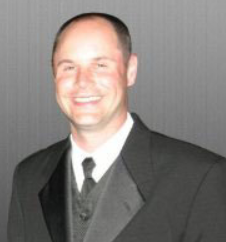
James Craig Dutton- courtesy photo Marietta Daily Journal
TOPEKA, Kan. (AP) — A former sales manager for the company that makes Glock firearms has been sentenced to 1½ years in prison for bribery.
The office of the U.S. Attorney for Kansas says 44-year-old James Craig Dutton, of Acworth, Georgia, pleaded guilty to one count of conspiracy to defraud Glock. The office says Dutton, who was an assistant national sales manager for Glock, accepted bribes and kickbacks from a Kansas gun dealer.
Dutton was sentenced Monday.
Co-defendant John Sullivan Ralph, III, was sentenced earlier to 18 months after pleading to conspiracy.
The prosecutor’s office says Ralph owned Olathe-based Global Guns & Hunting, Inc., and that Ralph admitted paying about $900,000 to Glock employees in exchange for preferential treatment.
Photo by Andy Marso Shawn Sullivan, Gov. Sam Brownback’s state budget director, answered lawmaker questions Monday about the administration’s plan to shift about $125 million to the state general fund. –
A budget deal in Washington, D.C., is helping Kansas balance its own books temporarily with an infusion of Medicaid cash. But a Democratic senator says the savings should be used to provide home and community-based services to Kansans with disabilities.
Gov. Sam Brownback’s budget director, Shawn Sullivan, answered lawmaker questions Monday about the administration’s plan to shift about $125 million to the state general fund.
The transfers are needed because state revenue estimators revised tax receipt projections down for the fourth straight time last week, leaving Kansas with a projected deficit for the fiscal year that ends June 30. Almost half of the $125 million comes from the state highway fund, but about $25 million of it comes from Medicaid.
Sullivan said some of that money is available because the D.C. budget deal reduced projected Medicare premiums for low-income residents who get their premiums paid through Medicaid. Sullivan said the rest of the Medicaid savings comes from revised actuarial cost estimates that will not affect any recipients or providers within KanCare, the state’s managed care Medicaid system that serves more than 425,000 Kansans.
“It does not involve any service reductions or provider rate reductions or changes,” Sullivan said. “It is, this part, a change in the estimates.”
While facing a tight budget in the last year, the state has used increased federal money from the Children’s Health Insurance Program and a prescription drug rebate program to fill gaps. Sen. Laura Kelly, a Topeka Democrat, asked Sullivan if the $25 million could be used to fund services for Kansans with disabilities on waiting lists for Medicaid programs that provide services to help them remain in their homes rather than institutions. Sullivan said they could, but the state’s budget picture compels the administration to go a different route.
“Just like anything, when you have savings, you can either choose to use that for state general fund or reappropriate to something else,” he said. “Yes, we could do that, but in our case we’re helping with the state general fund shortfall.” Sullivan said fully funding the current waiting lists would cost more than $100 million.
The Brownback administration has, in past years, used savings from the managed care switch to pare down some of the waiting lists.
After Monday’s meeting of the Legislative Budget Committee, Kelly said the administration also should consider using the latest savings to further reduce the number of people on the waiting lists, given that Brownback has made elimination of the lists a pre-condition of the state considering Medicaid expansion.
“We could take 25 percent of people off the waiting list, right now,” Kelly said. The $125 million in fund transfers also includes $9 million from the Children’s Initiatives Fund, which pays for early childhood health and education programs. Sullivan said the Children’s Cabinet that administers the fund had been improperly holding over money from the Early Childhood Grant Program from one year to the next.
He said bringing the $9 million into the general fund would not affect the program. Shannon Cotsoradis, president and CEO of the Topeka nonprofit Kansas Action for Children and a member of the Children’s Cabinet, disagreed.
In a statement released last week, Cotsoradis said nearly $60 million has been transferred out of the Children’s Initiatives Fund since passage of controversial income tax cuts in 2012.
“While Budget Director Sullivan continues to suggest these decisions are without consequences for our state’s children, that is simply false,” Cotsoradis said.
“Unlike the tax plan that got us into this perpetual budget crisis, these are evidence-based programs that offer a tremendous return on investment for the state while changing the course of a child’s entire life.”
The latest budget transfers also include $5 million from the Kansas Bioscience Authority, an agency that provides start-up help for human and animal health innovations.
KBA advocates say several years of budget cuts have put the future of the agency in doubt. Sullivan said the state also was transferring $3 million from the Health Care Access Improvement Program, $2.2 million from the Kansas Eligibility Enforcement System and $2.5 million from an Osawatomie State Hospital fee fund to help balance the budget.
He said the KEES savings came from payments that will not be made to the contractor Accenture due to ongoing delays in implementation of the computer system overhaul.
The Osawatomie State Hospital savings came from increased funding from non-state sources, such as patient co-pays and insurance payments. Some of the transfers are one-time money, but Sullivan said some may be carried over into the next fiscal year, when the state faces a projected deficit of $175 million.
Andy Marso is a reporter for Heartland Health Monitor, a news collaboration focusing on health issues and their impact in Missouri and Kansas.
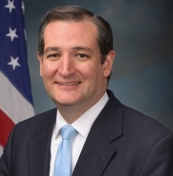
TOPEKA, Kan. (AP) — Sen. Ted Cruz has filed for the Kansas Republican Presidential caucus.
KSN-TV reports that Cruz is the fifth presidential candidate to file for the Kansas presidential caucus, which is scheduled to be held in March at about 95 different caucus locations around the state.
Other candidates who have filed for the Kansas caucus include former Florida Gov. Jeb Bush, Ohio Gov. John Kasich, Donald Trump and Ben Carson.

 Kansas Department of Agriculture