We have a brand new updated website! Click here to check it out!

Kansas battles pay-related turnover among prison staff

jail cellJOHN HANNA, AP Political Writer

TOPEKA, Kan. (AP) — Employee turnover at Kansas prisons has increased over the past five years, and the state’s corrections secretary and legislators agree that officers’ pay must rise if the state hopes to end a problem that’s now seen as a threat to public safety.

But a legislative committee’s endorsement last week of higher wages for uniformed officers raises potentially contentious questions about how to pay for them.

Republican Gov. Sam Brownback has ruled out further tax increases since he and the GOP-dominated Legislature raised sales and cigarette taxes in July to close an earlier shortfall.

Brownback’s stance — and many Republican lawmakers’ lack of interest in another tax debate — could force the Legislature into considering spending cuts elsewhere, perhaps even in aid to public schools, to boost pay for corrections officers.

Series of earthquakes continue in Oklahoma, felt in NW Kansas

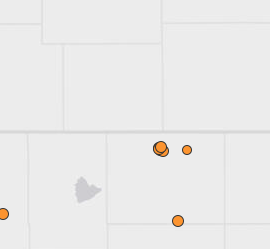
USGS earthquake map Saturday

MEDFORD, Okla. (AP) — A series of moderate earthquakes continues to shake northern Oklahoma, near the Kansas border.

The U.S. Geological Survey recorded a 3.5 magnitude earthquake nine miles northwest of Medford at 10:04 p.m. Saturday and a 3.4 magnitude quake in the same area at 2:29 a.m. Sunday. A 2.9 magnitude quake was recorded in the area at 9:31 a.m.

No injuries or damage are reported.

The quakes come after 17 earthquakes were recorded in the area from Friday night through Saturday afternoon — including magnitude 4.2 and 4.1 temblors near Medford that were reported felt in Oberlin, Kansas, some 400 miles away.

The Oklahoma Geological Survey has said many recent earthquakes in the state likely were triggered by the injection of wastewater from oil and natural gas drilling operations.

Kansas ranks low in providing summer meals to children

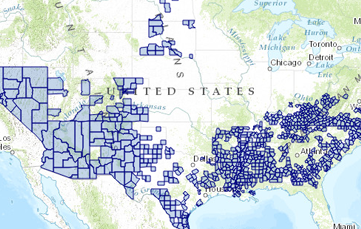
USDA image
USDA image

HUTCHINSON, Kan. (AP) — Kansas advocates for the poor say they are searching for sites to provide more summer meals to children.

During a regional Summer Meals Summit in Hutchinson this week, advocates said the state provides seven free summer lunches for every 100 schoolchildren who are eligible for free or reduced-priced lunches at school. A federal effort called Summer Food Service Program funds the meals.

The Hutchinson News reports only Oklahoma placed lower than Kansas in the number of meals it provides.

The Hutchinson meeting was one of five summer meals meetings held across the state recently.

Participants said transportation to meal sites is a major obstacle, particularly in rural areas. But others said providing the free meals is one of the most rewarding things a town can do for its citizens.

1 dead, 2 hospitalized after western Kan. rollover crash

fatalWICHITA COUNTY- A western Kansas man died in an accident just after 3:30a.m. on Sunday in Wichita County.

The Kansas Highway Patrol reported a 2010 Dodge Ram driven by Michael J. Beaver, 24, Scott City, was northbound on County Road 18 twenty miles north of Leoti.

The vehicle came to an intersection and missed the turn.

The driver overcorrected, the vehicle slid sideways, entered a ditch, and rolled.

A passenger Blake A. Nickelson, 22, Leoti, was pronounced dead at the scene and transported to Price and Sons Funeral Home.

Beaver and another passenger Lauren D. Apperson, 23, Scott City, were transported to the Wichita County Health Center in Leoti.

The KHP did not indicate whether they were properly restrained at the time of the accident.

Lawsuit against Barton Co. mental health provider, not former director

Screen Shot 2015-11-08 at 8.10.38 AM

Great Bend Post

GREAT BEND -When news came out last week that Dwight Young from the Center for Counseling and Consultation in Great Bend had sexual harassment allegations against him, most people assumed the women that filed the lawsuit were seeking action against Young.

Two women filed a federal lawsuit with reports of the former executive director demonstrating “serial predatory sexual behavior.”

The current executive director of the Center, Doug McNett, says the lawsuit is directed at the Center and not Mr. Young.

“The lawsuit is just against the center,” said McNett.” That makes it unique in terms of what we can and can’t say. We have an obligation to protect Mr. Young’s personnel records as well as these two individuals.”

One former and one current woman filed the lawsuit with representation from a Wichita lawyer. The civil case begins in the 1980s with reports of Young allegedly asking staff members about sexual habits, giving inappropriate gifts, having inappropriate conversations, and belittling women staff members.

McNett wanted to reassure the public that the mental health provider in Great Bend is operational throughout the lawsuit. “This lawsuit won’t impact the financial integrity of the agency,” he said. “We have professional liability insurance so the lawsuit will not impact or day to day or long term operations.”

The lawsuit also goes after McNett and The Center for Counseling and Consultation Board for hiring McNett as Young’s replacement instead of hiring one of the women from the lawsuit that was also qualified.
Young resigned as the executive director shortly after a local attorney was hired to investigate the claims against Young.

Applications open for small business funding to help grow exports

KS Dept of Commerce logoKansas Department of Commerce

TOPEKA–The Kansas Department of Commerce is now accepting applications from small businesses for programs and funding designed to help grow exports. These programs, which are being offered through the U.S. Small Business Administration (SBA) State Trade and Export Promotion (STEP) Grant, will help non-exporters begin exporting for the first time or existing exporters expand their export levels.

“Small businesses in our state have tremendous potential for growth through exporting,” said Kansas Commerce Interim Secretary Michael Copeland. “The programs offered by the STEP Grant will help these businesses gain experience and access the resources they need to become successful exporters. I encourage Kansas small businesses to visit Commerce’s website or to contact us to learn more about their export potential and these opportunities.”

Programs offered through the STEP Grant include export seminars and training courses; opportunities for participation in foreign trade shows and missions; and support for entering new markets. Since 2012, more than 30 small businesses in Kansas have participated in STEP grant programs and achieved $9.2 million in export sales. For the current grant year, SBA has awarded Kansas $296,533 in STEP funding. Commerce is administering the grant in tandem with the Kansas Department of Agriculture.

Businesses that wish to apply for support or that are interested in learning more about programs and eligibility should visit KansasCommerce.com/STEP.

Mizzou students, football players pressure school leaders

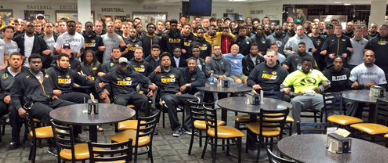
COLUMBIA, Mo. (AP) — Student protests at the University of Missouri over how racially charged incidents have been handled by school leaders have ramped up over the semester and reached a peak with 32 black football players now refusing to participate in team activities until the president is removed.

It’s the latest controversy at the state’s flagship university, following the removal of graduate students’ health care subsidies and an end to university contracts with a Planned Parenthood clinic.

Several members of the football team tweeted the team’s statement Saturday night.

Campus groups and Jonathan Butler, a black graduate student nearly a week into a hunger strike, have criticized university President Tim Wolfe over the handling of issues of race and discrimination. Wolfe met with Butler and student groups last week.

High court to hear Kan. man’s appeal over sex offender registration

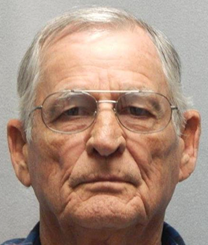
Lester Nichols- photo KBI

WASHINGTON (AP) — The Supreme Court will decide whether convicted sex offenders must update their status on the federal sex offender registry after moving to a foreign country.

The justices agreed Friday to resolve a split among lower courts that reached different outcomes in the cases of two men — one who lived in Kansas City, Kansas, and another who lived in Kansas City, Missouri.

The court will hear an appeal from Lester Nichols, a Kansas man who moved to the Philippines after his release from prison in 2012 without updating his registration. A federal appeals court in Denver upheld his conviction for violating the law.

But a federal appeals court in St. Louis said a convicted sex offender from Missouri did not have to register after he also moved to the Philippines.

FHSU student develops product that may change medicine forever

By JAMES BELL
Hays Post

It’s said necessity is the mother of invention, and one Fort Hays State University student saw a problem in a widely used and often deadly medical practice and immediately went to work on finding a solution, developing a system that has the potential to change medicine forever and save countless lives.

Screen Shot 2015-11-08 at 10.12.14 AM

In layman’s terms, the problem is simple. During a procedure known as Advanced Cardiovascular Life Support, a more medically advanced version of CPR, medical practitioners can give too much air to a victim, causing widespread damage to the body, complicating recovery and resuscitation, often resulting in death.

But as studies have shown the dangers and training emphasizes the importance of correctly administering airflow during ACLS, FHSU virtual college student Bobbi Sue McCollum has developed a simple solution to ensure only the correct amount of air is given to a patient. Her device could significantly improve the chances a patient will survive and be able to return to a normal life after the procedure.

“I couldn’t believe it when I left ACLS (training). There is nothing stopping anyone, with good intentions even, from hyperventilating people, and I knew there was probably some simple solution,” she said. “And I was sure that I could figure it out.”

And, if the excitement around the project is any indication, she did just that.

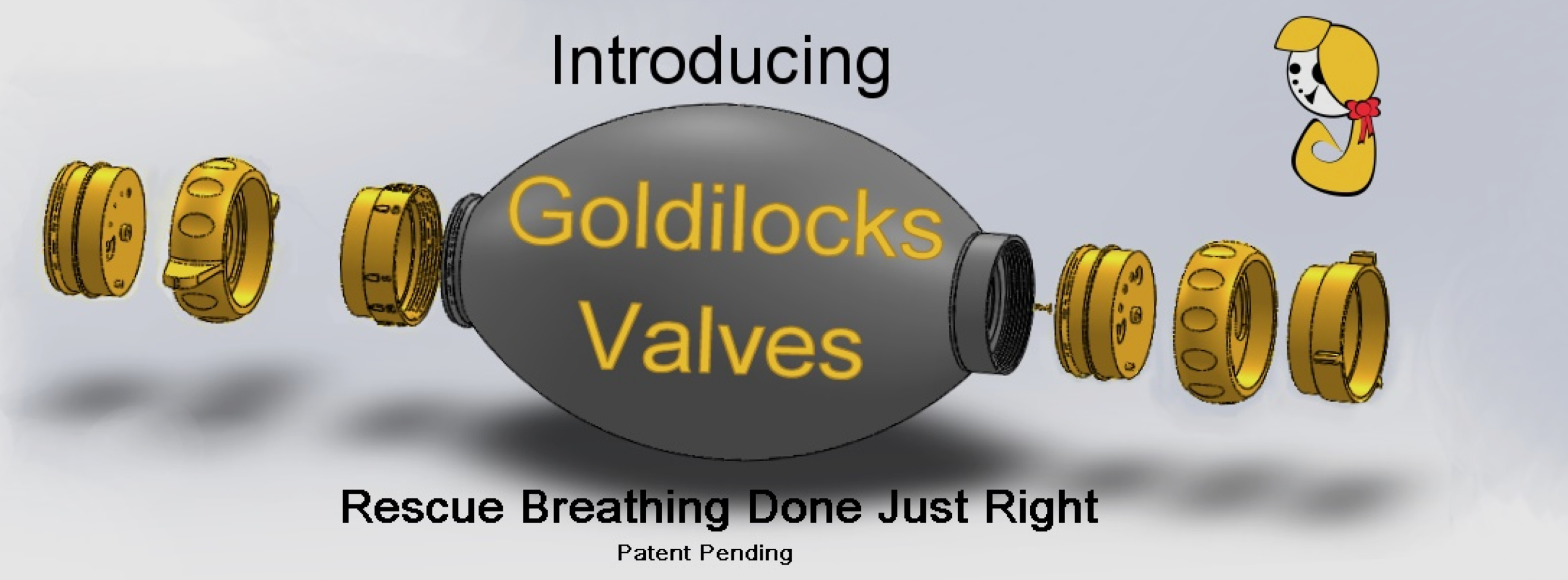
Goldilock valves give feedback to the operator, stopping the ability to compress air too many times during ACLS.

“With my system, you look at the patient and estimate their size – it is actually possible to estimate the amount of air someone needs by looking at them – so I made a system based on that,” McCollum said.

The valve which is attached to a bag which pushes air to the patient is adjusted to the patient’s size and regulates the flow of air into the bag.

Goldilock Valve

“You click it to that space and then it refills the bag a little slower,” she said. “When you feel it is fully re-inflated, five seconds has passed and it’s time to compress the bag again.”

There is nothing like this device currently available on the health care market.

The Problem

Air given during resuscitation when used properly should give 10 to 12 breaths per minute, but despite training, practitioners often triple that amount, causing hyperventilation.

“You have to imagine a scenario that someone is dying in front of you, six seconds is an eternity in that scenario,” McCollum said. “Studies show we’re doing it 30 to 37 times a minute we’re a compressing the bags.

“That’s correlated with a significant reduction in survival.”

While there is little data on the effect in humans available due to rising concerns in the medical community of admitting fault, it is a well-known and widespread problem.

“What’s interesting about this, they did all these animal studies and they know there is a decreased survival (rate),” she said.

Those numbers are hard to quantify to human patients, however, because medical providers are reluctant to assess the rate of hyperventilating rates because of liability issues, McCollum said.

“That’s a problem with medical culture. We are so afraid of being sued we have a problem really recognizing our own downfalls,” she said.

She believes this could be the biggest challenge in getting the device through the trial phase.

In one trial that she cited, human analog — pigs — were given proper respiratory rate and six out of seven lived. A second group given too much resuscitation — only one survived.

“We know it’s a problem. I don’t think the public understands the gravity of the problem,” McCollum said. “It is true that it happens frequently, but we didn’t know at the time it was so bad.”

Hyperinflation causes damage to the lungs, pushes air in the stomach and can create pneumonia from vomiting, which is one of the top reasons of death in intensive care units.

“The worst part is your lungs get so expanded they actually compress your heart down, so your heart has less and less room to refill with blood and push it back to your body,” McCollum said.

This starves the body from oxygen, including the brain.

“So the longer your code goes for the less and less likely if you are being hyperventilated the less and less likely you will come out with baseline neurological status,” she said.

The Fort Hays Connection

While McCollum lives in Oregon, she is originally from Nebraska and searched the area for a program to complete a bachelor’s in nursing and found FHSU to be a perfect fit.

“There is this huge push to have all RNs have bachelor’s, and they’re are really expensive programs mostly all over the country,” she said. “But I knew, since I was from the Midwest, I could get a good deal in the Midwest.

“Fort Hays has a great reputation, they have all the right accreditations that you need and they are really flexible. I could take it as slow or as fast as I wanted,” McCollum said.

She plans to graduate in December and, after working on the degree for over two years, and has found FHSU community connections even in Oregon.

“There are a lot of Fort Hays students out here,” she said. “There is a whole bunch of nurses that go to Fort Hays out here.”

The Next Step

Even as the device is still in development, the push to get to the field is strong — the faster it gets to market, the quicker patients will benefit from the life saving device.

“This month, I’ll have my third generation prototype come out,” McCollum said.

She is working with an air flow and mechanical engineer on the newest model.

Originally, she developed a two-valve system, based on average lung function, which wouldn’t work for every patient — so work continues to make it even more versatile.

“The new solution is even more simple, it’s elegant and it works for every patient,” she said.

That model is set to be released this week.

“I don’t think it will take much more to release a solid adult model,” McCollum said.

And work will not stop there. In January, a crowd-funding campaign is planned in order to develop a pediatric version of the device.

After the development is finalized, it will go to the FDA for approval, because the device is altering an existing device, it should move into a higher level of FDA testing, rather than the full line of testing, which usually takes years of research.

“I think we’re going to do a research trial and we have potentially contacted a place that will do research,” McCollum said. “I expect that once we do that, it shouldn’t take long to actually to be able to market it.”

While a device like this could net huge profits, she it not interested in creating a medical device empire, instead she simply wants to improve patient care. She said medical equipment marketing companies are pushing for moving the product along so the device can move into medical practices.

“I don’t want to manufacture or deal with any of that, I really just want to create this so we can stop hurting people when we are trying to help them,” she said.

She has no expectations of making huge profits from her device.

The Process and Expectations

Even with proper training, McCollum studied what actually happens during ACLS and thought there has to be a way to make the procedure better.

“My ‘eureka moment’ is when I pictured how it actually happens,” she said. “What they are actually doing is grabbing the bag, squeezing until their fingers touch, and then as soon as it re-inflates, they hesitate slightly then compress again. All I need to do is slow down the refill so they can feel that it is time to compress that bag again.

“I really think this whole thing is going to change the standard of care.”

She is especially hopeful that the biggest use of the device will help save soldiers in the field.

“In the military, we have all of these young guys that have strong healthy bodies that get trauma,” McCollum said, which makes them prime candidates for a form of resuscitation not complicated by disease.

She currently has provisional patents that could further development before the official submission and, as work continues, the final patent may be granted on the final form of the product, rather that its current iteration. Even with development still in progress, the outlook is good for McCollum and the patients her device will save.

“I feel so confident that I have created this concept that will save lives,” McCollum said.

For more information about the device and studies on the subject, McCollum has a website that can be visited here.

Ellis High School to present ‘Twelve Angry Jurors’

By JAMES BELL
Hays Post

Ellis High School Theatre will present “Twelve Angry Jurors,” a drama adapted from the screenplay by Reginald Rose in Nov. 13 and 14 at 7 p.m.

Doors open at 6:30 p.m. with an adult admission price of $5 and $3 for students.

The High School Drama Club will also be collecting donations for refreshments before and after the show.

The play has been made into several feature films over the years, most recently in 1997.

Play synopsis

A 19-year-old boy has just stood trial for the fatal stabbing of his father in this three-act drama. “He doesn’t stand a chance,” mutters the guard as the twelve jurors are taken into the bleak jury room. It looks like an open-and-shut case—until one of the jurors begins opening the others’ eyes to the facts. “This is a remarkable thing about democracy,” says the foreign-born juror, “that we are notified by mail to come down to this place—and decide on the guilt or innocence of a man, of a man we have not known before. We have nothing to gain or lose by our verdict. We should not make it a personal thing.” But personal it does become, with each juror revealing his or her own character as the various testimonies are re-examined, the murder is re-enacted and a new murder threat is born before their own eyes! Tempers get short, arguments grow heated, and the jurors become twelve angry people. The jurors’ final verdict and how they reach it—in tense scenes that will electrify your audience and keep them on the edge of their seats—add up to an exceptional piece of dramatic literature.

Cast and Crew

Foreman (Juror #1): Aspen Younger
Juror #2: LeeAnn Wilson
Juror #3: Dawson Sproul
Juror #4: Paige Molstad
Juror #5: Blakely Bittel
Juror #6: Skylar Gottschalk
Juror #7: Dalton Hensley
Juror #8: Rylee Torline
Juror #9: Maddy Gnad
Juror #10: Drew Keller
Juror #11: Sierra Pfannenstiel
Juror #12: Kaylyn Foster
Judge: Haley Reiter
Clerk: Jaylinn Pfeifer
Guards: Brendon Brenner, Brevin LaBarge, Bryce Younger, Aiden Johnson

Director: Alyssa Dawson
Assistant Director: Sarah Staten

Stage Managers: Aiden Johnson, Natalie Schoenberger, Haley Reiter
Stage Crew – Shelby Werth, Sierra Schmidt, Jaylinn Pfeifer, Katie Milbourne

Brownback tours Russell County sites on oil and gas field tour

Kansas Independent Oil & Gas Association

KIOGA provided our fifth annual oil and gas field tour with Governor Brownback on Nov. 4. The tour highlighted some of the technologies that are helping pave the way for finding and developing oil and natural gas reserves in Kansas and around the nation. Former KIOGA Chairman Tim Scheck, President of Scheck Oil Operations in Russell, organized the tour providing itinerary and sites to visit. Tim’s effort was nothing short of phenomenal.

The tour included a visit to a well site near Bunker Hill, Kansas. Representatives from several Kansas oil and gas industry companies had equipment and representatives on site providing explanations to Governor Brownback and the group about the operations and services used to drill and complete an oil and gas well in Kansas. Companies providing equipment and explanations on site were: Scheck Oil Operations, Southwind Drilling, Andy’s Mud Co., RPM Services Trilobite Testing, Inc., Log-Tech of Kansas, Express Well Service, Matt’s Cat, CHS, Quality Oilwell Cementing, Dan’s Packer Service, Lone Wolf Service Owen McQuade Pumping, Pioneer Wireline Service, and Kansas Strong.

Over forty folks joined the tour including Kansas Governor Sam Brownback, Kansas State Representative Troy Waymaster, Fort Hays State University President Mirta Martin and several representatives from FHSU, officials from Russell County, City of Russell, Russell Regional Hospital, Russell USD Schools including high school students, representatives from KRSL Russell Radio, and several oil and gas industry folks.

“The oil and gas industry is a vital segment of our state and national economy,” said Governor Brownback. “The people who work in this industry support a world-class operation and they do it in a safe and environmentally conscious way.”

“We feel it is important for state leaders to understand and see firsthand what is happening in the oil and gas industry in Kansas,” said Edward Cross, KIOGA President. “The tour was very beneficial for illustrating a number of field operations that government officials often hear about but most have never witnessed.”

Novel Cancer Treatment At KU Signals Start Of ‘Remarkable Revolution’

By DAN MARGOLIES

Carl Adams has an aggressive form of blood cancer that has resisted multiple attempts to treat it through chemotherapy. So in

Carl Adams prepares for the reinfusion of his engineered T cells Tuesday at the University of Kansas Hospital in Kansas City, Kansas. ALEX SMITH HEARTLAND HEALTH MONITOR
Carl Adams prepares for the reinfusion of his engineered T cells Tuesday at the University of Kansas Hospital in Kansas City, Kansas.
ALEX SMITH HEARTLAND HEALTH MONITOR

September, the 47-year-old father of two young daughters traveled halfway around the world with his family from their native Australia to The University of Kansas Cancer Center. There, a clinical trial is underway to test a therapy that harnesses the power of a patient’s own immune system to attack malignant cells.

It’s called CAR T-cell therapy: removing T cells, a type of white blood cell, from a patient’s body, genetically engineering them to recognize and attack the patient’s tumors, and putting the T cells back into the patient.

On Tuesday, after a traffic delay caused by the Kansas City Royals parade, Adams’ engineered T cells arrived back in Kansas City, where they were reinfused in his body. The whole procedure took less than five minutes.

“They’re like super cells that are going to attack the cancer and we’ve got plenty in here for them to chase and chomp, so we’re hoping they do their job over the next couple of days,” Adams said minutes before a nurse injected him with the T cells.

Even if it works, his doctor says he’ll still need a stem cell transplant from a matching donor. And there are known side effects, including fever and low blood pressure. But already, with three patients having received CAR T-cell therapy at KU, referrals are coming from as far afield as Portugal and Canada as well as the U.S. The second patient to receive the treatment at KU, a 27-year old Atchison, Kansas, mother of two, is said to be doing well.

Although lots of cancer treatments have been hailed as “blockbusters” only to disappoint, CAR T-cell therapy (CAR stands for chimeric antigen receptors) has generated lots of excitement among researchers. Unlike chemotherapy and radiation, which kill “good” and “bad” cells alike, CAR T-cell targets the disease by zeroing in on specific proteins found on the surfaces of the malignant cells.

“What I can tell you, as someone who’s been taking care of leukemias and lymphomas and transplant patients for 26 years now, this is the most hopeful I’ve ever been in my entire career,” says Dr. Joseph McGuirk, Adams’ physician and the director of

Dr. Joseph McGuirk, Adams' physician, calls CAR T-cell therapy the 'beginning of a remarkable revolution.' CREDIT UNIVERSITY OF KANSAS CANCER CENTER
Dr. Joseph McGuirk, Adams’ physician, calls CAR T-cell therapy the ‘beginning of a remarkable revolution.’
CREDIT UNIVERSITY OF KANSAS CANCER CENTER

blood cancers and stem cell transplants at KU Cancer Center.

Out of options

Adams has an extremely aggressive form of cancer called diffuse large B-cell lymphoma, or DLBCL. Among adults, it’s the most common form of non-Hodgkin’s lymphoma, a group of blood cancers. Adams had tumors in his chest, abdomen and bladder.

Diagnosed in Australia in April, Adams says he underwent about five rounds of chemotherapy before, as he puts it, “we had to think of what we had to do next.”

Out of options in Australia, he decided to seek treatment in the United States. So Adams, a business consultant for the global consulting firm KPMG; his wife Stacey; and their two daughters, ages 11 and 6, uprooted themselves from their home in Perth and made tracks for Houston’s M.D. Anderson Cancer Center. Doctors there pointed him to KU Cancer Center, where Phase II of the CAR T-cell clinical trial was underway to determine whether the treatment is effective and to evaluate its safety.

Adams and his wife found themselves a furnished apartment just north of the Country Club Plaza, enrolled their girls in school and embarked on the medical odyssey that culminated with the infusion of his engineered T cells on Tuesday.

But because the chemotherapy had suppressed his T cells, first there was a period of watchful waiting until he’d regained a sufficient number to be extracted. Once that happened, his T cells were shipped to a lab where they were genetically modified to create special receptors on their surface, the chimeric antigen receptors from which the therapy takes its name.

The engineered T cells were then grown to number in the billions. After that, they were shipped back to KU in a canister that was cooled to sub-zero temperatures to keep them preserved. At that point, the cells, a cloudy mixture amounting to no more than a few teaspoons in volume, were injected into Adams’ bloodstream.

By Tuesday night, Adams had begun running a fever, the result of his T cells releasing cytokines, small proteins activated as the T cells attack the malignant cells.

Billions of Adams' engineered T cells were shipped to KU Hospital in this canister on Tuesday and reinfused in his body. CREDIT ALEX SMITH / HEARTLAND HEALTH MONITOR
Billions of Adams’ engineered T cells were shipped to KU Hospital in this canister on Tuesday and reinfused in his body.
CREDIT ALEX SMITH / HEARTLAND HEALTH MONITOR

“These T cells can be so potent in releasing these molecules, so powerful against the cancer, that you can have a bad case of the flu times 10,” McGuirk says.

The symptoms are usually manageable, although the second patient at KU to receive the therapy ended up in the intensive care unit for several days.

“She did O.K., and overwhelmingly, patients do O.K., but it can be quite dramatic,” McGuirk says.

‘Remarkable remission rates’

The Phase II clinical trial at KU comes after early-stage trials at the University of Pennsylvania that demonstrated CAR T-cell therapy’s effectiveness in patients with advanced acute lymphoblastic leukemia, or ALL. In many cases, patients went into complete remission and have remained cancer-free.

“All of these trials are treating patients who have far-advanced and refractory or resistant disease,” says Dr. David Porter, one of the leaders of the study at Penn. “They’re no longer responding to conventional therapies and many of these patients have no other treatment options. And this immune therapy approach, using these T cells that are gene modified to attack their cancer, has resulted in really rather remarkable remission rates.”

Penn licensed its technology to engineer and grow the T cells to Novartis, the Swiss pharmaceutical giant that is sponsoring the clinical trial at KU. The hope is that manufacturing can be developed on a scale sufficient to make it practical to carry out immunotherapy on large populations of patients.

“People used to think that cell therapy was so personalized and so individualized that it was never going to be practical on any large scale, but I think those manufacturing issues have been worked out,” Porter says.
Even if the therapy works, however, McGuirk says Adams and the other patients enrolled in KU’s trial will still need stem cell transplants from matching donors. While CAR T-cell therapy may prove curative, it’s simply too soon to tell.

“Until we have more data and we know that it’s potentially curative, the insurance policy is to transplant them,” McGuirk says. “Because we know that that has a clear-cut, defined chance of curing their disease.”

Indeed, researchers caution that while early results of CAR T-cell therapy have been promising, the clinical trials are still in their early phases and large groups of patients have yet to be treated. And while KU is bearing the cost of treatment for enrollees in the clinical trial, if the therapy does prove successful, it undoubtedly will end up being very expensive.

“What I can tell you from our own experience – and I’m so excited about the potential of this therapy to cure patients with terrible cancers and I think it has very broad applications – I think it’s going to be very costly,” McGuirk says. “But to come up with a number, I’d just be pulling it out of thin air.”

That said, McGuirk calls the personalized treatments that CAR T-cell therapy represents “astounding in their potential.”

“We’re at the beginning of a remarkable revolution and we’re going to see an incredible story unfold in the next decade,” he says. “I’m confident that there’s now enough science behind this and experience that that’s what’s coming down the line.”

Porter is just as emphatic.

“We have patients now over five years from their treatment in remission, which is just unheard of for other types of treatment,” he says. “So I really do believe it is a breakthrough and some of the hype is warranted.”

Dan Margolies, editor of the Heartland Health Monitor team. You can reach him on Twitter @DanMargolies.

Kansas man hospitalized after SUV rolls

Screen Shot 2014-07-03 at 5.13.15 AMTOPEKA – A Kansas man was injured in an accident just after 8p.m. on Saturday in Shawnee County.

The Kansas Highway Patrol reported a 2002 Hyundai Santa Fe driven by Tyler Dean Johnson, 23, Topeka, was southbound on Kansas 4 three miles northeast of Topeka.

The SUV swerved to miss a deer, ran off the roadway and rolled onto its top into the east ditch.

Johnson was transported to Stormont Vail.

He was properly restrained at the time of the accident, according to the KHP.

Copyright Eagle Radio | FCC Public Files | EEO Public File