JOPLIN, Mo. – Fort Hays State’s Cory Keehn finished in second place individually at the NCAA Central Regional Cross Country Championships on Saturday. Keehn and Vincent Kiprop of Missouri Southern repeated their performances from the MIAA Championships as Kiprop was the individual champion and Keehn the runner-up on the 10K course.
Keehn covered the 10K course in 29:51, just 12 seconds back of Kiprop who won the race with a time of 29:39. They were the only two runners in the field to run sub-30 minutes.
Jacob Thomas was the next finisher for the Tigers in 38th with a time of 31:51. Troy Wineinger was 51st with a time of 32:03. Israel Baro took 59th in 32:12 and Seth Parres rounded out the scoring for FHSU in 67th at 32:24.
The Tigers took eighth as a team with 217 points and finished fourth out of the MIAA squads competing. Augustana won the team title with 82 points, the only team inside 100 points. East Central was second with 104 and Nebraska-Kearney was third with 119.
JOPLIN, Mo. – Fort Hays State women’s cross country finished sixth at the NCAA Central Regional Cross Country Championship on Saturday. The Tigers came up just one place shy of qualifying for the NCAA Championships, finishing with 166 points.
Shea Bonine led the Tigers individually for the second straight race, finishing 25th. She ran a time of 21:59 on the 6K course. Micki Krzewski, Chelsea Jackson and Sophie Dalmasso packed together to finish 27th, 28th, and 30threspectively. Krzesinski ran a time of 22:05, Jackson ran 22:08, and Dalmasso ran 22:10. Keanu Bradley rounded out the scorers for FHSU in 57th with a time of 22:49.
The Tigers were the second-best MIAA team in the field on Saturday. After finishing third at the MIAA Championships, the Tigers bested Missouri Southern on its home course. Southwest Baptist won the regional with 79 points, Minnesota-Duluth was second with 99 points, and Augustana was third with 115. University of Mary had 123 points and Harding had 132.
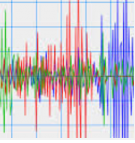
MEDFORD, Okla. (AP) — The U.S. Geological Survey reports a series of earthquakes along the Oklahoma-Kansas border — including magnitude 4.2 and 4.1 temblors near Medford.
Emergency management and law enforcement officials say no injuries or damage are reported.
The 4.2 quake was recorded at 12:29 p.m. Saturday nine miles northwest of Medford, the same area where a 4.1 magnitude quake was recorded at 5:11 a.m. Reports on the USGS website say it was felt in Oberlin, Kansas, some 400 miles away.
The two are among 11 earthquakes in north-central Oklahoma and south-central Kansas. The others ranged from magnitude from 2.5 to 3.5.
The Oklahoma Geological Survey has said many recent earthquakes in the state likely were triggered by the injection of wastewater from oil and natural gas drilling operations.
LOLITA C. BALDOR, Associated Press
KATHLEEN HENNESSEY, Associated Press
WASHINGTON (AP) — U.S. officials say the Pentagon’s plan outlining the long-stalled effort to close the Guantanamo Bay detention center, expected next week, includes details suggesting that the Centennial Correctional Facility in Colorado is one suitable site to send detainees whom officials believe should never be released.
The plan represents a last-gasp effort by the Obama administration to convince Congress that detainees who can’t be transferred safely to other countries should be housed in a U.S.-based prison.
Administration officials say the plan makes no recommendations on which U.S. site is preferred and provides no rankings. But it lists the seven prison sites in Colorado, South Carolina and Kansas visited by officials and includes advantages and disadvantages.
The officials spoke on condition of anonymity because they aren’t authorized to discuss the matter publicly.
HAVEN– A Kansas man was injured in an accident just before 6p.m. on Friday in Reno County.
The Sheriff’s office reported a combine driven by Leroy Schmidt was traveling on Parallel at Rayl Road when the vehicle rolled off a bridge and into a culvert.
Schmidt was ejected from the combine and trapped under the header.
Haven EMS and Fire freed him and transported him to a Wichita hospital for head and back injuries, according to the sheriff.
Listen as ‘Voice of the Chiefs’ Mitch Holthus reviews last week’s trip to London and Chiefs win over the Lions. Kansas City is off this Sunday. They resume their season November 15 in Denver against the Broncos.
The Holthus Hotline airs Saturday at 6:30am during the Chiefs season.
Janessa Miller of Gorham was recently named as one of three northwest Kansas winners in the 2015 Put the Brakes on Fatalities poster contest.
Miller was awarded first place in the 5- to 7-year-old age group and will receive a bicycle and helmet donated by Safe Kids Kansas. The prizes will be presented by the Kansas Department of Transportation and the Kansas Highway Patrol on Monday at 11 a.m. at the city park in Gorham. In case of inclement weather, the presentation will take place at the Gorham city office.
A total of 1,118 kids across Kansas ages 5 to 13 took the time to think about safety and participated in the contest. Put the Brakes on Fatalities Day is a nationwide effort to increase roadway safety and reduce all traffic fatalities.
For more information, visit www.ksdot.org/events/PutTheBrakesOnFatalitiesDay.
Class 6A – Regional
Blue Valley Stillwell 37, SM West 14
Derby 52, Topeka 21
Junction City 56, Hutchinson 21
Lawrence 56, SM North 32
Lawrence Free State 49, Wichita West 0
Olathe North 35, BV North 28
SM East 49, BV Northwest 13
Wichita Northwest 55, Wichita North 13
Class 5A – Regional
Goddard-Eisenhower 20, Kapaun Mount Carmel 14
Maize South 26, Great Bend 14
Mill Valley 49, Leavenworth 0
Pittsburg 49, Shawnee Heights 0
St. James Academy 41, Lansing 20
St. Thomas Aquinas 55, Topeka Seaman 21
Wichita Bishop Carroll 31, Salina South 14
Wichita Heights 41, Goddard 27
Class 4A, Division I – Regional
Abilene 43, Ulysses 38
Andover Central 47, Independence 13
Basehor-Linwood 41, Louisburg 34
Bishop Miege 61, KC Piper 12
Buhler 35, Mulvane 28
Eudora 33, Fort Scott 7
Paola 38, DeSoto 21
Topeka Hayden 21, Augusta 0
Class 4A, Divisoin II – Regional
Andale 60, Nickerson 45
Colby 14, Hugoton 2
Columbus 55, Anderson County 7
Frontenac 38, Girard 6
Holcomb 48, Concordia 0
Holton 35, Osawatomie 12
Santa Fe Trail 35, Jefferson West 22
Wamego 28, Clearwater 27
Class 2-1A – Regional
Jackson Heights 24, Jefferson North 14
Lyndon 48, Mission Valley 32
Meade 42, Ellis 14
Oakley 45, Syracuse 6
Olpe 35, Northern Heights 6
Phillipsburg 38, Salina Sacred Heart 13
Smith Center 48, Sedgwick 21
Troy 67, Wabaunsee 20
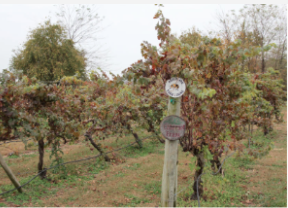
A ‘pesticide free zone’ sign hangs at the Somerset Ridge Vineyard and Winery near Paola, Kansas. Owner Dennis Reynolds says potential changes to the state’s weed eradication laws could threaten his vineyard. CREDIT ANDY MARSO / HEARTLAND HEALTH MONITOR
The rows of grapevines at Somerset Ridge Vineyard and Winery near Paola, Kansas, are withering, with dying leaves and shriveling fruit.
But that’s expected this time of year.
The prospect of it happening in the middle of the growing season concerns owner Dennis Reynolds more. Grapes are a sensitive crop, especially when it comes to herbicides that may drift over from neighboring farms or ditches.
“In certain states their use is heavily restricted or banned in certain areas,” Reynolds said of the chemicals that kill weeds. “But in a state like Kansas — where sensitive crop producers are very small in number and economic impact so far, whereas large-scale farmers that use these herbicides have much more political power — then we see kind of unfettered usage of them.”
The Kansas Legislature is mulling changes to its weed eradication laws — changes that could affect where and when such herbicides are sprayed.
Senate Bill 134 https://www.kslegislature.org/li/b2015_16/measures/sb134/ would shift the responsibility for determining which plants should be designated “noxious weeds,” and subsequently targeted for destruction, from the Legislature to the Kansas Department of Agriculture. It also would give more latitude to individual counties to designate noxious weeds and spray them with increasingly caustic substances.
Proponents say the changes will inject more science into the process of weed eradication and enable government to move more quickly to get rid of invasive species before they crowd out cash crops and good livestock forage.
But opponents worry that big business will control the process and that the chemicals used to eradicate problem weeds will have unintended consequences not only for products like Reynolds’ grapes but for human health.
Advisory panel
Kansas has 12 weeds declared “noxious” by the Legislature, including the white-flowered Sericea lespedeza and the thorny-looking musk thistle.
Chad Bontrager, deputy secretary of the Kansas Department of Agriculture, said the current definition of a noxious weed in state law is “a little bit circular.” It basically states that a noxious weed is any weed that the Legislature has declared noxious.
Once a weed is declared noxious, landowners are required by law to control and limit it on their property https://agriculture.ks.gov/docs/default-source/statutes-ppwc/noxious_weed.pdf?sfvrsn=2 . Government subsidies for herbicides — the preferred control method — are provided https://agriculture.ks.gov/divisions-programs/plant-protect-weed-control/noxious-weed-control-program . County weed directors are empowered to go onto any property and eradicate weeds at the owner’s expense if the owner does not comply with the law.
Bontrager told the Legislature’s joint 2015 Special Committee on Agriculture and Natural Resources https://www.kslegislature.org/li/b2015_16/committees/ctte_spc_2015_special_committee_on_agriculture_a_1/ last month that a host of factors should be taken into account when deciding whether a weed is “noxious”: Is it an invasive species? What’s its life span? What are its reproductive methods, annual seed production and germination? Is it a host for pests or pathogens? And what effect does it have on native species?
While the Legislature may consider all those factors, under current law it’s not a requirement.
“The Department of Agriculture would like to see a more rigorous, scientific and objective evaluation of potential noxious weeds in order to ensure we’re doing all we can to protect plant health and land owners in our state,” Bontrager said.
SB 134 would give the agriculture secretary the final word in declaring weeds “noxious,” after consulting with an 11-member advisory committee. The committee members, appointed by the secretary, would be:
Three private landowners.
Two weed specialists from Kansas State University recommended by university officials.
Two agriculture industry representatives recommended by the Kansas Agribusiness Retailers Association.
Two county weed directors recommended by the Kansas County Weed Directors Association.
One county commissioner recommended by the Kansas Association of Counties.
One natural resource management professional from the Kansas Department of Wildlife, Parks and Tourism.
The agribusiness retailers association and the Kansas Cooperative Council are on board with the changes. Lobbyists for those organizations said they usually prefer that new mandates be made by the Legislature through statute rather than through rules and regulations from executive branch officials. But in this case, the desire to take a more scientific approach to noxious weed designation trumped that philosophy, they said.
Absent from the advisory council is any seat specifically for those who produce herbicide-sensitive crops like grapes or cotton.
“We would certainly want the sensitive crop growers to be represented on any such advisory committee,” Reynolds said.
Paul Johnson is a lobbyist for the Kansas Rural Center, a nonprofit focused on sustainability.
Johnson said one of the three landowner seats on the advisory board should go to a sensitive crop producer. In addition, he said, the board should include a seat for someone from an environmental group like the Sierra Club or Audubon of Kansas.
Zack Pistora, the Kansas Sierra Club’s lobbyist, suggested the panel should include an expert from the Kansas Department of Health and Environment to advise on herbicide toxicity.
“The bugs and superweeds are starting to happen, so we’re escalating the type of chemicals we’re using,” Pistora said. “It’s a concern.”
Counties get more leeway
Johnson also is concerned about the increasing toxicity of herbicides used to kill noxious weeds.
He believes another provision in SB 134 would give city and county governments the authority to declare any weed not on the state list noxious in their jurisdiction, and allow county officials to use any chemical herbicide to kill it on public lands — even chemicals not on the state’s cost-sharing list https://agriculture.ks.gov/docs/default-source/pp-noxious-weed-control/cost-share-herbicides.pdf?sfvrsn=0 .
Johnson said many weeds used to be controlled with a chemical herbicide called glyphosate, commonly known by its commercial name, Roundup.
But as plants have developed resistance to that, a more powerful herbicide known as 2, 4-D has been employed.
“I think we’re at the point where agribusiness is getting real concerned about the weed situation because they’ve overused glyphosate and Roundup Ready, and more superweeds are coming into the process,” Johnson said. “They just want a quicker way to identify plants they can’t control with regular herbicides that we have today and just step up the toxicity.”
He fears that the noxious weed law is on its way to being streamlined so that more weeds can be added and more toxic herbicides can be used without deliberation during the legislative process — a process that ensured environmentalists were able to air their concerns during committee hearings.
Any changes to the noxious weed law, he said, should include a provision requiring landowners to use the “least toxic chemicals in regards to human and animal health” as they start trying to eradicate their weeds and then step up from there.
A 13-nation study on the cancer-causing potential of 2, 4-D was published in June in The Lancet https://www.thelancet.com/journals/lanonc/article/PIIS1470-2045%2815%2900081-9/fulltext . The researchers determined there was “inadequate evidence” of a link between cancer and high levels of 2, 4-D exposure in workers who manufacture and apply the substance.
But there is evidence that the herbicide can cause damage to crops like grapes, even at far lower application rates than those recommended by the product label https://www.extension.purdue.edu/extmedia/ho/dw-10-w.pdf .
It also tends to drift farther than other herbicides — a concern for people like Reynolds.
There are other methods for preventing and controlling problem weeds, but herbicides frequently are the most effective.
Pistora of the Sierra Club said controlling noxious weeds is important to protect native plants and animals, but a judicious, deliberate approach to eradicating problem weeds is best.
“It is a balance,” he said.
Andy Marso is a reporter for Heartland Health Monitor, a news collaboration focusing on health issues and their impact in Missouri and Kansas.
ANDOVER –Two Kansas men, including a sheriff’s deputy were injured in an accident just before 8p.m. on Friday in Butler County.
The Kansas Highway Patrol reported a 2013 Dodge Charger driven by Butler County Sheriff’s Deputy Kevin M. Kichler, 38, El Dorado, was southbound on Butler Road in Andover.
The Charger attempted to make a left turn onto 120th and turned in front of a 2004 Toyota Rav 4 driven by Albert N. Gale, 59, Rose Hill.
The Toyota struck the Charger in the rear passenger door.
Kichler and Gale were transported to Wesley Medical Center. Gale was not wearing a seat belt, according to the KHP.
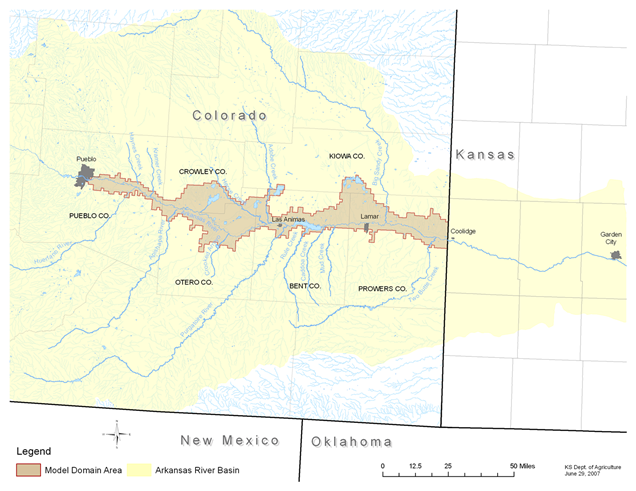
GARDEN CITY–The Arkansas River Compact Administration annual meeting will be Thursday, Dec. 10, at 9:00 a.m. at the Clarion Inn, 1911 E Kansas Ave, Garden City. The meeting will be recessed for lunch and reconvened for the completion of business in the afternoon as necessary.
ARCA administers provisions of the Kansas-Colorado Arkansas River Compact, including operations of the John Martin Reservoir.
Topics to be covered at the annual meeting include a review of John Martin Reservoir operations, compliance update, committee reports, and updates from state and federal agencies.
Kansas has three representatives who serve on ARCA, including David Barfield, chief engineer of the Kansas Department of Agriculture’s Division of Water Resources; Randy Hayzlett, Lakin; and Hal Scheuerman, Deerfield.
ARCA’s operations, administrative, legal, and engineering committees will meet on Wednesday, Dec. 9, at 1:30 p.m. at the Clarion Inn.
The Kansas-Colorado Arkansas River Compact was negotiated in 1948 between Kansas and Colorado with participation by the federal government. Its stated purposes are to settle existing disputes and remove causes of future controversy between Colorado and Kansas regarding Arkansas River water and to equitably divide and apportion the water between Colorado and Kansas, including benefits arising from John Martin Reservoir.