The Union Pacific Railroad will close its railroad crossing on U.S. 83 near Oakley for repairs starting Monday. The work is expected to be completed and the road reopened by Wednesday.
Traffic will be diverted around the crossing using U.S. 40 and I-70. For more information about the closing, contact KDOT area engineer Mathew Withington at 785-672-3113.
The Kansas State Board of Education announced a new and bold vision for education on Oct. 27. “Kansas will lead the world in the success of each student.” The new Kansas Vision is a direct result of a statewide conversation with more than 2,000 Kansans telling us what they want from their state education system.
The data collected challenged the status quo and gave the State Board a new and exciting direction. Parents, teachers and the business community are demanding higher standards in academic skills, as well employability and citizenship skills. In fact, the data tell us schools should give even more focus to the skills and characteristics of nonacademic traits, such as teamwork, showing up on time, persistence, collaboration and community service. Business leaders said overwhelmingly (81 percent) that more focus must be placed on nonacademic skills.
All agreed Kansas needs to move away from a “one-size-fits-all” system that relies exclusively on State Assessments from No Child Left Behind. The state of Kansas needs to have a more student-focused system that provides support and resources for individual success.
When asked “What needs to change?” to insure such a system, the board began by looking at policies and regulations that include graduation requirements, how students earn credits, curriculum, school accreditation and standards. Services and opportunities Kansas provides students must include Individual Plans of Study, increased counseling and social worker support, high-quality early preschool and all-day kindergarten and improved alignment from pre-K through post-secondary. The State Board will revisit its College and Career Ready definition and revise it to include citizenship and civic readiness.
The new Vision for Kansas is more than just changing things around at the edges of our educational system. It is about what we value. It is changing the culture of schools. The Vision is for high standards and expectations for each student in academic and nonacademic areas across Kansas.
The new Vision for Kansas isn’t about regulations and top-down leadership; it must include all stakeholders and be led by teachers, local boards, and business and university partners. But most importantly, the Vision must be embraced by parents, grandparents and all citizens of our state. It isn’t about money! Yes, we as a State Board and elected officials must be good stewards and wise in our use of the state resources, but equally as important, we must give the children we serve the gift of a bright and hopeful future. They are the future of our state and nation. “Kansans CAN” lead the world in the success of each student! Will you join us?
Jim McNiece Chairman, Kansas State Board of Education Wichita, KS
Supporters of banning the sale of cigarettes to teens and young adults in the Kansas City area may be close to landing their first major coup.
On Monday night, a legislative committee of the Unified Government of Wyandotte County/Kansas City, Kansas, one of the region’s largest municipalities, endorsed revising its legal code to ban the sale of cigarettes to anyone under the age of 21. The current age under state law is 18.
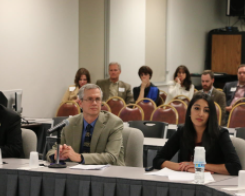
“We know it’s important,” Commissioner Melissa Bynum told representatives of the Tobacco 21 | KC campaign, an initiative of Healthy KC, which is a partnership between the Greater Kansas City Chamber of Commerce and Blue Cross and Blue Shield of Kansas City.
The full commission could consider the revisions as early as next month, said Commissioner Ann Brandau-Murguia, who is championing the campaign among elected officials in the unified government.
Announced last Thursday, Tobacco 21 | KC aims to make 21 the legal age of sale of tobacco products in all of the roughly 100 municipalities in the Kansas City region. Proponents argue that stopping people from smoking at an early age should cut down on the number of lifelong smokers.
With a population of nearly 162,000 residents, Wyandotte County has about 8 percent of the population in and around Kansas City. The county is nearly as large as Overland Park and has more people than Olathe, with 128,000 residents.
Commissioner Mike Kane was the lone dissenter Monday among the five members of the Administration and Human Services Committee.
“You did have a good presentation, but I’m not interested in it,” Kane told the Tobacco 21 | KC representatives. “We are here to govern, not dictate.”
He said that members of the armed forces are under a lot of stress – even those who are younger than 21 – and that they should have the right to purchase cigarettes if that helps them relax.
But as a self-employed optometrist, Commissioner Jane Philbrook identified with arguments from the Tobacco 21 | KC representatives that smokers can hurt the bottom line. Productivity suffers when smokers go outside to have a cigarette, she said.
The Tobacco 21 | KC campaign also points to research estimating that increasing the age at which people can buy cigarettes to 21 around the country would only decrease tobacco retailer and industry sales by about 2 percent.
Murguia and other campaign officials stressed that it’s not their intent to criminalize possession of cigarettes among older teens or even target people who might buy cigarettes for under-aged youths.
“It is not a gotcha game,” Brandau-Murguia said.
She didn’t rule out a move in that direction, though.
Brandau-Murguia said other commissioners likely share Kane’s sentiments but the limited scope of the proposed ordinance change could garner a majority on the full commission.
The region-wide campaign comes at a fortuitous time for the unified government, said Wesley McKain, supervisor of the Health Department’s Healthy Communities Division.
With the help of a Chronic Disease Risk Reduction Grant from the Kansas Department of Health and Environment, the health department has just hired a tobacco-reduction coordinator.
The new coordinator is providing staff support to a newly created Tobacco-Free-Wyandotte Action Team, which has joined the five other long-standing teams that are part of Healthy Communities Wyandotte. The unified government began the effort six years ago when it finished last among all Kansas counties in overall health outcomes.
Mike Sherry is a reporter for Heartland Health Monitor, a news collaboration focusing on health issues and their impact in Missouri and Kansas.
BURLINGTON–The Kansas Wildlife, Parks and Tourism (KDWPT) Commission approved a proposal to raise fees for fishing and hunting licenses at their public meeting in Burlington on October 22, 2015. The new fees will be effective January 1, 2016. KDWPT staff have been discussing fee increases since early last spring and presented a draft proposal before the Commission at their public meeting in August.
Fee increases were deemed necessary to ensure pivotal programs important to hunters and anglers can be maintained and enhanced. Basic hunting and fishing license fees haven’t increased since 2002, and the price of resident deer and turkey permits haven’t increased since 1984. Inflation has increased the cost of doing business by almost 30 percent since 2002, and the uncommitted balance of the Wildlife Fee Fund was beginning to decline. License and permit revenues go into the Wildlife Fee Fund to pay for wildlife and fisheries programs, which receive no State General Fund money.
By unanimously approving the proposed increases, the Commission ensured that programs such as Walk-in Hunting Access (WIHA), Community Fisheries Assistance (CFAP), Pass It On, Fishing Impoundment and Stream Access (FISH), and Wildlife Habitat Improvement (WHIP) will continue to provide hunters and anglers with high-quality outdoor opportunities. Increased revenues will also help fund day-to-day business such as operation of four fish hatcheries, law enforcement, public lands management and private land programs.
Beginning January 1, 2016 a resident annual hunting or fishing license will cost $25. The current fee is $18. However, value-added options are built into the new fee structure, including a discount for purchasing a combination hunt/fish annual license ($45) and an early-buy combination discount ($40) if purchased before February 1. Also included are multi-year hunting and fishing licenses that will provide savings. A five-year fishing or hunting license is priced at $100, and a five-year combination hunting/fishing license is $180, a savings of $70 if those licenses were purchased individually each year.
Nonresidents will pay $95 for an annual hunting license and $50 for an annual fishing license.
Resident deer permits will go from $30 to $40; nonresidents will pay $415 for the combination (one antlered deer/one antlerless whitetail) permit. Resident turkey permits are set at $25 and nonresidents will pay $50 for a fall turkey permit and $60 for a spring turkey permit.
Lifetime hunting and fishing licenses will go from $440 to $500 and $880 to $960 for a combination.
Youth license and permit fees were not changed, and the senior lifetime hunt/fish combination license ($40) will not change.
In other business, commissioners approved an amendment to the definition of a setline, allowing anglers to anchor a setline with a 25-pound weight, and use a closed-cell float to mark it. Amendments to the creel and length limit reference document were approved, including several changes to length and slot-length limits for blue catfish. To see all approved creel and length limits see K.A.R. 115-25-14 at: https://ksoutdoors.com/KDWPT-Info/Commission/Upcoming-Commission-Meetings/October-22-2015/October-22-2015-Approved-Regulations
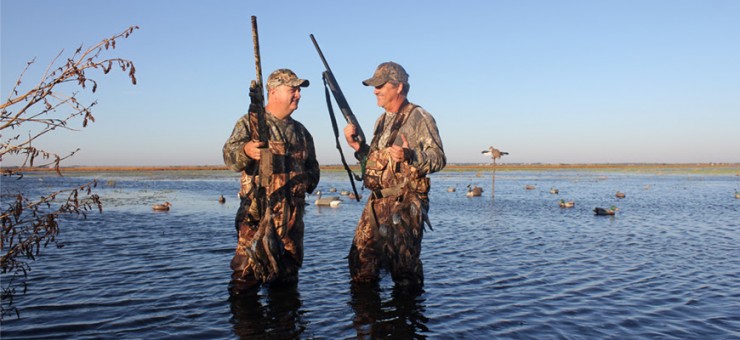
And in final action, commissioners approved staff’s proposal for duck zone boundaries. After months of public meetings, discussion and surveys, KDWPT staff proposed a new map that will go into effect for the 2016 fall duck seasons and remain in place for five years. The only change was a boundary shift to move Cedar Bluff Reservoir out of the Low Plains Early Zone and into the Low Plains Late Zone. All other duck zone boundaries remained the same.

 Submitted