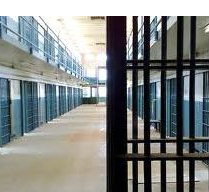
SAN FRANCISCO (AP) — A Washington D.C. legal aid center is seeking to abolish the country’s so-called cash bail system, saying requiring criminal suspects to post bail or stay in jail pending trial treats poor defendants unfairly.
The Equal Justice Under Law center has filed seven lawsuits across the country seeking to abolish the cash-bail system. It has succeeded in changing the bail policies in four, smaller Southern jurisdictions.
It filed its latest lawsuit in October, challenging San Francisco’s bail system. Center lawyer Phil Telfeyan says if a judge strikes down San Francisco’s bail system, similar policies in the state’s 57 other counties will also have to be changed.
A judge will decide in next month whether to temporary suspend San Francisco’s bail system until the lawsuit is resolved.
A new report says that the U.S. needs to redouble its efforts to protect Americans from the threats of infectious disease threats like MERS-CoV, pictured above on camel epthelial cells. CREDIT NIAID IN COLLABORATION WITH COLORADO STATE UNIVERSITY
Kansas is one of seven states that rank in the bottom tier in a newly released report measuring states’ readiness to deal with infectious disease outbreaks.
The report, “Protecting Americans from Infectious Diseases,” was produced by the Trust for America’s Health and the Robert Wood Johnson Foundation. It finds that most states are ill-prepared to deal with the threat of antibiotic-resistant superbugs, resurgent illnesses like whooping cough, tuberculosis and gonorrhea, and other bacterial, viral and parasitic diseases.
“The overuse of antibiotics and underuse of vaccinations along with unstable and insufficient funding have left major gaps in our country’s ability to prepare for infectious disease threats,” Jeffrey Levi, executive director of the Trust for America’s Health, said in a statement.
Kansas – along with Idaho, Michigan, Ohio, Oklahoma, Oregon and Utah – scored on only three of 10 key indicators measuring states’ efforts at outbreak prevention, detection, diagnosis and response. The indicators collectively offer a snapshot of state health systems’ strengths and weaknesses.
Kansas got credit for having public health laboratories with a biosafety professional and providing biosafety training; and for meeting the national performance target of testing 90 percent of reported E. coli cases within four days.
On the seven remaining indicators it received no credit. Those indicators measure whether states:
Increased or maintained public health funding over the last two fiscal years.
Vaccinated at least half of their population ages six months and older for seasonal flu.
Excluded philosophical exemptions to childhood immunization or required parental notification or an affidavit for such exemptions.
Met certain reporting requirements for HIV/AIDS surveillance.
Authorized syringe exchange programs.
Completed climate change adaptation plans.
Reduced central line-associated bloodstream infections between 2012 and 2013.
Sara Belfry, a spokeswoman for the Kansas Department of Health & Environment, said that while there was always room for improvement, “we aren’t as bad as this report makes us out to be.”
Belfry said that 48 percent of the state’s population got flu vaccinations in 2014-2015, falling just short of the report’s 50 percent target. She said that 55.5 percent of children up to 17 years of age got their flu vaccinations, compared with only 45.6 percent for adults 18 years and older.
“Adults sometimes forget to get their flu vaccinations,” she said.
She also said that Kansas doesn’t have a statewide policy excluding children who don’t get childhood immunizations from school. Instead, local school boards set their own policies.
“And a lot of local school boards do have policies that say if you haven’t gotten up to date on your vaccinations within 90 days of entering school, then you’re not able to come until you get those vaccinations,” Belfry said. “So it’s just because we don’t have a statewide policy that we didn’t reach that measure.”
Finally, she said that public health spending was up in the current fiscal year, albeit by only about $100,000.
“I think the important thing for Kansans to know is that we are prepared to make sure that we’re able to respond in the event of an infectious disease outbreak,” she said.
The state had no cases of measles this year, compared with six last year, and cases of whooping cough have also fallen, Belfry said.
“So we know we’re doing a better job and we can always do a better job making sure we’re getting immunizations and making sure adults are getting immunizations as well,” she said.
Lougene Marsh, director of the Johnson County Department of Health and Environment, said it was “disappointing to see that the state was in the lowest tier” on core functions of public health, namely “control of infectious disease and protecting Americans from that.”
But she pointed out that public health funding in Johnson County was in much better shape than the state as a whole. The county’s public health budget, which largely comes from county property taxes, has increased from $6 million in fiscal 2014 to $7.8 million in the upcoming fiscal year.
“So I think that’s a very strong commendation for our local board of health and their recognition that they do have responsibility around protecting the health of the public and that they are taking that responsibility seriously,” she said.
In contrast, in Sedgwick County, the second largest county in Kansas by population after Johnson County, funding for public health programs, including initiatives aimed at improving the county’s immunization and infant mortality rates, have been cut. Also cut was $48,634 earmarked for a county health assessment.
Statewide, public health funding fell by 1.1 percent between fiscal 2013 and fiscal 2015, according to the infectious disease report. Kansas was one of 16 states that saw such funding decrease. Missouri increased its public health funding during the same period by 1.9 percent.
Missouri met five of the report’s 10 indicators, placing it in the middle of the pack. The Show Me state got credit for the same indicators that Kansas did as well as for HIV/AIDS surveillance and public health funding.
Missouri was among 28 states that scored a five or lower. No state received 10 points. Five states – Delaware, Kentucky, Maine, New York and Virginia – scored on eight of the indicators. Six – Alaska, California, Maryland, Massachusetts, Minnesota and Nebraska – scored on seven.
The report makes several recommendations. Among them: increasing resources for epidemiology and laboratories to deal with outbreaks; updating disease surveillance systems; incentivizing the development of new medicines and vaccines; decreasing antibiotic overuse and increasing vaccination rates; taking measures to contain rising hepatitis C outbreaks and other sexually transmitted infections, particularly among young adults; and adopting strategies to end AIDS in every state and city.
Dan Margolies, editor of the Heartland Health Monitor team. You can reach him on Twitter @DanMargolies.
WICHITA- Two men, including one from Great Bend, were injured in an accident just before 12:30 a.m. on Sunday in Sedgwick County.
The Kansas Highway Patrol reported a 2002 Dodge Ram pickup driven by Alex A. Reed, 22, Great Bend, was eastbound on Kansas 96 just west of Hillside in Wichita.
The driver lost control and struck a guardrail.
A passenger in the Dodge Jacob Hayes, 23, Wichita, was transported to Wesley Medical Center. The KHP reported Reed was injured but not where he was treated.
Both were properly restrained at the time of the accident, according to the KHP.
SUSAN HAIGH, Associated Press
MICHAEL MELIA, Associated Press
HARTFORD, Conn. (AP) — Lawmakers in states around the U.S. are proposing stiffer penalties for people who make threats on schools at a time of fears over terrorism and mass shootings.
As demonstrated by recent shutdown of schools in Los Angeles, threats can cause large, costly disruptions and traumatize students even in cases that might involve hoaxes.
Michael Dorn is the executive director of the school safety nonprofit group Safe Havens International. He says there have been proposals in states across the U.S. in increase punishments, including those where school threats already can be prosecuted as felonies.
In Connecticut, state Sen. Tony Hwang said Tuesday that he intends to reintroduce a bill that would that would beef up the state’s threatening laws. His son was locked down at his high school in October after a threat.
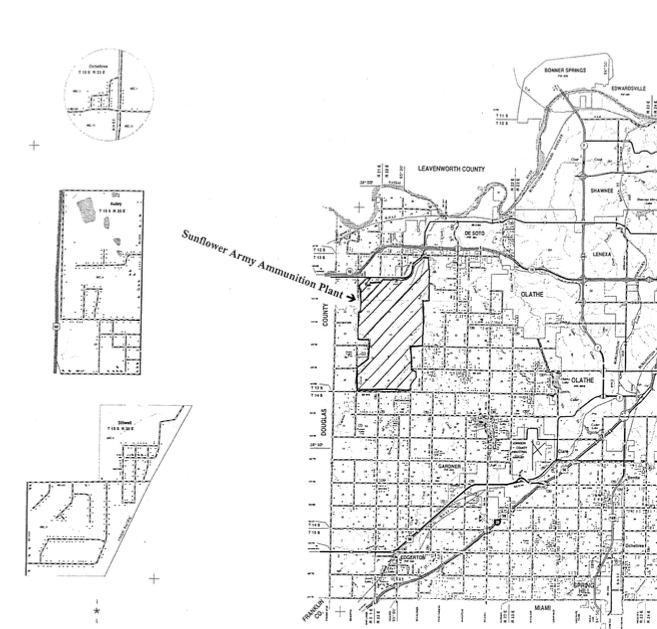
DE SOTO, Kan. (AP) — The U.S. Army is preparing to resume work removing pollutants on a 15-square-mile tract that’s considered the largest potentially developable chunk of land in the Kansas City metropolitan area, but the project is expected to take far longer than officials had envisioned.
Environmental cleanup at the Sunflower Army Ammunition Plant in Johnson County was halted five years ago when federal funds dried up.
The Kansas City Star reports the Army’s projected timeline for a job that started in the 1990s calls for it to be ready for the first house, shop or office possibly by 2028.
Kansas and Johnson County officials see the property as key to growth along the Kansas 10 corridor linking Johnson County with Lawrence.
The cleanup was supposed to have been finished three years ago.
ANDERSON COUNTY – A Kansas man was injured in an accident just before 2p.m. on Saturday in Anderson County.
The Kansas Highway Patrol reported a 2004 Ford Expedition driven by Tryce Robert Nelson, 21, St. Paul, was westbound on U.S. 59.
The driver was distracted and collided with 2010 Subaru Legacy driven by Veronica Jean Jerome,45, Olathe, that had slowed and signaled to make a westbound turn onto north 2500 Road.
The collision caused the Subaru to roll.
A passenger in the Subaru Jonathon Taylor Wright, 21, Paola, was transported to Ransom Memorial Hospital.
Nelson, Jerome and another passenger in the Subaru were not injured.
All were properly restrained at the time of the accident, according to the KHP.
Funeral Service for longtime Brewster, Kansas farmer and teacher William C. ‘Bill’ Selby, 84 will be held Wednesday, Dec. 30, 10:00 AM Central Time at the Brewster United Methodist Church.
Interment: Brewster Cemetery
Friends may share respects: Wednesday, Dec. 30, from 9:00 until 10:00 AM Central Time at the Brewster United Methodist Church
Memorials: NW KS Animal Shelter or Brewster United Methodist Church may be left at the services or mailed to Koons Funeral Home 211 North Main, Goodland, KS 67735-1555.
LAWRENCE, Kan. (AP) — A new University of Kansas program that begins next fall will give a handful of students with intellectual disabilities a chance to take classes at the school for the first time.
The KU Transition to Postsecondary Education for Youth with Intellectual Disabilities program is being funded through a $1.5 million, five year federal grant. The Lawrence Journal-World reports the experience will look much like it does in K-12 education, where youths with disabilities such as Down Syndrome or autism are mainstreamed.
Special education associate professor Mary Morningstar says the students will be fully integrated in all aspects of university life. She expects five to eight participants in the first year.
The ultimate goal is for participants to exit the program with paid jobs.
DE SOTO (AP) — The U.S. Army is preparing to resume work removing pollutants on a 15-square-mile tract that’s considered the largest potentially developable chunk of land in the Kansas City metropolitan area, but the project is expected to take far longer than officials had envisioned.
Environmental cleanup at the Sunflower Army Ammunition Plant in Johnson County was halted five years ago when federal funds dried up.
The Kansas City Star (https://bit.ly/1Pey44y ) reports the Army’s projected timeline for a job that started in the 1990s calls for it to be ready for the first house, shop or office possibly by 2028.
Kansas and Johnson County officials see the property as key to growth along the Kansas 10 corridor linking Johnson County with Lawrence.
The cleanup was supposed to have been finished three years ago.
Verland (Vernie) Windholz, 78 of WaKeeney, KS passed away Thursday December 24th, 2015 at his home. He was born December 15th, 1937 to Alois and Sophia (Pfannenstiel) Windholz in Codell, KS.
Vernie attended the Lost Canyon Grade School and graduated from Victoria High School. Since the time He was old enough to reach the gas pedal, Vernie could be found driving truck, whether it be hauling for his Dad on the farm or transporting commodities halfway across the country, until he was forced to retire. Vernie spent all of his retirement telling everyone about his grandchildren and great-grandchildren. Verland was a member of Christ the King Catholic Church in Wakeeney, KS.
He is survived by his children Bill (Bonnie) Windholz, Conni(Clarence) Bliss, Roger(Darla) Windholz, Rich(Pam) Windholz and Brad(Gina) Windholz. Eight grandchildren and eleven great grandchildren. One brother Ernest (Judy) Windholz and two sisters Gladys Brown and Mary Kay VanDon. He was preceded in death by his parents.
Memorial contributions are suggested to the Trego and Gove County Walk-A-Thon for health. Checks made to the organization may be sent to Schmitt Funeral Home, 336 N. 12th, WaKeeney, KS 67672.
Mass of Christian Burial will be at 10:30 a.m., Wednesday, December 30th, 2015 at Christ the King Church in WaKeeney. Burial to follow in Christ the King Catholic Cemetery.
A public viewing will be Tuesday, December 29th from 5:00 to 7:00 p.m. with a prayer vigil at 7:00 p.m. at Schmitt Funeral Home in WaKeeney.
WICHITA- A Kansas man was injured in an accident just before 11a.m. on Saturday in Sedgwick County.
The Kansas Highway Patrol reported a 2015 Chevy truck driven by Marvin E. Emley, 74 Emporia, was on the southbound exit ramp from Interstate 135 to 29th Street in Wichita.
The truck left the roadway to the right, went through a fence, and struck a stone embankment.
Emley was transported to St. Francis Medical Center.
He was properly restrained at the time of the accident, according the KHP
LAWRENCE (AP) — A new University of Kansas program that begins next fall will give a handful of students with intellectual disabilities a chance to take classes at the school for the first time.
The KU Transition to Postsecondary Education for Youth with Intellectual Disabilities program is being funded through a $1.5 million, five year federal grant. The Lawrence Journal-World (https://bit.ly/1NQgLUA ) reports the experience will look much like it does in K-12 education, where youths with disabilities such as Down Syndrome or autism are mainstreamed.
Special education associate professor Mary Morningstar says the students will be fully integrated in all aspects of university life. She expects five to eight participants in the first year.
The ultimate goal is for participants to exit the program with paid jobs.
In May, the FCC, along with the Consumer Financial Protection Bureau and state attorneys general, announced that Verizon Wireless would pay $90 million and Sprint Corporation would pay $68 million to settle investigations that revealed the companies billed customers millions of dollars in unauthorized third-party premium text messaging services, according to a statement from the Federal Communications Commission.
The two cases brought a total of $353 million in penalties and restitution against the U.S.’s four largest wireless carriers, structuring these settlements so that $267.5 million of the total will be returned to affected customers.
Customers have until December 31 to submit claims through www.cfpbsettlementverizon.com and www.sprintrefundpsms.com Consumers with questions about the redress programs can call 1-877-389-8787 for the Sprint case, or 1-888-726-7063 for Verizon.
AT&T customers can submit claims through www.ftc.gov/att or call 1-877-819-9692 for more information.
What is cramming?
Cramming is the illegal act of placing unauthorized charges on your wireline, wireless, or bundled services telephone bill. The FCC has estimated that cramming has harmed tens of millions of American households.
Deception is the hallmark of cramming. Crammers often rely on confusing telephone bills to trick consumers into paying for services they did not authorize or receive, or that cost more than the consumer was led to believe.
Wireless consumers should be particularly vigilant. Smartphones are sophisticated handheld devices that enable consumers to shop online from wherever they are or charge app purchases to their phone bills. The more your mobile phone bill begins to resemble a credit card bill, the more difficult it may become to spot unauthorized charges.
How does cramming occur?
Cramming most often occurs when telephone companies allow other providers of goods or services to place charges on their customers’ telephone bills, enabling a telephone number to be used like a credit or debit card account number for vendors. Crammers may attempt to place a charge on a consumer’s phone bill having nothing other than an active telephone number, which can be obtained from a telephone directory.
What do cramming charges look like?
Cramming comes in many forms. Charges – such as those described below – may be legitimate if authorized but, if unauthorized, are cramming:
Charges for services that are explained on your telephone bill in general terms such as “service fee,” “service charge,” “other fees,” “voicemail,” “mail server,” “calling plan” and “membership.”
Charges that are added to your telephone bill every month without a clear explanation of the services provided – such as a “monthly fee” or “minimum monthly usage fee.”
Charges for specific services or products you may not have authorized, like ringtones, cell phone wallpaper, or “premium” text messages about sports scores, celebrity gossip, flirting tips or daily horoscopes.
How can I protect myself against cramming?
Carefully review your telephone bill every month, just as closely as you review your monthly credit card and bank statements.
Ask yourself the following questions as you review your telephone bill:
Do I recognize the names of all the companies listed on my bill?
What services were provided by the listed companies?
Does my bill include charges for calls I did not place or services I did not authorize?
Are the rates and line items consistent with the rates and line items that the company quoted to me?
When in doubt, ask questions. You may be billed for a call you placed or a service you used, but the description listed on your telephone bill for the call or service may be unclear. If you don’t know what service was provided for a charge listed on your bill, ask your telephone company to explain the charge before paying it.
Make sure you know what service was provided, even for small charges. Cramming often goes undetected as very small “mystery charges” – sometimes only $1, $2, or $3 – to thousands of consumers. Crammed charges can remain on bills for years.
Keep a record of the services you have authorized and used. These records can be helpful when billing descriptions are unclear.
Carefully read all forms and promotional materials – including the fine print – before signing up for telephone or other services to be billed on your phone bill.
 PAUL ELIAS, Associated Press