We have a brand new updated website! Click here to check it out!

INSIGHT KANSAS: Flint, Mich., and Kansas tax policy

Ordinarily, Kansans would not look to a medium-sized Michigan city with a large minority population for lessons in politics and policy-making.

But Flint’s continuing water-quality disaster offers clear lessons for any state whose leaders have cut back services and placed greater tax burdens on localities.

Burdett Loomis
Burdett Loomis

As one Michigan conservative activist explained: “Governor Rick Snyder appointed an emergency manager to address Flint’s long time fiscal problems. The manager, looking to reduce costs, opted to start obtaining water from the nearby Flint River instead of paying Detroit for the supply. The river had contaminants from years of auto manufacturing, and acted corrosively on the pipes to leach out the lead.”

As the overseer of water quality for Michigan municipalities, the state’s Department of Environmental Quality (sic) failed in early 2014 to require the city to add inexpensive corrosion-control chemicals to this new – and clearly more polluted – water source. Over the next 18 months, Flint’s children experienced huge spike in lead levels in their blood.

The DEQ acknowledged its mistake and switched the city back to lake water this past October, but the long-term effects of the lead poisoning will not be known for many years.

Meanwhile, far-right Republican governor Rick Snyder, who has shrunk government aggressively in Michigan, did not declare a state of emergency until early January, 2016, and has deflected blame from his administration. Although Governor Snyder did not directly order the change in water sourcing, his administration helped create the revenue problems for Flint, implemented the defective policy, and then ignored clear evidence of a developing health crisis.

Finally, as a governor who has consistently attacked the federal government, Snyder last week requested – and President Obama granted – $27 million in emergency disaster aid to help address the evolving disaster.

As with many GOP governors, the federal government is the enemy, until it’s not.

Why is Flint’s public health crisis relevant to Kansas? First, we need to question whether such a situation could happen here. Although an exact repeat is unlikely, the anti-government attitude of Governor Brownback and the Legislature suggests that similar problems already exist, especially for the state’s most vulnerable citizens.

For example, under the Brownback administration, welfare funds – which provide no more than $400 per month for truly poor families – are cut off after 36 months, or 24 months sooner than the federal law requires. Thus, in January, 2016, 200 families lost their meager assistance, even as the Kansas poverty rate was climbing and the sales tax on food remained among the highest in the nation.

The state cannot fill its ranks of prison guards or state troopers, as budget shortfalls continue to bedevil state policymakers. Perhaps not as dramatic as lead poising, but indicative that the state cannot carry out its basic public service responsibilities.

Likewise, for some of the most vulnerable of our fellow citizens, those housed at the Osawatomie State Hospital, cutbacks have meant that the facility no longer qualifies for Medicare funding. While administration officials argue that patients will not be affected, Rep. Jim Ward (D-Wichita) makes a simple point: “The [budgetary] incompetence hurts taxpayers, as well as the safety of our citizens… Out of the state general fund, [we] will have to pay the full cost of any patients at Osawatomie.”

Conditions at prisons or mental hospitals, along with public safety on the roads, have not yet produced a story as dramatic as that of Flint’s lead poisoning.

What has become clear, however, is that Kansas’s continuing budgetary squeeze and the anti-government, anti-federal assistance stances of state officials have created a series of personal crises for those individuals – the needy, prisoners, and the mentally ill – who have the least power to affect policies that directly affect them.

And that’s just plain wrong.

Burdett Loomis is a professor of political science at the University of Kansas.
HPD Activity Log Jan. 20

hpd 2nd sponsor dec 22

hpd bobs bail bonds bottom 2 jan 6

hpd celebratation church bottom 1 jan 6

The Hays Police Department responded to 4 animal calls and 9 traffic stops Wed., Jan. 20, 2016, according to the HPD Activity Log.

Abandoned Vehicle–800 block Walnut St, Hays; 10:34 AM
Disturbance – General–1000 block E 8th St, Hays; 12 AM
MV Accident-City Street/Alley–3700 block Vine St, Hays; 2:20 PM
MV Accident-City Street/Alley–13th and Canterbury, Hays; 2:55 PM
MV Accident-City Street/Alley–22nd and Vine St, Hays; 2:55 PM
MV Accident-City Street/Alley–2000 block E 13th St, Hays; 3:01 PM
MV Accident-City Street/Alley–1100 block E 13th St, Hays; 3:01 PM
MV Accident-City Street/Alley–2700 block Vine St, Hays; 3:03 PM
MV Accident-City Street/Alley–1800 block Vine St, Hays; 3:05 PM
Welfare Check–400 block W 5th St, Hays; 3:14 PM
MV Accident-City Street/Alley–1000 block 40 Bypass Hwy, Hays; 3:16 PM
MV Accident-City Street/Alley–2600 block Main St, Hays; 3:27 PM
MV Accident-City Street/Alley–2000 E block 13th St, Hays; 3:29 PM
MV Accident-City Street/Alley–21st and Canterbury Dr., Hays; 3:29 PM
MV Accident-City Street/Alley–Country Club and Hall, Hays; 3:36 PM
MV Accident-Hit and Run–5060 block W 6th St, Hays; 3:35 PM; 3:45 PM
MV Accident-City Street/Alley–500 block Ash St, Hays; 4:26 PM
MV Accident-City Street/Alley–2000 block E 12th St, Hays; 4:47 PM
MV Accident-Hit and Run–27th and Hall, Hays; 4:49 PM
Animal At Large–2700 block Elm St, Hays; 6:38 PM
Counterfeit currency/documents–1900 block Vine St, Hays; 6:38 PM
Assist – Other (not MV)–2000 block Main St, Hays; 8:03 PM
Suspicious Person–4100 block Vine St, Hays; 8:23 PM
Theft (general)–2800 block Vine St, Hays; 9:17 PM
Found/Lost Property–500 block W 27th St, Hays; 10:51 PM

hpd 2nd sponsor  dec 22

Man who police say shot at Kansas officers charged

CourtKANSAS CITY, Kan. (AP) — A man who police say shot at officers in Kansas City, Kansas, faces drug and gun charges.

The Topeka Capital-Journal reports that 27-year-old Ashawntus McCambry is charged with one count each of possession with intent to distribute crack cocaine, possession with intent to distribute marijuana, unlawful possession of a firearm in furtherance of drug trafficking and of unlawful possession of a firearm following a felony conviction.

McCambry was initially charged for crimes that allegedly took place on Dec. 22. Police say he fired shots in the direction of officers as they served a search warrant at his residence.

McCambry surrendered, saying he didn’t know they were police and that he thought he was being robbed.

It wasn’t immediately clear if McCambry has an attorney.

Kansas woman hospitalized after Interstate rear-end crash

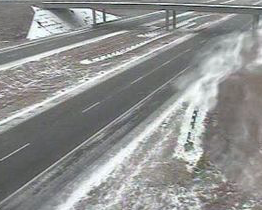
A slick southbound Interstate 135 on Thursday -KDOT image

HARVEY COUNTY- A Kansas woman was injured in an accident just after 7:30 a.m. on Thursday in Harvey County.

The Kansas Highway Patrol reported a 2007 Pontiac passenger vehicle driven by Kaleb Ray Beaugh, 22, Salina, was southbound on Interstate135 just north of North Newton in the right lane.

The Pontiac was traveling at a higher rate of speed behind a 2011 Toyota passenger vehicle driven by Karen Sue Koehn, 55, Moundridge.

The Pontiac rear-ended the Toyota.

Koehn was transported to Newton Medical Center. She was properly restrained at the time of the accident, according to the KHP.

Beaugh was not injured and it is not known if he was wearing a seat belt, according to the KHP.

Wednesday storm bring 4-plus inches of snow, multiple accidents

By JONATHAN ZWEYGARDT
Hays Post

The winter storm system that moved across Kansas on Wednesday afternoon and evening brought the first real measurable amount of snow to the Hays area in 2016.

The system moved in quickly Wednesday afternoon causing the drive home to be a bit tricky for many in the area.

According to the Hays Police activity log, there were 16 accidents reported in city limits between 2 and 5 p.m. The Ellis County Sheriff’s Department and the Kansas Highway Patrol were still compiling accident reports Thursday morning.

The K-State Ag Research Center south of Hays reported 4.5 inches of snow of the last 24 hours. There were a number of reports of 4 inches throughout the Hays area. In Ellis, there were reports of 3 and 3.5 inches.
RELATED: Hays man dies after semi rolls down embankment.

Hays High’s Rathke signs with Tabor

Denton Rathke Pic

By Dustin Armbruster

When the opportunity comes along to further an athletic career most everybody takes the chance. That is exactly what Denton Rathke did on Thursday morning at the Hays High cafeteria. The senior signed his national letter of intent with Tabor to compete in track and field. Rathke said that it was the atmosphere of the college that helped him make his final decision on where to continue his education.

Denton Rathke

Rathke, who was also on the Indian’s football team, said that the Tabor coaches will be looking for him to try each of the throwing events they offer. He plans on majoring in accounting at the college located in Hillsboro.

HaysMed Convenient Care reflects on year one — new location planned

OLYMPUS DIGITAL CAMERA
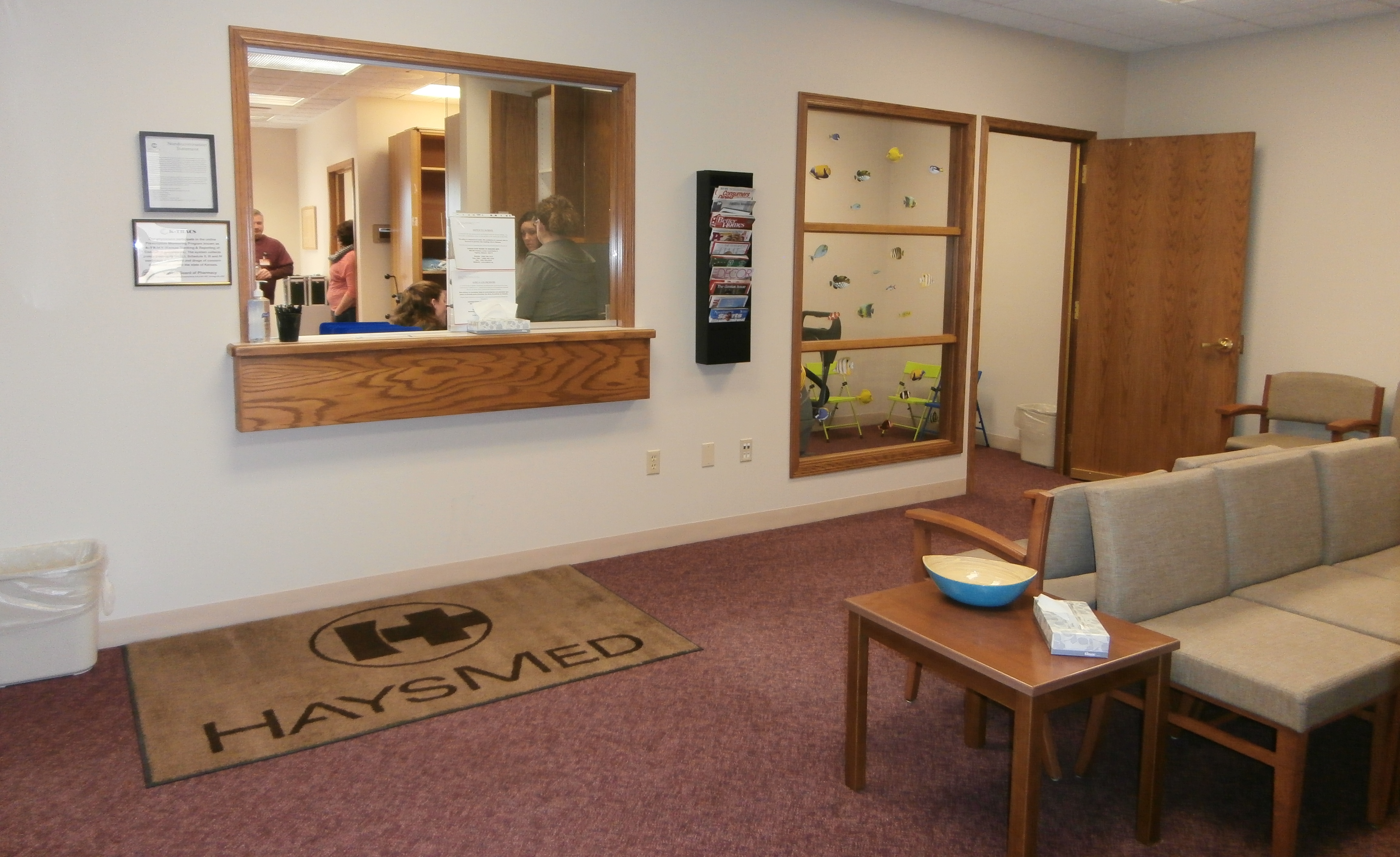
HaysMed Convenient Care Walk In Clinic, located at 2501 E. 13th in Hays.

Hays Medical Center

When the HaysMed Convenient Care Clinic opened a year ago, two main goals were easy access and affordable prices.

These expectations have been met and there is even more to come, said Terry Siek, vice president of patient care services/chief nursing officer.

We are evaluating the best location and hope to move to a location near I70 and Vine soon, Siek explained. It is currently located at 2501 E. 13th.

“Our commitment to convenience has been obvious and we want to take it a step further,” Siek said. “The new location, which will be announced later, will offer a more centralized location and even easier patient access.”

Since opening in January last year, the clinic averages 25 to 30 patients a day. During fall and winter months, however, influenza and upper respiratory illnesses increase the daily average to between 40 and 50.

The most common of these illnesses include acute pharyngitis; streptococcal pharyngitis; bronchitis; and acute upper respiratory infection.

“These types of cases are considered minor illnesses, which typically don’t require an emergency-room visit,” Siek said. “Minor concerns may be diagnosed through basic testing and treated by a nurse practitioner or physician assistant.

“This allows a patient to see a health-care professional at a more affordable rate since Convenient Care is billed as a clinic visit,” he continued.  “Convenient Care also allows the Emergency Department to have more beds readily available for acute and severe cases.”

In the walk-in clinic, minor illnesses and injuries are the priority on a first-come, first-served basis. While insurance policies vary, the co-pay usually is in the $20 range.

“In the emergency room, patients with minor issues will be treated after patients with more urgent matters,” Siek noted. “Therefore, using the appropriate service is a win-win for everyone involved.”

To further accommodate patients, HaysMed began offering its Convenient Care wait-time app for mobile devices last year. It refreshes itself every few minutes and allows people to obtain basic information on how long they may have to wait at the clinic.  The HaysMed Wait Times app is available at the Apple Store and Google play.  Both iPhone and Android versions are available.

“You are free to walk in when it is best for you,” Siek commented. “We understand busy schedules and our patients are telling us this feature is very helpful.”

Clinic hours are 8 a.m. to 7:30 p.m. Monday through Friday; 9 a.m. to 4:30 p.m. Saturday; and noon to 5 p.m. Sunday.

The clinic’s providers include: Jennifer Acosta and Lindsey Rut, both physician assistants; Nicole Spray, Cammie Williby, Ron Williams and Margo Straub, all advanced practice registered nurses; Tiffany Dewitt, licensed practical nurse; Bernas Munsch, registered nurse; and Crystal Zeiler and Maribel Alvarez, office staff members.

“Our first year of success would not have been possible without these wonderful caregivers,” Siek said. “Each of them and our part-time staff who fill many roles enjoy caring for our community. They are doing a great job with the care and treatment of your family and friends.”

Reid Nicholas O’Brien

Reed O'BrienReid Nicholas O’Brien, 26, Hays, died Tuesday, Jan. 19, 2016, at his home.

He was born June 10, 1989, in Hays to Rex and Diane (Gasper) O’Brien.

He was a 2008 graduate of Hays High School and attended Fort Hays State University, Hesston College and North Central Kansas Technical College, Hays. He was a member of Immaculate Heart of Mary Catholic Church, worked in several outdoor occupations, and enjoyed shooting hoops and spending time with his family, especially his brother and his son. He enjoyed playing his guitar, playing all kinds of sports, working with his hands and doing all types of artwork, especially pencil drawing.

Survivors include his parents, Hays; a brother, Drew O’Brien, Hays; a son, Brody Pfannenstiel, Hays; his fiance, Kayla Quenzer, Hays; a lifelong family friend, Randy Gonzales, Hays; and many aunts, uncles, cousins and friends.

He was preceded in death by his grandparents, Raymond and LaVerna Gasper and Peter and Leta O’Brien.

Funeral services will be at 10:00 am on Saturday, January 23, 2016 at the St. Nicholas of Myra Catholic Church, 2901 E. 13th, Hays. Burial will follow in the St. Joseph Cemetery, Hays. Visitation will be from 4:00 until 8:00 pm on Friday, and from 9:00 am until service time Saturday, all at the church. A parish vigil service and rosary will be at 6:30 pm on Friday at the church.

Memorials are suggested to an education fund for his brother and son, in care of Hays Memorial Chapel, 1906 Pine, Hays, KS 67601. Condolences may be left for the family at www.haysmemorial.com.

Ex-owner of Kansas restaurants pleads guilty to tax fraud

fraudSPRINGFIELD, Mo. (AP) — The former owner of Ziggies restaurants in Kansas and Missouri  has pleaded guilty to failing to pay more than $1.3 million in payroll taxes.

During a plea hearing Wednesday in federal court, Agim Zendeli of Springfield admitted he didn’t forward payroll taxes collected from employees to the Internal Revenue Service from March 2004 to December 2014.

He operated Ziggies restaurants in Springfield, Joplin, Carthage, Nevada, Republic, Willard, Marshfield, West Plains, Rolla and Poplar Bluff in Missouri, and in Pittsburg and Fort Scott in Kansas from 1998 to 2014.

Prosecutors say Zendell used the money from the scheme to support a lavish lifestyle.

To avoid paying past due taxes, Zendell formed 18 different companies to take over his restaurant operations using the names of family members, partners or employees.

Now That’s Rural: Lloyd Stearman

Ron Wilson is director of the Huck Boyd National Institute for Rural Development at Kansas State University.

By RON WILSON
Huck Boyd National Institute for Rural Development

What aircraft was the most widely used model for training airplane pilots during World War II?  Would you believe, an airplane named for one of the early pioneers of the aviation industry who came from rural Kansas?

In recent weeks we’ve learned about Clyde Cessna and Walter Beech, two of the three men who founded an airplane business in Wichita in 1924. Today we’ll learn about the third of those three:  Lloyd Stearman, whose plane, the Stearman Kaydet, was the primary trainer for World War II pilots.

Lloyd Stearman was born in the rural Kiowa County town of Wellsford, Kansas in 1898.  Wellsford had been a thriving community but faded away through the decades until it legally disincorporated. Other than the southeast Kansas town of Treece, which disbanded itself due to pollution problems in 2012, Wellsford was the last Kansas town to eliminate its legally incorporated status which it did in 1975. As of the town’s last official census in 1970, Wellsford had an official population of 9 people. Now, that’s rural.

Lloyd Stearman was born at Wellsford and went to school in Harper. While in grade school, he saw his first airplane, piloted by Clyde Cessna.

In 1917, Stearman attended what is now Kansas State University and studied engineering and architecture. During World War I, he enlisted in the U.S. Naval Reserve Flying Corps in Kansas City. He went to ground school in Seattle and then was stationed in San Diego where he learned to fly seaplanes.

After the war, Stearman returned to Kansas and worked as an airplane mechanic. There he met the aforementioned Walter Beech, who was a test pilot and salesman. Beech taught Stearman the finer points of piloting an airplane.

In 1924, Lloyd Stearman became chief engineer of the Swallow Airplane Company. Stearman designed his first airplane, called the New Swallow. Beech flew it at the National Air Races at Dayton, Ohio where it was crowned the nation’s best performing commercial airplane.

Of course, this was back in the day when planes were still constructed with wood and canvas.  Stearman and Beech wanted to redesign their aircraft to make the fuselage of welded steel tubing instead of wood, but their owner resisted. So they reached out to a guy who had recently purchased one of the New Swallows. His name was Clyde Cessna – the very same man who had piloted the plane which Stearman saw as a child.

In 1925, Lloyd Stearman, Walter Beech and Clyde Cessna went together to form a new business to build their planes using metal. The company was called Travel Air Manufacturing.

In 1926, the three young Kansans entered an airplane in the Ford Reliability Tour, a cross-country airplane performance competition that attracted the best aircraft in the country, and won handily.

But this moment of triumph quickly turned into a time of tragedy. In Wichita, Lloyd Stearman took his plane up for an aerial demonstration. Upon landing, he taxied his plane along the runway where stood a prominent citizen of Wichita who had stopped there with his family to watch the flight. The propeller of Stearman’s plane struck the man, killing him instantly. When he realized what had happened, Stearman himself collapsed in horror and had to be carried from the plane.

After that incident, Lloyd Stearman moved his family to California where he created his own aircraft company. Eventually he was recruited back to the airplane business in Wichita. The biplane which bore his name, the Stearman Kaydet, was so durable and reliable that it became the primary trainer aircraft for the U.S. military during World War II. Stearman would go on to work for Boeing and serve as president of Lockheed before passing away at age 77.

What was the most widely used training airplane for pilots in World War II? It was the Kaydet built by Lloyd Stearman, who made a difference with his pioneering aviation work.

Why did Kansas become such a center for aviation? Is it wide open spaces, the work ethic of our people, or visionary leaders? Perhaps all of the above have helped keep Kansas flying high.

And there’s more. We’ll find a modern-day restaurant which bears his name next week.

FHSU MBA students offered graduate teaching assistant opportunity in China

FHSU University Relations

The chance to spend a year in China is being offered to M.B.A. students through the College of Business and Entrepreneurship at Fort Hays State University.

“The China Graduate Teaching Assistant Program equips students with the graduate business education that they need to succeed in today’s competitive environment,” said Dr. Mark Bannister, dean of the College of Business and Entrepreneurship. “Participants will learn firsthand about one of the world’s most dynamic and important markets.”

China GTAs spend the first year of the two-year M.B.A. program in Hays, taking courses on campus and assisting faculty. The second year is spent in China, assisting the COBE’s American faculty members teaching in undergraduate business programs and taking second-year M.B.A. courses through FHSU’s Virtual College.

Bannister said that graduates of the China GTA program have found excellent jobs, including being accepted to international positions and doctoral programs. Some have remained in China to work for American or other international companies.

MBAPrograms.org has ranked this program as one of the top 10 M.B.A. programs for study abroad in China.

While in China, GTAs can pursue a variety of other interests such as learning Mandarin, visiting China’s ancient historical sites and new cities, and experiencing China’s dynamic food scene. FHSU provides participants with a tuition scholarship, complimentary housing, cafeteria services and a stipend to accepted students.

China GTAs join a sizeable community of American teachers on FHSU’s partner campuses in China. No prior international experience is required, nor is familiarity with the Chinese language. All FHSU courses in China are conducted in English. Students must complete a bachelor’s degree by summer 2016 and must be admitted to FHSU’s M.B.A. program in order to apply.

The college will select its China GTAs throughout the spring 2016 semester, beginning immediately. To apply or find out more information, contact the COBE graduate coordinator Rachel Dolechek at 785-628-5696 or by email at [email protected].

Cash tolls going up on the Kansas Turnpike

Southwest Wichita Travel Plaza-KTA camera image

TOPEKA, Kan. (AP) — Drivers who pay tolls with cash on the Kansas Turnpike will have to pay more, beginning in May.

The Kansas Turnpike Authority announced Wednesday that cash tolls will increase 10 percent while costs for those who use the electronic K-Tag will get discounts.

The revenue from the tolls will help pay for a more than 40 projects on the turnpike in the next decade. The projects include spending $14 million annually on pavement, up to $20 million to improve service areas and $25 million on an interchange in Wichita.

The Turnpike Authority receives no tax funding and supports its operations through user fees.

Copyright Eagle Radio | FCC Public Files | EEO Public File