PITTSBURG, Kan. (AP) — The fourth suspect in a 2014 home invasion that led to the death of a Pittsburg State University student has been taken into custody in Mexico.
The Pittsburg Morning Sun reports 20-year-old Bryan Levi Bridges was arrested in Juarez, Mexico, on Sunday night. He was wanted in Kansas on charges of first-degree murder, aggravated burglary and conspiracy to commit aggravated robbery in the October 2014 home invasion that left 20-year-old Taylor Thomas dead.
Crawford County Attorney Michael Gayoso says he hopes to have Bridges back in the county early next week for a first court appearance.
Prosecutors say Bridges was in the home with three other men as the group attempted to steal marijuana from Thomas’ roommate when Thomas was shot.
HOISINGTON – Law enforcement authorities in Barton County are investigating two suspects on drugs and weapons charges.
Just before 1p.m. on Friday, narcotics search warrant was executed by Hoisington Police at a residence in the 200 block of North Elm Street, according to a social media report from Hoisington Police.
Officers found large quantities of drugs and drug paraphernalia and arrested Blaise Cain for unlawful distribution of a controlled substance within one-thousand feed of a school and unlawful possession of drug paraphernalia.
Officers also arrested Kendal Jacobs for unlawful distribution of a controlled substance within one-thousand feet of a school, unlawful possession of drug paraphernalia, unlawful possession of a controlled substance and criminal use of a weapon.
The suspects are being held at the Barton County Jail on $100,000.00 bond.
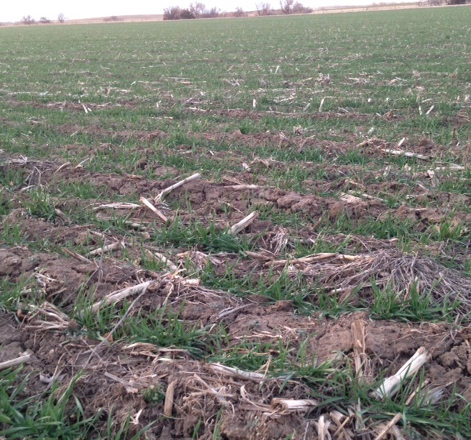
WICHITA, Kan. (AP) — Unseasonably warm temperatures have prompted winter wheat to break dormancy early in Kansas.
The National Agricultural Statistics Service reported Monday that rain is needed to support growth and development of the crop.
The agency rated winter wheat condition as 6 percent poor to very poor. About 35 percent is in fair shape, with 51 percent rated as good and 8 percent as excellent.
Mild weather conditions have been good for calving season, which is about 24 percent complete in Kansas
Nearly every minute, someone in our country develops Alzheimer’s disease, and more than 5 million Americans already live with this disease. It is the sixth leading cause of death in the United States, and it currently has no cure, no diagnostic test and no treatment.
As the population ages, the number of people diagnosed with Alzheimer’s will continue to grow, and if current trends persist, as many as 16 million Americans will have this terrible disease by 2050. I believe that, as a nation, we must commit to defeating one of the greatest threats to the health of Americans and the financial well-being of our country.
As a member of the Senate Health Appropriations Subcommittee, the Congressional Task Force on Alzheimer’s disease and a founding member of the Senate NIH Caucus, I believe it’s critical to support medical research. Consistent, sustained support of medical research is essential to saving and improving lives, reducing health care costs, growing our economy, and maintaining America’s role as a global leader in medical innovation.
Without a way to prevent, cure or effectively treat Alzheimer’s, it will be difficult – if not impossible – to rein in our nation’s health care costs. In 2015, the direct costs of caring for those with Alzheimer’s was about $226 billion. If the trend continues, the disease will cost more $1.1 trillion (in today’s dollars) by 2050. The costs borne by Medicare are also expected to increase by more than 400 percent, from approximately $113 billion today, to $590 billion in 2050. I support medical research because if we can find effective treatments for diseases like Alzheimer’s and dementia, we can extend quality of life for patients and also significantly reduce the cost of caring for them in years to come.
In 2013 and 2014 as Ranking Member of the Senate Health Appropriations Subcommittee that funds NIH, I worked to secure a significant increase in funding for Alzheimer’s research – at the time, the largest ever increase in Alzheimer’s disease research funding. I’ve since continued working with my subcommittee colleagues to secure considerable increases in Alzheimer’s funding over fiscal years 2015 and 2016.
This month, I was delighted to bring National Institute on Aging (NIA) Director Dr. Richard Hodes to Kansas to learn more about the important work taking place right here in Kansas – including at the University of Kansas Alzheimer’s Disease Center (KU ADC). Dr. Hodes spearheads the federal research effort to find effective ways to treat or prevent Alzheimer’s disease.
During Dr. Hodes’ visit, we met with a clinical trials patient from Overland Park. The patient explained to us that while he doesn’t have Alzheimer’s disease, he is concerned about the occurrence of Alzheimer’s disease in his family. The patient hopes his participation in KU ADC clinical trials will help researchers there gather valuable data on the disease that might benefit patients and families in the future, including his own.
As one of only 31 NIA designated Alzheimer’s Disease Centers in the United States, the KU ADC is uniquely positioned to contribute advancements in research leading to new and better ways to diagnose, treat and hopefully prevent and cure Alzheimer’s disease. KU ADC’s diverse array of research has helped bolster its reputation as the region’s premier Alzheimer’s research and clinical care hub. Researchers at KU ADC are conducting one of the first prevention studies in the world by examining the role of physical exercise in delaying or preventing Alzheimer’s disease for those at high risk who do not yet have any memory symptoms. Additionally, they are pursuing innovative new approaches to treat the disease by targeting the metabolism of brain cells.
Alzheimer’s has become a disease to define a generation, but if we focus and prioritize our research capacity, it does not need to continue as an inevitable part of aging. Medical research offers hope to those individuals and families affected by this terrible disease, and hope for our nation’s financial future.