WICHITA, Kan. (AP) — State and municipal employees are now able to conceal and carry on the job.
The measure is one of many newly passed laws that take effect July 1. Other measures include a shortening of the time someone can receive welfare and a ban on use of tanning beds by people under 18.
Under the concealed weapon law, public employees won’t need gun safety training to carry on the job.
Supporters say this will allow public employees to protect themselves on the job. Opponents say it violates the personal property rights of homeowners and creates potential safety risks.
Wichita Mayor Jeff Longwell says it remains to be seen how many city employees will even take advantage of the right to carry.
PRATT – Summer fun at Kansas state parks usually means being near, in or on the water. Twenty-three of our 26 state parks offer convenient access to lakes, reservoirs and rivers, providing a great way to enjoy the outdoors and beat the heat. However, fun on the water requires some common-sense safety precautions.
Remember that state park beaches do not have lifeguards. Parents should keep a close eye on youngsters and it’s a good idea to strap little ones into a properly-fitting life jacket. A toddler can disappear in an instant on a crowded beach. Older kids love to play on inflatable water toys but care must be exercised under windy conditions. A stiff Kansas wind blowing out from the beach can sweep floaters away from shore surprisingly fast.
Over the July 4th holiday weekend, reservoirs will be busy with pleasure boaters, skiers, personal watercraft, sail boats and anglers. Before boaters get to the ramp, they should be familiar with boating regulations and safety requirements, especially those concerning life jackets. Children age 12 and younger must wear a properly-fitting life jacket while on the boat, and there must be a serviceable life jacket readily accessible for everyone older than 12 onboard. The best safety precaution is to have everyone wear a life jacket while onboard. For more information on boating safety and regulations visit www.ksoutdoors.com.
While boating accidents aren’t common on Kansas waters, they do have a common theme: alcohol. Unfortunately, many boaters associate being on the water with drinking alcohol, and most boating accidents are alcohol related. Sun, waves and heat can exacerbate the effect of alcohol on judgment and coordination. Anyone planning on driving a boat should know that boating under the influence (BUI) is against the law.
KDWPT patrol boat
Kansas Department of Wildlife, Parks and Tourism boating officers can administer sobriety checks with breathalyzers. Anyone operating a boat with a blood alcohol content of .08 percent or greater will receive a citation and lose boating privileges. To learn more about BUI enforcement, watch this video: https://ksoutdoors.com/Boating/Boating-Legally/Alcohol-and-Boating.
Watching the weather forecast should also be part of preparing for a boating outing. Summer thunderstorms or high winds can make boating hazardous. Knowing the forecast and using a smartphone for weather updates while at the lake could prevent being caught in a sudden storm miles from a boat ramp.
Water recreation at Kansas state parks is safe and getting safer, but there is always some risk. However, if you make just a few precautions routine, you can ensure that your family has fun and stays safe.
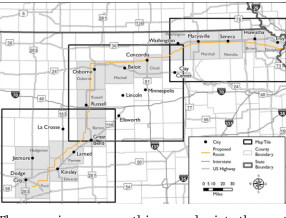
The overview map on this page depicts the route of the Grain Belt Express Clean Line in Kansas- Image Clean Line Energy Partners.- click to expand
JEFFERSON CITY, Mo. (AP) — A company is trying again to build a power line in Missouri for a multistate wind energy project.
Houston-based Clean Line Energy Partners on Thursday reapplied to build the Grain Belt Express despite earlier rejection from state regulators.
The power line would transmit energy from Kansas, across northern Missouri and Illinois to Indiana. Missouri utilities would have access to electricity.
Gov. Jay Nixon said Wednesday he supports the project. A group representing Missouri municipal utilities in June signed up for space on the transmission line.
But some landowners have said it could hurt farming and property values.
The Missouri Public Service Commission last year denied Grain Belt Express’ application, citing landowner concerns and questioning the need for the project.
Missouri is the only state that hasn’t approved it.
WICHITA, Kan. (AP) — A new government report shows Kansas growers planted this spring more of their fields into corn and soybeans, and put in fewer acres of sorghum.
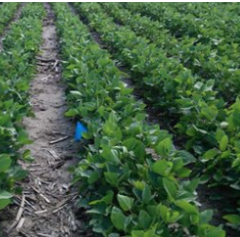
The National Agricultural Statistics Service said Thursday that Kansas farmers planted 4.8 million acres in corn, an increase of 16 percent compared to a year ago. About 95 percent were biotechnology varieties.
Also up in the state are soybean acres. The agency said Kansas had 4.15 million acres seeded in soybeans, an increase of 6 percent compared to last year.
Plantings this spring of sorghum are down 7 percent to 3.15 million acres.
Sunflower plantings plummeted 35 percent, down to 55,000 acres.
Kansas farmers are now harvesting the 8.5 million acres of winter wheat seeded last fall.
HUTCHINSON, Kan. — A Kansas man arrested on June 21 after a fire and explosion at the Plaza Towers building on 2nd Avenue in Hutchinson now faces five felony counts.
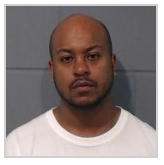
On Thursday, Chase Coble, 22, Hutchinson, was charged with three counts of aggravated arson with substantial risk of great bodily harm and two counts of criminal use of explosives.
The first three counts are level three felonies with a maximum sentence on each count of over 20-years in prison.
He was experimenting with plastic and chemicals and it got out of hand, according to police.
He was using chemicals to make black powder to use in explosives, but he claims he wasn’t doing that.
The chemicals he had were all toxic and volatile according to authorities.
Fire officials on the scene at the Plaza Towers on June 21
The fire and explosion caused significant damage to the apartment on the 12th floor of the Towers building and also some damage to the apartment below.
He asked for a bond reduction saying that his dad is paying for damages to the apartment and can’t afford to bond him. But, Magistrate Judge Cheryl Allen denied the request citing the safety of the community, but also with the charges calling for presumptive prison, there is danger of flight risk.
Bond in the case is only set at $25,000 and the case now moves to waiver-status docket on July 27.
GEARY COUNTY –Law enforcement authorities in Geary County are investigating a suspect on drug charges.
Just before 6p.m. on Wednesday, sheriff’s deputies stopped James Pasley, Marietta, GA on I-70 at East Street just west of Grandview Plaza for an alleged unsafe lane change, according to a media release from the Geary County Sheriff.
He was then arrested on suspicion of Possession of Marijuana with Intent to Distribute, Possession of Drug Paraphernalia, No Drug Tax Stamp and a lane change violation.
TOPEKA, Kan. (AP) — The president of a central Topeka hospital says the lack of Medicaid expansion in Kansas played a large role in the decision to sell St. Francis Health.
The Topeka Capital Journal reports that SCL Health put the hospital up for sale in May.
Hospital president David Setchel says that the facility forgoes up to $10 million in revenue each year because the state refused to expand KanCare, the state’s privatized Medicaid program.
SCL Health owns hospitals in multiple states, but Setchel said at a KanCare forum that its Topeka hospital is the only facility to operate in a state that hasn’t expanded Medicaid.
The governor’s office has argued expansion would prioritize those who choose not to work before people who are intellectually or physically disabled, as well as people who are frail, elderly or mentally ill.
By MARSHA BOSWELL Kansas Wheat
This is day 17 of the Kansas Wheat Harvest Report, brought to you by the Kansas Wheat Commission, Kansas Association of Wheat Growers and the Kansas Grain and Feed Association.
Southwest Kansas received rain and storms overnight, ranging from 40 to 60 hundredths of precipitation, which kept combines out of the fields until early afternoon on Wednesday. With windy conditions and temperatures in the low to mid nineties, the wheat dried out quickly and farmers were anxious to get rolling on Wednesday.
David and Lisa Schemm who farm in Wallace and Logan Counties, reported that they are about 40% done with their harvest. Yields have been averaging from the 50s to 70s on the majority of their fields so far, test weights have been really good, and proteins have been highly variable, ranging from below average to excellent on different fields.
Schemm reports that his wheat looks “phenomenal” this year. “This is probably one of the best years we’ve had since I came back to farm which was in the early 90s.” One of his top yielding varieties is KanMark, which was released by Kansas State University in 2014.
The Horton family, who farm and produce seed wheat in Wichita and Kearny Counties report excellent yields this year as well. Joe, a new hard white wheat from KSU, yielded over 100 bushels per acre for the Hortons. This year is better than the past few for the Hortons and other farmers in the area.
“This year is a year of exceptions,” said Alec Horton. “It’s not going to be a normal year by any means, but it’s not a year that couldn’t happen again, if you manage everything correctly.”
“We’re finally starting to see these new technologies and things we’ve done starting to pay off,” Rick Horton added. “It’s not going to happen every year, but we’ve seen that this is what we can do. You can be profitable growing wheat.”
Steve Badger of Frontier Ag in Oakley reports that harvest began for them on June 17, but they really got started the week of June 20. He estimates that they are 50-75% complete in the area. Yields have gone as high as the 80s, but he estimates that the average is in the area of 50-60 bushels per acre.
Badger said proteins are highly variable, but it seems that the protein levels are actually increasing as harvest progresses. With some rain Tuesday night and rains in the forecast over the next several days, harvest will likely continue past the 4th of July. Test weights have decreased slightly after Tuesday night’s rain, but are still above 60 pounds per bushel.
He reports that a lot of acres were sprayed with fungicides, with pilots spraying more acres this year that they ever have. This may be due to the fact that there was a lot of wheat streak mosaic in the area last year, when yields averaged only 35-40 bushels per acre.
For exclusive #wheatharvest16 content and more, head to facebook.com/kansaswheat.
THOMAS COUNTY –A man was injured in an accident just before 12:30p.m. on Thursday in Thomas County.
The Kansas Highway Patrol reported a 2007 Honda motorcycle driven by Bruce A. Williams, 58, Arvada, CO., was eastbound on Interstate 70 three miles west of the U.S. 83 Junction.
The motorcycle entered the south ditch and overturned.
Williams was transported to Citizens Medical Center.
A last-minute special legislative session? Kansas schools brought back from the edge after being on the brink of closing? How can such things possibly be happening?
This is Kansas, after all: practical, straight-talking, fiscally conservative, always-be-prepared Kansas. Surely lawmakers must comprehend that Kansans want stability, and want to be reasonably positioned to face future challenges.
Duane Goossen
If the governor and legislators do understand, they have not shown it with their financial management of the state. The Brownback fiscal experiment has left Kansas in a highly precarious financial position. A crisis over school funding and a special legislative session are just the latest examples of the chaotic environment born of unaffordable tax cuts.
The state’s long-running school finance formula logically called for more money to go to classrooms as costs and enrollments increased. However, with finances in a downward spiral, lawmakers opted to sack the school finance formula and cut funding. Then they froze that lowered aid level in place through a block grant.Of course, without a formula, funding inequities between school districts quickly developed. Don’t blame the Kansas Supreme Court for this.
The Court did not create the situation, but rather pointed out that distributing funds inequitably does not meet constitutional muster, and ruled that lawmakers must fix it.If Kansas had retained a properly funded school finance formula, no families would have worried about whether schools would open in August. A special session should never have been necessary.
In the crisis atmosphere of a special session, lawmakers managed to add enough money to keep schools open—certainly a positive thing—but by counting on one-time dollars from the hoped-for sale of the Kansas Bioscience Authority. Their solution may last through the November elections, but not much longer.
For three years running, Kansas has not received enough revenue to pay bills, leaving the general fund bank account utterly empty. Kansas has a rainy day fund on paper, but without money in it. The highway fund has borrowed to its limits, with road maintenance cut to a fraction of normal, bridge maintenance cut in half, and many construction projects cancelled.
Each month, as revenue falls short of expectations, something more must be cut. In March the cuts fell on universities, then on road projects, then on hospitals and doctors who provide Medicaid services, then on the universities again. Finally, to finish the fiscal year at the end of June, the governor simply decided that millions of dollars in bills would go unpaid, pushing them off for payment in a future fiscal year.
In January, the next Legislature will face the daunting task of building a new budget in which even a constrained set of expenses outpaces revenue by hundreds of millions. Plus, those future legislators will be saddled with the bills that current legislators and the governor left unpaid this year.What happens when the next recession comes? What happens as roads and bridges continue to deteriorate? What happens as rural hospitals close? What happens as school funding proves to be inadequate? Kansas is ill-prepared to deal with any of it.
Scraping by for a time, tapping savings, and using up one-time resources might be justified if those tactics were a bridge to a more permanent solution. But there is no correction in place, no fix ready to kick in. The current financial trajectory leaves Kansas destined to stumble from crisis to crisis, dealing constantly with financial uncertainty.Special sessions. Fights with the Court. Schools on the brink. Unwelcome national publicity. Bills paid late. Waiting lists for services. Deteriorating bridges. Get used to it, Kansans, because this will be our new normal unless we chart a different financial course.
Duane Goossen formerly served 12 years as Kansas Budget Director.

 WICHITA, Kan. (AP) — State and municipal employees are now able to conceal and carry on the job.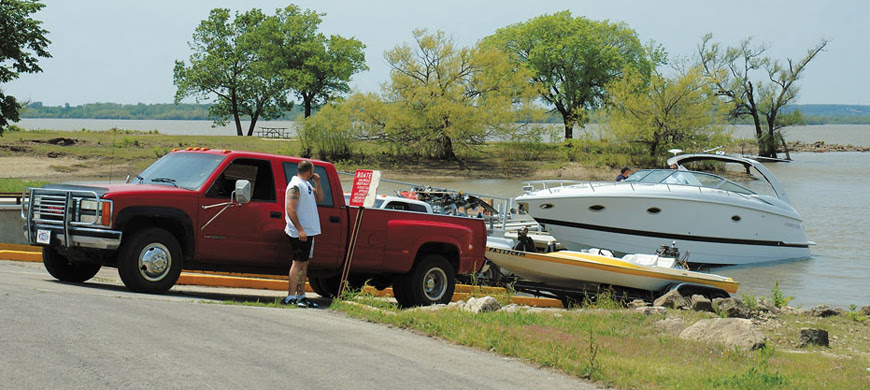
 KDWPT
KDWPT

 WICHITA, Kan. (AP) — A new government report shows Kansas growers planted this spring more of their fields into corn and soybeans, and put in fewer acres of sorghum.






 City of Hays





 THOMAS COUNTY –A man was injured in an accident just before 12:30p.m. on Thursday in Thomas County.


 WICHITA, Kan. (AP) — Wichita police say two men have died at an industrial accident in south Wichita.