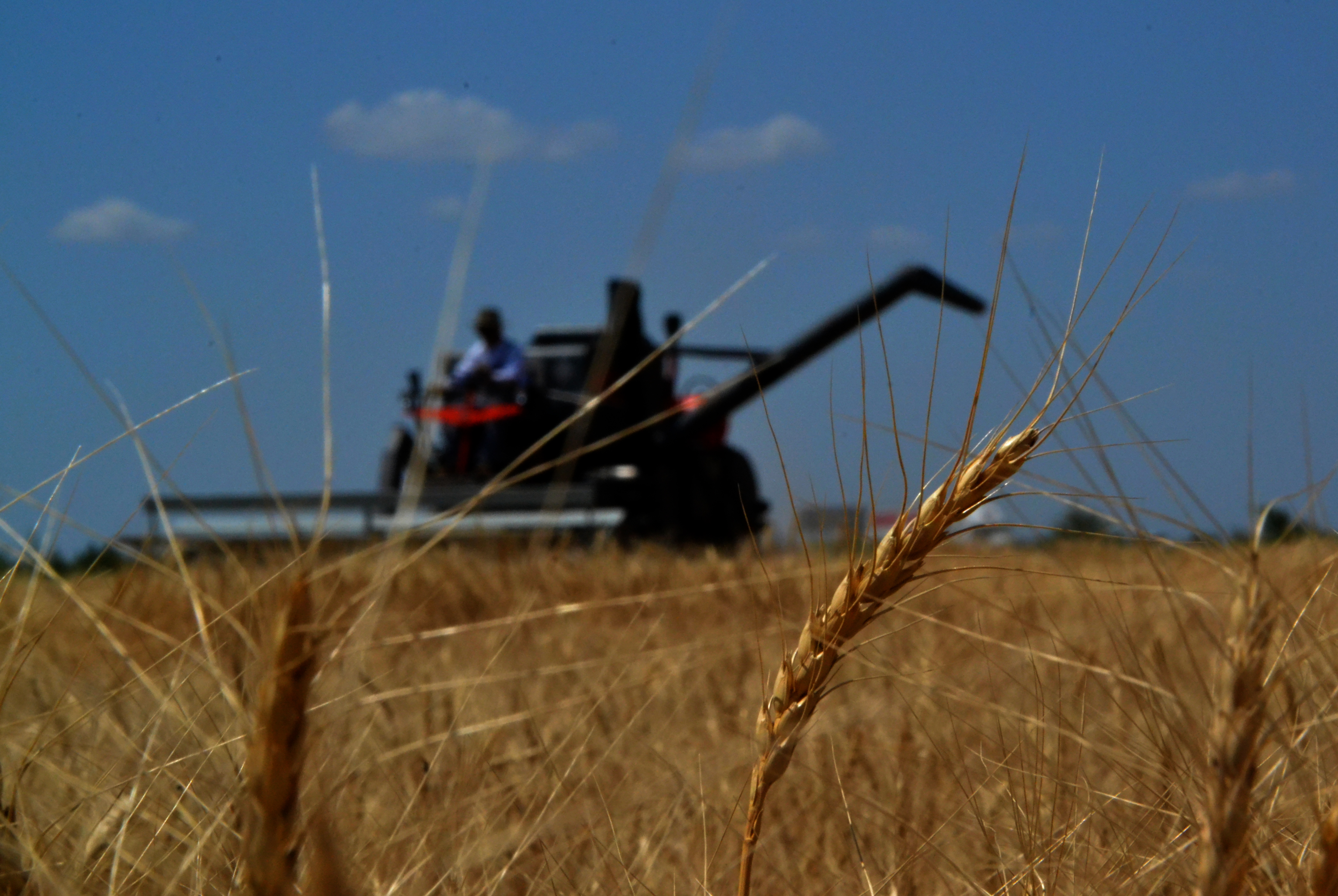
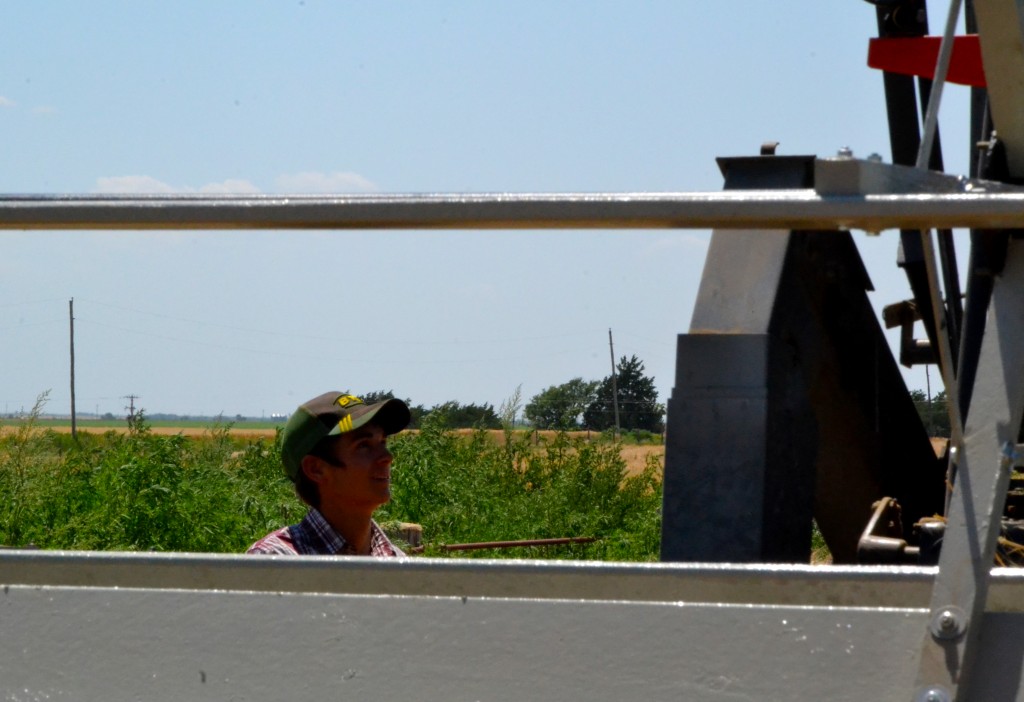
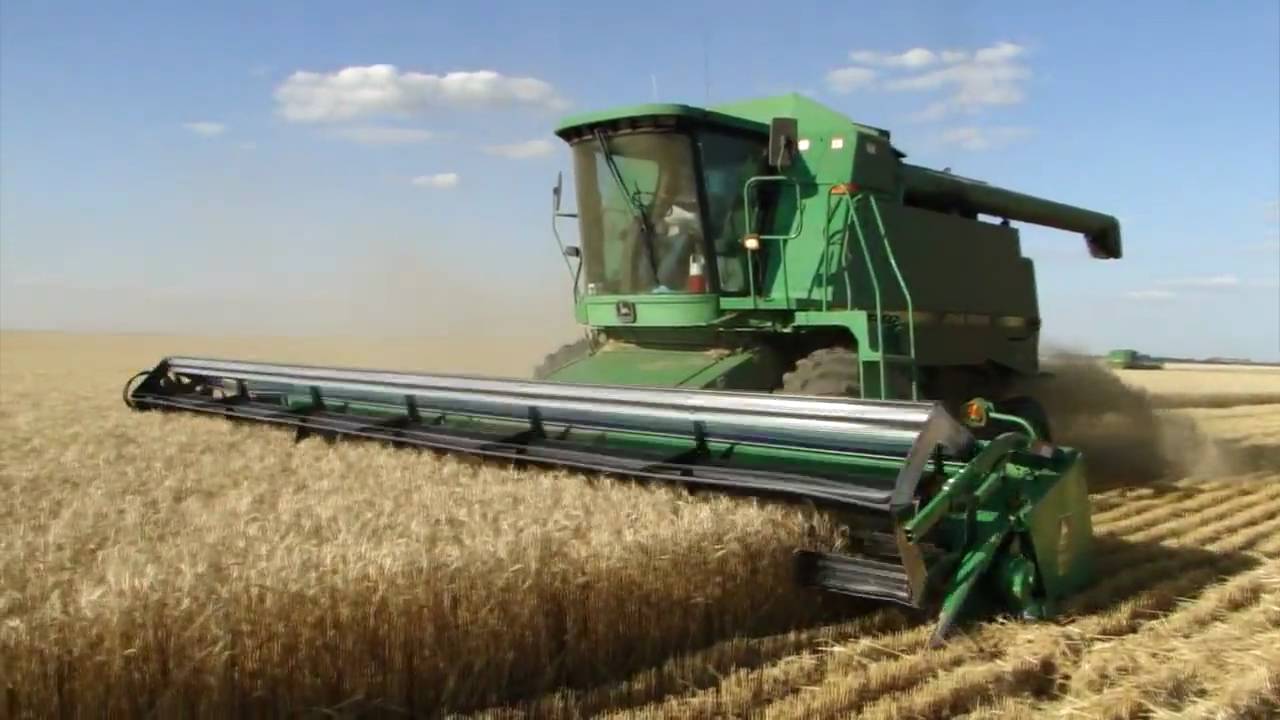
That’s how Stacy Campbell, Ellis Co. Extension Agriculture Agent describes the area wheat harvest, as he admits it’s hard to complain about rain in a locale that perpetually needs more moisture.
However, the past few days of intermittent rain is slowing down harvest, which Campbell said local grain elevator managers estimated is about 50 percent complete. Although cutting is temporarily halted, much of what’s been harvested is good–very good.
“We need a little bit of wind and some more sunshine,” Campbell said Wednesday morning, “and no more little showers.”
There were showers early Tuesday afternoon in Ellis County, ranging from just a trace to 0.35. Early Saturday evening a severe thunderstorm brought 0.70 to two inches across the county. The National Weather Service in Dodge City is forecasting rain through Saturday.
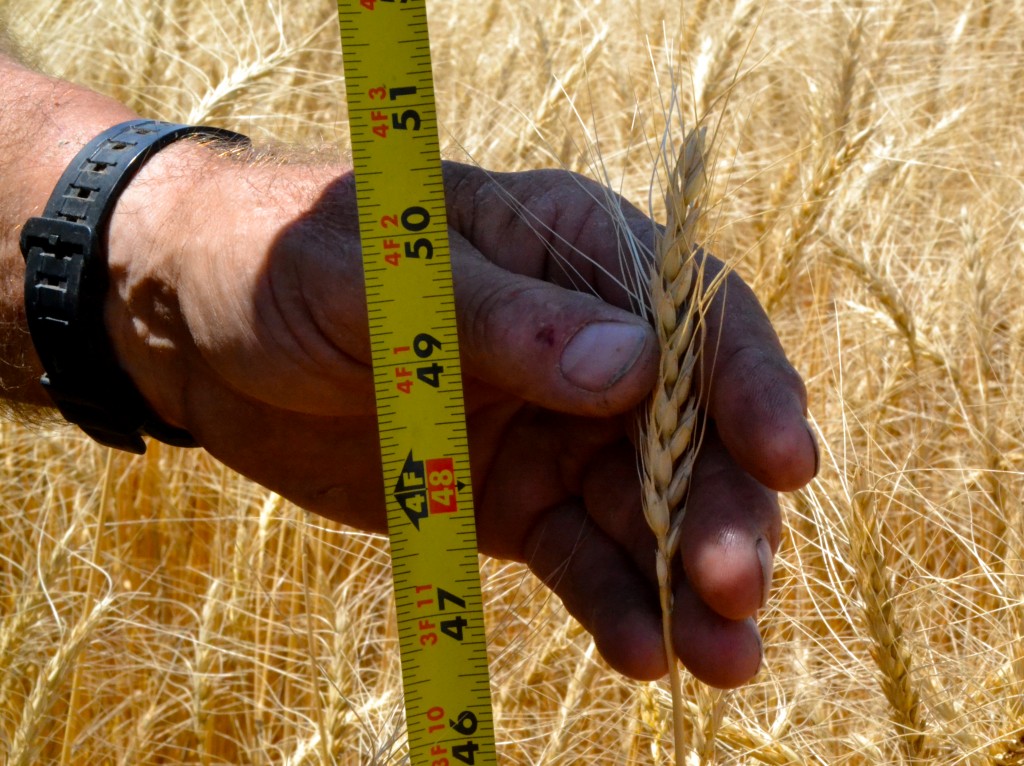
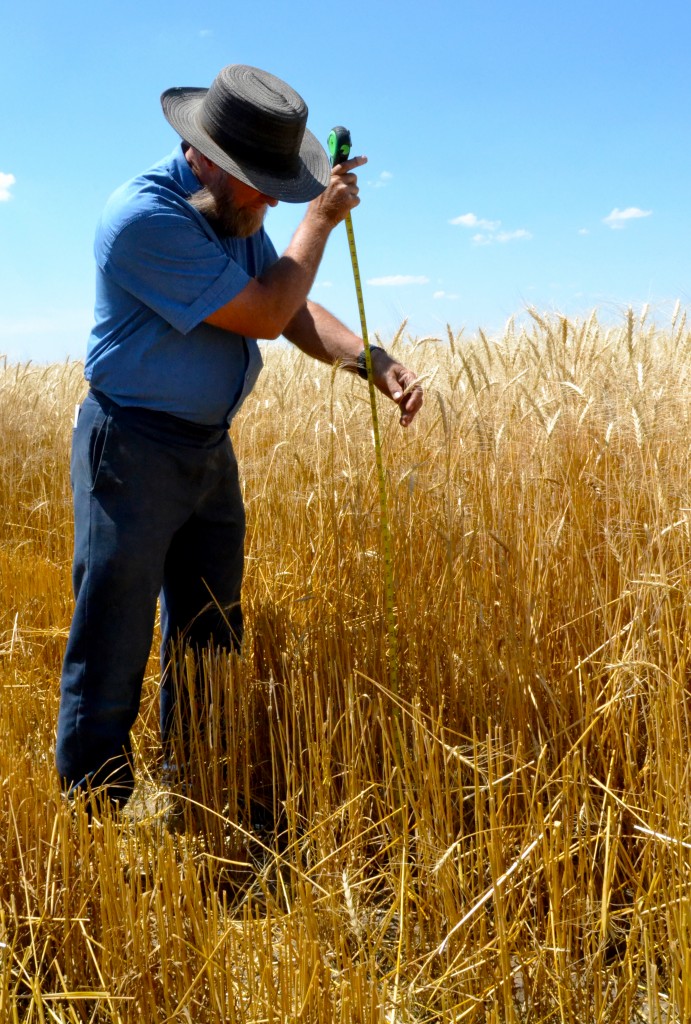
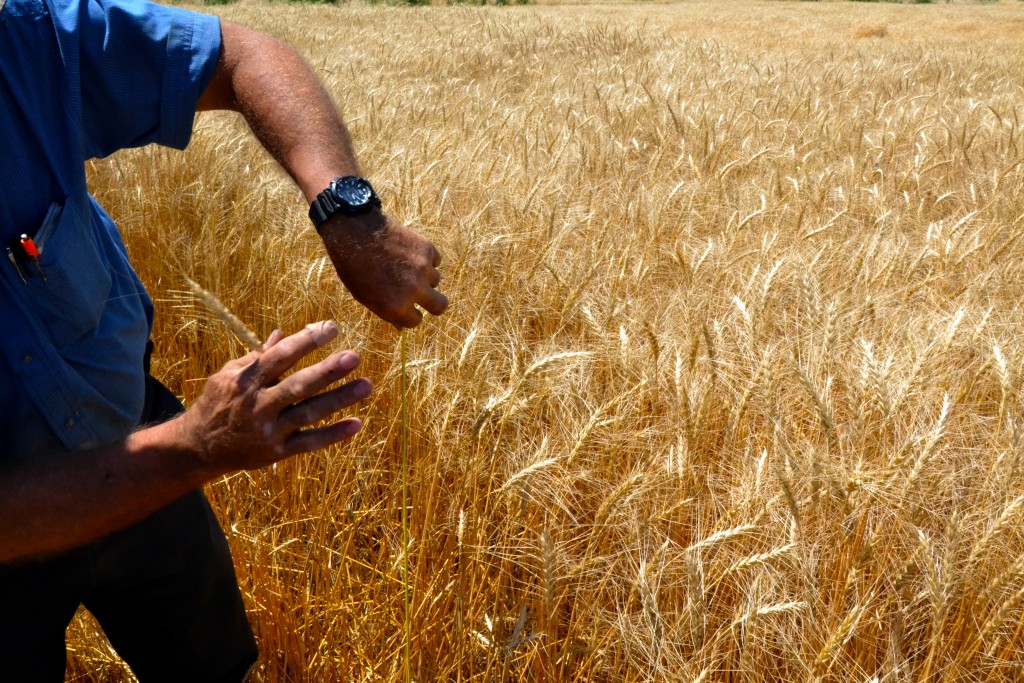
The wheat that’s been harvested so far “may have historically high yields,” according to Campbell. “This may go down in the record books this year.”
“Eighty-plus summer fallow wheat, there’s even some 90 and 100-bushel wheat. Even continuous crop is doing 70. Guys that planted wheat after corn last year are even doing 60 bushels,” Campbell said, although he recognized that’s not true for every Ellis County farmer. “Obviously, somebody out there had hail and with all this rain some of the wheat got tall and fell over. It’s not picture-perfect across the county, but really, really good yields.”
Unfortunately, as the law of supply-and-demand kicks in, the price for wheat keeps going down.
“Yesterday in Hays (June 28) the wheat price finished at $3.09 a bushel,” Campbell reported. “A few months back it wasn’t great, but it was still well over $4 a bushel and teetering around $5 during the winter. That’s what happens when you have great crops. That’s why farming is such a challenge.”
SHERMAN COUNTY – Five people died in an accident just after 2 a.m. on Wednesday in Sherman County.
The Kansas Highway Patrol reported a 2016 Volvo semi driven by Yuriy P. Mudrenko, 27, Antelope, Calif., was eastbound on Interstate 70, 11 miles east of Goodland.
The semi rear-ended a 2004 Toyota Sequoia driven by Calvin Florez, 42, Guatemala, according to KHP reports.
The collision caused the Toyota to veer into the south ditch, where it overturned.
Mudrenko was transported to Citizen’s Medical Center, and Florez was transported to Via Christi in Wichita.
There were five fatal victims in the Toyota and several other injured occupants, the KHP reported. The identities of the individuals are unknown at this time.
The drivers were properly restrained at the time of the accident, according to the KHP.
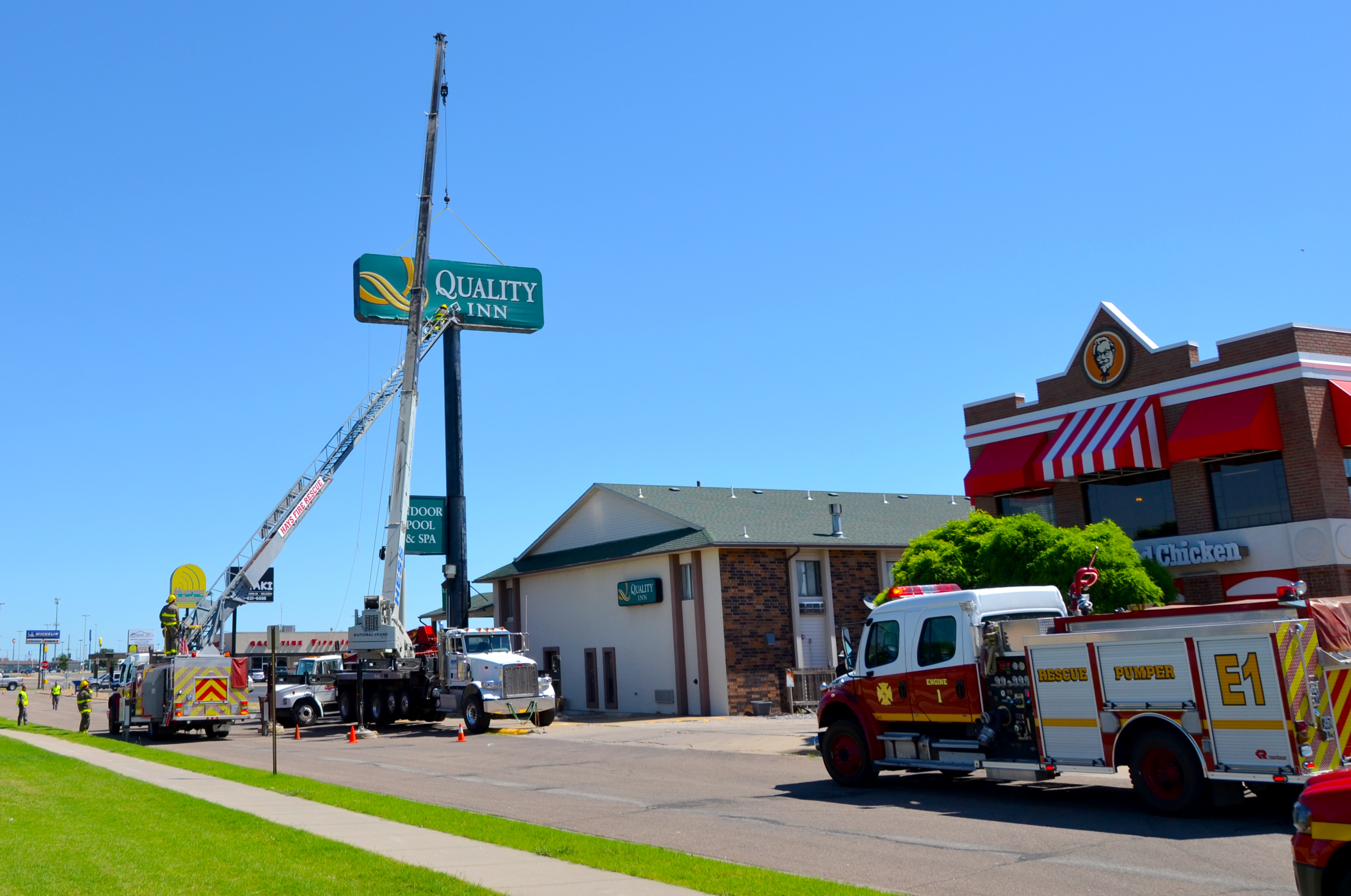
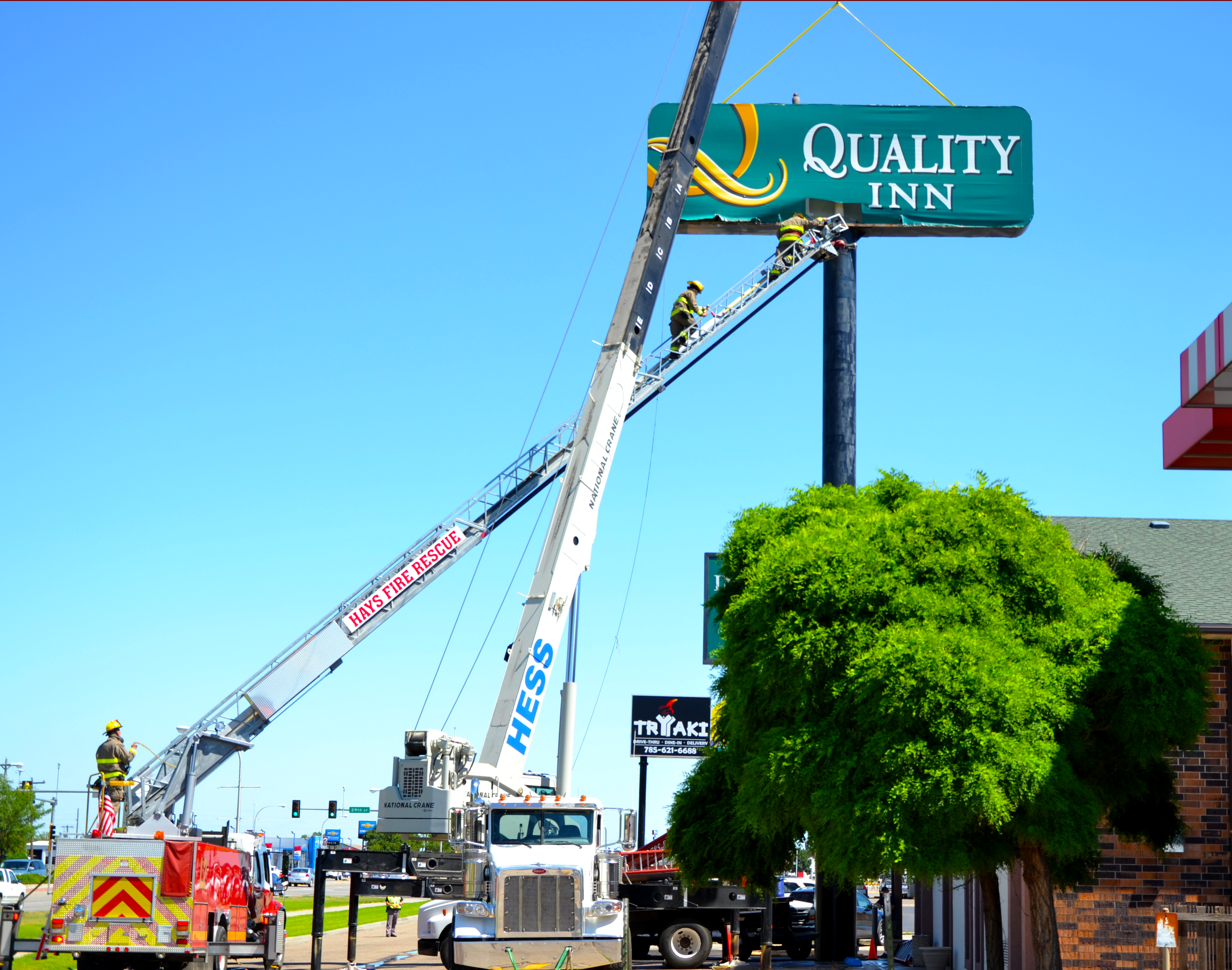
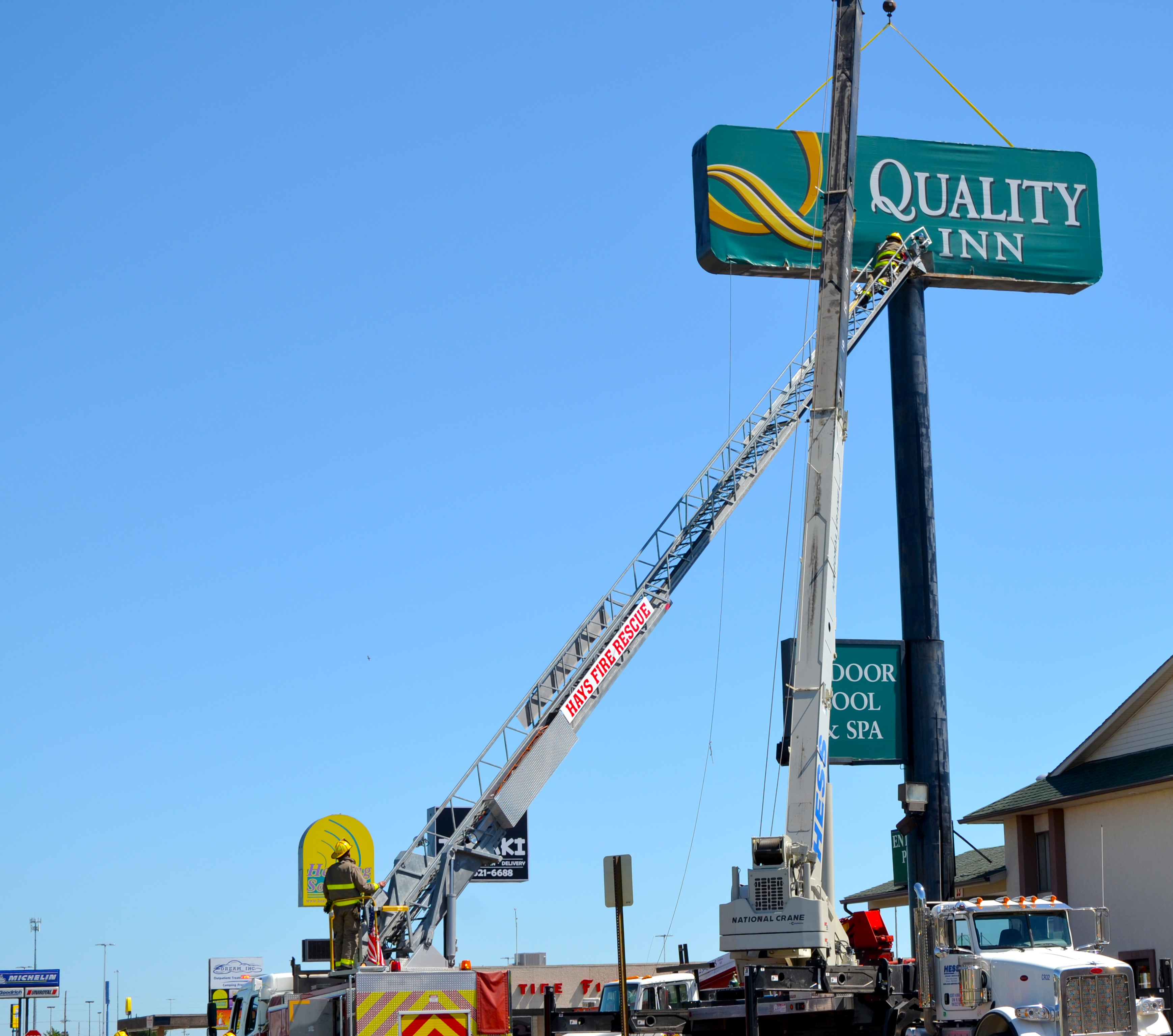
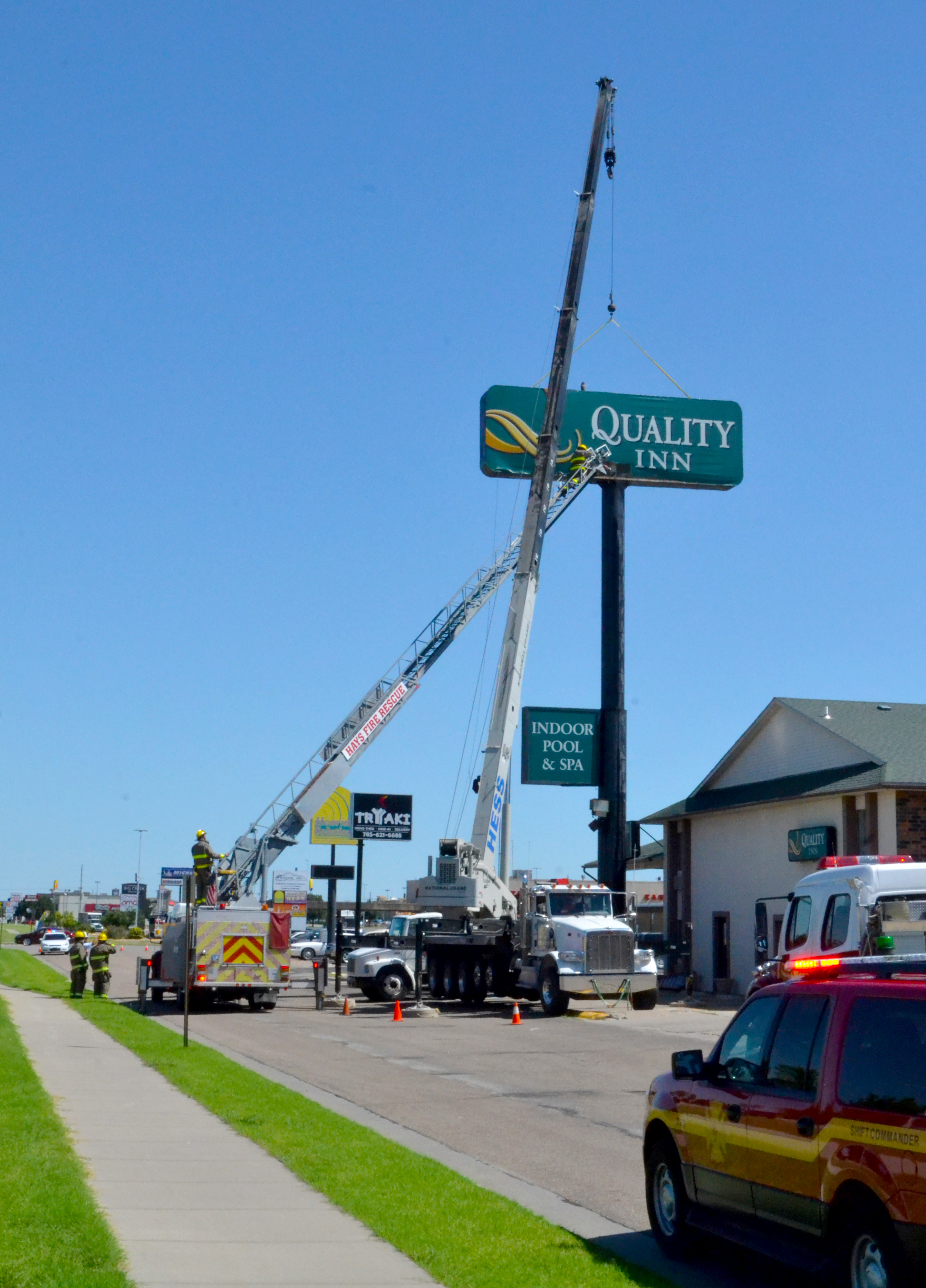
At around 11:10 a.m. Wednesday, the Hays Fire and Police Departments responded to a fire contained within the sign in front of Quality Inn, 2810 Vine, where welders were working on the sign.
“They were up there trying to remove the sign, cutting bolts off they can’t get loose,” said Hays Fire Department Capt. Kirk Klein.
At the top of the pole, he said there was an opening that allowed birds to enter into the pole, bringing with them nesting materials.
“There’s a ring where the two posts join together. There is a nest down there and, as they were cutting, sparks and embers were dropping down that started the nest on fire,” Klein said.
The welders attempted to extinguish the fire with extinguishers and water, but because of the length of the pole were unable to completely extinguish the fire.
Workers then called the HFD and flagged a passing truck to assist.
After setting up the ladder, members of the HFD worked to put out the smoldering fire within the pole.
“We used the ladder pipe to spray down, but since it was so far down, we took a hose up the ladder and hung it down and moved it around. Then we ran a hose up from the bottom,” Klein said.
Klein said water was sprayed after the fire was out in an effort to soak any remaining nesting materials.
The HFD remained at the scene for a little over an hour and, by 12:30 p.m., work had resumed on the sign.
As they continue to work through the 2017 budget process, the Ellis County Commission will hold a special session Thursday morning.
The commission will also discuss the current ban on fireworks in rural Ellis County. Earlier this month, commissioners elected to keep the ban on fireworks in place in unincorporated areas of Ellis County.
The commission, however, can pass a resolution lifting the ban if conditions improve.
The commission also is scheduled to hear presentations from eight departments — district court, buildings and grounds, appraiser, treasurer, sheriff/jail, information technology, county clerk/elections, administrator/contingencies.
Thursday’s meeting is at 9 a.m. at the Ellis County Administrative Center in the basement executive room.
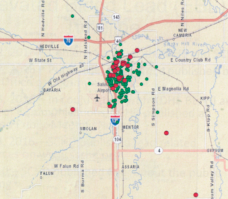
High lead blood cases in Saline County. The red dot represents result 5 ug/dL or over, green dot is under 5 ug/dL.
SALINE COUNTY -Kansas health officials continue working to determine what is causing elevated lead levels among over 30 children in Saline County.
According to a release from the city of Salina, County Health Department Director Jason Tiller told commissioners during Tuesday’s meeting, “we don’t know where the lead is coming from right now but every possible source of lead contamination is being examined.”
Tiller said that on June 22 and June 23, another 384 adults and children were tested for lead. Of those, forty-two individuals did not identify any risk factors to proceed with further blood screenings.
Blood screenings were also completed during that time that involved 147 children and 153 adults. An additional 42 individuals will be called back to complete the blood screening.
Results will come from the Kansas Department of Health and Environment in about 10 to 14 business days.
In March, the Pediatric Environmental Health Specialty Unit at Children’s Mercy Hospital in Kansas City contacted KDHE about elevated blood lead levels in Saline County.
On May 20, KDHE’s Bureau of Epidemiology and Public Health Informatics provided an update. During a 15-month period (January 1, 2015 to March 31, 2016), 32 Saline County residents were found to have elevated blood lead levels. Of these, 27 lived with the Salina City limits.
Tiller said Kansas recommends that all children be screened for blood lead levels at age 12 and 24 months. As part of Kan Be Healthy Screenings, children on Medicaid are required to be screened at age 12 and 24 months.
High lead blood cases with the Salina City Limits The red dot represents result 5 ug/dL or over, green dot is under 5 ug/dL.
For children, cases with results of 10 ug/dL or higher are referred to the health department for case management; adults are referred with levels of 25 ug/dL or higher.
County Commission Chairman Monte Shadwick said many citizens have asked him where the lead is coming from. Tiller replied, “industry, possibly water.” He said they hope to get the answers from information compiled by KDHE interviews with affected families.
ort Hays State Sports Information Director Ryan Prickett earned more national recognition in 2015-16 as four of his media guides earned national publication honors from CoSIDA (College Sports Information Directors of America). The 2015-16 Fort Hays State Women’s Basketball Media Guide was tabbed “Best in the Nation,” while the 2015 Football Media Guide, 2015 Volleyball Media Guide, and 2015-16 Men’s Basketball Media Guide all were voted third nationally in the College Division, which includes all non-NCAA Division I institutions (NCAA Divisions II and III, NAIA, and NJCAA).
The Women’s Basketball Media Guide earned “Best in the Nation” honors for the first time ever. After ranking third nationally for three straight years, the women’s basketball guide ascended to the top this year. Prickett earned the third “Best in the Nation” honor of his career after the 2011 and 2014 FHSU Volleyball Media Guides were tabbed with same title. Former sports information graduate assistants Doug Self (now Sports Information Director at Southwestern Oklahoma State) and Andrew Sogn (now Assistant Sports Information Director at Washburn), teamed with Prickett to produce the nation’s top volleyball media guides those years.
In his career as Sports Information Director at FHSU, Prickett has amassed 14 Excellence in Publications Awards from CoSIDA. All 14 are for media guides that ranked among the top four nationally (volleyball, women’s basketball, men’s basketball, and football combined).
This is the first year of Prickett’s career where all four of his media guides produced at FHSU earned the Excellence in Publications Award from CoSIDA. Last year three of the four guides earned the distinction. This year the men’s basketball guide jumped into the top three (its highest ranking ever), while football remained third for the second straight year. The volleyball guide remained in the top three for the fifth consecutive year.
Jared Schiel of the FHSU Foundation designed the covers for the football and volleyball guides, while Prickett designed the covers for the women’s basketball and men’s basketball guides. Photos for the guides were provided by Mitch Weber, Emma Henry, Mark Shaiken, and Bob Duffy. Fort Hays State University Printing Services printed the guides. Prickett produced the entire layout of all four guides, including writing and design.
Prickett enters his 12th year as Sports Information Director at Fort Hays State University in 2016-17.
TOPEKA – Kansas Attorney General Derek Schmidt on Tuesday asked the Kansas Supreme Court to reconsider its opinions in a group of DUI cases in light of the recent U.S. Supreme Court decision in Birchfield, according to a media release.
The attorney general’s requests come after the recent U.S Supreme Court decision on three DUI-related cases, known together as Birchfield v. North Dakota, which addressed the constitutionality of criminally punishing post-arrest refusals to submit to testing to determine blood alcohol levels. Last week, the U.S. Supreme Court upheld that the Fourth Amendment permits warrantless breath tests incident to arrests for drunken driving. Additionally, the Court found that there was no legal right to refuse a breath test incident to arrest and upheld a conviction for refusal to comply with the requested breath test. As a result of this decision, previous conclusions made by the Kansas Supreme Court in State v. Ryce, State v. Nece, State v. Wilson,and State v. Wycoff require reconsideration.
“The Kansas cases reached a different result that appears inconsistent with the U.S. Supreme Court’s holding,” Schmidt said. “Although the issues presented are not identical, the bottom line is the same: The U.S. Supreme Court says the U.S. Constitution allows the state to criminally punish a driver’s refusal of a breath test after a DUI arrest, and the Kansas Supreme Court has said it does not. We think the Kansas court’s conclusion must yield to that of the U.S. Supreme Court, and we have requested clarity on the matter.”
In February, the Kansas Supreme Court overturned a state statute making it a crime for a person suspected of DUI to refuse to submit to a test to determine blood-alcohol levels. The state court held that the statute as currently written violates constitutional rights. Shortly after, Schmidt filed motions asking the Kansas Supreme Court to delay formally issuing the mandate on its decisions on the four Kansas cases, State v. Ryce, State v. Nece, State v. Wilson and State v. Wycoff, pending the outcome of the Birchfield case. Motions were later filed asking the Court to reconsider its decisions striking down the refusal statute, which effectively stayed the mandate in the cases. The Kansas Supreme Court has taken no action on the pending motions.
In March, Schmidt joined 17 other attorneys general in filing a friend-of-the-court brief with the U.S. Supreme Court in the Birchfield case urging the Court to decide the case in a way that upholds the constitutionality of Kansas’ statutes.
ELLIS COUNTY–Effective Friday, July 1, 2016, motor vehicle tag registration fees will increase to $3.25 per vehicle registration, in order to support the Kansas Highway Patrol and Kansas Law Enforcement Training Center.
This was done in an effort to increase hiring in the agency, the KHP will receive $2 of the increased fee and the remaining $1.25 will go to the KLETC (Kansas Law Enforcement Training Center) for training.
The mailing of the July renewals has been delayed from mid-June until July 1 in order to add the increase.
All transactions received (by mail) and processed July 1 or after, will be subject to the increased fee. “This means if someone mails in their renewal before July 1 and we receive it on July 1 or after, it will be returned for the additional fee. The postmarks do not apply as they have in the past,” Ellis County Treasurer Ann Pfeifer said in a news release.
“This is what the Department of Revenue has instructed us to do as they will update the computers to handle the new fees after 5:00 p.m. on Thursday, June 30, and we have no way to avoid collection of the fees shown,” she explained.
Those that would like to go online and renew their July tags early to avoid the extra fee may do so.
“If you have multiple vehicles, you may not be listed on the same renewal form and you will need to look them up by those tag numbers. If you come to the office, please make sure to have a list of your tag numbers and insurance for each vehicle,” Pfeifer added. “We would be happy to help you renew your vehicles, even if you don’t have your notice.”
I will admit I wasn’t sure what to expect when the story idea was presented. A western Kansas farmer cutting wheat with an antique combine during harvest isn’t my normal fare. But growing up, I worked with farmers, I’ve driven a combine, and spent days in the 100-degree heat working fields, so I thought, “Why not?” and made the call.
Harvest, as I have known it, is a hectic time, rushing to get wheat cut and delivered, especially as storms are expected to move in, so I wasn’t expecting an immediate answer. Much to my surprise, after a couple of rings a strong, but friendly, voice rang out.
“Hello, this is Roger,” came across the line, slow and deliberate.
After introductions, the man on the line, Roger Kuntz, who lives in Grainfield, explained the premise behind his endeavors.
“Why not find the simplest piece of equipment ever built and enjoy them versus buying into the high-tech world where you see the preposterous gadgetry that you’re maintaining for others?” he said. “Why not make your world fit you?”
And my interest was piqued.
A time was set and a couple of days later myself and videographer Cooper Slough made the hour drive to interview Kuntz and shoot his harvest.
The farm was easy enough to find, just a quarter mile west of the little town of Quinter, with a medium-sized red barn, and a 1949 Chevy truck parked right on the side of the road.
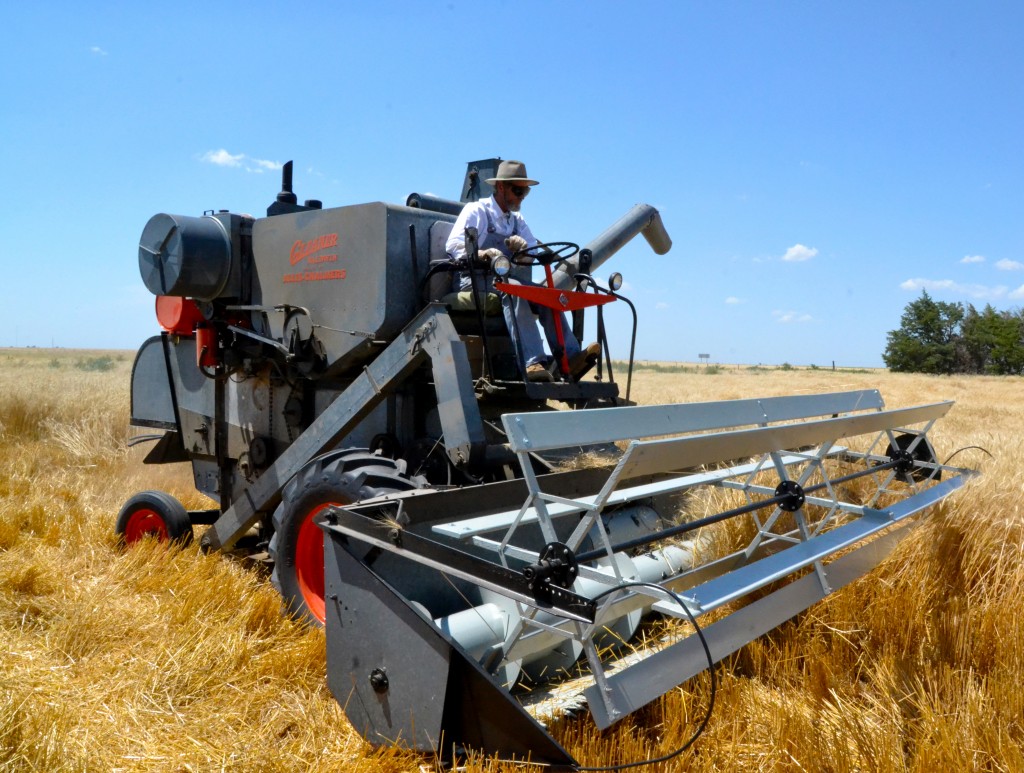
Roger Kuntz preparing to begin cutting with his 1950’s combine “Chitty Chitty Bang Bang”
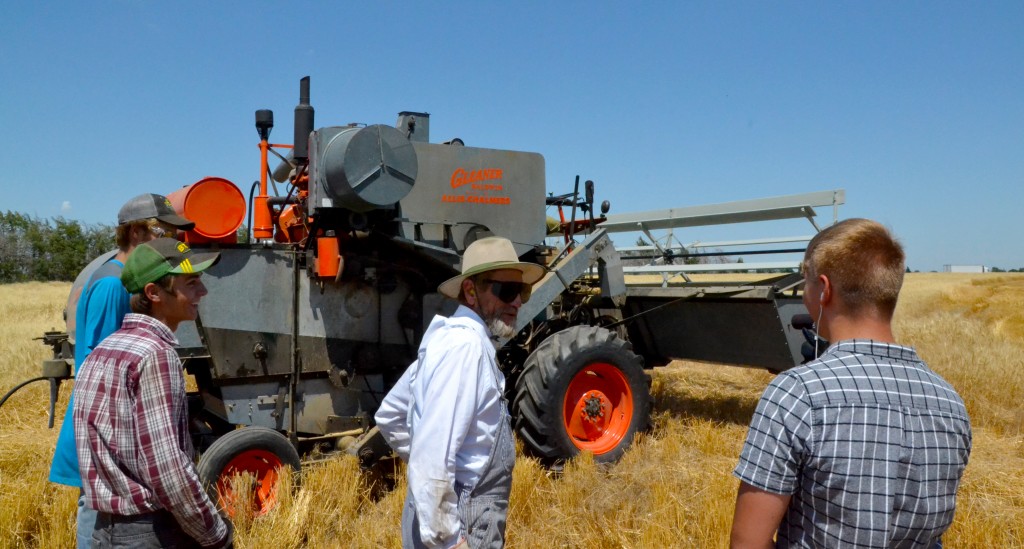
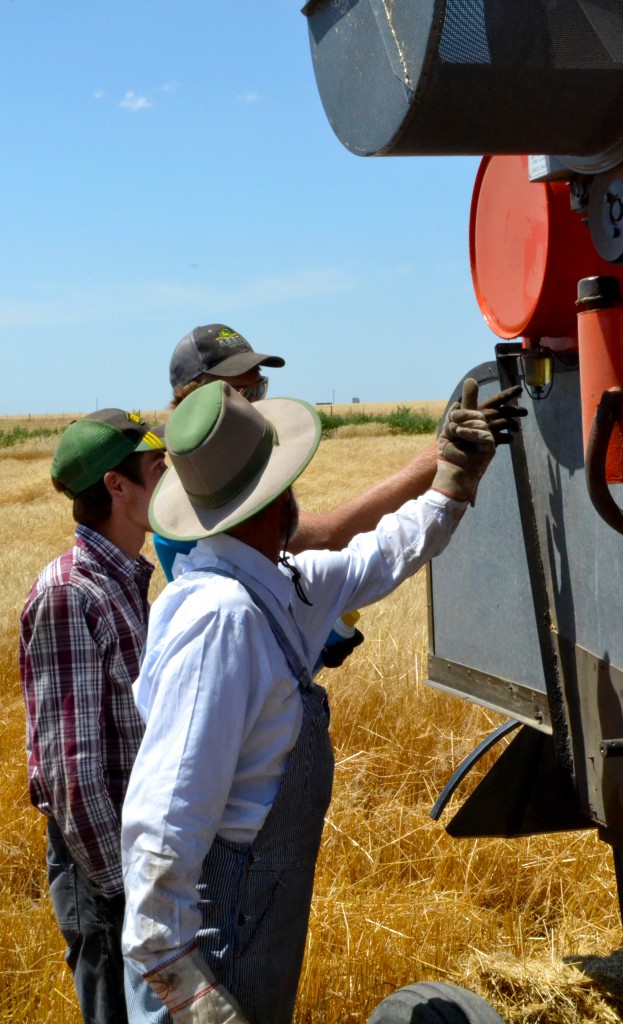
Roger Kuntz reviews repairs made by Cody and Jessie Bogart before wheat cutting begins just west of Quinter.
“Look at that,” my cameraman said as we passed the truck.
“This must be our guy,” I matter-of-factly responded.
Kuntz had told me about that truck on the phone. It had been his fathers and was still used to haul grain, 150 bushels at a time.
We were greeted almost immediately by a middle-aged woman who had the look of a farmer’s wife — Roger’s sister-in-law.
Roger wasn’t going to be immediately available, she said. The combine, the crux of the story, had apparently stopped running just before we arrived, and he was working to get it running.
We made small talk as we waited, talking about the pending storm and record wheat yields being reported in other areas of the state.
As I glanced around, I could see work being done on the combine, immediately wary that the story might require another trip, when I noticed an older man in full overalls and a hat with a full neck flap heading our way.
It was Roger Kuntz.
We talked about his equipment, his career in farming implements and why he runs his small farm in a way not seen in decades.
“The joy of being here today is the fact that we’ve come so far in getting bigger and more complex with the equipment in the 70’s until now. The joy comes from doing a small cottage farm right here at Quinter, Kansas,” he said.
After a lifetime of working with farmers, fixing implements across the world, he knows first-hand the difficulties of modern farming.
“The joy of simplicity outweighs so many other dimensions that pursuing this goal of simplicity and harmony with nature has led me to go organic with the farming. Even though I’ve walked shoulder to shoulder with the people of the ’70s who drove the Big Buds, the Versatile tractors, etc. The organic small cottage farm is a way for me to unwind and to also train apprentices,” Kuntz said.
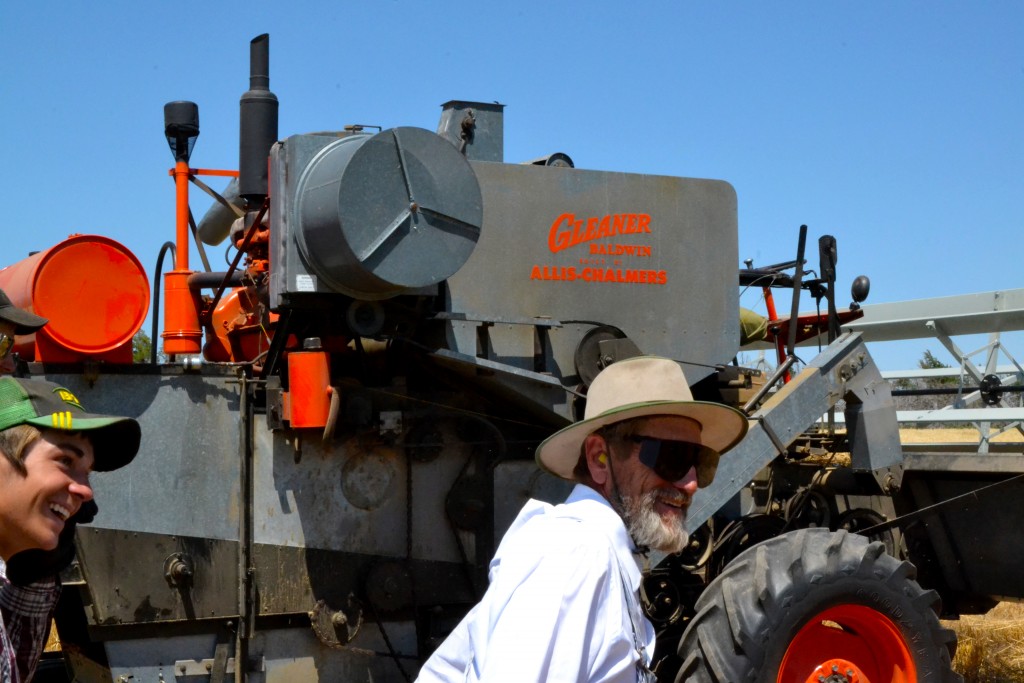
Two of those high school students, brothers Jessie and Cody Bogart, were working on the combine – affectionately named Chitty Chitty Bang Bang – replacing the fuel pump that was giving them trouble.
Both students have plans to continue the work they are learning with Kuntz after graduation, using the skills they learned — but they aren’t the first and likely won’t be the last to work with Kuntz.
“When possible, we try to help the handicapped and put them on the assembly of these parts in our cottage shop,” Kuntz said. “We also have the foster home teenagers come out when they’re available and help do some training there.”
The sense of community and the personal touch shines through with Kuntz, something he shares with pride.
The number of people Kuntz has met is hard to imagine. For decades he traveled the world, working as a service manager at K-Tech working on Flex-King tillage equipment, now traveling with Jessie helping farmers to precisely dial in their tillage equipment.
Those service trips give Kuntz an opportunity to hear stories and reflect on the lives of the modern farmer.
“That has been a big part of going out on the service trips. I tell Jessie and Cody, ‘Let’s listen to their problems before we respond.’ ” he said. “The stories of what they would do if they could do it over again are very touching.”
Kuntz’s story starts as a young student in the area, thinking beyond the classroom.
Daydreaming in school, Kuntz said, paid off as he worked in research and development and as a service department head, putting him in a position to develop relationships with farmers and the land.
“That work entwined me even further into agriculture and farming.”
But working on high-tech machinery also created a desire to get away and practice farming without the entanglements of modern technology as farms grew larger and became more complex.
“A retreat from that life was just having this small situation here with older antique farm equipment,” he said.
“We enjoy the sweat that comes off our brow, we sleep good at night and the toil and the non-high tech world has fit us very well,” he said in a poetic tone. “We enjoyed our journies, we love the land, we plan to stay here just as long as we can.”
During the hours filming and exploring the farm, we paused, sitting around a small table enjoying cookies and a homemade energy drink. As we gathered for the break, Kuntz, Jessie, Cody and their parents were curious about what we do. We explained the in-and-outs of our own jobs, noting the stark contrast in web-based reporting to their work in the fields.
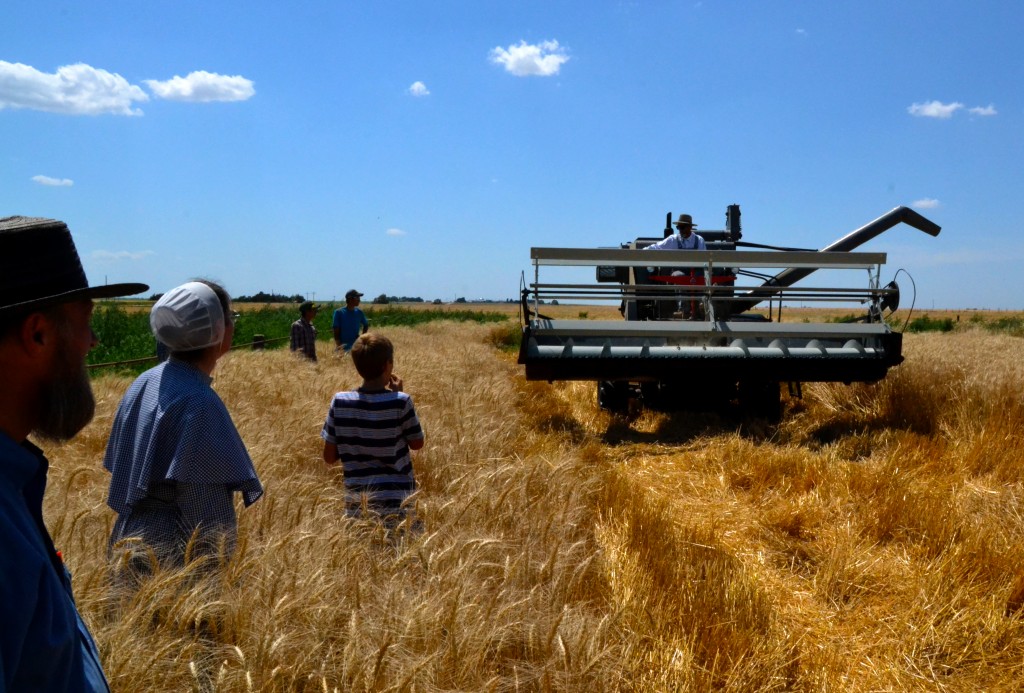
Then the fun began, the combine – once again operational – roared to life and we began capturing what we needed.
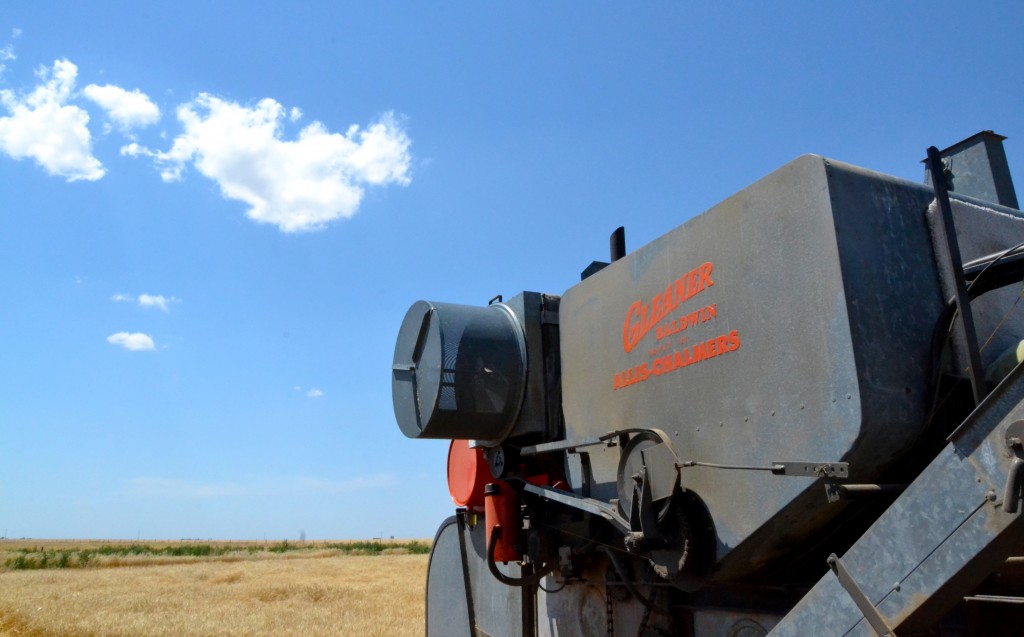
“It’s still functional. It does our job,” Kuntz said of his once-abandoned 1958 Gleaner A combine.
It was given to him, he told us, but he couldn’t just take it. He gave the farmer a donation for the machine that, without Kuntz, would likely have become scenery in a dusty field, collecting rust as an idle reflection of a time that had long since passed.
Despite the earlier hiccup, Chitty Chitty Bang Bang hummed along perfectly, albeit with a little coaxing from Kuntz. He insists singing its namesake song helps it run faster. The louder he sings, Kuntz said, the faster it goes.
As my cameraman rode shotgun, collecting shots of the harvest, he sang as they rolled along.
I wasn’t sure it helped the machine run, but the idea made me smile.
“Our little barn, our little group of machinery, and the way we farm is a real joy as these machines that are much older than the youth operating them go to the field,” he said.
The type of farming Kuntz does, organic and small, a cottage farm he calls it, isn’t without its merits in the modern world. Kuntz said he notices a growing need to pursue tillage even as others embrace new and stronger chemical treatments.
In the ’70s, the Big Buds did their job well but then came chemicals, allowing for no-till farming to be practiced, he said.
“That came in and changed agriculture.”
But weeds are adapting and tilling the ground is making a comeback, he added, giving him more opportunity to continue precision work on modern equipment.
“Tillage that can skip the ground 2 inches deep at 8 mph and really get a good job done, that where we come in,” Kuntz said. “It’s the finesse, the finesse of making a machine work so well that it pulls one or two years easier and performs right and does a good level job clear across.”
The bulk of farmers still practice no-till farming, he said, but some tillage is returning as people try to recalibrate to solve modern farming problems.
Out here, though, those problems seem distant as Kuntz practices farming that would be more familiar to someone in the ’60s than today.
“Out here, where I do not want to spray any and I need complete coverage to prevent weeds from taking over I plant a very old variety, maybe a 60-year-old variety. The varieties of Scout, Eagle, Turkey are the wheat varieties I plant and those were available in the ’60s,” he said. “It blocks the ground, shades the ground, protects the weed growth.”
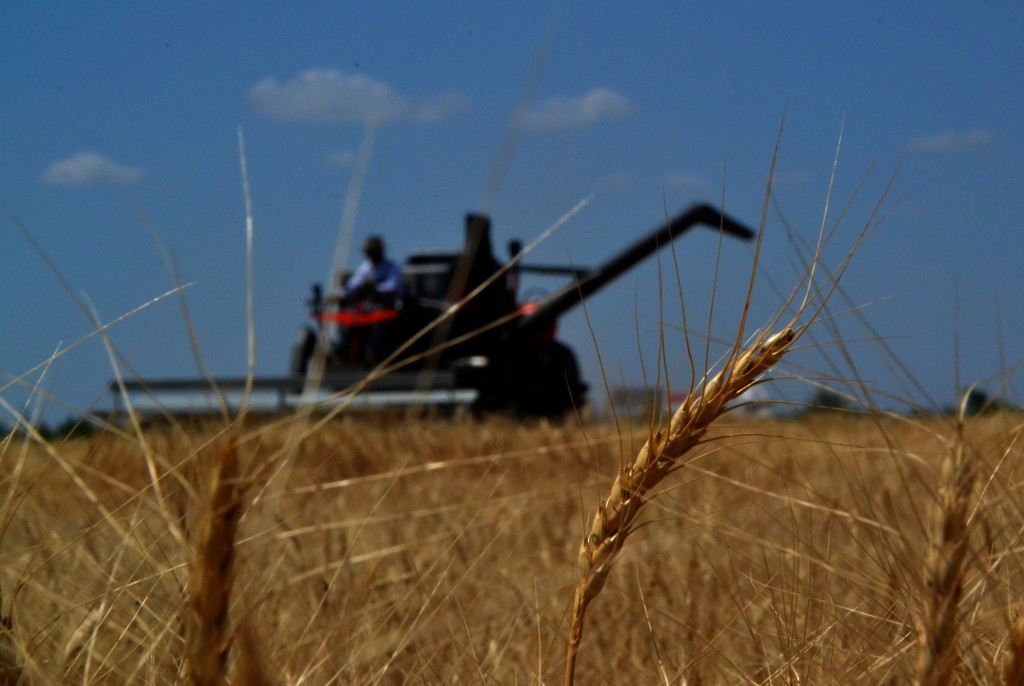
Stepping into the field, it is easy to see why – the wheat is unlike any other I have ever seen and taller than I would have believed. He had told me over the phone it was chest high. He wasn’t exaggerating.
As the day wore on, watching Roger and his young apprentices’ work, it occurred to me this labor of love is likely unsustainable. I couldn’t imagine a situation in which a profit could be made from such antiquated practices.
When I asked about profit, a small smile crept across his face.
Not only is it “a great release, it can be a profitable hobby,” he said. “There will be profit after the little combine and the 930 Case has done its job. There will be a profit in the first year.”
Without a hint of malice toward other farmers, he continued.
“Being a small farmer is profitable. It works well because you can stay so focused, so concentrated on doing a good job with little, that the returns are greater per acre because you’re hovering over it like a hen over its chicks.”
As I later sat down to compile the story, desperately looking for an angle, watching the video piece come together, I found I thought more about what he said, rather than what he was doing. Throughout the day, he had shared bits of wisdom, alluding to a simpler time.
“Go simple, go small, go now,” he told us, a quote he had collected throughout his travels.
As we traveled back to Hays, I was anxious to jump back into my digital world, scrolling through the news of the day, catching up on everything I had missed, later remembering that quote as we talked about the experience we had just had. Both the oddness of it, but also the familiarity and the kindness of strangers that is increasingly infrequent.
Because of that unexpected hospitality, I felt compelled to grant a request he made as we parted ways. He asked to share a quote by Sterling Hayden that is important to him and without hesitation I share it now.
“In the worship of security we fling our lives beneath the wheels of routine – and before we know it our lives are gone. What does a man need – really need? A few pounds of food each day, heat and shelter six feet to lie down in – and some form of working activity that will yield a sense of accomplishment. That’s all – in the material sense. And we know it. But we are brainwashed by our economic system until we end up in a tomb beneath a pyramid of time payments, mortgages, preposterous gadgetry and playthings that divert our attention from the sheer idiocy of the charade. The years thunder by. The dreams of youth grow dim where they lie caked on the shelves of patience. Before we know it, the tomb is sealed. Jessica Mitford writes about the American way of death, but the American way of death isn’t the burial ritual (silly as that is), but the way the average man lives. When you consider the beauty there is in the world, the rapture that can be known, the honest relationships, the excitement and exaltation there is for the taking – the real things to look at and feel and read…Where, then, lies the answer? In choice. Which shall it be: bankruptcy of purse or bankruptcy of life?”
A few days later, I traveled near Roger’s 80-acre farm and saw him riding high on his combine set against a bright blue sky. I smiled and began singing in my head “Chitty Chitty bang bang, Chitty Chitty bang bang, we love you,” imagining he was as well.
 By BECKY KISER
 SHERMAN COUNTY – Five people died in an accident just after 2 a.m. on Wednesday in Sherman County.








 TOPEKA – Kansas Attorney General Derek Schmidt on Tuesday asked the Kansas Supreme Court to reconsider its opinions in a group of DUI cases in light of the recent U.S. Supreme Court decision in Birchfield, according to a media release.
 ELLIS COUNTY