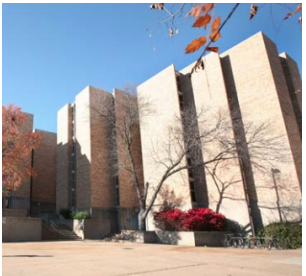
KANSAS CITY, Kan. (AP) — The University of Kansas is asking a federal court to dismiss a lawsuit filed by a former student who alleges she was raped by a football player on the Lawrence campus.
The university says in a federal court filing that the school was not at fault in the alleged rape of Daisy Tackett.
Tackett’s lawsuit says the university didn’t properly respond to her rape report or protect her from retaliation by the man and her rowing coaches.
The university’s motion for dismissal, filed Friday, says the school is liable for harassment only when it knows about it and is deliberately indifferent. The motion says the university did not now about any prior sexual assaults by the person Tackett has accused. The football player has not been named.
Last Friday the Kansas Supreme Court issued a ruling in the ongoing lawsuit regarding funding for Kansas public schools. The justices unanimously declared that the current funding law passed by the legislature only months ago and signed into law by Governor Brownback is unconstitutional. They logically concluded that an unconstitutional law cannot be enforced, and therefore ceases to exist. As a result there currently is no legal mechanism by which the state can fund K-12 education.
The court gave the Legislature “yet another opportunity to treat Kansas students fairly” and to “craft a constitutionally suitable solution and minimize the threat of disruptions in funding for education.” The court has made it quite plain that they are serious about this, and if the governor and legislature do not respond quickly, then the schools will be closed effective July 1. The court would accomplish this by enjoining anyone within the administration from making any payments for funding of K-12 education. Though they may not like it, I strongly suspect that those individuals will not wish to defy a direct order of the court and face the consequences of that action.
So the question is whether the Supreme Court has the authority to take such a drastic step. Those who oppose the ruling point out that the legislature has sole constitutional responsibility to appropriate funds, so they conclude that the court has no role in second-guessing the legislature’s actions. But the ruling reached the conclusion that the legislature’s plan was unconstitutional because it did not distribute funds equitably to all school districts. It also ruled that a clause which attempted to hold harmless certain school districts actually amplified the inequity by allowing them to raise more money via property taxes. Doing so increases inequity because other school districts lack the resources to do the same.
Although the legislature has a constitutional duty to appropriate funds, the court has a constitutional duty to determine whether any law enacted by the legislature is constitutional. If the court lacked this authority and responsibility, then resource-poor schools would be short-changed and many Kansas school children would be denied equal educational opportunity. This circumstance is a reminder that one of the primary reasons for the existence of the judiciary is to protect the rights of the minority from the tyranny of the majority. Those who do not value that constitutional protection are making the very foolhardy assumption that their own rights will always be among the majority. And by treating the rights of the minority with such little regard, they are tearing at the very fabric of the social contract under which we have all consented to live.
So the next move is up to the legislature. The ceremonial final day of the regular legislative session will take place on Wednesday, June 1, and many legislators will travel to Topeka to deal with a possible override of Governor Brownback’s veto of a bill which deals with multiple issues relating to property taxes. It would be possible for legislative leaders to merely extend the session to deal with this constitutional crisis but they have indicated they prefer not to do that, stating that they need time to digest the ruling and plan their response. But no one should have been surprised by the court’s ruling. Many impartial observers certainly expected this outcome.
It appears that legislators will make a one-day trip to Topeka on Wednesday and then return home, only to be called back later for an emergency legislative session to deal with this constitutional game of chicken. In the meantime, everyone associated with K-12 education will be in total limbo. School administrators don’t know if they will have schools to manage July 1. Educators are wondering whether they will have jobs and whether they will receive a paycheck after July 1. The same is true for custodians, school cooks, and bus drivers. And working parents will be faced with the difficult prospect of lining up childcare for their family if the schools remain closed.
It is estimated that it would take $38 million to $43 million to correct the constitutional defect identified by the court. That isn’t an insignificant sum, and yet not insurmountable compared to the roughly $4 billion spent annually on Kansas schools by the state. So one is left to wonder why there is so much resistance by the legislature and the governor to fixing the problem. Is it really about the $38 to $43 million or possibly about clarification of constitutional responsibilities? Although that is possibly the objective for some, I strongly suspect something else is at play here.
Consider statements made by Governor Brownback and legislative leaders following release of the ruling. Governor Brownback: “The court is engaging in political brinksmanship with this ruling”. House Speaker Ray Merrick: “The court has yet again demonstrated it is the most political body in the state of Kansas… Frankly, I find their actions disgraceful and hope Kansas voters will remember this in November when deciding whether these justices should be retained.” Senate President Susan Wagle: “Certainly this unconstitutional overreach, and making students the collateral damage of judicial activism, should weigh heavily on the minds of all Kansas voters when many of these justices are up for retention in November.”
These statements appear to confirm what I have long suspected. The constitutional crisis has been purposely crafted by Governor Brownback and legislative leadership in an attempt to discredit the judiciary. They hope to turn the Kansas voting public against the judiciary prior to the November election when five of the justices must stand for retention vote. The future of Kansas school children and everyone associated with K-12 education has been placed at risk as a result of the crass political scheming of these individuals and not through actions of the court. Certainly it took a great amount of courage for the justices to ignore the reality that their decision might lead to their removal from office and instead to perform what they perceived as their constitutional duty.
It is high time that we in the legislature set aside all the political rhetoric and get about our constitutional responsibility to equitably provide funding for all Kansas public schools. Reasonable solutions exist and it shouldn’t be difficult to reach resolution of the matter. I stand ready to work with my colleagues toward that end, and the sooner the better.
Cowboy Logic: Don’t cling to a mistake just because you spent a lot of time making it.
Quote of the Week: “The illiterate of the 21st century will not be those who cannot read and write, but those who cannot learn, unlearn, and relearn.” — Alvin Toffler, Future Shock, 1970
Sermon in a Sentence: The only true wisdom is in knowing you know nothing.
Pheasants Forever concentrates on saving and creating wildlife habitat, and as a member of the McPherson Area Pheasants Forever Executive Committee, Brett Reber envisioned a plot of land on which habitat enhancement techniques could be showcased for area farmers and ranchers to see.
Steve Gilliland
Reber approached the committee with his vision and a deal was struck with the former NCRA Refinery to lease a plot of land west of McPherson for the project. When the man farming the land heard about the agreement, he insisted they had been given some of his best and most accessible ground, and suggested they use a parcel further up the road that was poorer farm ground. Reber said it was disheartening at the time because that 46 acres of land contained an old dilapidated farmstead, and as a whole needed lots of work and cleanup.
Several of the committee members including Reber had read the book by Kansas native and KU graduate Richard Louv called Last Child in the Woods; Saving Our Children from Nature-Deficit Disorder, a narrative about the broken relationship between today’s youth and nature. As they surveyed that gnarly but more nature-rich plot of land and considered its potential for true outdoor nature interaction, they sensed their mission should focus more on educating youth, so in 2008 the McPherson Uplands Outdoor Life Center was born with the mission “To create a place for McPherson County and Kansas youth to learn and develop outdoor skills and an appreciation for wildlife and natural conservation.”
The front part of the property was a big open field, and the rest of the parcel lay on the other side of a tree row and was surrounded on one end by a wooded area and a creek. That portion contained the tumble-down old farmstead and was a drainage nightmare. The first order of business was to tear down the house, the huge barn and the buildings and to clean up the years of accumulated trash and junk around them. Next, two ponds were built at two different levels to solve the drainage dilemma. Nature trails were developed that meander through the woods and along the creek, and the open fields were seeded to native grasses. A metal round top building was erected at the parking area for equipment storage and as a shelter from inclement weather.
The McPherson Area Pheasants Forever Chapter remains the principal financial supporter of the center. The building, mowing and maintenance equipment, and labor to build the ponds, the trails and the shooting range were all donated. Benches along the trails, wood duck and floating goose nesting boxes, native grass & wildflower plantings and the new geo-caching course were all constructed by boy scouts as Eagle Scout projects. Check out their website at www.mcphersonvalleyuplands.org for a list of upcoming summer events. Of special interest is a summer program called “Third Thursday” when there are FREE youth shooting clinics held the third Thursdays of June, July and August, coached by KS Wildlife and Parks and Pheasants Forever members.
What once was 46 acres that knew nothing but endless years of poor wheat crops and erosion and was nearly devoid of wildlife, has been transformed into a wonderful, primitive, outdoor classroom teeming with songbirds, pheasants, quail and deer. Reber told me “It is truly a testament to the statement if you build it, they will come; if you create habitat, you’ll get wildlife.”…Continue to Explore Kansas Outdoors!
Steve Gilliland, Inman, can be contacted by email at [email protected].
TOPEKA–The Kansas Tourism staff of the Kansas Department of Wildlife, Parks and Tourism is hitting the road to meet with you. Make plans now to attend one of the upcoming tourism workshops July 18-22, 2016.
You will have the opportunity to meet one-on-one with staff to assist you with your marketing plan or to answer your questions on the programs that our office administers (for a list visit our industry website). There is no cost to attend the workshop, but we would appreciate if you could let us know if you are attending by registering before Thursday, July 14, 2016.
Tuesday, July 19
9:00 a.m. – 12:00 p.m.
Gateway Civic Center (Upstairs) ~ 1 Morgan Dr, Oberlin, KS 67749
Wednesday, July 20
9:00 a.m. – 12:00 p.m.
Ringneck Ranch ~ 655 Soloman Ln, Tipton, KS 67485
Thursday, July 21
9:00 a.m. – 12:00 p.m.
Marysville City Hall ~ 209 N 8th St, Marysville, KS 66508
Friday, July 22
9:00 a.m. – 12:00 p.m.
Riverfront Community Center ~ 123 S Esplanade St, Leavenworth, KS 66048
The KDWPT Tourism Division is charged with encouraging the traveling public to visit and travel within Kansas by promoting and developing the recreational, historic, and natural advantages of the state and its facilities.
The Division’s efforts include:
Marketing
Product Development
Research and Education
The Division’s marketing efforts are focused on domestic leisure travelers, travel writers, motor coach tour operators, and the international travel community.
For general questions or comments related to the Tourism Division, contact us by phone at (785) 296-2009 or email us at [email protected].
John Richard Schrock is a professor at Emporia State University.
A recent announcement by the European Commission calls for all research to be freely available online by 2020, a system called “open access.” This action threatens to undermine science research.
In addition, the work of a young graduate student in Kazakhstan has essentially accomplished “open access” by pirating huge collections of science papers and even books and placing them online free. Alexandra Elbakyan, apparently a brilliant computer programmer, has developed programs that steal academic papers from university websites, journal publishers and subscription service aggregators such as JSTOR, ebrary and Project MUSE.
This online piracy extends to scholarly books, as detailed in the April 22, 2016 issue of Chronicle of Higher Education. University presses affected and the number of titles pirated include: Cornell University Press (500 titles pirated), Johns Hopkins University Press (800), Harvard University Press (2,000) and Oxford University Press (over 17,000 titles stolen). The books are made free through the website Library Genesis while the scientific articles that number in the millions are on Sci-Hub.
Sadly, online surveys of scientists, including authors of these pirated articles, indicate widespread approval of this piracy. Analysis of where the most people are downloading these stolen articles indicate highest usage in: the Middle East, India, China, Russia, the United States, Brazil, and Europe.
According to the Chronicle of Higher Education, “Both sites were ordered shut down last year as a result of a lawsuit filed by a commercial journal publisher, Elsevier.” In response, Sci-Hub and Library Genesis merely switch to slightly different web addresses.
It is easy to be sympathetic to Ms. Elbakyan and her amazing success. A rationale posted on both sites “argues that the information in the articles and books should be free from commercial restraints” according to the Chronicle of Higher Education. This is the same argument that a group called SPARC has been making for decades, although they have worked for open access through legal channels. In addition, U.S. agencies have already required that federally funded research be made available free upon publication.
However, there are two major problems with open access that threaten the very core of the science enterprise: the dismantling of professional societies and the loss of a permanent science record.
The first threat is best described in a commentary sent to the New York Times by Gordon Nelson, President of the Council of Scientific Society Presidents in February 28, 2013. “A significant fraction of the scientific literature is published by nonprofit societies. Publications often represent an important core activity of those societies. Their pricing is a fraction of that of for-profit publishers. To mount a journal is not free. It requires hardware, software, management of the peer review process, editorial work (editors are often paid), maintenance of the database over decades, and printing the product…. If the new policy [open access] is implemented without consideration of the scientific societies, there could be serious damage to both science and science education.”
The second threat is the lack of a permanent archive when there is no paper copy in libraries. Despite the enthusiasm of digital idiots entrenched in academia, the life of online materials is very short. Just as we have made the change from VHS to CDs and are moving on to cloud-based services, most hardware and software becomes obsolescent in less than a decade.
Google executive Vint Cerf, co-inventor of the protocols that make the Internet work, warns of a digital “dark age” due to “bit rot” or the continuous loss of our ability to read materials barely a decade old. We are continually “migrating” our media files to new formats in time periods of less than ten years. He describes the need to “take an X-ray snapshot of the content and the operating system together, with a description of the machine it runs on, and preserve that for long periods of time.”
Teckkies are like teenagers who think their technology is immortal. But grown-ups can stop to ask, where are our files we made on MS-DOS? The cost of continually “migrating up” a science journal to new hardware and software formats rapidly exceeds the cost of having a paper copy in a library. A paper book or journal on acid-free paper lasts for at least 500 years, and you then copy it again on new acid-free paper.
Cerf reportedly told The Guardian newspaper, “If there are photos you really care about, print them off.” The same should be said for science research.
Alcides Escobar makes a jump throw during the Kansas City Royals game against the Tampa Bay Rays at Kauffman Stadium on May 31, 2016. (Photo by Jason Hanna / Kansas City Royals)
KANSAS CITY, Mo. (AP) – Lorenzo Cain homered and drove in four runs as the Kansas City Royals beat the Tampa Bay Rays 10-5 on Tuesday night, extending their winning streak to a season-best five games.
The Royals, who have won six straight series, took a two-game lead in the AL Central after being seven games out and in fourth place on May 10.
Cain hit a two-run homer in the first inning and a two-run single in the five-run fifth when the Royals batted around. Cain has 23 RBIs in his past 19 games after driving in 10 runs in his first 30 games.
Kendrys Morales homered – a two-run shot in the sixth – and drove in three runs for the Royals while Eric Hosmer had three hits and drove in two runs. Hosmer is 13 for 30 with 13 RBIs on this homestand.
Royals right-hander Dillon Gee (2-2) labored through five innings to pick up the victory.
KANSAS CITY, Mo. (AP) – Kansas City Royals rookie outfielder Brett Eibner was carted off with a lateral sprain of his left ankle in the fifth inning Tuesday night.
Eibner was injured chasing a triple by Tampa Bay’s Brad Miller. The Royals said Eibner would be evaluated more on Wednesday.
Eibner began hopping on his right foot while he retrieved the ball and flipped it to center fielder Lorenzo Cain. Eibner went down as manager Ned Yost and trainer Nick Kenney rushed to his aid. Kenney examined Eibner’s left foot and a cart was brought in to remove him.
Eibner doubled in the fourth inning to raise his average to .462 and has hit safely in all four games he has played since making his major league debut Friday. He had a walk-off single Saturday as the Royals scored seven runs in the ninth to beat the Chicago White Sox 8-7.
HUTCHINSON – A Kansas man arrested for alleged crimes involving the switching of an electric meter at his home entered a plea Monday to a single count of making a criminal threat, while the state dropped all the other charges.
Kerry Getz, 62, Hutchinson, was charged with aggravated assault with a deadly weapon, aggravated battery causing reckless bodily harm and criminal damage to property.
On March 17 a sub-contracted employee of Westar Energy was replacing electrical meters on the houses in the Reno County.
Getz apparently became angry and began arguing with the Westar worker, Carter Coulter, who then fled to his truck for safety.
Getz then allegedly followed him in his own vehicle and blocked in the Coulteur’s vehicle and ultimately forced the Westar vehicle from the road
In one of the verbal exchanges, he made the comment to the Westar employee that he had a weapon and may have to use it.
TOPEKA, Kan. (AP) — The Kansas Senate is considering a resolution condemning a recent Obama administration decree that public schools allow transgender students to use restrooms that match their gender identity, not their sex at birth.
Opponents say the measure is a distraction on the last day of the annual session.
The nonbinding resolution comes less than a week after the state Supreme Court ruled that legislators failed to equitably fund public schools. Justices threatened to keep public schools from opening in August if legislators don’t pass a measure by June 30 that adequately funds poor school districts.
Equality Kansas, the state’s leading LGBT group, is planning a rally on Wednesday to oppose the resolution. Tom Witt, executive director of Equality Kansas, says legislators should focus on the school funding formula instead.
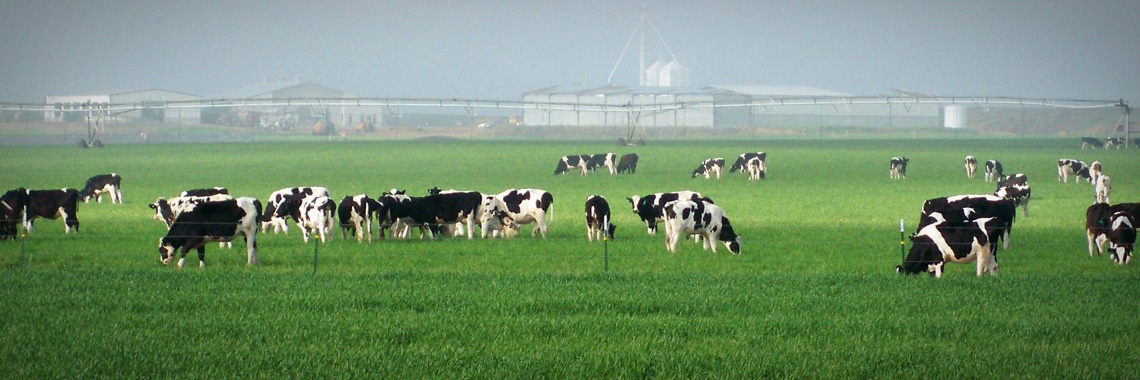
Kansas is America’s top new location for large dairies.
KDA
MANHATTAN–Kansas is one of the fastest growing dairy regions in the United States, and the Kansas Department of Agriculture is pleased to celebrate our hard-working dairy farmers during the month of June as the Governor has proclaimed it Kansas Dairy Month.
The Kansas dairy and milk production industry grew in 2015, with 143,000 dairy cows producing 3.1 billion pounds of milk valued at $537 million, and behind those numbers are more than 300 family-run dairy farms. The growth of the dairy industry in Kansas means economic gains for local communities and the state, and more safe and nutritious dairy products for families in Kansas and across the region.
Kansas dairies are becoming more progressive, as dairy farmers are making investments to enhance the milk processing industry in the state, and adding new advanced technologies like robotic milking machines. In addition, a world-class milk powder production facility is currently being constructed in the state.
A $235 million dairy plant being built in Finney County will begin production in 2017.
The Kansas Department of Agriculture’s dairy program is committed to serving the dairy farmers in our state by supplying resources to help their farms and processing operations grow and thrive. The dairy inspection team helps them stay on the forefront of the dairy industry by providing information and education and by advocating for the dairy industry both locally and nationally.
Members of the Kansas dairy industry joined with Gov. Sam Brownback for the signing of the proclamation declaring June Dairy Month in Kansas. Pictured from left: Jill Seiler, KDA and dairywoman; Dr. Mike Brouk, Kansas State University; Richard Felts, Kansas Farm Bureau; Stephanie Eckroat, Kansas Dairy; Aaron Pauly, dairyman; Lynda Foster, dairywoman; Gov. Sam Brownback; Steve Strickler, dairyman; Anita Rokey, dairywoman; Tucker Stewart, Kansas Livestock Association; Marley Sugar, Midwest Dairy Association; George Blush, KDA; Billy Brown, KDA.
“Kansas dairy farmers are an important part of the economic growth of the agriculture industry,” said Jackie McClaskey, Kansas Secretary of Agriculture. “Their success is a reflection of their hard work and commitment to improving the industry through innovations in dairy farming and milk processing.”
Follow KDA on Facebook and Twitter to learn more about Kansas dairies and to celebrate Kansas Dairy Month this June. For more information about KDA’s dairy program, go to agriculture.ks.gov/dairy or dairyinkansas.com.
TOPEKA, Kan. (AP) — Kansas Attorney General Derek Schmidt says Kansas will be joining litigation against the federal government for a directive that public schools allow transgender students to use the restrooms that match their gender identity, not their sex at birth.
Schmidt’s announcement Wednesday came ahead of a Senate debate on a nonbinding resolution that condemns the recent directive from President Barack Obama’s administration.
Texas and 10 other states already have filed suit against the federal government over the directive.
Schmidt said in a statement that Gov. Sam Brownback also favors joining the list of plaintiffs against the federal government. Schmidt said he is now considering whether Kansas will join the same lawsuit with the 11 other states or if it will pursue its own.




 KDWPT
KDWPT