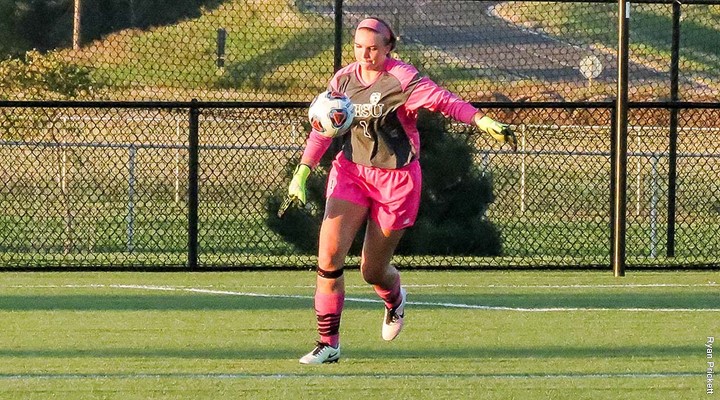
KANSAS CITY, Mo. – Fort Hays State sophomore Abbie Flax was named the MIAA Women’s Soccer Athlete of the Week on Tuesday (Oct. 25), helping the Tigers go 2-0 in conference play last week. Flax went 2-0 for the week in goal, which included her eighth shutout of the season.
Flax helped FHSU record key MIAA wins over Northeastern State and Central Oklahoma. She picked up a shutout in the 1-0 double overtime win against Northeastern State, making five saves. She ran her individual shutout streak to five matches with the win. She surrendered just one goal to Central Oklahoma in a 3-1 win, saving six shots.
Flax joined Megan Woolley of Central Missouri (Offense Player of the Week) and Autumn Olendorff of Lindenwood (Defensive Player of the Week) as the player of the week selections.
TOPEKA – A Geary County man pleaded guilty Tuesday to taking part in the kidnapping of a Junction City woman who was killed during the abduction, according to acting U.S. Attorney Tom Beall.
Drexel A. Woody, 26, who lived on Fort Riley at the time of the crime, pleaded guilty to one count of kidnapping resulting in death. The body of Amanda Clemons, 24, of Junction City, was found in February 2014 in Geary County, Kan.
In Woody’s plea, he admitted that on Feb. 7, 2014, he and his co-defendants met the victim, who was a prostitute, at a hotel in Junction City and kidnapped her. The defendants beat the victim in retribution for comments she had made on social media. During the beating, the defendants demanded the victim pay $300. They took the victim to another hotel room in an unsuccessful attempt to get the money, after which they transported her to Woody’s residence on Fort Riley.
While at Woody’s residence, the defendants allowed the victim to call her young son and her mother. The victim’s mother realized the victim was in danger and called Junction City Police. When police called the victim’s number to check on her, and the defendants listened to the call on speaker phone. Fearing arrest, the defendants transported the victim to a bridge in a remote part of Geary County, where they resumed the beating and attacked her with a knife. The victim broke free and jumped off the bridge, falling 15 feet and breaking her ankle. The defendants found the victim in the snow and resumed the assault
Shantrell Woody-photo Geary County
during which they cut her throat and killed her.
Woody is set for sentencing Jan. 30. He faces a penalty of up to life in federal prison.
Co-defendants who are awaiting trial include:
Larry L. Anderson, 27, Manhattan, Kan.
Marryssa M. Middleton, 25, Fort Riley, Kan.
Shantrell D. Woody, 27, Fort Riley, Kan., formerly an active duty service member.
Christopher Pugh, 32, Junction City, Kan.
Beall commended the Junction City Police Department, the Grandview Plaza Police Department, the Geary County Sheriff’s Office, the Riley County Police Department, the Fort Riley Criminal Investigation Division, the FBI, Assistant U.S. Attorney Tony Mattivi, Assistant U.S. Attorney Jared Maag and Geary County Attorney Steven Opat for their work on the case.
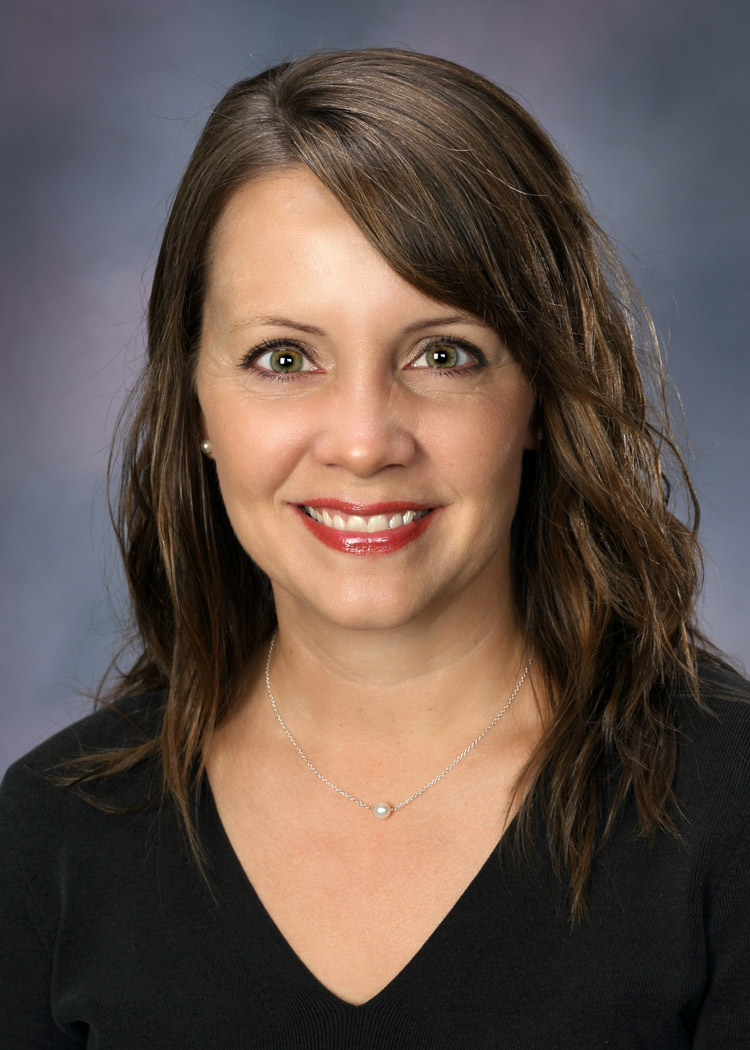
City Manager Toby Dougherty announces the appointment of Melissa Dixon to the director of Convention and Visitors Bureau position for the city of Hays. She will assume her duties Dec. 1.
Dixon is the assistant director of digital marketing at Fort Hays State University. Prior to her employment with FHSU, she was the owner and creative director of Blufish Design, a full service design studio and marketing agency in Starkville.
While in Starkville, Dixon served on the advisory boards for the Chamber of Commerce, Convention and Visitor Bureau, the Main Street Association and the Greater Starkville Development Partnership.
Dixon holds a bachelor’s of fine arts with an emphasis in graphic design from Mississippi State University.
“Melissa brings experience, drive and enthusiasm to the position,” Dougherty said. “She will be a strong leader and a wonderful ambassador for Hays.”
KANSAS CITY, Mo. – Fort Hays State senior Michael Cole was named the MIAA Men’s Soccer Athlete of the Week on Tuesday (Oct. 25), helping the Tigers go 2-0 in non-conference play last week. Cole finished the week with three goals and two assists for a total of eight points.
Cole recorded the first hat trick of his career with three goals and became the fourth player in program history to accomplish the feat in a 7-0 win at Southern Nazarene. He added an assist in the match to set a new school record for points in a match with seven. In the 3-1 win at Oklahoma Baptist, he provided the assist on the game-tying goal before FHSU went on to score twice more in the match.
Editor’s note: Reporters from KHI News Service and the Topeka Capital-Journal collaborated for a six-month exploration of how the state’s legal system deals with people with mental illness. This is the second in a four-part series, “Mental health on lockdown.”
At first, the man appears drunk.
He’s walking along an on-ramp from Lackman Road onto Interstate 435, a major highway snaking through the Kansas City metro area. At 1 p.m., traffic is heavy.
“He takes a few swings at the officer. They’re obviously not a Mike Tyson swing, but they’re swings nonetheless, where if something happened right there it could very easily spill over from the shoulder onto the highway where somebody would really get hurt,” Lenexa Police Capt. Wade Borchers said, recounting an incident from earlier this year that involved another officer.
But no highway brawl breaks out. Instead, the officer just talks with the man. He calms down and the officer is able to get him off the road. Then he handcuffs him.
The difference between what could have happened and what did happen rests in the officer’s training, Borchers explained. The officer was able to recognize the man was not actually drunk but instead had a developmental disability.
The story Borchers told serves as just one example of countless police interactions throughout Kansas that have been shaped by training focused on situations involving people with mental illness and developmental disabilities. Law enforcement agencies are attempting to pay greater attention to how they interact with people with mental health issues, though what that looks like can differ sharply among departments.
In particular, police approaches to mental illness exist along an urban-rural divide within the state. Large and midsize cities in Kansas have access to greater resources, while law enforcement in small towns and rural areas must grapple with limited resources and simple geography: Vast expanses of land often separate police from mental health professionals.
But police, especially in the eastern part of the state, also face acute challenges stemming from ongoing problems at the state’s psychiatric hospitals. With some individuals waiting days to be admitted to Osawatomie State Hospital, officers have grown increasingly frustrated.
“If they don’t have the ability to pay, they’re going to get quicker service at the jail than they will in the community,” Borchers said.
A push for CIT
At a time when the mental health system is under increasing pressure, police have taken a more active role dealing with people in crisis. They must respond to all situations, no matter how difficult.
“There’s a lot of people who need specialized help that I don’t think we’re providing very well,” said Sedgwick County Sheriff Jeff Easter during a gathering on mental health training for law enforcement and civic officials this fall in Wichita. “We’re trying to do the best we can in law enforcement, and obviously you guys are as well by being here today. But we all know the system right now is broken, in my opinion.”
Many larger police departments in Kansas over the past few years have embraced crisis intervention team training, commonly called CIT. The aim is to equip officers to appropriately respond to situations involving people with mental illness or developmental disabilities.
[ Related story: Washington state takes lead on police mental health training ]
CIT training involves both how officers act in the moment to defuse situations and how they guide people with mental illness to appropriate services.
“Not only learning the things to say, but also definitely focusing on the things not to say and do,” said Lane Mangels, a detective with the Salina Police Department.
“Policing has changed a lot just in my career, and it’s definitely different than it was 25 to 30 years ago,” he said. “We’re trying to get them to recognize when they see these signs and symptoms that if they focus on having a little bit of empathy in understanding where this person is coming from and think outside the box in ways to assist them, maybe they can de-escalate that situation.”
That can range from recognizing that a transient walking the highway may have a mental health problem to being aware of how a mental illness may affect someone in a standoff with police. Research suggests 10 percent of police contacts with the public involve individuals with serious mental illness.
Once an officer stabilizes a situation, CIT training emphasizes attempting to channel the individual with mental health issues to community services rather than jail. In some cases, this involves getting a person on the phone who can speak with the individual and perhaps persuade them to get help.
Other times, it involves deployment of a co-responder to the scene. The co-responder, often a mental health professional, may speak with the individual one-on-one and perhaps even transport that person to treatment if needed.
“I’ve talked to people direct and try to get them to voluntarily go somewhere, and they don’t want anything to do with it, but then I call Johnson County Mental Health and they talk to him for two minutes — ‘OK, I’ll do that,’” Borchers said. “And I’ve been standing here for half an hour trying to get you to do that, and you talk to them for two minutes and now you’re going to go. ‘Well, yeah, but they’re not a cop.’ OK, fair enough.”
A 2012 research paper in the journal Best Practices in Mental Health found only limited data on the number of people police are diverting toward services rather than funneling into the criminal justice system. But the authors suggested that law enforcement’s role as gatekeepers to both the mental health and criminal justice systems is increasing as state budgets are slashed.
The National Alliance on Mental Illness, CIT International and other groups have developed a curriculum for CIT training that typically takes 40 hours for an officer to complete.
Some of Kansas’ biggest police departments have sought training for large numbers of officers.
The Topeka Police Department has trained 149 of its 300 sworn officers, or almost half. Upward of 75 percent of officers on the street are trained, Topeka Police Maj. Bill Cochran said. He said there is a good chance a CIT-trained officer will be responding to any given call, whether they’re specifically requested or not.
The 40-hour training commitment can present a challenge to smaller departments, however.
“It’s very difficult for a small agency to send someone out of town for a week for training like that,” said Ed Klumpp, a former Topeka police chief who now works as a lobbyist for several law enforcement associations in the state.
Klumpp estimates 75 percent of law enforcement agencies in Kansas have fewer than 10 officers. For some agencies, voluntarily giving up an officer for a week represents an unacceptable loss of manpower. A week of hotel and meals for one or more officers also can strain budgets.
To combat that, the Topeka Police Department has developed a training regimen that takes place on nonconsecutive days. Cochran said the department has offered trainings once a month or once a week every other week to make CIT training more accessible for smaller agencies.
But those small agencies often must decide whether to pursue CIT at all. A department with just a handful of officers may not see the return on investment that makes training worth it.
Sgt. John Bryant of the Kansas City, Mo., police helps lead efforts to promote CIT in Missouri, including rural areas.
Bryant said some rural agencies have resisted CIT training. The key, he indicated, is to have law enforcement make the case for the training to other officers. Efforts to persuade smaller departments to adopt CIT have to be driven by law enforcement peers, he said.
“It’s kind of sad,” Bryant said. “Sometimes we’d go out to these smaller agencies and try to convince them they need CIT. ‘Oh, we don’t need that stuff, we know how to talk to people.’ Six months later, we’d see them … getting sued because they did something bad.”
He added soon after: “Hopefully, you guys can get to folks on your side of the state quicker than we did on ours.”
A large component of CIT training is building relationships between police and mental health professionals, not just training an officer how to react in a given situation.
In rural areas, those local mental health resources may simply not exist.
Rural challenges
Photo by Thad Allton/Topeka Capital-Journal Narciso Narvais, a deputy with the Sedgwick County Sheriff’s Department, speaks about the use of force by law enforcement. Narvais said case law outlines elements that must be present to justify force.
The High Plains Mental Health Center in Colby serves 20 counties that cover more than 19,000 square miles. Walt Hill, the facility director, said that while High Plains has good relationships with law enforcement, the CIT approach doesn’t make as much sense in rural northwest Kansas.
Instead, agencies in his corner of the state often turn to mental health first aid.
“Because of the number of small departments and turnover, and just the geography, mental health first aid has made more sense to us and to them because we don’t have really the critical mass that you would have in Topeka or KC metro area,” Hill said.
Mental health first aid is an eight-hour course developed in 2001 in Australia. In the United States, its umbrella organization is Mental Health First Aid USA, overseen by the National Council for Behavioral Health and the Missouri Department of Mental Health.
Mental health first aid carries a broader aim than CIT and can be taken by social workers, clergy and other civic leaders. Because training lasts a single day, it presents an attractive option to small police departments and cash-strapped agencies.
A University of Kansas researcher in 2013 found that mental health first aid had positively affected public mental health in Kansas. The course acted as a useful refresher for those with previous mental health education, the researcher said, and provided a solid base of knowledge for those with a limited mental health background.
Klumpp likened the difference between mental health first aid and CIT to the difference between completing a first aid course and becoming an EMT. Cochran said both programs will help officers identify signs that may point to mental illness, but CIT goes more in depth.
Paying extra attention to the relationship between police and mental health professionals, as well as technology, can present a workable alternative to CIT.
“So for us and law enforcement here, their preference is two things: the training we provide and second, to have this partnership with them if they have situation, we encourage them and they do call us and ask for assistance in dealing with situations,” Hill said.
More than 1,000 people in the 20-county area that High Plains serves have mental health first aid training, Hill said. Those trained often are first responders.
High Plains also uses telemedicine systems that allow an individual with a mental illness to speak with mental health professionals who might be hours away.
Telemedicine and telepsychiatry can be used to overcome some of the challenges found in rural areas, said Steven Leifman, a judge in Miami and chair of the Florida Supreme Court’s task force on substance abuse and mental health issues.
“There’s a horrible shortage of psychiatrists nationally, even for a beautiful, urban community like Miami,” Leifman said. “We can’t get people to come down here. I can’t imagine how hard it is for rural areas. So I think all of us need to start looking at telepsychiatry to improve access, and we need to teach within the community on how to respond to these issues.”
Cochran recognizes mental health first aid is a better fit for some agencies. The key for him, however, is that officers have some sort of mental health training.
No requirement exists in Kansas for officers to receive additional instruction on mental health issues beyond what they do in their initial training. But officers are almost certain to deal with individuals in a mental health crisis daily, Cochran said.
“Yet, there’s a lot of agencies that provide absolutely no additional training on mental health situations,” Cochran said. “If you don’t know how to effectively deal with people in crisis, then you get yourself in trouble.”
Stung by lack of resources
Even extensive officer training can be rendered ineffective by a lack of mental health resources.
Renovations at Osawatomie State Hospital a year ago led to a reduction in the number of beds at the facility. The psychiatric hospital also lost its federal Medicare certification last year after security lapses, causing it to forfeit upward of $1 million a month in federal funds.
Officers are well aware of the hospital’s ongoing troubles.
The reduced number of beds has created a waiting list for admission to the facility. The time to be admitted fluctuates but can last days.
Officers who believe an individual poses a danger to themselves or others can seek to have that person involuntarily committed to a state hospital. Given the current situation at Osawatomie, the process can prove frustrating for police.
Often, because immediate admission to Osawatomie isn’t an option, police may take an individual to the emergency room while he or she is on the waiting list. That frequently drains police resources because an officer may need to watch over the person.
Beyond the issues at Osawatomie, officers also perceive a reduction of resources, especially over the past decade, going toward mental health services.
The combination of those factors — the situation at Osawatomie and a decline in mental health resources — changes the behavior of officers on the street.
“The whole time I’ve been a police officer, the laws have been the same,” said Borchers, the Lenexa police captain.
“But what I’ll tell you is, 10 to 15 years ago, what I would do an involuntary committal (for) won’t even come close to it today,” he said. “It’s nothing that’s changed legislatively, it’s all been procedurally. And we are not getting people the help like we did 10 to 15 years ago. That’s just a bottom-line fact.”
Mental health care in Kansas has essentially become a triage operation, Borchers said. The state hospitals simply try to stabilize patients and get them out so the next person can go in, he said.
“The ones that get left holding the bag, really, are law enforcement,” he said.
Borchers said he doesn’t blame an officer for deciding to arrest a mentally ill person for a minor infraction — perhaps disturbing the peace by cursing — because if they go to jail, they’ll see a doctor within a day. If the officer seeks an involuntary commitment, they may sit in an emergency room for days before going to Osawatomie.
The scenario runs counter to the whole concept behind CIT: to identify people with mental health issues and keep them out of the criminal justice system.
“Of course, that’s where you have to rely on those mental health resources,” Klumpp said. “And unfortunately when those resources are overburdened or nonexistent, people end up getting charged with minor criminal acts because that’s the only way we have to resolve the issues.”
— Jonathan Shorman is a reporter for the Topeka Capital-Journal.
SEDGWICK COUNTY – A Kansas man died in an accident just before 12:30 p.m. on Monday in Sedgwick County during a police pursuit.
The Kansas Highway Patrol reported a 2007 Volkswagen Jetta driven by Alex Davis, 18, Arkansas City, was eastbound on 21st Street at Arkansas Avenue in Wichita.
The driver ran a red light and struck a 2008 Ford Fusion driven by James L. Dexter, 91, Wichita, that was south bound on Arkansas Avenue.
Dexter was transported to St. Francis Medical Center where he died.
Davis was not injured.
No details were released on what prompted the pursuit. Davis was arrested on a requested charge of murder in the second degree; unintentional but reckless, according to Wichita Police booking report.
Both drivers were properly restrained at the time of the accident, according to the KHP.
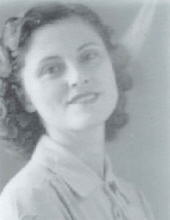
Neva Evelyn Marshall passed away Sunday, October 23, 2016 at Solomon Valley Manor in Stockton, Kansas at the age of 104. She was born on September 9, 1912 on the family farm south of Webster, Kansas to the late Lee and Lizzie (Veverka) Bray. She attended schools in Webster and Stockton graduating from Stockton High School with the Class of 1931. She later attended Fort Hays State College where she received her teaching degree in elementary education.
After graduation from high school, Neva was united in marriage to Warren Dunning. They had two sons, Warren Lee and Roger. In 1940 she married Ferrel Marshall. Together they had one daughter, Gloria Jean.
Neva was a dedicated teacher. She taught grades 1-8 in three Rooks County schools as well as Kindergarten in Stockton. She and husband Ferrel owned and operated a family dairy. She worked in the Stockton grocery and appliance stores and also as a bookkeeper for Ostmeyer Implement Company. She continued working as a Senior Companion , in order to help others, until the age of 95.
Neva is survived by her son Roger Dunning and wife Lorrie of Atchison; grandchildren Bruce Dunning, David Dunning, Dale Dunning, Klark Dunning, Tom Dunning, Angie (Havlas) Kollman, and Scott Havlas; great-grandchildren Stephanie Dunning, Alex Dunning, Nathan Kollman, Katie Kollman, Kyle Kollman, and Nick Kollman; and numerous dear and loving nieces, nephews, and cousins.
She was preceded in death by her parents Lee and Lizzie Bray, husbands Warren Dunning and Ferrel Marshall, son Warren Dunning, and daughter Gloria Jean.
Neva was loved by family, friends, and the wonderful caregivers at Solomon Valley Manor. Her loving and caring spirit will live on in the hearts and minds of all who knew her.
A graveside service will be held at 11:00am on Thursday, October 27, 2016 at Stockton City Cemetery in Stockton, KS. Visitation will be from 10:00-11:00am on Thursday at Plumer-Overlease Funeral Home in Stockton, prior to the service.
Wanda Pfannenstiel, age 65, of WaKeeney passed away Monday, October 24, 2016 at her home.
IN LIEU OF FLOWERS, the family requests memorial be made to Christ the King Building Fund or the WaKeeney Public Library. Donations to either fund may be sent to Schmitt Funeral Home, 336 North 12th, WaKeeney, KS 67672.
Ralph Schmidt was born In Colby Kansas on January 4, 1943. He passed away peacefully on October 16, 2016, at his home in Colby at the age of 73.
Ralph attended primary school in Colby, Kansas. Then as the first graduating class of CCC where he helped to name the Trojans as the mascot. Later at Kansas State University where his lifelong love of the Wildcat sports began.
He returned to Colby and married Cheryl Rogge in 1969, to this union two children were born Derick in 1974 and a daughter Ayshla in 1975.
Ralph was a hard worker and had many jobs in Colby area Including City of Colby, Gifford Hill Irrigation, PCA Of NW Kansas, and many other Jobs.
He had many interest including antiques, fishing, hunting, firearms, bowling, cards, cooking, dogs, family and having coffee friends. He was a avid fan of the Wildcats, Kansas City Chiefs and Dodgers Baseball.
He is survived by his sister Nadine Apley, and children Derick Schmidt and Ayshla Haller. Three grandchildren Ireland, Rylie and Cooper. And many nieces and nephews.
Ralph was preceded in death by his parents Ralph and Lois Schmidt of Colby.
Bobby “Bob” Gene Cook, 88, of Russell, Kansas, died at his home on Sunday, October 23, 2016, in Russell, Kansas.
Bobby was born on December 05, 1927, in Monett, Missouri, the son of Samuel Roe and Stella Belle (Weaver) Cook. He attended grade school in Monett, Missouri and graduated high school in Wichita, Kansas. After high school, Bob joined the United States Navy during World War II. Bob moved to Russell, Kansas, in 1946. He met, fell in love and was united in marriage on November 21, 1951, in Russell, Kansas at the old United Methodist Church. From this union Bob and Norma Jean were blessed with a son Tom. Bob was self employed, as a bulk agent for Fina Oil. He was a longtime member of Otterbein United Methodist Church in Russell. He was also a member of the Shrine, Masonic Lodge, Elk and Russell V.F.W. Post #6240. He enjoyed fishing and hunting and spending time with his family and close friends.
Surviving family include his son Tom of the home, sister in-law Kay Lowenstein of Manhattan, Kansas; and two nephews. He was preceded in death by his parents, wife Norma Jean on September 17, 2016, 4 brothers and 2 sisters.
A celebration of Bob’s life will be at 10:30 A.M. on Friday, October 28, 2016, at the Otterbein United Methodist Church in Russell, Kansas, with Pastor Michael Eurit officiating. Burial will follow at the Russell City Cemetery in Russell, Kansas, with military honors being performed by the Russell V.F.W. Post #6240. Visitation will be from 9 A.M. to 8 P.M. on Thursday, October 27, 2016, at the mortuary with family to greet guests from 6 P.M. to 7 P.M. Thursday evening.
Memorials may be given to the Rough Riders or Otterbein United Methodist Church and sent in care of the mortuary. Pohlman-Varner-Peeler Mortuary of Russell, Kansas, is in charge of the funeral service arrangements.