 Last week’s inspection results from the Kansas Department of Agriculture:
Best Western Butterfield Inn 1010 E. 41st, Hays- Oct. 17
Regular inspection found no violations.
Last week’s inspection results from the Kansas Department of Agriculture:
Best Western Butterfield Inn 1010 E. 41st, Hays- Oct. 17
Regular inspection found no violations.

WASHINGTON -Hillary Clinton isn’t saying much about the FBI decision to investigate new emails linked to her private email server.
Kansas Senator Pat Roberts on social media said, “It is regretful that this matter wasn’t more fully reviewed some months ago, but it is certainly appropriate to take a hard look at it now.”
Clinton ignored shouted questions from reporters about the FBI investigation as she walked off her plane Friday in Cedar Rapids, Iowa.
She smiled and waved to reporters gathered on the tarmac, but made no comments.
It is regretful that this matter wasn’t more fully reviewed some months ago, but it is certainly appropriate to take a hard look at it now. pic.twitter.com/1HVmcMBJHn
— Pat Roberts (@SenPatRoberts) October 28, 2016
A U.S. official says newly discovered emails that have prompted a new FBI review of the Hillary Clinton email investigation came from a separate sexting probe of former congressman Anthony Weiner.
Federal authorities in New York and North Carolina are investigating online communications between Weiner and a 15-year-old girl.
The official said Friday that the emails referenced by FBI Director James Comey surfaced during that investigation. The official was familiar with the investigation but was not authorized to discuss the matter by name and spoke on condition of anonymity.
Comey told members of Congress on Friday that newly discovered emails believed to be related to the Clinton case were prompting a new review.

GRANDVIEW PLAZA- Law enforcement authorities are investigating injuries to an infant and have made an arrest.
Just before 4:30 p.m. on October 16, an ambulance was dispatched to 802 Janice Street Grandview Plaza in Geary County for a 2-month-old female infant who was not breathing, according to a media release.
The infant was transported to Geary Community Hospital for treatment. She was later transported by helicopter to Wesley Medical Center in Wichita, Kansas for additional treatment
of those suspected injuries.
The Grandview Plaza police and KBI conducted an investigation into the cause of the suspected injuries.
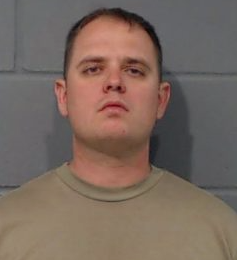
On October 20, Brigham Bailey, 33, Grandview Plaza, was placed under arrest for Aggravated Battery and Interference with Law Enforcement.
He is confined without bond pending first appearance in the Geary County District Court.

SHAWNEE COUNTY – Law enforcement authorities in Shawnee County are investigating an injury accident.
Just before 7:30 p.m. on Thursday, first responders were called to the scene of an accident at 37th Street and Kansas Avenue in Topeka, according to a media release.
A car hit a man riding a bicycle. The victim was transported to the hospital with life-threatening injuries.
Details of those involved were not released on Friday morning.

HUTCHINSON, Kan. (AP) — U.S. Rep. Tim Huelskamp is eyeing the 2018 election in a move to possibly reclaim the Kansas congressional seat he lost in the Republican primary.
The Hutchinson News reports Huelskamp quietly filed his statement of candidacy with the Federal Election Commission on Oct. 17 for the sprawling 1st District of western and central Kansas.
The ultra-conservative Republican was defeated in August by physician Roger Marshall, a political newcomer backed by farming and business groups. Marshall faces independent Alan LaPolice in the general election.
Huelskamp’s clashes with former Speaker John Boehner helped get him booted from the House Agriculture Committee, and the state’s loss of that seat became a campaign issue during the GOP primary in the farming district.
Huelskamp is a member of the far-right Freedom Caucus.

DONIPHAN COUNTY- A Kansas man was killed in a farming accident on Thursday.
Just before 10 p.m., first responders were dispatched to a tractor rollover near the area of Monument Road and 130th Road seven miles south of Wathena, according to Deputy Raymond Hall with the Doniphan County Sheriff’s Department.
Morris Miller, 80, left home at 3 p.m. to go mow a pasture.
Just after 9:30 p.m., family members found Miller pinned underneath the tractor.
He was pronounced dead at the scene.
BY ANDY MARSO

Federal officials Monday opened their regional office in Kansas City to take feedback on several changes to disability support policies in Kansas — including one they’ve instructed state officials to put on hold.
The Centers for Medicare and Medicaid Services told leaders of the Kansas Department of Health and Environment and Kansas Department for Aging and Disability Services earlier this month they cannot implement a change to the “capable person” policy — one of two changes to home and community-based disability support services made in May to help balance the state budget.
Federal officials also have instructed the state to provide more information about the elimination of a waiting list for Kansans with physical disabilities who requested such services. KDADS announced in August that the list was eliminated, but CMS officials say they have questions about whether Kansans were dropped from the list improperly.
Angela de Rocha, a spokeswoman for state agencies including the Kansas Department for Aging and Disability Services, said the agency will abide by CMS requirements for the capable person policy after it receives more federal guidance.
“The agency has requested a technical assistance call with CMS to discuss the process,” de Rocha said.
De Rocha said the agency has also provided CMS “extensive documentation” about the waiting list for services for Kansans with physical disabilities.

The inclusion of home and community-based services in KanCare was one of the most controversial aspects of the state’s 2013 switch to managed care Medicaid administered by three private insurance companies.
Legislators and Gov. Sam Brownback agreed to “carve out” the disability support services for one year to conduct voluntary pilot programs, but since 2014 those services have been included in KanCare.
Brownback has said including the support services in the same plan as medical services for Kansans with disabilities allows for better coordination of their care and leads to improved health and lower Medicaid costs, which in turn means more services can be provided to Kansans on waiting lists.
Tim Keck, interim secretary of the Kansas Department for Aging and Disability Services, said in a Wichita Eagle opinion column published Monday that some criticisms of KanCare are politically motivated.
Keck said the state is providing 36 percent more home and community–based services since switching to KanCare and the program’s care coordinators are helping Kansans with disabilities receive the proper level of medical services and daily supports.
“Individuals with disabilities who are on the KanCare waiver programs are receiving all the care and services for which they have a demonstrated need,” Keck said. “If they or their families don’t believe that is the case, there is a robust, multi-level appeals system in place to allow them to challenge such decisions.”
But providers of the support services say the change has led to service cuts, and some legislators have predicted new talks next session on removing them from KanCare.
Meanwhile, the state is preparing to submit its application to CMS to renew KanCare amid new levels of federal scrutiny.
The state announced the capable person policy change as a small part of $56 million in budget-balancing Medicaid cuts.
It and another change to how the state reimburses those who provide disability support services were expected to save the state $1.3 million each.
A state spokeswoman said the change would make for stricter enforcement of an existing federal rule limiting what reimbursements are allowed for routine daily tasks like cooking and laundry done for people with disabilities if they have another person living in their house capable of doing them.
Providers said they were concerned about how the change would be implemented.
James Scott, associate regional administrator for CMS, told state officials in a letter dated Oct. 12 that after reviewing the change his office “found a number of corrections and improvements we would like to suggest.”
Scott said his office found “inconsistencies” between how the state had changed the policy and the waiver agreements Kansas had signed with federal officials to implement KanCare.
Scott said the state must put the change on hold until it fixes the inconsistencies.
“Please be advised that until the waiver amendments are approved by CMS, KDADS must halt the implementation of the capable person policy as written,” Scott wrote. “Implementation of the capable person policy prior to approval of amendments that reconcile the waivers and the policy may result in compliance action by CMS.”
For Vicki Distefano, the capable person change was part of a reduction in her brother Mike’s services from 189 hours per week to 71.25 hours per week.
Mike Distefano is severely disabled due to a traumatic brain injury and lives in Fairway with Vicki, his primary caregiver. They received a letter last month from Mike’s KanCare company, UnitedHealthcare, alerting them that the reductions in his services would begin Nov. 1.
They’ve retained the services of Leawood attorney Kimberly Kass, who has filed for a fair hearing to appeal the reductions.
“Most of it does designate the capable person policy as the reason for the deduction (in hours),” she said.
Kass said she first read the letter from Scott stopping the capable person change Monday morning.
She said the letter should mean that UnitedHealthcare can’t cut Mike Distefano’s services, but she’s heard nothing from the company to that effect yet.
“They risk the wrath of CMS if they continue to implement it, but I don’t know what that means as far as what CMS is going to do about it,” Kass said. “Are they going to withhold funds? That’s not going to help.”
CMS has not halted the other budget-balancing policy change announced in May: an adjustment in how providers of support services bill the state for services rendered.
But it’s one of the things federal officials took comment on at Monday’s stakeholder meetings in Kansas City.
CMS officials also are seeking comment on the waiting lists for services, which have been around through several administrations and burgeoned during the recession under Democratic governors Kathleen Sebelius and Mark Parkinson.
The list for Kansans with intellectual and developmental disabilities remains large, but the list for Kansans with physical disabilities has dropped quickly over the last several years.
The U.S. Department of Justice began reviewing civil rights complaints related to the waiting lists in 2012.
That led the state to scrutinize the physical disability list, which was kept by the Centers for Independent Living. The names of more than a thousand people who could not be contacted, were no longer eligible for services or no longer wanted them were removed from the list as the state worked to reduce it.
Advocates for Kansans with disabilities have for years expressed concerns about the culling of the list and whether people who still needed support services were dropped improperly.
Megan Buck, acting associate regional administrator for Medicaid in the Kansas City CMS office, told state officials that the federal agency has heard from KanCare clients who were dropped from the waiting list without being contacted.
“Given the high number of people who have been moved off the waiting list in the last sixth months and the reports of individuals unaware they have been dropped from the list, we are concerned that some people who should have been offered services may not have been contacted properly,” Buck wrote.
Buck added a list of questions about the waiting lists to the bottom of her letter.
Edwina Ware, a 54-year-old who lives near Emporia, said she is one of those dropped from the list.
Ware, who has back problems and uses a walker, said she joined the physical disability waiting list before 2013. But when she checked her status this summer with the help of staff at the Flint Hills Area Agency on Aging, they found she was no longer on the list.
“There was no call; there was no nothing,” Ware said.
She has been reassessed for services and is in the process of completing paperwork to accept a formal offer for them, now that the waiting list is gone.
Andy Marso is a reporter for KHI News Service in Topeka, a partner in the Heartland Health Monitor team. You can reach him on Twitter @andymarso
SALINE COUNTY – Law enforcement authorities are investigating a pair of reported online scams.
A 52-year-old northwest Saline County man was the victim of a scam while attempting to sell a GPS unit online, according to Undersheriff Roger Soldan.
The man placed an ad on Amazon for the unit and clicked on a link, which to took him to another site.
A short time later, the victim reported he received emails from someone who said they said wanted to purchase the GPS.
Soldan said the two began exchanging emails on October 17th.
The victim was instructed to obtain an Amazon gift card in the amount of $670 and send the numbers off the gift card to complete the transaction.
After sending the numbers, the man realized he had been scammed and notified authorities on Thursday.
In another instance, a Salina man, while attempting to sell a garden tub for $440 on the website LetGo.com, was the target of another online scam.
Soldan said the 55-year-old victim was contacted by a prospective buyer on October 19th and was told he would be receiving a check in the mail to cover the cost of the tub.
The victim received a check in the amount of $1,810.35 and was instructed to keep $440 and pay the rest to a shipping company to send the tub.
The check, which was written on the account of Memorial Sloan Kettering Cancer Center, was later found to be a fake.
The man did not lose any money in this scam attempt, according to Soldan.
Linda Beech tells us how to give nutritional food during community food drives.
 FHSU University Relations and Marketing
A workshop on managing employee absences will be offered in November as part of the fall workshop series from the Management Development Center at Fort Hays State University.
“Absence Management: The Balancing Act — Address the Issues and Stay Legally Compliant” will be from 1 to 4:30 p.m. Tuesday, Nov. 15, in FHSU Memorial Union Stouffer Lounge.
The workshop is for supervisors, managers and human resource representatives who want to learn the nuts and bolts of managing employee absences. Participants will learn how to identify excessive levels of absence and effective practices to address them.
In today’s world of compliance requirements, employers often feel paralyzed in making decisions best for the company. In this workshop, participants will learn to overcome fear of litigation by making solid management decisions that are in compliance with the Americans with Disabilities Act (ADA) and the Family Medical Leave Act (FMLA). Real-life application will be provided in sample documents and mock case studies.
Ruth Bealer, organizational development manager at Midwest Energy Inc., will facilitate.
“Every industry is vulnerable to employee absences, whether due to long-term injuries, chronic illness, or an employee who calls in with little reasoning too frequently,” said Bealer. “It’s a sensitive topic for employers, but understanding the legalities of it will help an organization to manage the situation for the best outcome.”
Each person who completes the workshop will receive a completion certificate. The cost is $119. Registrations received prior to Nov. 11 are appreciated. Hays Area Chamber of Commerce members are eligible for a 15-percent discount.
Registration is available online at www.fhsu.edu/mdc/workshops. To learn more about this workshop or receive discount codes, contact Conni Dreher by phone at (785) 628-4121 or by email at [email protected].

HOLTON, Kan. (AP) — A judge has found sufficient evidence for a northeast Kansas man to stand trial on charges of sexually assaulting five women and a teenager.
The final preliminary hearing for Jacob Ewing ended Thursday with Jackson County Judge Norbert Marek finding probable cause to bind the 21-year-old over for trial on charges of sodomizing a 13-year-old girl in a rural cemetery. The Topeka Capital-Journal reports that the Marek previously ordered Ewing to stand trial in the other cases.
During the hearing, Ewing pleaded not guilty to charges in several cases brought against him. Marek also set trial dates.
County Attorney Shawna Miller alleges that Ewing took the girl for a car ride that ended in the assault. The defense argued that the girl initially testified that nothing had happened.
 CITY OF HAYS
The annual Hays alley cleanup started Monday, Oct. 24 and continues today.
Check the map for progress through Thu., Oct. 27.

Judicial merit selection was first adopted right here, in this part of the country. Will its death begin here as well, in this year’s Kansas judicial retention elections?
Merit selection is just a shorthand. The plan Kansas and many other states use is officially called the Missouri Nonpartisan Court Plan. While the details vary from state to state, the essential characteristics are these: when new judge must be appointed, a panel of attorneys chosen by peers will recommend a list of candidates—usually 3—to the governor. For higher court appointments, these candidates usually have several years of experience serving in district or circuit courts. The governor then selects one of these candidates and that person begins serving. Periodically, voters decide whether or not to retain each judge in office, and these votes, called retention elections, are staggered so that not all judges are on the ballot in the same year. Judges are almost always retained. Kansans have never rejected a judge since the state began adopting merit selection in 1958.
The Missouri Plan’s name traces back to Kansas City’s “Boss Tom” Pendergast, whose Prohibition-defying, concrete-laying, Mafia-connected political machine once controlled Missouri politics and even reached into Kansas (particularly Wyandotte County). Finally fed up, in 1940 Missouri voters used the petition initiative, making the Show Me State the nation’s first to adopt merit selection. Many other states followed suit shortly afterward.
Here in Kansas, merit selection followed Governor Fred Hall’s infamous “Triple Play.” After being defeated in the Republican primary for re-election in 1956, Hall resigned the governorship. Upon assuming the governorship, Hall’s lieutenant governor promptly appointed Hall as chief justice of the state supreme court. Kansas does not have a petition initiative, but the state legislature reacted promptly. While they could not recall Hall, they did institute merit selection starting in 1958. It later spread to the appellate courts, and most district courts as well.
In 2013, the Legislature passed, and Brownback signed, legislation to remove the state appellate court from merit selection. Now, appellate judges are appointed by the governor and confirmed by the state senate, just like the federal system that so often freezes in gridlock– including right now, over President Obama’s unconfirmed Supreme Court designee Merrick Garland. Brownback then filled a new appellate court slot with his ally Caleb Stegall, who had no previous experience as a judge. Stegall served one year before securing a Supreme Court appointment, via merit selection, from Brownback.
This year, conservative activists are working hard to make judicial retention elections a major battleground. “Reject Activist Judges” and “Reject All But Stegall” signs and mailers are popping up around the state. While the ostensible reason for this involves the notorious “Carr brothers” murder case, the Governor and legislators are also peeved at the court’s long string of rulings on school funding, and some also mention recent rulings finding an anti-abortion law to be overly broad.
The state supreme court simply ordered the Carr brothers to be re-sentenced. The Carrs will never see a day outside of jail and may yet face the death penalty. Instead, if non-retention passes, the real legacy of this vote will be to undermine judicial independence. Merit selection was created based upon the same principles once laid out by Alexander Hamilton– to hold the courts above politics, and insure that judges do not have to please voters or repay favors. Will judicial independence survive Kansas politics in 2016?
“This independence of the judges is equally requisite to guard the constitution and the rights of individuals from the effects of those ill humors which the arts of designing men, or the influence of particular conjunctures, sometimes disseminate among the people themselves, and which, though they speedily give place to better information and more deliberate reflection, have a tendency, in the mean time, to occasion dangerous innovations in the government, and serious oppressions of the minor party in the community.” –Alexander Hamilton, Federalist #78 (archaic spelling in original)
Michael A. Smith is a professor of political science at Emporia State University.