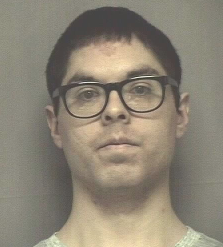
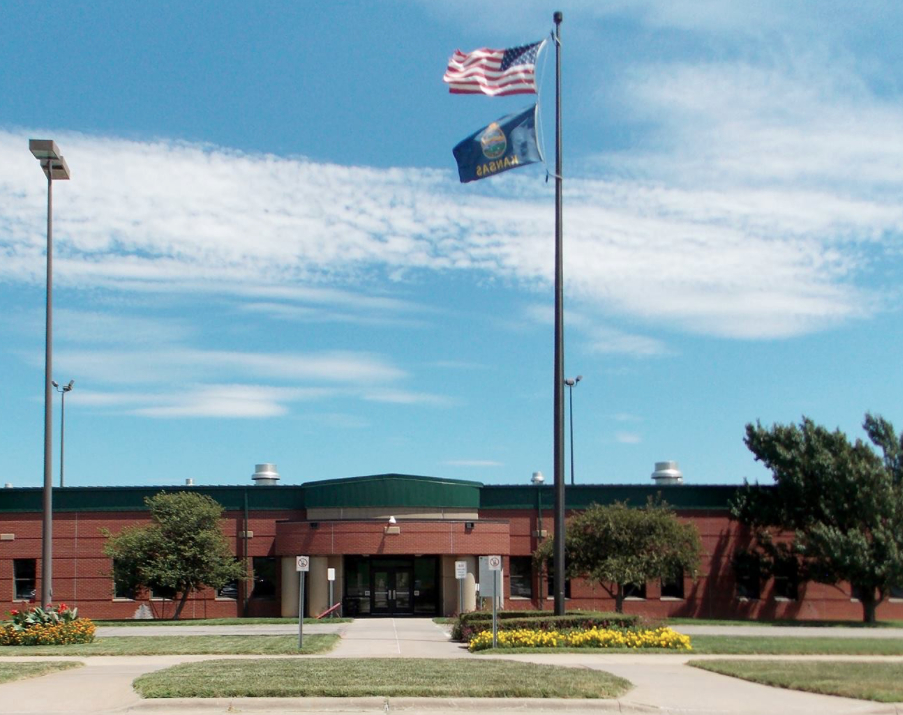
RENO COUNTY — A Kansas inmate accused of making criminal threats has been charged with having a homemade knife while in the Reno County Correctional Facility.
Justin Reyna, 30, was sentenced to one year in the Reno County jail, but then granted probation for a conviction of giving a false alarm.
The second count of aggravated criminal threat was dismissed by the state as part of a plea agreement. The crime occurred in March of 2016.
The charge of trafficking in contraband in a correctional facility involving the homemade knife occurred on Sept. 21.
Reyna has served time in prison for convictions of criminal threat and aggravated criminal threat for crimes in Pratt County in 2010.
During that time he spent some time at the prisons in Hutchinson, El Dorado and the Larned Correctional Mental Health Facility and, through all three, had an extensive disciplinary report, according to the Kansas Department of Corrections.
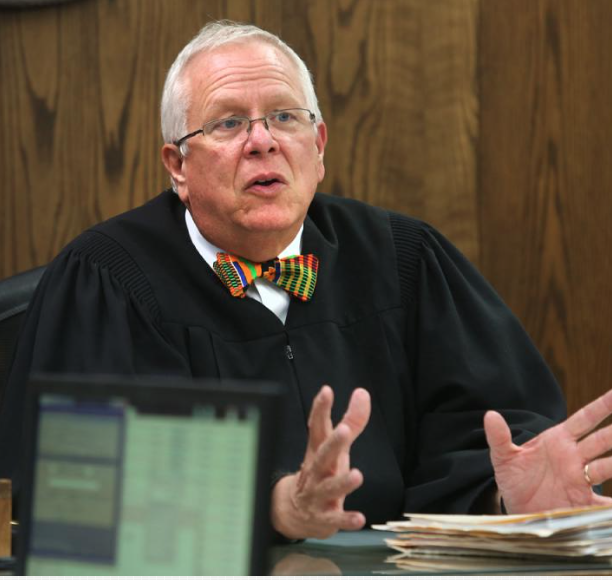
In court Tuesday, he requested a reduction of the bond, saying that he has set up appointments at Horizons Mental Health. The state opposed any reduction, but Judge Trish Rose agreed to lower the bond from $10,000 to $5,000.
WICHITA, Kan. (AP) — Law enforcement authorities say that Sedgwick County is the victim of fraud.
The Sedgwick County Sheriff’s Office said in a news release Wednesday that the resulting loss to the county government was about $566,000.
The sheriff’s office was notified at about 5 p.m. Tuesday about the fraud.
Lt. Lin Dehning of the sheriff’s office says the offense report shows the fraud occurred between Sept. 23 and Oct. 26, and that right now investigators are looking at the loss as one offense.
Dehning says the investigation is just beginning and that is all the information they have to release right now.
WELLSTON, Okla. (AP) — The Latest on the search for an man accused of wounding two police officers (all times local):
4 a.m. Thursday
The search for an Oklahoma man wanted in a cross-state string of killings, shootings and carjackings is entering its fourth day, and authorities say they have no idea where the suspect may be.
Michael Dale Vance Jr. is wanted on multiple charges, including two counts of first-degree murder for the near-decapitations of two relatives in the town of Luther that Oklahoma County Sheriff John Whetsel described as “rage killings.”
The 38-year-old Vance was last seen early Monday about 30 miles from the Texas border in western Oklahoma. Whetsel says by now, Vance could be anywhere from California to Florida.
Whetsel says it’s also possible that Vance has died if he hasn’t received medical treatment for a gunshot wound he suffered during a shootout with police in Wellston on Sunday.
1:45 p.m. Wednesday
An Oklahoma sheriff says a man suspected of killing two relatives and shooting two police officers during a violent rampage could be hundreds of miles away in another state or even another country.
Oklahoma County Sheriff John Whetsel told The Associated Press on Wednesday that 38-year-old Michael Vance could be “anywhere from California to Mexico to Florida.” Whetsel says it’s also possible Vance died if he hasn’t received medical treatment since being wounded during a shootout with police in Wellston on Sunday.
Whetsel says the last known sighting of Vance was about 2:30 a.m. Monday at a convenience store in the far western Oklahoma town of Sayre. Authorities say he shot a man in the leg while trying to steal a vehicle in the town that’s about 30 miles from the Texas border.
10:15 a.m.
Authorities say an Oklahoma man suspected of killing two relatives and shooting two police officers during a violent rampage may be planning to target people connected to a criminal case against him.
Oklahoma County Sheriff’s Office spokesman Mark Opgrande says 38-year-old Michael Vance referenced some potential targets during videos he posted live on Facebook while on the run from police.
In one video, Vance mentions the name of a woman and says she knew that he would get his guns and come for her.
Opgrande says some of the people authorities fear may be targeted are connected to a pending criminal case against Vance that alleges he sexually assaulted a 15-year-old girl.
Opgrande says authorities have warned several people to take precautions while the manhunt for Vance continues.
6:40 a.m.
An Oklahoma police officer says he engaged in a “firefight” Sunday with a man later accused in the killing of two relatives and several carjackings.
Wellston Police Officer Jim Hampton is one of two officers who were wounded in the encounter with Michael Vance, who remains on the run. Hampton tells Oklahoma City television station KOCO that he shot Vance twice as they responded to a shots fired call in their area, about 35 miles northeast of Oklahoma City.
Hampton says that at one point, he and Vance were facing each other and shooting. Hampton was shot in the foot but has been released from the hospital. A second officer was shot and is also expected to recover.
Hampton says he hopes Vance is apprehended soon, adding: “It’s not safe out there until he’s caught.”
———
The Oklahoma County sheriff says Michael Vance, the man wanted since Sunday in a string of violent crimes including two homicides, had a hit list targeting several more people.
Sheriff John Whetsel told The Oklahoman on Tuesday that authorities are “extremely concerned about those he may have indicated that he wishes harm to” and noted that the list was mostly people from outside of the county.
Authorities say the 38-year-old Vance posted live videos to social media during a violent rampage on Sunday that included the shooting of two police officers, armed car thefts and the killing of two relatives.
Whetsel also said that law enforcement is providing protection for the people on the alleged hit list.
The FBI is coordinating the search for Vance, who was last seen in western Oklahoma.
———–
Oklahoma authorities are still looking for a man who they say posted live videos to social media during a violent crime spree that included the shooting of two police officers, armed car thefts and the killing of his aunt and uncle.
An arrest warrant including two counts of first-degree murder has been issued for 38-year-old Michael Dale Vance Jr. of Chandler, Oklahoma. He’s been wanted for more than 24 hours.
Oklahoma County authorities say they believe Vance shot and wounded two police officers Sunday night and then posted Facebook Live videos documenting his run from police. Police say he then drove to the home of his aunt and uncle and killed them.
In one of the videos, a man wearing a blood-stained shirt pans to a long gun and says: “This is real.”
—
9:20 a.m.
An Oklahoma City television station is reporting that a man accused of shooting two Oklahoma police officers has been posting live videos while on the run.
TV station KWTV reports that Michael Vance posted two videos Sunday night on Facebook Live. The Associated Press couldn’t immediately verify the videos. The Lincoln County Oklahoma sheriff hasn’t returned a message Monday morning regarding the videos. See the video here. (caution very graphic)
In one video, a man wearing a backward baseball cap says he’s about to steal another vehicle and it’s “gonna be intense.” In another, the same man says: “Letting y’all know, look, this is real” before showing a long gun on the passenger seat.
He says: “If you want to know what’s up next, stay tuned to your local news.”
Vance is a suspect in the shooting of two Wellston police officers Sunday night and in a double slaying in Oklahoma County.
___
———-
WELLSTON, Okla. (AP) — Authorities are searching for a man suspected in a double slaying and accused of shooting and wounding two police officers near Oklahoma City.
The Lincoln County Oklahoma Sheriff’s Office says the officers were shot Sunday night as they responded to a report of shots fired in the town of Wellston, 35 miles northeast of Oklahoma City. The sheriff’s office says they are recovering from their injuries.
The sheriff’s office says one person was arrested but that a second suspect, Michael Vance, stole a patrol car and remains missing.
The Oklahoma Highway Patrol says authorities believe Vance is driving a silver 2007 Mitsubishi Eclipse with an Oklahoma license plate of 943LQQ.
The sheriff in neighboring Oklahoma County said on Twitter that Vance is a suspect in two deaths in Oklahoma County, but no further details have been released.
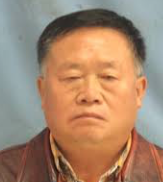
KANSAS CITY, Kan. (AP) — A 61-year-old scientist has pleaded guilty to a federal charge nearly three years after he was accused of stealing proprietary rice seeds developed in the U.S. and giving them to a visiting delegation from China.
The Justice Department said Wednesday in a release that Wengui Yan, of Stuttgart, Arkansas, pleaded guilty Monday in federal court in Kansas to one count of making false statements to the FBI.
Yan, who worked as a geneticist for the U.S. Department of Agriculture at the Dale Bumpers National Research Center in Stuttgart, was originally charged in December 2013 along with Weiqiang Zhang, a Kansas scientist, of conspiracy to steal trade secrets and theft of trade secrets.
According to the plea, Yan admitted knowing about plans to steal rice samples and send them to China.
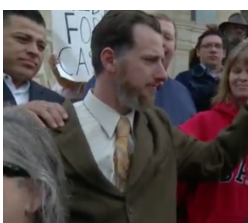
Schwab during March press conference- photo courtesy KSNT
TOPEKA, Kan. (AP) — The Kansas Supreme Court won’t consider the case of a couple whose children were taken into state custody.
The Topeka Capital-Journal reports the court Friday declined to hear the case of Raymond and Amelia Schwab, who claimed their children were placed in state custody because of Raymond Schwab’s use of medical marijuana.
A Kansas appellate court said earlier the children were taken into state custody because of neglect and Schwab’s suspected drug use, not because of Schwab’s use of medical marijuana. The appellate court found that Raymond Schwab tested positive for methamphetamine and opioids during a court-ordered blood screening last year.
Raymond Schwab then appealed to the Kansas Supreme Court, where he intended to represent himself. The high court’s refusal to hear the case denies him that opportunity.
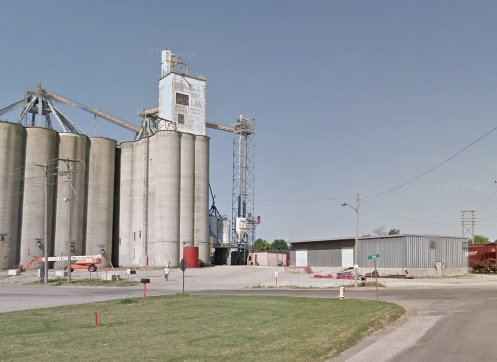
ABILENE, Kan. (AP) — A Union Pacific train derailed near a grain elevator in Abilene.
Union Pacific spokeswoman Calli Hite says the derailment happened at 3:50 p.m. on Monday. No injuries were reported.
Hite says the train was headed into customer facility when the 10 empty cars derailed and broke a power pole. The cause of the derailment is under investigation.
According to Hite, train cars that derailed on private property will be righted by the property owner. The Salina Journal reports that Union Pacific’s main line was cleared and reopened by about 8 p.m.
Photo by Thad Allton/Topeka Capital-Journal Wichita Municipal Court Judge Bryce Abbott presides in the state’s oldest and largest mental health court. He says intense supervision of nonviolent criminals with mental illness is a worthwhile community investment.
Editor’s note: Reporters from the KHI News Service and the Topeka Capital-Journal collaborated for a six-month exploration of how the state’s legal system deals with people with mental illness. This is the third in a four-part series, “Mental health on lockdown.”
Municipal Court Judge Bryce Abbott slid into a high-backed leather chair behind a stack of bloated manila files documenting the dilemma of adults seeking refuge in Kansas’ groundbreaking mental health court.
He shoved enough progress-report files aside to create a line of sight to defendants and family members, social workers, counselors and the public defender and prosecutor gathered in front of him for a review of dozens of ongoing cases. Action began with the “Rocket Docket” — a kind of flash-bang, front-of-the-line reward for folks dealing responsibly with their nonviolent criminal misconduct, underlying behavioral health condition and, often, a multitude of housing, employment, substance abuse, transportation or antisocial issues.
These courtroom exchanges were swift, relaxed and suggested the cycle of incarceration for some of these offenders could be severed.
“You haven’t been in trouble,” Abbott said to one of the first called to the bench. “Keep it up.”
Moments such as these displayed promise of intervention by officers of the court monitoring law-breakers in a way far different in style and substance than most defendants were used to. The backbone of the operation, a rarity in the Kansas court system, is the public-private collaboration on case management under the discretionary eye of a judge devoted to a concentrated caseload.
Since its inception in 2009, Abbott said, the Wichita Municipal Court’s voluntary version of therapeutic jurisprudence improved quality of life for graduates, diminished recidivism and saved taxpayers millions of dollars. It was started with a U.S. Department of Justice grant and sustained with financial backing by the city.
As names of participants were checked off the judge’s list, a middle-age male struggling to cope was ushered into the courtroom. Evidence was external. He was wearing Sedgwick County Jail’s standard ill-fitting orange jumpsuit. An encounter with Wichita law enforcement left his ankles and wrists bound in chains that clanked with every move.
Standing before Abbott, the defendant began ranting about rivals real or imagined. His remarks were spiced with a four-letter word that crudely referred to intercourse. In most courtrooms, that kind of obscene talk would produce an unequivocal rebuke from the bench: Shut up or get out. In this setting, structured with fragile defendants in mind, Abbott let it slide, briefly, before affirming decency boundaries.
“We have rules,” the judge said. “One of those rules is we don’t curse in court.”
His initial admonition and a stern reminder didn’t silence the defendant’s toxic tongue, but the exchange exposed limits of what some view as a radical experiment in judicial intercession. Frustration, as well as elation, awaits local units of government in Kansas pivoting to a problem-solving court to slow the revolving arrest-prosecute-incarcerate-release merry-go-round ridden by offenders enduring psychotic episodes.
“We’ve patted ourselves on the back and had our hearts ripped out on the same day,” Abbott said. “A criminal might choose to be a criminal, but the mentally ill do not choose to be mentally ill.”
The new asylum
In a handful of Kansas cities — Topeka, Lawrence, Kansas City and Wichita — there are independent movements to sculpt judicial programs channeling low-level offenders diagnosed with an illness of the mind to a separate court docket. It’s a recognition that old-school punishments often fell short.
The objective in alternative courts has been to help people step beyond an adversarial process into a program to improve access to services for those with mental illness, promote participation in treatment and reduce recidivism. Ingredients of change range from medication and therapy to housing and vocational rehabilitation. The judge regularly meets behind closed doors with lawyers and mental health staff to talk about the status of each case before meeting participants in open court. Drug testing is routine.
The target is a durable recovery for individuals that deflates the rising cost of incarceration for city and county governments without sacrificing public safety.
“I’ve heard from a couple folks, ‘Well, maybe you’re a soft-on-crime type. You’re coddling these people,’ ” said Jason Geier, a Topeka Municipal Court judge involved with the city’s alternative court. “Nobody’s getting a free pass. There are punitive measures taken against them. At the same time, in conjunction with that, they’re getting the assistance they need.”
Mental health courts in Kansas have arisen in an organic manner by drawing upon local community priorities. Federal grants often played a key role in launching these courts across the country, but there is no statewide initiative in Kansas. Other states, including Oklahoma, have aggressively adopted the concept to deal with defendants in psychological distress.
Photo by Thad Allton/Topeka Capital-Journal Gladys Williams represents COMCARE of Sedgwick County at the Wichita Municipal Court. Williams says changing lives of adults with persistent mental illness who cycle through the system requires direct intervention.
The advent of drug, veteran, domestic violence, truancy and mental health dockets in Kansas led to a judicial commission’s call in 2013 for establishment of guidelines to promote consistency.
Specialty courts can help defendants in a compromised mental state navigate a complex legal system, said Gladys Williams, a therapist with COMCARE of Sedgwick County and an integral part of the city’s mental health court.
“It can be an overwhelming process,” she said. “We have to be mindful that these things can be so familiar to us. We use our jargon. When you have a mental illness and don’t know where to begin … it is definitely not the easiest.”
Kansas municipal and district court officers involved with alternative courts are versed in obstacles to reordering a justice system that has evolved across the nation into a de facto dumping ground for people with major mental health problems.
Rick Cagan, executive director of the Kansas chapter of the National Alliance for Mental Illness, said closure of state mental hospitals in Kansas, including Topeka State Hospital in 1997, wasn’t followed with commensurate investment into community mental health service centers. The safety net in Kansas was stripped thousands of psychiatric hospital beds available to the mentally ill . Over time, corrections facilities became a common destination for people afflicted by mental illness.
“We’re still institutionalizing people. It’s just a different system,” Cagan said. “The idea is to not take people to jail in the first place. It’s to get them into a treatment environment.”
‘Bashed his face’
As underfunded state hospitals and community mental health centers in Kansas fell short of meeting demand for services, men and women with untreated illnesses would stumble from arrest to arrest for trespassing, disorderly conduct, loitering, shoplifting and drug possession. A majority of these low-level offenders would be candidates for a mental health court, but most don’t have that option because so few exist in the state.
The result: People with mental illness are disproportionately represented behind barbed wire and steel doors of jails and prisons.
“I strongly believe people can recover from mental illness,” said John Boutwell, who lives in Hutchinson. A couple years after he was diagnosed with a mental illness in 1994, he was charged with kidnapping after taking what he thought was a “joyride.” He spent 41 months in federal prison.
Incarceration isn’t the answer for people trapped by an illness that takes over the mind, he said.
“It took a lot of courage to admit there is something wrong with my brain,” said Boutwell, an advocate of courts and other public services designed specifically for the mentally ill. “I want to be heard. I want to be part of the solution. We’re too quiet.”
“We’ve patted ourselves on the back and had our hearts ripped out on the same day. A criminal might choose to be a criminal, but the mentally ill do not choose to be mentally ill.”
– Wichita Municipal Court Judge Bryce Abbott
Thirty-eight percent of inmates in Kansas Department of Corrections prisons during 2014 had a mental disorder — an increase of 126 percent since 2006.
Johnson County Sheriff Frank Denning said about 20 percent of inmates jailed in the state’s most populous county were mentally unstable. Johnson County has a diversion program for cases involving mental illness, but the jail continues to serve a robust population of those with mental illness.
“I have been running the largest mental health hospital in the state of Kansas,” he said.
Leawood resident Joy Branum said her adult son, Jonathan, knows well the inside of Denning’s jail. She said a troubling irony of the high-security facility was that her son would likely fall through the cracks.
“I’d rather have my son in an animal shelter. He would get help,” Branum said. “I was given the impression that in the jail system, he could get help. To me, he’s falling further into the abyss.”
She said he was convicted of a felony during a trial that didn’t touch on his mental state. She’s convinced her son, a military veteran and college graduate, has an undiagnosed mental illness. To add complexity to crisis, she said Jonathan declined treatment.
There is little hope of compelling her 30-year-old son to accept medication or therapy. She said prosecutors made clear Jonathan needed to take responsibility for his criminal conduct.
During a jail visit, Branum reminded her son of his goodness and intelligence. She told him that she loved him. She asked him the question of why.
“Why are you walking down this road? Next thing I know, he took that phone and bashed his face in.”
Intervention skeptics
Opposition to mental health courts exists among politicians uneasy about the investment required to implement a new branch of the judiciary and anxious that constituents might interpret an affirmative vote as evidence of being wishy-washy on crime.
Outside the political system, there is lack of appreciation for the number of people in Kansas struggling with mental illness.
“There are a lot of folks that are living with mental illness,” said Kathleen Lynch, a district court judge in Wyandotte County and a leader in formation of alternative court models.
Concerns also have been expressed about mental health courts perverting the justice system when a person’s best chance of obtaining critical health services resulted from getting arrested. Detractors argue mental health courts often expand an individual’s sanction to include a treatment regimen lasting longer than a sentence for the original crime.
Others question why a mentally ill person with mental illness who refuses to consume prescription medications as part of a court-monitored program could be sanctioned for that decision.
“Any kind of coerced procedure that involves administering drugs … amounts to a kind of psychosurgery,” said David Oaks, director of MindFreedom International, an organization that some associate with Scientology.
“The length of time they are denied liberty ought not to be affected by their decision to take prescribed psychiatric drugs,” he said.
Some judges remain uncomfortable taking on the role of a social worker at the intersection of a problem straddling the worlds of criminal law and mental health.
Instruction in law schools, including Washburn University and the University of Kansas, doesn’t place emphasis on introducing students to the mental health landscape they’re likely to encounter if practicing in the justice system.
Topeka’s plunge
Judge Lloyd Swartz, wearing a dark robe and displaying a warm demeanor, welcomed Terry — first names only for privacy reasons — to a session of the Alternative Sentencing Court. It was launched in January 2015 by Topeka Municipal Court with a $91,000 U.S. Department of Justice grant and $25,000 from the Kansas Health Foundation to provide treatment, rather than jail time, for those charged with misdemeanor offenses and diagnosed with a mental illness or in the clutches of alcohol or drug addiction.
In a large room, but sitting near mental health professionals, court officers and others, Terry explained how he took a walk in Gage Park recently when he felt tension rising in his head. Terry’s prior criminal offense was battery, but his challenges go deeper than a single episode.
He asked the judge if it would be reasonable to personally apologize to the victim.
“Send a letter of apology,” Swartz advised.
Brandon, proud of his new pair of glasses, was warned by Swartz not to get cute during an upcoming health assessment.
“When you try to play games with them or try to outsmart them, you may be hurting yourself,” the judge said.
Andrew said he landed a job and reported attending his first Alcoholics Anonymous meeting.
Michael told the judge he was in crisis over the weekend. “I’m still not doing well,” he said.
The judge praised his decision to visit a crisis center, urged him to attend more group sessions, handed him a few bus passes and promised to have a Topeka police officer check on his welfare.
It was a relatively uneventful Wednesday in Topeka’s special court, a voluntary opportunity for people to maintain freedom while receiving treatment for mental illness and associated maladies. All in this program were found guilty of misdemeanor crimes, sentenced and agreed to take part in the yearlong program process to avoid jail. They were referred by police officers, jail officials, judges or Valeo Behavioral Health Care, an agency that works with participants.
“Everybody we see has a component of mental illness,” said Swartz, who is clear about his mission. “Find people who are not able to connect with the resources necessary to stay out of trouble. It makes their lives better. It makes the city of Topeka a better place to live.”
In the program’s inaugural year, there were 29 participants. Six graduated, including the first, Paula. There were inevitable relapses, but a measure of success could be found in someone who stayed out of jail for six months after compiling a record of weekly multiple arrests. A majority of those eligible choose to sit in jail.
In October, Kansas Attorney General Derek Schmidt directed $50,000 in funding to the Topeka Alternative Sentencing Court.
“Providing the best public safety services and crime prevention requires a dedicated staff of local officials,” Schmidt said.
Mike Kagay, a Republican unopposed in the November election for district attorney in Shawnee County, said sufficient demand existed to start a track in Shawnee County District Court for cases tied to mental illness. He will take office in January and assume a platform to advocate that view.
“We need to work with these folks and give them some structure — give them an opportunity to succeed, not just incarcerate them. They are mentally ill and they can’t necessarily control all their actions,” he said.
A county strategy
After three years of study, the Douglas County Commission voted in August to allocate more than $440,000 for launch of a mental health court in January 2017. The county’s blueprint for reform doesn’t stop there.
A land swap with the Lawrence school district brought into the county’s possession land for construction of a proposed mental health intervention center. The next piece of the puzzle would be renovation of part of the county jail built in 1999 to better care for people in throes of a mental health episode.
“We have a big vision,” said Craig Weinaug, the Douglas County administrator. “A typical jail cell is the worst place to put someone who is seriously mentally ill.”
A consultant’s report evaluated status of the jail and potential of a mental health court. That analysis showed existing programs designed to reduce recidivism were addressing inmates interested in changing their lives, which meant those still incarcerated were increasingly violent and more likely to have an untreated mental health disorder.
Data on Douglas County inmates booked in April, July and October 2014 and in January 2015 showed 18 percent had a mental, behavior or emotional disorder resulting in functional impairment of major life activities. These mentally ill inmates stayed in jail an average of four days longer than those without a diagnosed disorder: 13.9 days versus 9.7 days.
Eighty percent of the mentally ill people with mental illness booked into Douglas County’s jail were not charged with a violent offense, but all had previously received mental health treatment, and 70 percent had been patients at a psychiatric hospital.
The proposed mental health court wouldn’t serve the entire range of people incarcerated at the jail. An estimated 11 percent of men and 12 percent of women booked by the county would meet a five-point criteria for participation in a mental health court.
County Commissioner Nancy Thellman said loss of state aid for Bert Nash Mental Health Center in Lawrence made clear the need for a new approach to the problem. She favors a one-step-at-a-time approach process that begins with a mental health court financed with existing county resources before turning to voters for approval of funding for the crisis center and jail expansion.
“Hopefully, there will be a number of instances where this will be a viable and improved alternative to incarceration,” said County Commissioner Jim Flory.
KCK’s wellness court
The informality of court sessions led by Lynch, the Wyandotte County District Court judge, was never intended to minimize seriousness of a docket comprising people who might require court-ordered mental health treatment.
The idea of ditching the black robe and tradition of compelling all to rise when the judge stepped into the courtroom was to make the environment more comfortable for those with their independence hanging in the balance.
Lynch said she owed that intimidation-reducing step to a woman who experienced psychotic symptoms triggered by the sight of a cloaked judge behind a deep bench.
“I was raised by folks who said, ‘If you see a need, you need to try to solve the problem,’ ” Lynch said. “We redid things in the courtroom. We had a big, open room. It was not very good. The patients couldn’t speak to their lawyers confidentially. We kind of gave them cubicles.”
Lynch handles the district court’s “care and treatment docket,” which requires a judge’s decision on whether individuals are a danger to themselves or others. Judges can decide to mandate outpatient treatment or order a trip to Osawatomie State Hospital in Miami County.
She prefers to call it a “wellness docket,” but the term hasn’t caught on beyond the downtown Kansas City courthouse.
“We try to find, for lack of a better word, that sweet spot. Where do we need to be?” she said.
Lynch also is among advocates of a proposed state law allowing placement of a 72-hour involuntary hold on people in meltdown. Under the proposal, local or regional crisis centers could have three days to stabilize a person against his or her will and without court order.
The idea failed to gain traction in the Kansas Legislature due to the potential cost and concern about infringement of civil rights.
Lynch said forcing a person into Rainbow Mental Health Facility, a 22-bed crisis-intervention unit in Kansas City, could put them in better condition to participate in care decisions. She said alternatives to the 72-hour hold were an emergency room, jail or worse.
Charlie Ross and Annie Neri, both of Lawrence, know what it’s like to be treated in a state mental hospital.
“I never want to go back to the hospital. It was a horrible experience,” said Neri, who has worked as a peer counselor for people with mental illness.
“I went in, unable to speak. Delirious,” Ross said. “I was terrified to the point I couldn’t speak.”
Both went voluntarily to a state hospital but believe community-based networks of crisis facilities, close to therapists and family, would serve Kansans better than unfamiliar hospitals or jails. Loss of state and federal funding for mental health services during the past decade has led to backlogs at mental health centers that force vulnerable people to deal with crisis alone, they said.
Neri said more Kansans ought to try walking in shoes of people with mental illness and to be more willing to invest tax dollars in lives of those struggling to attain normalcy. A new perspective would build support for a nimble judiciary interlocked with a safety net for the mentally ill, she said.
In doing so, she referenced then-U.S. Sen. Sam Brownback’s attempt to absorb the plight of inmates during a 2006 overnight stay at Louisiana State Penitentiary in Angola. She also pointed to the 2010 decision by voters to commit $18 million to renovating Lawrence Public Library.
“There is a funding issue,” Neri said. “We like libraries. We built one. Do we like mental health?”
— Tim Carpenter is a reporter for the Topeka Capital-Journal.
FAYETTEVILLE, Ark. (AP) — A judge has ordered the release of a 59-year-old man convicted of a killing that occurred in Arkansas more than 40 years ago.
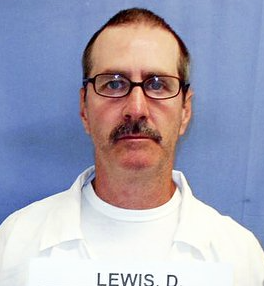
The Northwest Arkansas Democrat-Gazette reports that Dennis Lewis of Wichita, Kansas, was 17 years old when Jared Cobb was fatally shot during a robbery at a Springdale pawn shop in April 1974.
Lewis was convicted of capital murder and assault with the intent to rob in the case, and he was sentenced to life in prison without the possibility of parole.
Recent state and federal appeals court rulings have said mandatory life sentences without parole for juveniles are cruel and unusual punishment and therefore unconstitutional.
A judge signed an order Tuesday that Lewis’ sentence be vacated and that he be immediately discharged.
TOPEKA, Kan. (AP) — Authorities from several agencies are investigating a higher-than-expected number of arson fires in Topeka.
The Topeka Capital-Journal reports that 57 blazes have been intentionally set this year. That’s about 21 more than a city of Topeka’s size would expect.
Topeka Fire Marshal Mike Martin says many of the arsons have occurred in an area about two miles west of the Statehouse.
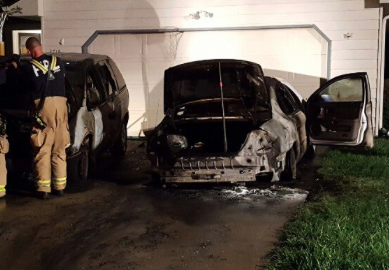
Companies on scene of multi car fire in 3700 blk of Kiowa. Investigator on scene. pic.twitter.com/XTMVo7MP8Z
No one has been injured in the recent arson fires, though they have caused thousands of dollars in damage to trash bins, garages and houses. Martin says that though the incidents appear to be connected, that doesn’t necessarily indicate a serial arsonist.
The Office of the State Fire Marshal, Topeka Police and the Bureau of Alcohol, Tobacco, Firearms and Explosives are assisting with the fire department’s investigation.
TOPEKA — The Manhattan/Topeka area will play host to the 2016 Leadership Kansas class on Wednesday, Thursday and Friday.
During this session, the 39 members of the 2016 Leadership Kansas Program will participate in discussions related to higher education, animal health, tax policy, immigration and more. The class will also visit Fort Riley, Flint Hills Discovery Center, the Kansas Statehouse, Cedar Crest, Security Benefit, Mars, Hill’s Pet Nutrition, and Blue Cross and Blue Shield.
Northwest Kansas representatives in the 2016 class include Joy Hatch, vice president for technology at Fort Hays State University; Brian Linin, Goodland, CFO of Frontier Ag Inc.; and Kevin Sanderson, Goodland, owner/franchisee of Sonic Drive-In in Goodland.
Over the course of the six-month program, the class will engage in discussions with top experts on the key issues facing Kansas. Manhattan/Topeka is the last of six communities to host the 2016 Leadership Kansas class. Other locations include: Kansas City Metro area, Dodge City/Garden City, Hays, Pittsburg, and the Wichita area.
Leadership Kansas is one of the oldest and most prestigious statewide leadership programs in the country. Established by the Kansas Chamber in 1979, the program is celebrating its 38th year of educating and motivating Kansas leaders from all four corners of the state. The Leadership Kansas program remains committed to its original mission to inspire persons to maintain involvement in the social, business and political fabric of our Kansas communities.
Leadership Kansas is currently accepting nominations for applicants for next year’s program which will begin in April of 2017 at www.leadershipkansas.org.
LARNED -Kansas Department of Corrections Secretary Joe Norwood announced today that Don Langford has been named warden of the Larned Correctional Mental Health Facility (LCMHF). Langford, who currently serves as the deputy warden at the Hutchinson Correctional Facility, began his corrections career in 1989. He started as a corrections officer and later worked as a corrections counselor and corrections manager.
“Don’s experience and knowledge of the correctional system will be valuable in his new role,” said Secretary Norwood.
Langford is married with three children. He enjoys hunting and spending time with family.
Langford replaces Tim Easley, who currently serves as the acting warden of LCMHF. Easley will remain at LCHMF, continuing to serve as the Deputy Warden.
Darren Dean Koehn, 57, lifelong resident of WaKeeney, died Tuesday, October 25, 2016, unexpectedly from natural causes while driving home from work. Born January 27, 1959, in Hutchinson KS, he was a son of the late Weldon and Doris (Schemm) Koehn.
On May 22, 2008, Darren was united in marriage to Lisa Moore in WaKeeney. He worked in the family business, Mi-T-Mart, as well as Frontier Ag CO-OP of WaKeeney, and most recently, Trego County Road and Bridge. He had a passion for shooting and hunting. Darren loved his wife and family very much. For years, he could be found either hunting, shooting, or spending time with his loving wife
Darren was preceded in death by a son, Aaron Dean Koehn; his father Weldon Dean Koehn; and his mother Doris Jean Koehn of WaKeeney. He is survived by his loving wife of fifteen years, Lisa Koehn; his loving children Jordan and Tessa Koehn; his stepchildren Amanda and husband Brandon Werth of Liberty, Missouri, Jackie and husband Adam Pollack of Palatka, Florida, Nancy Linton of North Carolina, and James Moore of Greeley, Colorado; his two brothers Weldon Koehn, Jr, and Terry Koehn and wife Shawna; and his niece Avery Koehn, all of WaKeeney.
A graveside service will be 3:00 p.m., October 28, 2016, at WaKeeney City Cemetery. There will be no visitation.
IN LIEU OF FLOWERS, the family suggests memorials be made to the Darren Koehn Memorial Fund. Donations to the fund may be sent to Schmitt Funeral Home, 336 North 12th, WaKeeney, KS 67672.
Condolences may be left for the family via online guest book at www.schmittfuneral.com.