ELLIS COUNTY – Advanced voting begins today in Ellis County and will continue until noon on Nov. 7. Registered voters can vote in advance at the Ellis County Administration Center located at 718 Main, Hays. Office hours are 8 a.m. to 4 p.m.
To vote, you must bring your voter I.D. Ellis County Clerk and Election officer Donna Maskus said it’s easiest to bring your driver’s license.
You must provide the following forms of unexpired photo ID (unless you are 65 or older, in which case the ID can be expired) when you vote:
• Drivers license or non-drivers ID card issued by Kansas or another state
• U.S. passport
• Concealed carry of handgun license issued by Kansas or another state
• Employee badge or ID document issued by a government office
• U.S. military ID
• Student ID card issued by an accredited Kansas postsecondary educational institution
• Public assistance ID card issued by a government office
• An ID card issued by an Indian tribe
• State Voter ID
The VoteKansas App is available for download to your iPhone or Android device. The app allows you to find your voting location, get directions to your voting location, and see what races and candidates will be on your ballot.
Proponents of organic, labor-intensive farming contend we should go back to the days when every family owned 40 acres, farmed with hay burners (horses) and applied no chemicals.
You remember the good ole’ days when people were self-sufficient, owned a couple milk cows, tilled a garden and butchered 40 or 50 fryers each spring.
Some of these zealots propose each nation should also strive for self-sufficiency. No imports. No exports.
Should such events occur, you may want to prepare yourself for milking each morning instead of that piping hot mug of coffee. Forget about sliced bananas on your bowl of corn flakes. These goodies we import into this country, and a lot more, won’t be on the kitchen table any more. Count on it.
God forbid we adopt these policies. If we cave in to those who spread hysteria about unsafe food and giant farms, be prepared to do without the services of all the non-agricultural types. This includes carpenters, painters, nurses, doctors, teachers, writers, musicians, etc. In case you haven’t heard, labor-intensive farming doesn’t permit time for many other pursuits. Neither does production agriculture.
Farmers run non-stop, from early morning to late at night, planting and harvesting crops, tilling the soil, feeding and caring for livestock. Their work seldom ends. It’s foolish to assume everyone would want to leave his or her jobs in the city to move to the farm. It ain’t all “Green Acres” out there folks.
And who’s to say all these people from other professions would become productive farmers?
A city friend remarked to me that he does not want to be a farmer. He contends he couldn’t feed himself, much less the rest of the country or world.
“I’d starve to death and so would the rest of us,” he told me. “If you want to till the soil, go for it. But that doesn’t mean the rest of us want to, thank you.”
If we return to a system where everyone farms, brace yourself for even more uncertain economic times. Manual labor and animal power could spell the return of food shortages and famine. A nation of farmers translates to a nation even more vulnerable to depressions and hunger. A drought, plague of insects or disease could trigger such tragedies because we’d have no chemicals to fight them with.
Today’s mechanized farmer provides us with the safest, most abundant food in the world. He works closely with crop consultants when applying herbicides, insecticides and fertilizers. He has cut his uses significantly in recent years — up to 50 percent in some cases.
Farmers work years to leave a legacy of beneficial soil practices. Most of the farmers I know would give up farming rather than ruin their land. They are proud of the crops they grow and the land they work.
Farmers continue to work to conserve water, plug abandoned wells, watch their grassland grazing and continue to adopt sound techniques that will ensure preservation of the land. Urban residents should also look at new ways to protect the environment where they live.
There’s an old saying that rings true today: “Don’t look back.”
Yes, we can never return to the good ole’ days. Besides, were they really all that good?
John Schlageck, a Hoxie native, is a leading commentator on agriculture and rural Kansas.
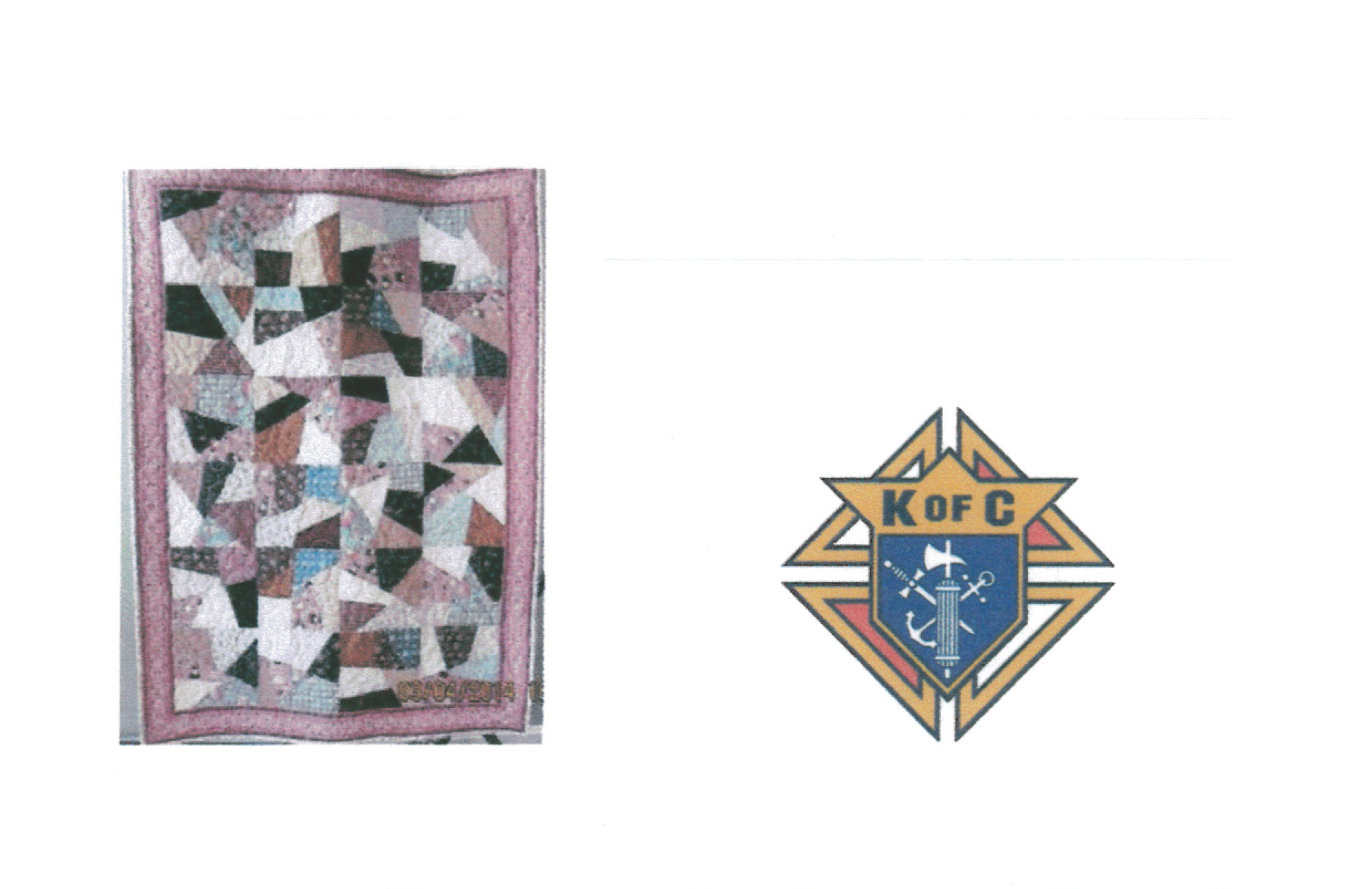
A fundraising quilt show and raffle will be held Sat., Oct. 29, 10 a.m.-4 p.m., in Ellis with proceeds going toward rejuvenation of the Ellis Knights of Columbus Hall, 1013 Washington Street.
Admission is five dollars which includes a light luncheon.
The raffle quilt, featuring pictures of Ellis past, is being made and donated Colette Bucholz from the local store Seams Like Olde Times.
Raffle tickets are available at Equity Bank, Seams Like Olde Times, Knights of Columbus Insurance and Leonard Schoenberger. The drawing will be at 4 p.m. Oct. 29.
In an effort to save money and “go green,” Bank of Hays, 1000 W. 27th, is building a solar panel carport.
“I’ve always been intrigued about the going green aspect,” said John Clarke, president of Bank of Hays. “Ever since we built the building, I’ve been thinking about this.”
The carport will have 15 vehicle bays for employees with 176 solar panels. The solar panels will produce 47 kilowatts of power for the bank, which will be enough to supply the bank with half of its needed energy.
“The long run is to save money,” Clarke said.
The solar project itself will cost upwards of $200,000, but it is projected to pay itself off in seven years, he added.
“The projection we got said seven years, but that does not factor in the projected increases in utility rates,” Clarke said.
According to Clarke, the bank should save $8,000 in the first year and, by year 20, the bank could be saving $20,000 and will keep three million pounds of carbon dioxide out of the atmosphere over the next 25 years.
“We feel like at this time the project makes economic sense,” Clarke said.
The solar panels have a life expectancy of 25 years and Clarke has been reassured that they can withstand softball-size hail.
Clarke began looking into the project two years ago. He originally looked at putting solar panels on the roof of the bank, but the weight the panels would not work with the roof.
He began looking at solar businesses in the Denver area, but rested on Cromwell Solar out of Lawrence.
Cromwell is largest and oldest solar installation firm in the Kansas region and has experience in residential and commercial design.
The project is still in the early stages as the solar panels have to be added, but Cromwell will begin adding in the solar panels in two weeks, Clarke said.
Once the installation process of the solar panels begins, it should take three or four days to finish that portion of the project. The whole carport should be completed in the next month.
As far back as Casey Fitzgerald can remember, his dad Haskell Pack Jr. was always fishing, hunting, trapping, camping or otherwise enjoying some outdoor activity. Casey remembers his first hunting trip with his dad; he was about 6 years old, and it was a pheasant hunt with his dad and uncle. Casey was so small that he was actually lost in a big patch of tall weeds for a long time before they found him.
By contrast, he remembers his dad’s last hunt ever; it was a goose hunt with Casey and some other family members. By then his dad was so sick and weak that he kept falling down, but he wouldn’t give up until the hunt was over. Haskell Pack Jr. passed away shortly after that hunt.
Steve Gilliland
Deer hunters brag about the size of their buck’s antlers, fishermen brag about the weight of their fish and pheasant hunters brag about the length of their pheasant’s tail feathers. Five years ago in conversation with some friends, someone tossed out the idea of starting a “longest tail feather” contest in Haskell’s name to honor his long commitment and enjoyment of the outdoors. Casey ran with the idea, and this year, in conjunction with the Hodgeman Co. Economic Development Council, they are celebrating the fifth year of the Haskell Pack Jr. Memorial Longest Tail Feather Contest.
Here’s how the contest works. It begins the opening day of KS pheasant season, November 12, 2016 and ends the last day of pheasant season, January 31, 2017. There are four drop-off points where the entire pheasant with all feathers still intact must be taken. Those locations are Pawnee Valley Lodge in Jetmore, CPS Crop Production also in Jetmore, Horse Thief Reservoir 9 miles west of Jetmore and at Pride AG in Hanston. At the drop off point, a volunteer will fill out a form with the hunter’s contact information, then the hunter will pull out what they consider to be the longest tail feather on their bird and deposit it into a container with their contact info.
Hunters over 16 years old must show their hunting license when they register their feather. New this year will be a youth category for hunters 11 through 17 years old, and hunters under 16 must present proof of hunter’s education when registering their feathers. When the season ends, all entered feathers will be judged against each other by Casey himself to determine the winner in both categories. The adult winner will be awarded a new Mossberg 500 shotgun, and the youth winner will receive a lifetime hunting license.
Besides celebrating his dad’s love of hunting with the longest tail feather contest in his name, Casey strives to honor his dad’s love of the outdoors by keeping his family involved in the outdoors as well. His oldest son Alex, who’s 14, hunted pheasants with Casey for the first time last year. Casen who’s 11 and John who’s 10 both enjoy shooting, camping and fishing and will follow Casey into the field soon enough. Casey’s wife Susan has taken hunters ed. and hunted deer once, and enjoys fishing and camping. Three years ago Casey also started and maintains an outdoor page on facebook called “Family Outdoor Recreation.” It’s a page open to the public where all things outdoors can be promoted and discussed.
What a great way to pay tribute to someone’s commitment to the outdoors, even better when that someone is your father! My son and grandson both like the outdoors and both like to fish, but not hunt. My LACK of fishing prowess is legendary, so I doubt anyone will ever, in good conscience be able to pay tribute to me as a fisherman. I do hope though that after I’m gone I’ll leave a legacy as someone who loved the outdoors and who loved all of God’s Creation. And as I’ve said before, it all boils down to our kids!…Continue to Explore Kansas Outdoors.
Steve Gilliland, Inman, can be contacted by email at [email protected].
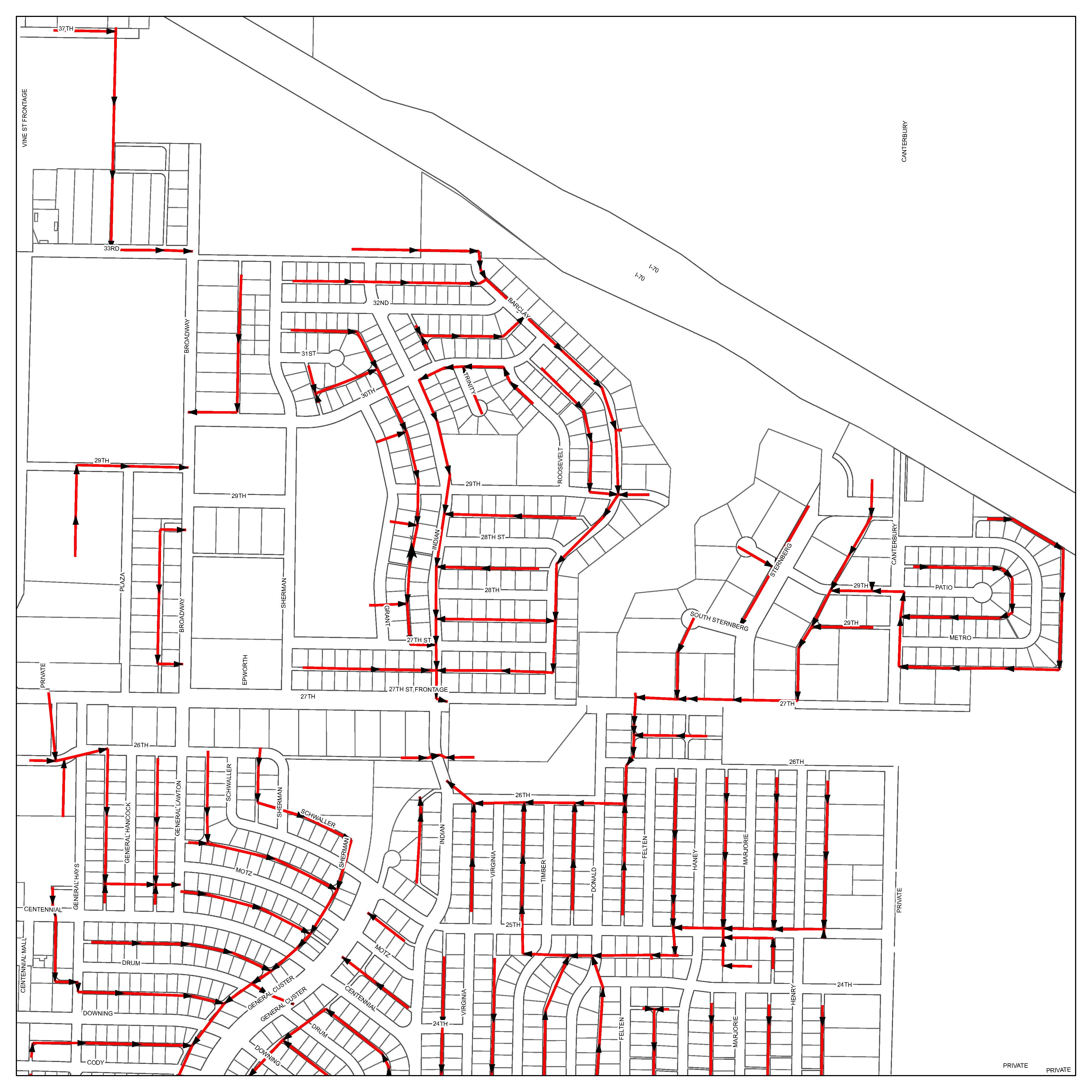
The city of Hays Utilities Department has contracted ProPipe to conduct sewer line cleaning and inspections at the locations described below and shown on the maps. Cleaning began Thursday, October 13, 2016 and will continue through November 22, 2016. The date may change due to breakdowns, weather, or other problems.
On Friday, October 21, 2016, crews will be working in the area of 27th & Vine moving south to Centennial Blvd. and over to General Lawton Rd.
On the map, the red lines indicating the 2016 project of 19 miles. The area that will be cleaned is east of Vine Street, from 37th to 33rd continuing south of I-70 down to Highway 40. Crews will also be cleaning the area of 7th St. between Main and Oak and also south Elm St.
On Monday, Tuesday and Wednesday, October 24, 25 and 26 from 1 p.m. to 4 p.m., city of Hays firefighters will be practicing the procedures to attack a large fire. This training will be conducted at Aubel-Bickle Park on Sherman Avenue between 27th Street Terrace and 29th Street.
Traffic will be restricted in this area.
The public is invited to observe.
This training tests the ability of the five on-duty firefighters to quickly place two large fire streams at work to control a building fire or keep such a fire from spreading to other buildings.
The city of Hays Fire Department policy is to conserve water as practical while maintaining the capabilities to respond to emergencies. By conducting this training in the park, the water is also being used to help maintain the grass and other landscaping.
RUSSELL — In the spring of 2016, the Insurance Services Office conducted a site visit of the City of Russell for the purpose of assigning a Public Protection Classification rating for fire protection.
A numeric public protection classification score is given to each community following an extensive audit to include emergency communications (10 percent), water supply system (40 percent) and fire department (50 percent). This score is based on a 1-10 scale where a ‘1’ is the best fire protection possible and a ’10’ means no fire protection is available.
Since May 1, 2005, the City of Russell has enjoyed a very respectable ISO rating of 4.
The City of Russell Fire Department was upgraded this year to a Public Protection Classification of 3, putting the city in the top 10 percent of the nation in terms of fire protection systems and capabilities.
The ISO rating upgrade would not have been possible without the commitment and support of the City Council and a sustained cooperative effort by our Fire Department led by Fire Chief Shane Preston, our Public Works Department led by Rich Krause, and our 911 Communications Center led by Deanise Howard according to Russell City Manager Jon Quinday.
Each year the Russell City Fire Department responds to more than 200 emergency incidents, participates in more than 1,000 man hours of training, conducts inspection and incident preplans on more than 300 commercial buildings, and conducts 10 public education events.
Russell’s water distribution department maintains over 60 miles of water lines and 350 fire hydrants in the City, while the 911 Communication Center is operated 24-hours a day and receives more than 1,000 emergency calls per year.
A community’s public protection classification score depends on our emergency communications systems; our fire department, including equipment, staffing and training; the water supply system, including the inspection and flow testing of hydrants and a careful evaluation of the amount of available water compared with the amount needed to suppress fires; our community efforts to reduce the risk of fire, including fire prevention codes and enforcement, public fire safety education, and fire investigation programs.
“I am very proud of our team for their hard work and dedication. While our new classification may lead to reduced property insurance rates, it is the City’s ability to respond and potentially save lives that is of the utmost importance,” said Quinday.
Fort Hays State University’s American Democracy Project and the Student Government Association will host a political debate between two candidates for the Kansas House of Representatives, District 111, Democrat Eber Phelps and Republican incumbent Sue Boldra, at 7 p.m. Wednesday, Oct. 26, in the university’s Robbins Center.
In addition to the debate, Dr. Joe Romance, associate professor of political science, will conduct candidate interviews with Patrick Wiesner, Democratic nominee for the U.S. Senate, and a representative for incumbent Republican U.S. Sen. Jerry Moran.
You must provide the following forms of unexpired photo ID (unless you are 65 or older, in which case the ID can be expired) when you vote:
• Drivers license or non-drivers ID card issued by Kansas or another state
• U.S. passport
• Concealed carry of handgun license issued by Kansas or another state
• Employee badge or ID document issued by a government office
• U.S. military ID
• Student ID card issued by an accredited Kansas postsecondary educational institution
• Public assistance ID card issued by a government office
• An ID card issued by an Indian tribe
• State Voter ID
The VoteKansas App is available for download to your iPhone or Android device. The app allows you to find your voting location, get directions to your voting location, and see what races and candidates will be on your ballot.






 Submitted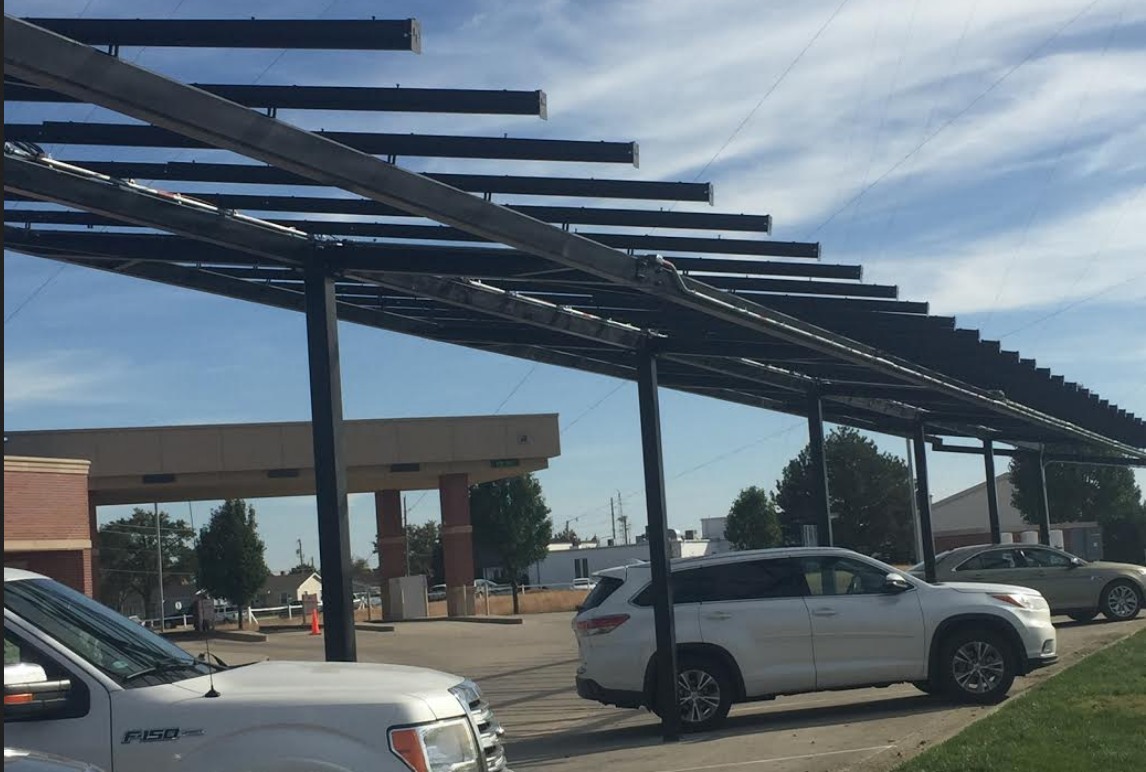







 FHSU University Relations and Marketing