We have a brand new updated website! Click here to check it out!

Corn disease, new to Kansas, may impact crop yields

photo KSU
photo KSU

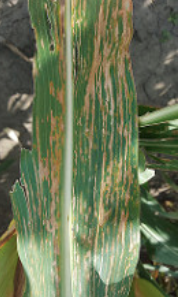
MANHATTAN — A corn disease that is new to the heartland is infecting Kansas crops.  Bacterial leaf streak is so new to the United States that it is unclear whether it will pose a threat to this year’s yields, according to Kansas State University plant pathologist Doug Jardine.

The U.S. Department of Agriculture-Animal and Plant Health Inspection Service confirmed the presence of the new disease Aug. 26. In Kansas, it has been positively identified in 12 counties from Pratt County to Edwards County.

The disease is thought to have occurred on corn in South Africa, but it has been most notably associated with gumming disease of sugarcane. At this time, it is not known how it made its way to the United States or how long it has been here.

Following its initial confirmation, APHIS, working with state departments of agriculture and extension plant pathologists, began a survey of corn fields across the western Corn Belt. Bacterial leaf streak disease has now been identified in nine states including Nebraska, Kansas, Colorado, Iowa, Illinois, Minnesota, South Dakota, Texas and Oklahoma, Jardine said.

“Three additional counties have had corn with symptoms of the disease, but samples have not yet been confirmed definitively by DNA analysis.”

Infected corn leaves exhibit narrow tan to brown streaks that range from less than an inch to several inches long.


It is not currently known how the disease has spread to so many states, Jardine said, but a current hypothesis is that it is seed transmitted. Movement within a field or from field to field may be by the bacteria blowing in the wind created by thunderstorms. Unlike Goss’s blight, it does not appear that it needs a wound to aid it in getting into the plant.

“Under what conditions is it likely to occur? By far the single largest scenario associated with the disease is corn being produced in a continuous, no-till, sprinkler-irrigated production system,” Jardine said. “This is likely the reason that most positive counties in Kansas are in the western part of the state. That being said, the disease has also been found in furrow irrigated fields, as well as dryland fields in a strict corn-soybean rotation.”

No research has been conducted to date to determine if there will be any impact on yield, the K-State plant pathologist said. Disease management options are currently limited. Since it is a bacterial disease, fungicides are not effective. Because of the highly erodible nature of most Kansas soils, residue management will not likely be an option except perhaps in southeast Kansas.

“We do not know how long the bacteria can reside in old crop debris, but observationally, it can survive through the rotational year to soybeans,” Jardine said. “Observations in hybrid demonstration trials in Nebraska indicate that there are differences in hybrid response to the disease with some being much more susceptible than others. Long term, hybrid selection, as with Goss’s blight, will be the primary means of management.”

As with any crop disease, he added, samples can be submitted to the K-State Plant Disease Diagnostic clinic through any county or district extension office or directly to the clinic. Information on sample submission can be found at tinyurl.com/hm9eale.

 

SCHLAGECK: Prepare for hunting now

John Schlageck writes for the Kansas Farm Bureau.

Upland game hunters remain positive about a good season this fall in Kansas. Talk with landowners in the western half of Kansas and they will tell you rainfall this summer has resulted in more birds for the upcoming fall season. This year promises to be as good as 2015 and maybe better as hunters scour the countryside in search of pheasants, quail, ducks and other species of wildlife.

It goes without saying that Kansas farms and ranches have always been a handy, ready-to-use outlet for many urban dwellers who travel outside their city homes in search of recreational hunting. On opening day of the upland game season, the interstate and U.S. highways will be a steady stream of pickups, SUVs and cars headed for central and western Kansas.

If you’re one of these hunters who plan to hunt on private land, remember one key word when your thoughts turn toward hunting. This word is consideration. Translated, this word means thoughtful and sympathetic regard.

In this country, wildlife belongs to the people, but landowners have the right to say who goes on their land. If you are interested in hunting, make arrangements before you hunt.

Don’t wait until the day you plan to hunt someone’s land and then pound on their door at 6 a.m. Once you’ve secured permission, here are some suggestions to follow to ensure a lasting relationship between you and the landowner.

Agree on who, and how many, will hunt on the land. Specify number and furnish names. Talk about specific times and dates you plan to hunt.

Phone each and every time before you plan to hunt, and let the landowner know your intentions. The landowner may have forgotten about your original conversation. It’s just common courtesy to say hello before hunting and ask again for the opportunity – or privilege to hunt on someone’s property.

Determine exactly where on the land you have permission to hunt. Some areas may be off-limits because of livestock or crops.

Always, and I can’t stress this enough, leave gates the way you find them. If they are open, leave them that way. If they are closed, shut them after you pass through.

If you ever leave a gate open and a farmer’s cow herd gets out of the pasture, “Katie bar the door.” You’ll never be invited back to hunt.

Once you’ve enjoyed a successful hunt, stop by to thank the landowner for his generosity. Offer to share the game you bag.

After the season ends, write a note expressing your appreciation for the opportunity to hunt. You may also find out what the landowner and his/her family enjoys eating or drinking and drop by later with a gift.

Leasing of land by the hunter from the landowner is becoming more
popular in Kansas. Such agreements allow hunters a guaranteed hunting site. It
also provides the landowner income to recoup some of the investment he needs to leave habitat suitable for wildlife to survive and prosper.

If you enter into such a lease, make sure it is written and includes all provisions both parties deem necessary. This should include a clause for the landowner and his or her family to hunt on the land.

Remember that the hunter and landowner should always discuss the terms of the hunt before hunting begins. This is extremely important. And hunters, never forget you are a guest and it is a privilege to hunt on the owner’s land.

John Schlageck, a Hoxie native, is a leading commentator on agriculture and rural Kansas.

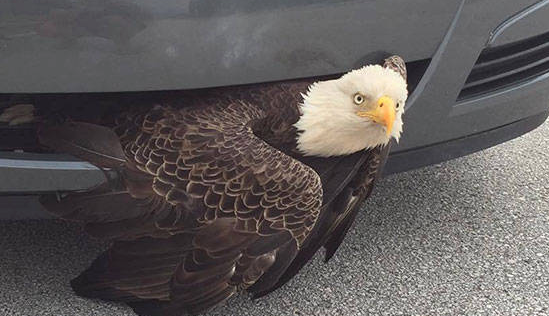
Ready to soar: eagle freed unharmed after stuck in car grill

A bald eagle flew in front of became lodged in the grill of the vehicle-photos Clay County, FL., Sheriff

GREEN COVE SPRINGS, Fla. (AP) — A bald eagle that somehow managed to get wedged in the front grill of a car was freed unharmed after a passing motorist noticed the bird.

The Clay County Sheriff’s Office says a resident of the Fleming Island area south of Jacksonville noticed the bird peering out of a passing car Saturday as the area recovered from Hurricane Matthew. The resident urged the motorist to pull over and rescue crews were called.

The sheriff’s department says rescue personnel and deputies were able to work the bird free from the car. It was taken to a wildlife sanctuary in Jacksonville but screen-shot-2016-10-10-at-9-46-12-amauthorities say the eagle appears to be unharmed. Photos posted of the eagle on the sheriff’s office Facebook page show it standing on two feet in a cage.

Proposal request on new HVAC system on Hays USD 489 board agenda

usd489 rockwell centerBy GARRETT SAGER
Hays Post

Tthe Hays USD 489 Board of Education will discuss the HVAC proposal request for Hays High School during tonight’s board meeting and work session at 6:30 p.m. in the Toepfer Board Room, 323 W. 12th.

The board will be reviewing the proposal request that is to be drawn up by the Integrated Consulting Engineers, Inc.

At last month’s board Meeting it was discussed how HHS is in need of a “massive job” done on its HVAC system and that it would be the next big project handled by the district.

The board and administration will also discuss using a construction management at-risk firm to oversee the construction/renovation projects of a potential bond issue.

Also up for discussion for Monday’s meeting:

  • Hays High roof storm repair bid
  • Transportation purchases
  • Update on enrollment from the preliminary report
  • Maintenance building update
  • Special board meeting set for Oct. 17

Saving animals becomes hobby for two HHS students

Isabelle Braun helping to intubate the animal before surgery.
Isabelle Braun helping to intubate a dog before surgery.

By KAYLI POTTER
Hays High Guidon

Last month sophomore Isabelle Braun and freshman Emma Buchholz took a trip up to South Dakota to experience something that the average high school student does not get to.

“My mom’s a vet so we travel to a few places a year to do spay and neuter clinics,” Braun said. This pulls Braun away from school often. “We’ve probably been up there 11 times, and I’ve been all but once,” Braun said.

Though South Dakota doesn’t seem to be too far away, the places that the Braun family travels to aren’t always so close to home.

“I haven’t been to nearly as many places as my parents for this,” Braun said. “They’ve been to South Dakota, Mississippi, Belize, Suriname, Turks and Caicos, and the British Virgin Islands. I’ve been to three of those places – S.D., Belize, and Suriname.”

Sometimes, one of the family’s friends goes along with them to lend a hand. On this trip, that friend would be Buchholz. “We met Emma when we were really little because her mom was my mom’s vet tech,” Braun said.

Braun’s mother was not the only vet that attended the clinic. “There were three vets and a bunch of people from South Dakota who always volunteer,” Braun said.

Emma Buchholz giving gas to a dog during surgery.

Even with three vets, everyone had plenty to do. During the two day clinic, approximately 120 surgeries were preformed. With this many surgeries being done, it is vital that all hands are on deck. “I washed the instruments and helped out Dr. Braun,” Buchholz said.

After going on so many trips, Braun is considering becoming a vet, and following in her mothers footsteps. “When I was little, I always wanted to be a vet, then I stopped, but these trips do make me want to be one,” Braun said. “However, if I did become a vet and didn’t make it as far as I mom has, I would feel that it was for nothing.”


Kan. woman jailed after chase with 4 kids in the vehicle

chase policeHUTCHINSON, Kan. – A Kansas woman was arrested Sunday night on U.S. Highway 50 by Reno County Sheriff Deputies after she failed to stop for them leading to a chase.

Just after 10 p.m. on Sunday, Kansas Highway Troopers received a call of a hit and run accident at U.S. 50 and Partridge Road.

Reno County Sheriff Deputies responded and saw the vehicle traveling east bound on U.S. 50 with one tire missing.

When Samantha Caravalho, 28, Hutchinson, ultimately did stop, there were flames coming from the vehicle’s right fender.

Deputies initially had trouble getting her from the vehicle and she informed them she had four kids in the vehicle.,

Deputies safely removed the children and then used a fire extinguisher to put out the fire.

They were then able to get Caravalho from the vehicle and she was taken to jail.

Potential charges against Caravalho include DUI, two counts of aggravated battery, felony flee and elude and four counts of felony endangerment of a child.

Her bond in the case is set at $27,500 she should make a first court appearance on Tuesday.

Woman from Hays hospitalized after rear-end collision on bypass

ELLIS COUTY- A woman from Hays was hospitalized in an accident just before 1:30 p.m. Monday in Ellis County.

The Kansas Highway Patrol reported a 2013 Chevy Traverse driven by Amanda Marie Truan, 34, Gorham, was northbound on the U.S. 183 Bypass just west of Hays.

The Chevy rear-ended a northbound 2010 Ford Fusion driven by Kelli L. Thiel. 50, which made a sudden stop, according to the KHP.

Thiel was transported to Hays Medical Center. Truan was not injured.

Thiel was not wearing a seat belt, according to the KHP.

Kubiak to take a week off after migraine diagnosis

ENGLEWOOD, Colo. (AP) – Broncos GM John Elway says doctors have ordered coach Gary Kubiak to take a week off after experiencing a migraine and that special teams coordinator Joe DeCamillis will serve as interim coach Thursday night in San Diego.

Kubiak was lethargic following Denver’s 23-16 loss to Atlanta on Sunday night and was taken from the stadium via ambulance and hospitalized overnight.

He was in the process of being discharged from the hospital and sent home when Elway held a 2 p.m. MST news conference at team headquarters.

Kubiak, 55, had a health scare in 2013 when he was coach of the Houston Texans, suffering a “mini-stroke” and collapsing at halftime of a game against Indianapolis. He returned 10 days later.

Physicists to present favorite Nobel laureates in next Science Cafe

fhsu SciCafeOct16aFHSU University Relations and Marketing

Five members of the physics faculty at Fort Hays State University will present their favorite Nobel Prize winners at the next Science Cafe at 7 p.m. Tuesday, Oct. 11, at Gella’s Diner, 117 East 11th St., Hays.

Presenters are Dr. Gavin Buffington, Dr. C.D. Clark, Dr. Eric Deyo, Dr. Jack Maseberg and Dr. Kent Rohleder.

This Science Cafe is sponsored by FHSU’s Science and Mathematics Education Institute.

Kansas airport: Pilot reports laser pointed at his airplane

green-laser-pointerSALINE COUNTY – Law enforcement authorities in Saline County are investigating report of a laser being pointed at an airplane near Saline Regional Airport.

On Friday, the Salina Airport Authority notified the Saline County Sheriff’s office after a pilot reported a green laser was pointed at him just before 9 p.m.

The beam was reported to have come from about 6 miles southwest of the airport.

Deputies located and spoke with some individuals in the area but were not able to locate the source of the laser, according to Saline County Undersheriff Roger Soldan.

Ellis, Trego counties cited in Kansas AG’s report on Colorado pot

The following map depicts in green those counties where a survey respondent reported the presence of Colorado marijuana.
The map depicts in green those counties where a survey respondent reported the presence of Colorado marijuana.

TOPEKA – The Kansas attorney general’s office today published a new report that shows marijuana from Colorado has permeated nearly all parts of Kansas, Attorney General Derek Schmidt said.

The report, which includes information from Trego and Ellis counties, also shows that Colorado’s decision to “legalize” marijuana has resulted in a sharp increase in the availability of marijuana-laced “edibles” in Kansas, a phenomenon rarely encountered here before the Colorado experiment.

Since Colorado changed its state law to allow recreational as well as medical use of marijuana, persistent anecdotal reports from law enforcement agencies in Kansas had suggested Colorado marijuana was readily flowing into Kansas despite assurances that federal authorities would exercise their authority to prevent Colorado marijuana from flowing into nearby states where it remains illegal. But solid data about the extent of the problem was unavailable.

Click HERE to read the entire report.

In December 2015, Schmidt exercised his authority under Kansas law to gather information from local law enforcement officials and began surveying all county and district attorneys, sheriffs and police departments in the state about their specific experiences with marijuana coming from Colorado. The information provided by 320 responding law enforcement agencies and 70 prosecutors’ offices is compiled in the report released today.

“This report provides the first data-based snapshot of the specific effects Colorado’s experiment in ‘legalization’ is having in Kansas,” Schmidt said. “I hope this information will serve to better inform policy discussions and debates. Whatever one’s views on the merits of Colorado’s choice to ‘legalize’ and on the federal government’s decision to look the other way despite the commands of federal law, it is clear that decisions made in Colorado and Washington, D.C., are having a significant effect in Kansas.”

The report summarizes its findings as follows:

The survey responses demonstrate that Colorado marijuana is prevalent in Kansas. While some jurisdictions reported an increase in overall levels of marijuana crimes, the major effect of Colorado marijuana ‘legalization’ appears to be that high grade marijuana from Colorado has to a large extent replaced lower grade marijuana from Mexico and home grown marijuana. Numerous jurisdictions also reported a significant rise in the availability of marijuana edibles and other marijuana products, such as waxes and oils, originating from Colorado.

A copy of the report is available on the attorney general’s website at www.ag.ks.gov/survey-results. That site also links to the raw information collected from the responding law enforcement agencies and prosecutors.

Click here to read the entire report.

🎥 Free smoke alarms provided to Ellis Co. residents during October

fire prevention week 2016By BECKY KISER
Hays Post

Fire Prevention Week is held annually on the anniversary of the Great Chicago Fire, Oct. 8-10, 1871. There were more than 300 deaths and 100,000 people were left homeless.

The 2016 theme of Fire Prevention Week is Don’t Wait-Check The Date! Replace Smoke Alarms Every 10 Years.

“Smoke alarms need to be replaced every 10 years,” according to city of Hays Firefighter Travis Johannes. “Carbon monoxide alarms should be replaced sooner–every five years.”

Smoke alarms are key to home fire safety. “Sixty percent of home fire deaths occur in houses without working smoke alarms,” Johannes noted. Those statistics come from the National Fire Protection Association (NFPA), which also reports half of home fire deaths result from fires reported between 11 p.m. and 7 a.m. when most people are asleep.

Don't Wait - Check the Date! Replace Smoke Alarms Every 10 Years
(Click to enlarge)

Smoke and carbon monoxide (CO) alarms should be tested monthly. “Working smoke and carbon monoxide alarms warn you in time to take proper life-saving action. If your smoke or carbon monoxide alarm goes off, get everyone out of the house and call 911,” Johannes said.

He recommends installing smoke alarms in each bedroom, outside each sleeping area, and on each level of a home. Carbon monoxide is an odorless, tasteless and colorless gas. CO alarms should be placed on each level of a home, especially near sleeping areas.

The Hays Fire Department has free smoke and carbon monoxide alarms who cannot afford them. This month, HFD, as well as the Ellis, Victoria and Ellis County Fire Departments are teaming up with the Western Kansas Chapter of the American Red Cross to provide free smoke alarms in the community. HFD will also assist senior citizens or those with limited mobility with installing alarms, checking alarms, or changing alarm batteries.

Second-graders watch the smoke rise to the ceiling of the HFD mobile fire safety house at Roosevelt Elementary School in 2013.

During Fire Prevention Week, Hays firefighters are taking their mobile Fire Safety House to local third-grade classes. The students learn where smoke and carbon monoxide detectors should be placed in their homes, what to do if one goes off and how to develop a home fire escape plan with their families.

In 2014, U.S. fire departments responded to an estimated 367,500 home structure fires. These fires caused 2,745 deaths, 11,825 civilian injuries, and $6.8 billion in direct damage, according to the NFPA.

“Fire Prevention Week is a good time to check your alarms and change the batteries,” Johannes reminded homeowners.

For more information, contact HFD at (785) 628-7330.

Copyright Eagle Radio | FCC Public Files | EEO Public File