Open enrollment for 2017 health plans at the online insurance marketplace, healthcare.gov, starts November 1. -click to expand
Kansans will get to choose between two insurance companies when open enrollment begins Nov. 1 for 2017 coverage through the Affordable Care Act’s online marketplace.
But for Kansans outside the Kansas City metropolitan area, one company will offer only HMO plans that restrict coverage to in-network providers.
The Kansas Insurance Department published an overview of the marketplace choices this week.
A new insurer, Minnesota-based Medica, has entered the Kansas market and will sell seven traditional health insurance plans — with varying premiums and levels of coverage — in all counties.
Blue Cross and Blue Shield of Kansas City remains in the market and will sell 11 plans in Johnson County and Wyandotte County. It will offer traditional coverage as well as “exclusive provider organization,” or EPO, plans that are like HMO plans in that they can restrict coverage to in-network care and require a “gatekeeper” to approve coverage prior to care.
Blue Cross and Blue Shield Kansas Solutions will remain in the ACA marketplace and sell plans in the state’s other 103 counties, but all five of its offerings will be HMO plans.
Most Kansans get health insurance through their employer, a family member or government programs like Medicare and Medicaid.
According to the insurance department, only 6 percent of the state’s residents were covered in 2016 by individual health insurance plans like the ones offered on the marketplace.
Andy Marso is a reporter for KHI News Service in Topeka, a partner in the Heartland Health Monitor team. You can reach him on Twitter @andymarso
SALINE COUNTY – Law enforcement authorities and school administrators in Saline County are investigating a reported school threat.
Salina police said they received a report that a student at Salina South High School allegedly threatened gun violence against the school on Friday, according to an email sent to parents from USD 305
Police arrested the student on Thursday, according to the email.
No additional details were available early Friday afternoon.
DETROIT (AP) — Subaru is recalling nearly 593,000 vehicles, some for a second time, because windshield wiper motors can overheat and increase the risk of a fire.
The recall affects certain Legacy and Outback cars from the 2010 to 2014 model years. The company says that due to contamination, parts in the wiper motor cover can interfere with one another. If snow or ice stops the wiper arms from stopping in the proper position, the wiper motor could overheat. That could disable the wipers and melt the cover.
It was unclear whether the problem caused any fires or injuries.
Dealers will replace the wiper motor bottom cover at no cost, but a schedule for the recall isn’t finished. Some of the vehicles were recalled in 2011 for a similar problem.
SALINE COUNTY – Law enforcement authorities in Saline County are investigating a suspect for alleged assault of a teenager.
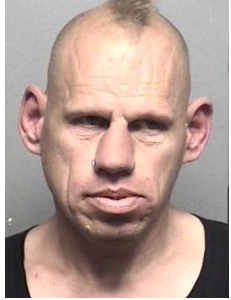
Thomas Dunn, 46, Salina, was arrested on Thursday and cited for misdemeanor battery, according to Salina Police Sgt. James Feldman.
Just after 9:30 p.m. on Wednesday, a 16-year-old girl was walking in the 100 block of E. Walnut near the Stiefel Theatre and became paranoid that someone was following her, according to Salina police captain Paul Forrester.
When the girl turned around, a man she described as wearing a pink dress with a Mohawk haircut struck her in the right cheek.
After striking the girl, the man then tried to pull her into an alley.
Forrester said the girl was able to kick the man in the groin to free herself.
She then ran to her home and notified police.
They identified Thomas Dunn as the suspect. He is to appear in Salina Municipal Court on the charge.
TOPEKA – The Kansas Department of Health and Environment has rescinded a boil water advisory for the City of Dorrance public water supply located in Russell County. The advisory was issued because of positive bacteriological samples from the distribution system.
Public water suppliers in Kansas take all measures necessary to notify customers quickly after a system failure or shutdown. Regardless of whether it’s the supplier or KDHE that announces a boil water advisory, KDHE will issue the rescind order following testing at a certified laboratory.
Laboratory testing samples collected from the City of Dorrance public water supply indicate no evidence of contamination and all other conditions that placed the system at risk of contamination are deemed by KDHE officials to be resolved.
Tuberculosis fact sheet from Sedgwick County – Click to enlarge
SEDGWICK COUNTY -Officials in Sedgwick County are investigating a case of Tuberculosis at Wichita State University.
The county health department reported on Friday that a student at the school was diagnosed with the disease, according to a media release and that measures are in place to stop the spread of disease.
Although the student lived in a dorm, the risk of WSU students and staff getting TB is very low, according to the release.
Sedgwick County Division of Health will contact those who have been in close contact with the student for evaluation.
If the Division of Health does not contact a student, there is no need for a TB evaluation.
Tuberculosis is spread from person to person through the air in a confined are over a long period of time, according to a fact sheet on TB from Sedgwick County.
TOPEKA – Kansas Attorney General Derek Schmidt will visit three western Kansas communities next week to speak to community groups and participate in a roundtable discussion with area prosecutors.
Schmidt’s public schedule is as follows:
Thursday, Oct. 6
7 a.m.
Remarks at Hays Sunrise Rotary Club
Hays Welcome Center, 2700 Vine
11 a.m.
Meeting with Regional Prosecutors
Garden City
Friday, Oct. 7
7:30 a.m.
Coffee with Sheridan County Farm Bureau
Oscar’s, 845 Main, Hoxie
BARTLESVILLE, Okla. (AP) — Two religious colleges in Missouri and Oklahoma say they won’t take part in this year’s NAIA cross-country championship because the meet was moved out of North Carolina in response to the state’s law limiting LGBT protections.
The NAIA, which has 15 member schools in Kansas, opposes the law, which bans local ordinances that allow people to use locker rooms and bathrooms matching their gender identity. The law also excludes gender identity and sexual orientation from local and statewide antidiscrimination protections.
The NCAA also removed high-profile games from North Carolina.
The Tulsa World reports that Oklahoma Wesleyan President Everett Piper said the NAIA should give female athletes “the dignity of having their own restrooms.”
KYTV in Springfield, Missouri, says the College of the Ozarks cited similar reasons. President Jerry Davis called the NAIA’s action “political correctness gone berserk.”
Frank Younger preps noodles for noodles & beans at the Ellis County EMS booth.
Eagle crews on the scene. Check KAYS for updates through the morning.
Kevin Rupp gets set up at the American Historical Society of Germans from Russia booth.
Eagle’s Mike Koerner, right, talks with Brad Boyer of the Ellis County Historical Society.
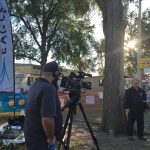
Jim Huenergarde with the Hays Lions Club preps for an interview.
Gene Stramel, right, and Gary Whitesell at the Lions Club homemade bierocks and cinnamon roll stand.
Setting up the stage Friday morning
Jon Armstrong with the FHSU Foundation, right.
FHSU Victor E. Tiger greets some young fans
Catherine The Great, aka Cheryl Glassman, explains history of Volga Germans from Russia.
Oren Windholz talks about harvesting ice in Ellis County.
Wrapping the homemade bierocks in foil
Wilson Elementary first-graders
Sigma Alpha Iota FHSU music fraternity selling homemade kuchen and green bean dumpling soup
Bukovina Society board members Oren Windholz, Eileen Goetz, Guy Windholz
Joe Dolezal Polka Band
Joe Dolezal Polka Band
Volga German welcome by Tom Haas, who learned the language from his grandfather. His ancestors came from Russia to Ellis County. Emcee Mike Cooper is pictured at left, and Nick Werth, President of the Ellis/Rush County Volga German Society is at right.
Dr. Joey Linn, FHSU vice president of student affairs
Several students from Germany attending FHSU welcome the crowd.
Tom Hass and Nick Werth tap the keg.
Alberta Klaus and Nathan Haas dancing the polka.
Green bean dumpling soup
Lined up for lunch at the Ellis Co. EMS Responder Rehab booth
Nolan Sump, Kan. Alliance of Professional Historical Performers, talks about the history of making beer.
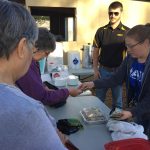
Pulling up to order a German lunch from the NCKTech Culinary Arts students
HAYP booth
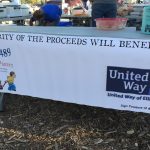
Blackberry kuchen made by HAYP member and USD 489 Board Clerk Sarah Wasinger (at right.) Most HAYP proceeds go to United Way of Ellis Couunty and USD 489 Hope Pantry.
Michael A. Smith is a Professor of Political Science at Emporia State University.
Debating incumbent Jimmy Carter in 1980, Ronald Reagan pulled one of his classic moves. Reagan summed up decades of political science research with a pithy, homespun-sounding question. Once thought impossible, inflation and unemployment were both high at the same time, so the economy was on everyone’s mind. In his trademark style, Reagan looked directly into the camera and addressed the voters themselves, not his opponent or the moderator, asking “are you better off that you were four years ago?”
Economists may scoff. The ups and downs of the economy are too complex to attribute to politicians’ actions, but political scientists know the score. Reagan was encouraging viewers to use a strategy called retrospective voting. This explains why the economy is usually the single biggest deal-maker (or –breaker) for undecided voters.
Reagan won the 1980 election easily.
Four years later, the economy in recovery, Reagan again asked, “are you better off than you were four years ago?”
Reagan then pulled off only the second 49-state landslide in American history.
This year, in Kansas, it is time to revisit Reagan’s question.
In 2012, Governor Brownback was frustrated with moderate Republican leaders in the Kansas Senate. He and his political allies pulled off a first-in-Kansas-history moment: a well-funded, professionally- organized campaign targeting these obstinate moderates in the Republican primaries. They sought to oust 12 and succeeded in removing 9. Then Brownback hit the gas: having passed tax cuts earlier that year, Brownback proceeded to privatize Medicaid, drain the state highway and children’s health trust funds, abolish the school base funding formula, and refuse federal money to expand Medicaid and set up an Affordable Care Act marketplace.
Are you better off than you were four years ago?
How are the schools that your children or grandchildren attend? How likely are they to stay in Kansas after they graduate? How is their teachers’ morale?
How is your local hospital doing? Is it solvent? Is it closing?
How about your area’s roads? Are repairs on schedule?
Finally, comes Brownback’s signature act: the 2013 tax cut. How much of that have you seen, personally? How much job growth have you seen in your community and workplace as a result?
Senator Forrest Knox’s (R-Altoona) primary-election defeat last month spells trouble for Brownback. Knox was a Brownback ally and conservative firebrand known for his outspoken advocacy of, among other things, giving adoption preference to traditional, heterosexual, two-parent families like the ones on the 1950s TV show Leave It to Beaver (he actually said that). I spoke with some of Knox’s former constituents, unhappy that he was ignoring district matters. One local mayor got no help from Knox on an environmental variance, needed to build a new water-treatment plant. Knox’s constituents expected responsiveness, but they did not get it. Now Knox is out, along with other Brownback allies like Representative Virgil Peck (R-Tyro), who made national headlines for attacks on immigrants and even on the authors of these newspaper columns, yet Peck did nothing while a hospital closed in his district.
Voters may have wondered, are they better off than they were four years ago?
Kansans will have another chance to revisit Reagan’s famous question again this November.
Michael A. Smith is a Professor of Political Science at Emporia State University.
John Richard Schrock is a professor at Emporia State University.Only 38 percent of graduating seniors who took the ACT exam scored high enough to be “college-ready” in three of the four core subjects. The report by ACT, Inc., producers of the American College Testing program, shows a decline from 40 percent college-ready the year before.
The ACT aptitude tests given in reading, English, math and science are each scored on a scale from 1 to 36 and then averaged. The nationwide composite score averaged 20.8, down from 21 the previous year.
Some of the decline is due to more high school students taking the ACT. Almost 2.1 million seniors took the ACT this last year compared to 1.9 million the prior year. As some states have begun testing all students, inclusion of lower performing students was expected to depress scores.
ACT reports that in 2016, 20 states funded ACT testing for all of their public school students: Alabama, Alaska, Colorado, Hawaii, Illinois, Kentucky, Louisiana, Michigan, Minnesota, Mississippi, Missouri, Montana, Nevada, North Carolina, North Dakota, South Carolina, Tennessee, Utah, Wisconsin and Wyoming.
The highest-scoring states of Massachusetts, Connecticut, New Hampshire, New York and Delaware had less than 25 percent of their seniors take the test. If only the academic elite take the test, the average scores will be high. The lowest performing states were Alabama, Hawaii, South Carolina, Mississippi and Nevada where essentially all of their seniors take the test.
Kansas had 74 percent of students taking the test and the Kansas average composite score was 21.9. This compares with a national average of 64 percent and an average score of 20.8.
With the exception of the math section, the ACT is mostly an aptitude test that measures overall skills in those fields, rather than an achievement test. Therefore, the ACT does not drive the school curriculum and it is very difficult for teachers to teach-to-the-test. This stands in contrast to the new SAT that has aligned with national curricula. Fortunately, twice as many students take the ACT compared to the SAT.
Some years ago, then Kansas Education Commissioner Posny described the ACT as a possible test for the State Board to require statewide. The advantage would be that some Kansas students who had not considered college would discover that they were college-able. I supported a statewide ACT requirement if this test replaced all other external assessments, because it would end the teach-to-the-test pressure that has seriously damaged our public schools. The State Board of Education never really considered a statewide ACT requirement due, among other factors, to the high cost of paying for every student to take the test. Nevertheless, the drive to send every high school graduate to college has resulted in three-fourths of Kansas students taking the ACT anyway.
And that is where the ACT data are particularly damning. Only 38 percent of American seniors are prepared for college course work. Yet the President, the Kansas Governor, and national agencies such as the Lumina Foundation are driving public universities to graduate 60 percent of college students. As a result, many public high schools have inflated grades to the point where it is impossible to fail unless a student stops breathing. And the pressure to admit, retain and graduate every tuition-paying warm body in public universities is rapidly becoming Job One. Nevertheless, the likelihood of these students—who need substantial remedial course work—being able to complete a genuine and rigorous college degree remains low.
The consequences are fairly clear: the student who walks across stage to receive a degree they earned will be followed by several who receive the same degree but have done far less work. The ACT scores show that our universities should be admitting fewer students, not more. The refusal of our educational leadership to recognize these ACT numbers resembles a Vietnam War-era saying: “In order to save the university, we had to destroy it.”