We have a brand new updated website! Click here to check it out!

Young Readers Conference features former FMS principal Monte Selby

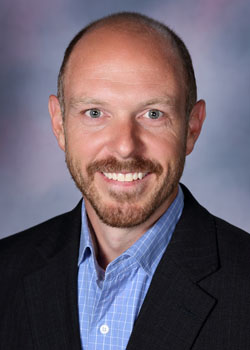
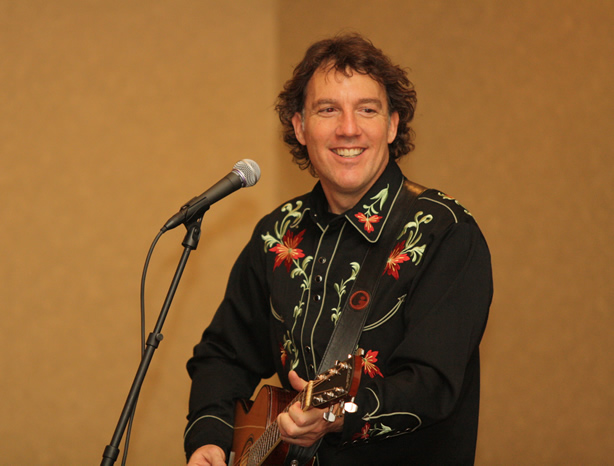
Monte Selby, Education's Songwriter
Monte Selby was an assistant principal and principal at Felten Middle School in Hays from 1989 to 1996.

FHSU University Relations and Marketing

Health will be the theme of the 2016 Young Readers’ Conference, “A Recipe for Healthy Living,” at Fort Hays State University. Speakers teach kids all about staying healthy through fun learning activities.

Sessions will focus on physical fitness, music and mental wellness integrated into literacy.

Events will be held in Gross Memorial Coliseum and Cunningham Hall and will welcome 200 first- to second-grade students and their adults sponsors on Tuesday, Sept. 27, and 200 third- to fifth-grade students and their sponsors on Wednesday, Sept.28.

The day will start out with guest keynote speaker Monte Selby, an education songwriter.

Selby is a former principal of Felten Middle School in Hays and taught vocal music in Hays USD 489. He now lives in Colorado.

Following Selby’s presentation, students will separate into four sessions that will be on rotation throughout the day.

Seth Kastle
Seth Kastle

The event will also feature FHSU faculty member Seth Kastle, instructor of leadership studies/Virtual College International, who will present his new books “Why is Dad So Mad?” and “Why is Mom So Mad?” that help explain what post-traumatic stress disorder is to children.

“I will talk about the importance of mental health because of the context of my books,” said Kastle. “This is a huge part of the ‘Recipe for Healthy Living.’” Kastle will also donate a number of books to the Young Readers Conference.

Dr. Beth Walizer
Dr. Beth Walizer

Dr. Beth Walizer, professor of teacher education, has been in charge of the event for several years and shared the joys of being a part of it along with some struggles that are faced every time FHSU hosts the conference.

“The biggest challenges we face every year when we host the Young Readers Conference are costs, but we do our best to keep prices low so the students can afford to come,” said Walizer. The committee also writes out various grants to institutions that make it possible for more students to attend.

But the struggles that are faced during the planning are rewarded once the students arrive. “I love seeing all of the joy and excitement on the kids’ faces,” said Walizer. “The greatest joy of it all is when they tell me how much fun their having.” Some kids have even written Walizer letters to thank her and tell her how much they loved it.
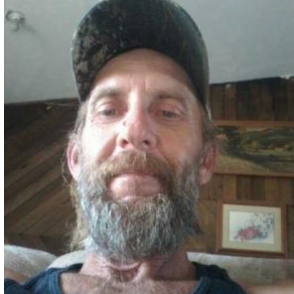

Kansas man being held on $1M bond in ex-father in law’s murder

MITCHELL COUNTY – A second suspect has been arrested and charged in the July 2015 killing of Darrell Hill, according to Mitchell County Attorney Mark Noah.

Hill was brutally murdered at his home in the rural Mitchell County community of Asheville, according to the sheriff’s department.

On September 14, Hill’s former son-in-law, Merlyn Hoesly, 56, Simpson, was formally charged with First Degree Murder and Interference with Law Enforcement.

He remains in the Mitchell County jail on a $1 million bond.

The Public Defender’s office was appointed to represent him.

The trial for the original suspect Trevin Spencer, 29, of rural Cloud County is rescheduled to begin on October 5, according to Noah.

Spencer was the only person present when the killing happened according to Noah and the charges against Hoesly stem from “aiding and abetting” or being “an accessory.”

– The Associated Press contributed to this report

HHS FFA team headed to national competition

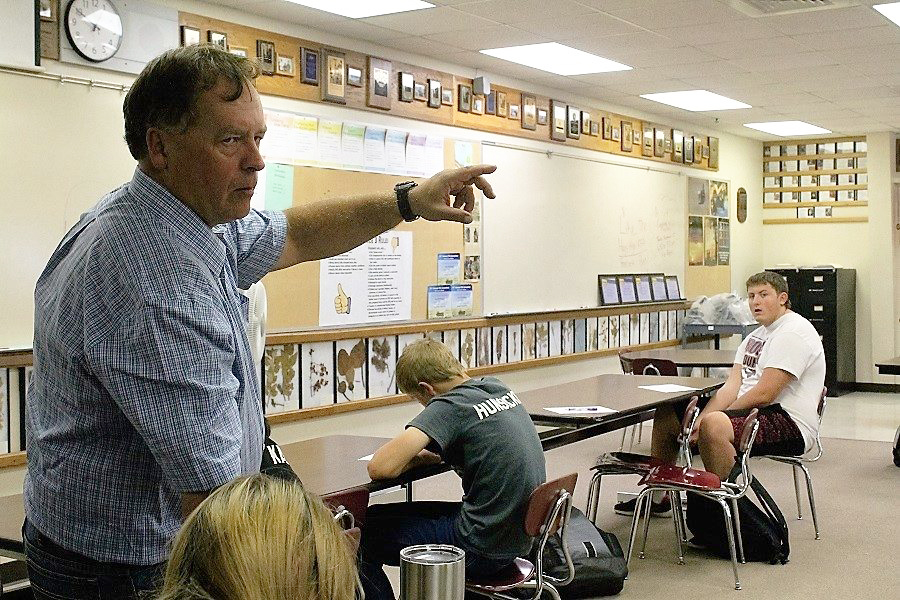
 FFA Instructor Curt Vajnar teaches during one of his agriculture classes.

‘HHS FFA Instructor Curt Vajnar teaches during one of his agriculture classes.

By ANNISTON WEBER
HHS Guidon Co-Editor-in-Chief

The Future Farmers of America (FFA) Land and Homesite Career Development team will be one of four teams representing Kansas at Nationals in May.

This year will be the third year in a row that the FFA team has been headed to Nationals in Oklahoma City.

This year’s team consists of senior Brandi Zimmerman, and juniors Dustin Schneider, Jared Kisner and Elijah Joy.

Schneider has been involved with FFA for three years, and is serving as the chapter treasurer. “I am ecstatic that the team is going to Nationals,” Schneider said. “I made some pretty stupid mistakes during the tournament, but I really am proud of the teams achievements.” Schneider placed 12th at the event.

At the State FFA competition, the students take various measurements to determine soil class. Slope, soil texture, and depth of soil trees are a few of the things each student looks for during the event.

Kisner took first place in both of the area land competitions. “This is a new experience for me,” Kisner said. “I’ve competed at State before, but not Nationals.” Kisner said he has always loved all things agriculture related. “It comes natural,” Kisner said. “I really hope to take first at Nationals also.”

Report: Password breach could have ripple effects far beyond Yahoo

screen-shot-2016-09-22-at-3-33-46-pmLONDON (AP) — Information security experts worry that the record-breaking haul of password data from Yahoo could be used to open locks up and down the web.

One big worry is a cybercriminal technique known as “credential stuffing,” which works by throwing leaked username and password combinations at a series of websites in an effort to break in, a bit like a thief finding keys in an apartment lobby and jamming them, one after the other, into every door in the building.

The spillover effect on other websites has some experts comparing the Yahoo hack to an ecological disaster.

Shape Security’s Shuman Ghosemajumder on Monday compared such breaches to global warming, saying they were progressively making the internet less safe.

REMINDER: HaysMed will host free screening of end-of-life documentary ‘Being Mortal’

Screen Shot 2016-09-01 at 10.37.39 AMHays Medical Center

Hospice at HaysMed is holding a free, community screening of the documentary “Being Mortal” on Sept. 27, from 6 to 8 p.m. Rose Garden Banquet Hall, 2350 E. Eighth. After the screening, audience members can participate in a guided conversation on how to take concrete steps to identify and communicate wishes about end-of-life goals and preferences.

“Being Mortal” delves into the hopes of patients and families facing terminal illness. The film investigates the practice of caring for the dying and explores the relationships between patients and their doctors. It follows a surgeon, Dr. Atul Gawande, as he shares stories from the people and families he encounters. When Dr. Gawande’s own father gets cancer, his search for answers about how best to care for the dying becomes a personal quest. The film sheds light on how a medical system focused on a cure often leaves out the sensitive conversations that need to happen so a patient’s true wishes can be known and honored at the end.

“Being Mortal” underscores the importance of people planning ahead and talking with family members about end-of-life decisions.

Seventy percent of Americans say they would prefer to die at home, but nearly 70 percent die in hospitals and institutions. Ninety percent of Americans know they should have conversations about end-of-life care, yet only 30 percent have done so.

In February 2015, “Being Mortal” aired nationally on the PBS program “Frontline.” For more information about the film, visit https://www.pbs.org/wgbh/frontline/film/being-mortal/. The film is adapted from Dr. Gawande’s 2014 nationally best selling book of the same name. More information about the book is at https://atulgawande.com/book/being-mortal/.

The free screening is made possible by a grant from The John and Wauna Harman Foundation in partnership with the Hospice Foundation of America.

FHSU professor awarded grant to promote diversity in geosciences

Dixon
Dixon
FHSU University Relations

Dr. Grady Dixon, chair and associate professor in the Department of Geosciences at Fort Hays State University, will be the principal investigator on a $400,000 grant from the National Science Foundation.

The project, “Hearts of GOLD (Geo Opportunities for Leadership in Diversity),” involves researchers from Florida International University, the National Center for Atmospheric Research, the National Oceanic and Atmospheric Administration, and Virginia Tech University.

“Geosciences is perhaps the least diverse STEM field when it comes to including underrepresented groups such as women, people of color and people with disabilities,” said Dixon.

“Among those who do enter STEM fields, previous research has shown that their success is often unrelated to aptitude, but instead depends on their ability to tolerate the biases and harassment from colleagues,” he said.

The Hearts of Gold project differs from previous diversity efforts because it focuses on the leaders of the discipline rather than younger or newer members.

“Many of the most successful geoscience researchers have histories of promoting and mentoring colleagues and students from underrepresented groups, but they are rarely outspoken about this practice because their expertise and experiences are not related to diversity,” said Dixon. “This project will bring together those giants in the field in an effort to teach them the tools and skills needed to become champions for diversity in the greater interest of the geosciences.”

The “top-down” approach of this project is designed to set examples for teachers, students, employers and the public.

“I am excited about the goals of this project as well as the visibility it will provide for FHSU,” said Dixon. “We will be working with dozens of leading scientists from the across the country, and they will all know that this opportunity is being facilitated by FHSU.”

For more information on the Hearts of Gold award, visit https://www.nsf.gov/awardsearch/showAward?AWD_ID=1645430.

HPD Activity Log Sept. 26

hpd top sponsor jan 6

cleland pharm hpd activity log

hpd bobs bail bonds bottom 2 jan 6

The Hays Police Department responded to 11 traffic stops and 10 animal calls Monday, Sept. 26, 2016, according to the HPD Activity Log.

Animal Call–400 block W 19th St, Hays; 2:11 AM
Animal At Large–3200 block Vine, Hays; 7:21 AM
Lost Animals ONLY–400 block E 18th St, Hays; 9:58 AM
Domestic Disturbance–400 block W 15th St, Hays; 10:05 AM
MV Accident-City Street/Alley–300 block W 6th St, Hays; 10:29 AM; 10:31 AM
Violation of Restraining Order/PFA–200 block W 8th St, Hays; 10:59 AM
Warrant Service (Fail to Appear)–200 block E 4th St, Russell; 12:21 PM
Animal At Large–1200 block Motz Ave, Hays; 12:39 PM
MV Accident-Private Property–4100 block Vine St, Hays; 12:51 PM
Animal Cruelty/Neglect–2100 block Walnut St, Hays; 12:53 PM
Animal At Large–1500 block Main St, Hays; 1:15 PM
Civil Dispute–500 block E 20th St, Hays; 1:33 PM
Phone/Mail Scam–3700 block Hall St, Hays; 1:51 PM
MV Accident-City Street/Alley–22nd St and Canterbury Dr, Hays; 3:05 PM
MV Accident-Private Property–100 block E 28th St, Hays; 3:10 PM
Suspicious Activity–4300 block Vine St, Hays; 3:18 PM
Tobacco Violation–1200 block Main St, Hays; 3:40 PM
Theft (general)–2300 block Walnut St, Hays; 3:30 PM
Abandoned Vehicle–2000 block Wheatland Ave, Hays; 4:08 PM
MV Accident-Private Property–100 block E 28th St, Hays; 3:10 PM
Warrant Service (Fail to Appear)–1600 block Main St, Hays; 4:37 PM
Lost Animals ONLY–400 block W 18th St, Hays; 4:48 PM
Underage Possession of CMB/LIQ–200 block Ash St, Hays; 5:09 PM
Violation of Restraining Order/PFA–1300 block Harvest Rd, Hays; 9:18 AM; 6:42 PM
Theft (general)–2200 block General Custer Rd, Hays; 1:40 PM; 1:50 PM
Shoplifting–3300 block Vine St, Hays; 6:15 PM; 6:29 PM
Criminal Threat–1500 block Haney Dr, Hays; 6:57 PM; 7:40 PM
Civil Dispute–700 block E 6th St, Hays; 7:07 PM; 8:29 PM
Theft (general)–500 block W 27th St, Hays; 4:30 PM; 4:45 PM
Civil Dispute–500 block Ash St, Hays; 11:46 PM

hpd top sponsor jan 6

Hays USD 489 board considers new software to help with building systems, repairs

https://youtu.be/i-FJbIMVD2s

Video Courtesy of USD 489 News

By GARRETT SAGER
Hays Post

During Monday night’s Hays USD 489 Board of Education meeting, the board took a look at software designed to better record the life expectancy of the buildings’ systems throughout the district, as well and the architects and engineers that go with the project.

For several years, the district has used the same company to provide help with various district needs such as heating, air and plumbing, and Hays USD 489 Superintendent John Thissen noted the board and administration already have heard a presentation from them.

“I’m still in the same mode, whether its this particular system to use or a different one,” Thissen said.

Hays USD 489 has eight buildings within its district, and the panel of board members all agreed that finding a software to keep better records of the aging systems is the appropriate direction to go in order to keep the buildings in the best possible condition.

“This is much more sophisticated,” board member Sarah Rankin said.

Thissen said the district needs to be thinking long-term when it comes to facilities.

“When I say long-term I mean a decade, two decades or three decades,” he said.

The software is ideal according to Rankin, who said during Monday night’s meeting she was unaware of HVAC system issues at Hays High School.

“I did not realize how desperate the high school was,” she said.

HHS is said to need a “massive job,” according to Thissen, and is expected to be the next big project.

“It’s more than just replacing the outside units. It’s totally going in and redoing everything, ” Thissen said.

John Thissen
John Thissen

Hays High is the newest building in the district and last year was identified as its biggest issue.

“It would have to be started pretty soon here,” Thissen said, noting work could begin in the summer of 2017.

The software would be more cost-efficient for the district, as part of the data would show the district how to conserve energy and when to plan repair schedules. An exact cost of the software was is not available until additional presentations are made to the board.

“The pure savings per month from a different system was pretty substantial,” board President Lance Bickle said.

The district is still paying on loans from the new HVAC system that went into the Hays Middle School, so the data provided by the software would give the district a better idea of the numbers and how much they would actually spend from a year-to-year basis — creating a better budgeting situation.

Question were raised about the plan that was presented last June in regard to the bond election and if this would be a part of the new bond. Thissen made it clear to the board that this is not a part of another potential bond election and that it needs to be its own “path.”

“This plan has nothing to do with the bond elections,” Thissen said. “This is dealing with a capital outlay plan and making sure the systems around the district are kept in the absolute best possible condition they can be.”

In other business, the board took a look at a Thomas More Prep-Marian/O’Loughlin traffic study.

Last week, Thissen received a invitation for the study to be revisited to see what progress can be made. USD 489 parents now use a portion of Victory Drive for pickup and drop-off purposes.

“The invitation was really very pleasant,” Thissen said.

Board member Josh Waddell joined Thissen at the meeting as representatives of USD 489.

Joining Thissen and Waddell were two representatives from the Hays Police Department, two TMP representatives, two engineers and a representative of the city of Hays.

No actual report was actually given at the meeting last week, according Thissen.  That report is expected to be ready in six to eight weeks, and it will be the first of multiple reports the board will see.

“The first report will just be the preliminary report,” Thissen said. “The finalized report will come after.”

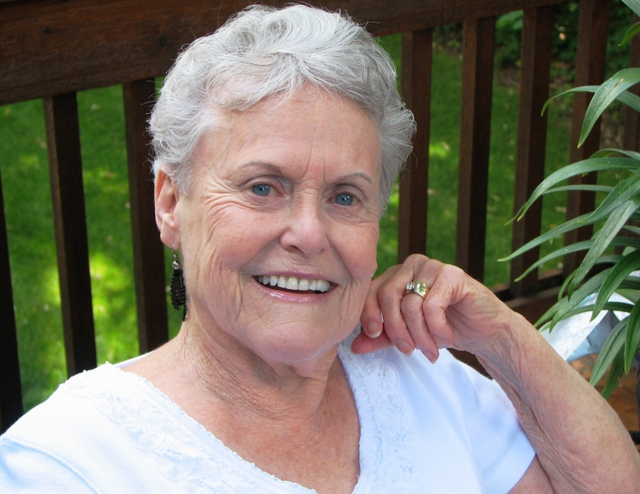
Marilyn (Hawkins) Hall

Screen Shot 2016-09-27 at 7.50.22 AMMarilyn (Hawkins) Hall passed away at Hays Medical Center in Hays, Kansas on September 13, 2016 not too far from Dodge City, the place of her birth on August 18, 1930. Her parents were Clyde and Frances Hawkins. When she was a child the family moved to Merriam, Kansas and later to Fairway when her father began teaching chemistry and physics at Shawnee Mission Rural High School. Following in his footsteps, she earned her teaching degree in 1952 at Bethany College in Lindsborg, Kansas. Marilyn then married Robert Clark and taught high school science in Beverly, Kansas. Together they had three children who survive her. When her children became older Marilyn continued her education and received a master’s degree from the University of Kansas in the Department of Special Education. She taught special education classes and became a “consulting teacher” helping other teachers in the Shawnee Mission School District.

Marilyn was soon recognized as an exceptional teacher and was sought out to teach high school dropout students at the Juniper Gardens Children’s Project (JGCP) in Kansas City, KS. Beyond her success in the classroom, she became a researcher at JGCP and earned her Doctoral Degree in Special Education at KU in 1975. Marilyn then received a federal grant to implement a program she designed called Responsive Parenting, which taught over 3,000 parents positive behavior management skills.  Following that she went into private practice and specialized in counseling parents of children with behavioral problems. After finding that many of those parents had marital problems, which were negatively affecting their children’s behavior, she became a marital counselor and went on to help countless couples and families.

Having divorced, she married Dr. R. Vance Hall in 1977. Over the course of their careers they carried out research and gave seminars and presentations across the country. They authored and were editors of a series of manuals, which are still in print, designed to teach both parents and professionals behavior management skills (The ‘How to Teach’ Series). Their educational materials have been used widely and translated into Spanish, German, Hebrew, French, Portuguese, Swedish and Chinese.  Beyond their professional lives they loved to travel the world together, and wherever she was, Marilyn especially loved time spent with family and friends.

Much to our sadness, Marilyn became ill while on the way across Kansas on a trip to once again visit some of our National Parks. She succumbed to the effects of influenza and viral pneumonia. Marilyn is survived by her husband, Vance Hall, her sister, Fran Nelson (Richard), her three children Douglas Clark (Catherine Thompson), Debra Goodman (Karl Bricker) and Julie Adams (Clyde); and three daughters who came into her life when she married Vance, Alison Dildine (Jamie), Darien Smith, and Laurel Stitzhal (David). She is also survived by eighteen loving grandchildren, thirteen great grandchildren and a host of others. She was an intelligent, caring and effective teacher, mother, grandmother, great grandmother and friend to so many. We will miss her incredible zest for life and the color of her eyes. They were “that” blue!

A memorial service will be held at a future time at JGCP in Kansas City, Kansas. Memorial gifts may be sent to The R. Vance & Marilyn Hall Graduate Student Award Fund through the Kansas University Endowment Office, or to a charity of your choice. Gifts to the named fund may be made online at www.kuendowment.org/makeagift or by calling 1-800-444-4201 ext. 576.

SCHLAGECK: A fall harvest for the ages

John Schlageck writes for the Kansas Farm Bureau.

It’s a fall harvest for the record books. Corn, milo and soybean crops continue to bust the bins and pour into on-farm-storage and elevators across Kansas. Thousands upon thousands of bushels of these fall crops may end up on the ground or cement slabs temporarily.

If you’ve traveled to any of our row crop fields across the state, you know what I mean. They continue to teem with fall harvest.

Combines chomp through the fields of corn, milo and soybeans eager to dump the bountiful crops into waiting trucks and grain carts. Today’s green, red and silver monsters move through the fields a little slower than some years as they growl and grind through the abundant crops.

On gravel and blacktop roads tandem trucks and semis race back from the elevators so the machines can fill them up again. Fall harvest in Kansas marks that magical time of the year when producers of food and fiber reap what they have sowed. Without a doubt, this year’s crop will be one for the ages.

Seeing this bountiful production unfold, underscores the importance of farming and ranching in Kansas. Our Kansas farmers – and their contemporaries across this great land – continually risk all that is theirs; hoping success is what each harvest and year will bring.

They work with the land, chemicals, computers and livestock. They must understand markets, people, soil crops and climate. Their livelihood is largely dependent upon factors that are oftentimes completely out of their control.

Still, farmers farm to succeed. They farm to grow and harvest crops and produce livestock. Farmers see their vocation not only as a business, but also as a way of life to preserve in good times and bad. They have their feet planted firmly in their soil. They are dedicated to the land and providing us with the safest, most wholesome food on the planet.

The U.S. Department of Agriculture estimates the average person consumes approximately 194 pounds of cereal products annually. When you couple that with approximately 66 pounds of oils, 115 pounds of red meat and 63 pounds of poultry it’s readily apparent why Kansas harvest is an important time.

Today’s consumer has the option of using nearly 4,000 different corn products. These uses range from corn flakes to corn sweeteners. Corn and milo remain the top source of livestock feed.

Countless foods are made from today’s fall soybean crop. Some of these include crackers, cooking oils, salad dressings, sandwich spreads and shortenings. Soybeans are used extensively to feed livestock, poultry and fish.

Sunflowers from the Sunflower State can be used as an ingredient in everything from cooking to cosmetics and biodiesel cars. And as you probably already know, they’re a really tasty snack – and healthy too.

So if you have an opportunity to visit our state’s fertile fields this fall, think about the professionals who are busy providing the food we find on our tables each and every day. Tip your hat, raise an index finger above the steering wheel of your car or give a friendly wave to these producers of food and fiber who are dedicated to feeding you and the rest of the world.

John Schlageck, a Hoxie native, is a leading commentator on agriculture and rural Kansas.

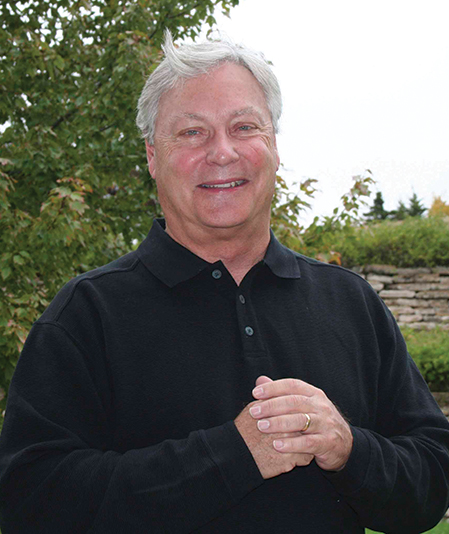
OPINION: Raising taxes for Kansas schools is not the answer

opinion letterBy Dr. WALT CHAPPELL
Former member, Kansas State Board of Education

The next time a candidate for state legislature promises to “fully fund education”, ask them how much more they will raise your taxes.

Already, 51% of our state budget goes to local school boards.  This leaves very little for any other essential programs.

Kansas is 4th in the nation on the amount of state taxes going to local schools.  So, how much is enough?

According to the National Association of School Budget Officers, in FY2012, Texas spent 41.7%, Colorado spent 39.1%, Missouri spent 34.9%, Nebraska spent 30.4% and Oklahoma spent 30.4%.

Alabama spent 55.1% of their state taxes on K-12 schools, yet has some of the lowest test scores in America.  However, Massachusetts spent 18.3% and consistently has the highest student achievement scores.

Clearly, the amount of money a state legislature appropriates has little to do with the level of their students’ academic achievement. In Kansas, some districts spend as little as $8,000 per student while other districts spend as high as $27,000 per student to get the same results.

In addition, for most people, the property taxes they pay goes primarily for local schools.  Yet, the total amount spent by their district administrators keeps going up.

So, it is finally time that Kansas parents, students, local school board members, teachers, legislators, judges and taxpayers are told the truth about how $3 billion dollars MORE per year since 1998 are being spent to educate the same number of K-12 students.  During all these years, the national NAEP and ACT test scores continue to show that only 1-in-3 Kansas students is actually proficient enough to succeed in college or start a career.

For too long, false and misleading information from the State Department of Education, Kansas Association of School Boards and paid “school lobbyists” have tried to convince the public and Supreme Court that K-12 schools are UNDERFUNDED. Yet three times since 2001, state education staff deliberately lowered the percent correct answers to pass the state tests. Then they falsely claimed that nearly 90% of Kansas students were supposedly “proficient.”

In 2015, new state tests were given with more honest passing percentages. The results were “dismal.” But, these are the same low scores for Kansas students reported by national NAEP & ACT tests for nearly 20 years. So why is anyone SURPRISED or claiming that a drop in state test scores is due to not receiving enough money for school administrators to spend??

Obviously, raising our taxes by another $800 million dollars to get the same poor results is NOT THE ANSWER to making sure that Kansas kids are prepared for college or career!

Dr. Walt Chappell is a former member of the Kansas State Board of Education.

Visit to Fort Hays State campus a thrill for Colorado third-graders

Burlington walking-webBy DIANE GASPER-O’BRIEN
FHSU University Relations

Devon Slack says he knows where he is going to college when he graduates from high school.

It took just one visit to Fort Hays State University’s campus to impress the youngster from Burlington, Colo.

While Devon’s arrival on campus as a student would be a few years — he is a third-grader on schedule to enter college in fall 2026 — the students’ enthusiasm for learning during the field trip to Hays was exactly what John Fitchen was looking for when he scheduled a visit to FHSU for his school’s third-graders last week.

“I believe education is good for many students who don’t know it yet,” said Fitchen, one of three third-grade teachers at Burlington Elementary School.

Fitchen, who has arranged several unique field trips in his five-plus years in Burlington, wanted to expose his students to a university campus at a young age.

FHSU was his destination of choice for several reasons.

“Hays is a safe space to take third-graders,” Fitchen said. “Fort Hays State is very affordable, it’s a great school, and it’s small enough and safe enough space where kids from rural areas can feel comfortable.

“It’s relatively close to us,” he continued, “and it’s a school that Burlington has many good connections to.”

One of those connections works closely with Fitchen every day.

Rachael Brachtenbach, one of the third-grade teachers at Burlington who is in her second year of teaching, is a 2015 graduate of FHSU.

“I came here on a visit and fell in love with it,” said Brachtenbach, a native of Stratton, Colo., who graduated with an elementary education degree. “I graduated (from high school) in a class of 16, and this was the small-town atmosphere I was looking for.”

Now, Brachtenbach is more than happy to “show them my alma mater.”

Another 2015 alum agreed that Fort Hays State was the right destination of choice for her.

“It’s affordable, comfortable and close to home,” said Amber Ruggels, who grew up in Russell and transferred to FHSU from Hutchinson Community College because she liked the tourism and hospitality program.

“This is a great school,” said Ruggels, now an admissions counselor at FHSU who helped show the students around campus.

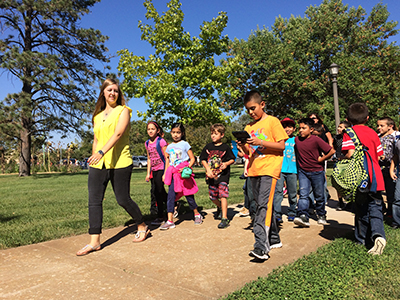
The group of 40-some students, teachers and several parents split up into small groups and visited Forsyth Library, a science lab and the observatory in Albertson Hall, sat in on choir practice and checked out residential hall living.

When asked what his favorite part of the day was, Devon replied emphatically, “Everything!”

“I’m coming here when I graduate,” added Devon, a student in Brachtenbach’s class.

Classmate Jovany Lopez echoed that sentiment.

“This is where I’m going to college,” Jovany said.

Jessi Fisher, mother of Hayden Fisher — one of Fitchen’s students — said Burlington is lucky to have forward-thinking staff such as her son’s teacher.

“He is so awesome,” Fisher said of Fitchen, in his fifth year at Burlington. “He gets them out in the community and does a lot of field trips. He is such an out-of-the-box thinker.”

Fitchen said the visit to Fort Hays State was a way of bottling the enthusiasm the youngsters have for learning now, something that can tend to wane in high school.

“Sometimes by the time students reach high school, they have made up their mind they aren’t going to college,” Fitchen said. “To them, college might be four years of math. So we want to open their eyes to the university and that science and math, and college in general, can be fun.”

“They see me having fun, they see me still interested in learning,” added Fitchen, who has a Ph.D. in genetics but decided to go back to school and get credentials to teach. “It rubs off.”

“This trip has had a big impact on them. I’ve heard so many of them say they’re going to school here,” Brachtenbach said. “I am so proud.”

While those thoughts can change over the years, Fitchen believes in impacting students with learning opportunities at a young age, and he thinks “there’s a really good chance you’ll get one or two of these kids here in school in nine years.”

If Devon Slack has his way, he will be one of them.

Copyright Eagle Radio | FCC Public Files | EEO Public File