We have a brand new updated website! Click here to check it out!

On-campus conceal carry approved by Regents; FHSU policy similar to others’

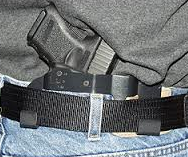
guns on kansas campusesTOPEKA (AP)–The Kansas Board of Regents approved policies that detail how the state’s six public universities will implement a state law allowing concealed handguns on campuses beginning next year.

The Regents approved the policies with little discussion Wednesday.

Starting in July, the universities will be required to allow anyone 21 or older to have concealed handguns on campus in buildings that don’t have security measures, such as metal detectors. The security measures generally are considered too expensive for most campus buildings, meaning concealed carry will be allowed in nearly all buildings on the campuses. Stun guns ” but not the more powerful Tasers — also will be allowed.

The universities can later ask the regents for permission to permanently or temporarily add security measure to prohibit concealed weapons at specific venues.

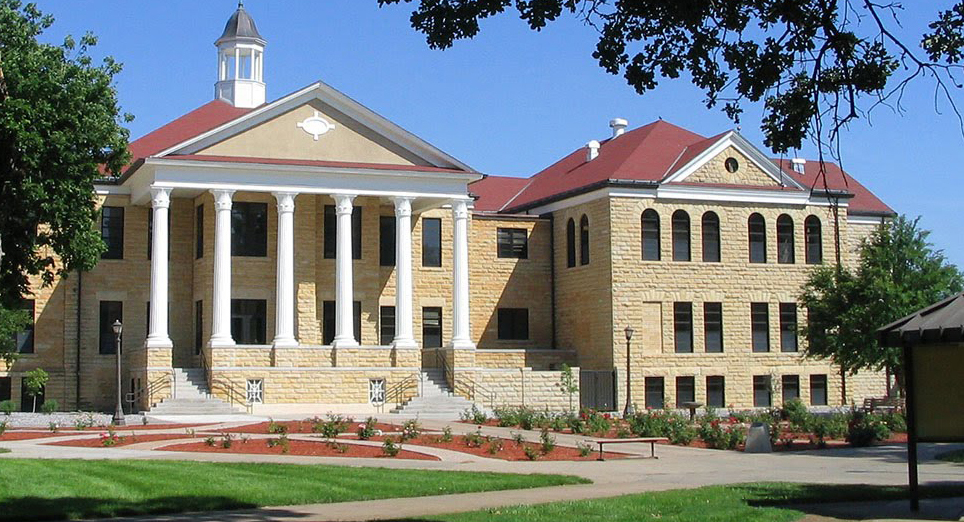
The following is the Fort Hays State University policy submitted to the Regents for implementation of concealed carry on campus beginning July 1, 2017.

FORT HAYS STATE UNIVERSITY
POLICY TITLE: Gun Policy
POLICY PURPOSE: The purpose of this section is to describe how concealed handguns may be carried and stored on the campus of Fort Hays State University in as safe a manner as possible pursuant to Kansas law [The Private and Family Protection Act, K.S.A. 75-7c01 et seq.]

BACKGROUND:
APPLIES TO: Everyone on Campus
DEFINITIONS: Concealed Carry Defined. Individuals who carry a handgun on campus must carry it concealed on or about their person at all times. With respect to this policy, concealed means completely hidden from view and does not reveal the weapon in any way, shape, or form. “About” the person means that an individual may carry a handgun if it can be carried securely in a suitable carrier, such as a backpack, purse, handbag, or other personal carrier designed and intended for the carrying of an individual’s personal items. Moreover, the carrier must at all times remain within the exclusive and uninterrupted control of the individual. This includes wearing the carrier with one or more straps consistent with the carrier’s design, carrying or holding the carrier, or setting the carrier next to or within the immediate reach of the individual. Exceptions to concealed carry at all times is during times of transfer from concealed to approved storage and for use in self-defense.

CONTENTS:
POLICY STATEMENT: Geographic Applicability. This policy is applicable only within the geographic limits of the campus of Fort Hays State University and within locations owned or leased by the University that are not part of the University campus, provided that such locations are located within the State of Kansas. Leased locations leased and controlled by an entity that may lawfully exclude or permit firearms at their premises (concealed or otherwise) may choose at their sole discretion to exclude or permit concealed firearms from their premises, notwithstanding a lease with the University.

Campus Gun Free Locations with Adequate Security Measures. Each location within the geographic applicability of this policy designated as gun free with permanent “adequate security measures,” as defined by Kansas law, will be identified in this policy. There are no University locations that have been designated as gun free with permanent adequate security measures. The University may from time to time designate a specific location as temporarily gun free and use temporary adequate security measures as defined and required by law and per KBOR policy. Appropriate notice will be given whenever this temporary designation is made.

Prohibitions. Open carry of firearms by any means is prohibited. The carrying of any rifle, shotgun, or other long gun by any means is prohibited. The carrying of any firearm, concealed or otherwise, is prohibited in any location or under any circumstances prohibited by the applicable federal or state law.

Restrictions to the Carrying of a Concealed Firearm Pursuant to Kansas Law: Kansas law states that the only type of firearm that an individual can carry while concealed is a handgun. Nothing in this policy is intended to replace municipal, state or federal law regarding weapons, firearms, explosives and other hazardous objects or substances or be inconsistent with the rights afforded a lawfully commissioned peace officer. The following restrictions apply to the concealed carrying of a handgun by Kansas law and the violation of any of the following restrictions is a crime under Kansas law:
 An individual in possession of a concealed handgun must be at least 21 years of age [K.S.A. 21-6302(a)(4)];
 A firearm cannot be carried by an individual under the influence of alcohol or drugs, or both, to such a degree as to render the individual incapable of safely operating the firearm [K.S.A. 21-6332];
 A firearm cannot be carried by an individual who is both addicted to and an unlawful user of a controlled substance [K.S.A. 21-6301(a)(10)];
 A firearm cannot be carried by an individual who is or has been a mentally ill person subject to involuntary commitment [K.S.A. 21-301(a)(13)];
 A firearm cannot be carried by an individual with an alcohol or substance abuse problem subject to involuntary commitment [K.S.A. 21-6301(a)(13)];
 A firearm cannot be carried by an individual who has been convicted of a felony crime [K.S.A. 21-6304];
 An automatic firearm cannot be carried [K.S.A. 21-6301(a)(5)];
 A cartridge which can be fired by a handgun and which has a plastic-coated bullet with a core of less than 60% lead by weight is illegal [K.S.A. 21-6301(a)(6)];
 Suppressors and silencers cannot be used with a firearm [K.S.A. 21-6301(a)(4)]; and,
 Firearms cannot be fired in the corporate limits of a city or at a dwelling, or at a structure or vehicle in which people are present, except in self defense [K.S.A. 21-6308, 6308a].

Carrying Safety. Holsters are Required. Every handgun carried by an individual, whether on their person or in a carrier, must be secured in a holster that completely covers the trigger and the entire trigger guard area and that secures an external hammer in an un-cocked position through the use of a strap or by other means. Handguns with an external safety must be carried with the safety in the “on” position. The holster must have sufficient tension or grip on the handgun to retain it in the holster even when subjected to unexpected jostling. Semiautomatic handguns must be carried without a chambered round of ammunition. Revolvers must be carried with the hammer resting on an empty cylinder.

Handgun Storage. Handgun storage at Fort Hays State University is only allowed in the following circumstances: (1) in an individual’s privately-owned or leased motor vehicle when the vehicle is locked and the handgun is secured in a location within the vehicle that is not visible from outside the vehicle; (2) in an individual’s on-campus residential unit when the handgun is secured in a holster and in an approved storage device (see below); or (3) in an employee’s office within an approved storage device (see below) that is placed in a non-visible location such as a desk drawer or non-visible location. Employees may only store their own handgun in their offices. The office must be locked when the employee whose office it is is not there and no overnight storage in offices. Handgun storage by any other means than specifically permitted in this policy is prohibited.

Approved (per policy definition) Storage Device. The University does not provide approved handgun storage devices to any person under any circumstances. Each individual who stores a handgun in an on-campus residence must provide their own approved storage device. An approved storage device has each of these characteristics: (1) it is of sufficient size to fully enclose the handgun while secured in an approved holster; (2) it is constructed of sturdy materials that are non-flammable; (3) it has a combination, digital, or other secure locking device that can only be unlocked by the individual using the storage device, but devices secured exclusively with a key lock are prohibited; and, (4) the device is constructed specifically for the storage of a handgun and/or ammunition. All ammunition stored in an on-campus residence must be stored in an approved (per policy definition) storage device.

Reporting, Investigation, and Determination. All reports of suspected violation of the conceal carry policy are made to FHSU Police by picking up any Emergency Campus Phone or by calling FHSU Police at 785-628-5304 or by calling 911. FHSU Police will conduct an initial investigation to determine whether the report describes a criminal matter and/or a policy violation. Police are solely responsible for deciding the extent of investigation necessary to make this determination. At any time beginning with receipt of a report, FHSU Police have the authority through this policy to disarm and/or temporarily confiscate a firearm and issue a restriction to not carry a concealed firearm on campus pending results of the weapons policy violation determination. The decision whether to confiscate and issue a restriction prohibiting conceal/carry will be made by Police when there is probable cause to believe that a Weapons Policy violation has occurred or continued possession and carrying by the alleged policy violator will create imminent danger to self or others. This authority does not supersede or alter the authority of Police to confiscate a firearm during a criminal investigation. A confiscated firearm will be stored and handled by Police according to their policies.

At any time after a report of suspected Weapons Policy violation has been made to Police and continuing through the date the final determination has been made in the matter, the President may take any temporary action as determined necessary by the President to ensure the safety of the University and of its students and personnel. Such temporary action may include, but is not necessarily limited to: prohibiting an alleged policy violator from carrying a concealed firearm anywhere within the geographic limits of this policy; if a student is the alleged policy violator, temporary suspension from one or more classes in which the student is enrolled, or a change in the student’s class schedule, or the placement of restrictions or conditions on the student in order to continue with normal class attendance and participation; if an employee (faculty or staff) is the alleged policy violator, temporary administrative leave with or without pay, or the placement of restrictions or conditions on the employee in order to continue with the employee’s normal employment.

When FHSU Police have finished their initial investigation:
 When the conclusion is that no crime has been committed and the Weapons Policy has not been violated, no further action will be taken and the matter is closed.
 When the conclusion is that a crime has been committed, but the Weapons Policy has not been violated, the incident will be handled as  a criminal matter only.
 When the conclusion is that a both a crime may have been committed and the Weapons Policy may have been violated, the matter will continue to be handled by the police as a criminal matter, but the policy violation incident report and any findings will be submitted to the appropriate University official for handling pursuant to the Weapons Policy. Police will have no further involvement in the policy investigation, except as requested.
 When the conclusion is that a crime has not been committed, but that the Weapons Policy may have been violated, the incident report will be turned over to the appropriate University official for handling pursuant to the Weapons Policy. Police will have no further involvement in the policy investigation, except as requested.

When Police have concluded that the Weapons Policy may have been violated, the incident report, findings, and any other appropriate information from the initial investigation will be submitted to the appropriate University official as described below. In those cases that include a criminal investigation, Police will release criminal investigative materials in accordance with standard law enforcement protocol.
 Vice President for Student Affairs or designee, if the alleged violator is a student.
 Human Resources, if the alleged violator is an employee.
 FHSU Police, if the alleged violator is a visitor to the University campus or is any person not described above.

Once the investigation materials have been received from Police, the process to be followed for determining whether the policy has been violated is:
 Student. The matter will be handled through the Student Code of Conduct as a student conduct issue.
 Faculty/Staff: The matter will be handled by Human Resources as a violation to any policy on campus.

Sanctions. The determination of which sanction(s), if any, that will be imposed following a determination that the Weapons Policy has been violated will be handled on a case by case basis. Notwithstanding the type and nature of sanctions that may be described in University policies, the appropriate sanction for violation of the Weapons Policy can be anything determined pursuant to the applicable policy as appropriate, including expulsion or termination from the University. The guiding theme when determining the appropriate sanction is to
ensure that the Weapons Policy violation will not be repeated and that the safety of University students and personnel is assured.

Knowingly Making a False Report. Each report of a suspected policy violation must be made in good faith. The conclusion after an investigation of a report that there has been no policy violation does not mean, by itself, that the report was not made in good faith. Knowingly making a false report of a policy violation is prohibited and will be investigated through the same process as described within this policy for the investigation of a suspected policy violation, with appropriate sanctions being assessed upon confirmation that a false report was made.

Training. All University students and personnel who are regularly within the geographic applicability of this policy are required to receive training concerning  this policy. Training will include learning where this policy applies, how a handgun is carried and stored pursuant to this policy, how to report a suspected violation of this policy, how reports are investigated, the potential sanctions upon confirmation of violation of this policy, and other topics relevant to this policy. The University will not conduct any training for students or personnel in the use of firearms, firearm safety, firearm cleaning and maintenance, firearm ownership or transfer of ownership, or any other topic not necessary for understanding and complying with this policy. The General Counsel’s Office is responsible for ensuring that appropriate training in this policy is conducted.

Budget shortfall leads to stall on KDOT road projects

photo KDOT

TOPEKA, Kan. (AP) — Ten more Kansas road projects are being postponed because of the state’s budget shortfall.

Kansas Department of Transportation spokesman Steve Swartz told The Wichita Eagle on Wednesday that the department would be taking on more projects if “there wasn’t some uncertainty right now.”

The state had planned to put 18 projects with estimated construction costs of around $24.7 million out to bid for work next month. That number has now been trimmed to eight projects that will cost $7.25 million.

Last month, the department indefinitely postponed 24 road projects that would have cost $32 million.

The state faces a projected $348 million budget shortfall this year with a larger shortfall of $582.6 million on track for the next fiscal year.

Kansas teen arrested after 2 county high-speed chase

Benjamin Joseph Jacquet- photo Dickinson Co.

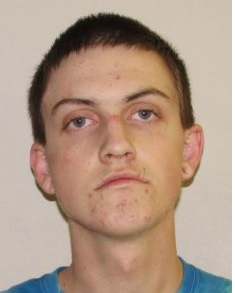
DICKINSON COUNTY -An attempt at a routine traffic stop resulted in a two county, multiple agency pursuit and arrest on Tuesday in Dickinson County.

Deputies initially attempted a routine traffic stop in Junction City when the suspect attempted to flee southbound on Franklin Street near Chestnut Street, according to Geary County Undersheriff Brad Clark.

“We just pursued him from there through the city limits out on Goldenbelt and over on Liberty Hall in to Dickinson County.”

Kansas Highway Patrol Trooper Ben Gardner said the KHP took a primary role and took charge of the pursuit as it traveled into Dickinson County.

“At 4 pm Tuesday, the Kansas Highway Patrol was notified of a pursuit starting with Geary County law enforcement of a vehicle failing to yield going westbound on Kansas18 highway, according to Gardner.

Our troopers became involved and took a primary role and took over the pursuit as it continued into Dickinson County. The driver was driving very erratic and at some point was driving through fields and then finally stopping the vehicle, got out and run off on foot near Sage Road and 2800 Road in Dickinson County, north of Chapman.

From that moment when the person took off on foot, troopers established a perimeter and requested area canine units from our agency and our aircraft unit to respond to further assist in the recovery of this fleeing individual. Just after 5:00 our troopers were able to identify and locate the individual to place him in to custody, and to transport him then to Dickinson County for pending charges.”

Benjamin Joseph Jacquet, 18, of rural Dickinson County was booked in to the Dickinson County Jail on the following alleged charges: Flee or attempt to eldue; avoid tire deflating device, Aggravated assault of a law enforcement officer, Aggravated assault, Possession of stimulant, Interference w/LEO;misdemeanor obstruction/resist, Driving while license cancelled/suspended/revoked.

Former Pres/CEO of Kansas Board of Regents named interim president at Fort Hays State

Tompkins
Tompkins

Kansas Board of Regents

TOPEKA – The Kansas Board of Regents on Wednesday announced the appointment of Dr. Andy Tompkins as Interim President at Fort Hays State University.

“There is no one in the State of Kansas who has more experience as a leader in education, or who is more qualified to assist in this capacity,” stated Zoe Newton, Chair of the Kansas Board of Regents. “I appreciate the opportunity to work with Dr. Tompkins again. The Board is confident he will be able to successfully oversee Fort Hays State, especially because of his extensive knowledge of FHSU.”

Dr. Andy Tompkins became president and CEO of the Kansas Board of Regents on June 1, 2010, and retired from the position on June 30, 2015.

Throughout his career, Dr. Tompkins served at all levels of public education, beginning as a high school English teacher in 1969 and continuing on to work as a high school principal and district superintendent. In 1994, he was hired by Pittsburg State University as Chair and Associate Professor in the Department of Special Services and Leadership Studies. He then went on to serve as Interim Dean for the College of Education at Pittsburg State (1995-1996), a position he returned to as Dean from 2007-2010.

In 1996, Dr. Tompkins was asked to serve as the Commissioner of Education for the Kansas Department of Education, a role he continued in through 2005. Afterwards, he served as an Associate Professor at the University of Kansas, teaching in the Department of Educational Leadership and Policy Studies, before returning to Pittsburg State.

Dr. Tompkins was selected as Kansas Superintendent of the Year in 1992, was inducted into the Kansas Teachers Hall of Fame in 2001, and received the Governor’s Award presented by the Kansas State High School Activities Association in 2002. He was the recipient of the Leadership Kansas Alumnus of the Year Award (2002), received the University of Kansas College of Education Distinguished Service Award in 2004, and was given the Emporia State University Distinguished Alumni Award in 2005. He earned his undergraduate degree in English at East Central State University in Ada, Oklahoma. He earned his master’s degree from Emporia State University and his doctorate from the University of Kansas in Educational Administration.

The appointment was made necessary after Dr. Mirta M. Martin resigned her position as FHSU president in November.

Kan. Judge: Mistakenly sold NASA moon mission bag belongs to buyer

WICHITA, Kan. (AP) — A federal judge has ruled that a bag used to collect lunar samples during the first manned mission to the moon legally belongs to an Illinois woman who bought it for $995 when it was mistakenly sold during a government auction.

Judge J. Thomas Marten, of the U.S. District Court in Wichita says in his ruling Wednesday that he doesn’t have the authority to reverse the sale of the bag used during the Apollo 11 mission in July 1969.

The white bag has lunar material embedded in its fabric, and the government considers it “a rare artifact, if not a national treasure.” NASA was not informed of its sale.

It was recovered in 2003 during a criminal investigation against former Cosmosphere Museum director Max Ary, but was misidentified.

Nancy Carlson, of Inverness, Illinois, bought last year knowing only that it had been used during a space flight, but not which one.

UPDATE: Kansas regents consider universities’ concealed carry plans

TOPEKA, Kan. (AP) — The Kansas Board of Regents approved policies that detail how the state’s six public universities will implement a state law allowing concealed handguns on campuses beginning next year.

The regents approved the policies with little discussion Wednesday.

Starting in July, the universities will be required to allow anyone 21 or older to have concealed handguns on campus in buildings that don’t have security measures, such as metal detectors. The security measures generally are considered too expensive for most campus buildings, meaning concealed carry will be allowed in nearly all buildings on the campuses. Stun guns — but not the more powerful Tasers — also will be allowed.

The universities can later ask the regents for permission to permanently or temporarily add security measure to prohibit concealed weapons at specific venues.

———-

TOPEKA, Kan. (AP) — The Kansas Board of Regents will discuss the final draft of policies that spell out how the state’s six public universities will implement a state law allowing concealed handguns on campus beginning next year.
The regents are expected to approve the policies Wednesday.

Starting in July, the universities will be required to allow anyone 21 or older to have concealed handguns on campus in buildings that don’t have security measures, including metal detectors. The security measures generally are considered too expensive for most campus buildings, meaning concealed carry will be allowed on nearly all buildings on the campuses.

After the policies are approved, the universities will be able to return to the regents with requests to permanently or temporarily add security measure to prohibit concealed weapons at specific venues.

Wanted murder suspect hospitalized after shootout, crash into Kan. home

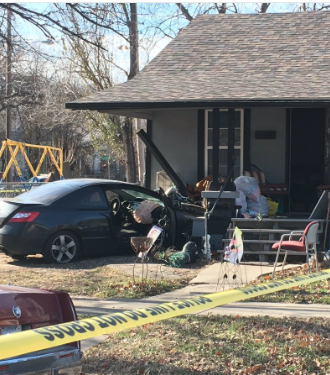
Wanted murder suspect crashed into home after shoot-out with US Marshals in Wichita-photo courtesy KAKE

SEDGWICK COUNTY – A man wanted for murder in Florida was critically injured after a shootout with US Marshals in Wichita on Wednesday, according Wichita Police Chief Gordon Ramsey.

Marshals attempted to arrested the suspect at a home in the 1000 Block of Ellis Street.

He shot at the officers and fled in a car with two others.

The vehicle crashed into a home short distance away.


The suspect attempted to take his own life and was transported to a hospital when confronted by officers, according to Ramsey.

Officers were not injured.

Name of the suspect was not released.


Kansas rural health group wraps up a year of meetings

Photo by Andy Marso/KHI News Service Lt. Gov. Jeff Colyer, right, leads the final meeting of the Rural Health Working Group on Tuesday in Topeka. The nine-member group will present a set of recommendations on rural health problems to the Kansas Legislature before the 2017 session.

BY ANDY MARSO

A task force chaired by Lt. Gov. Jeff Colyer to address problems in rural health care determined that expanding telemedicine, addressing workforce shortages and giving providers more flexibility were key to Kansas’ future.

The Rural Health Working Group wrapped up a year of meetings Tuesday and is now compiling a set of recommendations to present to the Legislature ahead of the session that begins Jan. 9.

Those recommendations will not include expanding Medicaid under the Affordable Care Act — something rural hospital officials say would help their bottom line, but Colyer and other conservative Republicans say is a nonstarter.

The work group members did not discuss that option Tuesday, but Colyer said the items they did discuss present a more comprehensive, long-term plan to securing health care access in rural areas.

“This isn’t a simple answer: Do one or two things and we’re done,” Colyer said. “This is how do we evolve as a state over the next 20 years.”

Several people on the nine-member panel were absent Tuesday, but those in attendance agreed on several areas of emphasis.

Breaking down barriers to telemedicine — including a lack of commercial insurance coverage and reliable rural broadband internet service — were seen as essential.

Rep. Dan Hawkins, a Republican from Wichita who chairs the House Health and Human Services Committee, said providers treating patients remotely using tools like videoconferencing will become normal, rather than a novelty, in psychiatry and other medical specialties.

“I think it’s going to become a mainstream part of health care in general,” he said.

Hawkins said Rep. Jim Kelly, a Republican from Independence, has been leading the telemedicine charge in the Legislature and likely would propose more on that issue next session.

Workforce shortages

The panel also largely agreed more must be done to increase the number of qualified health care workers in rural areas, especially as the population ages.

Kari Bruffett, director of policy for the Kansas Health Institute and former secretary of the Kansas Department for Aging and Disability Services, proposed a scholarship program for students interested in becoming licensed nurses or long-term care workers in rural areas. The Kansas Health Institute is the parent organization of the editorially independent KHI News Service.

Colyer and Hawkins both agreed that licensing new mid-level providers, who would have more practice rights than nurses but less than doctors, also could be part of the equation.

But Hawkins warned that those turf battles are often fierce.

“I’m not sure where that will go,” Hawkins said. “It’s a very divisive issue when you put nurses and doctors … in the same room talking about that. It gets kind of crazy sometimes.”

Jenifer Cook, a physician from Russell on the work group, said any new mid-level licenses have to be established carefully and deliberately. Trusted mid-level providers who have been working under physicians for years don’t concern her, she said, but the potential for hundreds of recent graduates coming out to practice solo after earning a certificate online does.

“They need that residency that we all had … before being on their own,” Cook said.

Colyer said after the meeting that the potential of mid-level providers should be discussed in “all facets of Kansas health care,” including dental care. The state’s dentists traditionally have opposed mid-level dental providers.

More flexibility and funds

The work group also agreed that the state should give hospitals and other rural providers the licensing flexibility to branch off and provide services like psychiatric beds and long-term care, which are both in demand and potential sources of new revenue.

Colyer said “micro-hospitals” like one planned for Overland Park should be considered for rural areas, and Bruffett said the Rainbow Services Inc. crisis stabilization center in Kansas City could be a model for filling mental health needs in other communities.

But Hawkins said the state also needs to address problems within KanCare, its managed care Medicaid system.

He said it takes providers longer to get claims processed and paid under Medicaid than under private insurance, even though they’re usually deemed valid claims.

“Why does that happen?” Hawkins asked. “Why do we have a system where over and over and over again providers have to fight to get paid?”

Susan Mosier, secretary of the Kansas Department of Health and Environment, said her agency is working on changing its claims reporting system so that it has more oversight as claims are processed by the three managed care organizations that administer KanCare.

The work group also heard a presentation from Mike Randol, the state’s Medicaid director, about ways to restore a 4 percent cut to Medicaid reimbursements.

The cut has drawn strong opposition from providers since it was made earlier this year to help temporarily balance the state budget.

Randol laid out three options, all of which are designed to draw down more federal Medicaid dollars: raising a tax on providers, including hospitals; raising a tax on managed care organizations, including the three KanCare companies; or raising a “bed tax” on long-term care facilities, including nursing homes.

Andy Marso is a reporter for KHI News Service in Topeka, a partner in the Heartland Health Monitor team. You can reach him on Twitter @andymarso

Kansas woman hospitalized after vehicle hits pole guide wire, rolls

HARVEY COUNTY – A Kansas woman was injured in an accident just before 9:30 a.m. on Wednesday in Harvey County.

The Kansas Highway Patrol reported a 2000 Volkswagen passenger car driven by Talea Carmen Montano, 28, Newton, was southbound in the 1800 block of North Main Street.

The vehicle left the roadway, struck a telephone pole guide wire and rolled.

Montano was transported to the hospital in Newton.

She was not wearing a seat belt, according to the KHP.

Police issue alert, ask for help to identify Kansas package thief

photos Maize Police

SEDGWICK COUNTY –Law enforcement authorities across Kansas are investigating reports of thieves taking packages left for homeowners.

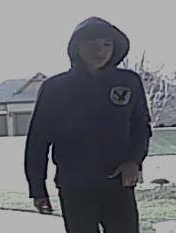
Police in Maize are seeking the public’s assistance in identifying the a suspect who stole a package from the porch of a residence in the Watercress Development shortly after FedEx left the package on Tuesday.

The suspect may have been in a dark colored car, according to police.

If you know this subject, please contact Detective Piper with the Maize Police Department at 316-722-1433.

Police reminded that thieves are watching for packages being delivered to homes this time of year.

If you are expecting deliveries at your home and you will not be home to accept them, we recommend contacting the appropriate carrier service and arrange to pickup your package at the carrier’s office or have the package delivered to your place of employment.

Sie Doe, Jr. named to D2CCA All-America First Team

Fort Hays State defensive end Sie Doe, Jr. was named to the D2CCA All-America First Team as a defensive lineman on Wednesday (Dec. 14). Doe now has two All-America First Team selections this season after receiving the same distinction from the AFCA. The D2CCA All-America Team is voted on by sports information directors across the nation.

Doe was one of four finalists for D2CCA National Defensive Player of the Year, but the honor went to fellow first team defensive lineman Lucky Baar of McKendree University. Baar finished the year with 17.5 sacks and 21.5 tackles for loss, while recording 55 tackles. Doe had 15 sacks and 19.5 tackles for loss, but made 26 more tackles than Baar with 81 for the season. Doe tied for second nationally in forced fumbles with five for the season, while Baar had two. Both Doe and Baar are also considered two of the top defensive linemen in the country by coaches as both were AFCA First Team All-America selections.

The 15 sacks for Doe set a new single-season school record, while he tied the FHSU career record of 21.5 also held by Trevell Smittick (1997-99).

Earlier this season, Doe was named the D2CCA Super Region 3 Defensive Player of the Year and the MIAA Defensive Player of the Year. Over two years at FHSU, Doe amassed 151 tackles, 34.5 tackles for loss, 21.5 sacks, and eight forced fumbles. He was an All-MIAA selection both years.

2016 D2CCA All-America Football Team

FHSU Sports Information

$450K Kansas house fire blamed on heat lamp, extension cord

Fire damaged home on Tuesday evening -Photos Saline County Sheriff

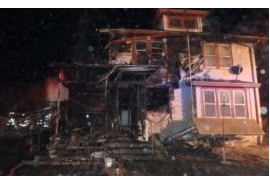
SALINE COUNTY – An electrical issue is believed to be responsible for starting a fire at a rural Saline County home on Tuesday, according to fire investigators.

Just after 5:30 p.m., John Tillman arrived at the residence at 9104 Fairchilds Road and smelled smoke inside, according to Saline County Sheriff’s Lt. Michael Ascher.

Tillman discovered the fire in the garage, and called 9-1-1.

When fire units from Saline County Rural Fire Districts #2 and #6 arrived, they found the garage fully involved in fire that spread to the home.

A heat lamp plugged into an extension cord had been on in the garage to provide warmth for a dog.

The dog did not survive.

Loss of the home, garage, and personal items has been placed at $450 thousand dollars.

There were no other injuries reported.

KanCare expansion meeting in Hays tonight

alliance for a healthy kansas logoSUBMITTED

An organizing meeting of the Alliance for a Healthy Kansas will be held tonight in Hays.

“(We need) to expand our KanCare program in a way that benefits not only our most vulnerable citizens, but also the Kansas economy,” says Tom Bell, president of the Kansas Hospital Association.

Dr. Melinda Miner, Hays

Many western Kansas dentists, including Dr. Melinda Miner of Hays, are in support of expanding KanCare.

Now more than ever, policymakers in Topeka need to hear from us about how expanding KanCare (the state’s Medicaid program)  is crucial to our state’s economic future — and how it will help over 150,000 Kansans access health care.

The Alliance for a Healthy Kansas is planning pizza, politics and planning events so Kansans across the state can learn about what KanCare expansion actions we should take before session starts in January. We need you to join us.

What: Expand KanCare Community Forum
When: Wednesday, December 14, 2016
Time: 6:30 p.m.
Where: Sternberg Museum, Expeditions Meeting Room @ 3000 Sternberg Drive, Hays

Copyright Eagle Radio | FCC Public Files | EEO Public File