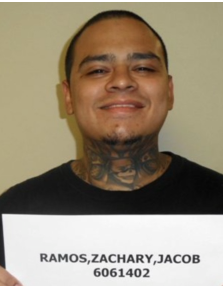
SHATTUCK, Okla. (AP) — The Oklahoma Highway Patrol says a Kansas man was killed when he crashed a stolen sport utility vehicle he was driving while leading police on a high speed chase in northwestern Oklahoma.
The OHP says 30-year-old Zachary Ramos of Liberal, Kansas, was dead at the scene of the crash Friday on a county road near Shattuck.
A police report says Ramos was leading Shattuck police and Ellis County deputies on a chase on U.S. Highway 283, then onto a county road. The report says Ramos lost control of the SUV and it overturned several times and crashed into a tree.
Ramos was thrown about 30 feet from the vehicle.
The OHP says the SUV had been reported stolen to Woodward police.
KANSAS CITY, Mo. (AP) – Kansas City police are investigating the shooting deaths of two children.
Police said in a statement that officers were called early Saturday to a home on a reported shooting and found three juvenile victims.
The victims were taken to a hospital, where one was declared dead.
The Kansas City Star reports that a second victim suffered critical injuries and died at the hospital. The third victim, who is 16 years old, had non-life-threatening injuries and is expected to recover.
One of the deceased victims was 8 years old, and the other was 9.
WICHITA, Kan. (AP) — Few of the 17,600 Kansas voters at the center of legal fights over the state’s proof of citizenship requirements actually cast ballots in the Aug. 2 primary.
Voting rights advocates won temporary court rulings in federal and state courts affirming the right to vote for people who registered at motor vehicle offices but never submitted citizenship documents.
Overall, statewide turnout for the primary was 23.1 percent. Officials say 9,032 provisional ballots were cast, but don’t yet have a number for how many of those were cast by voters affected by the court decisions.
The Associated Press surveyed the state’s five biggest counties, which accounted for 4,287 of provisional ballots. It found 37 affected voters who cast ballots.
In order for students to get ahead in learning music, jumpstart rehearsals take place the week before school begins. This year, jumpstart was held Aug. 8 – 11 for two hours each day.
During this time, team, leadership and communication skills are also a key part in the jumpstart process.
One of the activities the Chamber Singers participated in involved each person dumping a packet of glitter into a container with glue and water.
Three-year Chamber Singer member, senior Hayden Sillmon, said this was his favorite activity.
“The glitter signified what our group wants to be,” Sillmon said. “When you start out, it’s all separate. But when you shake the container, all the glitter comes together and forms one color.”
Sillmon added he believed the game taught an important lesson.
“This is what Chamber Singers should be,” Sillmon said. “One, unified group.”
Junior Taya Randle said being involved with Chamber Singers has shown her how important music is.
“Jumpstart gives you the opportunity to connect with everyone,” Randle said. “We also start working on music, so we are already ahead of the game by the time school starts.”
The group also participated in an activity where they had to work as a team to put a story together.
“It was honestly a pretty stressful game,” Randle said. “It really showed us how important it is to try and work together. If we don’t work together we will just be a jumbled mess, just like the game.”
“The jumpstart activities are very important,” Sillmon said. “Some of the members come in not knowing anyone. Jumpstart gives us a chance to get comfortable with each other while learning difficult music.”
Randle said she is looking forward to seeing how the group grows.
“We’ve spent a short amount of time together,” Randle said. “Our group already is learning how to blend and sing well as a team.”
For junior Emily Ricke, this is the first year she has been involved with Chamber Singers and jumpstart.
“I was in Concert Choir last year and there are well over 70 people in that class,” Ricke said. “Chamber Singers is different because I feel like since there is only 28 of us we really get to know everyone.”
Senior Rachelle Lumpkins is also a first year member to Chamber Singers.
“Chamber Singers is different from Concert Choir because of how fast we progress,” Lumpkins said. “It would have taken weeks to get through all the music that we did in four days, and months to be as advanced as we currently are.”
Lumpkins added she is excited to see what the school year has to offer.
“I’m very excited to participate in Dinner Show,” Lumpkins said. “I really can’t wait to have fun singing and learning new things every day.”
Listen to Mike Cooper interviewing Diana Staley; ARPN, MSN, at the Dreiling/Schmidt Cancer Institute at HaysMed, with the topic of “Relay for Life” by clicking the link above and then clicking the play button
PLAINVILLE — The Heartland Community Foundation recently awarded Rooks County Healthcare Foundation three grants totaling $10,734 to help fund three new health care programs initiated at Rooks County Health Center.
Evidence of the first benefit of these grant funds was demonstrated at the Rooks County Free Fair in Stockton as RCH’s Nursing Department launched its county-wide initiative to train area citizens in hands only cardio pulmonary resuscitation and the use of automated external defibrillators. RCH personnel were providing 20 minute demonstrations on the latest in emergency lifesaving measures 1 p.m. to 5 p.m., August 10-12, Wednesday through Friday of the fair. “The mastery of these simple protocols can greatly enhance the survivability of someone stricken by a heart attack. Nearly 90% of cardiac arrests suffered in the United States outside a hospital result in death. The immediate application of hands only CPR by a bystander can double or triple the victim’s chances of survival,” stated Pam Harmon, RN and RCH Chief Nursing Officer.
Grant funds will also be used to acquire a media warmer and a blanket warmer for the Diagnostic Imaging Department to improve patient comfort during certain scans. The media warmer heats up the media contrast solution that is injected into patients for specific procedures. “This warmed solution is more comfortable for the patient, leading to less stress during the scan. Few rural hospitals have this available due to the cost,” stated Karen Harris, Director of Imaging Services at RCH.
Additionally, the Diagnostic Imaging Department will receive a blanket warmer for patients affected by the cooler temperature in the imaging areas. According to Harris, the department is kept at a constant 68 degrees because of the elaborate computerized equipment used throughout. The warmed blankets are always welcomed by those patients that are ill, recovering or are experiencing a longer procedure.
RCH also received funding to purchase four portable closed air purifying respirators to enhance safety for RCH staff and patient visitors. According to Stephanie Bjornstad, RN and RCH Quality Coordinator, these are valuable aids when coming into contact with patients who may have been exposed to highly communicable diseases such as TB, measles, SARS or chicken pox.
The Heartland Community Foundation, an affiliate of the Greater Salina Community Foundation, serves as a vehicle for charitable giving in Rooks, Trego and Ellis counties. Its mission is one of enhancing the quality of life in these counties by helping meet existing and future needs of local communities.
For more information about Rooks County Healthcare Foundation or Rooks County Health Center, visit www.rookscountyhealthcenter.com.
The 103rd season of the Hays Symphony Orchestra features almost exclusively Russian music, intended as a tribute to the Volga-German heritage and cultural identity of Hays.
The 2016-2017 season is the second year of artistic direction under the baton of Shah Sadikov, assistant professor of music and theatre at Fort Hays State University.
The season’s inaugural concert, Saturday, Sept. 10, in the Beach/Schmidt Performing Arts Center in Sheridan Hall on the FHSU campus, begins with a gala and a pre-concert presentation (6:45 p.m.) by Dr. Jeff Jordan, director of FHSU bands, and will end with a Russian Desserts reception sponsored by friends of the Hays Symphony and Cathy’s Breads, Hays.
“The opening gala and free concert is our gift to the community. We hope the public will come explore and celebrate the rich and vibrant music of Russia,” said Cathy Drabkin, volunteer director of marketing for the orchestra.
“The gala will include displays of the orchestra’s history, hands-on activities for kids and opportunities to win free tickets for subsequent concerts,” she said.
Free tickets for the opening concert are available by contacting the Hays Symphony at [email protected].
The inaugural concert, with guest conductor Ben Cline, chair of the Department of Music and Theatre at FHSU, begins at 7:30 p.m. The evening’s repertoire includes Tchaikovsky’s “Marche Slave,” Rimsky-Korsakov’s “Capriccio Español” and Rachmaninoff’s universally-recognized Piano Concerto No. 2. Dr. Irena Ravitskaya, FHSU associate professor of piano, will be the soloist. Dr. Ravitskaya, who immigrated to the United States in 1995, is originally from Moldova (formerly of the Soviet Union).
All concerts in the symphony’s season are at 7:30 p.m. in Beach/Schmidt, unless otherwise noted.
The Fall Classics Concert is Saturday, Oct. 15. The featured performer is Sunnat Ibragimov, guest cello soloist for Tchaikovsky’s “Rococo Variations.” Igrabimov, a native of Uzbekistan, is a graduate student at Park University’s International Center for Music in Parkville, Mo.
The performance also includes Rimsky-Korsakov’s “Scheherazade,” the musical retelling of “One Thousand and One Nights.” This oriental-influenced piece weaves the story of the Arabian queen through the plaintive lines of a violin solo.
Next in the season’s lineup is a family Halloween concert on Sunday, Oct. 30, featuring the children’s favorite “Peter and the Wolf,” which spotlights the different instruments of the orchestra through a Russian folktale. Actors from the Hays Community Theater will dramatize the performance, with Brenda Meder, director of the Hays Arts Council, serving as narrator. The concert includes a host of pre-concert activities, including a costume contest, an instrument petting zoo, a Russian story time and photo ops with The Wolf.
The spring semester begins with a Valentine’s Concert on Saturday, Feb. 11, as Maestro Faruk Sadikov guest conducts iconic orchestral favorites “Romeo and Juliet” and the “Polovtsian Dances.” Sadikov, from Uzbekistan, is the father of HSO music director Shah Sadikov and an internationally known conductor.
Piano soloist Tatiana Tessman also joins the symphony for a performance of Rachmaninoff’s “Rhapsody on a Theme of Paganini.” Tessman, artist in residence and director of keyboard studies at Kansas Wesleyan University, Salina, was born in Russia.
HSO members perform as part of the Cottonwood Festival on Saturday, March 11, continuing to feature Tchaikovsky in beloved chamber music works such as “Souvenir de Florence” and his “Serenade for Strings.”
Saturday, April 1, the Hays Symphony will present a very special event with Stravinsky’s “Soldier’s Tale,” in which music and drama are married in a Faustian tale of a deserting soldier who trades his fiddle to the devil for unlimited wealth. Guest actor Mark Robbins (KC Actors Theater) narrates, with FHSU theatre students portraying the story’s characters.
The HSO season concludes on Saturday, May 6, with the President’s Concert, in which the orchestra will perform Stravinsky’s notoriously difficult “Rite of Spring.” The work, infused with raw vitality and primitive power of radical modernism, caused near riots at its Paris premiere in 1913.
Concert tickets, available at the box office 30 minutes before each performance, are $15 for adults. Tickets are free for all children and students. For a concert brochure listing all season details, contact the Hays Symphony at [email protected].
The sharing economy is rapidly gaining popularity. Within the next eight years projections show that sharing rides, homes and equipment will be a $335 billion global industry.
But before you jump in on peer-to-peer transactions, understand how they work and how to avoid financial pitfalls.
Knowing the insurance considerations involved in sharing economy transactions is especially important as these business and personal ventures move forward. Sorting out the main points now can save you possible frustration later.
The following tips may help consumers and entrepreneurs in their sharing activities.
Don’t be taken for a ride.
Ridesharing companies such as Uber and Lyft connect individual drivers with people who need rides. Passengers and drivers can screen each other, schedule rides and collect payment electronically.
Consider these tips to stay safe on the roads while using a ridesharing service:
Before contracting as an Uber or Lyft driver, know if your personal auto insurance policy typically excludes coverage for business use or when drivers are “available for hire.”
Several insurers offer products to fill coverage gaps for ride-share drivers. Premiums, type of coverage, limits and availability vary by state. Ask your insurance agent to find out what is and is not covered.
Before accepting a shared ride, know the extent that you are protected in the event of an accident. Most ridesharing companies have liability policies to cover any passenger injuries. If you are injured while riding, report a claim with the driver’s insurer and the ride-sharing company’s insurer.
Home is where the “smart” is.
Home-sharing or peer-to-peer rentals offer people the opportunity to rent out rooms or entire homes to guests for extra income. Guests find a property online and pay for the stay like a hotel. The difference is that the property is often a privately-owned apartment, condo or house, and anyone can register as a host or guest.
The following facts will improve your home-sharing smarts:
If you regularly rent out rooms for a profit, that venture could be considered a home-based business. Because some homeowners policies won’t cover property damage caused by or injuries to a paying guest, talk to the home-sharing service and your own insurance agent to determine if additional liability coverage or special landlord insurance is needed.
If you plan to stay in accommodations secured through a service such as Airbnb or VRBO, confirm that your own homeowners, renters or personal liability insurance policies offer protection for potential damages to the rental property. If not, make adjustments as needed.
Home-sharing user agreements change often. Read the fine print every time you book a stay.
Personally speaking….
A smaller segment of the sharing economy involves the lending of personal items for a fee. Lenders and borrows advertise and rent items like power tools, golf clubs or designer dresses online. This also occurs when someone seeks help online from another individual to help with tasks like packing boxes or housecleaning.
Check out the following tips to help protect yourself and your items:
When lending goods such as a designer dress or bicycle, get a security deposit to help cover any losses. Capture photos and other information in your own home inventory.
You could be liable for renting out items that you know don’t work properly. Your homeowners policy may not cover the transaction because you were paid in exchange for the rented goods.
If you hire a stranger to help with home cleaning, moving or other tasks through sites such as TaskRabbit, find out the insurance coverage. The service may offer a guarantee, but often it is secondary to any insurance or policies you may already have in place.
Life can be more connected when working within the sharing economy, but you need to prepare yourself first so you are not surprised later.
Ken Selzer, CPA, is the Kansas Commissioner of Insurance.
Mostly sunny and slightly cooler today with high temperatures this afternoon reaching the mid to upper 80s. The remainder of the weekend will be dry with lows in the lower 60s and highs in the mid to upper 80s. Most of next week will be dry with temperatures that are expected to be a few degrees cooler than normal.
Today: Sunny, with a high near 88. Light and variable wind becoming east 5 to 7 mph in the afternoon.
Tonight: Mostly clear, with a low around 61. East southeast wind 5 to 9 mph becoming calm after midnight.
Sunday: Mostly sunny, with a high near 89. Light and variable wind becoming southeast 5 to 8 mph in the morning.
Sunday Night: Mostly clear, with a low around 63. Southeast wind around 9 mph.
Monday: Sunny, with a high near 89. Southeast wind 8 to 11 mph.
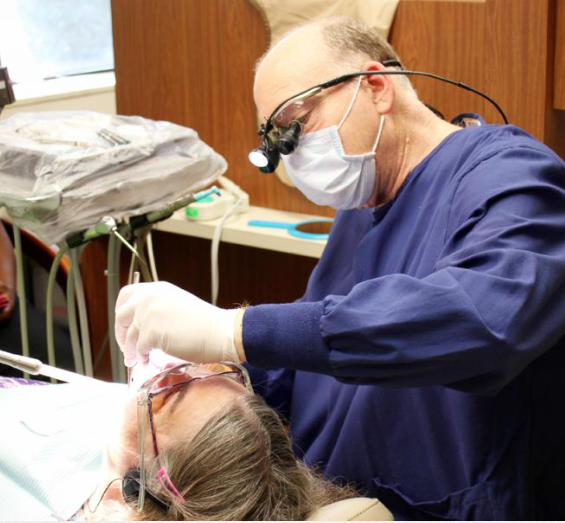
Photo by Andy Marso/KHI News Service Dr. John Fasbinder says it’s challenging to convince his colleagues to treat adult Medicaid patients because of the low reimbursement rate — about 40 cents on the dollar compared to private insurance for dental work.
John Fasbinder’s dental office was busy on a recent Tuesday. Three employees helped in the reception area, answering phones and clicking away at computers. Hygienists tended to patients in three dental chairs in the main clinic. Fasbinder and his associate, Seth Cohen, flitted among those patients and others in private rooms set up for more intensive work.
Most days are like this for Fasbinder. At his Prairie Village office, he takes patients on Medicaid — no matter how old they are, what part of Kansas they come from or how difficult they are to treat.
That’s rare. In fact, Fasbinder thinks he may be the only oral surgeon left in the state who takes all comers.
“I try hard to get dentists to see Medicaid patients, and a lot of them won’t,” he said.
That’s because Kansas Medicaid, or KanCare, pays about 40 cents on the dollar compared to private insurance for dental work. And that was before legislators and Gov. Sam Brownback cut the reimbursements another 4 percent this year to help close persistent budget holes.
Fasbinder said that will make it even harder to convince his colleagues to take Medicaid patients.
“To take money away from a system that’s already compensating so little is not the answer,” he said. “And maybe we do need to be speaking to those representatives … that may be very well-meaning, but whoever’s pulling on their coattails or trouser legs is speaking stronger than we are. We need to let them know — logically, rationally, the best we can — that this is not working.”
Rates trending down
Medicaid reimbursement rates for dental care have dropped steadily in Kansas for years.
In 2003, reimbursements for Kansas children were among the top 10 in the nation, covering almost 70 percent of what private insurance would pay. By 2013 Kansas had dropped to the middle of the pack, with reimbursements around 47 percent of private pay. The reimbursements for treating adults are even less competitive.
Kevin Robertson, executive director of the Kansas Dental Association, said most of the state’s oral surgeons will see Medicaid patients up to age 21. Some take older adults who live in their counties and “a few will treat on a case-by-case basis.”
But he agreed that it is challenging to get any Kansas dentist to treat the thousands of adults covered by Medicaid, including about 7,700 who have intellectual or developmental disabilities.
“The lack of an increase in provider rates for 15 years has created a climate where the number of oral surgeons that accept Medicaid is low,” Robertson said via email. “The upcoming 4 percent decrease in provider rates will not make that any easier.”
John Fales, a pediatric dentist in Olathe and the president of the dental association, submitted written testimony about the reimbursement cuts to federal officials who hosted a Medicaid forum in Salina last month.
Fales said he has provided dental care to children and adults with special needs on Medicaid since 1983 and he has always done so at a loss because the reimbursements didn’t cover expenses. The cuts will increase the losses by thousands of dollars.
“A 4 percent decrease in reimbursement will likely be the death knell for KanCare’s ability to provide local access to dental care for these patients without an adequate number of dental providers,” Fales wrote.
Tight budgets a challenge
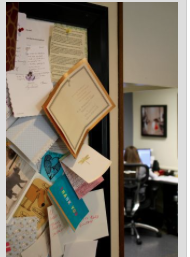
Photo by Andy Marso/KHI News Service A display of thank-you notes reflects the appreciation that patients have for Dr. John Fasbinder, who is one of a few dentists in Kansas who treat adult Medicaid patients.
Kansas legislators have been dealing with tight budgets in the wake of large income tax cuts spearheaded in 2012 by Gov. Sam Brownback and Republican leaders.
Increases to the Medicaid reimbursements aren’t likely without a change in tax policy or a sudden spurt of dramatic economic growth.
But Fasbinder said he’s already doing as much of that as he can, for people who don’t even have Medicaid.
“We get a lot of patients sent to us that don’t have anything,” he said. “From Catholic Charities, from abuse places. The prosecuting attorney’s office has called us about people who have been beat up. And we try to take care of everybody we can.
“There’s not always funding. But you know what? It’s just a ‘gotta do’ thing. I would like to get better funding from the state. I would like to see them better take care of the money that they’re taking taxes out for me and everybody else.”
Fasbinder said that if legislators think all dentists are living large, they’re mistaken. He drives a 2008 Toyota Camry.
That’s his choice, he said. He could be making more money if he shifted his patient mix to serve more patients with private insurance.
But some of Kansas’ most medically fragile people are on Medicaid, and Fasbinder is worried about them not getting care.
“There’s a lot of people whose needs are not getting met, and they’re not paying us just wonderful amounts,” Fasbinder said. “It’s making it hard for us to survive. We have trouble with access to care, and we’ve got trouble with meeting the needs.”
Focus on the patients
Fasbinder said he thinks legislators would make Medicaid reimbursements a higher priority if they just met some of his patients.
Patients like Sarah Matthies.
Matthies has a disability, the result of a serious back injury she suffered while horseback riding. She had another dentist who treated Medicaid patients. Then she was hospitalized for several months. When she got out, she knew she was behind on her dental care, with four cavities and a busted crown.
So she tried to see her dentist.
“Then I get a letter saying he’s retiring and I go, ‘Darn,’” Matthies said, “and the dentist who took over is not taking Medicaid.”
At first Matthies wasn’t sure where she would turn. Eventually she found Fasbinder through a website run by the state Medicaid contractor who handles her case.
“It was real hard to find Dr. Fasbinder, and he’s quite a ways away,” said Matthies, who lives in Olathe.
Matthies has to arrange transportation to her dental appointments at least three but no more than 30 days in advance.
But at least she lives in the same county as Fasbinder’s practice.
Many of his other Medicaid patients travel much farther, and some have far more severe disabilities.
Some are developmentally disabled, or nonverbal, and find routine dental work traumatic.
Parents rave about how Fasbinder treats their special needs children.
“Let me just tell you, I’m probably going to get emotional here,” Jennifer Smith said in a phone interview. “He is extremely compassionate and very patient.”
Smith is executive director of the Autism Society of the Heartland and has two grown children who have autism.
She has witnessed Fasbinder treating nonverbal patients by holding their hands while he works and talking them through what he’s doing because he can tell they are in pain even if they can’t describe the pain for him.
“He is treating that person as a person, an individual,” Smith said. “Not talking over them.”
Smith said she and others also go to Fasbinder because he is a licensed anesthesiologist who will do sedation dentistry even at Medicaid rates.
That’s very rare, and often it’s the only practical way to do dental procedures on patients with intellectual or developmental disabilities.
“(For) so many of our loved ones with disabilities, it’s a sensory issue,” Smith said. “They’re not understanding what’s going on, and having to sit and have someone poke and prod in their mouth — it’s difficult.”
Smith, who lives in Gardner, said she was disappointed to hear that the Medicaid reimbursements are being reduced. Many people in the autism community would struggle to find dental care without Fasbinder, she said.
“He has them come from all over because of what he does,” Smith said. “When you’re a family that has a loved one with a disability and you find a provider that spends the time and, even if there’s an emergency, will schedule something to immediately get them in, you want to stay with them because they get it.”
A matter of life and death
Anne Hull has two adult sons who have developmental disabilities and go to Fasbinder’s clinic.
She knows it’s challenging for providers like Fasbinder to run a business on what Medicaid pays and finds the recent reductions to reimbursements alarming.
Hull wonders if the general public understands how many of their fellow Kansans have developmental disabilities and how dental pain can affect their ability to thrive.
“As a country, we need to make sure that people who truly need the help get it,” Hull said. “And that they’re not suffering in pain.”
Fasbinder said doing the sedation dentistry for his patients with developmental and intellectual disabilities is a moral obligation, but not easy on the bottom line.
“It’s tough when they go to sleep and we’ve got to do everything Medicaid allows me to do on them at the time and make those treatment decisions without a lot of information that I can garner ahead of time because I can’t get near them,” Fasbinder said. “I won’t get in their mouths (before they’re sedated). I can’t get in their mouths — nobody can — to try to figure out the best therapy, the best treatment, for them.”
There are many restrictions on what dental work Medicaid will cover, especially for adults. For example, tooth extractions are only covered when deemed medically necessary.
That makes dentists even more reluctant to take Medicaid patients. Fasbinder said some of the patients he sees have been without dental care so long, extractions aren’t just medically necessary — they’re a matter of life and death.
“The truth is it’s killing people,” Fasbinder said. “The truth is there are more hospital admissions than we’ve had in a long time for dental. Ask the emergency docs what they can do for that. Nothing. Nothing. Because they don’t have a lot of dentists on staff. They can (only) throw antibiotics and pain pills at them, which increases our world resistance to antibiotics, and we’re all going to pay for that eventually.”
Fasbinder is 61. He plans to continue practicing another 10 to 15 years, while handing off ownership of his clinic to Cohen.
Before he retires, Fasbinder would like to see a stronger provider network for Medicaid patients.
Fasbinder wishes his colleagues would take more Medicaid patients with complex medical conditions and developmental and intellectual disabilities. But he doesn’t entirely blame them for not doing so. It’s a shared societal responsibility, he said, and the current Medicaid rates represent a societal failure.
“There’s got to be ways we can take care of these folks,” Fasbinder said. “We’re supposed to. The federal government mandates that we’re supposed to. Our ethical values mandate we’re supposed to take care of these people.”
Andy Marso is a reporter for KHI News Service in Topeka, a partner in the Heartland Health Monitor team. You can reach him on Twitter @andymarso
CLINTON COUNTY – Two people from southwest Kansas were injured in an accident just before 6 p.m. on Friday in Clinton County Missouri.
The Missouri State Highway Patrol reported a 2006 Ford Freestyle driven by Anna M. Brown, 70, Liberal, was southbound on Interstate 35 at Route BB.
The driver swerved to avoid a merging vehicle and the driver overcorrected. The vehicle traveled off the road and struck an embankment.
Brown was transported to Cameron Regional Medical Center in serious condition, according to the MSHP.
A passenger Dan M. Brown, 68, Liberal, was transported to the hospital with minor injuries.
They were not wearing seat belts, according to the MSHP.




 Listen to Mike Cooper interviewing Diana Staley; ARPN, MSN, at the Dreiling/Schmidt Cancer Institute at HaysMed, with the topic of “Relay for Life” by clicking the link above and then clicking the play button
 KCVA
KCVA





 Mostly sunny and slightly cooler today with high temperatures this afternoon reaching the mid to upper 80s. The remainder of the weekend will be dry with lows in the lower 60s and highs in the mid to upper 80s. Most of next week will be dry with temperatures that are expected to be a few degrees cooler than normal.