We have a brand new updated website! Click here to check it out!

FHSU wrestling moves up in national rankings

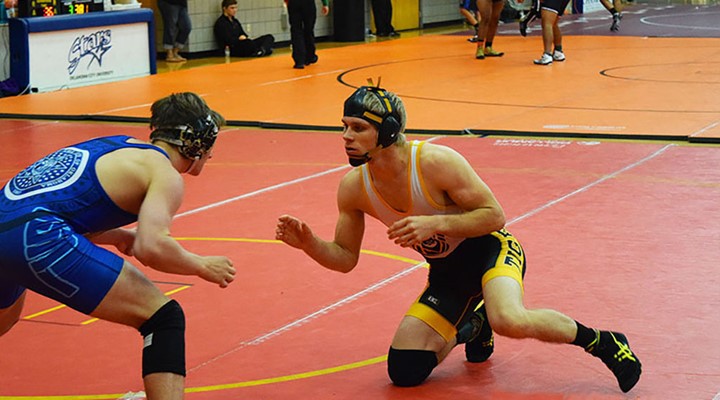
INDIANAPOLIS – Fort Hays State wrestling moved up to No. 18 in the Division II Wrestling Coaches Association poll released on Monday. Fort Hays State was tied for the No. 25 spot in the preseason poll. The Tigers are one of three MIAA schools in the national rankings as Nebraska-Kearney sits at No. 5 and Central Oklahoma is No. 14.

In the individual rankings Jon Inman held steady as the No. 4 wrestler at 197 pounds. He is the only Tiger to remain undefeated this season at 14-0. He suffered an injury setback at the Bob Smith Open and looks to return to the lineup when ready.

A new addition to the individual rankings is Tiger 141-pounder Brandon Ball, who is tabbed seventh in the nation. The redshirt-freshman is putting together an outstanding season thus far at 19-3 overall. Ball has been hot of late for FHSU winning 12 of his last 13 matches.

Here is a link to the latest rankings.

D2 Wrestling Rankings (Dec. 12, 2016)

FHSU Sports Information

Edith ‘Kay’ Catherine (Williams) Eggleston

screen-shot-2016-12-13-at-10-20-50-amEdith “Kay” Catherine (Williams) Eggleston passed away on Saturday, November 26, 2016 at her home in Plainville, Kansas at the age of 94. She was born on May 17, 1922 in Plainville to the late Edward and Edith (McClay) Williams. She grew up in the Plainville area and graduated from Plainville High School with the Class of 1940. She went on to attend Business College for one year in Topeka, Kansas.

Kay’s life adventures took her to California and then settled in Nevada for 45 years before returning to Kansas. Her office, secretarial skills, and self employment kept her busy until retirement. Her travels during these years took her to Europe, Ireland, Russia, Alaska and 18 months in Africa.

She truly believed in “Busy Hands, Happy Heart”. Her love of sewing, knitting, crocheting and embroidery produced many beautiful creations. As an avid quilter, Kay was a charter member of both Truckee Meadows Quilters in Reno, Nevada and Crossroads Quilters in Stockton, Kansas. For 40 years, she made and donated quilts to various charities across the country, with over 100 given in the last ten years to Hospice of Hays Medical Center in Hays, Kansas.

Kay is survived by her son Charles L. Kittrell and wife Pat of Mineral Bluff, GA; daughter Karen K. Sears of Plainville; sister Mary Stepp of Plainville; four grandchildren; and five great-grandchildren.

She was preceded in death by her parents Edward and Edith Williams; sisters Lois Macke, and Flora Wilbur; and son Francis Edward Kittrell.

Every stitch, of every block was given with love pouring from Kay’s heart, through her hands, to touch the lives of more people than can be counted, many of whom she never met. Although she will be greatly missed, our hearts will be encouraged, and we will stay wrapped in her warm and loving arms with every quilt she made.

A memorial service will be held at 1:00 pm on Friday, December 16, 2016 at Plumer-Overlease Funeral Home in Plainville. Inurnment will follow in the Plainville Cemetery. There will be no visitation.

Donald J. ‘Don’ Bott

Donald J. “Don” Bott, 85, La Crosse, Kansas, died at Salina Presbyterian Manor in Salina, Kansas, on December 11, 2016.

He was born October 3, 1931 on the family farm southeast of McCracken, Kansas, to John and Lola Bott.
He attended Alexander Consolidated School and graduated high school in 1949. The fall of that year, he entered Fort Hays Kansas State College. Upon leaving college, he went into farming with his father, John. He took over the family farm upon the death of his father in 1956.

Donald married Patricia Wells, August 20, 1961, in the EUB Church, Alexander, Kansas. They have one child Sonya Bott of Salina, Kansas. They recently celebrated their 55th wedding anniversary.

He was an active member of the Evangelical United Brethren Church in Alexander, Kansas, and later joined the United Methodist Church in La Crosse, Kansas, and served on the board of trustees.

He and his wife lived on the farm until 1974 when they moved into their newly built house in La Crosse, Kansas. Donald was a dedicated farmer and good steward of the land in his care, winning a conservation award.

He served on the Boards of the Alexander Co-op, Rush County Farm Bureau, ASCS, and EUB Trust Fund. He was a member of Alexander Kiwanis for many years. He occasionally played golf and enjoyed entering tournaments with friends. He enjoyed being on a bowling team for many years and playing ping pong, even entering in a tournament on a cruise. In later years, he enjoyed playing Words with Friends, and surfing on his iPad.

He retired from farming in 1997 and enjoyed many years of his retirement with his wife. He enjoyed helping at the farm after retirement and later, enjoyed trips to the farm as long as he was able after his retirement. He and his wife enjoyed several trips in the United States and abroad, experienced being short term Winter Texans, and often traveled to see the their daughter.

In 2010, his health began to fail, and in October 2016 he entered hospice care at Salina Presbyterian Manor, in Salina, Kansas. He was preceded in death by his parents, John and Lola Bott. In passing, he leaves his wife, Patricia, daughter, Sonya, sister, Lucile Shabowich, and her husband, Stan Shabowich, and several cousins.
Visitation will be Wednesday, December 14, 2016, from 4:00 P.M. to 8:00 P.M. at the Janousek Funeral Home, La Crosse, Kansas, with the family receiving friends from 6:00 P.M. to 7:00 P.M.

Memorial service will be Thursday, December 15, 2016, at 11:30 A.M. at the United Methodist Church, La Crosse, Kansas, with Pastor Angie Vertz officiating. Interment will be private family.

Memorials are suggested to the United Methodist Church, La Crosse, Kansas, or Kindred Hospice, McPherson, Kansas.

Condolences or remembrances may be left for the family at www.charterfunerals.com/locations/janousek-lacrosse.php.

Arrangements were by Janousek Funeral Home, 719 Pine Street, P O Box 550, La Crosse, Kansas 67548, 785/222-2517.

Richard ‘Dick’ A. Norman

Richard “Dick” A. Norman, son of Allen and Marguerite (Stoneman) Norman, was born in Beloit, Kansas on August 19, 1948, and passed away at the Bryan Medical Center in Lincoln, Nebraska on December 9, 2016, at the age of 68.

Dick grew up in the Norton community and graduated from the Norton Community High School. He went on to attend college at Fort Hays State University and received his Bachelor of Science Degree. On September 5, 1967, Dick and Jeris Erhardt were united in marriage in Norton, Kansas. Dick and Jeris lived in Hays until 1971, when they moved to Norton where he worked at Scheetz Motor Company, Big A Auto Parts, then later owned City Motors, Inc, Chrysler, Plymouth, Dodge, Jeep.

Survivors include: his loving wife, Jeris, Norton, KS; two daughters, Amy, and husband, Mark Griffey, Norton, KS; Dr. Amber, and husband, Lt. Patrick Teten, Chesapeake, VA; two grandchildren, Morgan and Lance Griffey, Norton, KS; father-in-law, Melvin Erhardt, Norton, KS; brother-in-law, James, and wife, Donna Erhardt, Atlanta, GA; sister-in-law, JoLene, and husband, Rick Mai, Osage Beach, MO; several other relatives and friends.

Richard was preceded in death by his parents, Allen and Marguerite (Stoneman) Norman and mother – in – law, Neva Erhardt.

FUNERAL SERVICE – Thursday, December 15, 2016 -10:30 A.M.

PLACE – Enfield Funeral Home – Norton, Kansas

VISITATION – Wednesday, December 14, 2016 from 5:00 P.M – 7:00 P.M.

PLACE – Enfield Funeral Home – Norton, Kansas

INTERMENT – Norton Cemetery – Norton, Kansas

MEMORIALS – Richard Norman Memorial Fund

Veryl Edward Van Der Wege

Veryl Edward Van Der Wege, son of Edward Van Der Wege and Della (Harbers) Van Der Wege was born January 4, 1915 in Prairie View, KS and passed away at the Logan Manor in Logan, KS on December 9, 2016 at the age of 101 years 11 months 5 days.

At the age of 9 months he and his family moved to a farm 10 miles southwest of Prairie View where he attended Timber Lake Grade School and Norton High School, graduating in 1933. He participated in wrestling and football, and as a freshman varsity player helped Norton win the state football championship.

Veryl and Freida Carver from Logan were married in Norton on January 23, 1936. He was employed at Heath Hudson dealership in Salina, later moving to Kansas City, KS where they purchased a restaurant on Quindaro Blvd. to sell hamburgers — 6 for $0.25 and coffee at $0.05 per cup. They moved to Denver, CO where he sold Wearever Cookware, followed by a move to Utah where he worked in a copper mill. They eventually moved back to Norton owning a Nash auto dealership. He then worked for the State of Kansas at the Port of Entry and Border Patrol.

Veryl joined the Norton Christian Church in 1964 and remained in Norton until 1980 when they retired to Sun City, AZ where he served as Deacon and Elder in the Christian Church there. For the next 22 years they were “Snowbirds” living in Arizona during the winter. During the summer Veryl and Freida lived in Montrose, CO where he pursued his passion of fishing and hunting.

In 2002 Veryl and Freida returned to Norton to reside at Timber Creek. Freida passed away in 2005 after nearly 70 years of marriage, and Veryl was alone until he married Viola Gallentine on April 28, 2007 at the age of 92 in the Norton Methodist Church. They continued to reside at Timber Creek until her death on July 18, 2013. Veryl continued to reside at home until his recent hospitalization.

Veryl had 4 brothers and 4 sisters, 4 younger and 4 older; his only surviving sister, the youngest of the 9, lives in Modesto, CA. He is survived by a sister-in-law, Arlene Hix, of Norton; special friend, Michel Magers; numerous nieces & nephews, and extended family.

FUNERAL SERVICE – Wednesday, December 14, 2016 –10:00 A.M.

PLACE – Norton Christian Church – Norton, Kansas

VISITATION – Tuesday, December 13, 2016 from 5:00 P.M – 7:00 P.M.

PLACE – Enfield Funeral Home – Norton, Kansas

INTERMENT – Norton Cemetery – Norton, Kansas

MEMORIALS – Veryl Van Der Wege Memorial Fund

Kan. teacher accused of racist remarks sparks school meeting disruption

Members of Black Lives Matter-LFK during Monday’s board meeting- image courtesy USD 497

LAWRENCE, Kan. (AP) — The Lawrence school board abruptly adjourned a meeting amid a disruption sparked by frustration over the district’s handling of a teacher accused of making racist comments during class.

Members of a group calling itself Black Lives Matter-LFK took over Monday’s meeting, screaming and cursing near board members.  Watch video of the board meeting here.

The protesters also said they, not the board, were in charge of the meeting. Police responded but left at the request of a board member.

The group accused the school district of protecting a South Middle School teacher who had recently resigned. Under a settlement agreement, the district agreed to withhold the results of its investigation in exchange for a promise from the teacher that the district wouldn’t be sued. The teacher has denied the allegations.

KHP: 3 adults, 2 children hospitalized after crash

MEADE COUNTY – Five people were injured in an accident just after 7 a.m. on Tuesday in Meade County.

The Kansas Highway Patrol reported a 2008 Kia Optima driven by Itzel Gomez Valle, 21, Guymon, OK., was westbound on U.S. 54 one mile west of Kansas 98.

The vehicle crossed left of center and hit an eastbound 2009 Suzuki SX4 driven by Delia Bencomo, 47, Dodge City.

Gomez Valle and one passengers in the Kia Emmanuel Ponce, 3, Guymon, OK., were flown to a hospital in Wichita.

Another child in the Kia Cuauhtemuc Valenzuela, 1, Guymon, OK., was transported to Meade District Hospital.

An adult passenger in the Kia Erika Valle-Rivera, 42, Guymon, OK., was transported to Mineola District Hospital.

Bencomo was transported to the hospital in Dodge City.

All were properly restrained at the time of the accident, according to the KHP.

Misinterpretations, lack of context plague embargoed FHSU faculty survey

By GARRETT SAGER
Hays Post

Lost in the confusion at Fort Hays State University that followed the resignation of Dr. Mirta Martin from her post as president is a survey sent out to many of the faculty and staff at FHSU — a survey that may of played some role in her departure.

Since pieces of it were used to demonstrate dissatisfaction in Martin’s leadership at a October meeting with the Kansas Board of Regents, the survey, which was delivered to Hays Post by an anonymous FHSU employee, since has been shut down by an internal panel and a gag order has been placed on discussing its contents.

Dr. Carl Miller, FHSU Faculty Senate president and associate professor in the philosophy department, said he used the meeting with the Regents as an opportunity to “alert the board that we were aware of some troubling information about the administration.”

In November, the Institutional Review Board at FHSU ordered all copies of the unredacted and redacted survey and data it contained be destroyed.

But the survey played an instrumental role in the controversy leading up to Martin’s resignation on Nov. 23. During that October Faculty Senate meeting, Miller told the Regents the survey showed a “broad range of discontent” among faculty and staff.

Miller told the Regents the Senate had conducted a survey, and it said that 66 percent of the respondents indicated they would be likely to leave FHSU if they could find another job.

But that interpretation lacked context, according to the senator assigned to conduct it. Dr. Gary Brinker heads up the university’s Docking Institute, but was acting in his role of faculty senator during the investigation.

The survey given out to faculty members in October only covered Martin’s proposed change to the caps and overloads policy and how the policy would affect the individual faculty members from a personal and financial perspective. The survey was not intended to seek opinions on Martin’s overall competency as president, Brinker contends.

RELATED: Regents expected to name interim president this week.

The Faculty Senate would reject the proposal of caps and overloads and pass a resolution that the university wait to implement until at least the fall of 2017.

In the 56-page document given to Hays Post, faculty members were asked to answer six questions — all of which dealt with a proposed change to the FHSU caps and overloads policy — and then provide personal testimony to why they answered the way they did.

Brinker, a professor in the sociology department, said that, based on the information presented, there have been many false conclusions made about the survey’s findings.

“They’ve absolutely been misrepresented. It’s been falsely misinterpreted, in my opinion” Brinker said. “When you interpret survey results, the context is very important.”

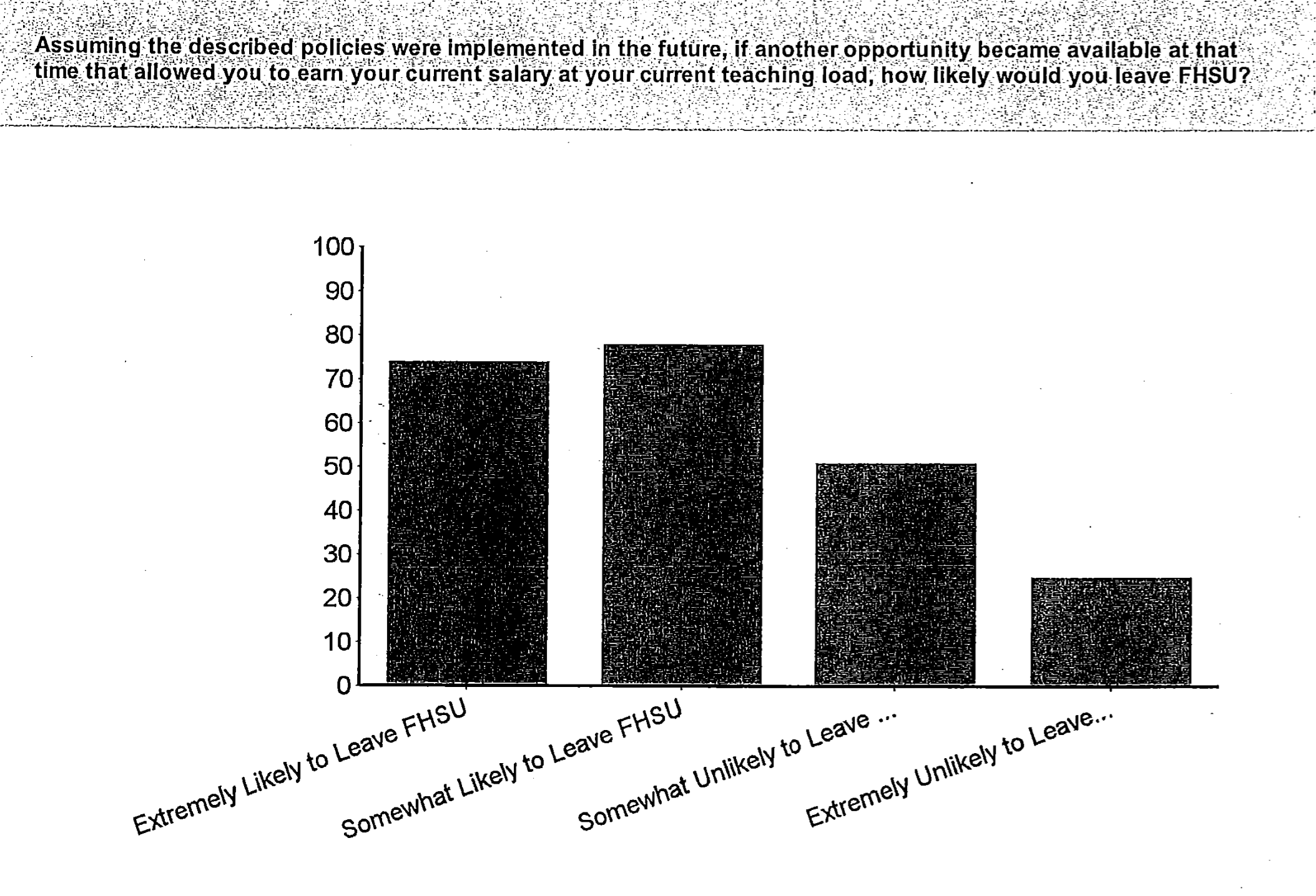
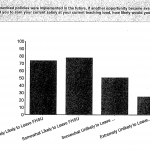
The data Miller used originates from the survey, but the question presented in the survey was: “Assuming the described policies (caps and overloads) were implemented in the future, if any opportunity became available at that time that allowed you to earn your current salary at your current teaching load, how likely would you leave FHSU?”

Miller said he was misquoted in early media reports and that he tried his best to explain to the Regents it was only if the polices were implemented that the faculty would consider leaving.

“I tried very hard to not make the statement that two-thirds of people are looking for work,” Miller said.

Brinker denied that Miller made any attempt in explaining the findings of the survey to the KBOR.

While Miller says he was misquoted, he still believes the 66 percent figure reflected negatively on Martin’s leadership.

The data shows 32.46 percent said they were extremely likely to leave FHSU if the caps and overloads policy was changed, while 34.21 percent said somewhat likely to leave FHSU. The proposed change to the caps and overloads policy would transfer teaching duties to overload classes to adjuncts, which would have meant a loss of income for professors currently teaching those classes.

The data presented to KBOR and reported in the local media was out of context, Brinker said.

“To interpret survey results, you have to give all the context that was given to the respondent when you are interpreting it, or it can be misleading,” he said.

Brinker could not comment specifically how the data was misinterpreted, as it would be a violation of the gag order on the survey.

“I believe I cannot do that because, in order to do that, I would have to refer to the results of the survey. But I will say that anyone who has a copy of that report can read it, and you don’t have to be a rocket scientist to interpret the degree in which it does not provide support for the allegations against Martin,” Brinker said.

Click HERE to view the survey, including comments.

According to Miller there’s been no false interpretations of the survey, adding the KBOR is in possession of the survey.

“If I misrepresented the data, I would then be misrepresenting something I then gave to the Regents,” he said. “They are in possession of it. For me to say something that the survey does not show would be foolish, and I would lose all credibility.”

Miller said he urged the Regents to read the comments section, which he said showed widespread dissatisfaction with Martin.

“I told the board that there was 50 pages of comments that showed dissatisfaction and that they can read them and characterize them for what they are,” he said.

Miller said the comments section does support the notion of a broad range of discontent and dissatisfaction with Martin.

“I’m not sure how you can look at the comments and say that they are overwhelmingly positive like Dr. Brinker believes,” Miller said. “The comment section expresses everything that has been said to me in my discussions with department chairs and various other faculty members that they are displeased with Martin’s leadership.”

The IRB held a special meeting just before Martin’s resignation to discuss the survey. In the short meeting, according to Brinker, IRB panelists asked him if he believed the subjects were harmed, and Brinker said they were not.

Following that meeting, Brinker said he was left with the impression that he IRB would allow him to clarify misinterpretations presented to KBOR, but the opposite turned out to be true.

“I was shocked,” Brinker said. “At the time, I had no idea that President Miller intended to use the study in the way that he did. … The whole purpose of the IRB is to protect the human subjects of my study and they weren’t in danger until the embargo because now the public believes that this survey shows widespread dissatisfaction with Martin, and all these faculty members wanted President Martin fired. If this survey provides no evidence of malfeasances or negative behavior of President Martin, by suppressing that information, you are damaging all these faculty members.”

Brinker thought Miller would use the survey internally to show the Senate whether the faculty did or did not support the a change to the caps and overloads policy.

“I was totally shocked when he (Miller) cited the survey supporting widespread dissatisfaction with President Martin,” Brinker said.

Miller does not recall making any statements of how the survey specifically shows widespread dissatisfaction.

“I tried to be as narrow as possible in presenting the survey. It simply did not show dissatisfaction with Martin’s presidency because that’s just not how it was devised. But, in the comments if you read them, that is where you find the widespread dissatisfaction,” Miller said.

Although he came up with the questions for the survey, Brinker said he suspects the survey was devised to be a tool that would be used in a campaign to smear Martin.

“It appears that’s what it was used for, and I can only assume that’s how it was devised,” Brinker said. “The scope of how the survey was used was beyond what I thought it was going to be used for.”

Miller disagrees with Brinker’s comments and acknowledged the survey was not designed to discern general satisfaction with Martin and her leadership.

“I tried not to use it in that way,” Miller said. “I tried to use it very specifically for the two policies and show that faculty did not support the policies. It did not measure a general dislike.”

Brinker recently resigned from the Faculty Senate because the Senate did not object to how Miller presented the survey.

“I was very upset with what President Miller did,” Brinker said. “He basically used his position as president as a bully pulpit.”

KBOR has acknowledged that they did receive Brinker’s email expressing how the content of the survey was misrepresented by certain individuals at the October meeting. However, KBOR declined to comment on the specific findings in the survey or if they played a role in Martin’s departure.

Because of the nature of the survey, Miller does not believe that the survey played any role in KBOR’s investigation into Martin and could not even say with complete certainty that the Regents even looked at the survey.

“In the end, it had nothing to do with her leaving. It had zero importance,” he said. “The board had it, but they didn’t make any decisions on the survey and she didn’t resign because of the survey. At most, the survey is embarrassing to her. All the survey shows is that faculty were not satisfied with the policies and the comments do take jabs at her, but our letters to the boards meant more than this survey.”

What the survey does show

The survey shows the faculty largely opposed the Martin’s proposals to increase the cap size to 50 students per class and overloads.

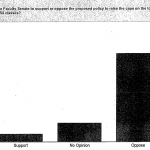
The survey showed 76.52 percent of the faculty opposed the policy to raise the cap size of the classes and showed 73.80 percent of the faculty opposed the policy to shift overload classes to adjuncts.

In the narrative comments section of the survey, several faculty members said the policy of shifting overloads away from full-time faculty to adjuncts would affect them financially because they have “become accustomed to the pay” and because of a lack of base wage increases in recent years. Most of the narrative comments spoke directly to the question of the caps and overloads policy, although some faculty members did express frustration with the addition of new administrative overhead put in place by Martin.

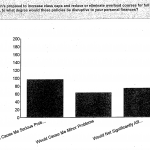
According to the survey, 41.45 percent of faculty said if the overload policy was implemented it would cause “serious problems” to their personal finances, while 26.92 percent cited “minor problems,” and 31.62 percent said it would not significantly affect their personal finances.

Furthermore, the faculty cited that the quality of education would affect the students greatly if the two policies were passed because adjuncts are not as qualified as full-time faculty. Some said adjuncts are not as “invested” in the university as full-time faculty.

Other faculty members pointed the increase of caps decreasing the quality of education for students because of the extra time it would take to grade the work of the students, adding the larger student-to-professor ratio would limit the number of students they would be able to help.

Many faculty members said their salary is well under the national average for someone with their qualifications and to ask them to do more work with no pay increase would be wrong.

Why was the survey shut down?

Before the gag order, Brinker was not aware the IRB had the authority to shut down a survey.

“I was not aware the IRB had the kind of power to do a thing like that,” Brinker said. “I have absolutely have never had the IRB have issues with my research before, and I have been teaching for 25 years.”

In an email sent to Hays Post by Dr. John Raccke, chairman of the Justice Department and chairman of the IRB, he said the IRB followed FHSU IRB Policies and Procedures, which were approved March 10 by the university, stating the survey met all three of the criteria to be deemed a unanticipated problem.

Those factors included: “unexpected (in terms of nature, severity, or frequency) given (a) the research procedures that are described in the protocol-related documents, such as the IRB-approved research protocol and informed consent document; and (b) the characteristics of the subject population being studied; related or possibly related to participation in the research (in this guidance document, possibly related means there is a reasonable possibility that the incident, experience, or outcome may have been caused by the procedures involved in the research); and suggests that the research places subjects or others at a greater risk of harm (including physical, psychological, economic, or social harm) than was previously known or recognized.”

The IRB determined the survey caused a situation that has the potential for adverse effects of psychological and financial harm.

The IRB also cited a conflict of interest by Brinker because, as director of the Docking Institute, he answers directly to the university president.

Brinker denied the conflict of interest because he said he was acting as a faculty member when creating the survey and simply used Docking Institute software because it was convenient.

“I only work half-time as the Docking director. The other half, I am a faculty member in the department of sociology,” he said. “I was the faculty representative, and I did my role as a faculty member in conducting the survey.”

Miller has since apologized for the way he presented the survey by calling it a Docking survey.

“I initially said the survey was created by the Docking Institute,” he said. “I was wrong. It was created by Gary Brinker and not through the Docking Institute and I have since corrected that. I did not intend to give it false authority. I was not aware that there was a distinction.”

Brinker said he attempted to make the point of acting as a faculty member to both the IRB and Regents, with whom he was able to share how he assessed the misinterpretation.

“Before the embargo, I was able to scrutinize the survey, and I did send KBOR my assessment to the degree on how the assertions of President Miller were misrepresented,” Brinker said.

The conflict of interest is pointed in the wrong direction, said Brinker, who believes the IRB and members of the Faculty Senate had a conflict on interest because members of both teach overload classes.

“In my mind, anyone on the IRB who teaches overloads should have excused themselves from decision. Is that not a conflict of interest?” Brinker asked. “My concerns have been left unanswered. The IRB is damaging, which is why I believe they are being driven by self interest.”

According to an online listing of classes taught, many members of the Faculty Senate and IRB do indeed teach overload classes. Some members of the faculty would have lost thousands of dollars in wages if Martin’s proposed overload policy was implemented, a fear referenced frequently in the comments portion of the survey.

Typical class load for a professor at FHSU is four classes, or 12 hours. According to a faculty search, 20 of the 44 teach overload classes. Two of the eight IRB members teach overload classes.

“What I see is an unusually high number of courses taught by the faculty senators, including two members of the IRB,” Brinker said. “This is a strong indication of a conflict of interest.”

About two-thirds of faculty at FHSU teach overload classes, and the survey showed about 68 percent of the participants in the survey teach overload classes with ranges from one to seven or more, according to the survey.

“Im not sure you could find a Faculty Senate member that did not teach overloads because most faculty do,” Miller said. “It’s almost unavoidable.”

Not all overloads are paid, however, as it does not take into consideration the independent classes.

Independent classes are classes that show they are being taught by a chair of a certain department, but in fact the chair is just the instructor on record and the duties of teaching are completed by another professor who then provides the grade to the chair.

For example, Raacke, who is the chair of the Justice Department and one of the IRB members teaching overload classes, is listed as teaching seven overload classes, but only gets paid for two of the classes.

“There’s false conclusions on the overloads. Some have these big numbers and you are led to believe that they are making large sums of money off these overloads, but that is just not true,” Miller said.
5 hurt, 2 critically, in NW Kansas oil-drilling explosion

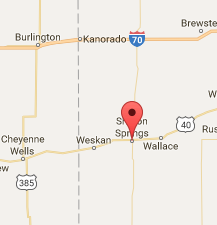
Russell Springs is located in NW Kansas-google map

SHARON SPRINGS, Kan. (AP) — Five people have been hurt, two critically, in an explosion at a western Kansas oil field.

The blast happened Monday morning south of Sharon Springs in Wallace County.

Fire Chief Jay Sharp says crews were working when gas made its way onto the deck floor of a warming hut, which included running heaters. Sharp says the explosion happened when something electrical sparked.

He says the two with critical injuries were airlifted from a hospital in Tribune.

Sharp says responding crews were able to put the fire out quickly.

Hays woman reappointed to Statewide Independent Living Council

office of the governor squareOFFICE OF THE GOV.

Topeka – Kansas Governor Sam Brownback today announced new appointments to boards and commissions, including a Hays woman.

“I want to thank these hard-working men and women for their willingness to serve our state with their time and talents. Their unwavering dedication is helping to make Kansas the best state in America to raise a family and grow a business,” said Governor Brownback.

The Governor’s Office is always looking for qualified, interested Kansans to serve the state on commissions and boards in their areas of expertise. If you are interested in serving on a commission or board, please visit https://governor.ks.gov/serving-kansans/office-of-appointments.

Deaf and Hard of Hearing Advisory Committee on the Language Assessment Program
Angela Walker, Overland Park
Robin Olson, Lenexa
Joan Macy, Lenexa
Janet Goodenow, Westmoreland
Katie Wise, Sedgwick
Nancy Defazio, Wichita
Dr. Robert Maile, Spring Hill
Petra Horn-Marsh, Olathe
Kristin Pedersen, Lawrence
Nancy Jo DeFazio, Wichita

Kansas Selective Service Systems Board
Rita Hartman, Atchison
Al Joe Wallace, Barnard

Fire Service Training Council
Jack Taylor, Emporia

Kansas Firefighters Memorial Advisory Committee
Michael Martin, Topeka

Midwest Stem Cell Therapy Center Advisory Board
Dr. Dana Winegarner, Overland Park (reappointment)

Real Estate Commission
Connie O’Brien, Tonganoxie

Selective Service Systems
Craig Duke, Kansas City

Statewide Independent Living Council
Tami Allen, Garden City (reappointment)
Angela Zimmerman, Hays (reappointment)

Volunteer Commission
Dr. Joe Marlow, Olathe

Former Great Bend bank employee pleads guilty to stealing from bank

OFFICE OF U.S. ATTORNEY

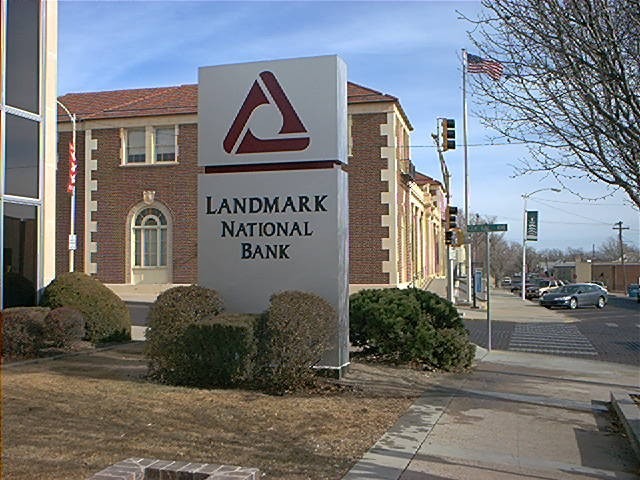
Landmark National Bank, Great Bend

KANSAS CITY – A former employee of a bank in Great Bend pleaded guilty Monday to stealing more than $73,600 from the bank, U.S. Attorney Tom Beall said.

Kaden Herman, 19, Great Bend, Kan., pleaded guilty to one count of embezzlement by a bank employee. In his plea, he admitted he was working for Landmark National Bank in Great Bend, in May 2016 when the crime occurred. Herman gained access to a key and code that he used to open an ATM at a branch at 1623 Main Street in Great Bend and remove the cash.

When questioned, Herman denied involvement, but witnesses said they saw him when he took the key in to be duplicated. Investigators served a search warrant at his home and found the money.

Sentencing is set for Feb. 27. The government has agreed to recommend three years supervised release. Beall commended the FBI and Assistant U.S. Attorney Jason Hart for their work on the case.

Controversial USD 428 superintendent resigns at Monday meeting

Brad Reed-photo USD 428

BARTON COUNTY – USD 428 Superintendent Brad Reed confirmed during Monday night’s school board meeting that he was leaving the district.

Reed, dressed casually, addressed board members at the beginning of the meeting, “We’ve come to a good agreement and I’ve given the board president my resignation, retirement effective June 30,” he said.

The Board then voted to appoint Kris Thexton, current Assistant Superintendent of Business and Operations as the acting interim superintendent.

Board President Joyce Carter refused to comment on the circumstances surrounding Reed’s departure. She did say that the district would contact the Kansas Association of School Boards and let them know about the opening that would be filled for the 2017-2018 school year.

The district hired Reed in January of 2014.

Earlier this year, Reed was criticized for how he handled the district’s response when students assaulted another during two separate swim team bus trips.  At that time, parents pressured the district to fire Reed.  Two students were charged in the assault case in Ellsworth County and one was convicted of misdemeanor battery.

Hays USD 489 board discusses post-bond election survey, wage study

By GARRETT SAGER
Hays Post

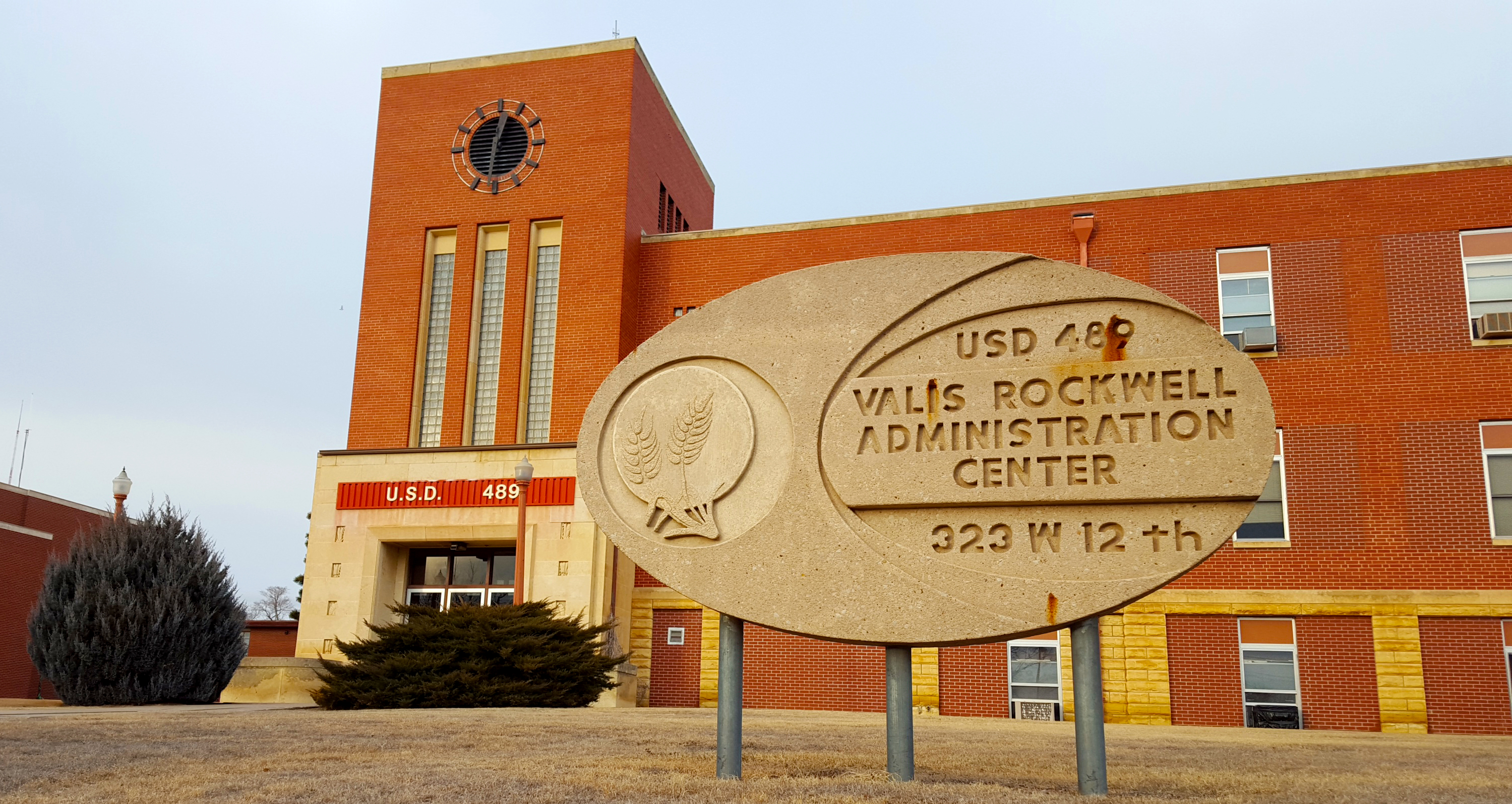
During Monday night’s Hays USD 489 Board of Education meeting and work session, Superintendent John Thissen provided feedback to the board about a wage study and underpaid positions, and discussed results on a post-bond election survey.

With the help of a study done by Fort Hays State University, Thissen said the investigation shows classified staff members of the district are significantly underpaid.

“The survey shows that together, our classified staff is underpaid by about $150,000 in salary,” he said.

Two months ago, Thissen told the board how many of faculty and staff are well underpaid compared to the same positions around the state.

“We are at the bottom in the state in some of these positions,” Thissen said. “We simply do not have the money.”

One of the positions that USD 489 is at the bottom in is bus drivers.

The district pays its bus drivers $10 per hour and have had to cut back on some routes. With increasing student numbers, the district might need to add routes and up the pay of the bus drivers.

“Our district is growing in the elementary and middle school parts and, with our growing numbers, more routes may need to be added,” Thissen said.

Para-educators and substitute teachers were also a topic of discussion.

Currently, the district pays the lowest in the area for substitute teachers and struggles to get substitutes for that reason.

Thissen said raising pay for substitutes would add an extra $12,000 to the budget.

As for the paras, the district goes through one about every other week, according to Thissen, because the district pays so little and offers no benefits.

“They often find jobs somewhere else, mainly because we can’t pay them and do not offer benefits,” he said.

USD 489 pays paras for 5.5 hours at a rate of $9 per hour.

“Five in a half hours a day is simply not enough,” Thissen said.

For the district to fix the majority of the salary issues facing it, it would cost the district around $1.5 million, Thissen said.

“There is a need to fix this,” he said. “If the district could somehow come fall into $1.5 million, I would strongly urge you that we use the money for this — keeping in mind this would be a yearly thing.”

The issue is one that will need to be revisited and will not be acted upon for a while, Thissen said.

The board also heard back from the June 7 bond election survey that was conducted after the failed bond attempt the board had last summer.

“It confirmed things expected,” Sarah Rankin, board vice president, said.

The intention of the survey was to give the board an idea of which components were supported in the election and which were not, as well as provide some direction toward the next bond election.

“There’s some good and encouraging information that comes from this survey when moving forward on getting ready for another bond election,” said Mike Walker, assistant director at the FHSU Docking Institute.

Thissen, who had yet to be hired when the bond election failed, said he was not surprised with the results of the survey.

“I think we all figured what would come out of this survey since it came after the failed bond issue, but as you can see, this gives us different areas we can target,” he said.

One of the points of interest was the difference in the support and non-support was based on how connected the individuals were with the district.

The board also passed motions on two items at the beginning of the meeting.

The board passed unanimously to move the February early release date from Feb. 1 to 8.

Also passed was the adoption of board policies GAOF salary deductions and IIBF acceptable use guidelines.

Copyright Eagle Radio | FCC Public Files | EEO Public File