Hays, Kansas – Kay F. Wellbrock, age 82 died Friday, April 29, 2016, at her home in Hays, Kansas.
She was born March 18, 1934, in Hays, Kansas, to Lewis and Joann (Rupp) Hatfield.
She married Leo J. Wellbrock on August 16, 1952 at Wichita, Kansas. He died November 5, 2013.
She was a homemaker and was a bus driver for U.S.D. 489 Transportation Department from 1981 to 1995. She grew up in Hays and was a 1952 graduate of Hays High School. She was a member of Immaculate Heart of Mary Catholic Church.
Survivors include four daughters, Pam Whitham and husband, David, Broken Arrow, OK; Kelly Heifner and husband, Jim, Hays, KS; Sandra Seems, Salina, KS; Tina Dix and husband, Doug, Hays, KS; one daughter-in-law, Jolene Wellbrock, Hays, KS; two brothers, Lewis “Butch” Hatfield, Moore, OK; Charles “Chuck” Hatfield and wife, Leona, Hays, KS; 16 grandchildren and 8 great grandchildren.
She was preceded in death by her parents; her husband; three sons, Gary Wellbrock, Wayne Wellbrock and Leo Steven Wellbrock; two brothers, Kenneth “Corky” Hatfield and Donnie Wayne Hatfield; and one sister, Bonnie Pless.
Services are 10:00 A.M. Tuesday, May 3, 2016, at Immaculate Heart of Mary Catholic Church Hays, Kansas. Burial in St. Joseph Cemetery Hays, Kansas.
A vigil service will be at 7:00 P.M. Monday, at Cline’s Mortuary of Hays, 1919 East 22nd Street, Hays, Kansas 67601.
Visitation is from 5:00 to 8:00 P.M. Monday, and from 8:30 to 9:45 A.M. Tuesday, all at Cline’s Mortuary of Hays.
Memorial to Hospice of Hays Medical Center and Paralyzed Veterans of America. Condolences can be sent via e-mail to [email protected].
Victoria, Kansas – Joseph James Dreiling, age 58, died Tuesday, April 26, 2016, at his home south of Victoria, Kansas.
He was born January 23, 1958, in Hays, Kansas, to James E. and Charlene (Munk) Dreiling.
He was a 1976 graduate of Russell High School. He attended Victoria High School and attended Fort Hays State University. He was a member of The Basilica of St. Fidelis Victoria, Kansas. He was an insurance agent for a few years and has worked in construction for 20 years. He was a talented and gifted musician. He played piano, saxophone and accordion. He was a member of numerous bands including: The Tony “Red” Pfeifer Polka Band, Madgic, Boogie Grass Fever, Stardust, Dusty Rose, The Wild Wild West Band, Sly-Ridge and was one of the original members of the “Jimmy Dee and the Fabulous Destinations” for over 40 years.
Survivors include two sisters, Donna Miller and husband Ted, Emporia, KS; Linda Rogers and husband Scot, Wichita, KS; three nephews, Aaron (Carrie) Miller, Austin Miller, Jerad Rogers; and three nieces, Amy (Brian) Hansen, Hayley Rogers and Sophie Rogers.
He was preceded in death by his parents; one infant sister Anne Marie Dreiling; his grandparents, John P.A. and Pauline Dreiling, Ted and Alexia Munk.
Funeral Services will be 11:00 A.M. Monday, May 2, 2016, at The Basilica of St. Fidelis Victoria, Kansas. Inurnment will be in St. Fidelis Cemetery Victoria, Kansas.
A vigil service will be at 7:00 P.M. Sunday, at Cline’s Mortuary of Hays, 1919 East 22nd Street, Hays, Kansas 67601. The family will receive friends from 5:00 to 8:00 P.M. Sunday, at Cline’s Mortuary of Hays and from 10:00 to 11:00 A.M. Monday, at The Basilica of St. Fidelis Victoria, Kansas. Memorials to The Victoria High School Band or Humane Society of the High Plains.
UPDATE: Due to weather conditions, the event has been moved to Saint Michael’s Episcopal Church, 2900 Canal Blvd.
The benefit “Pawlickin’ Barbecue and Traeger Grill Raffle” for the Western Plains Animal Refuge will be held Saturday, April 30, in the Hays Municipal Park, 1st and Main, from 5 to 7 p.m.
Cost is $10 per plate.
Friendly dogs are welcome to attend. They must be on a leash and current on vaccines.
Raffle tickets for the Traeger Lil’ Tex Elite Wood Pellet Grill are now available at Hillside Veterinary Clinic, 5250 Vine St., for $10 per ticket.
TOPEKA, Kan. (AP) — The Kansas Court of Appeals has ruled that a man could be convicted of driving under the influence using evidence obtained under a defunct law.
The appeals panel ruled Friday that the statute in question had been struck down by the Kansas Supreme Court after Brent Kraemer’s 2013 arrest in Salina for suspicion of DUI.
The Topeka Capital-Journal reports the officer read Kraemer an implied consent advisory, informing him of a criminal charge if he refused to take a blood-alcohol test. Kraemer agreed to take the test, which he failed.
Since then that advisory has been replaced.
Kraemer wanted the appeals court to find his consent was obtained by an unconstitutional advisory. But the appeals panel says the ruling stands because the law was in effect at the time.
UPDATE: Due to poor weather conditions, the car show has been rescheduled to May 14.
A car show this month in Hays will help benefit Habitat for Humanity of Ellis County.
Hot Rods for Humanity is scheduled for April 30 at the Ashley Furniture parking lot, at 27th and Vine streets. Registration is from 10 a.m. to noon, with the show from noon to 3 p.m.
Judging and results will be from 3 to 4 p.m., with a variety of awards handed out.
Registration for vehicle owners is $25. Freewill donations from spectators will be accepted.
For more information, click HERE or call (785) 623-4200.
In this financial page sometimes it’s advantageous to use real life examples to assist, educate, and motivate others with their own planning.
On April 21, 2016, one of the most prolific musicians of all time died an untimely death at the age of 57. Prince’s music spanned a 40 year period and he was declared one of the richest music entertainers of all time.
Prince was very meticulous about being in control of his music career. He owned both the recording and publishing rights to all of his compositions and, because of one of his many wonderful talents, also played most of the instruments on his recordings.
Unfortunately, that same meticulous attitude was not used with the thought of someday taking his last breath on this Earth. So the very voice that was needed to direct his dollars, copyright proceeds, property, and songs that had never been recorded,was no longer there. Someone other than Prince is now in control of his estimated $300 million estate. That someone turns out to be the state of Minnesota and the IRS. Without a will, Minnesota follows the line of descendants, which in Prince’s case would be a sister and 5 half-siblings. These six would split the proceeds evenly. His parents pre-deceased him, and he had no children. So this may or may not be what Prince would have intended to happen.
Establishing a will or trust essentially enables your voice to still be there to direct your entire life’s earnings exactly where you want them to go after your death.
The problem lies in the fact that as humans, we think we’re indestructible and that we’ll always have another day to do this very important planning.
It has been communicated to Prince’s sister, Tyka Nelson, that she has an obligation to at least try to locate Prince’s will. However if you were in line to inherit one sixth of $300 million, how hard would you be looking? So, at a time when everyone should be grieving the loss of a loved one, instead they are working on locating a will, and dealing with all the business aspects of someone exiting this world and leaving assets behind. With the proper planning ahead of his death, a value could have been established for the many things that weren’t just green dollars. How do you put a value on a vault full of unpublished songs, or the copyright capability of his music extending on long after his death and the revenue that this would have provided? This all could have been established long before this wonderful musician’s death with the help of Prince and the IRS.
And because of the lack of planning Uncle Sam is likely to take half of the estate, and they don’t want music manuscripts, or copyrights which undoubtedly were a substantial part of his estate, but rather green dollars. Will some things have to be liquidated in order to pay the government close to $150 million? Probably so, and the IRS doesn’t give you long to come up with these dollars. Proper planning would have avoided many of these challenges facing the loved ones and their representatives, now.
Complicating these issues, there very well could be lawsuits that appear as different relatives try to claim their expected or promised share. If Prince’s voice remained, even with his absence through a will or trust, there would be no question as to where his proceeds would go.
Understand it does not necessarily have to be a famous musician in a far-away state, and certainly $300 million is not required to do some planning ahead of time. When is the best time to do this? The time is now, as you take care of it and don’t have to concern yourself with it anymore, unless you have substantial changes in your financial picture. Why now, because now is better than later, and that later as is evidenced in Prince’s case, never happened.
In your search for a proper attorney to help you in these matters, make sure it is someone that does this kind of work all the time. If you were having brain surgery, you would certainly not want a surgeon that just performed surgeries 10 percent of the time. There are attorneys that specialize in criminal cases, divorces, land acquisitions, etc. but it would be in your best interest to secure an estate tax attorney that does this kind of planning 100% of the time. With all of the ever-changing rules, it would be preferable to have someone that is current on all these requirements. It is puzzling to think that some very famous musicians, athletes, and entertainers that have access and funds available to have the very best planners in the estate tax area, have done little or nothing to prepare for the inevitable, and that is their death.
Prince is gone, his music lives on, and hopefully this is an example that motivates you to take the proper action to avoid many of the aforementioned issues. Good luck!
Tim Schumacher represents Strategic Financial Partners in Hays.
Listen to Mike Cooper interviewing, Dr. Roman Reznik, Pulmonologist at Haysmed; with the topic of “Lung Issues” by clicking the link above and then clicking the play button
Charles C. Haynes is director of the Religious Freedom Center of the Newseum Institute.
The culture wars took an expected turn this month when two Republican governors vetoed “Bible bills” in the reliably red states of Idaho and Tennessee.
The Idaho legislation would have permitted the Bible to be used “for reference purposes” in teaching literature, history, government and other subjects in public schools. To placate critics, amendments had deleted any mention of geology, astronomy and biology, and added “other religious texts.”
In his veto message, Idaho Gov. C.L. “Butch” Otter wrote that although he has “deep respect and appreciation for the Bible as religious doctrine,” allowing the bill to become law would violate the Idaho Constitution’s prohibition on teaching “religious tenets or doctrines” in public schools.
A week later in Tennessee, Gov. Bill Haslam vetoed legislation that would have made the Bible the state’s official book. “In addition to the constitutional issues with the bill,” said Haslam, “my personal feeling is that this bill trivializes the Bible, which I believe is a sacred text.”
During the heated debate leading up to Haslam’s veto, proponents argued that the measure was not an endorsement of religion, but merely official recognition of the “great historical and cultural significance” of the Bible in Tennessee. Opponents countered that making the Bible the state book promotes one religion over others in violation of both the state and federal constitutions.
Both Bible bills suffered from vague, overly broad language that would have undoubtedly led to years of controversy and litigation.
What did the Idaho legislature mean by use of the Bible for “reference purposes” in public school classrooms? Could teachers invoke biblical authority when teaching history, literature and other subjects? If so, that would be unconstitutional.
Or did the legislature mean that teachers may refer to the Bible in some objective way when teaching? If so, the bill would be unnecessary because current law already permits academic teaching about the Bible, where appropriate, in the public school curriculum.
If the Idaho constitution is currently construed by educators to prohibit objective teaching about the Bible, then the legislature could clear that up by making the distinction between unconstitutional “teaching religious tenets” and constitutional “teaching about religion.” The bill Gov. Otter vetoed failed to make that distinction — and thus would have only made matters worse.
The Tennessee bill was equally murky. Did the legislature intend to designate sacred scripture as the official state book, which would be unconstitutional? Or did the lawmakers merely want to acknowledge the historical and economic impact of the Bible, which ignores the religious meaning and significance of the scriptures?
During legislative debates in both states, proponents appeared to want to have it both ways: Elevate the Bible because it is the word of God, but do so with ambiguous, secular language designed to pass constitutional muster.
Otter and Haslam, both religious men, wisely rejected these roundabout attempts to use the engine of government to privilege the Christian faith. Ironically, by protecting the autonomy of religion, their vetoes did more to preserve the authenticity of the Bible than legislation could ever accomplish.
For many Christians and Jews, when the Bible is co-opted by the state, it ceases to be the prophetic word of God. An “official Bible” can no longer speak truth to power; it becomes instead an echo of the powers that be.
Preventing the entanglement of religion and government — the source of much repression and violence throughout history — is, of course, the genius of the First Amendment. The vitality of religious life in America is living proof that religion flourishes best in a society where every person is free to choose in matters of faith without government involvement or coercion.
Kudos, then, to two conservative, Republican governors who had the courage to stand up for religious freedom, despite the political price. Their vetoes of misbegotten “Bible bills” are good news for the First Amendment — and good news for the Good Book.
Charles C. Haynes is vice president of the Newseum Institute and founding director of the Religious Freedom Center. [email protected]
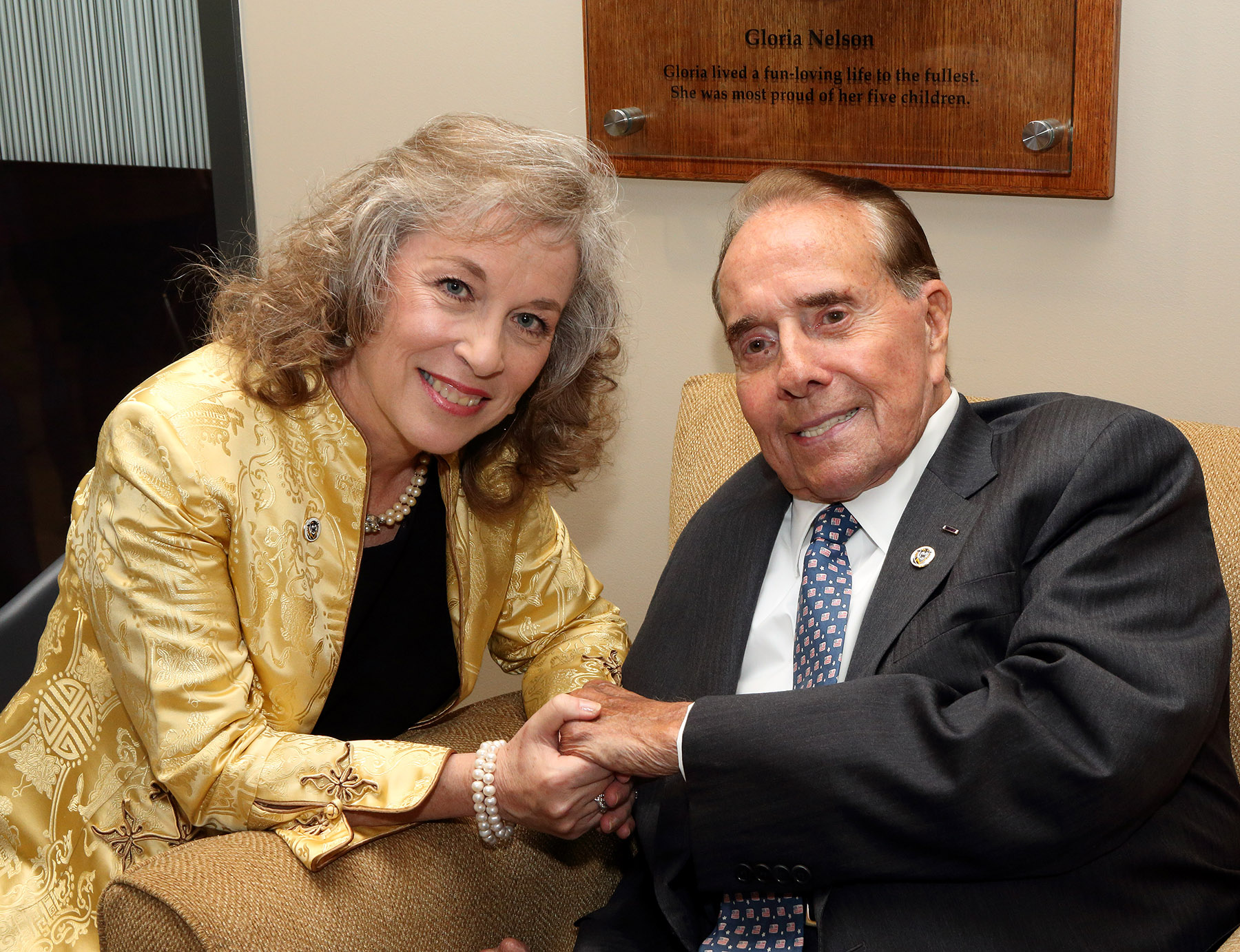
President Mirta M. Martin and Senator Robert J. Dole at the dedication of the Dole Sisters Lobby in fall 2014.
By RANDY GONZALES FHSU University Relations
Robert J. “Bob” Dole’s western Kansas values are a good fit for what Fort Hays State University values. The university will honor Dole at the FHSU Commencement ceremonies May 13 and 14, awarding him the university’s first-ever honorary doctorate. He will be the keynote speaker both days.
Dr. Chapman Rackaway, acting chair of the Department of Political Science, said Dole is still relevant for today’s students at FHSU. Traits like values and sacrifice and courage are synonymous with Bob Dole, who was born and raised in Russell.
“Dole was there in a time when people were willing to make sacrifices to get things done,” Rackaway said. “He sacrificed his body in World War II; he sacrificed his preferences sometimes to get things done in Congress.”
Dole, 92, learned the value of hard work growing up in the Depression, working as a soda jerk at the local drugstore. He played sports at the University of Kansas before opting to enlist in the Army in 1942. Dole was seriously wounded while serving in Italy in 1945. He spent three years recovering from injuries to his shoulder, back and right arm, which left him partially paralyzed in the arm. Dole then returned to college and earned both his undergraduate and law degrees from what was then Washburn Municipal College in Topeka.
“Just when you think you are courageous, think about a guy like Bob Dole,” Rackaway said. “He was a19-year-old kid who stepped out on European soil with a gun in his hand. That’s courage.”
While in school after the war, Dole won a Republican seat in the Kansas Legislature. After graduation he returned home to Russell to practice law. He served as county attorney before winning a Congressional seat in 1960. Dole later became a U.S. Senator in 1968 and was elected Senate majority leader in 1984 — the longest-serving Republican leader. He resigned in 1996 during his fifth term to run for President. Dole won the Republican nomination but lost to Bill Clinton in the general election. Dole also ran for Vice-President in 1976, when Gerald Ford lost to Jimmy Carter.
“He is simply one of the most important political figures in the last century of American politics, one of the more important Americans,” Rackaway said. “He is a reminder of what politics is like when it works.”
Dole was known for being able to compromise to get legislation passed.
“Let’s not discount how deft a conciliatory and compromise-driven leader he was,” Rackaway said. “I say that as a high compliment.
“No politician ever gets things done without compromise,” Rackaway added. “If you can engineer compromise, you’re a political maestro. That was one of his great gifts.”
The Washington of today, mired in gridlock, was not Dole’s Washington. With Dole, there was no backroom dealing – what you see is what you get.
“There is this very kind of perfect western Kansas attitude, which is, ‘I’ve got a job to do, let me get it done,’ ” Rackaway said.
Rackaway said it seems only right for FHSU to honor Dole, considering he grew up nearby. As well, Dole donated $100,000 to honor his sisters – Norma Jean Steele and Gloria Nelson – with plaques in the lobby of Hammond Hall to recognize their commitment to education.
“I think it’s perfectly appropriate,” Rackaway said. “Bob Dole represents the idea that people from a little town of just a few thousand people can rise to some of the great heights in the American political machine.
“Fort Hays State is the steward of western Kansas,” he added. “Both of them bear the marks of this place where we’re from. That’s a beautiful thing.”
While Dole had a long and distinguished political career, FHSU junior Rebecca Vincent is just starting out getting involved in politics. The organizational communications major joined the College Republicans club on campus just last month.
“I’ve always been super involved in politics,” Vincent said. “My family, we’ve got really strong Republican ties.”
That’s why it seemed only natural for Vincent, who is from Frederick, Colo., to join College Republicans. She hopes to attend commencement and listen to a political icon speak.
“I think it’s a great thing,” Vincent said, “not just for College Republicans but Fort Hays State in general.”
After a lifetime of public service, Dole has kept active in politics in his retirement. He has devoted time to speaking engagements and his law firm. Dole has written several books, including his memoir, “One Soldier’s Story.”
Rackaway can hardly wait to meet Dole when he comes to Hays in May.
“I’m super excited to meet him,” Rackaway said. “There aren’t too many politicians I can get a little celebrity awe-struck on. I am incredibly excited to meet Bob Dole.”
SHAWNEE COUNTY – Law enforcement authorities in Shawnee County are investigating a shooting near a child care center.
Just after 5 p.m. on Friday, police responded to 33rd and Gage Street in Topeka after report that a man was wounded, according to a media release.
The victim was transported to a local hospital with non-life threatening injuries.
Several rounds from the weapon were fired, according to police. One bullet also hit a building used as a child care center. There were no injuries in that facility.
Police are looking for a black male suspect driving a 2-door Chrysler convertible.
GARDEN CITY- Fire investigators are working to determine the cause of a house fire on Friday in Garden City.
Just before 6:30 p.m. on Friday, fire crews and police responded to 623 Garden City Avenue for a reported structure fire, according to a media release.
They found a large amount of smoke and the west side of the residence engulfed in flames.
The surrounding homes were evacuated by law enforcement.
All residents who lived in the house were accounted for. There were no injuries.
The estimated total loss is $105, 000.00. The residence was deemed structurally unsound and uninhabitable.
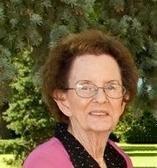
 Hays, Kansas – Kay F. Wellbrock, age 82 died Friday, April 29, 2016, at her home in Hays, Kansas.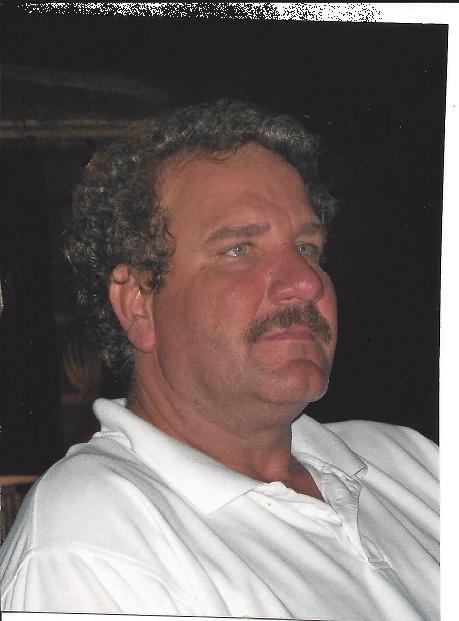
 Victoria, Kansas – Joseph James Dreiling, age 58, died Tuesday, April 26, 2016, at his home south of Victoria, Kansas.
 Submitted






 Listen to Mike Cooper interviewing, Dr. Roman Reznik, Pulmonologist at Haysmed; with the topic of “Lung Issues” by clicking the link above and then clicking the play button