We have a brand new updated website! Click here to check it out!

Ronald E. ‘Ron’ and Alfreda J. ‘Freda’ Broetzmann

Hays, Kansas – Ronald E. “Ron” Broetzmann, age 79, died Saturday, December 3, 2016, at his home.  Alfreda J. “Freda” Broetzmann died Tuesday, November 29, 2016, at her home.  

Both services are pending at Cline’-Keithley Mortuary of Hays, 1919 East 22nd Street, Hays, Kansas 67601

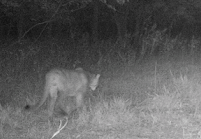
3 recent mountain lion sightings reported in Kansas

Mountain lion photographed on trail cam in southeast Kansas – courtesy KDWPT

WICHITA, Kan. (AP) — Two Kansas teens got a big surprise, and video, when the hound they were using to hunt raccoons treed a mountain lion last month in Wabaunsee County.

The Wichita Eagle reports that the Thanksgiving night sighting was one of three documented within 15 days in a 60-mile area.

Kansas Department of Wildlife, Parks and Tourism biologist Matt Peek doesn’t know whether that part of Kansas has multiple animals or one that has been getting around.

A motion-activated trail camera on Fort Riley got a good image of a mountain lion on Nov. 9, though the authenticity of the image has not yet been officially confirmed. A similar camera got a photo in Shawnee County on Nov. 20.

Sometimes a single animal is photographed multiple times in different locations.

Crop conditions deteriorate as drought invades Kansas

kansas-wheat logoBy JORDAN HILDEBRAND
Kansas Wheat

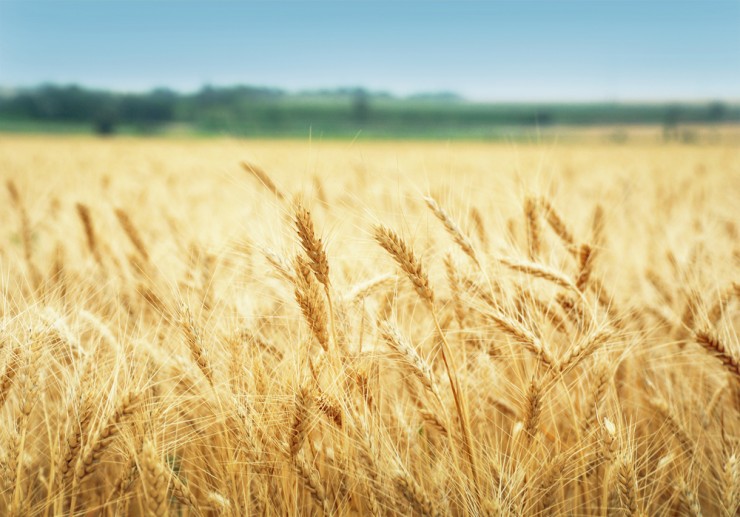
Much needed moisture makes the top of many Kansas wheat farmers’ 2016 Christmas wish lists. According to the U.S. Drought Monitor, much of western Kansas is currently in moderate to severe drought just a few weeks after the entirety of the state was declared drought free for the first time in six years.

According to Romulo Lollato, wheat and forages extension specialist for Kansas State University’s Department of Agronomy, Kansas crop conditions vary greatly.

“We have very contrasting conditions statewide,” said Lollato. “In south central and southeast Kansas, planting was delayed in many cases due to excess moisture in the region. Western Kansas wheat has gotten a rough start since there hasn’t been much moisture since many fields were planted. Producers who planted earlier generally have a pretty good start, but producers who waited for that optimal plant time in western Kansas haven’t seen much rain.”

In central and eastern portions of the state, Lollato reports that even though planting was late, temperatures were warm, so the crop has had a good chance to catch up in development.

“In some cases we’re seeing some pretty lush growth to the crop, particularly in the central corridor,” said Lollato.

Southwest Kansas has been dry over the last few weeks, but subsoil moisture for the area remains adequate from a moist summer. Northwest Kansas has seen some recent moisture in the form of snowfall, but that small amount of snow is the only moisture the crop has received in the last two months.

“The western region has had a pretty rough start, and just about everyone is needing some precipitation,” said Lollato. “When traveling, particularly in the southwest Kansas area, you’ll see some fields that are pretty thin.”

Gary Millershaski, a farmer from Lakin, reported that his thicker stands are a “wolf in sheep’s clothing.”

“It looks decent, but we had wind gusts up to 50 miles per hour on Sunday, and that wind just kicked up wheat plants as it went,” said Millershaski. “It’s a decent stand, but we haven’t had a measurable rain in my part of the county since August 6th or 7th. We just really need that moisture for the roots to develop down deeply.”

The Kansas Crop Progress and Condition report from USDA’s National Agricultural Statistics Service lists topsoil moisture rated 14 percent very short, 31 short, 53 adequate, and 2 surplus. Subsoil moisture is rated 8 percent very short, 27 short, 64 adequate, and 1 surplus. Winter wheat condition rated 3 percent very poor, 10 poor, 35 fair, 45 good, and 7 excellent. Winter wheat emerged was 96 percent, near 98 both last year and the five-year average.

Lack of moisture isn’t the only challenge facing the 2017 Kansas wheat crop Lollato has reported several diseases already rearing their heads statewide. Wheat Streak Mosaic Virus has already been spotted throughout Kansas. Wheat Streak Mosaic Virus can cause severe economic damage, and in most cases infection can be traced to a nearby field of volunteer wheat The diseases are carried from volunteer wheat to newly planted wheat, and can cause stunting and yellow streaking on the leaves of the plant.

“There’s really nothing we can do about Wheat Streak Mosaic Virus at this point for the current crop, but controlling the green bridge for next year’s crop will be vital,” said Lollato.

It’s never too early to start planning for good management practices. According to the K-State Department of Agronomy, volunteer wheat within a half-mile of a field that will be planted to wheat should be completely dead for at least two weeks prior to wheat planting. Doing so will help control wheat curl mites (carriers of viruses like Wheat Streak Mosaic Virus), Hessian fly and greenbugs.

Lollato has also seen many reports of leaf rust from Salina to the northwest corner of the state. While the visible rust and potential for yellowing leaves may be startling, Lollato reassured that the disease most likely won’t survive through the winter, but advised keeping a close eye on disease pressure while scouting in the spring. Other issues that some farmers may see include yellow leaves, a potential sign of nitrogen deficiency.

“We had a lot of rainfall during the summer which, in addition to a high yielding wheat crop, may have depleted a lot of nitrogen from the soil profile,” said Lollato. “For producers who applied their nitrogen, yellowing may be attributed to drought stress since plant roots may not be able to draw up that applied nitrogen.”

While management practices can greatly affect yields, what wheat needs now is some help from Mother Nature.

“What this crop really needs is for temperatures to cool down and rain or snow to fall,” said Lollato.
Former Kansas school counselor sentenced for drug distribution

McMurry
McMurry

RENO COUNTY– A former Kansas elementary-school counselor who entered a plea in a drug distribution case against him was sentenced Friday to 56-months or four years and eight months in prison.

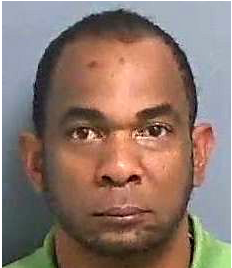
Terry Lamont McMurry, 49, Hutchinson, entered pleas to possession of cocaine and marijuana, both with intent to distribute, possession of drug proceeds, endangerment of a child and sale of marijuana. As part of a plea agreement, the state dropped two charges for possession of drug paraphernalia and no tax stamp.

His attorney argued for a departure in the case, which was denied by District Judge Trish Rose. She ordered the sentenced be served.

In November of 2015, the Reno County Drug Unit set up a controlled buy from McMurry using an informant with a listening device.
That then led to the eventual search warrant being served on McMurry’s home in the 1600 block of Aurora.
The state alleges he was selling the drugs from his home
They allegedly found marijuana and cocaine inside the home packaged for sale, packaging material, scales and cash.
Marijuana was also found in McMurry’s Mustang and crack cocaine was found in his Mercedes convertible.
Three Mercedes cars and the Mustang were seized during that search.
McMurry was a school counselor at Faris Elementary School in Hutchinson at the time of his arrest.

Clara Colleen (Koppes) Burroughs

screen-shot-2016-12-05-at-10-56-50-amClara Colleen (Koppes) Burroughs passed away Thursday, December 1, 2016 at Salina Regional Health Center in Salina, Kansas at the age of 68. She was born on September 4, 1948 in San Mateo, California to Nicholas “Nick” and Veda (Bane) Koppes. After graduating from Miami Coral Park High School in Miami, Florida, she went on to graduate from Kansas Wesleyan University in Salina, Kansas in 1984 with a degree in nursing. In 1967 she was united in marriage to William E. Burroughs in Miami. They later divorced. They were blessed with a son, Bryan.

Colleen had a huge heart that was evident in everything she did. She enjoyed helping people, and her career as a nurse gave her the opportunity to touch countless lives; always encouraging her patients and bringing smiles to their faces, even in difficult times. As an animal lover, time with her German shepherds, Major and Dirk, was just as uplifting for her heart as it was for theirs. But the time she cherished the most was when she had opportunity to love on, and spoil her granddaughters.

Colleen is survived by her son Bryan Burroughs of Salina; daughter-in-law Cindy Burroughs of Topeka; and granddaughters Lexus and Jade Burroughs.
She was preceded in death by her parents Nick and Veda Koppes.

Funeral services will be held at 11:00 am on Monday, December 5, 2016 at Plumer-Overlease Funeral Home in Stockton. Burial will follow at the Stockton Cemetery. The family will receive friends from 10:00 am until service time on Monday at the funeral home.

Colleen showed us by her daily example how to live uncomplicated in life, and unconditionally in love. Her heart and spirit were a continual source of strength and encouragement for those she loved and cared for. Although she will be greatly missed, she will forever be in our daily thoughts, words, and deeds.

W. Kansas rural towns benefit from fire truck/equipment program

Eric Ward, excess property manager and fire planning specialist with the Kansas Forest Service, stands in front of the rows of military vehicles that his department turns into fire trucks for rural fire departments.

By TIFFANY RONEY
KSU

MANHATTAN — Small Kansas communities are benefiting from a fire truck and equipment program offered through the Kansas Forest Service at Kansas State University.

The Kansas Forest Service, which is one of five state forestry agencies in the nation housed at a land-grant university, issues trucks and equipment through the Federal Excess Personal Property program and the FireFighter Property Program.

“These programs are a very good example of how K-State serves and engages with the citizens of Kansas,” said Eric Ward, excess property manager and fire planning specialist with the Kansas Forest Service. “Along with free trucks, we provide screening, training and administrative oversight, so these programs embody Kansas State University’s land-grand mission of providing direct service to Kansas citizens.”

The forestry service receives used trucks and equipment from Fort Riley and other military sites, completes any necessary repairs, and issues them to departments in need of resources. It has provided fire trucks, rescue tools, protective clothing and medical equipment to communities across Kansas. Some of the communities receiving resources this year include Ashland, Beloit, Bennington, Conway Springs, Council Grove, Effingham, Fredonia, Gem, Girard, Horton, Marquette, Savonburg, Towanda, Wakefield, Waterville and many more.

Terry Fleming, equipment mechanic with the Kansas Forest Service, repairs an engine on a used military vehicle that will become a fire truck for a rural fire department.

About 50 trucks are issued by the Kansas Forest Service each year. Each truck would cost about $500,000-$600,000 if purchased new from a manufacturer. Ward said many small fire departments have annual budgets of $2,000-$3,000.

“Our programs give communities fire protection they wouldn’t have otherwise,” Ward said. “Larger towns have enough taxes to fund their equipment, but for a rural community with a limited tax base, these programs are often the difference between having a fire department or not.”

The equipment is also potentially lifesaving for those who respond to emergency calls. The programs supply protective clothing and defibrillators, which are critical because heart attacks are one of the leading causes of death for firefighters.

“The cheapest defibrillators are about $1,500,” Ward said. “We offer them for free because having one can make a life-or-death difference.”

Fire departments qualify for the programs by submitting reports to the Office of the State Fire Marshal; completing a memorandum of agreement with the agency; and agreeing to paint the truck a non-military color and add a tank and pump within six months.

Ward said most fire departments are so grateful to receive any trucks or equipment that they fulfill those requirements immediately.

“The fire chiefs are very appreciative of the program,” Ward said. “Some are repeat customers who come back to us over and over. Without this provision, they wouldn’t be able to continue protecting their communities. Thanks to these programs, they can keep serving and protecting Kansas citizens for years to come.”

The Kansas Forest Service is part of the horticulture and natural resources department in Kansas State University’s College of Agriculture.

Workshops scheduled to help Kan. farmers weather ag economy

ROXANA HEGEMAN, Associated Press

WICHITA, Kan. (AP) — Kansas State University will provide financial and management advice for farmers and ranchers in the struggling agricultural economy.

It’s was a tough year for farm income and the commodity outlook for 2017 is pessimistic as well. Operating loans for this past season are coming due soon, and experts say many growers can’t make the payments.

See program description here.

A series of workshops that aim to help farmers navigate the downtown are planned across the state, starting next week and continuing into February.

The university has also expanded its farm analyst program to provide one-on-one assistance.

Its agricultural economics department says the goal is to help producers avoid bankruptcy and make adjustments in their operations while they still can.

Now That’s Rural: Allen Bailey, Marshal of Dodge City

Ron Wilson is director of the Huck Boyd National Institute for Rural Development at Kansas State University.
By RON WILSON
Huck Boyd National Institute for Rural Development

Illesheim, Germany. This audience is excited because authentic cowboys from Kansas are performing cowboy music. One of them is even the official marshal of Dodge City. He’s a man of many talents who comes from rural Kansas.

Allen Bailey is the western performer who carries the title of Dodge City marshal. Allen grew up at Cimarron, Kansas and went on to a varied career, working for the gas company, building saddles and cleaning hats, working for a hospital and senior citizens home and then in education.

Several key interests surfaced early in his life. First of all, his dad had a cow-calf operation. Allen loved horses and the cowboy life. Second, he enjoyed history – especially Kansas history. Third, he liked to draw and create art. Fourth, he enjoyed music.

“One guy called me a Renaissance man but I told him I’m just a nut who likes to do lots of things,” Allen said. “I do love Kansas.”

“I was fortunate to grow up in a musical family,” Allen said. “When I was 10 or 11, I found a book in the local store which said `You Too Can Play the Guitar.’ It cost 50 cents. I borrowed the money from my mother and she spent the rest of her life trying to get it back,” he said with a smile.

Allen learned to play on an old Roy Rogers guitar, not much bigger than a ukulele. “What was really neat is that, years later, I was able to interview Roy Rogers himself and tell him that story.”

Allen loved the guitar and found that he could play and sing. Soon he was playing dances professionally. Today Allen plays the guitar, bass guitar, pedal steel guitar, fiddle, tenor banjo, and piano. He continues to write, compose and perform music.

Allen started listening to High Plains Public Radio, the station based in western Kansas. He volunteered to help with some of the early fund drives. When the station manager suggested that they needed some live music, Allen offered to bring in his band.

“The program director noticed that I had a gift of gab,” Allen said. “She asked me if I wanted to host a program. They were looking for a program on Celtic music. I told her I didn’t know anything about Celtic music. She said, `So what do you know about?’ I said, `Western swing.’”

That was the beginning of a program called Western Swing and Other Things hosted by Allen Bailey. “I didn’t think it would last six weeks,” Allen said. Today, Western Swing and Other Things continues to air weekly on High Plains Public Radio as it has done for 28 years. “We have lots of great listeners and nice folks.”

Allen also continued his pursuit in artwork. “I was a freelance artist. Now I paint mostly western scenes, wildlife and equestrian.” His art has appeared in wildlife magazines which have gone coast to coast.

In 2000, he was approached about another opportunity. The town of Dodge City was looking for an official marshal to serve as an ambassador for the community. With his trademark handlebar mustache, musical talent, and knowledge of western history – not to mention his engaging personality – Allen was a natural choice.

Since 2000, Marshal Allen Bailey has proudly carried the title of Dodge City’s official marshal. He has represented the community far and wide – even as far away as Germany.

“They put on a Civil War reenactment for us,” Allen said. “I was struck by the fact that they were walking on cobblestone streets built by the Romans next to houses that were thousands of years old, yet they were so interested in American history. They are fascinated by our old west.”

Allen and his wife Janey recently moved to a place near the rural community of Windom, population 137 people. Now, that’s rural.

For more information, go to www.angelfire.com/ks2/dcmarshal.

It’s time to leave Illesheim, Germany and our performers from rural Kansas. We commend Marshal Allen Bailey for making a difference by representing Dodge City and the state of Kansas so well.

Cathedral Concert is Sunday at St. Fidelis

VICTORIA — The annual Cathedral Concert at the Basilica of St. Fidelis in Victoria will be at 3:30 p.m. Sunday. The concert is free and open to the public.

The choirs of Fort Hays State Univeristy (Fort Hays Singers, Concert Choir) will be joined by the Smoky Hill Chorale and guest choirs: Hays HS Chamber Singers and the TMP Singers.

Others also will be a part of the festive concert, including the FHSU Brass Choir, FHSU Flute Ensemble, Kay Werth, Tom Meagher and visiting scholar Yanqing Xing. As always, carols sung by the audience will help to get them involved in the season.

Russell church will hold gift bazaar this weekend

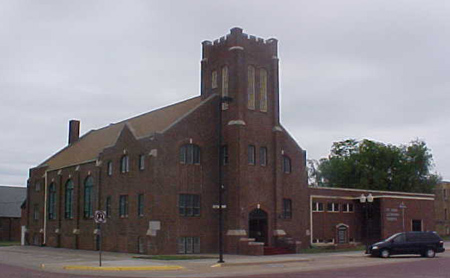
RUSSELL — St. John Lutheran Church, 425 N. Main, Russell, will host its annual Gifts from the Heart Bazaar from noon to 3:30 p.m. Sunday at the Parish Hall.

Some of the gifts available will be quilts, fair trade gifts, jewelry, scarves, baskets, baked goods and many other items. All proceeds raised will be donated to a worthy cause. Admission is free with a non-perishable item for the Russell County Food Pantry.

For more information, contact Margaret Finkbeiner (785-483-4105), Judy Holmes (785-483-2551), Jan Deines (785-483-4790), Janice Jack (785-445-3786) or Terri in the St. John Lutheran Church office (785-483-5358).

Copyright Eagle Radio | FCC Public Files | EEO Public File