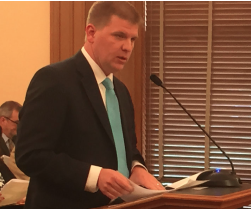
Photo by Ashley Booker Shawn Sullivan, Gov. Brownback’s budget director
JOHN HANNA, AP Political Writer
TOPEKA, Kan. (AP) — Kansas officials are bracing for a new fiscal forecast for state government that is expected to force Republican Gov. Sam Brownback to outline new proposals for avoiding a budget deficit.
State officials, legislative researchers and university economists were meeting Wednesday to draft revised projections for tax collections through June 2017. The new forecast is expected to be more pessimistic than the current one issued in November.
Budget Director Shawn Sullivan then is expected to outline budget measures.
The state’s tax collections for the current fiscal year have fallen $81 million, or 1.9 percent, short of expectations.
The new forecast could leave the state with a projected budget deficit for the next fiscal year beginning July 1.
Legislators return next week from their annual spring break to tackle budget issues.
FINNEY COUNTY- Law enforcement authorities in Finney County are asking the public for help to locate a suspect in connection with a stabbing.
Just before 8:30 p.m. on March 21 Officers of the Garden City Police Department were dispatched to the 200 block of N. Tenth Street.
They found a 21-year-old man with a stab wound to the chest.
He was transported to the hospital with life threatening injuries.
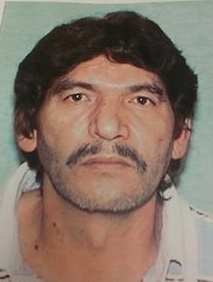
After further investigation the Garden City Police Department has identified a suspect and is requesting assistance from the community to attempt to locate 55-year-old Ramon Ramirez-Estrada. He is 5’8” inches tall and weighs approximately 160 pounds.
He does have an active warrant for his arrest for Aggravated Battery, according to police.
CANEY, Kan. (AP) — A small southeast Kansas school district will have a four-day week for the rest of the year to save money.
The Wichita Eagle reports the Caney Valley school board voted to add 10 minutes to each school day and cancel classes for the next five Fridays.
Superintendent Blake Vargas says the district, which has about 800 students, is facing a $70,000 budget shortfall. He cited adjusted enrollment, bus costs and years of educational funding cuts for the shortfall.
Other school districts also are considering schedule changes or other measures to reduce costs.
Jim Freeman, chief financial officer for Wichita schools, says that district cold end this school year early, and his staff might propose lengthening the school day but shortening the next school year.
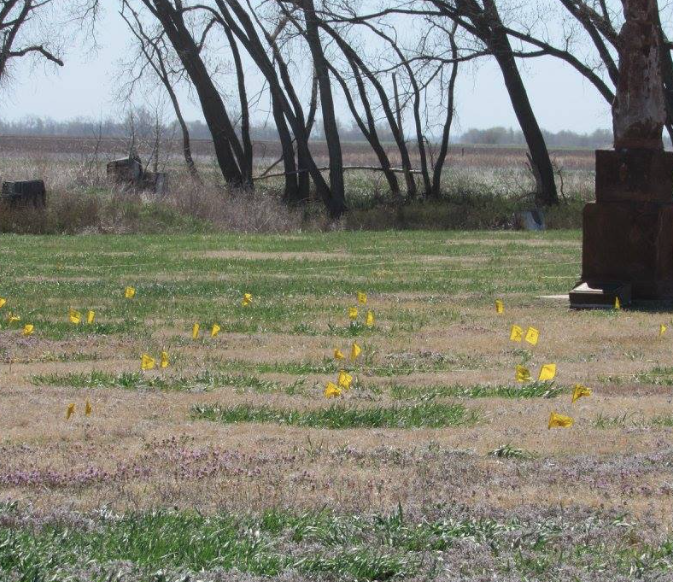
Flags mark the cemetery survey-photo Fort Larned National Historic Site
FORT LARNED, Kan. (AP) — Archeologists think they have a better idea of where bodies are buried near the Fort Larned National Historic Site in Kansas.
The fort’s history stretches back to 1859, when thousands of soldiers were stationed there to preserve peace among Santa Fe Trail travelers and Native Americans. It didn’t become the Fort Larned National Historic Site until Aug. 31, 1964.
The Great Bend-Tribune reports that a crew surveyed 16 acres at the fort this month using non-invasive surveying methods, such as ground-penetrating radar. Historical accounts indicate that deceased civilians and military personnel, perhaps as many as 100, were buried near the fort.
Although archaeologist Steven De Vore has a good idea of the bodies’ location, excavation work would be needed to determine the precise location.
Five Fort Hays State University professors will present “Pecha Kucha” — a series of topics presented in 20-second segments — at the Science Café at 7 p.m. Tuesday, April 26, at Gella’s Diner, 117 East 11th St.
“Pecha Kucha” features 20 slides of various images, shown for 20 seconds each.
The presenters are from FHSU’s Physics Department: Dr. Gavin Buffington, professor; Dr. C.D. Clark III, assistant professor; Dr. Eric Deyo, assistant professor; Dr. Jack Maseberg, associate professor; and Dr. Kent Rohleder, instructor.
The presentation is sponsored by FHSU’s Science and Mathematics Education Institute and is free and open to the public.
LAWRENCE — Larry Singell is the second of three candidates for provost and executive vice chancellor of the Lawrence campus, according to a media release.
He has served as executive dean of the College of Arts and Sciences at Indiana University Bloomington since 2012. Singell, an economist who studies the economics of higher education, had previously been associate dean for social sciences in the College of Arts and Sciences and head of the economics department at the University of Oregon. Other details about the candidate, including a complete curriculum vita, are available at provostsearch.ku.edu.
Singell will deliver a public presentation to campus from 4 to 5 p.m. Thursday, April 21, at Alderson Auditorium in the Kansas Union. A reception will follow from 5 to 6 p.m. in the Traditions Area on the fourth floor of the Kansas Union.
For those with a KU online ID, the presentation will be live-streamed via video, and an archived video link will be made available after the presentation is over. Links to the live stream and archived video will be available at provostsearch.ku.edu, as well as an online evaluation form. Evaluation forms will be accepted until April 28.
Singell joins Neeli Bendapudi as named candidates for the position.
A search committee chaired by Steve Warren, professor of speech-language-hearing and investigator in the Life Span Institute, identified the three candidates. The committee was assisted by the executive search firm R. William Funk and associates.
The final provost candidate’s public presentation is scheduled for 4 p.m. Monday, April 25, at the Summerfield Room in the Adams Alumni Center. The name of the remaining candidate will be announced on Friday, April 22.
WASHINGTON, D.C. – U.S. Sen. Pat Roberts, R-Kan., Chairman of the U.S. Senate Agriculture, Nutrition, and Forestry Committee, and U.S. Sen. Jim Inhofe, R-Okla., Chairman of the U.S. Senate Environment and Public Works Committee, today released a statement after receiving a letter from the U.S. Environmental Protection Agency (EPA) inspector general regarding the Agency’s taxpayer funded, anti-farmer campaign.
“I am pleased the EPA inspector general agrees that an investigation into the Northwest Indian Fisheries Commission’s questionable use of millions in taxpayer funded grants for political purposes is warranted,” Sen. Roberts said. “In the days since Sen. Inhofe and I called for an investigation, farmers and ranchers have contacted my office to thank us for standing up for them. We already know this campaign was malicious. Now we need to know what role the EPA had in it and whether they are properly monitoring the lawful use of federal funds.”
“It is important that the EPA inspector general get to the bottom of how taxpayer money was used to criticize farmers and promote the agenda of environmental activists,” Sen. Inhofe said. “In a hearing before the Environment and Public Works Committee this morning, EPA Administrator Gina McCarthy admitted that EPA has halted payments to the grant organization due to the concerns the inspector general will be investigating. That’s an important step, but EPA needs to prevent similar mismanagement for occurring in the future.”
Roberts and Inhofe on April 5 sent a letter to Arthur A. Elkins, Jr., the inspector general of the EPA, requesting an audit and investigation of an EPA grant to the Northwest Indian Fisheries Commission used to support an anti-farmer advocacy campaign in Washington state. The campaign included billboards and a website that support increased regulation of agriculture in Washington state. The inspector general has confirmed that it will answer the questions raised in the Roberts and Inhofe letter as part of an audit into the $20.5 million in grants awarded to the Northwest Indian Fisheries Commission.
HOISINGTON – Law enforcement authorities in Barton County are investigating a suspect on drug and weapons charges
Just after 10 a.m. on Tuesday, officers with the Hoisington Police Department and Barton County Sheriff’s Office responded to 467 West 9th Street in reference to a male subject identified as Al Pierce, 61, who was threatening to kill his wife as well as harm law enforcement if they responded, according to a media release.
Information given prior to law enforcement’s arrival was there were firearms in the residence.
Upon arrival officers contacted Pierce briefly at the front door before he went back inside. Pierce later exited out of the rear of the residence and began walking south on Clay Street where he was taken into custody.
A search of the residence was later conducted where narcotics, stolen property and firearms were recovered.
Pierce was booked into the Barton County Jail on the following charges in lieu of $300,000.00 bond:
1. Possession of Methamphetamine with intent to distribute within 1000’ of a school
2. Possession of a Controlled Substance
3. Felony Possession of Marijuana
4. Felony Possession of Drug Paraphernalia
5. Possession of Drug Paraphernalia
6. Criminal Use of a Weapon
7. Criminal Possession of a Weapon
8. Criminal Possession of a Weapon
9. Criminal Threat
10. Felony Interference with Law Enforcement
11. Theft
Pictured left to right: Andre Favors Saints Head Coach, Scott Gardner Saints Owner/ General Manager, Kevin Boryczki Bicentennial Center Asst. General Manager/Director of Marketing, and Ron Rideout Bicentennial Center General Manager- photo Bicentennial Center
SALINA -For the first time since 2007, a minor league professional basketball team will call Salina home.
At a press conference Tuesday afternoon, Bicentennial Center officials announced that the Salina Saints of the American Basketball Association (ABA) will play their home games in 2016-17 at the Salina Bicentennial Center.
The Saints are owned and operated by Toda, LLC, a local Salina group led by Scott Gardner, who will also serve as the team’s general manager.
Gardner, a Salina resident, has been involved locally with MAYB and AAU basketball teams. He is a graduate of Northern Iowa University where he played collegiate football.
“We are excited to bring minor league basketball back to the City of Salina,” said Gardner. “We are thrilled to give back to the community by providing fun, affordable, family entertainment at the Bicentennial Center.”
At the press conference, Gardner introduced the Saints Head Coach, Andre Favors.
Favors, a Salina resident, has previous coaching experience as the head coach of the Brown Mackie Women’s Basketball Team.
He was also the assistant coach with Garden City Community College and Brown Mackie during the 2005 National Championship Season.
The Saints’ season, which is tentatively set to begin in November, will consist of 20 games, 10 home and 10 away. Most of the games will take place on Saturdays and Sundays. The regular season runs through February.
Three tryout sessions will be held for the team, two in Salina and one in Wichita. The first tryout session is scheduled for May 21 from 8 a.m. to 2 p.m. at the Kansas State University Polytechnic Gymnasium. Favors said prospective players must be within a 100-mile radius.
“The ABA is excited about getting a team here in Salina,” Favors said. “It’s a great place for professional sports and people will come out and support it.”
Season tickets for the Salina Saints 2016-17 season are currently on sale at the Bicentennial Center Box Office or by calling 785-826-7200. For pricing and more information please visit BicentennialCenter.com or call 785-826-7200.
For more on the Salina Saints, including tryout information, visit SalinaSaints.com.
LAWRENCE, Kan. (AP) — A second member of the University of Kansas rowing team has filed a lawsuit alleging she was sexually assaulted by a football player at the school.
The Kansas City Star reports the student isn’t named in the lawsuit filed Monday. Her attorney, Dan Curry, says the woman was assaulted Aug. 29 in her room at Jayhawker Towers.
Curry filed lawsuit in March for former Kansas rower Daisy Tackett, who said she was assaulted at Jayhawk Towers in 2014. Curry says the women were assaulted by the same football player, who agreed in March to be expelled. His name hasn’t been released.
University spokeswoman Erinn Barcomb-Peterson declined to comment on individual sexual assault investigations. But she says the university tries to investigate and quickly resolve all reports of sexual assault.
(AP) — UnitedHealth, the nation’s biggest health insurer, says it will remain in public health insurance exchanges in only a handful of states next year after expanding to 34 this year.
CEO Stephen Hemsley says the company cannot continue to broadly serve the market created by the Affordable Care Act’s coverage expansion because of the higher risk that comes with its customers.
UnitedHealth Group Inc. has estimated that it could lose as much as $475 million on its public exchange business this year and expects losses from its exchange business to total more than $1 billion for this year and last.
Hulda (Franz) Goossen was welcomed into her eternal home in heaven on April 16, 2015, by her Lord and Savior Jesus Christ, along with many other family members and friends who have “gone before.”
Hulda Ella was born to Peter J. and Anna Franz on April 6, 1921, in rural Canton, Kansas. She was the youngest of seven children. She married Cornelius D. Goossen on June 2, 1942, after which they settled on a farm near Mingo, Kansas. Eight children were born to the union. She is loved and remembered well by her family: Vernon and Linda Goossen of Mingo, Kansas; Simon and Carolyn Goossen of Westminster, Colorado; Andrew and Sheryl Goossen of Pryor, Oklahoma; Harold and Priscilla of Lincoln, Nebraska; Othelia and Bernie Vacura of Oberlin, Kansas; Tim and Micki Goossen of Goodland, Kansas; Arleta Wiebe of Elbing, Kansas; and Erna Goossen of Norton, Kansas. Hulda was predeceased by her husband, a son-in-law, Kevin Wiebe, and a grandson, Scott Goossen. She leaves many who will remember her including 23 grandchildren, and their spouses, 44 great-grandchildren, and 2 step-great-great-grandchildren.
In her early years, Hulda lived with her family lived on a farm about five miles from Goessel, Kansas. The house had a kitchen built onto the back and behind the house there were also steps, which led down to the cellar. Hulda was told not to go down there, but curiosity got the best of her and she disobeyed, sneaking down to the forbidden underground storeroom. The complete darkness and dampness scared her so much that she never went down there again.
The Franz family attended the Alexanderwohl Mennonite Church. Sometimes after church they sometimes went to Grandpa and Grandma Schmidt’s home for dinner. It was so much fun looking at the catalogs they had at their house. Hulda recalled the high shelves in her grandparent’s home. Aunt Maria had to really stretch to reach them. Years later upon visiting the home as an adult, she realized the shelves were actually regular in height. Aunt Maria was short and, of course, Hulda had been just a child.
Hulda preferred outdoor chores more than the indoor domestic ones, so sisters Bertha, Katherine and Anna Ruth helped their mother with the housework while Hulda helped her father and brothers, Jacob and Peter, with the outside work. She fed the chickens and gave the calves milk from a bucket. As she grew she took on the responsibility of milking ten cows. When she would go for the cows in the evening, she took the dog, Bobby, with her. He would help her round them up.
A few months after her sister, Bertha, married Alvin Goossen and moved to Thomas County in western Kansas, Hulda’s parents decided they would also move there. They purchased a 300-acre farm one-half miles west of Mingo, Kansas. Hulda was nine years old.
Hulda loved school and geography was her favorite subject. Although the class was taught in English, all the children spoke German. If they had a question, they asked it in German. German was all that was ever heard on the playground at recess. She finished her early education, completing eighth grade at the Mingo Country School. She was kept busy with schoolwork and chores at home. Hulda also enjoyed sewing and sometimes she found time and scraps of cloth to sew clothes for her niece Susy’s doll.
Hulda professed her faith in Jesus at an early age during daily vacation Bible school. When she told her father about it, he said that she was too young and did not understand. He thought she was just missing her mother who was away from home tending her daughter who had just had a baby. Years later after her marriage, Hulda was listening to the Back to the Bible Broadcast on the radio while ironing clothes. God spoke to her heart and she reaffirmed her faith in Christ for her eternal salvation. As an adult, she became a member of the Meadow Mennonite Church in Mingo.
During the Great Depression of the 1930’s, the Franz family considered a meal with meat a very special treat. Hulda’s father butchered for people and they would sometime give him pieces that they did not care for, such as the tongue and the tails. Her mother made a delicious oxtail soup. In order not to spend money on gasoline, her father removed the engine from his vehicle and hitched the horses to it, drawing the reins through an opening.
In this way the family could have the comfort of an enclosed vehicle without the expense of gasoline and engine repairs.
A three-day blizzard in 1933 left the Mingo area residents snowbound for over two weeks. Snow had drifted up to the barn roof on the Franz farm. Brother Pete and Hulda dug a tunnel through the snow from the house to the barn.
Then there was the Dust Bowl, which plagued the Midwest. While the family ate their meals, they would cover their plates with newspaper, only lifting it long enough to sneak a bite and then return it to its place where it protected their food from the gritty dust. In an effort to prevent the dust from entering the house, they would wet rags and put them in the windows.
Cornelius Goossen was from the same community as the Franz family when they lived in the Goessel community. His adopted sister, Hilda, was Hulda’s special friend. She tried to encourage him to date Hulda. His brother, Alvin, had married Hulda’s sister, Bertha. One Christmas, Corny visited his brother Heinrich and his wife, Martha in western Kansas. He attended a Christmas program in which Hulda gave a recitation. “Some of us may not be here when Christmas comes again,” she quoted. The idea of the recitation was that opportunities must be taken in the moment, because they may never happen again. Cornelius decided he had better not let the opportunity of seeing Hulda go by.
Several weeks after Christmas, a storm hit western Kansas, burying the countryside in deep snow. One day Peter came running into the Franz home. “Someone is coming to see you,” he announced to his sister. “That’s impossible,” was Hulda’s response. “The snow is too deep. No vehicle could get through.” But it was true. Cornelius had trudged two and a half miles through deep snow to see Hulda. Much of their courtship was done by mail, but occasionally Cornelius would make the trip west for a personal visit.
On June 2, 1942, they were married in the Meadow Mennonite Church (now the Mingo Bible Church), which at that time met in a school house moved onto the church property in Mingo. It was the first wedding celebrated in the church building. The whole church was in attendance, as well as the groom’s parents. Their honeymoon trip was Hulda’s move to eastern Kansas. Cornelius loaded his bride’s belongings into his father’s Model T dump truck. They moved onto the Goossen family farm and lived in an upstairs bedroom, sharing the house with his parents.
Later they moved to a farm 5 miles south and ½ mile east of Mingo, Kansas. The Lord blessed them with eight children (Vernon, Simon, the twins Andrew and Harold, Othelia, Timothy, Arleta and Erna) and a debt-free farm. A series of accidents served to draw them closer to the Lord. Cornelius and Hulda were very missionary minded. They gave generously to the Lord’s work and often had missionaries in their home. Hulda did not prize possessions over people, but the remembrances and souvenirs that missionaries gave them had great meaning for her.
Cornelius was diagnosed with cancer and after battling it for three years, he entered the presence of the Lord on November 3, 1959. Bravely, Hulda maintained the family while her two oldest sons shouldered the responsibility of the wheat farm, often missing school to carry out the work. Even with all the work to accomplish, Hulda found time to enjoy life. Sometimes the boys started a baseball game in the yard. She would come up to bat and crack one clear out into the field, all the runners would move forward, and it was a win. Her children all thought she was the best, most fun-loving mom ever! She could cook like none other, but the food always disappeared too fast. Then it was time to wash up and start the next round.
A large part of Mom’s life and responsibilities revolved around her youngest daughter, Erna, who is mentally and physically disabled. She loved Erna dearly and was incredibly proud of her accomplishments, and even though Erna lived in Winfield and then later in Norton, Kansas, she was always concerned that her daughter knew of her mother’s love.
Five years after her husband’s death, Hulda decided to move to a home in Colby. There she found work as a nurse’s aide at the Good Samaritan Center, and later became the head baker at Colby Elementary School. Even though it was hard work, she enjoyed baking bread for all the school children. For several summers she served as the head cook during the summer at Maranatha Bible Camp near McCook, Nebraska. She was known for making delicious caramel pecan cinnamon rolls, and often shared them with the staff at the KGCR radio station.
In 1969, Hulda went back to school by taking GED classes and then went on to complete 33 hours at Colby Community College. She was proud that she could “hold her own” with the “youngsters” in her classes. She felt that her example was important to her children.
Eventually she became a professional seamstress, doing sewing and alterations for numerous customers. She also worked in the fabric department at Walmart. Hulda also found time to volunteer her time in order to help others. When the children were in grade school and high school, she taught Good News Clubs in Oakley. Hulda also helped found and enjoyed working at the U-Save Shop, a used clothing store that contributed their proceeds to the ARC (Association for Retarded Children) to benefit retarded children.
Hulda always had a smile on her face and a positive attitude, even when life brought her numerous difficulties. When her burdens here on earth were the heaviest, Hulda would often be humming and singing to lighten the load. She knew the words to every hymn and she enjoyed lifting her voice in praise to God. She enjoyed waking in the early hours and spending time in the Word with a cup of coffee in hand. She took the responsibility of making sure that all of her children went to church regularly and studied the Bible.
During her last years on earth, she resided at the Prairie Senior Living Complex where she received good care. Whenever her family visited her, Hulda was sure to repeat numerous times, “I like it here.” She was content to be wherever she was and found joy in little things. This was such an encouragement to her family.
Although we, her family, will miss her, we rejoice today because she has fulfilled her service on earth and has now heard her Father’s words, “Well done, my child. Welcome Home.”
Philip ‘Phil’ Finley, 86, Colby, Ks., died April 17, 2016, at Citizen’s Medical Center of complications from heart failure.
He was born March 25, 1930, in White City, Ks. the first of five children of Marshall A.and Zelma (Krenkle) Finley.
Philip graduated from Morrowville High School in 1947, and enrolled at Kansas State University. ROTC was mandatory, thus started his life long military career. He graduated from KSU in 1951 with an Agricultural Education Degree and a commission as a second Lieutenant of Artillery.
Philip was assigned to Fort Custer, where he met Jacquelin Lou Thomas of Battle Creek, Mich. and they married on the 24th of May 1952. Four months after the marriage, Philip was sent to the Republic of Korea, serving as an artillery forward observer and artillery officer with the 59th Field Artillery Battalion and the 15th Automatic Weapons Artillery Battalion.
After returning home from overseas combat, Philip once again enrolled at KSU and graduated with a Masters Degree. This began a new career as an educator, a career he was familiar with, since both his parents had dedicated their lives to education. In 1954 he moved to western Kansas accepting a position at Bird City Rural High School as a Vocational Agricultural Instructor.
In 1955 the couple moved to Norton, Ks., and Phil assumed the duties of Vo. Ag. Instructor and Assistant Principal of Norton Community High School. While in Norton, two children were born, Jeffrey A. Finley and Robin L. (Finley) Binder.
Following 12 years in Norton, the Finley’s moved to Oberlin, Ks.. Phil once again affiliated with KSU became the Decatur County Extension agent and later a Northwest
Area Extension Specialist concentrating on community resource development.
Moving to Colby, Ks. in 1974 found Phil serving as Northwest Area Extension Director until resigning in 1987 to shift careers once more.
Having been a member of the Kansas National Guard for numerous years, Phil achieved the rank of Brigadier General, commuting the long distance on weekends to the Kansas National Guard Headquarters in Topeka, Ks.. Exposure to state government offered an opportunity to become Adjutant General of Kansas under Governor Mike Hayden until 1991. Having reached the rank of Major General , Philip retires from a 40 year military career.
Retirement found Phil trucking, spending time with granddaughter Kally, involved with the VFW and American Legion, and rendering care to family and friends. Phil was unfettered in serving God, Country, Community, and Family and Friends. Phil knew no stranger and will be missed by all. What a wonderful Father and Friend!
Phil was preceded in death by his parents, sister Bonnie Holman (4/2/2016), brother-in-law Ronald Hiatt, granddaughter Rebecca Binder, and a son-in-law Roger Binder.
Survivors include; a son Jeff Finley and friend Mary Juenemann, a daughter, Robin Binder; siblings and in-laws Robert (Delores) Finley, Sam (Donna) Finley, Virginia Hiatt and brother-in-law Jon Holman and a granddaughter Kally Binder.






 FHSU University Relations and Marketing











 Philip ‘Phil’ Finley, 86, Colby, Ks., died April 17, 2016, at Citizen’s Medical Center of complications from heart failure.