Year: 2016
Partly cloudy, colder Saturday
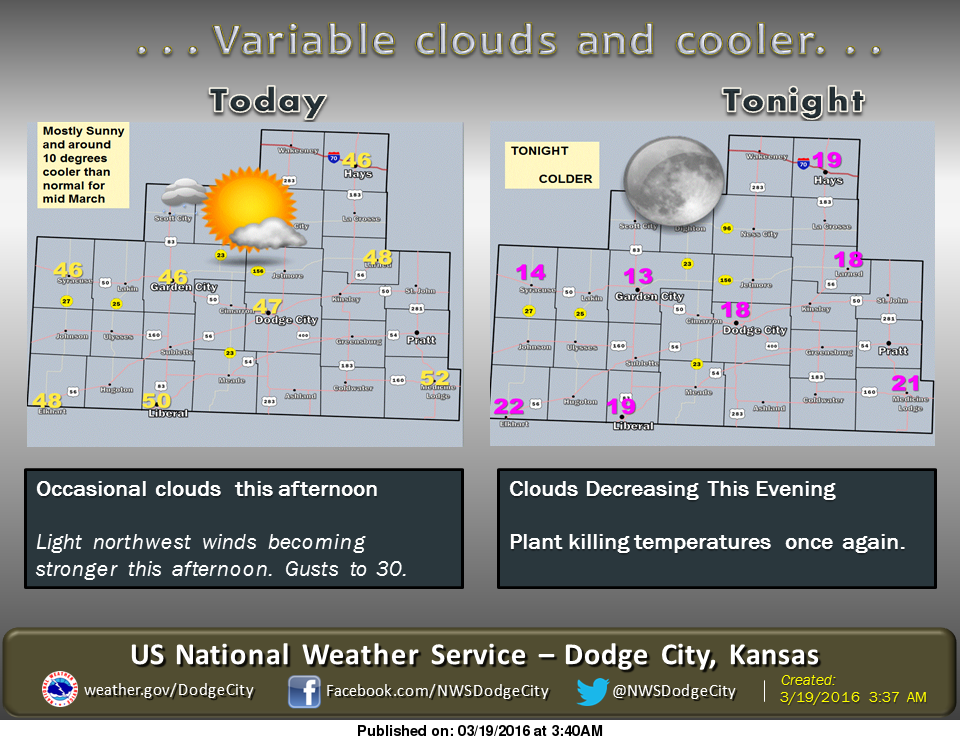
 The weekend will start on a cold note, with high temperatures in the mid 40s. During the afternoon north winds will become breezy, but then become light after sunset. Lows will be a few degrees cooler than last night. Temperatures will moderate on Sunday, returning to around 50 degrees.
Today: Mostly sunny, with a high near 46. Breezy, with a north northwest wind 8 to 13 mph increasing to 15 to 20 mph in the afternoon.
Tonight: Mostly clear, with a low around 18. North northwest wind 13 to 18 mph decreasing to 7 to 12 mph in the evening.
Sunday: Sunny, with a high near 53. Northwest wind 6 to 8 mph.
Sunday Night: Mostly clear, with a low around 30. South wind 7 to 11 mph.
Monday: Sunny, with a high near 74. South southwest wind 9 to 15 mph.
Teen sexting prompts a move to update child-porn laws

 KRISTEN WYATT, Associated Press
DENVER (AP) — Rampant teen sexting has left politicians and law enforcement authorities around the country struggling to find some kind of legal middle ground.
To many public officials, prosecuting students for child porn seems like overkill. But many aren’t ready to let students off the hook altogether.
Dozens of states have adopted or are considering new, more lenient laws that would apply in cases of teenagers sharing nude selfies among themselves.
The Kansas Senate has passed a bill to lessen the penalties for sexting by middle and high school students in hopes that prosecutors will be willing to combat the practice.
The Kansas House has approved their own version of the legislation.
Both measures focus on 12- to 18-year-olds accused of transmitting images of a nude child. Under existing state law, prosecutors are restricted to filing a felony charge that carries a prison sentence up to 11 years and four months and lifetime registration as a sex offender.
Both chambers’ bills make a first offense by someone 18 or younger a misdemeanor, punishable by up to a year in jail.
The debate underway in Colorado revealed deep divisions about how to deal with the phenomenon.
Kansas man hospitalized after SUV overturns
 JACKSON COUNTY, MO- A Kansas man was injured in an accident just after 3a.m. on Saturday in Jackson County Missouri..
The Missouri State Highway Patrol reported a 2013 Chevy Silverado driven by Sean P. Lamb, 24, Blue Springs, MO., was westbound on Interstate 70 just east of Blue Springs.
The SUV traveled off the right side of the road, struck a ditch and overturned.
Lamb and a passenger Casey S. Bates, 26, Manhattan, were transported to Centerpointe Medical Center in Independence.
They were properly restrained at the time of the accident, according to the MSHP.
KU Medical Center grapples with concealed weapons law
By SAM ZEFF
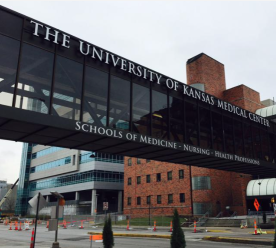
July 2017 may seem like a long way away, but when you’re planning to allow guns on college campuses, it might as well be just around the corner. How Kansas colleges will comply with the law allowing guns on campus while maintaining security is complicated.
But it’s perhaps most complex at the University of Kansas Medical Center and KU Hospital in Kansas City, Kan.

Since Kansas lawmakers passed a bill that would allow almost anyone to carry a concealed gun on college campuses, we’ve been hearing the arguments against it: Students are too immature to carry guns, theft is a problem and faculty would feel unsafe debating controversial topics in class. At the sprawling and growing KU Medical Center, they have all those worries and more.
“There are concerns in a high-stress, high-risk environment like health care,” says Executive Vice Chancellor Doug Girod.
The law allows institutions to ban guns, but only if they provide metal detectors and security guards. That’s not only prohibitively expensive but almost impossible to achieve at the medical center complex.
It’s easy to see why as you walk around the campus. From 39th Street you can see a dozen doors leading into the bookstore and a courtyard between buildings. Turn around and look north and there’s the medical library. Just down the street is the busy emergency room.
Almost 7,000 students and staff and hundreds of more patients and family member pass through those doors and dozens of others around the complex every day. Once through the doors, they enter a maze of hallways that connect classrooms, offices and clinics.
So Girod says he is worried.
“We have some vulnerable populations that are harder to protect. I mean, we’ve got patients stuck in a hospital, they aren’t going to get up and flee. We have children. We have pregnant mothers. The spectrum is very broad, so health care is certainly a unique environment.”
How unique? Some doctors say conflict is part of the job.
“But there’s a lot of confrontation that happens in health care,” says Allen Greiner, a family medicine doctor who has been on the faculty for 18 years and is a native Kansan. “Between groups of patients, inside of families, between providers and patients. Between providers and providers.”
He says guns are probably already being carried into the hospital, but he thinks this could make it even more common and gun accidents more likely. He’s not alone.
Erin Corriveau joined the faculty about a year ago and is also a family doctor. She has nothing but praise for KU Medical Center and Kansas City. But inviting more guns on campus, she says, may drive her and others from KU.
“I think a lot of faculty members will consider moving on if this is enacted,” says Corriveau. “I don’t think this is smart for Kansas. I don’t think this is the best thing for the health of our population.”
Most faculty and staff across the state agree with Corriveau. A recent survey from the Docking Institute at Fort Hays State University showed 70 percent of faculty and staff at Kansas Board of Regents institutions oppose the new conceal and carry law. Eighty-two percent said they would feel less safe with armed students on campus.
So there is pushback and even a bill that would reverse the portion of the law allowing guns on campus.
But all of it is mostly falling on deaf ears in Topeka. “Do you need security? Then you better get it,” says state Sen. Forrest Knox, a Republican from Altoona and one of the leading gun advocates in the Legislature.
He says his daughter is an emergency room nurse at Truman Medical Center in Kansas City, Mo., and her experiences there reinforce his thinking that everyone should be able to defend themselves.
“If you don’t provide security, then you shouldn’t deny the public’s right to provide for their own,” he says. “That’s the logic of the bill, OK, and nothing has changed in that whether it’s a hospital or not.”
Knox says he’s willing to listen if KU Medical Center officials want to restrict guns in the emergency room or patient rooms. For their part, officials say they probably will hire more police officers to patrol the 41-acre complex and may post security at the library, restricting guns in that building.
But short of turning out conservatives in the November election, nothing appears to be able to stop concealed weapons from coming to Kansas campuses.
Sam Zeff is a reporter for Heartland Health Monitor, a news collaboration focusing on health issues and their impact in Missouri and Kansas.
Election year issues to be discussed at Eisenhower Presidential Library

 ABILENE – The first in a series of Kansas Town Hall programs focusing on election year issues, “We the People: Civic Education in Kansas,” will be held Tue., March 22, in the Visitors Center of the Eisenhower Presidential Library, Museum and Boyhood Home, Abilene.
The program begins at 7 p.m. with a keynote speech by Kansas Attorney General, Derek Schmidt, who will address the rights and responsibilities of citizenship.
“I sometimes reflect on how much we demand of those who wish to become American citizens by their own choice,” Schmidt said. “In many ways, it is more than we demand of those of us fortunate to have been born to citizenship. The nature of citizenship is not always fully understood or appreciated by those to whom it came without effort.”
Schmidt was elected the 44th attorney general of Kansas in 2010 and reelected in 2014. In 2015, he was elected national Vice President for the National Association of Attorneys General.
A panel discussion will follow the keynote address, including four panel members. The panelists will discuss civic education programs, classes and activities in which they are involved. A question and answer session will follow their presentations.
Panel participants include:
Bob Beatty, Professor, Political Science, Washburn University. Beatty is also a
political analyst and consultant with KSNT/KTKA TV.
Nathan McAlister, History teacher, Royal Valley Middle School, Mayetta, Kan. In 2010 McAlister was named Kansas and National History Teacher of the Year by the Gilder Lehrman Institute for American History.
Pam Sanfilippo, Education Specialist, Eisenhower Presidential Library. Sanfilippo facilitates learning for groups of all ages using the primary sources in the holdings of the Eisenhower archives.
Tom Vontz, Professor and Director, Center for Social Studies Education, Kansas State University. Vontz’s interests include civic education research.
This Kansas Town Hall program is held in partnership with the Kansas Humanities Council, Kansas State University Library, and the Kansas State University Institute for Civic Discourse and Democracy.
Teens survive after airplane crashes on Kansas golf course UPDATE
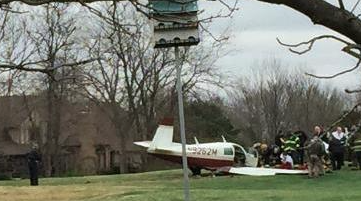

WICHITA, Kan. (AP) — A pair of teenagers was able to walk away from a rented airplane one of them was flying when it crashed onto a Kansas golf course.
Wichita police say the pilot was a 17-year-old boy and the passenger an 18-year-old woman who were on their way from Nashville, Tennessee, to Jabara Airport in Wichita on Friday when they crashed.
The Wichita Eagle reports the 1966 single-engine Mooney came down on the 14th hole at the Tallgrass Country Club, narrowly missing nearby homes. Nikki Womack says she and her daughter saw the plane fly very low over their neighbor’s home before crashing onto the golf course.
Womack says the boy got out and was bleeding from the head, followed by the woman, who had a serious eye injury.
———–
WICHITA- A small plane made an emergency landing at Tallgrass golf course in Wichita just after 3:20p.m. on Friday.
Two people were injured in the accident, according to Wichita Fire Department officials. The golf course is located in the 2400 Block of North Tallgrass.
Few additional details on what caused the accident are available. Check Hays Post for more information as it is released.
Kansas juvenile justice system is set for possible overhaul

 TOPEKA, Kan. (AP) — Low-risk juvenile offenders and those who violate probation could be referred to community-based programs instead of being placed in juvenile detention centers under a proposal being considered by Kansas lawmakers.
House representatives gave the measure first-round approval vote Friday. It passed 38-2 in the Senate last month. The House is expected to vote on final approved Monday. A Senate conference committee will then review changes to the measure.
The House Corrections and Juvenile Justice Committee added a provision to reserve up to 50 beds in group homes for offenders without a safe home. The measure approved by the Senate said all group homes would close by July 2018.
Some law enforcement agencies worried that offenders committing higher-level misdemeanors would be likely to re-offend if all homes closed.
Teen bicycle rider hospitalized after hit by Kansas driver

 RILEY COUNTY – A bicycle rider was injured in an accident just before 4:30p.m. on Thursday in Riley County.
The Kansas Highway Patrol reported a 2013 Honda Civic driven by Rachel Ryan, 24, Overland Park, was south bound on U.S. 177 three miles south of Manhattan, in the right lane.
The vehicle struck a southbound bicycle ridden by Shem McConnell, 17, Cusseta, Georgia.
McConnell was transported to the University of Kansas Hospital. He was wearing a helmet, according the KHP.
Ryan was not injured.
Kan. House advances bill to block local efforts to curb consumption of junk food

By JIM MCLEAN

JULIEN MENICHINI / CREATIVE COMMONS-FLICKR
The Kansas House on Thursday tentatively approved a bill to prohibit city, county and school district officials from adopting certain types of healthy food policies.
The bill — House Bill 2595 — would prevent local officials from restricting the sale of so-called junk food at restaurants, grocery stores and other retailers. It also would preclude policies that require businesses to provide consumers with more nutritional information about the food and drinks they sell.
The bill is scheduled for final action Friday.
The Kansas measure mirrors model legislation developed by the American Legislative Exchange Council, a controversial organization that works with corporate executives and state lawmakers to develop business-friendly policies.
The bill is being pushed by Republicans seeking to build a firewall in Kansas against policies being implemented in other areas of the country to restrict the sale or require more extensive labeling of high-calorie foods and drinks. The cite former New York Mayor Micheal Bloomberg’s failed attempt to regulate the size of sugary drinks as an example.
Supporters also want to head off any effort to use zoning and licensing laws to limit where fast food restaurants can locate. They say Kansas needs a statewide policy to create a predictable environment for businesses.
“What we’re looking for is consistency and uniformity,” said Rep. Gene Suellentrop, a Wichita Republican and ALEC member.
But opponents charge the bill is a solution in search of a problem. They say cities, counties and school districts aren’t contemplating the kind of policies the bill is intended to block. And they fear it will disrupt more modest local efforts to promote healthy eating and curb the state’s rising obesity rate, which at 31.3 percent ranks as the nation’s 13th highest.
“This bill would, I think, be harmful to hundreds of innovative and evidence-based programs and initiatives designed to improve the health of Kansans, especially children and teens,” said Rep. John Wilson, a Lawrence Democrat who works for a nonprofit organization focused on reducing childhood obesity.
Wilson said he fears the bill will have “a chilling effect” on efforts under way in Lawrence and Douglas County to create a healthy food environment. He said communities should be free to pursue such comprehensive approaches because the environments in which people live and work can “make it easy, hard or impossible” for them to make healthy choices.”
Ashley Jones-Wisner, a lobbyist for KC Healthy Kids, a nonprofit advocacy organization, said she is concerned the bill will hinder collaborative efforts to increase access to healthy foods in the Kansas City metropolitan area.
“The problem with this bill is that the language is incredibly broad,” Jones-Wisner said. “There could be a lot of unintended consequences.”
Jones-Wisner is particularly concerned about language in the bill that prohibits cities and counties from using permitting and licensing policies to address “food-based health disparities.”
“This bill could effectively tie the hands of local governments trying to retain local grocery stores in rural areas,” she said. “It could also potentially harm the work that we’re doing in urban areas to try and attract grocery stores and increase food access in low-income (urban) areas.”
During a committee hearing on the bill, Jason Watkins, a lobbyist for the Kansas Restaurant and Hospitality Association, said advocates needn’t be so concerned.
“Nothing in this bill says that a nonprofit can’t do education about lifestyle choices with their members,”
Watkins said. Still, Rep. Erin Davis, an Olathe Republican, was uncertain about whether the bill would allow school districts and local health departments to continue nutrition education programs.
So she offered an amendment to ensure that educators could continue to teach children that “an apple is a more healthy choice than a (Hostess) Ho Ho.”
Opponents applauded the amendment, which passed on a voice vote, but said they remained concerned that the bill could prohibit the ability of school districts to limit the availability of non-nutritious items in vending machines.
Jim McLean is executive editor of KHI News Service in Topeka, a partner in the Heartland Health Monitor team.
Symphony to memorialize ’66 Kansas tornado with stormy music
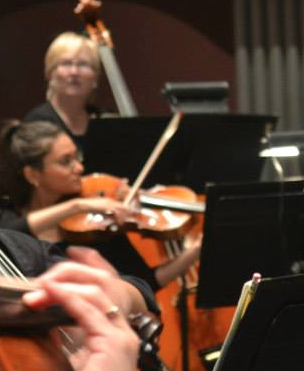

TOPEKA, Kan. (AP) — The Topeka Symphony Orchestra is performing stormy music to commemorate the upcoming 50th anniversary of a tornado that killed 16 people.
The Topeka Capital-Journal reports that the performance is scheduled Saturday night at the White Concert Hall on the campus of Washburn University.
The symphony’s music director and conductor, Kyle Wiley Pickett, says he’s read accounts of the tornado that struck on June 6, 1966. The tornado was classified as an F-5 on the Fujita scale. It stayed on the ground for more than a half hour, cutting a half mile-wide swath.
Works from Ludwig van Beethoven and English composer Benjamin Britten will be performed in remembrance. Pickett says the selections “reminds us of the greatness of nature — its beauty as well as terrible power.”
Voters will decide whether to add hunting, fishing rights to Kan. constitution

TOPEKA, Kan. (AP) — Kansas residents will decide this November whether to include the right to hunt, fish and trap wildlife in the state constitution.
Kansas would become one of about 20 states that make hunting, fishing and trapping a constitutional right if voters approve the proposed amendment in the Nov. 8 election. The Senate gave final approval to the House resolution in a 36-0 vote Thursday. It passed 117-7 in the House last month.
The measure would add a new section to the constitution’s Bill of Rights to preserve the outdoor activities as a preferred way to manage wildlife. Any future measures seeking to limit the activities would need to prove that a particular animal could become endangered.
Watch the Special Olympics Opening Ceremonies

Video from the 2016 Special Olympics Kansas Opening Ceremonies from Thursday evening.