TOPEKA, Kan. (AP) — A man has died after being shot in what Topeka police believe to be a drive-by shooting.
Topeka police Lt. Bryan Wheeles said that 25-year-old Deljuan Patton was shot early Sunday morning and transported to a hospital by a private vehicle. Police responded to the hospital, where Patton later died.
According to Wheeles, preliminary information indicates that Patton was struck during a drive-by shooting as he was seated in a vehicle.
WICHITA, Kan. (AP) — A 53-year-old man has been arrested after Wichita police say he stabbed his 32-year-old son and threatened his 11-year-old grandson with a knife.
Wichita Police Department Sgt. Steve Yarberry said that the incident happened shortly before 9:40 p.m. Saturday. Police say someone called 911 and reported that the suspect stabbed his son with a pocketknife after a verbal and physical altercation.
Yarberry said that the son was stabbed in the abdomen and was transported to a hospital in critical condition. The grandson was not injured in the incident.
The 53-year-old man was arrested on suspicion of aggravated battery, domestic violence and aggravated assault.
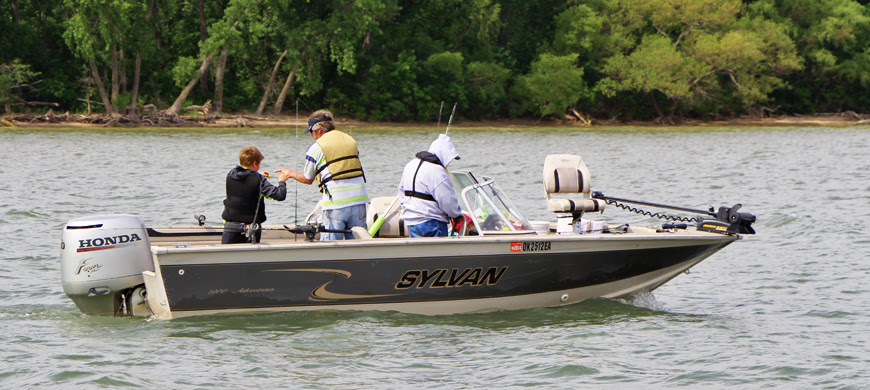
PRATT– Anglers like to keep their best fishing holes secret, but that’s hard to do now that the Kansas Department of Wildlife, Parks and Tourism (KDWPT) produces the annual fishing forecast. The forecast is a compilation of data gathered by KDWPT district fisheries biologists throughout the year. The data comes from sampling efforts, including test netting, electroshocking and creel surveys. The forecast presents this data in a format that lets anglers find waters that contain their favorite species in both good numbers and the size they prefer.
For example, if you like to catch crappie, you can use the forecast to find a reservoir, lake or pond where the biologist found lots of crappie during sampling efforts last fall.
A quick look at the reservoir category for white crappie shows that John Redmond Reservoir is ranked No. 1 for Density Rating, which is the number of crappie longer than 8 inches caught per unit of sampling effort. If you’re more interested in quality-sized crappie, then look at the Preferred rating, which is the number of fish caught during sampling that were 10 inches long or longer. Again, John Redmond is No. 1, by a large margin. Two-thirds of the fish sampled in John Redmond last fall were longer than 10 inches. The Lunker Rating (crappie longer than 12 inches) for this lake is also No. 1 among Kansas reservoirs. So, John Redmond will be a great place to catch crappie this year, both in terms of numbers and size.
Theoretically, a reservoir with a Density Rating of 32 will have twice as many crappie 8 inches long or longer than a lake with a Density Rating of 16. However, there are often other factors that may influence sampling results, and some lakes may not be sampled every year, so the forecast includes other ratings such as the Biologist’s Rating. A biologist may feel that the numbers don’t accurately reflect the fish population, so they enter a rating of Excellent, Good, Fair or Poor. The Three-year Average is there because a lake may not have been sampled this past year. It shows an average of the past three years of Density Ratings. And finally, there is a Biggest Fish rating, which simply lists the biggest fish caught during sampling.
Anglers can view the forecast at www.ksoutdoors.com, and in printed brochures that will soon be available at KDWPT offices. Use the 2016 Fishing Forecast to find your own fishing hot spots this spring.
TOPEKA, Kan. (AP) — Kansas legislative negotiators have agreed on the details of a plan for balancing the state’s next budget.
The plan drafted Monday by three senators and three House members would eliminate a deficit of nearly $200 million in the state’s $16.1 billion budget for the fiscal year beginning July 1. It would do so mostly by juggling funds.
But the plan does not add extra money for public schools to respond to a Kansas Supreme Court decision striking down an education funding law.
The court said last week that poor school districts have been shorted by a 2015 law that distributes more than $4 billion in aid a year to the state’s 286 local districts.
Both chambers must approve the agreement for the plan to go to Republican Gov. Sam Brownback.
TOPEKA, Kan. (AP) — The Kansas Secretary of Corrections would be able to sell prison-made goods to more entities under two bills before a House committee.
Both of the measures would allow the secretary to sell products to any person or organization in Kansas. One would allow a vocational building program to manufacture housing units for sale or donation to the public.
Corrections Secretary Johnnie Goddard told the House Committee on Commerce, Labor and Economic Development on Monday that the program would reduce the recidivism rate from 35 percent to 18 percent.
Proponents from Ellsworth say the program also would address the shortage in rural housing. A representative of the Kansas Manufactured Housing Association argued that the measures would create unfair competition.
The Department of Corrections would pay inmates up to $1.05 a day.
LOS ANGELES – A Kansas State University professor won a Grammy award on Monday night for his solo performance on an album with the Kansas City Chorale
Bryan Pinkall, assistant professor of music, and the Kansas City Chorale won in the categories of Best Choral Performance for the album “Rachmaninoff: All-Night Vigil.” He is a 2003 graduate of Great Bend High School
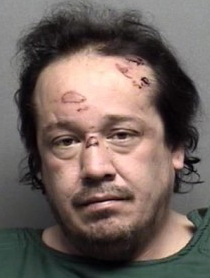
SALINA- Law enforcement authorities in Saline County are investigating an attempted robbery.
Just after 1:30a.m. on Sunday, Police were called to the 100 block of East Prescott after a report of a robbery in progress.
When they arrived, officers found Danny Barnhouse, 44, had tried to rob two men by pointing what appeared to be an assault rifle at them, according to police.
The victims were able to wrestle the toy airsoft gun and a knife from Barnhouse and hit him in the face several times.
Barnhouse was booked into the Saline County Jail on requested charges of attempted aggravated robbery, attempted aggravated burglary, and aggravated assault.
Click below to listen to Monday’s Tiger Talk with Fort Hays State women’s basketball coach Tony Hobson and men’s coach Mark Johnson. The program airs Monday at 6 p.m. on Tiger Radio Mix-103.
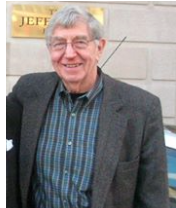
Courtesy photo -Snead in a social media account from March of 2015 “An old hard drive find. December 15, 2005 found (longtime Washington Post Editor) Ben Bradlee (left) outside the Jefferson Hotel in D.C. obviously hurting for a lunch date.
LAWRENCE, Kan. (AP) — Bill Snead, an award-winning news photographer from Kansas whose career included covering wars and national political conventions, has died. He was 78. You can see some of his amazing work here.
Snead’s wife, Dona Snead, said Monday that Snead died at his Lawrence home Sunday after struggling for several months with advanced lung cancer.
Snead spent 21 years with The Washington Post, including as a staff photographer and assistant managing editor for graphics.
The Lawrence Journal-World reports Snead also served as picture editor for National Geographic and bureau manager for United Press International in Ho Chi Minh City, Vietnam. Snead was later a senior editor at The Lawrence Journal-World until 2007.
He won the newspaper photographer of the year award from the White House News Photographers Association in the early 1990s.
SUMNER COUNTY – One person died in an accident just before 9a.m. on Monday on Sumner County.
The Kansas Highway Patrol reported a 2015 Chevy pickup driven by Daniel J. Santiago, 27, Alva, OK., was westbound on U.S. 160 seven miles west of Wellington.
The pickup rear-ended a westbound 1997 International semi that was westbound, stopped and getting ready to turn south on Mayfield Road.
Santiago was transported to Shelly Funeral Home.
The semi driver Van Galliardt, 53, Matfield Green, was not injured.
Santiago was not wearing a seat belt, according to the KHP.
TOPEKA, Kan. (AP) — Two Kansas legislators from different parties are suggesting that the state has mismanaged its two mental hospitals to justify a turning them over to private companies to operate.
But one of Republican Gov. Sam Brownback’s top social services administrators told a House committee Monday that there’s nothing to the allegation.
Both Democratic Rep. Jim Ward of Wichita and Republican Rep. Scott Schwab of Olathe suggested the hospitals may have been deliberately mismanaged.
Secretary Tim Keck said the Department for Aging and Disability Services sees privatization to as an option for Osawatomie State Hospital about 45 miles southwest of the Kansas City area, but not for Larned State Hospital in western Kansas.
Dozens of positions are open at each hospital, and the federal government decertified the Osawatomie Hospital in December.
The Kansas Supreme Court ruled last week that the current method of funding public schools is unconstitutional, which I had predicted when the block grant funding mechanism was enacted during the 2015 legislative session. The court gave the legislature until June 30 to replace the faulty system with another which will ensure relatively equal educational opportunity for all Kansas school children. Note that this ruling only applies to equity of funding, and the larger question of whether funding is adequate is still unsettled.
The problem with the block grant is that it locked each school district’s level of state support at a specific amount and did not take into account factors such as changes in enrollment, number of special needs students, or shifts in a district’s ability to assist in the funding of its schools. The Court pointed out that one solution would be to return to the old school finance formula, which was first adopted in 1992 and subsequently modified numerous times to better match the needs of districts and their students. If legislators do not choose that approach then another plan must be rapidly developed in order to meet the June 30 deadline.
If the legislature fails to act then the Court will enjoin state officials from making any expenditure to public schools until their ruling is followed. If that happens then Kansas public schools will not open next fall. This situation is nothing less than a constitutional time bomb, and it raises several pertinent questions:
How much additional money will be needed to ensure equity? The court gave no specific figure and left it up to the legislature to determine. Early estimates range from $50 million to $100 million but it will obviously depend on the details of the new funding formula.
Where would that money come from? The legislature has consumed all available excess funds in crafting a budget last week, a budget I declared to be held together with baling wire and duct tape when I voted no. The legislature has cut income taxes and raised sales taxes to among the highest in the nation. We have few options in this self-inflicted crisis.
Does the Supreme Court have the authority to stop expenditures for schools and shut down the system? The constitution specifically grants the power to appropriate funds to the legislative branch of government. Some colleagues are outraged that the court would take this step. However the Kansas constitution specifically states “the Legislature shall make suitable provision for finance of the educational interests of the state”. The court has assumed responsibility to interpret whether the finance provided by the legislature is in fact suitable… both in terms of equity and adequacy.
Here is an excerpt from last week’s ruling : “Without a constitutionally equitable school finance system, the schools in Kansas will be unable to operate beyond June 30. And because an unconstitutional system is invalid, efforts to implement it can be enjoined. “
On what basis does the court claim authority to rule statutes unconstitutional? Again from the ruling: “Our order should not be misinterpreted as expressing a desire by this court to become a regular supervisor of Kansas’ school funding system. We do not, as evidenced by our dismissal of the Montoy litigation 10 years ago. But our order is a manifestation of Hamilton’s conclusion that “the courts were designed to be an intermediate body between the people and the legislature.” Federalist Paper No. 78. Consequently, while we do not desire to become a supervisor of the school finance system, neither do we abandon our duty to the people of Kansas under their constitution to review the legislature’s enactments and to ensure its compliance with its own duty under Article 6.”
Alexander Hamilton directly addressed the question in the early days of our republic: “Limitations [on legislative authority] can be preserved in practice no other way than through the medium of the courts of justice, whose duty it must be to declare all acts contrary to the manifest tenor of the constitution void.” He later said “There is no position which depends on clearer principles than that every act of a delegated authority, contrary to the tenor of the commission under which it is exercised, is void. No legislative act, therefore, contrary to the constitution, can be valid.”
I must side with the court on this question. While we legislators are constitutionally empowered to appropriate, that authority cannot and must not stray into actions which are unconstitutional. And when that happens the court is surely authorized to intervene. Were it not so then the rights of the minority would be forever under threat. As the Kansas population shifts from rural to urban, rural legislators are increasingly outnumbered. Without judicial oversight and intervention, a future Kansas legislature might decide to enact school finance legislation which disadvantages rural school children. We cannot allow that to happen. In a democracy, the judicial system exists to provide justice for all, including protecting the rights of the minority from the rule of the majority.
Rep. Don Hineman, 118th District, R-Dighton [email protected]
(785) 296-7636
The 118th Kansas House District includes Gove, Lane, Logan, Scott, Sheridan, Trego and Wichita counties, as well as portions of Graham, Rooks and Thomas counties.

 TOPEKA, Kan. (AP) — A man has died after being shot in what Topeka police believe to be a drive-by shooting.