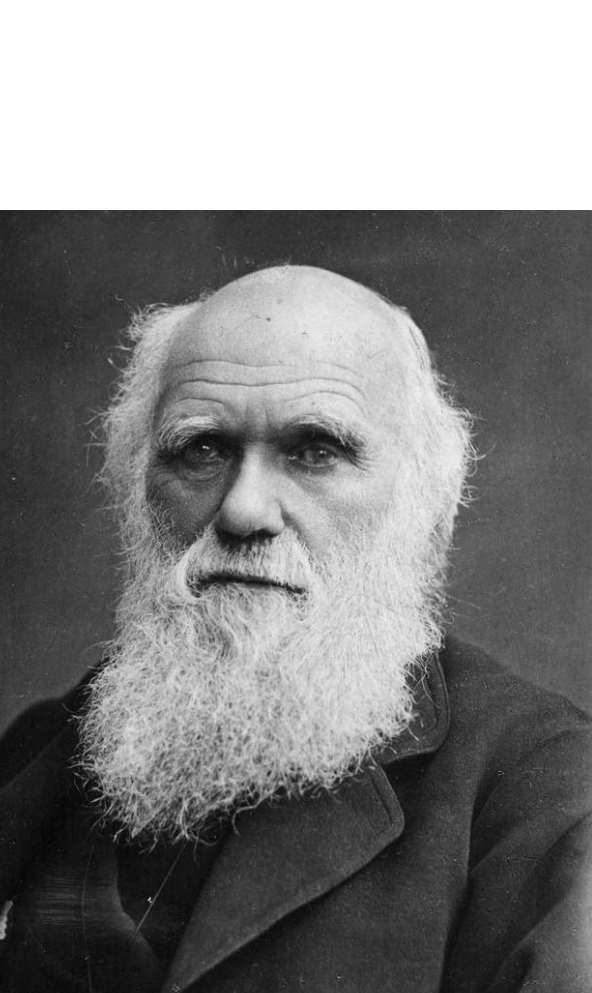
Admission to Fort Hays State University’s Sternberg Museum of Natural History is free from 1 to 6 p.m. on Sunday, Feb. 14, in celebration of Charles Darwin’s 207th birthday.
Multiple family-friendly, hands-on activities exploring the science of mate selection will be set up throughout the museum. Mate selection is a mechanism of evolution describing how individuals in a species select and compete for mates.
Activities will include examples of modern and fossil animals that use extravagant features to attract members of the opposite sex, and examples demonstrating how some evolutionary features can be dangerous.
The museum is open Tuesdays through Saturdays from 9 a.m. to 6 p.m. and on Sundays from 1 to 6 p.m.
HUTCHINSON — A Kansas man arrested and charged in October in a meth distribution case now faces a second case where he’s charged with drug distribution.
Darren Stephenson, 54, Hutchinson, was in court Monday where he was read the complaint that alleges he was in possession of marijuana with intent to distribute, possession of methamphetamine, possession of drug paraphernalia with intent to distribute and personal use paraphernalia.
The state alleges he was in possession of a seller’s quantity of marijuana as well as the meth when Hutchinson Police arrested him on Feb. 1.
In the earlier case, Stephenson is also charged with possession of marijuana, possession of drug paraphernalia with intent to distribute, no tax stamp and personal use drug paraphernalia.
A drug-related search was done on his property in the 1400 block of North Forest.
Drug Unit detectives say that inside his bedroom they found a wooden box containing a digital scale with white residue, new baggies, a zip-close bag with a crystal substance, later determined to be three grams of meth.
They also found a glass pipe with burnt vegetation, another pipe with burnt residue, a second baggie with green vegetation that weighed about a gram and tested positive for marijuana, and a used bag with crystal residue, which is also believed to have been meth.
Stephenson is free on bond in both cases.
He has prior convictions in Rice County for aggravated indecent liberties with a child in 1999 and obstruction of the legal process in 2006.
TOPEKA, Kan. (AP) — A bill that would expand a new state tax-credit system that pays for scholarships for low-income students to attend private schools has passed a hurdle.
The Topeka Capital-Journa reports that a majority of the House Education Committee approved the expansion Monday. Next, it needs to pass a vote on the House floor.
Currently, the program allows certain businesses to donate money for private school scholarships. In return, they can deduct part of the donation value from their tax bills.
Proponents say it expands educational options. Opponents say it hurts state coffers and may be unconstitutional.
Under the expansion, families could earn more and still qualify. It also would allow more taxpayers to receive the credit and increases the amount that could be subtracted from tax bills.
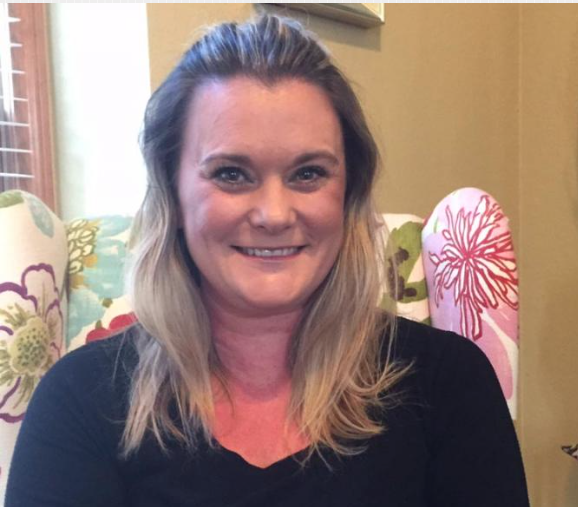
Photo by Jim McLean/KHI News Service Amy Holdman, a 41-year-old mother of two from Overland Park, believes her frequent use of tanning beds as a teenager is the reason for three surgeries in the past year to remove cancerous skin from both arms. She will speak Tuesday to a legislative committee in support of a bill that would prohibit tanning salons from allowing people under 18 to use ultraviolet beds.
Amy Holdman has a cautionary tale for Kansas lawmakers. The 41-year-old mother of two from Overland Park is convinced that her frequent use of tanning beds as a teenager and young adult is the reason she’s had to endure three surgeries in the past year to remove chunks of cancerous skin from both arms.
Doctors had to dig deep to remove melanoma cancer cells from her right forearm in February 2015.
In the months that followed, she underwent dozens of painful biopsies and two more scarring surgeries. “I truly believe that I got melanoma later in life because of tanning bed use when I was younger,” Holdman said during a recent interview at her home.
As a high school and college student, Holdman said she didn’t know anything about the risks she was taking. “I was on the dance team, so we would wear the little outfits and you wanted to be tan and cute,” she said. “
And then in college, I was actually a nanny for a family that had a tanning bed in their house.
Being a college kid with no money, that sounded great at the time.” But if she could travel back in time knowing what she now knows, Holdman said she would give her “16-year-old self” a sobering warning. “
I’m a single mom with two daughters, and there is nothing more important to me than to be here for them,” she said. “To think that could be taken away from me because I was worried about a tan is sickening to me at the age of 41.”
Melanoma is the most dangerous type of skin cancer because it is more likely than basal cell and squamous cell cancers to spread to other parts of the body, according to the American Cancer Society.
Still, like most forms of skin cancer it is curable if detected early enough. “I hope I’m out of the woods,” Holdman said, noting that in addition to getting comprehensive skin examinations every three months doctors perform periodic lung and liver scans to ensure that she’s cancer free.
Photo by Jim McLean/KHI News Service Amy Holdman pointing to the site of one of the 40 skin cancer biopsies she’s undergone during the past year. Also visible is the scar on her forearm from the first of three surgeries to remove melanomas from both arms. –
“The fear is always in your head that something could come back later,” she said. Holdman is among those scheduled to testify Tuesday to the House Health and Human Services Committee in support of House Bill 2369, which would prohibit tanning salons from allowing people under 18 to use ultraviolet beds.
Businesses that violate the ban could be fined up to $250 per violation. Anticipating pushback from lawmakers opposed to placing restrictions on private businesses, Holdman is prepared to argue that the health hazards of tanning are similar to those posed by smoking. “It’s just like tobacco,” she said.
“People can’t smoke legally until they’re 18.” It’s a fair comparison, according to research cited in a fact sheet compiled by the cancer society’s lobbying arm, the Cancer Action Network.
It says that “the dangers of tanning devices are so serious” that the World Health Organization has labeled them “carcinogenic to humans” along with tobacco and asbestos.
A 2012 British study cited in the fact sheet found that using a tanning device before the age of 35 increased people’s risk of later developing melanoma by 59 percent.
Tanning bed use before age 25 increased the risk of squamous cell and basal cell carcinomas by 102 percent and 40 percent respectively, according to another 2012 study.
The tanning industry is pushing back by questioning both the research findings and the motives of the cancer society and other groups that it says are part of a “sun scare” campaign.
Salon owners from across the country banded together in 2012 to form the American Suntanning Association. At the time, founding ASA board member Diane Lucas, chief executive of Palm Beach Tan, a national salon chain, said: “There are many misconceptions about the risks associated with indoor tanning.
One of the primary roles of the ASA is to address and factually dispel these myths and educate the public about intelligent, practical sun care for tanners and non-tanners.”
The Kansas bill, which was introduced a year ago but is just now getting a hearing in committee, targets people under 18 because of the high rate of tanning bed use among teenage girls.
According to a 2013 survey done by the Centers for Disease Control and Prevention, more than 27 percent of 12th grade girls reported using tanning beds in the previous year, with many describing their use as frequent.
Kansas is one of seven states that places no restrictions on the use of tanning devices, according to the National Conference of State Legislatures.
Thirteen states have laws that ban the use of ultraviolet tanning devices by people under 18, while others require parental approval or regulate the length of exposure time.
The hearing on the Kansas bill is scheduled for Tuesday afternoon at the Statehouse.
Jim McLean is executive editor of KHI News Service in Topeka, a partner in the Heartland Health Monitor team.
WICHITA, KAN. – An Arizona man was sentenced Monday to 5 years in federal prison for driving 12 pounds of methamphetamine from Arizona to Kansas.
According to U.S. Attorney Barry Grissom Jose Francisco Beltran, 39, Tucson, Ariz., pleaded guilty to one count of interstate travel in furtherance of drug trafficking.
In his plea, he admitted that on Aug. 27, 2015, the Kansas Highway Patrol stopped him on Interstate 70 in Lincoln County, Kan.
Troopers discovered approximately 12 pounds of methamphetamine and a half pound of powder cocaine. He told investigators he picked up the drugs in Arizona and was delivering them to Wichita, Kan.
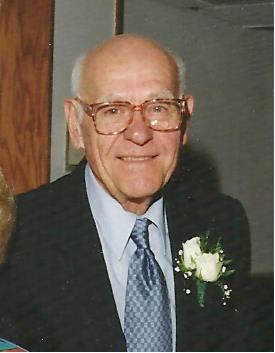
Louis J. Wiesner, 95, Hays, died Sunday, February 7, 2016 at the Good Samaritan Society in Ellis, Kansas. He lived life to its fullest with a great love for his family, friends, and Catholic faith.
He was born March 8, 1920 in Hays the son of Anna Jacobs and Joseph M. Wiesner. He graduated from St. Joseph Military Academy and was employed by Coca-Cola Bottling Company for several years.
He served in World War II as a cannoneer with the 88th Army Infantry Division. He married Catherine A. Wolf on October 7, 1940 in Hays. She died February 6, 2007.
After his discharge, his Grandfather A.A. Wiesner offered him a position as the meat cutter in the family grocery store at 8th and Main in Hays. He enjoyed 40 years creating his own recipes for perfectly seasoned German sausage and raw hamburger. He always served the best cuts of meat to his many customers.
When it was decided to close Wiesner’s Grocery Store, he took a position as the shoe salesman in Wiesner’s Dept. Store. He was a dedicated employee and after his retirement, he enjoyed traveling with his wife, Catherine, gardening, and woodworking. He rarely missed watching the K.U. basketball team on television. He was a member of St. Joseph Catholic Church, the third degree Knights of Columbus Council #1325, V.F.W. and American Legion.
Survivors include three children, Phillip Wiesner of Hays, Andrew and Dawn Wiesner of Arvada, CO, and Teresa and Glenn Brocker of Arvada, CO, four granddaughters, Amy Brocker of Wheat Ridge, CO, Wendy and Levi Alsobrook of Bullhead City, AZ, Dr. Valerie Wiesner and husband Dr. Alex Kravchenko of Cleveland, Ohio, Dustie Wiesner of Lakewood, CO, a great granddaughter Haley Alley of Bullhead City, AZ, a sister Anita O’Neil of Olney, MD, and many nieces, nephews, and cousins.
He was preceded in death by his wife, an infant son Louis, Jr., his parents, a daughter in law Cheryl Casey Wiesner, his siblings and their spouses, Charles Wiesner, Thomas (Lucy) Wiesner, Mildred (John) Howe, Rita (James) Dreiling, and two brothers in law Joseph Campitell and Paul O’Neil.
Funeral services will be at 10:00 am on Saturday, February 13, 2016 at the St. Joseph Catholic Church, 210 W. 13th, Hays. Burial with military honors by the Hays VFW Honor Guard will be in the St. Joseph Cemetery. Visitation will be from 4:00 until 7:00 pm on Friday and from 9:00 am until 9:45 on Saturday, all at the Hays Memorial Chapel Funeral Home, 1906 Pine Street. A parish vigil service will be at 6:00 pm followed by a Knights of Columbus Council #1325 rosary, all on Friday at the funeral home.
Memorials are suggested to St. Joseph Catholic Church, Hospice of Hays Medical Center, or to TMP-Marian High School, in care of the funeral home. Condolences may be left for the family at www.haysmemorial.com. Louis will be remembered for his strong work ethic and unique sense of humor. All who knew him have been blessed with wonderful memories.
Susan G. Komen Kansas is partnering with Hays Medical Center and Midwest Cancer Alliance to present a Komen Impact panel discussion on the latest developments in breast cancer research in Kansas. The conversation will take place on Feb. 18 from 5:00pm-7:00pm at Hays Medical Center. It is free and open to the public.
The panel will be moderated by cancer biologist, Komen researcher and breast cancer advocate, Danny Welch, PhD. Several Kansas oncology professionals and cancer survivors will join Welch in this public forum on cancer innovations and challenges. In addition, representatives from Susan G. Komen Kansas will present an overview of the state of breast cancer in the region.
“We’re excited to be part of this community conversation between breast cancer experts and the people who are directly impacted by the disease,” said Peggy Johnson, breast cancer survivor and former chair of Komen’s National Board of Directors.
According to the Kansas Cancer Registry, nearly 2,000 women in Kansas will be diagnosed with breast cancer this year. The Kansas Department of Health and Environment reports that more than 370 women die in Kansas each year from breast cancer-related causes. However, when diagnosed at an early stage, survival rates are greater than 95%.
“This is a great opportunity for recent information to be shared with those impacted by breast cancer and within the community” said Hays Medical Center Nurse Navigator, Lisa Reiter, RN.
BLOOMINGTON, Ill. – The Collegiate Choir from Illinois Wesleyan University in Bloomington, Ill., will present a free will concert at First Presbyterian Church, 2900 Hall Street, Hays, on Sunday, March 13, 2016 at 7:30 p.m.
This concert is one of ten appearances the Choir will make during its 2016 spring concert tour. The tour itinerary includes performances in Illinois, Kansas, Colorado and Nebraska.
The Illinois Wesleyan University Collegiate Choir has established a long history of excellence through its on-campus performances, annual tours and recordings. The Choir also sponsors the IWU Choral Commission Series, which in its 65-year history has added many significant works to the choral repertoire and resulted in a number of important world premieres at Illinois Wesleyan University.
The 48-voice choir is composed of student musicians representing the School of Music and other areas of the University, and is dedicated to the performance of the finest sacred and secular choral music spanning six centuries and a variety of languages. Students in the choir are selected by audition and maintain a rigorous rehearsal schedule in preparation for their concert tour and other engagements throughout the year.
The Choir is under the direction of Dr. J. Scott Ferguson, Director of Choral Activities at Illinois Wesleyan University. The Collegiate Choir has received acclaim for the “breath-taking beauty and skill of the voices, the superb repertoire, and the awesome musicality.” Programs have been called “wonderfully well-selected, versatile, interesting, and musical.” An Estonian conductor praised the choir’s “clear intonation, beautiful and sound harmony, multifarious strokes, and broad dynamic scale.” A renowned Czech conductor noted, “I was overwhelmed by the great intonation, precise rhythm, beautiful work with dynamics, and incredible stylistic interpretation of compositions from all style periods and genres.”
This year’s tour program includes literature from the Renaissance and Contemporary eras. The Choir will begin the first half of the program with three Renaissance motets, including the pictorial Ascendente Jesus in naviculam by Melchior Vulpius followed by a French chanson, an English madrigal, and a German part song, also from the Renaissance. The first half will close with three sacred compositions: Nunc dimittis by Gustav Holst, Evermore by Philip Lawson and Cantate Domino by Józef Świder.
The Choir will begin the second half of the program with selections from Urmas Sisask’s collection Gloria Patri. The final section of the program will include Exultate Deo by Françis Poulenc, Éjszaka and Reggel by György Ligeti, Shall I Compare Thee by Nils Lindberg, and Prima serie dei cori di Michelangelo Buonarroti il Giovane by Luigi Dallapiccola, which includes Il Coro delle Malmaritate (Chorus of the Unhappily Married Women) and Il Coro dei Malammogliati (Chorus of the Unhappily Married Men).
Charles C. Haynes is director of the Religious Freedom Center of the Newseum Institute.At an historic gathering in Marrakesh, Morocco on January 27, more than 300 Muslim leaders — including many of the world’s most eminent Islamic scholars and clerics — declared that the religious freedom of minority faiths must be protected in Muslim majority nations.
The Marrakesh Declaration comes at a time of unprecedented persecution of Christians and other minority groups by extremists acting in the name of Islam in the Middle East, Africa and South Asia.
Pushing back against false and dangerous narratives about Islam, the Muslim leaders called on the entire Muslim world to reaffirm the principles of the Charter of Medina, a constitutional contract between the Prophet Muhammad and the people of Medina, “which guaranteed the religious liberty of all, regardless of faith” 1,400 years ago.
To counter extremism and promote freedom, the declaration calls for a “broad movement for the just treatment of religious minorities in Muslim countries and to raise awareness as to their rights.”
Morocco, the host country for the conference, is often cited as an example of an Islamic state that protects the rights of Christians, Jews and other religious minorities. Some of the other Muslim majority nations, however, are badly in need of the reforms called for in the declaration: Citizenship that is “inclusive of diverse groups” and initiatives, including education, that promote understanding across religions.
By sending a message to government leaders who ignore the true teachings of Islam as well as to terrorist groups that pervert the meaning of the faith, the Marrakesh Declaration stakes out an authentically Muslim position in support of religious freedom.
“Enough bloodshed,” said Shaykh Abdallah bin Bayyah, a key organizer of the conference and president of the Forum for Promoting Peace in Muslim Societies. “There is a sickness right now in the world but we have treatments for it within Islam.”
In other words, Islam is not the cause of extremism; Islam offers an answer to it. Now the challenge facing Muslim scholars and religious leaders will be to translate the declaration into societal reforms and peace efforts that effectively counter extremist movements, especially among the young.
The Marrakesh Declaration has received scant media attention in the United States. Positive news about Islam — including the many earlier statements and actions of Islamic leaders to fight extremism — rarely makes headlines. But Americans should take heed of the message coming out of Morocco.
At a time when Islam is coopted by terrorists and demonized by anti-Muslim groups, Americans need to hear the true voice of Islam. To understand why this matters, consider that hate crimes against Muslim Americans and mosques across the U.S. have tripled since the terrorist attacks in Paris and San Bernardino, California last fall, according to a study conducted by researchers at California State University.
Ignorance and fear of Islam breed anger, hate and violence. In recent months, a young girl wearing an hijab was attacked by classmates, a Muslim cab driver was shot by a passenger who was angry about ISIS, a Muslim woman at a carwash was threatened by a man at knifepoint — and the list goes on.
Just as the KKK and White Supremacist groups — which claim to be based on “Christian principles” — are not labeled “Christian extremists” by most Americans, so ISIS and other terrorist groups who act in the name of Islam should not be given the label “Islamic.”
If we can tell the difference between authentic Christianity and perverted versions of the Gospel, so we should learn to tell the difference when it comes to Islam. Our ability to work with one another, defeat our common enemy, and uphold religious freedom hangs in the balance.
Charles C. Haynes is vice president of the Newseum Institute and founding director of the Religious Freedom Center. [email protected]
Some environmental groups have been less than kind to agriculture. They have bombarded the public with figures on soil loss, pesticide-related mishaps and alleged failed attempts at using pesticides to reduce infestation. Their figures are oftentimes unverifiable.
Technology has often been labeled the No. 1 environmental enemy by some of these groups. Food producers – farmers and ranchers – view technology as the application of knowledge. As humans, we survive by adapting the environment to our needs.
Take away technology and man would be just like other primates – confined to tropical regions and subject to extinction due to environmental changes. To survive and progress, we must wisely use the environment, conserve resources and continually produce new food and fiber.
Some would argue that resources are made not born and I agree. Land, ores, petroleum – the raw materials of our planet – are not inherent resources. They do not inherently further human purposes.
Man determines what is useful and how to use it. Topsoil becomes a resource when a farmer tills the soil and plants wheat seed, for example. Ores become resources when metals are extracted from them.
During the past two centuries, technology has been creating resources more rapidly than humans have been consuming them. By every measure of price and availability, resources have become more abundant.
Without science and technology, today’s farmers and ranchers would be unable to feed the masses outside of the agricultural industry. Farmers use technology responsibly. They constantly learn new farming methods and practices by attending training sessions and courses. Using minimum and no-till farming practices and incorporating grass waterways and buffer strips, farmers have improved water quality and increased wildlife habitat.
But new farm technology is expensive. It is in the best interest of farmers to use it carefully and sparingly. Misuse would add to the cost of production, which would result in an even lower return on their investment.
Food produced in the United States is safe. More than four decades of Food and Drug Administration testing has shown the majority of our fruits and vegetables have no detectable pesticide residues. This underscores that American farmers use pesticides properly.
Countless laws help ensure our food is safe. Billions of dollars are spent annually to support food and agricultural safety and quality inspection. The private sector, along with state and local governments spend additional billions on similar activities.
Farmers and ranchers support efforts to evaluate and enhance the current regulatory and food monitoring system. Agricultural producers want to work with all parties toward maintaining safe food, but this industry and our society must avoid policy changes that are based solely on fear or false information.
Decisions affecting the future course of agricultural production are critically important and will have far- reaching impacts on our quality of life. We must be careful in determining long-term policies. Farmers and ranchers must continue to maximize their production capacity with an ever-watchful eye on food safety, quality and the environment.
So by all means let’s have this conversation about food safety and public health. But let’s be sure this conversation is complete, fair and factual.
John Schlageck, a Hoxie native, is a leading commentator on agriculture and rural Kansas.
The Hays Public Library is offering a new one-on-one help service for those who want to learn more about their computers, smart phones and tablets. One-on-one help sessions will be offered on Thursdays from 9-11 a.m. and 3-5 p.m.
Patrons can sign up for a half hour session in the library or call the library at 785-625-9014. Patrons can also walk-in – though people with scheduled appointments will have priority.
“We offer computer classes twice a month and we noticed that not everyone has the same skill level when it comes to computers and technology” said Dustin Key, the library’s IT administrator, “By offering this service we hope to be able to help individuals with specific needs and questions.”
Tech help will not be limited to computers and laptops. You are welcome to bring in any tech device or gadget that you’d like to learn more about or better use. Mr. Key also emphasizes that he will not be repairing computers and other tech devices, “While we are more than happy to help with any kind of device, we will not be doing any kind of repairs or service on devices.”
One-on-one tech help sessions are scheduled for every Thursday in February. Mr. Key commented “I am excited to see what the response is to this new service and I hope to extend it past February.”
For more information about this and other programs, please visit the library’s website www.hayspublib.org.
 FHSU University Relations and Marketing