TOPEKA — A recent news release I read said that one in three Americans had their health records breached in 2015, either through computer hacking or information technology problems.
Medical identity thieves—whether they hack in to a third-party website or directly steal your personal information—can use your name or health insurance information to make appointments with health care providers, get prescription drugs, make claims to insurance companies, or get medical equipment.
Those fraudulent medical activities can falsify your medical records, cost insurance companies billions of dollars ($320 billion annually, according to a recent estimate), and ultimately raise the cost of your health insurance premiums. The toll is high, both in dollars and personal security.
What can you look for to protect your information? The Federal Trade Commission has compiled a list of some possible signs that your medical identity has been compromised. They include the following:
A bill for services you didn’t receive
A call from a debt collector about a medical debt you don’t owe
Medical collection notices on your credit report that you don’t recognize
A denial of insurance because your medical records show a condition you don’t have
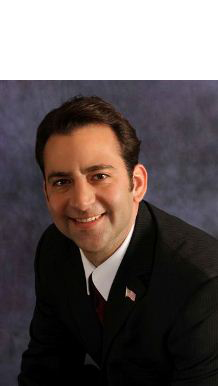
Randy Adair, the Kansas Insurance Department’s Anti-Fraud Division Director, makes numerous presentations yearly about how to protect your personal information and what to do if you think someone has stolen it. Here are some of the points he makes.
“Free” health services may not be. Be careful in responding to offers of free health services or products that require you to provide your health plan identification number. Don’t be tricked into giving out personal information.
Don’t share insurance information by phone or email. The only exception might be if you initiated the call, and you know the person on the other end of the message can be trusted.
Keep your insurance and health records in a safe place. Better yet, shred all old documents, especially labels from prescription bottles.
If you think your information has been stolen, ask for your medical files. You have the right to those files, and you can check them for errors.
Keeping your health information secure has become a major concern of insurance companies and insurance regulators throughout the country. With the number of cybersecurity attacks that occurred during the past two years, both industry and regulatory agencies such as state insurance departments have called for increased safeguards for businesses protecting your information.
But personal responsibility in guarding and reviewing your information is your first line of defense.
We at the Kansas Insurance Department can also help. If you suspect that your information has been stolen or compromised, call our Anti-Fraud Division at 800-432-2484.
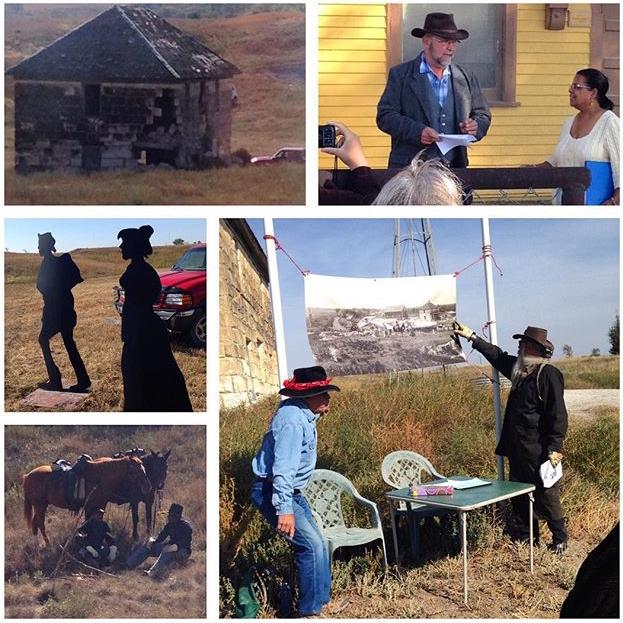
NICODEMUS–Nicodemus National Historic Site in Nicodemus has been named one of the Top 70 Bucket List experiences in Kansas, as announced in the current winter issue of KANSAS! Magazine.
“To celebrate the 70th anniversary of KANSAS! Magazine, we wanted to find out the top 70 experiences on Kansans’ bucket list,” explained Linda Craghead, Assistant Secretary for Kansas Parks and Tourism. The tourism division asked the magazine’s readers and other Kansas enthusiasts to submit their must-do lists, and the top 70 results are featured in KANSAS! Magazine on its 70th birthday.
After the bucket-list submissions poured in, an editorial board pared the list down to the 70 finalists. Some are among the state’s acclaimed attractions, such as Cheyenne Bottoms and Quivira National Wildlife Refuge near Great Bend, Chicken Mary’s and Chicken Annie’s restaurants in the Pittsburg area, Abilene’s Dwight D. Eisenhower Presidential Library and Museum and the Kansas State Capitol in Topeka. Other more surprising ones range from the 1950s All-Electric House in Shawnee and the Home on the Range Cabin near Smith Center to Guy & Mae’s Tavern in Williamsburg and Clark Drug, Soda and Ice Cream Parlor in Cimarron.
While eateries, museums and artsy attractions are among the favorites, Kansans seek out outdoorsy, sporty and festival fun, too. The toughest tackle the grueling, 200-mile Dirty Kanza, hikers trek the trails at Konza Prairie, paddlers ply the Kansas River and bluegrass fans world-wide flock to Winfield’s annual Walnut Valley Festival.
“We’re hoping to get the word out about all the unique, scenic and fun experiences the state offers,” said Craghead. “And while 70 choices is just a start, it’s a great introduction to what’s special about Kansas!”
Kansas Tourism is continuing the Bucket List promotion in 2016 with a monthly social media contest. People visiting any of the 70 locations can take a photo at the site and post it to Instagram or Twitter using the hashtag #KSBucketList (one entry per person per location). One winner will be drawn at random each month and awarded a prize, and a grand prize winner will be announced at the end of 2016.
EXPERIENCE YOUR AMERICA
The National Park Service cares for special places saved by the American people so that all may experience our heritage.
The Bucket List is available in KANSAS! Magazine, at the state’s Travel Information Centers or at www.TravelKS.com.
The town of Nicodemus is symbolic of the pioneer spirit of African Americans. They dared to leave the only region they had been familiar with to seek personal freedom and the opportunity to develop their talents and capabilities. Nicodemus NHS represents the western expansion and settlement of the Great Plains, and includes five buildings: The First Baptist Church, St. Francis Hotel, Nicodemus School District Number One, African Episcopal Church, and Township Hall.
Listen to Mike Cooper interviewing Dr. Jeff Curtis from Medical Specialists, at HaysMed with the topic of “Adult Medical Issues” by clicking the link above and then clicking the play button
TOPEKA–The Kansas Creative Arts Industries Commission has released the final deadline to submit applications for its two main grant categories. The final application deadline for 2016 is Feb. 19, 2016. This round will allow for a grant activity period for projects that begin Mar. 29, 2016 and conclude by Dec. 31, 2016. Approved projects that end June 30, 2016 may be given priority based on available funds. The programs and their sub-categories are as follows:
STRATEGIC INVESTMENT PROGRAM
The Strategic Investment Program recognizes the important role creative organizations play in building and sustaining cultural and economic vibrancy in Kansas. By funding a variety of professional and organizational development opportunities that impact cultural programming, these grants support initiatives that use the arts to enhance community vitality, revitalize neighborhoods, generate local business, create and preserve job opportunities and impact tourism. Applicants must make a compelling case as to why this particular self-identified activity or opportunity was selected, how it will have a substantial impact on their work and community, and how it will enhance the national reputation of Kansas.
Strategic Investment Program grants are awarded in three categories:
· Organizational Development: This category provides funding for professional development opportunities for Kansas based arts organizations that help strengthen business practices, increase organizational viability and promote long term sustainability.
· New and Expanded Works: This program provides funding for new or significantly expanded productions, exhibitions, programs or events by Kansas-based nonprofit arts organizations. Projects should either be an entirely new type of program for the organization designed to diversify its services or an expansion of an existing program designed to significantly enhance the quality of current offerings.
· Equipment and Technology: This program provides funding to purchase equipment, materials, and/or technology upgrades to expand or improve an applicant’s organization.
ARTS INTEGRATION PROGRAM
Arts Integration Programs support the role the arts play in all levels of education, community service, and workforce development. This program provides funding for educational institutions, arts organizations, and community service non-profits to use the arts to increase student success, foster creative thinking, develop critical job skills, and enhance community development.
Arts Integration Programs are awarded in three categories:
· Visiting Artists: This category provides funding for eligible organizations to engage and deepen the impact of arts programming on local and underserved audiences through exposure to and interaction with professional visiting arts. Presenters may book artists in any discipline, not just in performing arts. Projects should strive to integrate an arts discipline into non-arts content areas; help interpret an exhibition, performance, or presentation; and support community development goals and objectives.
· Integrated Arts Education: This category supports new or expanded educational programming that integrates arts learning into non-arts curriculum and content areas to address emerging technologies, areas of skills shortages, STEM curricula, workforce readiness, and increase student performance.
· Innovative Partnerships: This category supports innovative programming between arts organizations and non-arts organizations to impact a variety of community and/or economic development goals. Arts organizations are encouraged to partner with other community entities (hospitals, prisons, etc.) to develop arts-centered programs that address community needs such as public health, transportation, tourism, unemployment, aging, corrections, etc.
U.S. Senator Jerry Moran, R-Kan., and Fort Hays State University announced Friday that FHSU has been awarded a grant of more than $700,000 from the U.S. Department of Agriculture to develop curricula focused on the use of small unmanned aerial systems (UAS) in precision agriculture.
The program, under development by FHSU, claims to enhance and improve the technical and analytical skill sets of the next generation of farm managers, technicians and crop advisors. The grant is part of a $4 million award to Non-Land Grant Colleges and Universities.
As Chairman of the Senate Appropriations Subcommittee on Agriculture, Sen. Moran supported a $1 million increase in federal funding for the USDA Capacity Building Grants for Non-Land Grant Colleges of Agriculture Program, which is furnishing the $701,072 grant to FHSU. This is the second largest grant given out by the program this year and one of the larger federal grants received by FHSU.
“Investments in research grants for Non-Land Grant Colleges of Agriculture provide hands-on learning opportunities for students with the added benefit of discovering new information to be utilized by farmers and ranchers,” Sen. Moran said. “This grant awarded to Fort Hays State University will go toward an effort to link the enormous potential of incorporating UAS into precision agriculture with real world application of the technology. Strong support of agricultural research makes certain our producers are on the forefront of technological advancements and ahead of our global competitors in agriculture.” The new curricula will teach both the gathering of data by UAS and the incorporation of the data into agriculture. The primary focus will be on providing students with experiential-learning opportunities involving the hands-on use of UAS and analytical tools along with “real world” experiences applying data in management decision making.
“We are very grateful to Senator Jerry Moran for his vote of confidence in stewarding the process that ultimately resulted in awarding this grant to Fort Hays State University,” FHSU President Mirta M. Martin said. “This is an investment in the future, not only for our students, but for our region and our state. It is particularly significant, as it illustrates the benefits derived from uniting academic disciplines under our newly created College of Science, Technology and Mathematics. When people come together for the common good, excellence is the outcome.”
The primary beneficiaries of this grant at FHSU will be students pursuing post-secondary agricultural degrees, as well as those seeking degrees in natural resource management. Farmers and ranchers on the Great Plains and Flint Hills will also benefit through open houses, field days and workshops held at regional farms and natural areas that will demonstrate and provide experience with new UAS technology in the support of the agricultural economy. Demand is high and the job outlook is very strong for individuals skilled in the understanding and use of precision agricultural technologies. In Kansas alone, the economic impact of UAS technologies is estimated at $2.9 billion over the next decade. This grant will help make certain that a skilled workforce is available to meet this potential.
House Bill 2504: School Consolidation
This past Wednesday, February 3, the House Education committee held a hearing on House Bill 2504, commonly referred to as the School Consolidation Bill. The bill states that on July 1, 2017, and every ten years, the State Board of Education would be required to realign school district boundaries. The boundaries would be effective for school instruction and attendance on the first day of July.
House Bill 2504 also stipulates that if a home county has less than 10,000 students, the State Board of Education would realign the district boundaries so that there would be only one district in each county.
The number of school administrators and supervisory service employees employed by a realigned school district could not exceed 120% percent of the number of school administration and supervisory service employees of the school district with the largest enrollment in the prior year when the territory became part of the district.
The bill does state it would allow school districts to voluntarily consolidate before the date of realignment. School districts that would consolidate on or before July 1, 2016, could file a request that would specify the home county that a voluntarily consolidated district would be considered a part of, only if the district has territory in that particular county.
Before July 1, 2017, the Department of Education would be required to identify and list all property, including real estate and vehicles, by the district and used primarily for a district’s central administration purposes during the 2016-2017 school year.
Then before the date of July 1, 2018, the Department of Education would be required to notify each realigned school district of all listed property that it would receive. If a realigned district were in possession of two or more physical office locations, the realigned district would only be able designate one physical office location to be used for school administration purposes. If a realigned school district were be in possession of two or more vehicles, the realigned district would only be able to designate one vehicle to be used by the superintendent or other central administration staff. These designations would be posted by the Department of Education on its website for at least two years. All other vehicles and property not designated would be considered “surplus district property.” All surplus district property would be transferred to the Kansas Department of Administration. With approval of the State Finance Council, the Secretary of Administration would dispose of all surplus district property with the proceeds being deposited into the State General Fund.
The Department of Education estimates the enactment of this bill would reduce the number of school districts from 286 to 132. However, the bill would have no effect on state aid to school districts, as the bill does not make changes to the current block grant school finance funding. Because state aid to districts would not change, expenditures that would have been utilized for realigned superintendent salaries and “surplus district property,” such as administrative buildings and vehicles, would likely be reallocated within districts; however, overall expenditures for districts would not be reduced.
I am adamantly opposed to this bill and during the course of the past two weeks, I have received numerous emails, calls, and letters expressing the same position and concerns. Although I do not foresee this bill moving forward in the legislative process, however, if it does, I will do everything I can to stop it.
HCR 5005
HCR 5005 would submit to the voters of Kansas an amendment to Article 3 of the Kansas Constitution regarding the selection for Kansas Supreme Court justices. This amendment would eliminate the Supreme Court Nominating Commission and allow the Governor to appoint a qualified person to the position with confirmation of the Senate. According to this amendment, the Clerk of the Supreme Court would promptly notify the Governor when a vacancy would occur, then the Governor would then be required to make an appointment within 60 days. If there is no appointment made by the Governor, the Chief Justice of the Supreme Court would select an appointee.
In either appointment scenario, the Senate would be required to vote to consent to the appointment within 60 days of the appointment. If the Senate is not in session and will not be in session within the 60 day time limit, the Senate would be required to vote on the appointment within 20 days of the beginning of the next session. If a majority does not vote in favor of the appointment, the Governor would then be required to appoint another qualified person within 60 days of the vote, and the same procedure would be followed until a valid appointment is confirmed.
While the method of appointment would change, both the Supreme Court justices and Court of Appeals judges would continue to be subject to retention elections.
Although I do favor this selection model, very similar to the model used on a federal level, the House Concurrent Resolution failed to gain the two-thirds majority in order to proceed.
House Bill 2486: School District Bond Review Board
House Bill 2486 is another education-focused bill to which I am opposed. House Bill 2486 would establish the School District Bond Project Review Board, which would be comprised of the following members: the chairperson of the House Committee on Appropriations; the chairperson of the Senate Committee on
Ways and Means; the ranking minority member of the House Committee on Appropriations; the ranking minority member of the Senate Committee on Ways and Means; and two members of the State Board of Education.
For general obligation bonds that have been approved for issuance by a local election on or after January 1, 2016, capital improvement state aid would be paid only with approval of the review board. School districts would then submit applications to the review board for their approval. If the review board approves a district’s application, the board would be required to determine the extent of the facility being constructed or improved is to be utilized for direct instruction of students, as expressed by a percentage of the total utilization of the facility. In making a determination, the board could only consider basic building planning and design to be a part of the facility. Any architectural enhancements to a facility beyond basic building planning and design would not be considered part of the facility that would be utilized for direct instruction. The review board would certify to the State Board of Education the percentage of utilization and that percentage would be used in calculating state aid that the district would receive for bond payments.
According to the Kansas Department of Education, enactment of House Bill 2486 would likely have the effect of reducing bond and interest state aid for bond issues after January 1, 2016. The bill would not change state aid entitlements that districts currently receive for bond issues prior to January 1, 2016.
I hope that this bill does not move out of the Education committee as I do not feel that it is the authority of the state to involve itself with bonding measures that have been approved by the school district’s governing body and the voting public.
Bills Passed This Week and Contact Information
Early Friday morning the House completed Final Action on five bills, four of which passed. Those bills were: House Bill 2438 which will allow cities to submit a request to the county commissioners to join an adjoining fire district; Senate Bill 248 which allows for the repeal of key deposit funds; Senate Bill 188 which are publishing requirements under the Kanas uniform financial accounting and reporting act; Senate Bill 133 which would provide immunity from criminal prosecution for a minor seeking medical assistance due to the consumption of alcohol; and House Bill 2446 which increases the minimum motor vehicle insurance liability limit for property damage. I voted yes on the bills, except I voted no on Senate Bill 188.
If you have any concerns, feel free to contact my office at (785) 296-7672, visit www.troywaymaster.com or email me at [email protected]. The honor to serve you in the 109th Kansas House District and the state of Kansas is one I do not take lightly. Do not hesitate to contact me with your thoughts, concerns and questions. I appreciate hearing from the residents of the 109th House District and others from the state of Kansas.
Troy L. Waymaster
State Representative
109th Kansas House
300 SW 10th
Topeka, KS 66612
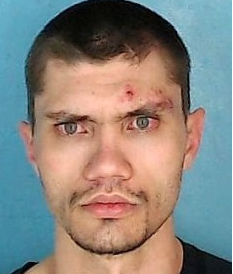
HUTCHINSON. — A Kansas man who allegedly sold drugs to a confidential informant was sentenced Friday to nine years in prison.
Alex Nathan Reck, 26, was convicted for the sale of methamphetamine within a thousand feet of a school and other various drug charges as well as criminal possession of a firearm by a felon and interference with law enforcement.
On April 1, the informant was supplied with approximately one ounce of meth by Reck at the Trails West Motel in South Hutchinson.
Later in the day, Drug Enforcement officers attempted to place Reck under arrest and he allegedly ran, but was quickly captured.
Officers then did a search of his motel room and allegedly found numerous new syringes, new and used baggies and one loaded syringe.
They also found a .38 caliber handgun and learned he has felony convictions within the past 10 years.
Reck admitted in court that what he did was wrong and understands he will be in prison.
He told the court he wants to do everything he can while in prison to do positive things so when he gets out, he can start a new life. He also wants to inform young people of his story saying drugs ruined his life.
In addition to the sentence, he will also have to pay a $2,000 KBI lab fee.
Fort Hays State University’s annual 13-city program of recognizing scholarship winners for the next academic year is underway and Hays area recipients will be honored Monday, Feb. 8.
The highlight at each event is the recognition of scholarship winners.
High school juniors and seniors and transfer students in Kansas, Nebraska and Colorado have been invited to Student Recognition Program’s in their areas. The programs are held in communities across Kansas, in southern Nebraska and in Denver to accommodate area students and their parents and guardians.
Any student who lives outside the designated SRP areas is welcome to attend the nearest SRP but must RSVP by calling 1-800-628-FHSU (3478) or (785) 628-5673 or by signing up online at www.fhsu.edu/admissions/srp. The FHSU Alumni Association requests RSVPs for the receptions no later than a week in advance of the SRP date.
Receptions hosted by the FHSU Office of Admissions in each locale include dessert or pizza buffets provided by the FHSU Alumni Association. Students and their parents have the opportunity to mingle with FHSU faculty, staff and administrators and with area FHSU alumni before and after the scholarship presentations.
Many high school seniors and transfer students will receive certificates for a variety of scholarships awarded to them by FHSU.
FHSU alumni and other interested community members are also encouraged to attend.
Scholarships to be awarded at the SRPs include the $3,500 Presidential Award of Distinction, the $2,000 University Scholar Award, the $1,500 Hays City Scholar Award, and the $1,000 Traditions Scholar Award. All are awarded only to incoming freshmen enrolling in college for the first time, but each is renewable provided students maintain the minimum required academic standing.
One-time awards recognized at the SRPs are the $1,000 Transfer Student Scholarship and the $900 or $500 Academic Opportunity Awards, given to scholars by individual academic departments.
Each SRP event features a multimedia presentation by FHSU President Mirta M. Martin and three drawings — a $400 FHSU Student Recognition Program Scholarship, a $500 textbook scholarships and another for an iPad. Four $400 SRP scholarships are awarded at the reception in Hays.
The SRP schedule includes the area served at each program site.
Hays, 7 p.m. Monday, Feb. 8, at FHSU’s Memorial Union, 700 College Drive. Dessert will be served. The Hays SRP serves students from Ellis and Trego counties and from the cities of LaCrosse in Rush County; Natoma in Osborne County; Plainville in Rooks County; and Ransom in Ness County.
On Sunday, Feb. 14, Fort Hays State University’s Sternberg Museum of Natural History is celebrating Charles Darwin’s 207th birthday with a free day at the museum.
Sternberg, 3000 Sternberg Drive, will be open with free admission during normal Sunday hours: 1-6 p.m.
There will be special activities set up exploring the science of mate selection (perfect for Valentine’s Day!).
Mate selection is a mechanism of evolution describing how individuals in a species select and/or compete for mates. Special exhibits will include examples of modern and fossil animals that use extravagant features to attract members of the opposite sex, and examples how sometimes features evolve for attracting mates can be dangerous to the individuals.
Displays and activities will be appropriate for all ages.
It may take only a few minutes, but for the victim of sudden cardiac arrest, it can be the event of a lifetime.
Sudden cardiac arrest strikes about 250,000 adults in the United States annually. More than 95 percent of its victims die before reaching a hospital – many because they don’t receive cardiopulmonary resuscitation (CPR) and defibrillation in time. Defibrillation is a process in which an electronic device gives an electric shock to the heart to help restore the heart’s normal rhythm.
To help improve those odds, the HaysMed DeBakey Heart Institute and the Hays Medical Center Foundation will hold its 16th annual Staying Alive Hands Only CPR Training on Saturday, February 27, at the Center for Health Improvement at Hays Medical Center. During the day, the Institute hopes to train over 200 people for free in its Family and Friends CPR course. The one and one half hour class is designed for members of the general public, eight years and older; and is not for those seeking professional certification. More than 30 certified instructors and volunteers will donate their time to the event.
Classes in adult and pediatric CPR will be offered at 9:00 am and 11:00 am. To register, call 1-800-248-0073, ext 5500 or 785-623-5500 or go to
“If more people know how to perform CPR, it naturally increases the probability that victims of cardiac arrest would receive CPR more timely—when it can still make a difference,” said Bryce Young, Vice President of Operations at Hays Medical Center.
When performed immediately, CPR may double a cardiac arrest victim’s chances of survival by adding critical minutes to a patient’s life. With CPR, breathing and chest compressions circulate oxygenated blood to the brain, heart and other vital organs until defibrillation is performed.
Cardiac arrest survival is directly linked to the amount of time between the onset of sudden cardiac arrest and defibrillation. Chances of survival drop 7-10 percent with every minute of delay. Brain death starts to occur in just four to six minutes
Seventy-five to 80 percent of all sudden cardiac arrests happen at home, so knowing how to perform (CPR) can mean the difference between life and death for a loved one, according to the American Heart Association.
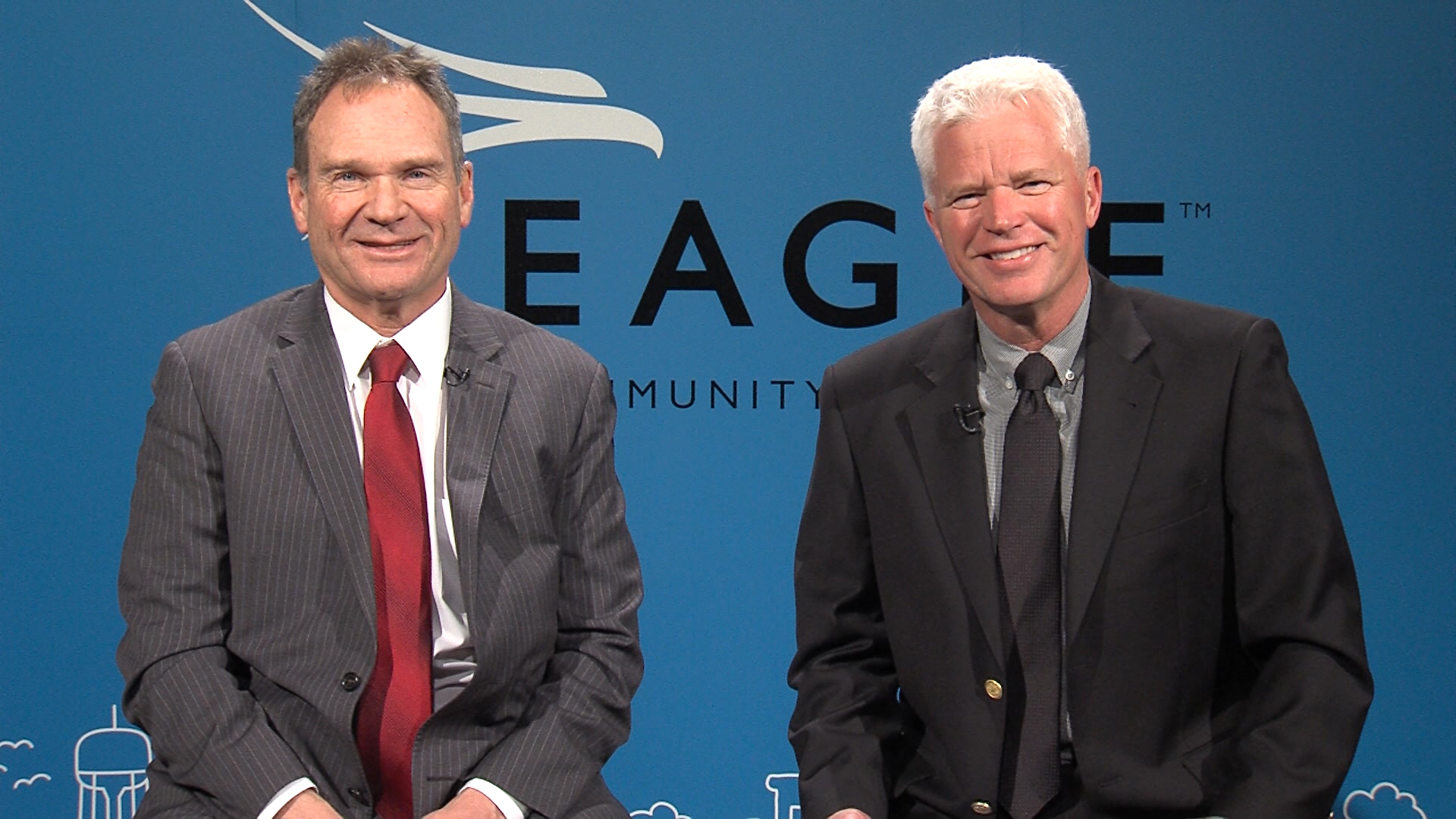
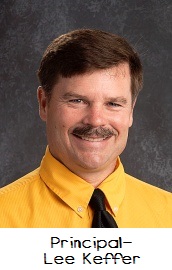
Lee Keffer has been named the latest Covenant Builders Hometown Hero. He will be honored at Saturday’s Fort Hays State University basketball games, scheduled to begin at 2 p.m.
Eagle Communications is the game sponsor, and the Tiger women will wear their pink uniforms in support of breast cancer awareness, so wear pink to support them.
From Keffer’s nomination form:
“Mr. Keffer is the principal at Roosevelt Elementary in Hays. He is a veteran of our Military. Mr. Keffer is the true meaning of honesty, integrity and a great leader. The children at Roosevelt Elementary know he means business but also know he truly cares about each of them.
“Many of the young boys in our school that do not have a father figure look up to him. He gives the children at Roosevelt Elementary a safe, structured environment to learn in. As a boss he is top notch. He will stand by his word even when it does not benefit him (or actually makes his job harder and he has to ‘take the heat’).
“I feel honored to have him as a boss and blessed to have him as my child’s principal.”
Joplin HigginsJana’s Campaign Inc. will be hosting Joplin Higgins from Hunter Valley, Australia, this coming week. Higgins is an attorney who specializes in family law and domestic violence issues. She is coming to the U.S. to learn from Jana’s Campaign and other domestic violence professionals across Kansas, Missouri and Colorado.
“We are proud and excited that Joplin has asked Jana’s Campaign to help her identify and connect with U.S. professionals in the field of domestic violence prevention and response,” says Dr. Christie Brungardt, Jana’s Campaign board member.
“Our representatives will accompany Joplin to all her meetings and will be learning alongside her,” Brungardt added. “We are honored to build this new international partnership to reduce gender and relationship violence worldwide.”
Throughout a 10-day period, Higgins will be meeting with representatives from the District Attorney offices’ in both Denver and Johnson County, KS, the Kansas Attorney General Office, the Kansas Coalition against Sexual and Domestic Violence, as well as attending several prevention workshops and presentations provided by Jana’s Campaign.
She will meet with many other professionals, including Juliana Carlson, professor of social work who conducts international research on violence prevention strategies across the globe. Higgins will complete her trip by visiting with additional experts in the state of Tennessee.
Jana’s Campaign is a Hays-based, education and prevention organization with the mission of reducing gender and relationship violence. Jana’s Campaign was created in honor of Jana Mackey who lost her life to domestic violence in 2008. Mackey, a Hays High School graduate, was a 25-year-old law student at the University of Kansas at the time of her death. She spent years volunteering and helping victims of sexual assault and domestic violence in Lawrence.