KANSAS CITY, Mo. (AP) – Chiefs offensive coordinator Doug Pederson says his interview for the vacant head coaching job in Philadelphia went “great,” but he insists he is focused on the New England Patriots.
The Chiefs visit the reigning Super Bowl champions for a playoff game Saturday.
Pederson interviewed for the Philadelphia job Sunday. He started nine games at quarterback for the Eagles in 1999, and began his NFL coaching career under Andy Reid in 2009 as a quality control coach.
Pederson followed Reid to Kansas City in 2013 as his offensive coordinator.
The Eagles have also interviewed Tom Coughlin, Duce Staley, Pat Shurmur and Ben McAdoo. Bears offensive coordinator Adam Gase also interviewed before taking the job in Miami.
A state law will make it legal to carry concealed weapons into campus buildings beginning in July 2017, and to prepare for that change, the Docking Institute of Public Affairs at Fort Hays State University conducted a survey to gather opinions from faculty and staff at universities throughout the Kansas Board of Regents system.
The results showed that a strong majority — 70 percent — would prefer to see the law changed so that handguns are not allowed inside campus buildings. Overall, the majority of respondents indicated that allowing concealed carry on campus by all groups would make them feel less safe. Only 53 percent said they would feel less safe if they carried a concealed handgun. In contrast, 82 percent said they would feel less safe if students were allowed to carry concealed handguns on campus.
The Kansas Legislature passed two laws in recent years that will open campus buildings to the concealed carry of guns effective on July 1, 2017.
In 2012, the Legislature passed the Personal and Family Protection Act, overriding local gun ordinances statewide and allowing concealed-carry permit holders to carry their weapons in almost all public buildings. Guns could be banned only if a building had adequate security measures to keep all weapons out. Some public locations, including universities, were allowed a temporary exemption from the new law, postponing concealed carry until 2017. In addition, in 2015 the Legislature passed a follow-up measure allowing anyone who can lawfully own a gun to carry it loaded and hidden without a concealed-carry permit.
With the prospect of concealed carry becoming a reality on university campuses next year, the Regents and officials at the state universities have begun to prepare for the change, and feelings have run high on both sides of the issue.
The Regents Council of Faculty Senate Presidents, in collaboration with the Regents University Support Staff Council, commissioned the Docking Institute to gather faculty and staff opinions and policy preferences regarding guns on their campuses.
Faculty senate presidents from seven of the Regents universities (Emporia State University, Fort Hays State University, Kansas University, Kansas University Medical Center, Kansas State University, Pittsburg State University and Wichita State University) helped obtain email addresses of all faculty and staff employed at their respective universities. The survey instrument was constructed by researchers at the Docking Institute and sent back to the presidents for review and modification.
The survey was launched on Dec. 3, 2015, and a total of 20,151 faculty and staff were invited to participate. Data collection ended on Jan. 4, and 10,886 responses were received, resulting in a response rate of 54.0 percent. There is no margin of error because all faculty and staff were invited to participate in the study.
“The healthy response rate from each institution and the overall response rate of 54 percent are proof of the concern campus employees have with the current weapons policy,” said Dr. Lorie Cook-Benjamin, associate professor at Fort Hays State, president of the FHSU Faculty Senate and chair of the Council of Faculty Senate Presidents. “The survey’s results clearly show that a majority of our employees want to see the law amended so guns are not allowed on campus.”
Some key results from the survey:
When asked their policy preference regarding concealed handguns on campus, the majority (70 percent) of respondents preferred amending the law so that guns are not allowed on campus, and 7 percent favored keeping the current law but extending the exemption past 2017. Nearly one-fifth favored keeping the current law and allowing the exemption to expire, which would then allow guns on campus. The 4 percent who responded “Don’t Know” suggests that few do not have an opinion on this issue.· More than half (54 percent) of respondents said they would favor their university expending the necessary resources to implement “adequate security measures,” 23 percent said it would depend upon the cost, 16 percent said they would not favor their university expending the necessary resources, and 7 percent said they did not know. The law allows concealed weapons to be banned if those security measures are in place, but it is problematic whether the measures would be affordable and whether they would be manageable on a campus where large crowds must pass quickly from building to building.
When asked how seeing a screening station as they enter a university facility would affect their sense of safety, almost half (45 percent) of respondents indicated they would feel safer, 24 percent said they would feel less safe, 24 percent said it would not affect their sense of safety, and 7 percent said they did not know.
Overall, the majority of respondents favored the prohibition of guns in all buildings, at sporting events and in open areas of campus. Respondents were slightly more likely to favor allowing concealed carry by faculty and staff than students or visitors.
Respondents were slightly more likely to favor prohibiting guns at sporting events than all other areas. Respondents were most likely to favor allowing concealed carry in open areas of campus by all groups and in faculty offices by faculty and staff.
With the exception of campus police or public safety offices (63 percent), about 43 percent supported allowing the secure storage of handguns on campus, assuming guns are allowed on campus. There was slightly less opposition to secure storage in locked vehicles, and relatively few opposed secure storage in campus police or public safety offices. Opinions regarding the secure storage of shotguns and hunting rifles were similar.
The vast majority of respondents (90 percent) favored requiring a permit to carry a concealed gun on campus, 7 percent favored allowing concealed carry without a permit, and 4 percent said they did not know.
About half of respondents said they would be less likely to work at their university if concealed carry were allowed. Only 8 percent indicated they would be more likely to work at their university, and 42 percent said it would not affect their decision.
Most respondents (68 percent) indicated they at least occasionally teach material that challenges some students’ views and deeply held beliefs in ways that some may find uncomfortable. Similarly, 70 percent said they discuss material that challenges views and deeply held beliefs in ways that others may find uncomfortable.
Overall, the majority (70 percent) of respondents indicated allowing guns on campus would negatively impact their course and how they teach; 20 percent disagreed.
Two-thirds (66 percent) of respondents said that allowing guns in the classroom limits their academic freedom to teach the material and engage with students in a way that optimizes learning, while 24 percent disagreed.
Three-fifths (60 percent) of respondents agree they are concerned that they will need to change how they teach their course if guns are allowed in the classroom. Twenty-four percent disagreed.
More than half (57 percent) of respondents indicated allowing guns on campus would negatively impact the service and/or outreach work they conduct with clients/community members on campus; 27 percent disagreed.
Fifty-six percent of respondents said they are concerned that they will need to change how they provide services and/or outreach work they conduct with clients/community members on campus if guns were allowed; 28 percent disagreed.
Nearly half (47 percent) of respondents agreed that allowing guns on campus would negatively impact how they conduct their research; 31 percent disagreed.
Forty-four percent of respondents agree they are concerned that they will need to change how they conduct their research if guns are allowed.
Nearly half (46 percent) believe that allowing concealed carry on campus would increase campus crime levels, 16 percent thought it would decrease campus crime, 22 percent said it would not affect campus crime, and 16 percent said they did not know.
Respondents were most confident in their campus police or security force’s ability to maintain a safe environment, with 68 percent indicating they are at least somewhat confident.
Respondents had the least confidence in their campus police or security force’s ability to enforce a gun-free policy, with only 46 percent being at least somewhat confident.
Respondents were most evenly divided in their level of confidence with their campus police or security force’s ability to respond quickly to an active shooter, with 59 percent expressing that they are at least somewhat confident.
The majority (91 percent) of respondents indicated their primary work occurs on campus. Only 9 percent said their primary work occurs off campus.
The full FHSU survey is available as a pdf on the Docking Institute website: [email protected].
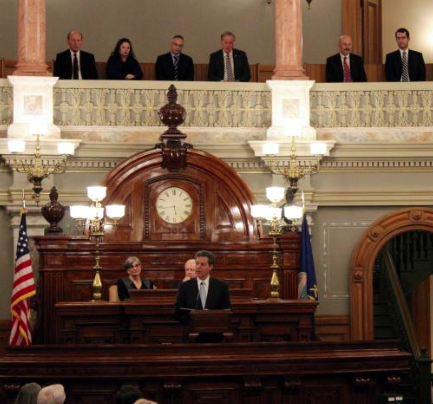
Photo by Susie Fagan/KHI News Service In his State of the State speech Tuesday night, Gov. Sam Brownback announced the creation of a task force to “address the problems of health care delivery in rural Kansas.” Seated behind Brownback are Senate President Susan Wagle, left, and Speaker of the House Ray Merrick. –
Kansas Republican Gov. Sam Brownback didn’t specifically mention Medicaid expansion in his State of the State speech Tuesday night to a joint session of the Legislature.
Still, he made it clear that he remains opposed to expanding eligibility to cover more than 150,000 low-income adults, many of whom are uninsured.
Seeming to acknowledge that the closure of Mercy Hospital in the southeast Kansas community of Independence had increased interest in expansion, Brownback said “Obamacare” was the main reason for the hospital’s financial struggles and those of other rural providers.
“It was Obamacare that cut Medicare reimbursements to rural hospitals,” Brownback said, referring to the Affordable Care Act.
“It was Obamacare that caused the problem. We should not expand Obamacare to solve the problem.”
Nationally, hospitals supported the ACA and the Medicare reimbursement reductions it included because they expected that increasing the number of Americans with private insurance and expanding Medicaid would more than offset those reductions. Kansas’ rejection of expansion has denied hospitals and other health care providers in the state much of that offsetting revenue.
Not expanding Medicaid has cost Kansas providers $920 million and counting, according to the Kansas Hospital Association, which keeps a running total of the cost on its website. Insisting that expansion isn’t the solution to the struggles of rural providers, Brownback said he’s open to other proposals. He announced the creation of a working group to “address the problems of health care delivery in rural Kansas.”
Brownback named Lt. Gov. Jeff Colyer, a plastic surgeon and the primary architect of KanCare, the state’s privatized Medicaid program, to lead the group in crafting a plan for his consideration “by this time next year.”
“I believe this working group should have frontline stakeholders involved, including a rural hospital administrator and a rural physician, at the same time as top policymakers,” Brownback said.
Brownback said the working group would welcome input from “diverse organizations.” But he said it would be unrealistic to rely on “yet another false Obamacare promise.”
“We can and should find a Kansas solution that will improve rural health care access and outcomes,” he said.
Shortly before the governor’s speech, the hospital association distributed an editorial to Kansas media written by Terry Deschaine, a former hospital CEO and current member of the board of trustees at Sumner Regional Medical Center in Wellington.
Deschaine countered the governor’s arguments against expansion, saying it would “inject some much-needed cash into rural hospitals like Wellington’s.
“As a former hospital administrator and current hospital board member, I implore our state leaders and lawmakers to expand KanCare,” Deschaine wrote.
“While not a silver bullet, expanding KanCare is an important part of preserving access to hospital care across Kansas — and particularly in rural communities like Wellington.”
A recent report commissioned by the Sunflower Foundation said that Medicaid expansion would lower state spending in several areas by enough to cover the annual $53 million cost of expansion, perhaps with money to spare.
The hospital association is working on an expansion bill modeled on so-called red-state plans adopted in other states headed by Republican governors. Association officials say they hope to have the bill introduced by next week.
Jim McLean is executive editor of KHI News Service in Topeka, a partner in the Heartland Health Monitor team.
TOPEKA–Kansas Lt. Governor Jeff Colyer, M.D., a Hays native, has announced the selection of nine members for the Rural Health Working Group. As requested by Governor Sam Brownback in his State of the State address, the working group will address the problems of health care delivery in rural Kansas. The working group will present a proposal to Governor Brownback in early 2017.
“The Rural Health Working Group brings together a wealth of professional knowledge and personal experience to address rural healthcare access and outcomes with Kansas solutions,” Lt. Governor Colyer said in a news release. “As a fifth generation rural Kansan and physician, I understand that rural hospitals are often the lifeblood of their community. We must continue to form Kansas solutions to sustain rural health care.”
Working group members have diverse backgrounds and include frontline stakeholders, rural hospital administrators, policy makers. The inaugural meeting will be held during the 2016 legislative session.
Rural Health Working Group members include Dr. Jenifer Cook, a rural physician. Since completing her residency, Dr. Cook has worked in 18 Kansas towns outside of Wichita. Within the past year, she has worked in Russell, Larned, Greensburg, Clay Center and Pratt.
Rural Health Working Group Members
Chair
Lt. Governor Jeff Colyer, M.D.
Members
Senator Mary Pilcher-Cook, Public Health and Welfare Chair
Representative Daniel Hawkins, Health and Human Services Chair
Senator Mitch Holmes, Rural legislator, St. John
Representative Jim Kelly, Rural legislator, Independence Linda Stalcup, Stevens County Hospital CEO, Hugoton Dr. Jenifer Cook, Rural Physician, Russell
Kari Bruffett, Kansas Health Institute Director of Policy
Secretary Susan Mosier, Kansas Department of Health and Environment
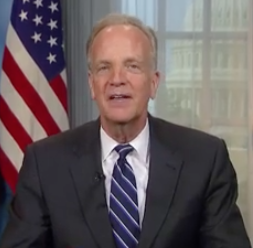
WICHITA, Kan. (AP) — A new report shows U.S. Sen. Jerry Moran has amassed more than $3.1 million in cash for his re-election effort as 2016 kicks off. The Kansas Republican is running unopposed so far.
His campaign reported on Wednesday it raised about $750, 600 during the fourth quarter last year, with nearly $280,000 of contributions coming from political committees. It spent more than $322,000.
The campaign listed the transactions in a finance report, covering the period from Oct. 1 to Dec. 31, 2015.
For this time in the election cycle, the campaign contends it has the largest cash-on-hand balance of any incumbent U.S. senator for Kansas in recent history.
Deputy Campaign Manager Elizabeth Patton says in an email that the support is indicative that Kansans know and trust Moran puts Kansas first.
HUTCHINSON – A man suspected of setting a pair of fires on in May of 2014 was before a Reno County judge Wednesday for the reading of two charges against him.
Dustin Gordon, 26, is charged with two counts of arson for allegedly setting fire to a two story home and also a trailer that was used for storage.
He was transferred to the Reno County jail from Saline County this week after he was convicted and sentenced in October in three cases of arson in that county.
The fires were occurred on East Blanchard south of the intersection of Kansas 61 and U.S. 50, on the southeast side of Hutchinson.
When fire crews arrived, they found a fully involved two story house and also a second fire in a mobile home 1/8 mile east of the house that was fully involved as well. Both houses were vacant and had been for some time.
In Saline County, Gordon was convicted for two counts of aggravated arson and one count of arson and is currently serving time on those three charges.
WICHITA – Law enforcement authorities are investigating an alleged theft of fine china.
On Saturday, police officers in Wichita stopped a male suspect near 55th Street South and Seneca who was in possession of these dishes, according to a social media report from police.
They were possibly taken in a theft or burglary, according to police.
If you have any information that could help police please contact Burglary Investigations at 316-268-4141.
GEARY COUNTY –Law enforcement authorities in Geary County are investigating 3 suspects on alleged murder charges.
Sheriff’s deputies responded to Shandy Lane near the community of Milford on Monday night after a report of persons being kidnapped and robbed at gunpoint.
During the incident, one of the victims was shot in the head with a semi-automatic handgun. That victim required minor medical treatment, according to Sheriff Tony Wolf.
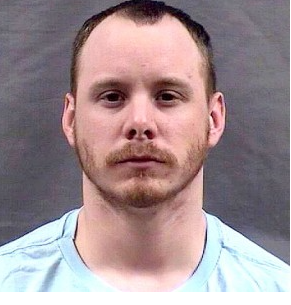
Michael White
A lengthy investigation ensued, a search warrant was executed at a residence on Johnson Drive in Junction City that resulted in the seizure of marijuana, numerous guns, and suspected stolen property.
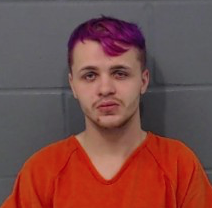
On Tuesday evening, Erick Wiseman, Michael White, and Ronald Haywood Jr. all of Junction City were arrested on suspicion of Attempted First Degree Murder, Aggravated Robbery and Aggravated Kidnapping.
Erick Wiseman
They are being held without bond at the Geary County Detention Center pending a first appearance in Geary County District Court.
Brackets for the upcoming Mid-Continent League basketball tournaments were released on Wednesday. The play-in games will begin Saturday, Jan. 16.
In the girls bracket Hill City (6-0) earns the top seed and they will host the winner of Saturday’s play-in game between Trego (2-6) and Oakley (1-6) Monday at 6p.m. Trego and Oakley play at 6p.m. Saturday at the Stockton grade school.
Click on the bracket to view
Phillipsburg (4-3) and Norton (4-4) meet in the four versus five matchup at 6 p.m. Monday. The winners will play each other in the semifinals Friday at 3 p.m. at Plainville.
TMP-Marian (6-2) is the No. 2 seed and they will host the winner of the seven seed Ellis (3-5) and No. 10 Plainville (0-8). Ellis and Plainville will play Saturday at 6 p.m. at the Stockton high school.
Stockton (5-3) the three seed will host six-seed Smith Center (4-4) Monday at 6p.m. The winner of the game takes on the winner of TMP and the play-in game winner Friday afternoon in Plainville.
Norton (7-1) earned the top seed on the boys side and will host the winner of No. 8 seed Stockton (3-5) and nine seed Phillipsburg (2-5) Tuesday at 6p.m. Stockton and Phillipsburg play Saturday evening in the Stockton grade school gym following the girls game.
Click on the bracket to view
In the four versus five matchup Plainville (5-3) will host Trego (4-4) Tuesday at 6 p.m. The winners will play each other in the semifinals Friday at Plainville high school.
On the bottom side of the bracket TMP-Marian (6-2) is the No. 2 seed and they will host the winner of No. 7 Smith Center (3-5) and 10 seed Oakley (0-7) Tuesday at 6 p.m. Smith Center and Oakley play Saturday at 6 p.m. at the Stockton high school following the girls game.
Hill City (4-2) is the three seed and they will host the six seed Ellis (4-4) Tuesday at 6 p.m. The winner of that game will get the winner of the TMP and the play-in game winner Friday afternoon in Plainville.
All the consolation games will be played in Stockton with Plainville hosting the winner’s side of the bracket.
WASHINGTON – Today Congressman Tim Huelskamp (KS-01) voted to ditch the EPA’s Waters of the United States (WOTUS) rule. Huelskamp was a cosponsor of S.J. Res. 22 in the House. His colleagues voted 253 to 156 on the disapproval resolution; it will now be sent to the president’s desk.
For years, Congressman Huelskamp has been fighting this radical new regulation, an unprecedented effort by the Obama Administration to expand its regulation and control over all waters in our nation, well beyond the limits established in law by Congress. The legislative and judicial branches continue to whittle away at the flawed rule. In 2015, Huelskamp took action to stop implementation and funding of the rule. In November, a federal court issued a stay on nationwide enforcement.
“As a fifth-generation farmer, I personally understand the threat WOTUS poses to our rural way of life. As at least one Court has decreed, WOTUS is illegal, because it seeks to regulate every road ditch, farm pond, prairie pothole, swimming pool, water tank, and rain puddle in Kansas and elsewhere—despite the clear law otherwise. With passage of our resolution, my colleagues have joined with me on the side of rural Americans to protect us from the EPA’s unprecedented water grab. While President Obama has already threated to veto our common sense effort, I hope both chambers will stand strong and override his veto.”
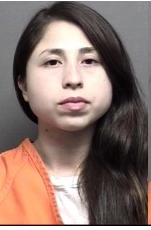
SALINA -A federal grand jury returned an indictment Tuesday charging a woman for crimes related to the 2015 homicide of a Salina teenager, according to a media release from the U.S. Attorney’s office.
The indictment charges 21-year-old Azucena Garcia-Ferniza, a citizen of Mexico, with one count of possession of a firearm while unlawfully in the United States, one count of accessory to a crime after the fact, and one count of having knowledge of a felony that she did not report to law enforcement. The crimes are alleged to have occurred May 7, 2015, in the hours following the shooting death of 17-year-old Allie Saum.
If convicted, Garcia-Ferniza faces a maximum penalty of 10 years in federal prison and a fine up to $250,000 on the firearm charge, and a maximum penalty of three years and a fine up to $250,000 on the misprision charge. On the charge of knowingly giving aid to a person who committed a crime, she faces a maximum sentence of half of the sentence for the person who committed the crime.
The firearm, a .45 caliber Glock 30 handgun, is believed to be the murder weapon used in the Saum shooting. According to an arrest affidavit from the Salina Police Department, Garcia-Ferniza tried to hide the firearm allegedly used in the murder to prevent law enforcement from finding it. She had placed the firearm in her pants while law enforcement officers were obtaining a search warrant for her residence. The officers located and took possession of the firearm from her. She was then arrested and subsequently charged in state court with interference with a law enforcement officer, concealing evidence, and two counts of aggravated endangerment a child. Later that day, she freely and voluntarily admitted to having the firearm in her possession and attempting to conceal it from law enforcement officers.
Garcia-Ferniza is one of six suspects charged in the murder of Saum, who was shot on the evening of May 6, 2015, in what prosecutors have called a case of mistaken identity. Police say the shooting was the result of a fight that occurred earlier that same day. The suspects were part of a group of people that were out seeking revenge for the fight. One of the suspects mistakenly identified the male driver of a pickup, later identified as Saum’s boyfriend, as someone that had been involved in the fight. Shots were fired into the pickup in the 800 block of Russell and Saum, who was in the passenger’s side of the truck, was struck in the head. She succumbed to her injuries shortly after midnight on May 7, 2015.
Garcia-Ferniza was taken into federal custody in late August and later turned over to Saline County authorities. According to the Saline County Sheriff’s Office, she has been an inmate of the Saline County Jail since October 29.
The federal case against Garcia-Ferniza was investigated by Immigration and Customs Enforcement. Assistant U.S. Attorney Brent Anderson is prosecuting the case.
Left to right: Noah Bruggeman, Braydon Binder, Tate Dinkel and Jensen Brull (Photo courtesy HFE)
By JEFF BRULL HFE School
Four Holy Family Elementary fifth graders competed in the Kansas State Chess Association (KSCA) Grade Level State Championship Saturday at Wichita’s Brooks Center for STEM and the Arts. Unlike other tournaments the team has competed in, the grade level championships have no team component. As a result, the Holy Family players often had to face off against one another throughout the day’s six rounds of play.
In the end, medals were given to the top ten players in each grade. All four HFE fifth graders earned a medal with Tate Dinkel in 9th with 3 wins, Braydon Binder in 8th with three wins, Noah Bruggeman in 7th with three wins, and Jensen Brull finishing the day as runner-up notching 4.5 victories. Brull had a draw in round 4, and his only loss was at the hands of teammate, Noah Bruggeman, earlier in the day.
Competition was almost entirely representative of Wichita and Kansas City area schools. Students competing in the grade level championships typically have higher than average KSCA ratings, and the HFE players saw some of the most talented fifth grade chess players in the state. Placing four in the top ten is certainly an accomplishment, and we are very proud of the positive impression these boys are making for our community and for Holy Family Elementary.
The HFE Chess Team will make a return trip to Wichita Saturday to compete in the Wichita North Invitational. There, they will once again compete for individual and also team honors. They will be joined by the TMP-Marian Chess team which is gearing up to defend their 2015 state championship.