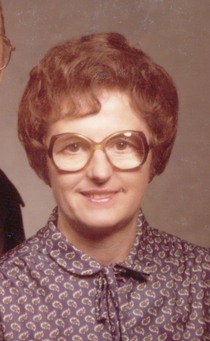
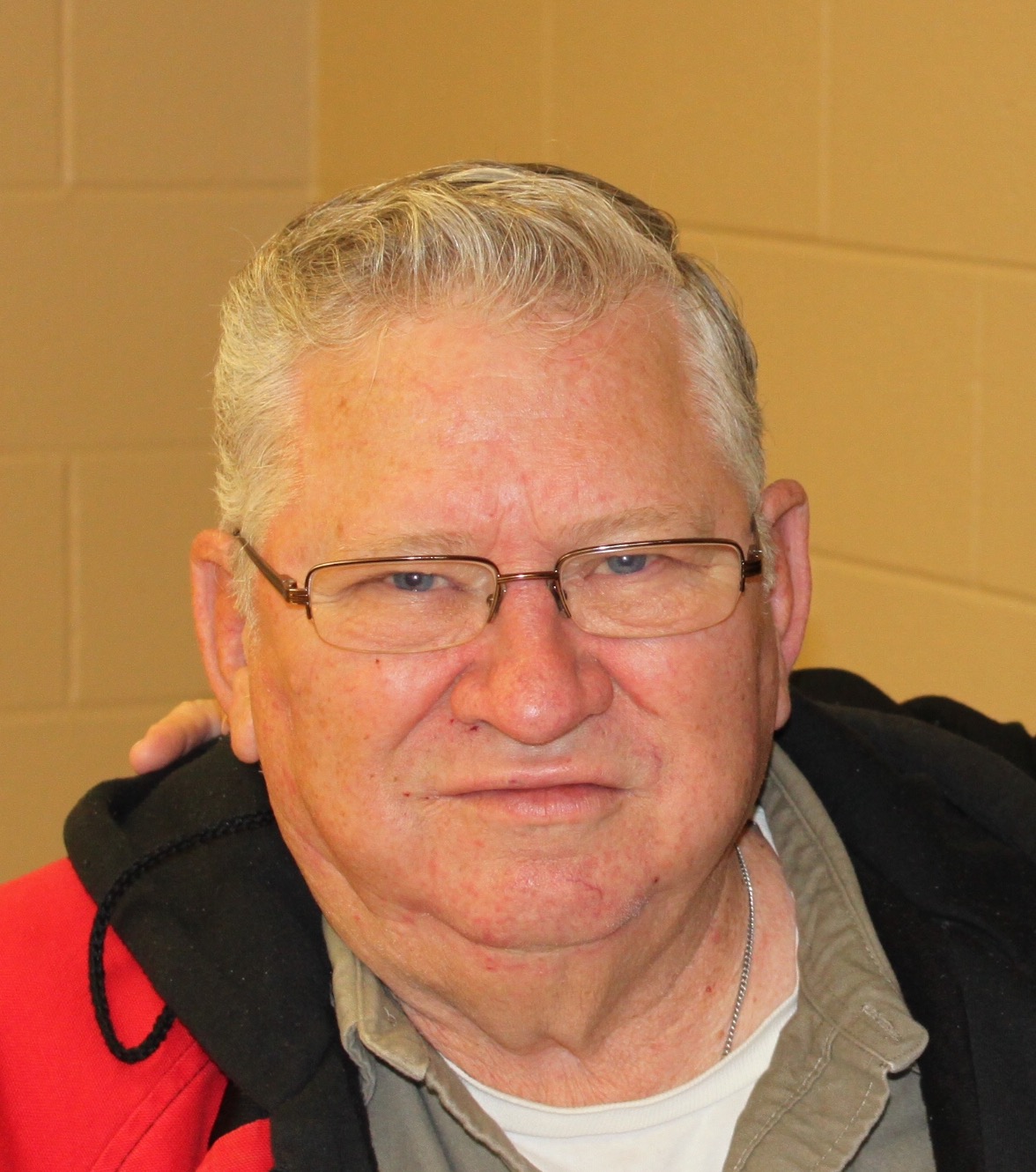
Bernard “Bernie” J. Schreiner, age 69, of Ogallah, passed away Tuesday, December 29, 2015 at Hays Medical Center. He was born November 15, 1946, in Hays, to Richard and Juliette Ann (Ferland) Schreiner.
Bernie was a 1964 graduate of Trego Community High School. He served our country in the United States Navy during the Vietnam War, and was a very proud Veteran. On June 7, 1966, he was united in marriage to Valree Ziegler. After Bernie’s military service, he settled with his wife and three children in Ogallah, KS, where he owned and operated Schreiner Trucking for many years. He was a member of St. Mary’s Catholic Church in Ellis, and was a lifetime member of the VFW. Bernie was an avid outdoorsman who loved to fish, hunt, camp, and travel. He loved to ride his motorcycle, and was a proud member of the Harley Owners Group. Bernie loved life and had many hobbies, but most important to him was time spent with his beloved wife Valree, and all of his kids and grandkids. Bernie left fond memories in the hearts of his family and friends – Many camping trips, boat rides, vacations, family gatherings, polka dances and parties. He will be greatly missed by many.
He is survived by his wife Valree, of the family home; a son, Bernie E. Schreiner (Cheryl Amundson) of Littleton, Colorado; two daughters, Lisa (Allan) Reiter and Amy (Jamison) Miller, all of Ellis; five grandchildren, Olivia Reiter, Haley Reiter, Maxson Miller, Evalyn Miller, and Jillian Miller; two brothers, Richard A. (Lucy) of Puyallup, Washington, and Alvin (Danene) of Woodland Park, Colorado; four sisters, Deanne (Jack) Level of Plano, Texas, Terri Budzyna of Springfield, Missouri, Nanette (Joel) Woodall of WaKeeney, and Cindy (Gary) Werth of Quinter; and numerous nieces and nephews. He was preceded in death by his parents.
Mass of Christian Burial will be 10:30 a.m., Monday, January 4, 2015 at St. Mary’s Catholic Church, Ellis. Burial will be in the Kansas Veterans’ Cemetery, WaKeeney. Military honors will be provided by the United States Navy Honor Guard.
Visitation will be at the funeral home in WaKeeney, Sunday evening from 5:00 to 7:00, with a parish vigil service to follow at 7:00.
In lieu of flowers, memorial contributions are suggested to Dreiling-Schmidt Cancer Institute. Checks made to the organization may be sent to Schmitt Funeral Home, 336 North 12th, WaKeeney, KS 67672.
MANHATTAN, Kan. (AP) — Jaysean Paige scored 18 of his 25 points after halftime, Tarik Phillip connected on a floater with 4.5 seconds left in the second overtime and West Virginia toughed out an 87-83 victory over Kansas State on Saturday in the Big 12 opener for both teams.
Phillip finished with 14 points and five assists for the Mountaineers (12-1, 1-0) and Daxter Miles Jr. had 10 points.
Two free throws by D.J. Johnson with 22 seconds left in regulation sent the game to overtime where the teams traded scores but couldn’t break the tie. The Mountaineers then used eight free throws and the big-time floater from Phillip late in the shot clock to seal the victory.
Barry Brown led Kansas State with 20 points on 6-of-12 shooting while Wesley Iwundu, Kamau Stokes and Dean Wade combined for 44 points on 14-of-29 shooting.
HUTCHINSON, Kan. (AP) — A state official says abundant rainfall last year helped reduce the number of water use violators in Kansas.
The Hutchinson News reports that Kansas Department of Agriculture data show 10 Kansas irrigators were fined in 2015 for tampering with their water meter or falsifying their water use report. About 20 other water users were fined for overpumping their water right for the second or third time.
Most of the cases were for actions in 2014, with a few from 2013. Some other cases are still being completed by state officials.
Lane Letourneau, water appropriations manager for the state, says the rain helped people implement better water management strategies.
He also credited a program that allows irrigators to use more water during drought years and bank water during wet ones.
John Richard Schrock is a professor at Emporia State University.
I am a professional.
I do not earn hourly wages or punch a time clock. I am a salaried professional who works as long as needed to get the work done. My salary should reflect the importance of my profession in society.
I alone determine what, how and when to teach the components of my discipline within a range of recognized professional practices. I consult with my professional colleagues, but in the end I determine my teaching practices. I do not yield that curricular duty to textbook publishers or external agencies. While discipline knowledge may be universal, students are not uniform in experience background nor ability.
I teach both my discipline and my students. Students come into my course as unique students. They should graduate from my course as unique students.
I know my discipline thoroughly because a teacher cannot teach what a teacher does not know. And I know my discipline at least one level deeper than what I teach because I must get the lesson correct and be able to carry advanced students further. I have a broad liberal arts education because I am preparing students for a full life, not just for a job.
I have a unique set of communication skills that fit with a particular range of students. Other teaching colleagues have unique sets of skills as well that may often be different. By interacting with a variety of teaching personalities, students learn to interact with the variety of people they will encounter in life.
The duty of school administration and staff is to provide teachers and students with the support and resources we need.
Just as doctors are the core professionals of a hospital, teachers are the core professionals of a school. And just as the best of doctors lose patients, the best of teachers lose students. This does not mean that doctors want patients to die or teachers want students to fail, but that despite our best efforts, there are many factors beyond our control that are involved in the medical and teaching arts.
Teaching is an art. And artists vary in how they practice. A teacher who inspires one student may not inspire another.
As a teacher I am a role model for honesty, work and study ethic, and dignity. Within the context of my discipline, I work with my students. –To reinforce honesty. –To encourage hard work and study. –To promote personal dignity. –To practice students in tolerance and respect for others who differ in language, race, religion, physical features, gender, intelligence and values. –To require respectful behavior so they will in turn deserve respect. –To help students grow to become young ladies and young gentlemen.
I have a responsibility to be excited about my discipline. But each student is responsible for his/her intrinsic motivation.
I will evaluate each student’s intellectual growth with fairness and I will not characterize a student by any single examination. I alone will develop or select the evaluations to be used in my coursework. My teaching will be driven by my students’ needs, not by any external impersonal criteria. I will work to know each student personally, knowing that the totality of a student’s abilities are beyond simple measures and that an examination is not an education.
I will continually update my knowledge in my discipline and in education in order to improve my effectiveness as a teacher. I alone will select my professional development. My school will fully support my professional decisions in self-improvement.
Any country with a future will fully support the teaching profession because all other professions depend upon teachers to educate their future professionals. For without professional teachers, a country has no future.
John Richard Schrock is a professor at Emporia State University.
Happy New Year, Kansans! A new legislative session begins soon, and troubled state finances once again top the agenda. Kansas staggers forward in a perpetual budget crisis that our lawmakers have been unable—or unwilling—to solve.
The basic problem is simple. Kansas does not have enough income to meet expenses.
The cause of the problem stems directly from the Brownback income tax cuts. Those tax policy changes indisputably led to a sharp decline in the state’s revenue stream. As a result, in the last three years, Kansas has consistently spent more than it takes in, a practice that makes the state poorer and poorer.
At first, lawmakers made up the difference between declining income and growing expenses by drawing down cash reserves. A $709 million bank balance went to zero in less than two years.
With the bank account empty, lawmakers began drawing hundreds of millions from other state government accounts. The highway fund has been the prime target, but many other funds, including those set aside for early childhood programs and economic development, were also sacrificed in the attempt to keep the general fund solvent.
Of course, lawmakers also tried hard to cut expenses. Funding for public schools, a prime responsibility of the state, has been pulled down far below where it should be. State hospitals and prisons remain understaffed. The current budget slashes planned maintenance on roads and bridges. Yet, even these efforts have not lowered expenses nearly enough to make them fit within the dramatically diminished revenue stream.
The budget imbalance became so acute last year that even conservative lawmakers voted to raise the sales tax rate, a move that further shifted the state’s tax burden to low- and middle-income Kansans. The sales tax increase improved the overall revenue stream, but it did not come close to solving the problem.
The Brownback tax cuts brought the revenue stream down so significantly that truly damaging expense cuts coupled with a sales tax increase have not repaired the budgetary mess.
The financial problem and its cause are easy to identify, and so is the solution. Revisit the income tax cuts, which were far too deep.
Don’t expect that, though.
Gov. Brownback has announced that he does not want to deal with any tax changes this session. Nor do the conservative legislators who voted to raise the sales tax. 2016 is an election year for all members of the Legislature, so many would prefer that Kansans forget what happened in the last legislative session. It’s also unlikely that expenses will go down. In their latest gambit to lower spending, lawmakers voted to pay a consulting firm $2.6 million to find “efficiencies” for them. The results are not all in, but the early recommendations from the contractor suggest selling KDOT woodchippers and paying bills late—a very inauspicious start.
When baseball great Yogi Berra died in September, the media replayed many of his famous witticisms. A favorite, “It’s like déjà vu all over again,” was reportedly first uttered by Yogi when Mickey Mantle and Roger Maris repeatedly hit back-to-back home runs in the 1961 season. Yogi didn’t know it then, but his phrase applies to the Kansas budget now.
Another year. Another budget crisis. Déjà vu. If our lawmakers again avoid the real solution by taking even more money from the highway fund, or by borrowing, or by exercising “creative accounting,” and if we buy the governor’s recent declaration that “we are going to be in good shape,” then Kansas will arrive at January 2017 with yet another budget crisis. But our state will be poorer and another year behind. It will be like déjà vu all over again.
Duane Goossen is a Senior Fellow at the Kansas Center for Economic Growth and formerly served 12 years as Kansas Budget Director.
Gene Policinski is senior vice president of the First Amendment Center.
What a strange, challenging and dangerous year it was for First Amendment freedoms, at home and abroad.
2015 was but seven days old when terrorists, claiming to be angry over the publishing of satirical drawings of the Muslim prophet Mohammed, burst into the offices of the French weekly magazine Charlie Hebdo, killing 12 people.
The tragedy sparked a worldwide outpouring of support for free expression — remember the signs and t-shirts declaring “Je suis Charlie” — I am Charlie? But the incident also prompted draconian proposals in France to limit certain kinds of free expression and new restrictions on Muslims simply because of their religious faith. And Nov. 13 attacks in Paris in which 130 died only added fuel to that.
As the year unfolded, free expression in the United States took a hit in the most unlikely places — at least to the Boomer generation which carried the protest banners in the 1960s of the “free speech movement”: Colleges and universities. Campus critics assailed everything from ideas and opinions they believe may make some uncomfortable, to professorial musings on subjects from gender to Halloween costumes, to the notion of inviting speakers with controversial or even repugnant views.
And at some schools — most visibly, at the University of Missouri, the home to a venerable journalism program — demonstrators against racism and bigotry assaulted freedom of the press even as they exercised their rights of free speech, assembly and petition. A group of activists including students and a few faculty members tried to keep student journalists from reporting on the protests at the public university — producing both a memorable pair of online videos capturing the confrontations, and perhaps the year’s best public example of the meaning of “irony” if not civic ignorance.
On the World Wide Web front, the ongoing War on Terror produced proposals to restrict or deny use of the Internet by groups like ISIS and raised again the old notion of banning “hate speech” from public discourse. The proposals came from both conservatives and liberals, who supported such censorious activity for reasons as varied as national security, public safety or simply as the means to purge unpopular or negative views from the “marketplace” of ideas.
Internet giants such as Facebook, You Tube and Twitter already have implemented strategies to take down posts by ISIS killers and recruiters using images of unspeakable violence to promote their views and recruit new followers. But there were calls for even more social media sanitizing to counter the sophisticated online strategies of militant groups promising earthly rewards and an eternal paradise.
Taking down videos of brutal murders beheadings and rants about killing Westerners are relatively easy calls. But Eric Schmidt, who leads Google, went a step further than most in voicing the idea of an algorithm that would relentlessly prowl the corridors of the Web searching and eliminating hateful speech — an Orwellian concept of censorship-by-technology that went even further than “1984” author George Orwell imagined.
In November, leading Democratic and Republican candidates for their party’s presidential nominations called for various kinds of “Silicon Valley solutions” to terrorists on social media — while mocking those who would raise First Amendment objections to silencing speakers as an alternative to producing positive messages and dealing with social and political issues being exploited by ISIS and others.
The year ended with the specter of journalists’ deaths again in headlines.
On Dec. 21, GOP front-running candidate Donald Trump mockingly discussed killing reporters (“I hate some of these people”) at a Grand Rapids, Mich., rally, to the laughter of some attending. He questioned reports that Russia had murdered some journalists, and said “I would never do that … It’s horrible,” but then finished with the observation “some of them are such lying, disgusting people.”
Just a few days laters came the annual, somber reports by the Committee to Protect Journalists and by Reporter Without Borders on the numbers of journalist worldwide jailed or killed in 2015. The CPJ report noted that “of 69 journalists killed for their work in 2015, 40 percent died at the hands of Islamic militant groups such as Al-Qaeda and Islamic State. More than two-thirds of the total killed were singled out for murder,” rather than dying in accidents or as the result of military conflict.
Freedom House reported in its 2015 annual report that “global press freedom declined … to its lowest point in more than 10 years. The rate of decline also accelerated drastically,” with just 14% of the world’s population living in nations “where coverage of political news is robust, the safety of journalists is guaranteed, state intrusion in media affairs is minimal and the press is not subject to onerous legal or economic pressures.”
Even on New Year’s Eve, free expression was under assault. There were reports that the various Web sites and digital services operated worldwide by the BBC — the international news operation headquartered in London — faced cyberattacks that blocked or crippled operations throughout the day.
The 2016 presidential election seems certain to raise again the First Amendment-grounded debate over restrictions on campaign spending and contributions and attempts to reverse the 2010 U.S. Supreme Court’s “Citizens United” decision removing most limits on spending by corporations and unions.
Some First Amendment experts are now open to modifying a long-standing barrier to government suppression of free speech that is not a “clear and present danger” in light of the new and pervasive ability via social media and the Web to provide a far-reaching platform for those promoting negative messages.
The new year starts with “atmospherics” as measured by public opinion polls that are not kind to protecting First Amendment freedoms, from reports that a sizable number of Millennials have no problem with government officials or the Pentagon reviewing or controlling a free press and free speech in the name of public safety, to a survey showing overall faith in democratic ideals is fading among younger voters.
Still, a large majority of Americans — in the Newseum Institute’s annual State of the First Amendment annual survey — do not see those core freedoms as “going too far in the rights they protect.” And as the late founder of the Institute’s First Amendment Center, John Seigenthaler, observed: “First Amendment freedoms are never secured but are always in the process of being made secure.”
Keep that last thought in mind, in 2016. Happy New Year.
Gene Policinski is chief operating officer of the Newseum Institute and senior vice president of the Institute’s First Amendment Center. He can be reached at [email protected]. Follow him on Twitter: @genefac
Hays, Kansas resident Leland W. McGuire age 96, died Wednesday, December 30, 2015 at his home in Hays.
He was born July 16, 1919 in Mingo, Kansas, the son of John L. & Mable R. (Trowbridge) McGuire. He was a farmer and a truck driver.
Survivors include his wife, Faye of the home; sons, Larry McGuire of Branson, MO, James McGuire of Chapman, KS, Eddy McGuire of Phillipsburg and Kurtis Hunziker of Hays, KS; 3 daughters, Judy Hopson of Holcomb, KS, JoLene Bay of Kansas City, MO and Jacqueline Ausmas of McKinney, TX; two brothers, Don McGuire of Bartlesville, OK and Harvey McGuire of Oakley, KS; 5 sisters, Marthanell Turley of Scott City, KS, Retah Lemmons of Oakley, Lue Ellegood of Oakley, Elizabeth Salters of Stockton, MO and Velda Cox of Wichita, KS; 18 grandchildren; and 26 great grandchildren.
Funeral services will be held as 11:00 a.m. Tuesday, January 5, 2016 at the Wesleyan Church in Oakley, KS with Pastor Clyde Graham officiating. Burial will follow in the Pyramid View Cemetery, Gove County, KS, with Military Honors conducted by the Fort Riley Honor Guard.
Mr. McGuire will lie in state on Monday, January 4, 2016 in the Olliff-Boeve Memorial Chapel, 1115 2nd Street, Phillipsburg, KS 67661 from noon until 9:00 p.m.
Memorial contributions may be made to the Oakley V.F.W.
The funeral service for lifelong Sherman County, Kansas, resident Lucille Fenner, 86, will be held Wednesday, January 6, 2:00 PM MT at First Baptist Church in Goodland. Interment will be in the Goodland Cemetery.
Friends may share respects Wednesday, January 6, one hour prior to the service at the First Baptist Church in Goodland.
Memorials may be made to Lucille Fenner Memorial and may be left at the services or mailed to Koons Funeral Home, 211 North Main, Goodland, KS 67735-1555.
Listen to Mike Cooper interviewing Dr. Jeff Curtis from Medical Specialists, at HaysMed with the topic of “Blood Thinners” by clicking the link above and then clicking the play button
TOPEKA, Kan. (AP) — Kansas lawmakers have approved a six-month contract with a software company that was criticized for technical delays last year.
The Legislative Coordinating Council this week approved a $293,488 contract for Propylon, a Dublin-based technology firm with a U.S. office in Lawrence. The company will perform technical support and upgrades for the Legislature’s custom software.
The Wichita Eagle reports legislative leaders complained during the last session that software problems slowed down the legislative process and delayed votes. The contract was under review since July.
The state has paid Proplyon about $16 million since 2005 to construct and maintain the Kansas Legislative Information System and Services portal. It is used for writing, researching and publishing bills.
The new contract, which lasts through June, includes measures to ensure greater accountability.
Listen as ‘Voice of the Chiefs’ Mitch Holthus takes a look back at the Chiefs road win over the Baltimore Ravens and previews tomorrow’s home game with Johnny Football and the Cleveland Browns.
The Holthus Hotline airs Saturday at 6:30 a.m. during the Chiefs season.
Gene Policinski is senior vice president of the First Amendment Center.
Our First Amendment freedoms will work — if we still have them around to use.
Those five freedoms — religion, speech, press, assembly and petition — have been challenged at various times in our nation’s history, as many would say they are today. But the very freedoms themselves provide the means and mechanisms for our society to self-correct those challenges, perhaps a main reason why the First Amendment has endured, unchanged, since Dec. 15, 1791.
Case in point: The tragic mass shooting in Orlando, Florida, on June 12 was followed by a burst of anti-Islamic rhetoric across the country after the killer declared allegiance to ISIS. The speech, however hateful, generally was protected by the First Amendment.
But in turn, those attacks were followed by pushback in the other direction. Muslim leaders decried the use of their faith to justify hatred of the United States or homophobic terrorism. Opposition was ramped up to the idea of increased surveillance of Muslims in America and now-President-elect Donald Trump’s suggestion for a temporary ban on Muslims entering the United States.
In two rounds of national polling in the Newseum Institute’s annual State of the First Amendment survey, support for First Amendment protection for “fringe or extreme faiths” actually increased after the Orlando attack, compared with sampling done in May.
The number of people who said First Amendment protection does not extend to such faiths dropped from 29 to 22 percent. In both surveys, just over 1,000 adults were sampled by telephone, and the margin of error in the surveys was plus or minus 3.2 percentage points.
The First Amendment is predicated on the notion that citizens who are able to freely debate — without government censorship or direction — will exchange views, sometimes strongly and on controversial subjects, but eventually find common ground.
Of course, that kind of vigorous and robust exchange in the marketplace only can happen if there is a “marketplace” — freedom for all to speak — and a willingness to join with others in serious discussion, debate and discourse that has a goal of improving life for us all.
Here’s where the survey results turn ominous: Nearly four in 10 of those questioned in the 2016 State of the First Amendment survey, which was released July 4, could not name unaided a single freedom in the First Amendment.
Perhaps not identifying by name even one of the five freedoms is not the same as not knowing you have those core freedoms. But neither does the result build confidence that, as a nation, we have a deep understanding of what distinguishes our nation among all others and is so fundamental to the unique American experience of self-governance.
We have thrived as a nation with a social order and a government structure in which the exchange of views is a key to solving problems. The nation’s architects had a confidence and optimism that such exchanges in the so-called “marketplace of ideas” would ultimately work for the public good.
What would those founders think of a society in which so many seem to favor the electronic versions of divided “marketplaces” that permit only that speech of which you already approve or that confirms your existing views?
Or worse yet, a society in which the five freedoms are used as weapons — from cyberbullying to mass Twitter attacks to deliberate distribution of “fake news” — to figuratively set ablaze or tear down an opponent’s stand?
As a nation, we cannot abandon the values of our First Amendment freedoms that protect religious liberty, that defend free expression at its widest definition and that provide a right to unpopular dissent, without fundamentally changing the character of our nation.
As a people, we must stand in defense of the values set out in the First Amendment and Bill of Rights some 225 years ago, even as we face one of the deepest public divides on a range of issues in our history.
And we must revisit and renew our faith in a concept expressed in 1664 by English poet and scholar John Milton and later woven deep into the institutional fabric of America: that in a battle between truth and falsehood, “who ever knew truth put to the worse in a free and open encounter?”
This column first appeared on Dec. 15, Bill of Rights Day, in a special report in The Washington Times.
Gene Policinski is chief operating officer of the Newseum Institute and senior vice president of the Institute’s First Amendment Center. [email protected]
 Hays Medical Center. He was born November 15, 1946, in Hays, to Richard and Juliette Ann (Ferland) Schreiner.