SALINA – Law enforcement authorities in Salina are investigating a suspect on attempted murder charges after a Friday automobile accident.
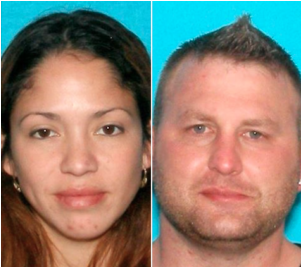
Aaron Rogers, 36, Salina, was booked into the Saline County jail on requested charges of Aggravated kidnapping, Criminal Damage to Property; Value Unknown, Domestic battery; Knowing rude physical contact w/ family member and Attempted Murder, according to the Saline County Sheriff’s Booking report.
He was involved in what was originally reported as an injury accident with a woman passenger
on the North Ohio Street overpass, according to Salina Police Seargeant Mike Miller.
There were no injuries, according to Miller.
Rogers is expected to make a court appearance next week.
Logan resident Lois M. Krouse passed away Thursday, Jan. 19, 2017 at the Phillips County Hospital in Phillipsburg, KS at the age of 102.
She was born Sept. 2, 1914 in Phillips County, the daughter of Richard & Anna (Shearer) Jaenicke. Her husband, Lewis Krouse, preceded her in death on June 25, 1993, as well as a son, Dennis.
Lois is survived by her daughter, Linda Blubaugh, of Phillipsburg, KS; three grandchildren and three great-grandchildren.
Funeral services will be held Monday, Jan. 23, 2017 at 10:30 a.m. in the Logan Christian Church, Logan, KS with Pastor Troy Buss officiating. Burial will follow in the Pleasant View Cemetery, Logan.
Mrs. Krouse will lie in-state on Sunday, Jan. 22, from noon – 9 p.m. at the Logan Funeral Home in Logan.
Memorial contributions may be given to the Logan Manor. Online condolences to: www.olliffboeve.com.
Logan Funeral Home, Logan, is in charge of arrangements.
Gene Policinski is senior vice president of the First Amendment Center.
Sending an “open letter” to President Trump has been in vogue these days.
Social activists, business moguls, media chieftains and political leaders all have penned a multitude of them since the November election. Some offer advice, some raise alarms, some offer praise and some just convey insults.
All well and good — those exchanges and more are in the “free speech and free press” ethos protected by the First Amendment of speaking “truth to power” — even if the response from Trump more often and not has been to vigorously tar unfavorable messages as “untruth.”
So this moment in history is just too ripe not to join in, but with a twist: Here’s my open letter about our core freedoms of speech, press, assembly, petition and religion… as a note not to the new commander in chief, but to the rest of us — “We, The People.”
For those reveling today in Trump’s oath of office, take a moment to consider that the freedoms of speech and press which he seems to be targeting were in no small way vital to a campaign rooted in reaching out to those who felt marginalized, ignored or even betrayed by both major parties.
Trump’s ongoing “fireside tweets” are both new to American politics and an echo of FDR’s similar mastery of the new medium of his era, radio, to speak directly to voters. He and we need to keep in mind that loosening libel laws to make it easier to sue a reporter also will make it easier to mount a legal challenge to all of us — including Trump — over our online comments.
And then there’s Trump’s biting, emotional indictments of the news media. More than 60 news and free press organizations earlier this week sent a multi-page note to the President and Vice President Pence, asking for a meeting to discuss transparency and press access to their administration.
We, the people, should endorse that call to coverage by our independent “watchdogs on government.” In turn, journalists must take action to reverse a widespread view — 74% in the latest State of the First Amendment survey — that the news media is failing to live up to its responsibility to be accurate and unbiased in news reports — or to, at the least — be transparent in declaring bias.
Holding government accountable in public for how public policy is made, and how public funds are spent, would seem to be a non-partisan objective we can all agree on. In that same SOFA survey, 71% of us said that was the case.
We will need to keep in mind as a nation that discussion, dissent, disagreement and debate are the hallmarks of a strong and open system of self-governance — and provide the means for self-correction when this nation goes astray. Let’s consider how rare it is in the world to be able to peaceably assembly without fear of government persecution or prosecution, to petition the government for change.
In like manner, there may be those who decry the “Women’s March” that will follow the Inaugural parade by one day as divisive. But what a grand example to other nations: Hundreds of thousands of Americans on one day, celebrating the peaceful transition of national power after a heated, closely contested election — only to be followed a single day later, in the same space, by hundreds of thousands of Americans protesting the political particulars of that transfer.
And finally, there’s certainly every reason to fear domestic and international terrorists. But we need to remember that targeting others solely because of their Muslim religious faith not only violates our nation’s unique commitment to respecting all faiths, but resurrects images of a time when unjustified wartime fear and disgraceful ethnic bias led us to intern Japanese Americans at the start if WWII.
More than ever, as we enter this new “Era of Trump,” we should heed the call to duty as citizens expressed in the observation by my late colleague John Seigenthaler that “our First Amendment freedoms are never safe, never secure, but always in the process of being made safe and secure.”
We may disagree — and often do — on how those five core freedoms of the First Amendment apply to any given set of facts.
But we should all stand behind them against any attempt to limit, weaken or ignore them on the basis of the variable political winds, the power of fear — or even the impact of the occasional Presidential tweet.
Gene Policinski is chief operating officer of the Newseum Institute and senior vice president of the Institute’s First Amendment Center. [email protected]
Goodland, Kansas, resident and former Greeley, Colorado, resident Archie Ruibal Jr., 55, passed away on Monday, January 16, 2017 at the Goodland Regional Medical Center in Goodland, KS.
Archie was born on June 3, 1961 in Greeley, Colorado to Archie Ruibal, Sr. and Maryann (Badial) Ruibal. He was one of two children.
Archie grew up and lived in Greeley for most of his life. He moved to Goodland seven years ago to be with his two children here. He attended Greeley West High School through 11th grade. Archie worked in construction as a laborer.
He enjoyed spending time with his family, shooting guns, stock car races, and listening to music. He really cared about his dogs, and helped in Goodland with the PBR.
Preceding him in death was his mother Maryann.
He is survived by his father Archie Ruibal, Sr. of Greeley, Colorado, four children; Anthony Ruibal and his wife Elizabeth Yanez and Amanda Aguirre and her husband Efrain, all of Goodland, KS, Kerystin Ruibal and Chelsey Ruibal, both of Greeley, CO, grandchildren Janea Balberrama, Anthony Ruibal, Jr., Angelina Ruibal, Annamarie Ruibal, Aalisa Ruibal, Maryalice Aguirre, Myles Aguirre, Janeva Aguirre, Mae Aguirre and Arthur Ruibal, all of Goodland, Lucas Ruibal, Abel Ruibal, Vladmiri Ruibal, Nikolei Ruibal, and Cecilia Ruibal all of Greeley, CO. He is also by one sister Beverly Ybarra and her husband Elias, as well as numerous nieces, nephews and friends.
Memorial services for Archie will be held on Saturday, January 21, 2017 at 1:00 PM MT at the Koons-Russell Funeral Home in Goodland with Father Norbert Dlabal officiating. Services will also be held at a later date in Greeley, CO.
Memorials may be made to the Archie Ruibal Memorial Fund and may be left at the service or mailed to Koons-Russell Funeral Home, 211 N. Main St., Goodland, KS 67735.
Online condolences may be left for the family at www.koonsrussellfuneralhome.com.
Service arrangements were entrusted to Koons-Russell Funeral Home, Goodland, KS.
John Richard Schrock is a professor at Emporia State University.
The Thunderbolt was a publication of the American Nazi Party. I saw my first copy my first year of teaching in rural Kentucky in 1969. Before class, a high school student showed me a copy, careful that no classmates were nearby. The feature story was an outrageous claim that African-Americans were more closely related to gorillas because they could produce hybrids and white Aryans could not. The article had a picture of a very hairy black infant to “prove” the case.
I recognized the picture. I wrote the term “hirsutism” on a slip of paper and sent the student to the library with instructions to look it up in the World Book encyclopedia. When he came back, after class was over he came up and whispered: “They lied, didn’t they.” I nodded. He had found the encyclopedia entry on the wide range of infants that have this rare hirsute condition and realized how the neo-Nazis had fabricated their racist article.
We did not use the term “fake news” in 1969. We had fake news, but it was slow to spread in print, and readership was small.
Today with social media, such fake news could “go viral” overnight.
Today, both K–12 and higher education are rushing to battle fake news with so-called “information literacy” courses that have magic cures for detecting the range of amateurish didn’t-quite-get-the-story-right misinformation to vicious falsehoods, such as the example above.
Librarians are often called upon to sort truth from trash. That is ironic because before the internet, library materials were classified: 500s and 600s were the pure and applied sciences. The occult was in the 100s. But our misunderstanding of free speech has kept the internet free from classification. How dare anyone put vaccines-cause-asthma or dolphins-are-just-underwater-humans in the non-sciences.
So the internet has become a vast wasteland. I let my student teachers discover this themselves. I assign them to find 10 accurate websites on the internet in some specific biology field that they choose: kidneys, ferns, fish, etc. They think it will be an easy assignment, but it takes hours or even days. They have over 40 credit hours of biology under their belts and they detect website after website that looks good—until they read the details. Tips on search words and other literacy tricks have little effect. A study in the journal Pediatrics found the majority of online information on childhood diarrhea was wrong, and sometimes fatal. Dot.gov and dot.edu sites are no more accurate than dot.com addresses.
A most damning piece of research came from the University of Connecticut. Seventh grade students were taught to become “research pros” by using RADCAB®, a “critical thinking assessment tool for online information” teaching about Relevance, Appropriateness, Detail, Currency, Authority and Bias.
The Connecticut study directed students to use RADCAB on the Pacific Northwest Tree Octopus website. The students found that the Tree Octopus website passed all the tests for authority, citations and other criteria (the PhDs and journals were fake, however). But when an actual expert was brought in to explain how the octopus only lives in the sea, nearly all of the students rejected the expert. They now had “ownership” of this falsehood.
This would not have happened if the students had actually known something about an octopus. To combat fake information in the future, citizens are just going to have to know more content.
To return to the Neo-Nazi Thunderbolt article I described at the beginning, my ability to de-fuse that terrible lie came directly from my having read through the World Book encyclopedia in fifth grade and then recognizing the picture over a decade later. Without that knowledge and our unique ability to recall faces and photos for long times, I would have had to resort to an authoritative “believe me” explanation that would not have undermined the legitimacy.
Abstract “information literacy” lessons don’t work. If there was any god-like truth-detector, we would all be using it.
Simply, any assertion that schools can teach students a method to separate truthful reporting from fake news, is itself “fake news.”
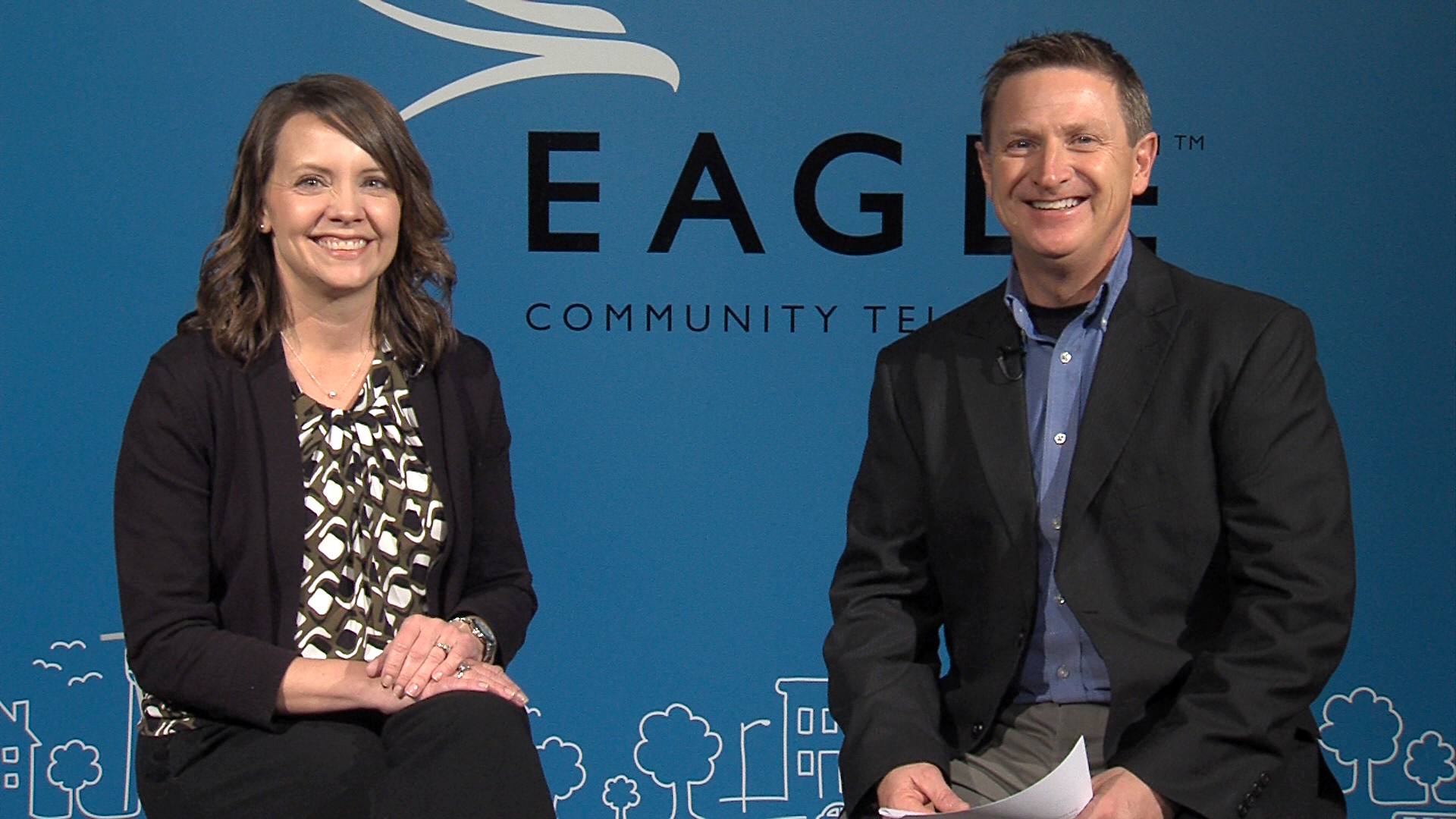
Listen to Mike Cooper interviewing Orthopedic Physician Dr. Walley Walstrom; from from Hays Orthopedic Institute at HaysMed, with the topic of “Sports Medicine” by clicking the link above and then clicking the play button
NEWTON, Kan. (AP) — A Kansas prosecutor says the death penalty “is on the table” in the case of two people who investigators say fled to Mexico as suspects in a triple homicide last October.
Harvey County prosecutors have charged 35-year-old Jereme Nelson and 31-year-old Myrta Rangel each with one count of capital murder and three counts of first-degree murder.
Nelson and Rangel were arrested earlier this month in Mexico and were returned to the U.S., where they remain jailed in California and await extradition to Kansas.
Authorities have said the bodies of 33-year-old Travis Street and 37-year-old Angela May Graevs, both of Moundridge, and 52-year-old Richard Prouty of Newton, were found Oct. 30 outside a rural home near Moundridge. An 18-month-old child was found unharmed.
It’s unclear if Nelson and Rangel have attorneys.
———————
HARVEY COUNTY –Law enforcement authorities continue to investigate suspects in connection with a Kansas triple-murder case.
On January 12th, Mexican authorities arrested 35-year-old Jereme Lee Nelson and 31-year-old Myrta Rangel in Rosarita Beach for the murders of 33-year-old Travis Street and 37-year-old Angela May Graevs, both of Moundridge, and 52-year-old Richard Prouty of Newton.
They were handed over to the U.S. Marshals Service and returned to the U.S. according to a media release.
During a Friday news conference, the Harvey County Sheriff’s office confirmed Nelson and Rangel waived extradition.
They remain jailed in San Diego.
No hearings in the case are scheduled until the suspects are returned to Kansas.
School board members play a crucial role as an elected board in the communities and the schools in which they serve.
January is School Board Recognition Month, a time to focus on your school board members in your community and thank them for their commitments, sacrifices and efforts. School board members work with administrators, school staff, and students to try to make the schools as best as they possibly can be. School board members voluntarily donate their time to take on the immense job of making action decisions for school districts.
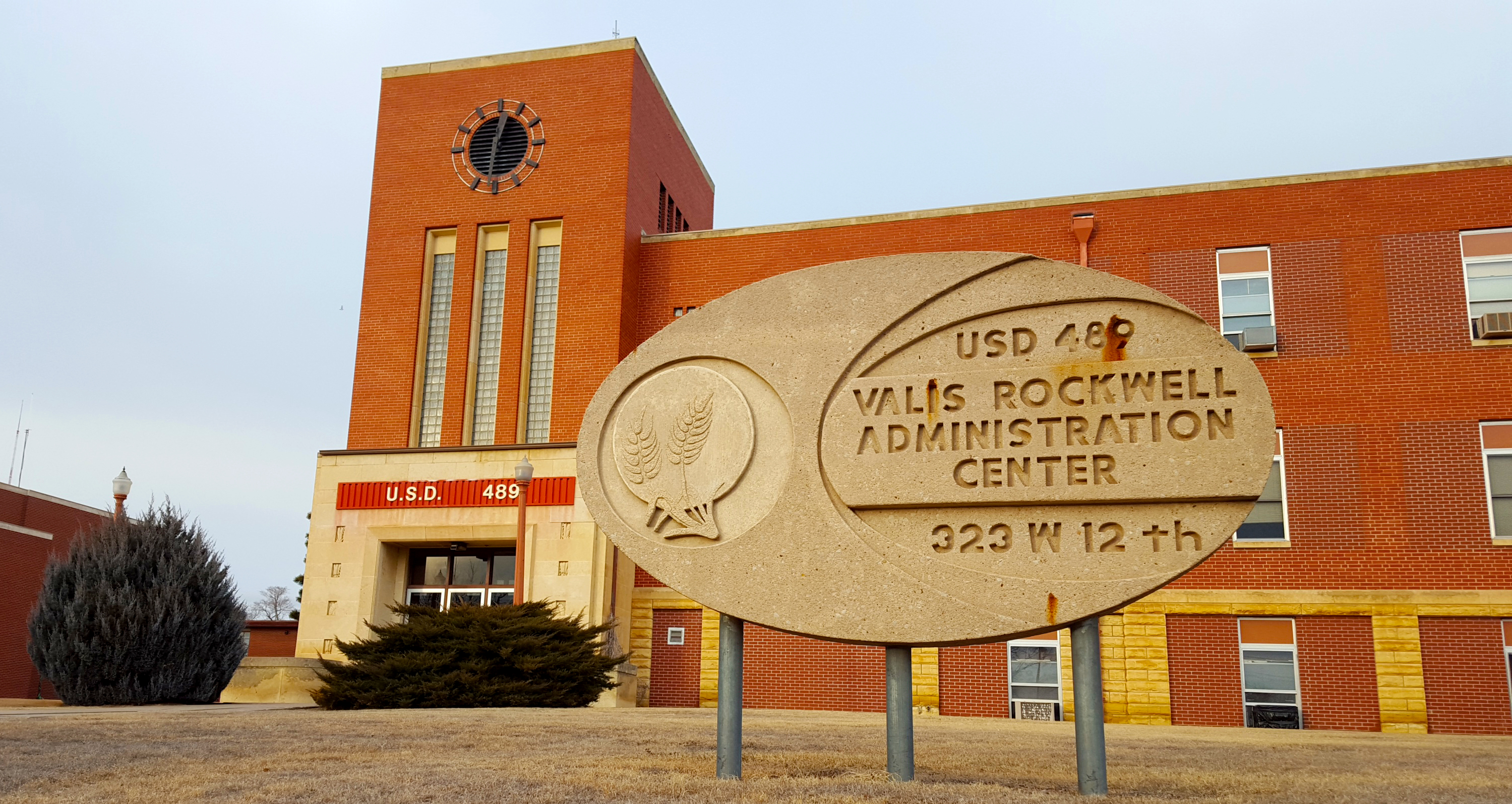
On Monday, Jan. 30, USD 489 will be having a BOE appreciation social and a board meeting. The appreciation social beings an hour before the scheduled meeting at 5:30 p.m. This will give community members a chance to thank the board members.
Cake and punch will be provided to those who attend.
To learn more about the USD 489 School Board members click to enlarge




 Listen to Mike Cooper interviewing Orthopedic Physician Dr. Walley Walstrom; from from Hays Orthopedic Institute at HaysMed, with the topic of “Sports Medicine” by clicking the link above and then clicking the play button