Just two days after being sworn-in and on the payroll, state legislators got the governor’s plan for the budget to fill the $350 million shortfall in the remaining six months of this fiscal year and the two last years of Sam Brownback’s governorship.
And, it is tricky and confusing, especially for the new legislators, nearly a third of the members, and they are still trying to figure out what goes where, and what’s borrowed from what.
The real key to the whole operation, though, is that the governor has managed to find a way to finance the shortfall this year and budget for the last two years of his governorship without any general tax increases.
That’s the political equivalent of walking across snow and not leaving tracks.
It puts the state in a financial bind, but there are no significant new taxes, and no tax on the LLCs and sole proprietorships and farms that the governor has touted as the engines of prosperity for Kansas. The bill for those transfers and shuffles doesn’t show up until someone else is governor.
Politically, it doesn’t get any better than that. Remember that good (even great) politics and good government aren’t the same. Good government keeps the schools, roads, health care, and the poor taken care of. Good politics boils down to not inconveniencing your voter base.
That’s something that is a pretty good final budget…no tax increases that most Kansans will wind up paying.
Oh, he does plan to boost the tax on cigarettes by $1 a pack, and double the tax on liquor, but besides the predictable grumbling a lot of smokers/drinkers probably will have to admit that they aren’t paying what those two vices are worth now.
There is budget shuffling and internal borrowing that is all pretty complicated and pushes the state’s revenue shortfalls into the future, but if you turn over the keys to the governor’s mansion in January 2019, well, you can read about it in the papers from somewhere else.
Practically, what is a good political budget for the governor is going to see substantial shaking up by the House and the Senate. Already lawmakers are upset about cutting payments to the state pension fund and borrowing from caches of cash in obscure special finance accounts. That internal borrowing, while it doesn’t show up immediately, remains an obligation to be repaid, and the repayment of that borrowing doesn’t happen until there’s a different person living in Cedar Crest, the state housing for the governor.
The next couple weeks should tell whether the governor gets most of his deficit-filling plan adopted. It’s going to be one of those “negotiations” between the Legislature and the governor; it may well come down to whether a gubernatorial veto of the Legislature’s plan can be overridden by the lawmakers or whether they have to try again. The out-years budget is one thing that lawmakers can work on next session, but finishing this fiscal year with a balance in the treasury is a constitutional requirement that won’t wait until next session.
So, let’s watch the next couple weeks on the current fiscal year budget. It may tell Kansans whether the Legislature has taken over or whether the governor is still in charge. …Or, whether it matters much to the governor who is running things for the last two years of his term.
A governor can pretty much make a job out of attending ribbon-cuttings, highway repaving projects and such without actually doing much policymaking work that requires legislative approval.
He can skate…if he cares to. Or, they could all just hug.
Syndicated by Hawver News Company LLC of Topeka; Martin Hawver is publisher of Hawver’s Capitol Report—to learn more about this nonpartisan statewide political news service, visit the website at www.hawvernews.com
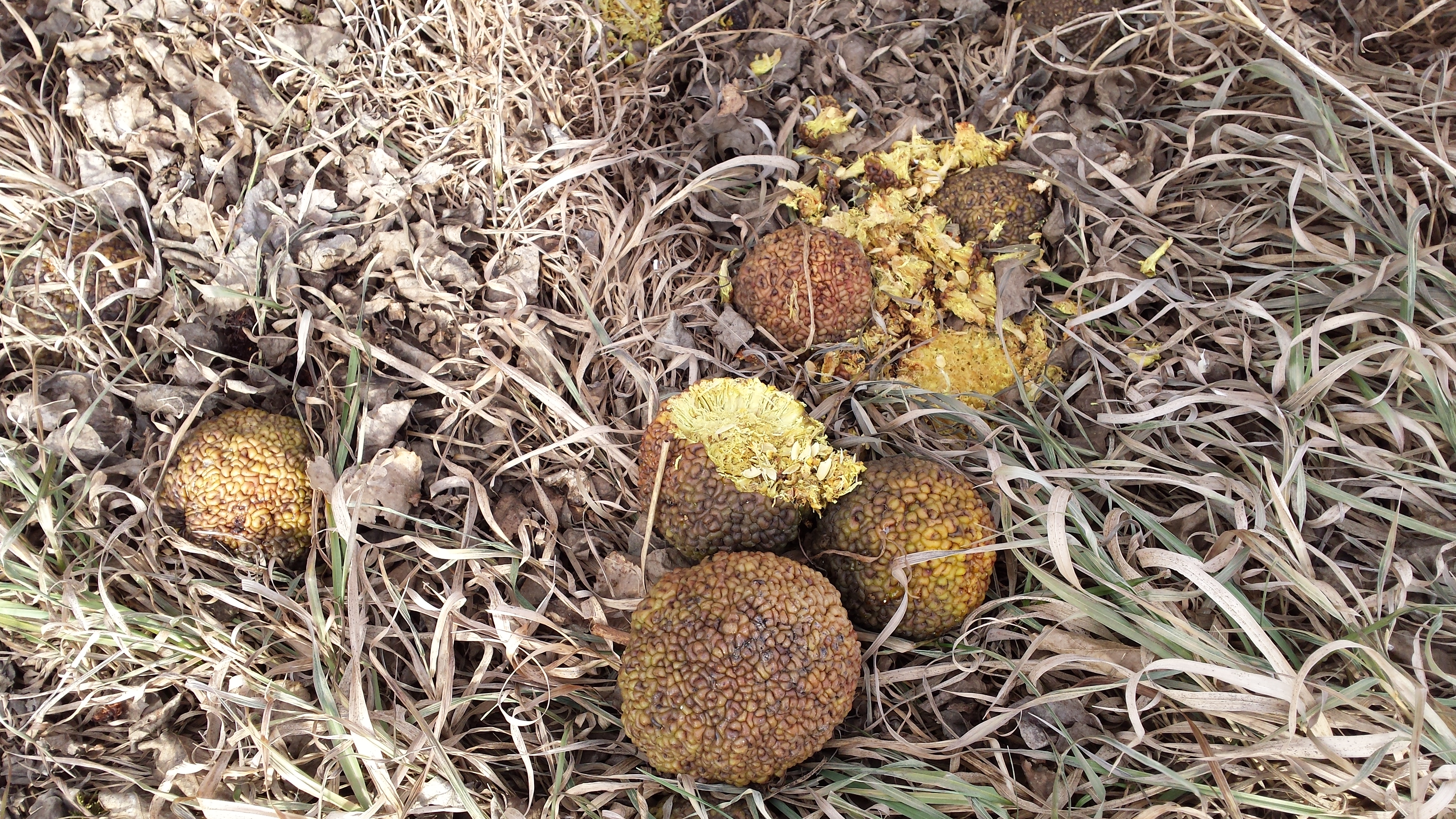
I was out checking traps and a bright greenish-yellow pile of debris under a hedge tree caught my eye. As is normal in the winter, squirrels have been chewing apart hedge apples to get to the many succulent seeds inside them.
In the 1880s before the invention of barbed wire, ranchers began planting Osage Orange trees as living livestock fences. The trees get their name from the Osage Indian tribe that lived near the trees native range in the Red River valley of southern Oklahoma and northern Texas, and from the citrus aroma emitted by the fruit.
Steve Gilliland
Osage Orange seedlings planted thickly together in rows and aggressively pruned soon grew into living fences that were “Horse high, bull strong and hog tight;” tall enough a horse couldn’t jump it, stout enough a bull couldn’t push through it and so dense a hog couldn’t penetrate it. Osage Orange trees have been planted in greater numbers than any other single tree species in North America.
The largest known living Osage Orange tree grows on River Farms in Alexandria, Virginia. The beast stands 54 feet tall and its branches span 90 feet. As firewood, dried hedge wood produces more BTU’s than any other wood. As fence posts, hedge wood provides more rot resistance without chemicals than any other wood. Osage Orange wood is also prized for making archery bows. One of the names given hedge wood by early explorers was bow wood, probably because they observed Osage Indians making bows from it. Although I could not confirm it, I found several references online to a guy in Americus KS. who makes harps from Osage Orange wood because “he believes it to be the most dimensionally stable of all woods when aged and placed under strain.”
However after all the praises are sung about the fine qualities of its wood, Osage Orange trees are best known for the annoying and seemingly useless fruit produced by the female trees. About the size of softballs and clothed in a thick bright green knobby husk (when first ripe) hedge apples are known by several other names: horse apples, hedge balls, monkey balls, green brains and mock oranges are the ones I know. As I noted above, squirrels love them for the seeds inside them, which by the way are NOT noxious to humans like I’ve always heard, but are said to be barely palatable, plus chemicals in the flesh can cause severe stomach irritation. Livestock can also eat them, but their sticky flesh is very dangerous for ruminants as it does not move well through their complicated digestive systems and easily becomes lodged, causing bloating and possible death. I confirmed that with our veterinarian Dr. Mark Handlin.
Many people swear by hedge apples for insect control, and say placing the ripe fruit under sinks, in closets etc. repels spiders, crickets and other pesky bugs, while naysayers believe the only way a hedge apple will kill or repel a spider is to drop it on the spider. One lady claims stuffing pieces of hedge apples down mole holes rids her yard of moles, and says it has worked for her neighbors too.
The most talked about and controversial use for hedge apples involves their alleged medicinal value. Studies have shown that hedge apple flesh does contain minor anti-inflammatory and anti-fungal properties, but those properties are in very minute quantities. Other than that, no official studies have confirmed any positive medicinal values of hedge apples. However, many people continue to believe that hedge apples offer curative and healing value. The internet contains much information and many testimonials of hedge apples curing cancer. Many people dry them and process their flesh to make pills and tinctures to fight colds and to boost the immune system. Some people freeze the whole fruits then grate off a tablespoon of the outer husk to take with honey when they feel a cold coming on.
Even though the sticky inner flesh of the hedge balls is said to irritate human skin, Iowa chemist and entrepreneur Todd Johnson’s company Osage Healthcare pays $180 a ton for hedge apples and extracts their oil for use in the cosmetics industry. Johnson, who calls himself the “Hedge Ball Kingpin of the US”, estimates his companies worth at 2 -7 million, and a partnering company will soon be selling hedge apple oil for $85 per ½ ounce. Another Iowa company called Moses Hedge Balls sells hedge balls, Osage Orange wood and product made from hedge apples called Hales Bug Repel. By the way, his hedge apples are a bit pricey at 4 for $26.00, 8 for $42.00 or a dozen for $54.00. (talk about a markup!)
My mom used to slice hedge apples into ¼ inch slices then dry them slowly in the oven to make decorations strongly resembling sunflower blooms. We used to throw them at each other when we were kids and I learned to be quick on my feet cause’ those things hurt! Between mom’s green willow switch to my bare legs and a hedge apple to the head, I might just opt for the green willow switch! For some reason Iowa seems to be a hotbed for hedge apple related research, companies and products. I don’t know, maybe Iowans know something we don’t.
One thing I do know; I’ll make you a better deal on a dozen hedge balls than Moses will!…. Continue to Explore Kansas Outdoors.
Steve Gilliland, Inman, can be contacted by email at [email protected].
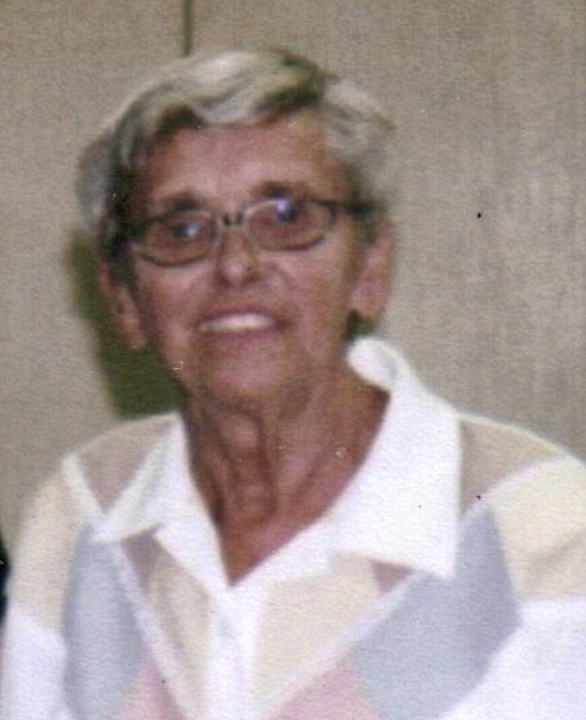
Rena Mae Rathsack, age 85 of hays, passed away June 7, 2015 at Hays medical Center in Hays. She was born April 7, 1930 to William and Beatrice Rathsack.
Rena was a retired Seargent in the US Army. She served in Germany, Okinawa right after Pearl Harbor and Hawaii.
She is survived by her special friends and caregivers, Kim and Terry Weigel and children of Hays, Craig and Jolene Hamel and children of Jacksonville, FL, Russ and Dawn Sharp and children of Edmond, OK, Scott and Christina Hamel and children of Stockton, Kyle and Teri Hamel and children of Gilbert, AZ, Shayne and Tiffany Hamel of Plant City, FL, her senior companion, Arlene Schlyer of Hays and first cousins, Joey and Mae Sazama of WI. and Jimmy and Sylvia Sazama of TX.
She was preceded in death by her parents and 2 brothers, Robert and James Rathsack.
Funeral services will be at 10:00 AM Friday, June 13, 2015 at St. Nicholas of Myra Church in Hays. Burial with full military honors by Ft. Riley Honor Guard at St. Joseph’s Cemetery in Damar, KS.
Visitation will be Thursday 6 PM – 8 PM at and Friday 9 AM – 9:30 all at Brock’s-Keithley Funeral Chapel and Crematory.
There will be a combined rosary and vigil service at 7 PM Thursday at the funeral chapel.
Memorials are suggested to the Hearing Impaired or the Disabled Veterans’ Association.
Condolences may be sent to the family by guest book at www.keithleyfuneralchapels.com or emailed to [email protected]
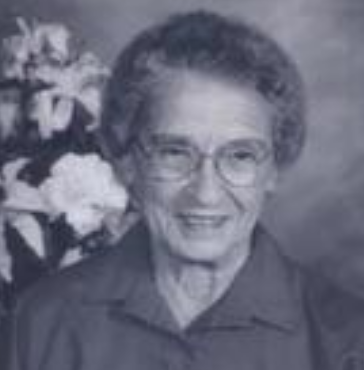
Mabel Blanche Hoss, 101, died Friday, January 13, 2017, at Cedar Village Long Term Care in Ness City where she had lived since 2001. She was born on January 11, 1916, to Lea and Maude (Gibson) Maranville on the family farm southeast of Ness City.
Mabel was schooled at home until fourth grade, then attended rural schools and graduated from Ness City High School in 1935. She married her classmate, George Hoss, on July 31, 1941. He died January 20, 1979. Although they did not have children, Mabel and George were enthusiastic supporters of the activities of their 30 nieces and nephews. They helped raise their niece, Donna Roof Skinner, who lived with them for many years and always considered their house her home.
Throughout her working years, Mabel was an actively involved farm wife. She also enjoyed other careers. She taught school for a combined nine years at one-room rural schools in Ness County, including Harold, Rosedale, Plum Creek, Manteno, and Nonchalanta. From 1959-1961 she served as Probate Judge and County Judge for Ness County. From 1961 till her retirement in 1978 she was Postmaster in the Ness City Post Office. Her husband died shortly after her retirement. From 1979-1998 Mabel spent the greater part of each year as a “snowbird” in the Rio Grande Valley in south Texas.
During her early years Mabel was very active, along with her whole family, in the Oddfellows and Rebekah lodges. When she married she joined the Catholic Church. She was professionally active in the Postmasters Association, Business and Professional Women’s Organization, and was an avid supporter of the Ness County Historical Society. Hobbies included quilting and travel to both U.S. and foreign destinations.
Survivors include niece Donna Skinner of Davis CA; and many other nieces and nephews. She was preceded in death by her husband, her sister Marie Harrel and her brother Rex Maranville.
Rite of Christian Burial Service was held Saturday, January 14, 2017, 9:30 a.m. at Fitzgerald Funeral Home, Ness City, Kansas.
Logan, KS resident Geneva A. Gingles passed away, Friday, January 13, 2017 at the Logan Manor in Logan at the age of 85.
She was born October 5, 1931 the daughter of Gerrit & Anna (Van Zuuk) Van Loenen.
She was married to Gailard Book on April 22, 1950 in Beloit, KS.He passed away on August 15, 1989.She then married Armand D. Gingles on November 29, 1991 in Logan, KS.He also preceded her in death on April 9, 2012.
She was also preceded in death by her parents; 2 sisters, Marjorie Nonhof & Edna Van Loenen; and a daughter, Elaine Book in 1979.
Survivors include 3 sons, Gerrit Book & wife, Nita of Chandler, AZ, Larry Book & wife, Sharlene of Oxford, KS & Dale Book & wife, Connie of Salina, KS; 2 daughters, Shirley McClendon & husband, Mack of Topeka, KS and Nancy Cook & husband, Kelly of Hays, KS; 16 grandchildren; & 21 great grandchildren.
A Mass of Christian Burial will be held at 10:30 a.m. Friday, January 20, 2017 at St. John’s Catholic Church, Logan, KS, with Father George Chalbhagam officiating.Burial will follow in the Prairie View Cemetery, Prairie View, KS.
A Scriptural Wake & Rosary will be held at 7:00 p.m. Thursday evening at the Logan Funeral Home, 102 E. Church Street, Logan, KS67646.Following the Rosary, the family will receive friends for visitation from 7:30 p.m. to 9 p.m. at the funeralhome.
Geneva will lie in state Wednesday, January 18th from Noon until 9 p.m. at the Olliff-Boeve Memorial Chapel, 1115 2nd Street, Phillipsburg, KS, then from 9 a.m. to 9 p.m. at the Logan Funeral Home, 102 E. Church Street, on Thursday, January 19th.
Memorial contributions may be made to the St. John’s Catholic Church, Hospice Services or Teens For Christ.
Logan Funeral Home is in charge of arrangements.Online condolences may be left at www.olliffboeve .com.
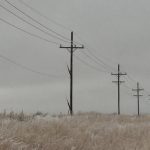
Midwest Energy is dealing with scattered outages across its coverage map Monday, including a larger outage south of Russell.
According to Midwest’s outage viewer, more than 1,500 customers are affected in that outage, which is between Russell and Great Bend.
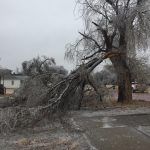
Overall, there are approximately 8,500 customers without power as of Monday afternoon after the weekend ice storm. Some of those customers could be without power for several days, Midwest said in a news release Monday afternoon.
In Ellis County, there were just a handful of localized outages.
Click HERE for the latest on Midwest power outages.
Click HERE for the extensive list of latest cancellations and delays.
Lois Jean Lowe, 91, of Colby, died Saturday, January 14, 2017, at Kearney Regional Medical Center, in Kearney, NE. She was born November 10, 1925, in Russell Springs, KS, to Charles and Mabel (Ricketts) Lamb. Jean graduated from Winona High School in 1943 and then attended Colorado State Teacher’s College. She taught elementary school in both Russell Springs and Winona during World War II. On August 13, 1944, she married Edwin Jack Lowe, in Winona, KS. They owned and operated Lamb Mercantile in Winona for over forty years and ran Lowe Firestone in WaKeeney from 1960-1962. She also farmed, winning the Logan County Soil Conservation Award in 1989.
Jean loved her family, church and serving her community. She was a lifetime member of the Winona United Methodist Church, serving as church choir director, youth leader and was a longtime member of United Methodist Women. She also served on the Western Plains Art Association Board and wrote a popular community news column for the Oakley Graphic.
Jean was preceded in death by her parents, husband Jack, and brother Jack Lamb.
She is survived by her children, Michael (Vickie) and Cynthia (Steve) Seideman; sister Donna Christensen; 5 grandchildren: Michelle Kirk, Christopher Lowe, Jenaya Van Horn, Brie Meschke and Mariah Van Horn Trujillo and 12 great grandchildren.
A funeral service will be held at 10:00 a.m. Thursday, January 19, 2017, at the Colby United Methodist Church with burial in the Winona Cemetery. Memorials are suggested to the Winona United Methodist Church, Ascension on the Prairie Episcopal Church of Colby or Western Plains Arts Association, in care of Baalmann Mortuary, PO Box 391, Colby, KS, 67701. For Condolences or information visit www.baalmannmortuary.com
The 2017 Kansas Legislative Session began on Monday, January 9 with the swearing in of all members. More than a third of the Kansas House will be new this year, as we welcomed an incoming class of 46 new members. Five of that group, however, have previous experience as House members and are now returning. The majority party Republicans number eighty-five and are joined by forty Democrats.
The legislature is scheduled to reach first adjournment on April 7. Veto session will convene on May 1, and the theoretical 90th day end of the session will come on Mothers Day, May 14. Although many pundits are predicting a long and contentious legislative session which could stretch well into June, the House got out of the gates rapidly this week and passed its first piece of legislation on day four of the session. That is nearly unprecedented, and is evidence of the resolve on the part of both leadership and members to get about our business quickly and responsibly.
Governors State of the State Address
Governor Brownback delivered the annual State of the State address on Tuesday afternoon in the House Chambers. The governor reiterated his belief in the effectiveness of the income tax break given to small businesses in 2012. He voiced continued opposition to Medicaid expansion, especially in light of current federal movement to repeal Obamacare.
The speech introduced some intriguing proposals, including a new dental school at the University of Kansas Medical Center, locating a private school of osteopathic medicine in Kansas, and challenging Kansas universities to offer a four-year degree for a total tuition cost of $15,000. While each proposal would bring great benefit to the people of Kansas, few details were provided, leaving some to wonder how realistic the proposals might be.
Governors Budget Report
On Wednesday Shawn Sullivan, Director of the Budget, released the governors budget report. It contained proposals to close the projected $340 million shortfall for fiscal year 2017 (ending on June 30) as well as proposals to deal with a $580 million projected shortfall in fiscal year 2018.
Highlights:
FY 2017 (ending June 30):
Liquidate long-term investment fund by transferring $45 million in interest earnings to State General Fund (SGF), then borrowing the principal of $317 million and repay over seven years.
Reduce payments into KPERS by $86 million.
FY 2018 and 2019:
Securitize (sell off) the revenue stream from the tobacco master settlement (which funds early childhood programs) in order to receive upfront payments of $265 million in both FY 2018 and 2019.
Continue reduced payments to KPERS at the 2016 rate rather than increasing payments as statutorily required. Generates SGF savings of $140 million in 2018 and $199 million in 2019. Extends the reamortization of KPERS by ten years and therefore extends the timeline before KPERS is fully funded.
Continue to divert all sales tax revenue from KDOT to SGF. Produces $288 million for the SGF in 2018 and $293 million in 2019.
Budget for efficiencies in K-12 school operation totaling $47 million in 2018 and $89 million in 2019. This is based upon recommendations contained in the efficiency study commissioned by the legislature in 2015. Legislative committees have already begun examining this proposal to determine feasibility and whether the projected savings are attainable.
Governors Tax Proposal:
Exclude rents and royalties from the small business income tax exemption
Freeze the bottom income tax rate at 2.7%
Increase annual report filing fee for businesses from $40 to $200
Increase tax on cigarettes $1 per pack
Increase tax on other tobacco products from 10% to 20%
Increase liquor enforcement tax from 8% to 16%
Cumulatively, these tax proposals would produce $179 million in 2018 and $199 million in 2019
The solutions the governor proposes have been characterized as very unpalatable by many observers. But more than anything that is a reflection of the dire fiscal circumstances the state currently faces. There is room for disagreement over how we got to this point and why. However, there is no controversy over the stark fact that the state is now broke, and that the practice of cobbling together annual budgets with unreliable and one-time funding sources cannot continue.
In the short run, our list of potential solutions is short and it will be a process of ranking a variety of undesirable options in order to find the best possible approach. Whatever the legislature settles on for a solution, it too is likely to be quite unpalatable. Longer term, the people of Kansas are asking for and deserve a long-term structural solution to the current fiscal imbalance. Finding that solution will require resolve, persistence, and cooperation on the part of all legislators.
First Bill of the Year Passes the House
On Thursday the House considered and passed an elections bill brought to the body by the Elections Committee and its Chairman Keith Esau. With the likely confirmation of 4th District Congressman Mike Pompeo as the new Director of the CIA, a special election will be necessary to pick his replacement in Congress. Inconsistencies in Kansas election law raise the prospect that the election results could later be challenged. The bill removes those inconsistencies and will allow for an orderly selection of Pompeos replacement. It is expected the bill will be quickly approved by the Senate and with the Governors signature the new law will be in place before the resignation of Congressman Pompeo.
Pay-Go
On Thursday the House adopted new House Rules which will guide the legislative process for the next two years. A key amendment was to revise the pay-go rule. Pay-go is shorthand for pay as you go, a concept which first appeared in federal budget debates. At the federal level the pay-go rule meant that a member of Congress could not propose an amendment requiring spending which would increase the national debt.
Deficit spending is not an option at the state level, but in 2011 the Kansas House adopted a version of pay-go allowing members to amend an appropriations bill only in a manner which would not increase the overall spending authorized by the bill.
Pay-go has been controversial since its first adoption. There is an appreciation for the strong fiscal responsibility it represents, but many members believe it concentrates too much power in the hands of those on the appropriations committee. They point out that only eleven members of the House (a majority of the membership on appropriations) can effectively control proposed expenditures with very limited input from the general membership. This is sometimes viewed as a disenfranchisement of the members not involved, and denial of their right to effectively represent their constituents in appropriations deliberations. Though there is merit to that argument, the concept of pay-go is essentially moot at a time when the states finances are in disarray.
Thursday the rules committee proposed an amendment to the pay-go rule which would eliminate pay-go if and when state finances improve to the point that the state general fund contains a 7.5% ending balance, as currently required by law but frequently violated in recent years. The rule was adopted after extensive debate, and strikes a balance between the desire for full inclusion, debate and amendment and the need for strong fiscal discipline, especially in difficult financial times.
Pay-go is much more restrictive if appropriations bills are brought to the floor in piecemeal fashion. Although appropriations bills are typically quite broad, and address most or all state general fund expenditures, there have been instances in recent sessions when appropriations bills have been brought forward which only concern certain departments or agencies. That severely constricts the ability of members to identify sources of funding to address their particular concerns. The willingness of the members to adopt a revised version of pay-go for 2016 can be viewed as display of trust that House leadership will allow broad appropriations bills to be considered.
The debate about what is the proper domain of government and where the dividing line should be between business and government is a discussion which traces back to the very founding of our country. The topic is once again of interest as the nation prepares for the inauguration of President-elect Donald J. Trump, a business tycoon with no prior government experience. This article from Knowledge@Wharton, an electronic service of Wharton School of Business at University of Pennsylvania, examines the question in depth: Can Government be Run Like a Business
WIBW Radio Appearance
My first 2017 appearance on WIBW Radio came in the early morning hours of Thursday, January 12. Due to the retirement of my friend Rep. Tom Moxley, this year my partner in the monthly radio interviews is Rep. Larry Hibbard (Toronto). Larry did a great job in his first performance. Give it a listen: WIBW Ag Issues 1-12-2017
Cowboy Logic
No one gives advice with more enthusiasm than the uninformed.
Quote of the day
“The most important thing in communication is to hear what isn’t being said.” – Peter Drucker
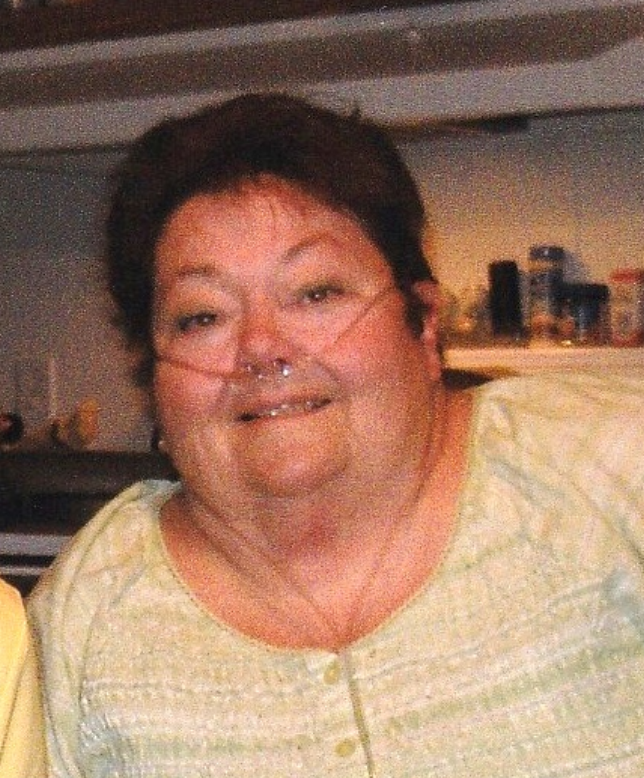
Sharon Katherine Cole, age 69, of Hays, passed away Friday, January 13, 2017 at Hays Medical Center. She was born July 3, 1947 in Arlington Heights, IL to Charles and Frances (Rome) Glimes.
She had worked with U-Haul in Phoenix where she became the first woman manager for the company, She also worked for the Phoenix Transit System as a bus driver and owned a catering business in Hill City. She was very active with the residents at Centennial Towers and made caps for newborn babies.
She is survived by her mother, Frances Glimes of Victoria; a son, John (Sheryl) Cole of Russell; a daughter, Roschelle (Lane) Pursel of Wells, MN; a sister, Diane Glimes of Russell; grandchildren, Stephanie, Mandy, Samantha, Sheree, and Ashlee; her great grandchildren, Sharmaigne, Abel, Brooklyn, Isabell, Jackson, Elijah, and Avery as well as two nephews, Michael and James Rosenberg.
She was preceded in death by her father, Charles Glimes; a daughter, RondaSue Nelson; a brother, Michael Glimes and a grandson, Austin Forde
Funeral services will be 3 PM Wednesday, January 18, 2016 at Brock’s-Keithley Funeral Chapel 2509 Vine Hays, KS 67601. Visitation will be Wednesday 11 AM – 3 PM at the funeral chapel.
Memorials are suggested to the Humane Society of the High Plains.
Condolences may be sent by guest book to www.keithleyfuneralchapels.com or emailed to [email protected]
PRATT – Seven lucky non-profit, conservation-based organizations will each receive a Kansas deer permit this year, courtesy of the Kansas Wildlife, Parks and Tourism (KDWPT) Commission Big Game Permit program. The organizations were drawn during KDWPT’s first public meeting of the year, held on Jan. 5 at the Flint Hills Technical College in Emporia.
The permit program, which received 142 eligible applications in 2016, allows Kansas-based nonprofit organizations that actively promote wildlife conservation and the hunting and fishing heritage to apply for a permit. If drawn, the organizations can then use the permit to raise money for the organizations’ conservation efforts, with 15 percent of the sales going directly to the chapter and 85 percent going to KDWPT to be spent on mutually agreed-upon conservation projects. An organization is eligible to receive only one Commission big game permit in a three-year period.
The following organizations were drawn by the Commission to receive a 2017 Commission Big Game Permit:
National Wildlife Turkey Federation (NWTF) – Kansas City Spurs Chapter
Information on how and when each chapter plans to make their permit available to the public for purchase will be provided on ksoutdoors.com at a later date.
For more information on the Commission Big Game Permit program, contact the Commission Secretary at (620) 672-5911 or visit ksoutdoors.com.
Ron Wilson is director of the Huck Boyd National Institute for Rural Development at Kansas State University.By RON WILSON Huck Boyd National Institute for Rural Development
“Grandma, tell me a story!” Those words are a call for storytime. In the case of one rural Kansas woman, those words would ultimately inspire a book and the beginning of a series.
Rosie Bosse lives with her husband J.R. on the family farm near Onaga, Kansas. Rosie grew up on a farm in Jewell County. She got a degree in home economics education from K-State. One night she went out dancing and met her future husband, J.R.
“We said we would wait five years to have children,” Rosie said with a smile. “Well, our first one was born nine months and three days after the wedding.” Within six years they had four children. Rosie chose to stay at home with the kids. She worked as a substitute teacher and got involved with Tupperware.
“I wanted a set of cereal bowls that I couldn’t afford, but I could get the kit free if I held four Tupperware parties so that’s what I did,” Rosie said. After hosting, she found she really liked the products and people. In fact, she was eventually promoted to a director with the company. She now has 55 people on her team. Hers is one of the most successful sales teams in Kansas.
Rosie’s family grew also. Her four children are now grown and she has nine grandchildren.
“The grandkids are always asking me to tell them a story, but I don’t always tell the stories the same way,” Rosie said. “My daughter said I should write the stories down.”
Rosie always enjoyed writing. “One of the people who influenced me the most was my English composition teacher at K-State,” Rosie said. “On the first day of class, she told us that a C was for average work, a B was for excellent work, and the only way to get an A was to write something that was good enough to be published. We were all so scared that we tried to drop the class, but we couldn’t do it.”
Rosie buckled down in the class and improved her writing in the course of the semester. “In the end, I did get an A, and it was one of the proudest grades I ever received,” Rosie said. The teacher even came to her wedding. “What a wonderful lady,” Rosie said.
Those writing skills would come in handy years later when Rosie’s daughter suggested that she write down the stories that she told her grandchildren. Rosie’s first book was written for a little friend. It was titled Beautiful Little Princess. She wrote another one based on a story for the grandkids.
On a whim, Rosie contacted a publishing company in Oklahoma City. Ultimately, the people there agreed to publish her book which was released in fall 2016. It is an illustrated children’s book titled How Clicker the Dog Earned his Name.
The story is not autobiographical, but it does begin with Mr. and Mrs. Farmer who “lived on a farm in the middle of nowhere.” In the story, Mr. Farmer finds and rescues an abandoned puppy. Mrs. Farmer insists on no more animals, but her heart melts when she sees the little dog. Spoiler alert aside, be assured that the story has a happy ending.
The story was illustrated by the company’s city-based artists, which was a challenge. “In the first drawings the pickup truck looked like a minivan, and the farmer’s arms looked like little sticks.” Rosie eventually sent in a photo of her husband’s muscular arms. The revised illustrations were wonderful.
The book about Clicker is just the beginning. Upcoming books include Knarleytooth, the Mean Mountain Lion and Clicker Finds a Mate. Rosie has also published cookbooks with hundreds of delicious recipes. The most recent is titled Grandma’s in the Kitchen but Not For Long, which focuses on good quality food which can be prepared quickly.
“I want good food fast,” Rosie said. She’s sold hundreds of the books from her rural location near Onaga, population 697 people. Now, that’s rural.
“Grandma, tell me a story!” Thanks to her grandchildren, Rosie Bosse is making a difference by sharing her stories with families everywhere.
Native Kansan Karen Madorin is a local writer and retired teacher who loves sharing stories about places, people, critters, plants, food, and history of the High Plains.
I’m guessing a good number of readers in my age group, folks entering their 7th decade, grew up as I did, believing humans were intended to boss their pets. Over time, as I have, they’ve reinterpreted those early views and accepted that four-legged companions actually run our houses.
A friend stopped to visit the other day. After we spent a couple hours catching up, she observed my little terrier sitting on my toes, staring intently at me. Unbeknownst to her, he was informing me it was nearly 3 p.m., aka his dinnertime. Noting his wrinkled brows and unblinking gaze , I excused myself to mix up his bowl of kibble. She teased that he had me well trained. I answered, “You have no idea.”
I’ve reluctantly acknowledged she stated pure truth. A fourteen-pound, thirteen-year old-canine dictates my actions from first thing every morning to mid-afternoon and just before bed. As soon as I awaken, his no nonsense path to the back door directs my mission to let this little guy and his furry, white sidekick outside for their morning constitutional. If I’m slow to respond, the toe-tapping pee- pee dance encourages me to attend to business. There’s no tolerance for this human to dress or brew coffee.
As the day goes on, my pointy-nosed guard dog perches at the edge of the sofa to survey the backyard. If he observes anything out of the ordinary—say a visiting German shepherd sprinkling his chain link fence or a brave squirrel creeping onto the grass—he races to my lap and implores me with sharp yips and pitiful whines to let him out to handle the situation.
Once he’s driven off the invaders, he directs his fuzzball partner to bark until I let them in. Once through the door, he examines the kitchen floor to see if I’ve dropped anything while he secured the premises. Usually, that’s a no, so he gives me the sad eye to tell me he’d really like a snack. If he happens to catch me eating a cheese stick, he plants himself at my feet until I give him and his begging buddy a nibble.
How this unschooled pooch tells time, I’ll never know. But he does. Once I wash and put away lunch dishes, he monitors house and yard–that is–until the little hand creeps close to the three and the big hand to the 12. Then this bundle of energy paces back and forth between his bowl and me. By 2:50, my self-ordained tyrant situates himself in my lap and begins a world-class stare down. If I haven’t looked at the clock, I know it’s officially doggy dinnertime.
If I want to read a book or write, I’m forced to serve my dictators . Both critters follow me to ground zero and strategically place themselves so I can’t leave the room until I’ve set their filled bowls before them.
It’s ironic I thought I’d train these dogs when they first moved in. I understand now that they meant all along to whip me into shape using those deep brown eyes and pitiful whines. I can’t imagine better bosses.
Karen Madorin is a local writer and retired teacher who loves sharing stories about places, people, critters, plants, food, and history of the High Plains.