Would you or your family be interested in serving as a host family for a Hays Larks player this summer? If so, you would be one of 26 families serving as a host family for little less than the two month Larks’ home season.
Presently, we are needing seven more host families. Host families are critical to maintaining this program in Hays. Hosting a player can be a rewarding and beneficial experience for your family.
If you have thought about it in the past, or would like additional information about hosting for this season, please contact Barb Leo at (785) 259-6180 or [email protected].
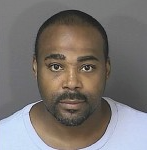
HUTCHINSON— A Kansas inmate serving time murder and charged in Reno County with two counts of battery of a corrections officer was granted a new attorney during a hearing last week.
The latest crimes by Richard Powell agains prison officers are alleged to have occurred at the Hutchinson Correctional Facility in September of 2015.
Magistrate Judge Cheryl Allen granted his request and Hutchinson attorney Shannon Crane will take over the case.
Powell is serving time for intentional premeditated murder, criminal possession of a firearm, traffic in contraband, voluntary manslaughter and aggravated assault in Wyandotte County in 1992 and 1998.
DODGE CITY -The American Civil Liberties Union of Kansas is asking Dodge City Community College about the school’s language policy.
According to the organization’s web site, they contacted the DCCC president and requested official documents related to an alleged requirement that the College’s cosmetology students speak only English and refrain from speaking Spanish at school. See the letter here.
The March 14, letter points out that 38.7% of the school’s students were Hispanic during the 2016 academic year and that 53.5% of Ford County residents were Hispanic according to 2015 census data.
The letter further pointed out that an English-only requirement would violate the constitutional rights of the school’s students.
The Fort Hays State University Student Government Association and the Rules of Rent Team of the Leadership 310 class will host a landlord fair for all students and community members who are looking for a place to live for the 2017-18 academic year.
The fair will be from 1 to 4 p.m. Tuesday, March 28, in the Memorial Union’s Fort Hays Ballroom.
Landlords will attend with their available listings. Questions can be asked about any possible listings, and information on the rules of renting will be available.
BUNKER HILL – Smoky Hills Public Television’s local program, Doctors on Call, will feature the topic of podiatry on Tuesday, March 28 at 7:00 p.m. with an encore April 2 at 3:30 p.m.
Dr. Geoffrey Kraemer with the Hutchinson Clinic, will be on hand to answer questions called in by viewers during the program. Questions also can be submitted via email at [email protected] or Twitter with the hashtag #DOCCall.
Doctors on Call is a program that provides medical information on a variety of different topics. Medical professionals from throughout the state travel to Bunker Hill to provide information and answer questions from the viewing audience.
RUSSELL–The National Weather Service in Wichita conducts spotter training sessions, which are normally scheduled throughout the spring months each year.
Attendees are taught the basics of thunderstorm development, storm structure, the features to look for, and where to find them. What, when and how to report information as well as basic severe weather safety are also covered.
The session is a multi-media presentation, which includes detailed video. These spotter classes typically take about 1½ to 2 hours, and are open to the public.
No prior experience is required, and there is no registration necessary to attend.
“Storm Fury On The Plains” will be held in Russell Tue., March 28 from 6:30 p.m. until 9 p.m. in the Dream Theatre, 629 N. Main St.
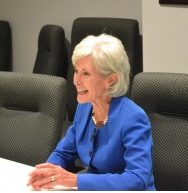
Former Kansas Gov. Kathleen Sebelius says she thinks it will take the state “decades” to recover from the effects of the state’s current financial woes.
During an interview Friday, Sebelius was asked by KCUR host Steve Kraske what she made of the state today.
“Well, it breaks my heart,” Sebelius says, noting that the state’s revenue stream had always been “a carefully balanced dance, with a third coming from property tax, a third coming from sales tax and a third coming from income tax.”
That balance, she says, enabled the state to fund schools, infrastructure, science investments and jobs.
“That’s really been greatly undercut, and I think it will take decades to recover from what has been a very difficult period for Kansas,” Sebelius says.
Sebelius, who was secretary of the U.S. Department of Health and Human Services during most of the Obama administration, also talks about the Republican bill to repeal and replace the Affordable Care Act, also known as Obamacare. As head of the agency, Sebelius oversaw the law’s rollout and implementation.
“I think if you look at the bill and what the Congressional Budget Office (CBO) tells us the impact of the bill will be, it is a very troubling picture,” Sebelius says. “The bill will save some money for the federal government, that’s clear, but it in no way lives up to what President-elect and then President Trump promised, which is health insurance for everybody, at a lower cost and better coverage.”
Sebelius is particularly troubled by CBO estimates that millions would lose health care immediately if the Republican plan passes.
“Lots of people – the estimate is 24 million people over the next 10 years, 14 million immediately – will lose coverage. Huge costs will be shifted from the federal government to states for Medicaid, which has been a 50-year partnership between the state and the federal government for pregnant women and children, disabled individuals, seniors in nursing homes.”
She also says the proposal won’t deliver what Republican lawmakers have promised voters.
“What has been said – we want patient-centered care, we want people to have choices, we want health insurance for everybody – that is not the proposal that is currently before the United States Congress,” Sebelius says.
Sebelius says the congressional debate over health care has been driven more by political considerations than a focus on the people who stand to be most affected by it.
“I find it very, very troubling that there are many members of Congress who talk about this as if it is some sort of a chess match: ‘We need to add a little bit here, we’ve got to win this battle,’” Sebelius says. “This is life and death for about 20 million people who now have financial stability and now have health coverage and protection for them and their families.”
Sebelius now devotes her time to an outfit she formed called Sebelius Resources LLC. She says it’s a vehicle through which she’s working on health and wellness issues in the private sector.
Dan Margolies is KCUR’s health editor. You can reach him on Twitter @DanMargolies.
John Richard Schrock is a professor at Emporia State University.
“Competition,” supposedly the miracle cure-all to improve education or any other product or service, comes in various flavors.
K–12 “voucher” systems vary in their implementation. In some states, vouchers are only provided to parents of children in schools found to be “failing” by some criteria—usually NCLB test scores or lack of highly qualified teachers. These are mostly urban schools, and the alternative schools available to these families are usually limited to a few other schools within a reasonable travel distance.
Limited options remain an obstacle even when vouchers are extended broadly to all parents of K–12 children, especially in rural states where there is no alternative school nearby. Where there are alternative schools, they may be selective private schools, religious schools, or home schools.
Availability of alternate schools also depends on history. When schools were supposedly desegregated in the south, many upper middle class and higher class white families paid to send their kids to private schools. Now, when these states issue vouchers, they may serve to perpetuate this divide. When vouchers are available to all, the wealthier can still add money to send their student(s) to more expensive private schools; those who cannot pay more cannot afford that extra cost. As a result, Indiana’s Choice Scholarship Program—the largest voucher system in the country with over 30,000 students—tends to drive a majority of white students to private schools.
Since higher tuition schools pay higher salaries and draw off the better teachers, vouchers do not provide poor families access to those higher-tuition schools. And that is another reason that competition does not work in education: it assumes a surplus of good teachers in order to stimulate improvement. There is no surplus. Given enough sorting time, this will drive the limited good teachers to the elite schools and leave economically poor schools with more unqualified long-term substitutes.
Educational savings accounts (ESAs) are a recent modification in school funding in FL, AZ, MS, TN, LA and NV. For example, Nevada parents can receive an ESA that resides in a savings account, these state funds earmarked for education of their children. The money can go toward tuition or other approved education-related expenses. It can even be used to attend religiously affiliated schools, to buy materials for home schooling, or to apply toward a mix of private and public school courses. In Nevada, the ESA requires that the student must have attended a public school for 100 consecutive days before becoming eligible for the ESA, thus excluding students who already attend private schools (a mechanism to avoid the elitism problem noted above). Virtual schools are not eligible for ESAs in Nevada, reflecting a growing awareness of their lack of effectiveness.
Online programs are eligible under Arizona’s Empowerment Scholarship Accounts that also cover therapy for special needs students.
But aside from several urban areas, Nevada faces the problems of a rural state with few to no alternate schools nearby most families. The Nevada ESA formula provides only $5000 per regular student per year and $5700 for low-income students and students-with-disabilities.
This last week, the U.S. Supreme Court ruled that special education students deserved more than a “de minimis” education; a school must provide academic rigor. But while public schools have to follow the IDEA laws covering special students, private schools do not. While about 10 percent of school-aged children are enrolled in private schools, only one percent of students with disabilities are.
School choice is therefore a fuzzy term that is not necessarily synonymous with vouchers or ESAs. It can include public charter schools, magnet schools and a range of other programs that help pay for private schools or home-schooling. And what might work for high-density states with consolidated schools doesn’t work in sparsely populated rural areas.
In 1848, Horace Mann (who strove to establish primary education for all) believed that education of both rich and poor in the same classrooms would “…do more than all things else to obliterate factitious distinctions in society.” For over a century, the public school became a “melting pot” where rich and poor students sat together. Unfortunately, American society has again become separated into segregated communities with unequal opportunities across schools. Neighborhood schools in unequal communities make for unequal education, long since Brown versus Board of Education ruled that “separate is not equal.” Unfortunately, none of these school choice proposals functions to solve this inequality.
PRATT – It’s tax time, and charitable donations are on our minds. What if your donation could make a positive difference in a disabled veteran’s life? The Kansas Department of Wildlife, Parks and Tourism (KDWPT) issues hunting and fishing licenses to Kansas disabled veterans, free of charge. Licenses are paid for with funding provided by the State. However, in recent years demand for the licenses has outgrown funding before the end of the fiscal year (July 1-June 30) in which it was allocated.
To cover the cost of licenses for disabled veterans whose applications are received after funding is exhausted, KDWPT has established a special disabled veterans donation account. If you would like to help provide a Kansas disabled veteran with a hunting and fishing license this year, mail a donation to KDWPT, 512 SE 25th Ave., Pratt, KS 67124 and specify that the donation is for “Disabled Veterans’ Hunting and Fishing Licenses.” Donations can be made for any amount and there is no deadline to donate. Donations can also be made online when purchasing your hunting or fishing license at ksoutdoors.com.
There may be tax advantages, so consult your tax advisor. You’ll know for certain, though, that your donation will be used to ensure those who have made heroic sacrifices to protect our freedoms and way of life continue to enjoy hunting and fishing in Kansas.
For more information on disabled veteran licenses and how you can donate, call (620) 672-5911.
KANSAS CITY, Mo. (AP) – Tyler Dorsey shot 6-for-10 from 3-point range and scored a game-high 27 points as the Ducks eliminated top seed Kansas, 74-60 in the Midwest Regional final at Kansas City. Dorsey was 9-for-13 from the field overall and finished with five rebounds as Oregon advanced to the Final Four for the first time since 1939.
Dillon Brooks chipped in 17 points for the Ducks, who began to fade midway through the second half before making the Jayhawks the second No. 1 seed to be ousted from the tournament. Jordan Bell added 11 points and 13 boards to the win.
The Jayhawks shot just 35 percent, including 5-of-25 from beyond the arc, and were unable to overcome an 11-point halftime deficit. Frank Mason III was the lone Jayhawk to score more than 10 points, finishing with 21.
Oregon will take on either Kentucky or North Carolina next Saturday.
SHELBY COUNTY, MO – Six people from Southwest Kansas were injured in an accident just before 7 a.m. on Saturday in Shelby County, Missouri.
The Missouri State Highway Patrol reported a 2005 Chevy Van driven by Jose M. Gomez-Miranda, 39, Garden City, was eastbound on U.S. 36 just east of Hunnewell.
The van traveled off the right side of the road, hit a field entrance and a road sign.
Gomez-Miranda, Hayde B. Lores-Cortez, 38, and four children all of Garden City, were transported to Hannibal Regional Hospital.
A 7-year-old passenger in the vehicle was not wearing a seat belt, according to the KHP.
Sandra Lea (Newcomer) French, passed away Thursday, March 23, 2017 at Salina Regional Health Center at the age of 59. Sandra was born on November 13, 1957 to Duane and Elaine Newcomer in Hays, KS.
Sandra was a graduate of Trego Community High School class of 1975. She married her husband David French in 1975 where they traveled the world with the military. After her husband retired, they moved back to Wakeeney, Kansas where she pursued her career as a florist. That career continued after moving to Salina, Kansas for a couple more years. She then began working at Salina Regional Health Center as a PBX/Doctors Exchange Operator. She stayed there for 15 years until retirement. Sandy spent all of her free time with her husband, kids, grandkids, and her beloved cats. She loved being a gramma and it consumed her life for the past five and a half years. Her grandchildren were her pride and joy and she wouldn’t have changed it for the world.
Survivors Include her husband David, three sons, Cory of Wakeeney, Lance and wife Mu of Daegu, Korea, Gary and wife Kristin of Steamboat Springs, Colorado, a daughter Melanie and husband AJ Shehata of Junction City, Kansas; three grandchildren Kennan French, Michaella French, Caidan French; one unborn grandchild Layla Shehata; six brothers, David and wife Kathy Newcomer of Greeley, CO, Randy and wife Julie Newcomer of Louisburg, KS, Keevin and wife Mary Lou Newcomer of WaKeeney, KS, Brian and wife Jeris Newcomer of Wildwood, MO, Steve Newcomer and wife Brenda Newcomer of Wakeeney, KS, and Eric and wife Dolores Newcomer of Austin, TX; Numerous nieces, nephews, and cousins.
Sandra was preceded in death by, her parents, Duane and Elaine Newcomer; and granddaughter Caitlynn Lea Morrison. Mass of Christian Burial will be 11 a.m. Wednesday, March 29, 2017 at Christ the King Catholic Church, WaKeeney. Burial will be in the Kansas Veterans’ Cemetery, WaKeeney. Visitation will be Tuesday, from 5 to 7 p.m. with a parish vigil service at 6:00 p.m. Both will take place at the funeral home.
In lieu of flowers, memorial contributions are suggested to Christ the King Catholic Church or American Breast Cancer Foundation (www.abcf.org). Contributions may be left on the ABCF website or sent to Schmitt Funeral Home, 336 N 12th, WaKeeney, KS 67672.

 SUBMITTED