BOURBON COUNTY- A Kansas woman died in an accident just before 10a.m. on Friday in Bourbon County.
The Kansas Highway Patrol reported a 1999 Ford Explorer driven by Austin E Farulkner, 16, Kansas City, was southbound on U.S. 69 ten miles north of Fort Scott.
The driver lost control over the vehicle when the driver’s side rear tire blew out.
The SUV traveled into went into the west ditch, rolled two times and the passenger Jennifer Shaw, 38, Pleasanton, was ejected.
Shaw was pronounced dead at the scene and transported to Frontier Forensics. She was not wearing a seat belt, according to the KHP.
WASHINGTON – Diego Martinez, 28, pleaded guilty Thursday to making false statements to the FBI during a federal hate crime investigation arising from a June 19, 2015, bias-motivated assault of three black Somali men in Dodge City, Kansas.
Martinez pleaded guilty in the District of Kansas to one count of making materially false statements to the FBI during an October 2015 voluntary interview.
During the plea hearing, Martinez admitted that, during the interview, he had provided the FBI with a false alibi for the time of the assault—specifically, that although he had told the FBI that he had been with an unknown woman at the time that the Somali men were attacked, this alibi was false.
He further admitted that he falsely told the FBI that his cell phone had stopped working shortly after the assault, when, in fact, Martinez had used his phone to contact, and to attempt to contact, one of the men who perpetrated the attack. Martinez admitted that he knew these statements were false at the time he made them to the FBI, and that they were material to the FBI’s investigation into the attack.
“Hate violence not only harms individuals but also threatens the diversity of our society and the well-being of our communities,” said Acting Assistant Attorney General Tom Wheeler for the Justice Department’s Civil Rights Division. “The Justice Department will continue to vigorously prosecute hate crimes, and to pursue defendants who, like Mr. Martinez, obstruct the investigations into those crimes.”
Martinez will be sentenced on June 1, 2017, and faces a maximum sentence of 5 years in prison.
By MICHAEL AUSTIN Kansas Department of Revenue Economist
As a first-time parent, there are times that I truly love to take in with my two-year-old son. Our favorite time of the day, by far, is bath time. As an economist, noticing his excitement as he retrieves his bath toys, I can’t help but to see similarities between the mechanics of bath time and the mechanics of labor markets.
A state’s labor market can behave very much like the water rushing in and out of a bathtub. Water rushing in to fill the tub is like the state seeing job growth and its population finding work. Job loss, intuitively, is like water flowing out of the drain. When job growth remains larger than the job losses, the state is closer to being “full.”
From the worst of the recession to now, private sector jobs in Kansas have grown on average more than 10,000 a year. This led to 2016, in which the state hit an all-time high in jobs and saw the lowest number of unemployed Kansans in 15 years.
Critics have argued that the Kansas job growth rate is slowing relative to other states, or to its previous years. While both statements are accurate, they are not comprehensive.
Understanding labor markets akin to drawing a bath can easily reconcile the state’s performance and these two critiques.
If water rushing from the faucet is to symbolize job growth, then it should be easily understood that the closer the water gets to a satisfactory level, the less water I allow to enter the tub. A state cannot experience robust job growth on to infinity. For a state labor market to be full, job growth must slow.
As for state comparisons, I present this question. Is the water level that my son enjoys at our home, the same water level at yours? Probably not, as the bathtubs in our homes are likely different and so a different water level and flow may be needed to achieve the same satisfaction. In a sense, what works in our bathtub, likely only works in our bathtub.
There is no state that is the exact copy of Kansas. No state that has the exact same industry makeup, worker/unemployed demographics, and/or income distribution, to name a few. The conditions that come together to dictate how and when the labor market is full in Kansas, isn’t easily transferrable to any other state.
Like my son at bath time, Kansans should be proud that our state is reaching a stage in the labor market, where those who want a job can easily find one. This does not mean Kansas is without room for improvement. To be sure, nearly every night my wife tells me the water level in the tub could be just a little higher.
TOPEKA, Kan. (AP) — Kansas’ highest court has cleared a major obstacle to the long-delayed construction of a big, new coal-fired power plant.
The state Supreme Court on Friday rejected an effort by an environment group to force the state to regulate emissions linked to climate change.
The justices upheld a 2014 decision by the Kansas Department of Health and Environment to give Sunflower Electric Power Corp. the go-ahead for its project.
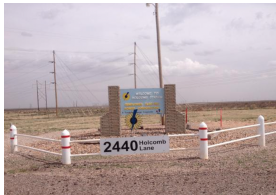
The utility wants to build an 895-megawatt plant adjacent to an existing one outside Holcomb, in southwestern Kansas and estimates the cost at $2.2 billion.
The company and the state’s attorney general said they were pleased by the decision.
But an attorney representing the Sierra Club said the ruling “opens the door for a lot of pollution in Kansas.”
——
TOPEKA, Kan. (AP) — The Kansas Supreme Court has cleared a major obstacle to the construction of a long-delayed coal-fired power plant in the state’s southwestern corner.
The court Friday rejected a legal challenge from the Sierra Club to a state decision giving Sunflower Electric Power Corp. the go-ahead for its $2.8 billion project. The Hays-based utility wants to build an 895-megawatt plant outside Holcomb.
The environmental group challenged a 2014 Kansas Department of Health and Environment decision to grant what it called an “addendum” to a 2010 permit. The permit said the plant would comply with federal air-quality standards.
The Sierra Club objected partly because the addendum did not require the plant to control greenhouse gas emissions.
An earlier state Supreme Court decision had forced KDHE to consider changes to the 2010 permit.
The leader of the Kansas Department for Aging and Disability Services wants the state’s two psychiatric hospitals to be exempt from a concealed carry law set to take effect in July.
KDADS Secretary Tim Keck told a legislative committee this week that the department is seeking authorization to continue banning concealed guns in Osawatomie and Larned state hospitals. The two hospitals treat people with mental health conditions who are considered a danger to themselves or others.
The Legislature passed a bill four years ago to allow visitors and people working in public buildings to carry concealed handguns. The only exemption to the law that will take effect July 1 would be for buildings with metal detectors and armed guards at every entrance.
Keck, who testified Wednesday before the House Appropriations Committee about efforts to improve the two hospitals, emphasized that he supports the right to bear arms. But he said allowing guns in the state-run psychiatric hospitals could place patients and employees at risk.
“It’s not a safe environment to have weapons available,” he said.
Rep. Kathy Wolfe Moore, a Kansas City Democrat, asked Keck about the cost of hiring security guards and installing metal detectors so Osawatomie and Larned state hospitals could continue restricting guns.
The department estimated that could cost about $25 million, but Keck said that may be higher than the actual cost.
The projected costs include $12.7 million for equipment and construction at both hospitals, according to KDADS. It also includes annual costs of about $11.9 million for security officers, assuming each officer’s pay and benefits total about $60,000.
Download the KDADS cost estimate for allowing concealed carry at Osawatomie and Larned state hospitals.
The department still is determining the cost of securing the Kansas Neurological Institute and Parsons State Hospital and Training Center, which treat people with severe developmental disabilities.
Angela de Rocha, a KDADS spokeswoman, said the department isn’t seeking a bill exempting the hospitals but would like to add an amendment to do so. The most likely candidate is House Bill 2220, which would prohibit higher education institutions from restricting concealed carry on their campuses.
Kansas already is facing a budget hole, so it would be a challenge for lawmakers to find millions more for security at the state psychiatric hospitals, Wolfe Moore said. Both hospitals have struggled to maintain their staffing levels, and allowing guns might deter potential employees, she said.
“I can’t imagine how much worse (the staffing situation) is going to get if we allow guns,” she said.
Wolfe Moore said she hopes lawmakers also would consider exempting other public hospitals and mental health facilities. A separate bill, which would have exempted the University of Kansas Hospital from the requirement to allow guns on university campuses, failed to get out of committee in February.
“I think public hospitals across the state are very interested,” she said. “It’s about being fair competitively.”
KU Hospital officials had asked for the exemption because they believed allowing concealed weapons could place them at a disadvantage compared to privately owned hospitals, which can still ban guns. They estimated it would cost more than $1 million to install metal detectors and post armed guards at every entrance.
Concealed carry proponents argue that law-abiding citizens may have to defend themselves if a facility doesn’t offer security.
“If you’re not going to do that, you need to allow everyone an equal playing field. You need to allow law-abiding citizens the opportunity to defend themselves,” said Travis Couture-Lovelady, a National Rifle Association lobbyist and former legislator, during a hearing earlier this year.
Meg Wingerter is a reporter for the Kansas News Service, a collaboration of kcur.org, Kansas Public Radio and KMUW covering health, education and politics in Kansas. You can reach her on Twitter @MegWingerter.
TOPEKA, Kan. (AP) — Kansas lawmakers agreed unanimously on a bill giving a sales tax break to people rebuilding fences on agricultural land after wildfires burned more than 1,000 square miles of the state.
The Kansas House voted to agree with the Senate’s amendments Friday that clarify the tax break goes to rebuilding fences, not new construction. The bill will go to Gov. Sam Brownback.
The bill gives a sales tax exemption on supplies bought to rebuild or repair fencing after the wildfire. Lawmakers passed a similar proposal after wildfires in two counties last year.
Brownback declared a state of emergency March 5 and signed an executive order four days later to help bring relief supplies.
March 17, 2017 Information Hearings: Lansing Correctional Facility and Osawatomie State Hospital
This week the House Appropriations Committee held informational hearings on possible renovation plans for the Lansing Correctional Facility and the Osawatomie State Hospital.
The hearing for the Lansing Correctional Facility, which was held on Tuesday, March 14, focused on the facility’s rising costs. Currently the facility, which was constructed in the 1860s, has the capacity of 2,405 inmates and 686 staff at a cost of $34,542,898 a year. Two plans of renovation were presented to the committee in order to decrease the prison’s cost. One being to build a new prison with bonds and another being a lease to purchase option. Both options increase the facility’s inmate capacity, decrease the number of staff needed by half, and decrease the cost of staff to $20,461,154 a year.
The hearing for the Osawatomie State Hospital was held on March 15. The Osawatomie State Hospital, just as with Lansing Correctional Facility, needs renovations and possible further changes. Seven different options for renovation were presented to the committee. These options differed in approach and value with the least costly option for recertification with a proposed cost of about $4.3 million for the expansion of 206 beds. The option of new construction would cost approximately $33,720,000. In addition to these requests for renovation, recommendations were made to improve the environment were given as well, one being to incentivize professional training and accreditation.
Ad Astra Rural Jobs Act Update
This week House Bill 2168, the Ad Astra Rural Jobs Act was debated and passed on floor of the House of Representatives. This bill provides tax credits to approved investment companies that loan capital to businesses that are wanting to either build new, expand, or relocate to rural Kansas counties and create jobs. This jobs act would specifically identify a rural area of the state as being a city that has a population of 60,000 or less, or could be designated as one by the Secretary of Commerce. This bill would integrate job creation critieria and priorities that would only enhance the Rural Opportunity Zones that was incorporated in 2011. House Bill 2168 passed the House of Representatives on March 14, by a vote of 97 to 22.
House of Representatives in Action: K-12 Education Budget Committee
The House of Representatives formed the K-12 Education Budget Committee to which leadership gave them responsibility to craft a new and constitutionally viable funding formula. The committee has already held many hearings on five different plans and listened to testimony from a variety of stakeholders. It is expected that they will make their proposal to the full House of Representatives by the end of the month. Nearly all observers believe the new finance plan and the Court ruling will require additional funding for K-12 public education. Estimates of the amount vary widely, but are primarily based upon the old formula, which was eliminated in 2015. Until a new formula has been evaluated and adopted, it is difficult to estimate any future cost.
Last weekend, I attended the Midwestern Fiscal Leaders meeting in Chicago where I gained much insight on Education funding throughout the United States and have relayed that information to the chairman of the K-12 Education Budget Committee.
Appropriations Committee
This week the Committee has been finalizing Budget Committee recommendations. The Committee received its last report on Monday, March 13 and next week we will begin to assemble the Mega Appropriations bill.
The Committee has also received Efficiency Study Updates from the Budget Committees. These updates report what Alvarez and Marsal (A & M) projected for savings on the 105 recommendations in the study, specifically those in the purview for that committee. The updates note whether the recommendations have been implemented, if any savings have been realized and the amount realized, and any further comments from the Budget Committees.
The Committee held bill hearings on HB 2362, relating to alcoholic beverage control modernization fee and HB 2340, which transfers actual SGF revenues in excess of a joint estimate to the budget stabilization fund, otherwise referred to as the Rainy Day Fund.
The Committee passed out HB 2180, which involves increasing the health maintenance organization privilege fee.
Executive Order 17-01
On Thursday March 9, Governor Sam Brownback signed Executive Order 17-01. The Executive Order assists fire relief efforts across the state. The Governor declared a state of emergency on March 5. It is estimated that the fires have burned more than 626,000 acres, ranking this fire event as the largest in state history. The Executive Order facilitates the immediate delivery of large quantities of hay, feed, fencing materials, and other relief supplies by waiving certain motor carrier regulations, according to the Governor’s press release. The Governor was in Clark County yesterday, which has been devastated by fire, with 85 percent of the county’s land mass burned.
Donations to help the relief effort can be done in a number of ways. Listed below are just three of many who are assisting those affected by the fires:
The Kansas Livestock Association has a form set up for donations on its website to support ranchers impacted by the fires: https://www.kla.org/donationform.aspx. They are organizing efforts to provide hay and fencing materials. To make in-kind donations, call the KLA at (785) 273-5115.
The Kansas Farm Bureau website has information on hay donations, animal disposal, disaster assistance programs, and wildlife recovery resources on its website: https://www.kfb.org/Article/Kansas-wildfirerelief.
The United Way of the Plains is partnering with the United Way of Reno County and the United Way of Dodge City to respond to the fires. Monetary and material donations can be made. In addition, they will have information on volunteer opportunities on their website: https://www.unitedwayplains.org/how-tohelp-wildfire-victims
The House this week also passed out House Bill 2387, which would provide a sales tax exemption for purchases related to certain property destroyed by the wildfires. This bill would exempt all purchases of tangible personal property and services made to construct, reconstruct, repair, or replace any residence, utility pole owned by a rural electric cooperative, or fence used to enclose land devoted to agricultural use that was damaged or destroyed by wildfires occurring during calendar year 2017. House Bill 2387 passed the Kansas House of Representatives on Tuesday, March 14, 122-0.
Contact Information
As always, if you have any concerns, feel free to contact me (785) 296-7672, visit www.troywaymaster.com or email me at [email protected]. Also, if you happen to visit the statehouse, please let my office know.
It is a distinct honor to serve as your representative for the 109th Kansas House District and the state of Kansas. Please do not hesitate to contact me with your thoughts, concerns, and questions. I always appreciate hearing from the residents of the 109th House District and others from the state of Kansas, as well.
Troy L. Waymaster, (R-Bunker Hill) is the 109th Dist. State Representative and chairman of the House Appropriations Committee.
SEWARD COUNTY – A woman died in an accident just after 5a.m. on Friday in Seward County.
The Kansas Highway Patrol reported a 1991 Mercury Cougar driven by Natosha Michelle, Garcia, 29, Pueblo, Co. was southbound on U.S. 83 three miles north of Liberal.
The vehicle crossed the center line and struck a Peterbilt semi driven by Leonard Earl Jameson, 60, Jones, Oklahoma.
The semi jackknifed and came to rest in north bound lane.
Garcia was pronounced dead at the scene and transported to Miller Mortuary.
She was not wearing a seat belt, according to the KHP.
Enrollment at Fort Hays State University for the spring 2017 semester has continued a string of record enrollments begun in the spring of 2002. The semester’s official 20th-day number of 12,653 is 315 students more than in spring 2016.
Since the spring 2002 semester, the 20th-day headcount each spring and fall has set a new record, besting the number from the previous spring or fall.
“What Fort Hays State has accomplished over the past number of years is unprecedented,” said Dr. Joey Linn, vice president for student affairs.
“This university has positioned itself to be the premiere ‘Forward thinking. World ready.’ institution in the country,” he said. “The people of FHSU are difference makers and continue to keep student success at the forefront.”
The numbers break down to 4,257 on campus, 6,652 in the Virtual College and 1,744 at FHSU’s international partner institutions, primarily China. On-campus enrollment was down 87 from spring 2016’s 4,344, but the other two modalities increased. The Virtual College number was up 269 from spring 2016, and international partnerships were up 133 from a year ago.
“That kind of consistent enrollment growth demonstrates that students recognize the value of an education from Fort Hays State, whether it is on campus or through the Virtual College,” said Dennis King, assistant vice president for student affairs and enrollment management.
“The outstanding education and individual student services FHSU provides has led to this growth,” he said. “Just schedule a visit and see what FHSU is all about.”
A special number is the number of Kansans enrolled. That number also showed an increase from spring 2016. This spring, a total of 7,205 Kansas residents are enrolled at FHSU, compared to 6,946 in the spring 2016 semester, an increase of 259, or 3.7 percent.
Hispanic enrollment, an area of particular interest to the Kansas Board of Regents, increased on-campus from 375 last year to 417 this year, an increase of 42, or 11 percent. Another 480 Hispanic students were enrolled through the Virtual College.
An additional 71 Hispanic students, undergraduate and graduate, came from foreign countries, 39 on campus and 32 through the Virtual College.
On-campus enrollment for students who identify as African-American is the same this spring as last year at 122.
Another area of special interest is the Graduate School, which also saw an increase over a year ago, with total enrollment of 2,626 this year compared to 2,449, an increase of 177 students, or 7.2 percent.
Hays Christian Church will be having its annual church garage sale on March 31st at 11 am-7 pm and April 1st 8 am-1 pm at the old Fashion Bug in Big Creek Crossing. Clothing items will be just $0.50 each. There will be a large variety items, all priced to be a blessing to others.
Donations to the sale will be gratefully accepted.To donate items, please contact [email protected]. All funds from the sale will be put towards sending youth to camp this summer.
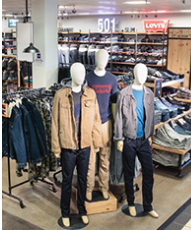
The store in Great Bend, the Hutchinson Mall, Lawrence, Winfield and Chanute will close as early as June, according to the news release. Liqudation will begin in mid-April.
JCPenney says the closures are a part of a continuing effort to advance sustainable growth and long-term profitability.
Approximately 5,000 positions will be affected by nationwide closures.
CRAWFORD COUNTY –A school bus driver was injured in an accident just before 2p.m. on Thursday in Crawford County.
The Kansas Highway Patrol reported a USD 250 Freighliner School bus driven by Edward L. Eichenberger, 49, Pittsburg, was westbound on Kansas 47 two miles west of Girard.
The bus hit a large turkey that flew across the roadway from the north ditch.
Eichenberger was treated at the scene of the accident and not transported to a hospital.
One additional teen student was possibly injured, according to the KHP.
Thirteen students and one other adult on the bus were not injured.
The driver was properly restrained at the time of the accident, according to the KHP.
RUSSELL COUNTY- A Kansas man was injured in an accident just after 8a.m. on Friday in Russell County.
The Kansas Highway Patrol reported a 2011 Ford passenger car driven by Douglas A. Kuntz, 49, Quinter, was eastbound on Interstate 70 just east of the U.S. 281 Junction.
The driver was distracted and ran into an eastbound International Concrete Truck driven by Oelke, Robert G. Oelke, 48, Russell.
Kuntz was transported to the hospital in Russell. Oelke was not injured.
Both drivers were properly restrained at the time of the accident, according to the KHP.