We have a brand new updated website! Click here to check it out!

Kansas zoo mourns death of 40-year-old orangutan

Clyde-photo Rolling Hills Zoo

SALINE COUNTY – Employees and fans of Rolling Hills Zoo are mourning the death of beloved Sumatran orangutan, Clyde. He died Wednesday morning due to medical conditions that are relatively common in orangutans, according to a social media report.

A fan favorite at the Zoo, at 40 Clyde had already outlived the average 28-year life expectancy of orangutans, according to the AZA’s MLE lifespan table.

Born August 1976 at the Cheyanne Mountain Zoo, Clyde came to Rolling Hills Zoo based on an SSP recommendation as a non-breeder in 2011 from the San Diego Zoo. 

Clyde had been a gentle partner for Rusa, Rolling Hills Zoo’s female orangutan. From the day they were introduced he impressed her and she was often found near him. He succumbed to her every whim and let her take whatever she wanted – even the food right out of his mouth. If she was out of sight he would look through the door just to make sure that she was still there. 

Clyde was affectionately called, “a grumpy old man” by his caretakers, and at age 40 he did things in his time while teaching them patience.

Clyde was also featured in the 2016 April issue of National Geographic as part of Joel Sarore’s Photo Ark.


Investigators ask for help to determine who set rural Kan. fires


Rural Geary Co. fire

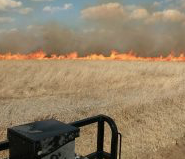
GEARY COUNTY – Law enforcement authorities and fire officials in Geary County are investigating several suspicious fires since late January in eastern and southeastern Geary County and asking for help to identify those responsible.

The most recent fire occurred during the evening hours on Wednesday, March 15 and involved the destruction of approximately 110 large bales of brome grass. Loss to the owner was approximately $5,000.00.

The agency is requesting the public to report information on any suspicious activity or suspicious vehicles on remote gravel roads in Geary County.

Anyone with information about these fires is asked to call Junction City/Geary County Crimestoppers at 762-TIPS, 1-800-KS-CRIME or the Geary County Rural Fire Department at 785-238-1290. Investigators from the Office of the State Fire Marshal are assisting the local investigators.

NW Kan. mail carrier indicted for allegedly stealing mailed gift cards

mailboxOFFICE OF KAN. U.S. ATTORNEY

WICHITA – A grand jury Thursday returned a federal indictment charging a mail carrier in Sheridan County with stealing mail, U.S. Attorney Tom Beall said.

James N. Stephenson, 25, Hoxie, Kan., is charged with one count of theft by a postal employee, one count of unlawful possession of 15 or more stolen gift cards and debit cards, and one count of aggravated identity theft. The crimes are alleged to have occurred from August 2016 to January 2017 in Sheridan County, Kan.

The indictment alleges Stephenson stole the cards from the mail while he worked for the Post Office in Hoxie.

If convicted, he faces up to five years in federal prison, and a $250,000 fine on the theft charge, 10 years and a fine up to $250,000 on possession of the stolen cards, and a mandatory two years (consecutive) on the identity theft charge.

The U.S. Postal Inspection Service – Office of Inspector General investigated. Assistant U.S. Attorney Brent Anderson is prosecuting.

Teacher jailed after 100-mile-per-hour Kan. chase resigns

Gantenbein

SALINE COUNTY- School district officials say a teacher jailed after a Tuesday morning high-speed chase is out of a job.

Law enforcement authorities in Saline County are investigating a suspect after a Tuesday morning high-speed chase.

Just before 1:30 a.m., a deputy pulled over a 2013 GMC Sierra driven by Adam Gantenbein, 30, Abilene, for improper driving left of center in the 2200 block of Kansas140 Highway, according to Saline County Sheriff Roger Soldan

When the Deputy attempted to approach the vehicle, the Gantenbeine fled at a high rate of speed.

The deputy pursued the suspect at speeds of 100-miles-per-hour and turned south on Burma Road.

Gantenbein eventually pulled the truck over as he approached Smolan Road.

He was booked into the Saline County jail for driving under the influence, flee and elude and speeding.

The Abilene school district accepted Gantenbein’s resignation as a special ed teacher  at Tuesday night’s meeting, according to district spokesperson Jennifer Bradford Vernon.

More Royals, Rockies home opener finalists drawn today

royalscontest

At 3 p.m. Thursday, Hays Post will announce two more finalists for its home opener ticket giveaway.

The finalists will be announced at Pasta Jay’s via Facebook Live HERE.

Eagle’s Jeremy McGuire will be on hand with the staff of Pasta Jay’s, 4310 Vine, to pick the second of four finalists for the Royals home opener on April 10 and the first finalist for the Rockies home opener on April 7.

Good luck!

rockiesopeningday

Jazz trio fundraiser Friday at Midland Railroad Hotel

(Click to enlarge)
(Click to enlarge)

WILSON–The Wilson Community Foundation presents original compositions and jazz favorites with Greg Harris, Matt Fuller and Grant Larson Trio Friday, March 17 at 7 p.m. in the drummer’s dinning hall.

Cash bar. Join us for St. Patrick’s Day dinner beforehand and receive 10% off your ticket.
Tickets:
$10 Adults
$5 Students

Tickets are on sale now and can be purchased and picked up in advance at the Midland Railroad Hotel, 414 26th Street, Wilson.

Call (785) 658-2284 for more information.


Rooks, Barton county farmers elected to Kansas Commodity Commissions

FarmlandKDA

MANHATTAN ­­— The Kansas Department of Agriculture has announced the result of the elections held for the state’s five grain commodity commissions — corn, grain sorghum, soybeans, sunflowers and wheat — in districts Four, Five and Six in the central region of the state.

KDA provides administration and oversight to the annual election process for the five commodity commissions in Kansas. Deputy Secretary Chad Bontrager serves as a representative on each. “Kansas farmers continue to invest in growth in the form of research and market development activities through check-off dollars. The commodity commissions play a valuable role in this investment in Kansas agriculture,” Bontrager said. “We appreciate these Kansans who serve the greater agriculture industry in this role, and we congratulate them on being elected as a commodity commissioner.”

Kansas Corn Commission
District Four: Mike Brzon is a corn, soybean and wheat farmer from Republic County. He currently serves on the Kansas Corn Commission, acting as past chairman. He also previously served the industry as a director for the U.S. Grains Council. Brzon has worked on state water issues and regulations in the Republican River Basin and has been actively involved in several associations and advisory boards, such as the Lower Republican Water Association, Farmway Cooperative Inc., Kansas Wheat Association, 21st Century Dairy and KSU Research Field.

District Five: Terry Vinduska is a corn farmer from Marion County and currently serves on the Kansas Corn Commission. He is a past officer of the U.S. Grains Council and is a current member of several organizations, including the National Corn Growers Association, Kansas Corn Growers Association and Kansas Farm Bureau. Vinduska has a bachelor’s degree from Kansas State University in agriculture. He is married to Cindy and has three adult children.

District Six: Kent Moore is a corn and soybean farmer from Pratt County. He is a member of the Kansas Corn Growers Association and Kansas Livestock Association, and currently serves the Kansas Corn Commission as chairman. Moore received his bachelor’s degree from Kansas State University in agriculture economics. He is married to Suzanne and has two adult children.

Kansas Grain Sorghum Commission
District Four: Stephen Bigge grows sorghum in Rooks County and is the current chairman of the Kansas Grain Sorghum Commission. He is a sixth-generation Rooks County farmer and a member of National Sorghum Producers, Kansas Grain Sorghum Producers Association and Kansas Farm Bureau. Bigge was a member of the first class of Leadership Sorghum, sponsored by the United Sorghum Checkoff Program. He is married to Melissa and has one son.

District Five: Clayton Short is a sorghum, wheat and soybean farmer in Saline County. He is a member of the Kansas Farm Management Association, vice chairman of the Kansas Grain Sorghum Commission and past chairman of Saline County Planning and Zoning Commission. Short graduated with an associate degree in agriculture from Colby Community College and a bachelor’s degree in agriculture from Kansas State University. He is married to Louanne and has three children.

District Six: Jay Zimmerman is a grain sorghum, wheat, soybean and cotton farmer from Sumner County. He is a current member of the Kansas Grain Sorghum Commission and was a director for six years for the U.S. Grains Council. He is an active member of several local, state and national organizations, including the Kansas Grain Sorghum Producers Association, Kansas Association of Wheat Growers and Kansas Farm Bureau. Zimmerman graduated from Kansas State University with a bachelor’s degree in civil engineering. He is married to Glennis and has four children and eight grandchildren.

Kansas Soybean Commission
District Four: Ronald Ohlde raises soybeans, corn, wheat, sorghum and beef cattle in Washington County. He previously served as chairman of the Kansas Soybean Association and is a member of several associations including the American Soybean Association, Kansas Livestock Association, National Corn Growers Association, Kansas Feed and Grain Association and Kansas Farm Bureau. He is married to Anita and has two sons.

District Five: Kent Romine grows soybeans in Barton County and is a fifth-generation farmer. He is a past chairman of the Kansas Soybean Association and Kansas Soybean Commission and is actively involved in several local, state and national organizations such as American Soybean Association, Kansas Farm Bureau and Barton County Fair board. Romine graduated from Kansas State University. He is married to Valerie and has two sons.

District Six: Dennis Gruenbacher grows soybeans, corn and wheat in Sedgwick County. He is very active in several associations and has served in numerous leadership roles and on several advisory boards, including the Kansas Soybean Commission, Kansas Farm Bureau and the National BioDiesel Advisory Board. Gruenbacher is a graduate of Newman University and received a bachelor’s degree in accounting with a minor in economics.

Kansas Sunflower Commission
No candidates are running for commissioner in districts Four, Five, and Six. The Kansas Sunflower Commission will appoint these positions.

Kansas Wheat Commission
District Four: Michael McClellan grows wheat in Rooks County. He currently serves the Kansas Wheat Commission as vice chairman, as well as Plains Grain Inc., in the same capacity. McClellan graduated with a bachelor’s degree in agriculture economics from Kansas State University. He is married to Tammy and has four daughters.

District Five: David Radenberg grows wheat in Barton County where his family farm has been active for more than 100 years. He is a member of Barton County Farm Bureau, Central Plains Coop and serves as the current secretary-treasurer for the Kansas Wheat Commission. Radenberg graduated with his associate degree from Barton Community College and with his bachelor’s degree from Kansas State University.

District Six: Scott Van Allen is a fourth-generation wheat farmer in Sumner County. Following in the footsteps of his father, Darrel, he has served nine years as a Kansas Wheat Commissioner and is a past president of the Sumner County Farm Bureau. Van Allen is married to Donna and has two children.

Commissioners serve three-year terms and the terms will commence on April 1, 2017.

INSIGHT KANSAS: Constituents, clergy test Marshall’s commitment to health care

When U.S. Representative Roger Marshall defeated incumbent Tim Huelsklamp last summer, commentators anticipated a rejection of Huelskamp’s bombastic, confrontational Tea Party politics, returning instead to a district-centered, low-key Republican like Senators Pat Roberts and Jerry Moran, both of whom once represented this same rural “Big First” district in central and western Kansas.

Michael A. Smith is a Professor of Political Science at Emporia State University.

How committed is Marshall to his district? One major test is his stance on repealing the Affordable Care Act. According to the Congressional Budget office, 24 million Americans will lose their health coverage under the Republican bill now working its way through Congress. This includes many Kansans. According to the U.S. Census, the Big First and the Wichita-area 4th district have the highest percentages of Kansans uninsured—nearly 10% in the 1st, considerably higher than in Eastern Kansas.

The Big First also features over 200,000 constituents who get their health insurance from public—that is, government—coverage. Will Marshall look out for them? His infamous quote from last week does not bode well. A doctor, Marshall told the health-care journal STAT, “Just like Jesus said, ‘The poor will always be with us…’ There is a group of people that just don’t want health care and aren’t going to take care of themselves… morally, spiritually [and] socially.”

Marshall’s comments drew heated reaction as he toured the district last weekend. At a packed Emporia town hall meeting—in a hospital, no less—one constituent who works with the homeless shot back: “The first thing that people want when they come to the shelter is health insurance.”

Other constituents were restive with Marshall’s deflections, and even local doctors who spoke were split on ACA repeal. Marshall’s other town hall meetings also got tense.

In addition, Big First clergy responded to his STAT interview. Pastors from Sterling to Salina told me—in nearly identical language—that Marshall’s interpretation of this scripture was “the opposite of what Jesus intended.” Pastor Caela Wood First Congregational Church in Manhattan, KS, explains, “Jesus was quoting another passage from Deuteronomy about how we treat people with lower income… that’s Jesus’ way of saying, ‘you probably aren’t going to follow that.’”

From Sterling, KS, clergy, I heard, “God is biased toward the poor, powerless, and disenfranchised,” and from Salina, “Jesus is especially attentive to people’s need for healing and hope, for food and care.”

Pastor Andrew McHenry of the First Congregational Church of Emporia added, “Some people (usually wealthy Americans) interpret this not as an observation on the continual opportunity to do ministry with the poor, but as a command to entrench the poor.”

Michael P. Milliken, Episcopal Bishop for Western Kansas, summed it up: “just because Jesus said the poor will always be there doesn’t give us an excuse to look the other way.”

Can Marshall respond meaningfully? Medicaid expansion recently passed the Kansas House with many Republican votes. In Congress, Republicans are defecting from the hasty, ill-conceived ACA “replacement” bill. Opposition includes the conservative Freedom Caucus, a pragmatic Coverage Caucus, and many Republican governors.

The debate over ACA repeal and Medicaid expansion may be the first real test of Marshall’s relationship with his constituents.

Godspeed, Congressman.

Michael A. Smith is a Professor of Political Science at Emporia State University.

Update: Kan. Supreme Court receptive to protecting abortion rights

JOHN HANNA, AP Political Writer

TOPEKA, Kan. (AP) — Kansas’ highest court appeared receptive Thursday to declaring for the first time that the state constitution recognizes abortion rights, with a majority of the justices skeptical of the state’s argument against the idea as it defended a ban on a common second-trimester procedure.

The state Supreme Court heard arguments in a lawsuit filed by Kansas City-area father-daughter physicians against a 2015 first-in-the-nation law that has become a model for abortion opponents in other states. The key issue is whether the Kansas Constitution protects abortion rights independently of the U.S. Constitution, which would allow state courts to invalidate restrictions that have been upheld by the federal courts.

Abortion opponents fear that such a decision by state courts could block new laws — or invalidate existing ones — even if President Donald Trump’s appointments result in a more conservative U.S. Supreme Court. Janet Crepps, an attorney for the New York-based Center for Reproductive Rights, which is representing the doctors, argued that it’s important for Kansas residents to know what rights their constitution protects.

“The federal constitutional protection seems to ebb and flow with the political tide,” Crepps said.

Abortion-rights supporters contend broad language in the state constitution’s Bill of Rights protects a woman’s right to obtain an abortion. The Bill of Rights says residents have “natural rights” including “life, liberty and the pursuit of happiness” and that “free governments” were created for their “equal protection and benefit.”

The state argues there’s no evidence that when the constitution was written in 1859, its drafters contemplated the issue in a legal environment in which abortion generally was illegal.

But four of the court’s seven justices peppered state Solicitor General Stephen McAllister with questions about the state constitution affording no protections for abortion rights now. Justice Dan Biles asked McAllister whether the state would face any limits on its power to restrict abortion, so that it could force a woman to carry a pregnancy to term even if she faced dying.

As McAllister struggled to answer, Justice Carole Beier said, “The uncomfortable answer you’re trying not to give is, ‘No.'”

Yet the justices appeared to struggle with what standard the state courts would use in reviewing abortion restrictions. McAllister noted that after the U.S. Supreme Court issued its landmark Roe v. Wade decision in 1973, more than four decades of contentious court battles over abortion followed.

And Justice Caleb Stegall, the only appointee of conservative Republican Gov. Sam Brownback, worried about Crepps’ argument that constitutional rights evolve to reflect a changing society and “the general march of progress.”

“How is this anything other than just a blank check to judges?” Stegall said.

Abortion opponents worried enough about the lawsuit’s outcome that they waged an unsuccessful, pre-emptive campaign to oust four justices from Kansas’ highest court in last year’s election, including Beier and Biles.

Six justices were appointed by Democratic or moderate Republican governors. The justices have faced strong criticism in the past from the Republican-controlled Legislature and Brownback over past rulings in a wide variety of cases.

The Kansas law at issue bars physicians from using forceps or similar instruments on a live fetus to remove it from the womb in pieces, using the non-medical term “dismemberment abortion” to describe the procedure. Such instruments are commonly used in dilation and evacuation procedure, which the Center for Reproductive Rights has described as the safest and most common abortion procedure in the U.S. in the second trimester.

The Kansas law was model legislation drafted by the National Right to Life Committee. The group says similar bans have been enacted in six other states — Oklahoma, West Virginia, Mississippi, Alabama, Louisiana and Arkansas.

Abortion providers reported performing 629 dilation and evacuation procedures in Kansas in 2015, according to the latest state health department data available. That was 9 percent of the state’s total abortions.

The lawsuit against the Kansas law was filed by Drs. Herbert Hodes and Traci Nauser, who operate a women’s health center in the Kansas City suburb of Overland Park. A Shawnee County district judge’s ruling put the law on hold beforehand; the Kansas Court of Appeals split 7-7, allowing the judge’s decision to stand.


—–

JOHN HANNA, AP Political Writer

TOPEKA, Kan. (AP) — Abortion opponents have enjoyed a long string of legislative victories in Kansas in recent years.

But now they worry that a legal challenge to a first-in-the-nation ban on a common second-trimester procedure could doom other restrictions they’ve won.

The Kansas Supreme Court will hear arguments Thursday in a lawsuit filed by Kansas City-area father-daughter physicians against a 2015 law that is a model for abortion opponents in other states.

The key issue is whether the Kansas Constitution protects abortion rights independently of the U.S. Constitution.

If the justices agree with a lower-court judge’s decision saying so, state courts could invalidate restrictions that have been backed by federal courts.

Abortion opponents in Kansas are worried while colleagues elsewhere anticipate President Donald Trump’s appointments moving the U.S. Supreme Court to the right.

Copyright Eagle Radio | FCC Public Files | EEO Public File