PRATT – Anglers are eager for warm weather and time on the water, and one of the hallmarks of spring fishing is the opening of the paddlefish snagging season. But hold on, it’s not as easy as showing up on opening day. While there are several rivers in southeast Kansas where paddlefish snagging is allowed, conditions must be right for paddlefish to be present.
The Kansas paddlefish season runs March 15–May 15 during the annual spring spawning run. Paddlefish may be taken in posted areas inside Chetopa and Burlington city parks on the Neosho River; on the Neosho River at Iola, downstream from the dam to the city limits; on the Marais des Cygnes River below Osawatomie Dam, downstream to a posted boundary; on the Marais des Cygnes River on the upstream boundary of the Marais des Cygnes Wildlife Area, downstream to the Kansas-Missouri border; and the Browning Oxbow of the Missouri River (Doniphan County).
Water temperatures of 50-55 degrees and an increase in river flow will start paddlefish moving upstream out of reservoirs. Most Kansas paddlefish are caught from the Neosho River at Chetopa, but for paddlefish to be present there requires a significant increase in river flow. It’s a good idea to call local Kansas Department of Wildlife, Parks and Tourism offices or area bait shops for river and angler updates before traveling to a site.
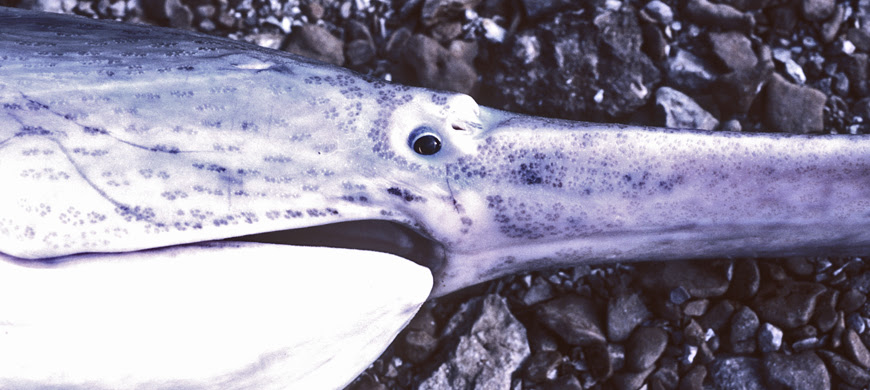
Paddlefish have been around for more than 300 million years, and these large, prehistoric looking fish are unique in several ways. First, they are similar to sharks in that their skin is scaleless and smooth, and their skeleton is made of cartilage rather than bones. And second, they are filter feeders, eating only microscopic zooplankton. As a result, they can only be caught by snagging. Kansas waters commonly produce paddlefish weighing 30-60 pounds, and the world record paddlefish that weighed 144 pounds was caught in Kansas.
Paddlefish anglers must have a paddlefish permit ($12.50 for adults, $7.50 for youth), which includes six carcass tags. Because the permit includes carcass tags, it must be purchased in-person from a license vendor or by calling 1-800-918-2877, in which case permit and carcass tags will be mailed. Permit-holders can snag up to two fish per day, and six for the season. Unless exempt, paddlefish snaggers must also have a Kansas fishing license.
Paddlefish may be snagged using pole and line with not more than two single or treble hooks. Barbless hooks must be used in Chetopa City Park. Catch and release is allowed in Burlington, Chetopa, and Iola, except that once attached to a stringer, a fish becomes part of the daily creel limit. There is a 24-inch minimum length limit for fish snagged in the Missouri River boundary waters, and there is a 34-inch minimum length limit for fish snagged on the Marias des Cygnes River.
Immediately upon harvest, anglers must sign a carcass tag, record the county, date and time of harvest, and attach the tag to the lower jaw of the paddlefish. Paddlefish caught out of season or in non-snagging areas may be kept only if they are hooked inside the mouth.
For information, consult your 2017 Kansas Fishing Regulation Summary, or visit www.ksoutdoors.com and click “Fishing,” “Fishing Regulations,” then “Paddlefish Snagging.”
WICHITA – Since consumer demand has surged nationally for Girl Scout Cookies, Girl Scouts of Kansas Heartland has acquired additional cookie inventory from a sister Girl Scout council to address product delays from the baker.
Nationwide Girl Scout Cookie sales have exceeded the highest projections of Girl Scouts of Kansas Heartland’s baker, ABC Bakers. Girl Scout councils get to choose the dates of their annual Cookie Sale, and several councils across the nation have already had their sale or are wrapping up their sale. In order to keep up with record-breaking demand nationwide, ABC Bakers has had to – for the first time – fire back up its ovens for all traditional cookie varieties and bake cookies around the clock.
While ABC Bakers is catching up with consumer demand, Girl Scouts of Kansas Heartland has acquired the four most popular cookie varieties – Thin Mints, Caramel deLites, Peanut Butter Patties, and Peanut Butter Sandwiches – from a sister Girl Scout council to ensure Kansas Girl Scouts have cookies on hand to manage their cookie businesses. There is a chance some customers in Kansas may see different names on cookie packages this weekend, since the cookie varieties acquired from our sister council are from Little Brownie Bakers. The names include the following:
Nearly 44 percent of Girl Scouts of Kansas Heartland’s troop cookie orders being filled this week will have the newly acquired cookies, along with the traditional cookie varieties from ABC Bakers. There is not a process in place to allow customers to request the newly acquired cookies from the other baker.
Girl Scouts of Kansas Heartland’s annual Cookie Sale continues through March 19, and while local sales are on pace with last year, the unprecedented sales growth in other parts of the nation signals an amazing start to the centennial season of Girl Scouts selling cookies. Local Girl Scouts are working hard to ensure their cookie businesses here in Kansas are successful, both through door-to-door and cookie booth sales. This year, Girl Scouts are celebrating 100 years of Girl Scout Cookies, as the first-known sale of cookies by Girl Scouts was in 1917 in Muskogee, Oklahoma.
During the annual Girl Scout Cookie Sale, Girl Scouts are learning essential life skills – goal-setting, decision-making, money management, people skills and business ethics – that stay with them forever. A package of Girl Scout Cookies costs $4 and so does a Girl Scout Cookie Share, a great option for those who can’t consume the cookies and want to share them with a soldier or local charity. Customers who purchase Cookie Shares can choose to donate the cookies to military members and their families, or to local charities like the Kansas Food Bank.
Proceeds from the annual Girl Scout Cookie Sale – every penny after paying the baker – stay in Kansas to support local Girl Scouts. Girl Scouts and their troops also use Cookie Sale proceeds to give back to the community as they complete service projects and participate in programs designed to build leadership skills, financial literacy, and self-esteem.
Those who haven’t been contacted by a local Girl Scout can find the nearest cookie booth by entering their zip code at kansasgirlscouts.org, by calling 888-686-MINT, or by downloading the free, official Girl Scout Cookie Finder app for iOS and Android mobile devices. Go to kansasgirlscouts.org to learn more.
About Girl Scouts of Kansas Heartland
Girl Scouts of Kansas Heartland serves more than 14,500 girls and adults in 80 Kansas counties through its operational headquarters in Wichita, Kan., and regional offices in Salina,Hays, Emporia and Garden City. Founded in 1912, Girl Scouts is the leading authority on girls’ healthy development and is the pre-eminent leadership development organization for girls. Girl Scouting builds girls of courage, confidence and character who make the world a better place.
Staff from Fort Hays State University’s Kansas Academy of Mathematics and Science will host nine free information sessions across the state for seventh-graders through high school sophomores and their families in March and April.
The academy offers high school juniors and seniors the opportunity to get a head start on their college education (up to 68 credit hours).
Students and their parents can learn about KAMS and visit with representatives from the academy. Registration can be by phone, 785-628-4719, or by visiting the registration website at https://www.fhsu.edu/kams/Info-session-registration/.
The information sessions are listed chronologically.
March 6
Hays, 5 to 6 p.m.
Fort Hays State University Memorial Union, Meadowlark Room
600 Park Street
March 7
Topeka, 5 to 6 p.m.
Topeka and Shawnee County Public Library, Anton Room, 202
1515 SW 10th Ave.
March 9
Wichita 5 to 6 p.m.
Wichita Public Library
223 S. Main St.
March 13
Hutchinson, 5 to 6:30 p.m.
Hutchinson Public Library, Meeting Room
901 N. Main St.
March 16
Dodge City, 5 to 6 p.m.
Dodge City Public Library, Meeting Room
1001 N. Second Ave.
March 20
Emporia, 5 to 6 p.m.
Emporia Public Library, Meeting Room
110 E. Sixth Ave.
March 23
Bonner Springs, 5 to 6 p.m.
Bonner Springs Public Library
201 N. Nettleton Ave.
March 30
Topeka, 5 to 6 p.m.
Topeka & Shawnee County Public Library, Anton Room, 202
1515 SW 10th Ave.
April 3
Salina, 5 to 6 p.m.
Salina Public Library, Technology Center Conference Room
301 Elm St.
All information sessions are free and open to the public. For more information, contact Jared Cook, coordinator for marketing and recruitment at (785) -628-4719 or visit www.fhsu.edu/kams.
About KAMS:
KAMS is an early-entry-to-college program that focuses on advanced mathematics and science. While studying at KAMS, students live on campus in a select residence hall with other KAMS students from across Kansas and around the world. Over the course of two years, students take 68 hours of college credit. These college classes are taken alongside traditional college undergraduates and taught by college professors, while simultaneously contributing to their high school graduation requirements.
Award winners will be honored March 9 in Manhattan
By RON WILSON Huck Boyd Institute Director
MANHATTAN – Leaders in agribusiness, the arts, diversity, entrepreneurship, manufacturing, local foods and tourism are being recognized by Kansas State University’s Huck Boyd National Institute for Rural Development as Leaders of the Year for 2017.
“These leading Kansans should be commended for their innovative ideas and service to rural communities,” said Mike James of Phillipsburg, chair of the board of directors of the Huck Boyd Institute.
This year’s award categories and winners are:
• Agribusiness – Alan VanNahmen, Farm Buddy, Kansas/Indiana
• Community Service – Tracy Teeter, The Main ARTery, Ulysses
• Diversity and Service – Cameron Bradshaw, Minorities in Agriculture, Natural Resources and Related Sciences, Jetmore – Collegiate; Kim Thomas, Mayor, Stockton – Professional
• Entrepreneurship and Business Development – Jill Mason, Confetti & Cashmere Party Boutique, Manhattan
• Rural Grocery and Retail Foods – Terry Olsen, Eastside/Westside Markets, Manhattan
• Rural Manufacturing – Mike Kilkenny, Taylor Forge, Paola
• Tourism – Dan and Brenda Pace and Amanda Kaufman, Collingwood Barn, Pretty Prairie.
The winners will receive their awards at a luncheon in Manhattan on March 9.
Kim Thomas grew up at Plainville and spent time with her grandparents at Nicodemus. She studied at Emporia State and then worked for Southwestern Bell in northwest Kansas as a communications technician. After she moved to Stockton, her friends encouraged her to run for city council and she was elected in 1999. In 2002, she became mayor – a position she has held ever since. She got involved in the League of Kansas Municipalities and in October 2016, became the president of that organization. Kim is the first female African American mayor in the state of Kansas and the first female African American president of the League of Kansas Municipalities.
The 2017 Huck Boyd Leaders of the Year winners were selected by entrepreneurship students in K-State’s College of Business.
The Kansas Scholastic Press Association announced the winners of the 2017 Regional Contests, which rewarded the best student journalism from among 2,500 entries gathered from around the state.
In the Regional Contest, students from 86 different schools competed in 19 different categories in 12 different classifications organized by geography and school size. KSPA will award more than 1,400 awards for entries into the contest.
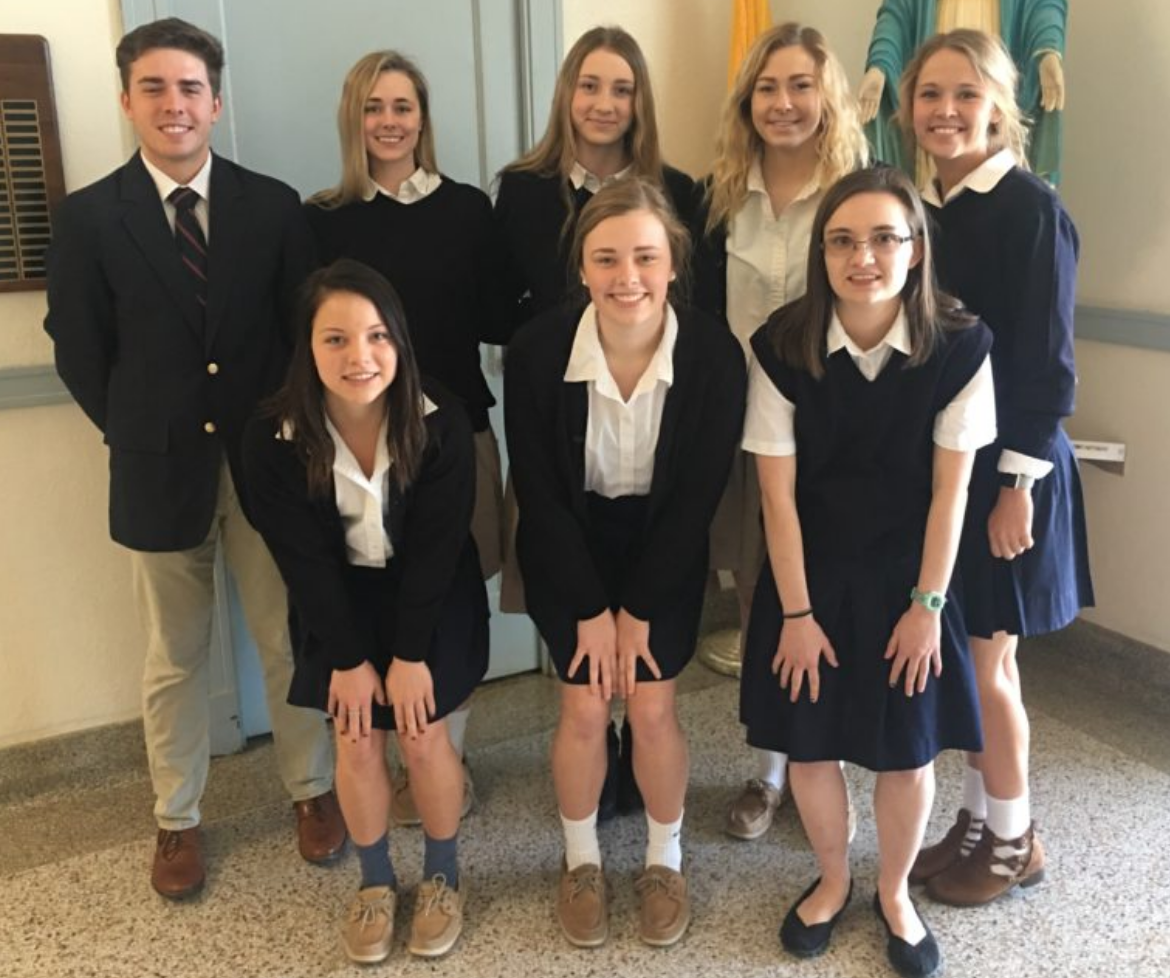
From Thomas More Prep-Marian High School, the following students won awards:
“This is the first time in awhile we have sent students to competition,” said Vanessa Schumacher, journalism instructor, “I am happy with how we did as a group. We sent nine students and placed eight of them. I can’t complain for our first year.”
Six university campuses throughout Kansas hosted the contests Feb. 24 and 25. This year, TMP-Marian competed at the Fort Hays State University location.
“We consider the Regional Contests to be one of our most important annual events both for students to receive feedback on their work and also for students to compete with one another,” said Eric Thomas, KSPA executive director. “Teachers who organize and enter their students into the contest give their students a great opportunity to see how their work compares to the work of others.”
KSPA enlists the help of journalism teachers, professional journalists, university faculty members and other journalism experts to judge the entries.
Any student who earns an award in the Regional Contest advances to the KSPA State Contest on May 6 at the University of Kansas. Based on results from the State Contest, KSPA will determine the top school in 1A, 2A, 3A, 4A, 5A and 6A.
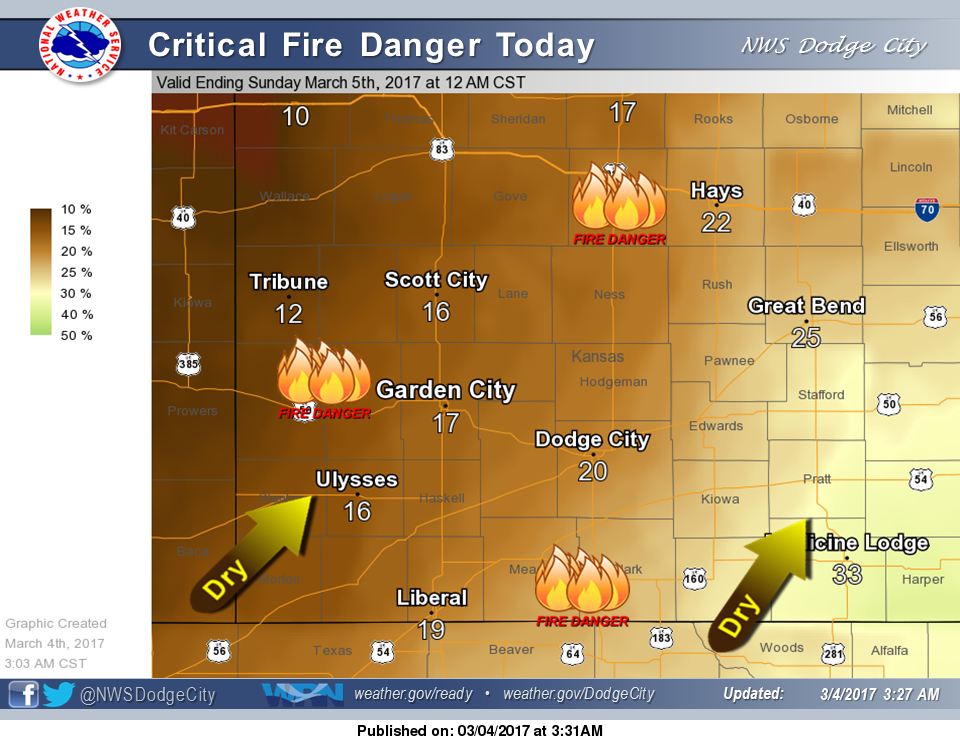
Today
Sunny, with a high near 71. Windy, with a south wind 9 to 14 mph increasing to 21 to 26 mph in the afternoon.
Tonight
Mostly clear, with a low around 46. Breezy, with a south wind 13 to 20 mph.
Sunday
Mostly sunny, with a high near 76. Windy, with a south southwest wind 15 to 20 mph increasing to 21 to 26 mph in the afternoon. Winds could gust as high as 36 mph.
Sunday Night
Mostly cloudy, with a low around 49. Breezy, with a south wind 17 to 23 mph, with gusts as high as 38 mph.
Monday
Mostly sunny, with a high near 70. Very windy, with a south southwest wind 16 to 21 mph becoming west northwest 26 to 31 mph in the afternoon. Winds could gust as high as 41 mph.
Monday Night
Partly cloudy, with a low around 29. Windy.
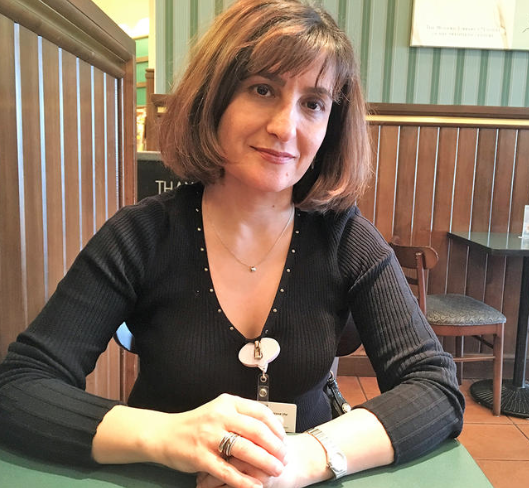
Dr. Saeedeh Salmanzadeh is a physician with Topeka-based Stormont Vail Health. She became a U.S. citizen in 2015 after immigrating to the United States from Iran, one of seven countries included in President Donald Trump’s travel ban. ANDY MARSO / KANSAS NEWS SERVICE
By ANDY MARSO
Dr. Saeedeh Salmanzadeh became a U.S. citizen at a naturalization ceremony in October 2015.
When the presiding official asked if any of the new citizens wanted to speak, she was one of the first to raise her hand.
By then Salmanzadeh had spent 15 years in America, after leaving her home in Iran where she was a doctor.
She had spent two years with no pay, studying for exams so she could practice in the United States.
She had spent three years practicing alongside her husband — also an immigrant from Iran — in Aberdeen, S.D., where they were the only pediatricians in a town of about 27,000 people.
She had spent a decade practicing in Topeka — expanding her patient list, buying a house and putting down roots.
At the naturalization ceremony, Salmanzadeh made the last step in that process, taking an oath to support and defend the laws and Constitution of the United States of America. Afterward she had a few things she wanted to say.
“I just thank(ed) all the American people, all the people who knew me and accepted me as I am,” Salmanzadeh said recently, sitting in a Topeka coffee shop and reliving the moment. “Most of the people after knowing me, they really didn’t care if I am atheist or Muslim or Christian. They look at me as a human being, and this is something that makes the United States very unique.”
But she fears that might be changing.
An executive order signed Jan. 27 by President Donald Trump barred travelers from her home nation and six other majority Muslim countries from which Barack Obama’s administration had restricted visas in 2015 because of concerns about terrorism.
The travel ban has since been blocked by a federal judge, but the Trump administration is fighting to restore it or implement a new version.
The abruptness of the ban caused havoc at the nation’s airports as some people who were en route to the United States or had landed were told they could not enter.
Many industries were affected, including an American medical system that relies increasingly on foreign labor. Health centers nationwide, including some in Kansas and Missouri, have long rolled out the welcome mat for foreign doctors. Rural areas in particular have benefited from a special “J-1 visa waiver” program for immigrant doctors who agree to work in underserved areas.
That’s what Salmanzadeh did. But others like her are now caught in the middle as a flashpoint debate over national security intersects with a more long-running discussion about how the U.S. fills its doctor shortage.
“If they want to continue (the ban) I am sure the places like Aberdeen, South Dakota, or very underserved area(s) … they are going to be affected most,” Salmanzadeh said.
The Numbers
According to the Migration Policy Institute, immigrants accounted for 27 percent of U.S. physicians and surgeons in 2010. The Medicus Firm, a company that recruits doctors on behalf of clients like hospitals, says that includes more than 15,000 doctors from the seven countries named in the ban: Iran, Iraq, Yemen, Sudan, Somalia, Syria and Libya.
The majority of them come from Iran. Some, like Salmanzadeh, left amid growing unrest that included student protests in 1999 and a government crackdown that followed.
Salmanzadeh said that at her house in Topeka the travel ban led to a series of frantic phone calls with family members back in Iran who wondered whether they would be able to see each other.
“We try to give them some reassurance that now we are citizens (and) hopefully … nothing is going to happen,” Salmanzadeh said. “But this is (the) kind of anxiety this law had on every family and these are normal families (that) had nothing to do with terrorists.”
Salmanzadeh is one of six physicians from countries named in the ban who are employed by Topeka-based Stormont Vail Health. A statement from the company said its physician support services division was in touch with an immigration lawyer to make sure those who are on work visas are able to stay.
“We want to support them in any way we can during this unsettling time,” said Dr. Robert Kenagy, senior vice president and chief medical officer.
Stormont Vail isn’t the only health system in the region affected.
Nathan Miller, a senior vice president of recruiting for Medicus, said the company’s data show that 269 doctors from the seven countries named in the ban are practicing in Kansas and Missouri.
They’re doing everything from primary care to heart surgery, and Miller said they’re generally the cream of the crop from their home countries.
“These are the top performers,” he said.
The doctors from the seven countries named in the travel ban represent only about 1 percent of the approximately 25,700 physicians in the two states.
But Miller, like Salmanzadeh, said they’re disproportionately working in rural areas.
“We rely on these international physicians to provide this type of care,” Miller said. “Some of these places, if these physicians weren’t available, they would be in even more dire straits than they are now based on the shortage they’re dealing with.”
Other Options
Dozens of physicians groups, including the American Medical Association, came out against the travel ban after it was announced.
But the Association of American Physicians and Surgeons was not among them.
Jane Orient, the executive director of the group for conservative doctors, said the precautions are justified until immigrant vetting processes improve.
“We have a national security problem, and we need a better way of assuring that people that are coming here are really coming to be Americans and not to blow people up,” she said.
Orient said she does not dispute the clinical abilities of the doctors coming from abroad, and most are “perfectly normal people” who don’t intend to cause any harm.
But she said the outcry over the ban has exposed the U.S. health system’s over-reliance on bringing in foreign doctors.
There’s an alternative, she said: Make room for the thousands of U.S. medical students every year who fail to “match” with one of the country’s coveted residency slots and have their dreams of becoming a doctor delayed or denied.
“We’re dependent on a brain drain from countries who are desperately short of physicians themselves,” Orient said. “And while these (visas) may be a good opportunity for excellent physicians to come here, I’m not sure we want to be dependent on this to serve our own people when we have lots and lots of Americans who would like to be physicians and are kept out simply by these restrictions on the number of positions that are available.”
Medical students fail to match with residency slots for a number of reasons, including receiving low scores on a licensing exam or reaching for competitive slots and not having an adequate backup.
Residency slots at hospitals across the country are funded in part by Medicare. A 1997 bill meant to restrain federal spending limits how many are available.
Orient said it’s time for an update.
“I think they made a tremendous miscalculation,” Orient said. “Now we’re hit with baby boomers retiring … and we do not have enough specialists to take care of them.”
Les Lacy is the vice president of regional operations for the Great Plains Health Alliance, a nonprofit that promotes rural health care and hospitals in Kansas and Nebraska.
He agreed that in the long-term the only cure for the rural physician shortage is more homegrown doctors.
“Train more physicians and support more residency slots, that’s what you do,” Lacy said. “We don’t have enough of them.”
But that takes time. Meanwhile, state governments are considering several stopgap measures such as increasing telemedicine or allowing mid-level providers like advanced practice registered nurses to do more.
Kansas Gov. Sam Brownback wants to increase residency slots, and Kansas and Missouri are among the first states (along with Arkansas) to pass laws allowing medical students who don’t match to practice in underserved areas under the supervision of another doctor.
None of the measures are perfect solutions.
“If it was a silver bullet, we would already have pulled it out and pulled the trigger on it,” Lacy said.
Hiring firms like Medicus to bring in foreign doctors under the J-1 visa is also an option, but Lacy said it’s falling out of favor.
Foreign doctors often experience culture shock in rural outposts and rarely stay after their three years are up, he said. Then hospitals are back in the recruiting game.
“It’s not as often used as it was 10 to 20 years ago,” Lacy said of the J-1 visa. “That doesn’t mean it’s a bad solution. It’s a solution not used as often right now, at least in communities I’m associated with.”
Other States
Salmanzadeh said the biggest reason she left Aberdeen for Topeka was to be closer to a sister who lives in Lawrence.
But she is more comfortable in Topeka, with an Iranian-American community in nearby Kansas City, she said, and the cultural challenges of rural practice were greater.
Another state, Minnesota, is making investments to try to bridge that gap.
Michael Westerhaus is a professor in the University of Minnesota’s Department of Medicine. He’s also a primary care physician at the Center for International Health, a clinic in St. Paul that was established in 1980 to care for the influx of Southeast Asian refugees after the Vietnam War.
Minnesota continues to be a haven for refugees, most recently thousands of Somalis displaced by civil war there.
Westerhaus said that in addition to providing treatment, the St. Paul clinic serves as a training ground for immigrants with overseas medical experience.
Like Miller and Orient, Westerhaus said the clinical abilities of the foreign physicians are often top-notch. But there are new things they need to get used to in the United States. Some are technical, like using electronic medical records. Others are cultural, like learning to give patients a set of treatment options and letting them choose, rather than dictating what will be done.
“A lot of the work we do is around development of those kind of skills,” Westerhaus said.
The Minnesota Legislature recently appropriated $1 million to address a physician shortage there that is expected to grow to between 2,000 and 4,000 doctors by 2025.
Some of that money will be used to pay for more residency slots, but a portion will go to Westerhaus’ clinic to establish a formal training program for the estimated 400 to 500 immigrant physicians in the state who aren’t licensed to practice in their new country yet. To qualify they will have had to live in Minnesota for two years and commit to spending five years practicing primary care in an underserved area after they complete the program.
Westerhaus said the communities they go to have nothing to fear.
“I’ve never had any personal concerns about my security or safety or that of our patients,” Westerhaus said. “We’ve found these are people that are caring, compassionate. They entered a career that was a service back in their own country, entered a career that was connected to serving others and they bring that same spirit here.”
The only security concerns Westerhaus has heard are from the immigrants themselves. Since the ban, he said, some of them “have gotten signals that they’re not as welcome here as they thought they were.”
Salmanzadeh said she would support the travel ban if it would truly make America safer. But she wonders why her native country was chosen while countries like Saudi Arabia — home to most of the 9/11 attackers — was not, and she fears extremists will use it as a recruiting tool.
“I’m sure ISIS can take advantage of this law to advertise that (the) United States is against all the Muslims in the world,” Salmanzadeh said. “Which is not true. Which is not true. … I hope that everything goes back to normal and the United States stays as a land of opportunity for all people around the world that are pursuing happiness.”
Andy Marso is a reporter for kcur.org‘s Kansas News Service, a collaboration of KCUR, Kansas Public Radio and KMUW covering health, education and politics in Kansas. You can reach him on Twitter @andymarso.
Ron Wilson is director of the Huck Boyd National Institute for Rural Development at Kansas State University.By RON WILSON Huck Boyd National Institute for Rural Development
A group of Australians is visiting the U.S. They will likely tour various U.S. landmarks and tourist locations, but one of their stops is at a rural location on the High Plains of Kansas. Why? The answer is that they are not just touring, they are geocaching. Geocaching has become a worldwide practice. One of the very first geocache locations was in rural Kansas.
Ryan Semmel is the person who told me about geocaching. Ryan is a military retiree, having served around the U.S. and overseas. He was stationed at Fort Leavenworth and then in Germany before coming to Kansas again. After serving at Fort Riley, he retired in Manhattan. “We love it here,” Ryan said.
“I’ve always liked adventure,” Ryan said. While serving previously at Fort Leavenworth, he heard about an outdoor scavenger hunt in Missouri. “I did it with one of my soldiers,” Ryan said. “It was so much fun that another soldier gave me a brochure about geocaching.” When he was subsequently stationed in Germany, Ryan did geocaching with his family.
“Geocaching is like a worldwide scavenger hunt using GPS technology to find canisters placed by other enthusiasts,” Ryan said. It has also been described as “an outdoor adventure where players use a free mobile app or a GPS device to find cleverly hidden containers around the world.”
This all began in 2000 when the government made global position system technology available to the public.
“A gentleman in Oregon was wondering how accurate these GPS readings were,” Ryan said. “He put a five-gallon bucket in the middle of the woods, posted the GPS coordinates on a message board, and asked if anybody could find it. A couple of guys did, and more people started putting out containers with coordinates for people to find.”
It was a lot of fun to explore and find these sites with geographically dispersed containers, called geocaches. However, it was difficult to scour the message boards to learn about the caches. In September 2000, three guys in Seattle thought of creating a central website where geocache locations could be registered, posted, and shared. That was the beginning of www.geocaching.com.
The website creators listed the first geocaches. One of those was the seventh official geocache of all time, and the first in Kansas, located in the High Plains. It is southeast of Colby near the rural community of Mingo, an unincorporated settlement with a population of perhaps 25 people. Now, that’s rural.
How does geocaching work? First of all, someone creates a geocache which consists of a waterproof container with a logbook and possibly more inside. They hide the geocache in a specific location, post the information online and leave it for explorers to find. When a geocache is found, the finders can sign the logbook and post their experience on the geocaching.com website.
The container itself might be a pillbox or bucket or tub, for example. Some geocaches contain trinkets which the finder can take and swap. “We call it SWAG,” Ryan said: “Stuff We All Got.”
“The only rule is, if you take something out, you have to put something back,” Ryan said. “I tell people to use old Happy Meal toys or something inexpensive from Dollar General.”
The geocaches are always put back for the next geocacher to find, and they are not buried. They are not to be placed on private land without the landowner’s permission.
The practice of geocaching has grown. There are approximately 3 million active geocachers worldwide, with more than 830,000 of those in the U.S. An estimated 2.8 million geocaches are now located in more than 180 countries. Ryan Semmel enjoys meeting these geocachers from all over.
A group of Australians is visiting the U.S., including a visit to Kansas to find our state’s original geocache. We commend Ryan Semmel and all those who are making a difference with this method of combining modern satellite technology with the timeless value of the great outdoors.
And there’s more. Geocaching is bringing a major event to Kansas in 2017. We’ll learn about that next week.
Charles C. Haynes is director of the Religious Freedom Center of the Newseum Institute.
On Feb. 8, a group of Latino men were leaving an overnight hypothermia shelter at Rising Hope Mission Church in Alexandria, Va., when they were surrounded by U.S. Immigration and Customs Enforcement (ICE) officers, arrested and taken away in vans.
The church’s pastor, Kerry Kincannon, worries that ICE is now targeting churches, abandoning long-standing ICE guidelines that treat houses of worship, hospitals and schools as “sensitive areas” to be avoided when rounding up people for deportation.
“They are making people fearful of coming to church,” Kincannon told a local TV station. “They are making people fearful of coming in, to get out of the cold, to get help in a shelter, and we are not going to stand for it, we are absolutely not going to stand for it.”
Kincannon is not alone. Religious leaders across the country are increasingly concerned about new immigration policies that have “taken the shackles off” ICE agents, in the words of White House Press Secretary Sean Spicer.
Of course, large numbers of undocumented immigrants were deported under the Obama administration. But Obama-era guidelines focused ICE on serious criminals and gang members; this directive appears to be vanishing under President Donald Trump. According to news reports from several states, people with no criminal history or with misdemeanor convictions are now being swept up in ICE raids.
Houses of worship are pushing back by declaring themselves “sanctuary churches” — an act of conscience that many sanctuary activists believe is rooted in biblical admonitions to “welcome the stranger.” At various times in American history, churches have given sanctuary to the vulnerable, most famously harboring fugitive slaves as part of the Underground Railroad in the 19th century. In the 1980s, many churches gave sanctuary to Central American refugees fleeing civil conflict.
According to USA Today, there are now more than 800 sanctuary houses of worship in 45 states, a number that spiked dramatically after the presidential election.
Earlier this month, to cite just one example, the First Unitarian Society of Denver gave sanctuary to Jeanette Vizguerra, a mother of four described by Denver Mayor Michael Hancock as “an active community member who has persistently pursued legal status through the proper channels.”
To be clear, religious and civic leaders like Kincannon and Hancock are not arguing that the government turn a blind eye to the presence of more than 11 million undocumented people in the U.S. Nor do they oppose ICE taking action against people who have committed serious crimes and endanger the community.
But sanctuary leaders are standing up for undocumented people who they believe have been betrayed by a government that has long refused to fix the problem, and big business that has long profited from the labor of undocumented migrants. Instead of taking responsibility for creating and sustaining a broken immigration system, many Americans now demand mass deportation and unworkable walls. For the sanctuary movement, this is a classic case of blaming the victim.
Against this backdrop of dysfunction, hundreds of religious individuals and communities involved in the sanctuary movement see their actions as acts of religious conscience protected by the First Amendment. For many Christians, protecting the vulnerable is more than social justice; it is a command of the Gospel.
Thus far, however, the religious freedom defense has not prevailed in the courts. Under current law, ICE may enter places of worship to arrest undocumented people. And religious leaders themselves risk being charged with harboring people not authorized to be in the U.S.
Exactly which actions by religious leaders could violate the law is murky, given that lower courts differ on whether “harboring” means concealment or simple sheltering. But we do know that religious clergy and laypeople were arrested and convicted for their work in the sanctuary movement in the 1980s.
Since the law may not protect them, churches and other places of worship must rely on public opinion and moral suasion to keep ICE agents from entering their sanctuaries. The ICE “sensitive areas” guidelines are an acknowledgment that the optics of raiding churches would be morally repugnant — and a public relations nightmare.
But if houses of worship become fair game for ICE under Trump — which is precisely what Pastor Kincannon fears — the only recourse for many people of faith is civil disobedience through nonviolent resistance.
Civil disobedience is not, of course, one of the five freedoms guaranteed by the First Amendment. But a sixth freedom — the act of following the dictates of conscience in pursuit of justice — has been at the heart of social justice movements throughout American history.
From the Underground Railroad to the women’s suffrage movement, from the civil rights movement to ACT UP, courageous Americans have defied what they believed were unjust government laws and policies — and willingly accepted the consequences, including physical assault, arrest and incarceration.
“There are just laws and there are unjust laws,” wrote Dr. Martin Luther King Jr. from his cell in the Birmingham jail. “I would agree with St. Augustine that an unjust law is no law at all…One who breaks an unjust law must do it openly, lovingly…I submit that an individual who breaks a law that conscience tells him is unjust, and willingly accepts the penalty by staying in jail to arouse the conscience of the community over its injustice, is in reality expressing the very highest respect for law.”
“Welcoming the stranger” in the current climate requires courage and carries risk. But in the face of injustice, the voice of conscience cannot be denied.
Charles C. Haynes is vice president of the Newseum Institute and founding director of the Religious Freedom Center. Contact him via email at [email protected]. Follow him on Twitter at @hayneschaynes.
MANHATTAN — From workforce development to increased market access to research and development of new technologies and products, agriculture is primed for growth. Based on direct input and collaboration with hundreds of Kansas agricultural leaders, the Kansas Department of Agriculture has compiled and summarized industry feedback into desired growth outcomes for 19 specific sectors of the industry. The outcomes document has now been published on the Kansas Department of Agriculture website, agriculture.ks.gov/GrowAg, along with documents providing expanded background information for each of the 19 agricultural sectors.
“At every stage of this project, we have been pleased with the enthusiasm, initiative and spirit of cooperation shown by agricultural leaders throughout the state, who are eager to work together to enhance an environment for growth in Kansas,” said Secretary of Agriculture Jackie McClaskey. “It comes as no surprise to us that the farmers, ranchers, and agricultural business leaders of Kansas understand the need to look to the future in strategic ways to create short-term and long-term expansion of our state’s agriculture industry.”
The Kansas Agricultural Growth Strategy project has been coordinated by KDA, with participation by more than 500 agricultural stakeholders. This project is a direct response to the call to action issued at the August 2015 meeting of the Governor’s Council of Economic Advisors hosted by KDA. A highlight of the project was the inaugural Kansas Governor’s Summit on Agricultural Growth, which was held in Manhattan in August 2016. The Summit brought together nearly 400 leaders from across industry sectors under one roof to talk about barriers, challenges, opportunities, growth goals and next steps.
Input from the Summit, as well as from smaller meetings both before and after the event, led to the identification of desired industry outcomes, which can be found at the Ag Growth website. These documents are not intended to represent the opinions and priorities of the state government, but as a compilation of feedback from agricultural stakeholders which will now serve as a guidance document for private, public and academic partners to work together to grow the agricultural industry.
“Growing the Kansas economy is a top priority, and to grow the Kansas economy the agriculture industry must grow,” said Governor Sam Brownback. “I appreciate the commitment of everyone across the state who has worked on this agricultural growth project and I look forward to seeing their progress in the future.” Agriculture is Kansas’ largest industry and economic driver, contributing $64 billion to the Kansas economy, and employing nearly 13 percent of the Kansas workforce.
Individual action plans for each outcome have been developed by members of the KDA Growth Team in consultation with industry partners, and will be used to track progress of the strategic growth project.
The industry will gather once again this summer for the second annual Governor’s Summit on Agricultural Growth on Thursday, Aug. 24, 2017, to evaluate progress on the actions plans and to identify next steps for the Kansas agriculture industry. Information on the Summit will be posted as it becomes available at agriculture.ks.gov/summit.
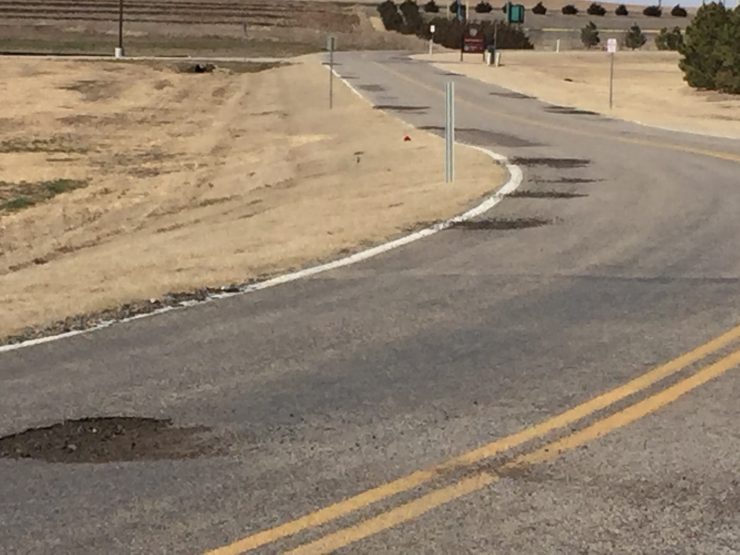
The Bickle/Schmidt Sports Complex road deteriorated badly over the winter and after heavy construction traffic associated with building the new FHSU Track and Field Facility.
By BECKY KISER Hays Post
The proposed 2017 Street Maintenance program for the city of Hays includes a $108,670 overage to rehabilitate the Bickle-Schmidt Sports Complex road.
Over the winter, the road deteriorated badly, due in large part to construction of the new Fort Hays State University track and field facility, Public Works Director Greg Sund reported to city commissioners Thursday night.
“We’re looking at having to rebuild the road because the base is just gone,” Sund said. “The university has agreed to pay 20 percent of the cost.”
Sund is proposing the city’s share would come out of the Special Highway fund. The commissioners objected to that idea.
“It’s the sports complex,” said Vice-Mayor James Meier. “Is there any reason that other 80 percent can’t be paid out of the CVB (Convention and Visitors Bureau) or the sports complex?” he asked.
City Manager Toby Dougherty said the funds could also come from the sports complex budget or the special parks fund.
“It’s horrendous what happened out there,” said Commissioner Sandy Jacobs, who looked at the road with Hays Parks Director Jeff Boyle. “I don’t think 20 percent from Fort Hays is enough.”
The FHSU Soccer Stadium was built in 2011.
FHSU paid 20 percent of the original cost to construct the sports complex road. The FHSU soccer stadium, built in 2011, is on the southeast side of the facility.
According to Dougherty, the blame doesn’t lie entirely with the university. The road problems existed prior to construction of the FHSU track and field facility.
“When we built the sports complex (it opened in the fall of 2011), the group promoting it to the voters oversold what we could build for $8 million,” Dougherty said. “The commission decided they wanted the complex that looked like what was sold to the voters — meaning eight ball diamonds, eight softball/football fields — and so we had to cut corners in a lot of places. The parking lots and road were one of those areas. They were all paved in the initial concept.”
By happenstance, when the facility was under construction, a portion of Vine Street was also being replaced. Dougherty explained how millings off Vine Street were used to build the sports complex road.
“We hired a company to rejuvenate those millings and then J-Corp of Hays agreed to lay down the millings on the complex road if we would name the road ‘S P Drive’ after Steve Pfannenstiel. We agreed to that. The millings were put down and the city put a couple chip seals over the top. The road problems started creeping up a little bit before construction of the Fort Hays State Track and Field Facility. The heavy construction truck traffic really just drove home the issue.
City officials say the sports complex road, built in 2011, will have to be replaced.
“When we investigated, we found it wasn’t so much a problem with the base as the fact the the millings had kind of turned to sand. They weren’t rejuvenated properly by the company, and we had no way of knowing that until they were on the sports complex road and kind of turned back to sand. So you have the movable base under the chip seal top now. We have to go back and grind everything in and re-compact it.”
Dougherty said the city has talked to FHSU, and in addition to paying 20 percent of the road repair costs, “they’ve agreed that every year when we do our maintenance out there, they’ll pay 20 percent of whatever we do. They’ve acknowledged partial ownership of this thing going forward.”
South end of the road
“And even though the north area of the road isn’t showing quite as much damage as the south end, it’s in the same kind of shape, so it makes no sense not to do the same thing to it,” added Sund. “The north end was not heavily trafficked by construction vehicles.”
The chip seal work must be done in warm weather to adhere correctly. Sund expected it would probably be done in July. Commissioners directed Sund to coordinate the work schedule with the Hays Recreation Commission to avoid summer tournament traffic at the complex as much as possible.
Sund also mentioned he’s received some complaints about trucks using the sports complex as a shortcut.
“We’re going to be putting up signs saying ‘No Through Truck Traffic.'”
Commissioners will consider approving the $1.054 million 2017 Street Maintenance program at their March 9 meeting.
 KDWPT
KDWPT





 Today
Today