The Hays Toastmasters club is the oldest standing club in the state. chartered Jan. 1, 1958. The group meets at Thirsty’s, 2704 Vine, on the first and third Wednesday of each month at noon.
“It’s a fun, relaxed environment where you can improve upon your public speaking and presentation skills as well as learning practical leadership skills. I’ve been a member since February of 2013 and I look forward to each meeting,” said member Travis Kohlrus. “They have manuals that you can work through at your own pace that teach you specifics about leadership and speaking. Each meeting includes a ‘word of the day’ where you can expand your vocabulary and challenge your mind to include this new word in as much of your speaking opportunities as possible during that meeting. We hand out awards for best ‘Word of the Day,’ ‘Table Topics Master,’ ‘Ahs’ and speeches.
Hays Toastmasters is a local affiliate of Toastmasters International. The major reason for joining is personal development through public speaking and leadership opportunities.
Toastmasters International is a world leader in communication and leadership development. The organization has more than 345,000 memberships. Members improve their speaking and leadership skills by attending one of the 15,900 clubs in 142 countries that make up our global network of meeting locations.
For more information on how to become a member, email Kohlrus at [email protected].
Real World 101 is an informative program aimed at primarily college students, or young adults entering the work force, to help ease their transition into the “real world.” Young professionals will share their experiences and tips on building credit and tax preparation, and networking in a new community.
This informative program will have plenty of time for your questions and discussion. It is free to attend for anyone entering the “real world” soon—because growing up isn’t easy.
Real World 101 will be held on Tuesday, April 11th at the FHSU Union Basement – Cody Commons from 7 to 8:00 p.m.
The Ellis County Extension Community Development Committee along, with the Hays Area Young Professionals and Alpha Kappa Psi business fraternity, is sponsoring this event.
Brought to you by Ecklund Insurance. Click for more.
Click to play the audio or read below.
There were major problems associated with the Dust Bowl other than dust, wind, heat, drought, and lack of cash. There were grasshoppers! Zillions of them!
And as you have seen in repeated television documentaries, grasshoppers eat anything and everything that is green, and some things that are gray or brown, including fence posts and shingles. Other crop-eating varmints invaded the countryside as well, but grasshoppers, because of their numbers, were the most destructive, unless you wish to discuss jackrabbits, which we will do when the fields and gardens begin to green up a bit.
Kay Melia
Grasshoppers hatch in the spring from eggs laid by the mature insect in the previous late fall. When they hatch, you almost have to have a magnifying glass to see them hopping merrily around the landscape like some kind of green flea beetle. But when they hatch in a fence row of weeds, or a field of emerging corn, they show phenomenally quick growth and what was a speck of green yesterday becomes a crop destroyer in just a few days. Grasshoppers have voracious appetites to say the least, and when hatching in large numbers, can lay waste to a field of anything green.
Gardeners would lay awake nights, hoping that the “chomping” they were imagining was just the dog chewing on a bone in the backyard. I use to try and shoo the grasshoppers away from the beans toward the zucchini. But the greatest amount of damage by grasshoppers seemed to occur in a newly emerging crop of wheat. The young, tender sprigs of growth seemed to disappear overnight, particularly in the areas near the fencerows of a wheat field. Fencerows were never farmed of course and weeds always seemed to pop up there every spring. Grasshoppers would soon move in and reduce the weed growth, just waiting for the grain drill. My Dad and other farmers had an answer to this crop destructing foolishness.
Here’s what they did. Dad would fill an old wash tub with a sack of bran. Bran, as you know is the outermost portion of the wheat kernal, and is very dry and fluffy. To the bran he would add a jug of banana oil. The oil served as a very fragrant draw to grasshoppers. And finally, enough arsenic would be carefully added to the concoction to make it lethal to any varmint who happened to imbibe. Careful measurement of the poison was a must, because arsenic was a bit expensive, just like old lace. The tub of grasshopper poison would be loaded onto a trailer and hitched to the tractor.
Dad would throw the poison bran by the shovelful into the fencerow as Max and I drove the tractor very slowly along. Several tubs full of the mixture were required, depending of course on the length of the fencerow. The process was very effective because an inspection the next morning revealed dead grasshoppers an inch deep or more. There were no factory produced bug killers in those days, so you made do with what you had. Needless to say, great strides have been taken in the last 75 years to cope with this type of problem. Crop science is a wonderful thing!
Oh, and by the way….I didn’t shoo those grasshoppers away from the beans toward the zucchini. That would have been useless because not even a grasshopper will eat a zucchini!
Kay Melia is a longtime broadcaster, author and garden in northwest Kansas.
Brought to you by Ecklund Insurance. Click for more.
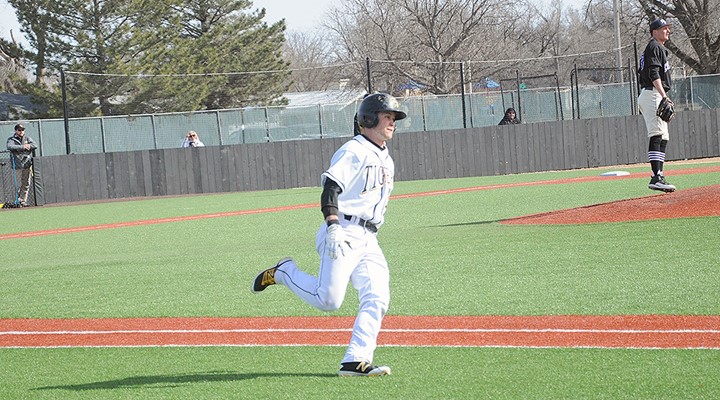
HAYS, Kan. – The Fort Hays State baseball team fell to Lindenwood after a late Lion rally Saturday evening (April 8) inside Larks Park, 8-4. The Tigers entered the sixth inning with a 4-2 lead, but the visitors plated six unanswered runs to seal the victory.
Fort Hays State falls to 9-24 this season and 2-18 in MIAA play, while the Lions are now 21-14 overall and 14-9 in the league.
Lindenwood took advantage of a leadoff double to take a 1-0 lead in the top of the first, but the Tigers had an answer in the home half of the third. After Jace Bowman worked a walk to lead things off, Jake Lanferman crushed a home run over the fence in left field to give FHSU the 2-1 lead.
The Tigers extended that margin to 4-1 in the following inning when they rattled off five singles. Trevor Hughes led off with a single before a single through the gap at short from Dayton Pomeroy put two runners on. Bryce Witchurch followed with a single into right, driving in one run. Jared Bogosian kept things rolling with another seeing-eye single into left, scoring Pomeroy. Ty Redington singled to load the bases with two outs, but the Lions got out of the jam after a nice play by the third baseman.
The visitors snatched the lead back in the top of the sixth when they pushed four runs across, also adding single runs in the seventh and eighth. The Lions were able to hold on thanks to five innings of strong relief from Brendan Feldmann, who allowed just two hits while striking out seven batters.
Sam Capps (2-3) took the loss after allowing six runs on eight hits in 5.1 innings of work, striking out three. Austin Weiser threw the final two innings for the Tigers, giving up just one hit and not allowing a run. Four Tigers picked up multiple hits in the contest, including Redington, Hughes, Pomeroy and Bogosian. Lanferman was the only FHSU player to drive in multiple runs, knocking in two on his fourth home run of the season.
The Tigers will look to salvage game three of the series Sunday (April 9) when the teams face off at noon.
HOUSTON (AP) — Cheslor Cuthbert hit a solo homer early and Eric Hosmer and Salvador Perez both went deep during a six-run eighth inning, helping the Kansas City Royals rally for a 7-3 win over the Houston Astros on Saturday night.
The Royals trailed 2-1 and managed just two hits off Dallas Keuchel before Luke Gregerson (0-1) took over for the eighth. Alex Gordon put Kansas City ahead with a two-run double, Lorenzo Cain hit an RBI single and then Hosmer’s first homer this season extended the lead to 6-2. Two pitches later, Perez sent an 88 mph fastball into the seats in left field to chase Gregerson.
Danny Duffy (1-0) allowed eight hits and two runs over seven innings for the win, and the Royals took their second straight from Houston after being swept in a three-game series at Minnesota to open the season.
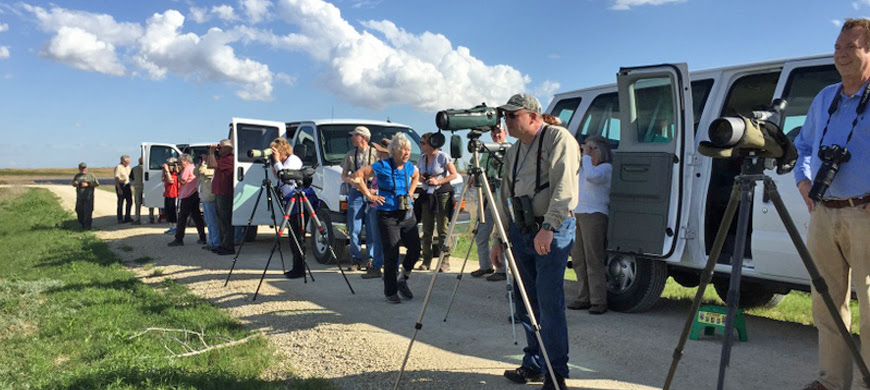
GREAT BEND – The 2017 Wings ‘N’ Wetlands Birding Festival is scheduled for April 28-29 in Great Bend and will offer participants a unique opportunity to view birds at two of the best birding spots in the Central Flyway – Cheyenne Bottoms Wildlife Area and Quivira National Wildlife Refuge. Held every other year since 2001, the Wings ‘N’ Wetlands Festival is open to both novice and experienced birders.
“The main focus of the festival is getting participants out on fieldtrips with experienced guides to find as many bird species as we can,” said Curtis Wolf, Kansas Wetlands Education Center (KWEC) site manager. “We are excited to be able to bring a diverse crowd of birders into the area to experience our wetlands as well as our area communities.”
Beyond the great guided birding trips, the two-day festival also includes a shorebird identification workshop, relaxing social time, a presentation by renowned birder and photographer Bob Gress, and opportunities to experience area attractions along the Wetlands and Wildlife National Scenic Byway. Participants can also sign up for additional birding field trips, including night birding and greater prairie chicken lek tours. The 2017 festival will be headquartered out of the Best Western Angus Inn Courtyard in Great Bend.
Cheyenne Bottoms Wildlife Area and Quivira National Wildlife Refuge are two Wetlands of International Importance and provide thousands of birds a stopover along their North and South migration routes. The festival dates coincide with the historical peak of shorebird migration, providing opportunities to see sandpipers, plovers, wading birds, and waterfowl. Approximately 180 species of birds have been recorded during most previous festivals. Notable species that may be observed are black rails, snowy and piping plovers, and least terns.
The festival is coordinated as an event of the Kansas Birding Festival, Inc. and is made possible by numerous organizations, including the KWEC, Kansas Department of Wildlife, Parks and Tourism, The Nature Conservancy, and the Great Bend Convention and Visitors Bureau. For more information, and to register, visit kansasbirdingfestival.org or contact the KWEC at 1-877-243-9268.
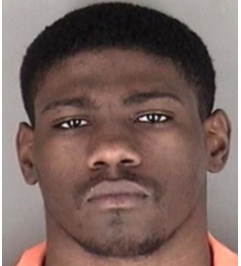
KANSAS CITY, KAN. – A Kansas man has been arrested and charged in two robberies, according to U.S. Attorney Tom Beall.
The Topeka Police Department assisted the FBI in arresting Joshua Alexander Musgraves, 24, Topeka, who is charged with two counts of commercial robbery.
An indictment filed in U.S. District court in Topeka alleges that on Jan. 6, 2017, Musgraves robbed Plato’s Closet, a clothing store at 1580 S.W. Wanamaker Road in Topeka.
The indictment also alleges that on Jan. 20, 2017, Musgraves robbed Kentucky Fried Chicken at 1812 N.W. Topeka Boulevard in Topeka.
If convicted, he faces up to 20 years in federal prison and a fine up to $250,000 on each count. The Topeka Police Department and the FBI investigated. Assistant U.S. Attorney Jared Maag is prosecuting.
Divine Mercy Service in 2016 at Immaculate Heart of Mary.
Submitted by Donetta Robben
Parishes in and around Hays,will celebrate Divine Mercy Sunday with a solemn hour of prayer and benediction at 3 p.m. Sunday, April 23, at Immaculate Heart of Mary Catholic Church, 500 E. 19th.
The service will include adoration of the Blessed Sacrament, the Divine Mercy Chaplet in song, as well as prayers, music and meditation. Confessions will be heard beginning at 2 p.m.
Devotion for Divine Mercy began in the 1930s when Saint Maria Faustina Kowalska, an uneducated Polish nun, received special communications with Jesus in which he asked her to have this image painted to spread the message of his mercy.
Under the instructions of a spiritual director, Saint Faustina, as she is known, wrote down her revelations with Jesus, which is now contained in her 600-page diary. In these writings, Saint Faustina said we are to call upon Jesus with trust, receive his mercy and let it flow through us to others.
This mercy fulfills the message in Matthew’s gospel that states, “Blessed are the merciful, for they shall obtain mercy.”
Saint Faustina said in her diary that we “radiate” God’s mercy to others by our actions, our words and our prayers.
The Divine Mercy image is a painting of Jesus with two rays emerging from his heart representing the blood and water which flowed from the side of Jesus as his heart was lanced after he died upon the cross.
One is pale representing the water which makes souls righteous. The other is red for the blood, which is the life of souls.
“These two rays issued forth from the very depths of my tender mercy when my agonized heart was opened by a lance on the cross. These rays shield souls from the wrath of my father. Happy is the one who dwell in their shelter, for the just hand of God shall not lay hold of him.” (Diary number 299)
Saint Faustina died in 1938 at the age of 33. She was canonized a saint April 30, 2000, in Rome by the Pope at that time, Saint John Paul II. Pope John Paul II said that the Sunday after Easter, Divine Mercy Sunday, would now be an official feast day of the Church.
Divine Mercy is not just for Catholics – it is for all souls. All Christians share in Jesus’ mercy, and all are invited to participate in this special hour of prayer.
A workshop on implementing Lean Six Sigma principles will be offered in April as part of the spring workshop series from the Management Development Center at Fort Hays State University.
“Intro to Lean Six Sigma: Adding Value to your Organization” will be from 8:30 a.m. to 4:30 p.m. Monday, April 24, in the Memorial Union’s Stouffer Lounge on the FHSU campus.
Lean Six Sigma methodology helps improve customer loyalty, time management, strategic planning, process cycle time, employee motivation and, most importantly, the bottom line.
In this workshop, participants will learn the principles of Lean Six Sigma using the define, measure, analyze, improve, and control phases of an improvement project.
The two facilitators for this workshop are certified and trained instructors. Dr. Jamie Schwandt, an FHSU alumnus, is an author, a TV show host and a continuing process improvement director in the U.S. Army reserve. Benjamin Christians is a Lean Six advisor with Honeywell and the U.S. Department of Defense.
Each person who completes the workshop will receive a completion certificate. The cost is $219. Registrations received prior to April 19 are appreciated. Hays Area Chamber of Commerce members are eligible for a 15-percent discount.
A short story by Cathy Adams, instructor of English in Fort Hays State University’s Virtual College International, has been published in the Southern Pacific Review, Santiago, Chile.
Cathy Adams’ first novel, This Is What It Smells Like, was published by New Libri Press, Washington. Her short stories have been published in Utne, AE: The Canadian Science Fiction Review, Tincture Journal, Upstreet, Portland Review, and thirty-two other publications. She earned her M.F.A. from Rainier Writing Workshop at Pacific Lutheran University in Washington. She lives and writes in Liaoning, China, with her husband, photographer, JJ Jackson.
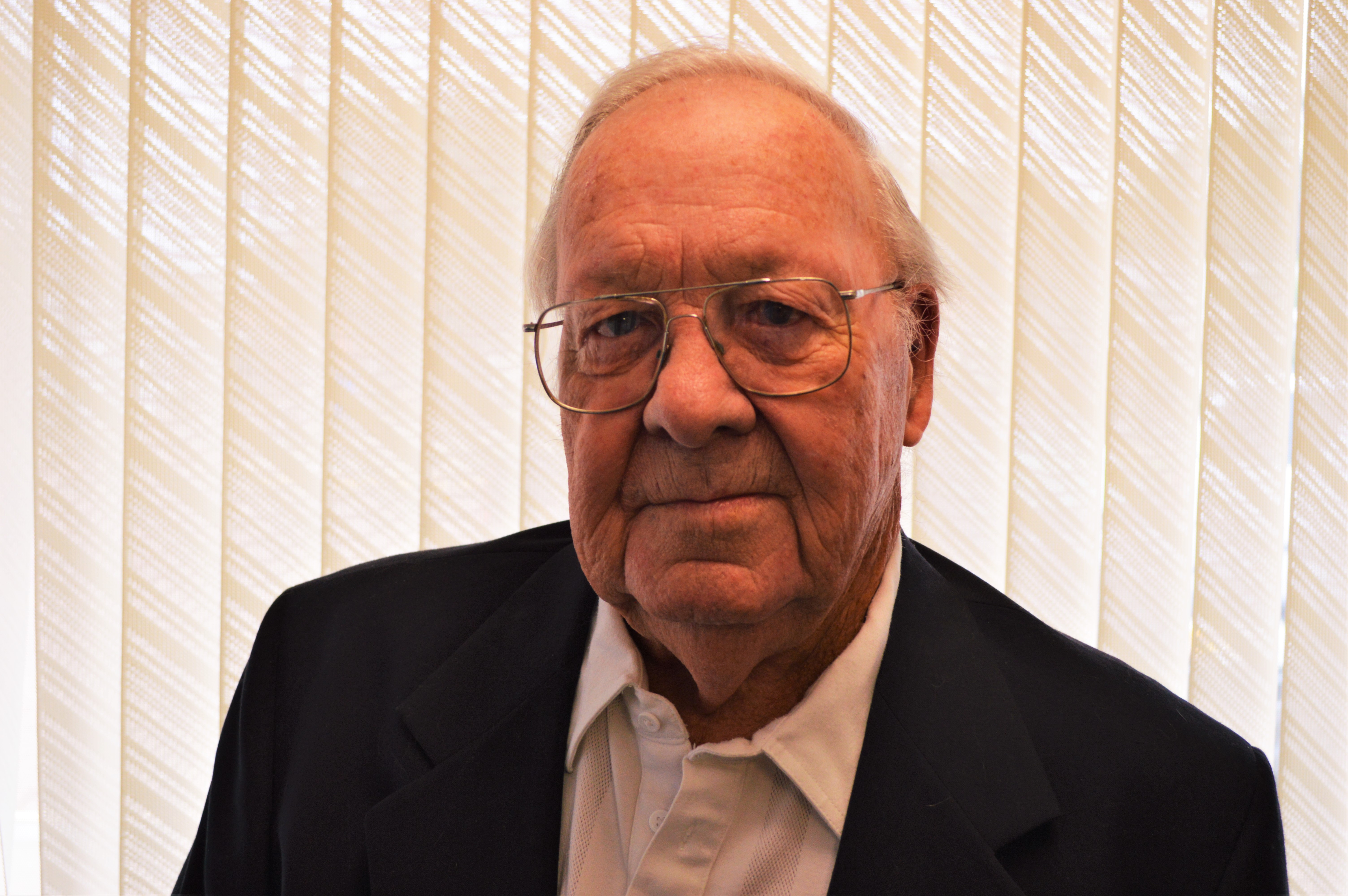
Gene Klein, Holocaust survivorFHSU University Relations and Marketing
In the spring of 1944, a teenaged Gene Klein and his family were taken from their village in Hungary and thrown into the infamous Nazi extermination camp known as Auschwitz.
He will bring his story to Fort Hays State University’s Beach/Schmidt Performing Arts Center at 7 p.m. Thursday, April 13. The public is invited. Admission is free.
His father was taken straight to the gas chamber. Klein was forced into slave labor until liberated in the spring of 1945, and he spent two years as a refugee before his and other family members were allowed to immigrate to the United States.
Now 89 and living in The Villages, Fla., Klein has been speaking out about the Holocaust for more three decades. Writing for The World Post in July 2016 as a memorial to Elie Wiesel, Klein noted that he, unlike Wiesel, was silent for decades about the Holocaust.
“Eventually, I decided that, like Wiesel, I needed to be public about being a survivor and that, in my own small way, I should contribute to the mission of educating the world about the Holocaust,” he wrote.
“I will tell our story,” he continued, “and I will speak — especially in these times — about the tolerance and compassion necessary to prevent what happened to us from happening to others.”
“He has traveled all over the world for decades sharing his Holocaust experiences, but has not yet visited Kansas,” said Hollie Marquess, instructor of history at Fort Hays State University. “Gene is excited to see Kansas for the first time and is happy to share his experiences with students and our community.”
His visit to Hays is an outgrowth of a world civilization class Marquess was teaching in the fall 2016 semester. They were reading “We Got the Water: Tracing My Family’s Path Through Auschwitz,” a book by Klein’s daughter, Jill Gabrielle Klein.
This coincided with a proposal for a trip to the National Campus Leaders Summit in January as part of the Embrace Difference campaign of the university’s Center for Civic Leadership. The summit was scheduled the U.S. Holocaust Memorial Museum in Washington, D.C., and one requirement for attendance was a proposal to the museum for a project in keeping with the museum’s mission and purpose.
Marquess’s students were “expressing an amazing response” to Klein’s book, she said, so “I located Gene Klein’s email and proposed that he visit our campus as a part of this project, and he accepted.”
She and Dr. Paul Niencamp, assistant professor of history, led five students on the trip to Washington in late January. The students represented the disciplines of history, political science and leadership studies.
“The Holocaust Memorial Museum has been supportive of this project since our proposal,” said Marquess. “It is an incredible opportunity for my students who have read this book to then get to meet him and visit with him, and it is also a wonderful opportunity for the community to hear his story and his message.”
Klein has inspired audiences around the world with his powerful and touching presentation on the continuing relevance of the Holocaust and the necessity of fostering the capacity for empathy, instead of allowing hate to flourish.
He is a frequent contributor to national and international media outlets, including CNN, The Guardian, and HuffPost Live.
Kansas legislators hit adjournment Friday with some big tasks left for their wrap-up session that starts May 1.
At the top of the list is a tax and budget plan, which largely will be influenced by the amount of school funding that legislators decide to add in light of the Kansas Supreme Court’s ruling last month. In the health policy arena, Medicaid expansion supporters are regrouping after the governor’s veto — and holding out hope for another shot this session.
Here’s a look at what legislators have accomplished and what remains to be done during the 2017 session regarding budget, education and health issues.
Coming To A Budget Compromise?
Lawmakers have made progress on balancing the current budget for the fiscal year that ends in June, but solutions for the coming years have eluded them. Revenue shortfalls are projected to total around $1 billion over the next two budget years.
Senate President Susan Wagle said Friday that agreeing on a tax package is “the most difficult thing” for legislators to do. CREDIT STEPHEN KORANDA /KPR
Republican Senate President Susan Wagle said the slow progress is to be expected.
“Coming to a compromise, an agreement on a tax package is probably the most difficult thing any state Legislature would have to do,” she said.
In February the House and Senate did advance a tax increase, but Gov. Sam Brownback vetoed the plan and lawmakers didn’t have the votes to override.
Sen. Laura Kelly, a Topeka Democrat, said legislators may consider a modified version of that plan.
“The issue, quite honestly, is the governor,” she said. “Can we get anything past him?”
This week Brownback made an unexpected announcement that he was endorsing a “flat tax” plan from a Senate committee. It would have eliminated the current 2.7 and 4.6 percent income tax brackets and imposed a 4.6 percent tax rate on all Kansans.
That bill failed by a wide margin in the Senate, 37-3, and gave legislators a bit of insight, Kelly said.
“We have found out what won’t work. I guess that’s progress,” she said.
On Friday, Brownback called the budget work done so far a “good opening discussion” but said more negotiations are likely.
“When you’re dealing with tax policy, you’ll go through 100 iterations to come up with something that can get through the entire process,” Brownback said.
That process may make for long days when legislators return to Topeka for the wrap-up session.
Rep. Melissa Rooker said they’ve been told to plan to work for two weeks straight, including through the weekend, to find tax and budget solutions.
“Which is fine, it’s appropriate to get the people’s business done, but it’s a lot of heavy lifting to pack into a very compressed time frame,” said Rooker, a Fairway Republican.
Both chambers have made some progress on budget plans for the coming two years. They largely avoid spending cuts and include some small, targeted spending increases. But both budgets would require hundreds of millions of dollars in new revenue to balance.
Sen. Dennis Pyle, a Hiawatha Republican, is among the lawmakers who want to consider spending cuts before tax increases.
“People in here generally like to spend money — especially other people’s money,” Pyle said.
The top budget writer in the Senate, Republican Carolyn McGinn of Sedgwick, said last month that she’s prepared to make spending cuts.
“At the end of the day, we have to balance our budget,” McGinn said. “If nothing passes on the revenue side, we’ll be back. We’ll be taking things out. We will balance this budget.”
Court Ruling Steers Education Funding
Budget negotiations have been complicated by the need to develop a new school funding formula, as spending on K-12 public education takes up about half of the $6 billion state general fund.
The optimism about education funding in Kansas really started in last year’s elections when moderate Republicans and Democrats unseated conservative legislators. Many of the new lawmakers had education backgrounds, from PTA members to a former superintendent, and made school funding a priority in their campaigns.
Acknowledging that writing a new school funding formula would be a priority — and a complicated process — House Speaker Ron Ryckman of Olathe created a special panel, the House K-12 Budget Committee.
A number of school funding plans emerged early in the session.
One was authored by Rooker with lots of input from other moderates and some Democrats.
Conservative plans included one by Rep. Scott Schwab of Olathe and a leftover plan from last year written by Rep. Ron Highland, former chair of the education committee, and Steve Abrams, who lost his Senate seat in the last election. Another plan came from the former president of the Kansas Chamber of Commerce.
During the first few weeks of the session, the committee discussed all of those plans. Then, talks slowed.
Superintendents did have some concerns when lawmakers talked about cutting current education aid to help balance the budget or forcing schools to dip into their reserves in future years, but nothing came of that.
House Speaker Ron Ryckman formed a special committee to come up with a new school funding formula this session. CREDIT STEPHEN KORANDA/KPR
Looming over all of this, of course, was the pending Kansas Supreme Court ruling in the Gannon school funding case.
Finally, on March 2 the court ruled that Kansas school funding was unconstitutionally inadequate. Estimates on how to fix that ranged from $500 million to $800 million.
After the ruling, David Smith, chief of staff for Kansas City Kansas Public Schools, said: “I think what people have come to understand is that any funding formula that is efficient and effective will look very much like the old one because it’s going to be tied to what it actually costs to educate students.”
The first plan from legislative leaders upped spending by just $75 million. Democrats scoffed at that number and, despite some arm-twisting by leadership, most Republicans dismissed it as too little.
Rep. Larry Campbell of Olathe, chairman of the K-12 committee, said the bill was “a starting point.”
During a marathon hearing on March 30, the K-12 committee increased that one-time infusion of $75 million to a five-year total of $750 million in new spending.
Rep. Ed Trimmer from Winfield, the ranking Democrat on the committee, said that’s the minimum the Legislature needs to add for public schools.
“Otherwise we’ll be back here doing this same thing again after the court tells us that’s not enough money,” he said.
Educators are excited about some elements of the bill: state funding for all-day kindergarten if districts choose to offer it, $10 million more over five years for at-risk early childhood development and about $2 million for teacher mentoring and professional development.
However, the committee did not pass out the bill. Campbell wanted to hire a constitutional lawyer to review the measure and ensure sure it will pass muster with the state Supreme Court before sending it to the House and Senate. Former state Senator Jeff King, who’d initially been rejected as too political, got the job as the committee’s counsel Friday a few hours after the Legislature adjourned for the break.
Once the bill hits the House and Senate floors, many questions remain. How will legislators come up with millions more in education funding when the state faces a large budget hole? Will moderate Republicans in the House be able to add more funding? Will $750 million survive in the Senate?
And then there’s the most important question: what will the Kansas Supreme Court think?
Medicaid Expansion A Veto Victim
Expanding eligibility for KanCare, the state’s privately run Medicaid program, dominated health policy debates this session.
After three years of attempts to get a Medicaid expansion bill beyond committee, the House and Senate debated and passed the bill. But they were unable to get enough votes to override Brownback’s veto. In his veto message, the governor said the bill prioritized “able-bodied” people over those who have disabilities.
Sheldon Weisgrau, director of the Health Reform Resource Project, said KanCare expansion advocates aren’t conceding defeat this session. But if the Legislature doesn’t take it up again this year, Weisgrau said advocates will keep pushing expansion as a way to help more Kansans access health care and to assist rural hospitals.
Rep. Susan Concannon, left, is unsure of the prospects for Medicaid expansion when the Legislature returns for its wrap-up session. CREDIT MEG WINGERTER / KANSAS NEWS SERVICE
“I’m a believer that nothing is dead until the Legislature adjourns,” he said in an email. “This issue is too important and has too much support to give up on.”
Rep. Susan Concannon, a Beloit Republican who was one of the strongest legislative voices in favor of expansion, was less sure about its prospects this session. Some House members have said they are open to reconsidering the issue, but she said it would be difficult to get another bill passed in the time remaining.
“It’ll be back next year, full force,” she said. “I’m discouraged, but I’m not giving up.”
Another health policy priority for Democrats and some moderates also may have fallen short. State hospitals, mental health centers, college campuses and the University of Kansas Hospital had sought an exemption from a state law that requires them to either allow visitors to carry concealed handguns or to hire security and install metal detectors. Several bills exempting one or more of those facilities failed to advance, though a bill that would exempt only state hospitals is alive in the House.
Tim Keck, secretary of the Kansas Department for Aging and Disability Services, said during a legislative hearing that bringing guns into a psychiatric hospital could endanger patients and employees.
“It’s not a safe environment to have weapons available,” he said.
Early in the session, committees discussed how they could invest more in the mental health system and restore some funding cut from Medicaid reimbursements last year.
Legislative leaders cautioned that state general fund dollars would be scarce as they tried to fill the budget hole and come up with a school funding plan that would satisfy the courts, so lawmakers have turned to other sources for health programs.
They looked to increase the privilege fees that health maintenance organizations pay to sell insurance plans as a way to restore a 4 percent cut to for Medicaid reimbursements.
A bill that passed the House on Thursday would raise the privilege fee paid on revenue from insurance premiums from 3.31 percent to 5.77 percent. The funds would go first to reversing the reimbursement cuts, with any additional money going to an “improvement fund” for community mental health centers.
Cindy Samuelson, spokeswoman for the Kansas Hospital Association, said the group was pleased to see the Legislature come up with a way to restore some of the Medicaid funds.
The bill raising the privilege fee would have to go conference committee because the Senate passed a different version, but Samuelson said medical providers are hopeful it will get through the process.
“The Medicaid provider cuts are exacerbating an already stressed health care system,” she said in an email. “By restoring the lost Medicaid funds, the state is taking an important first step in strengthening the Kansas health care system and the economic benefits associated with it.”
Kyle Kessler, executive director of the Association of Community Mental Health Centers of Kansas, said the improvement fund would help replace about $20 million in state funding that the centers have lost since 2007. The state funds help offset the cost of caring for uninsured patients, he said.
Lawmakers have shown an interest in mental health this year, and particularly in how limited admissions at Osawatomie State Hospital have forced emergency rooms and mental health centers to keep patients safe while they wait for a bed, Kessler said.
“We feel good about how they are listening to community mental health centers back in their home communities,” he said.
This story was produced by Stephen Koranda, Meg Wingerter and Sam Zeff of the Kansas News Service, a collaboration of kcur.org, Kansas Public Radio and KMUW covering health, education and politics. .

 The Hays Toastmasters club is the oldest standing club in the state. chartered Jan. 1, 1958. The group meets at Thirsty’s, 2704 Vine, on the first and third Wednesday of each month at noon.













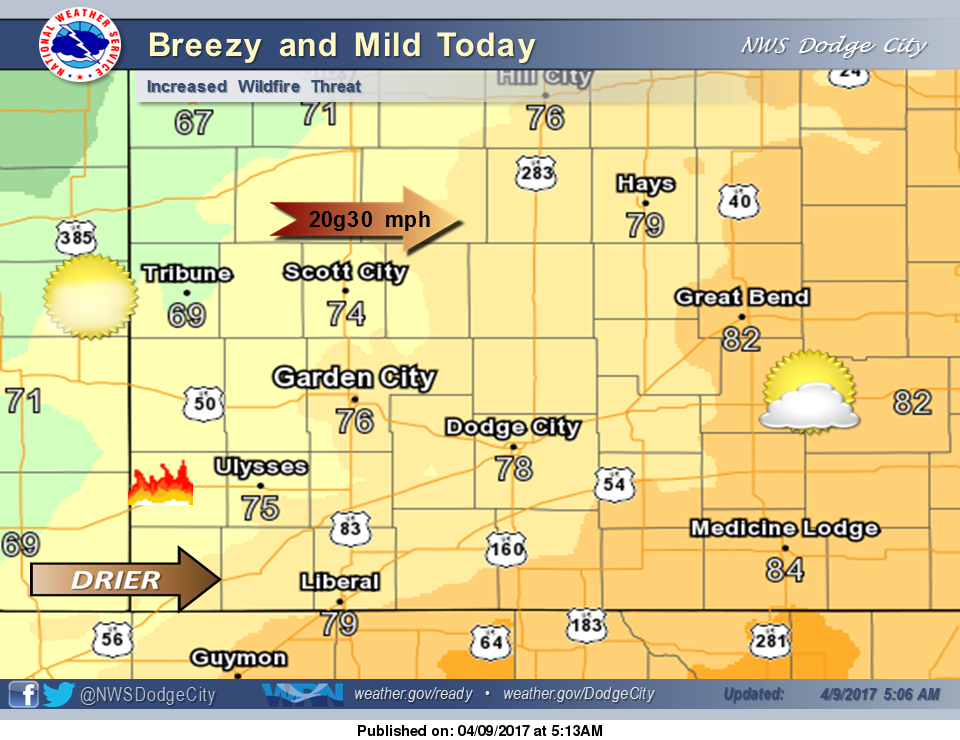
 Today
Today