Farmers – are you needing to pick a new variety of wheat or having problems with weed control? Then make plans to attend the Ellis County Pre-plant Wheat School on Wednesday, August 30 in Hays.
The event will begin with a light supper at 5:30 p.m. with the program starting at 6 p.m. in the meeting room of the Cottonwood District – Hays office at 601 Main Street.
According to Cottonwood District Extension Agent Stacy Campbell, topics of discussion by Extension Specialists will be wheat variety selection, disease and weed control options, variety interaction with nitrogen and fungicide, managing nitrogen for protein, rotations and tillage interactions, and the use of stripper headers to optimize residue management, and subsequent yields.
Pre-registration is requested by Monday August 28, by calling 785-628-9430 or by emailing Theresa at [email protected] .
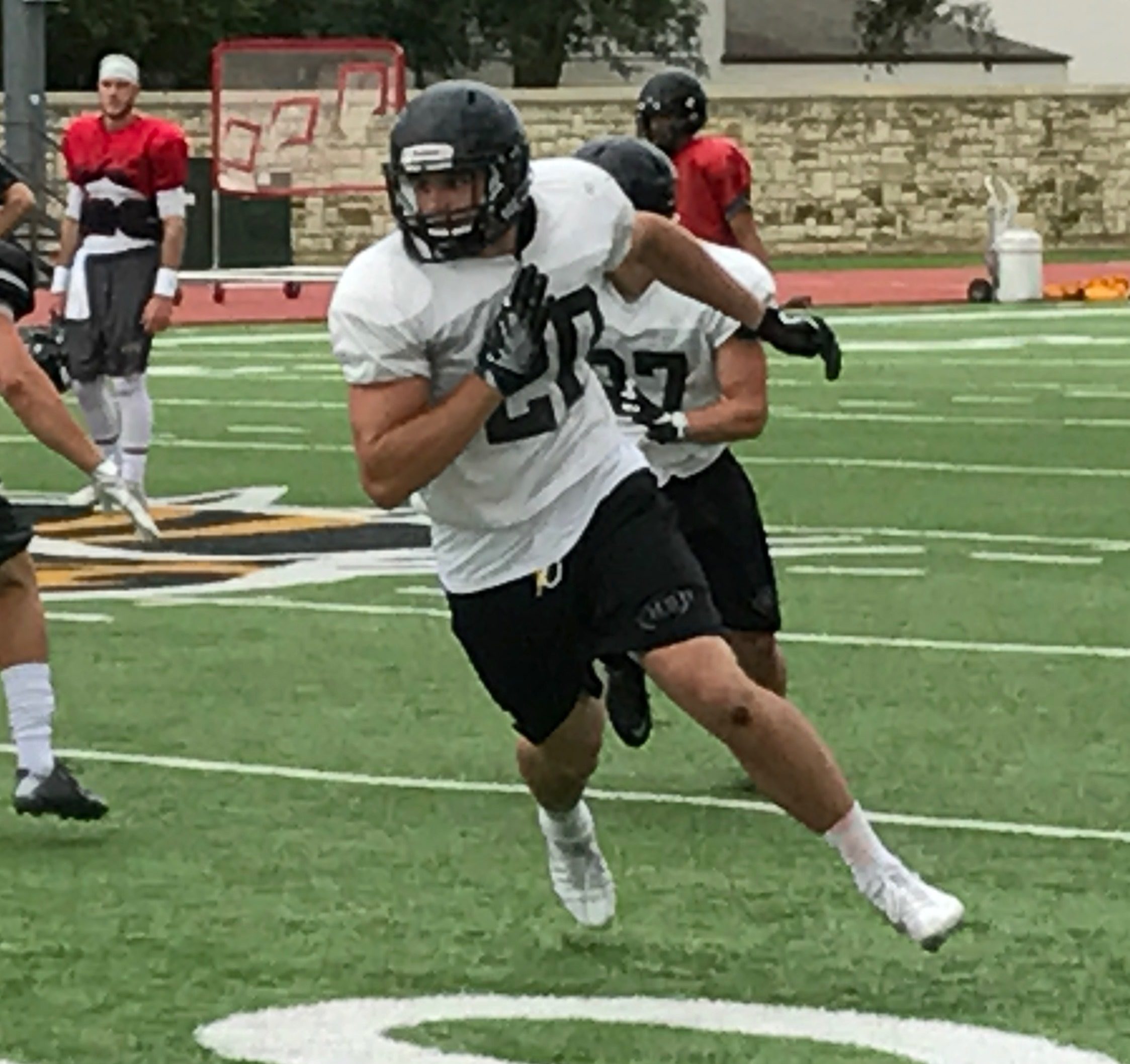
Drew Kite trying to make the transition from the basketball court to the football field. The Scott City junior was a member of the Fort Hays State basketball team the last four years and is now battling Matt Wendelberger and J.J. Lewis for the starting tight end spot.
Kite was all-state in both sports in high school and was the 3A Defensive Player of the Year and won a state title in football his senior season at Scott City.
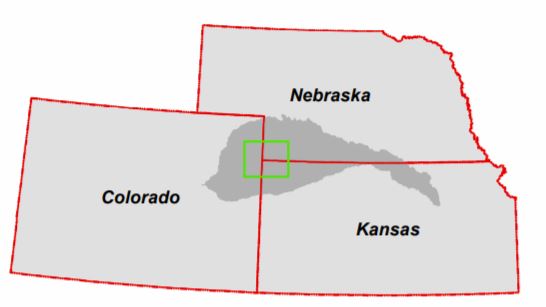
MANHATTAN — The Republican River Compact Administration (RRCA) will hold its 57th annual meeting at 10:30 a.m. MST (11:30 a.m. CST) on Tuesday, Aug. 22, 2017. The meeting will take place at the Burlington Community Center Conference Hall at 340 S. 14th St. in Burlington, Colorado.
The RRCA meeting will be hosted by the Colorado Division of Natural Resources, and will focus on water-related issues and activities, including compact compliance, within the Republican River basin in Kansas, Colorado and Nebraska.
Kansas, Colorado and Nebraska entered into the Republican River Compact in 1943 to provide for the equitable division of the basin’s waters, remove causes of potential controversy, promote interstate cooperation and joint action by the States and the United States in the efficient use of water and the control of destructive floods. The RRCA is composed of three commissioners representing Kansas, Colorado and Nebraska: Kansas Department of Agriculture, Division of Water Resources Chief Engineer David Barfield; Colorado State Engineer Kevin Rein; and Nebraska Department of Natural Resources Director Jeff Fassett.
In addition, RRCA will hold a work session to prepare for the annual meeting at 8:30 a.m. MST (9:30 a.m. CST) Tue., August 22, also in the Conference Hall of the Burlington Community Center. Both the work session and the annual meeting are open to the public.
Individuals who have questions regarding the meeting should contact KDA water management services program manager Chris Beightel at [email protected] or 785-564-6659 for more information.
Thirty projects that will improve intersections and streets in Kansas cities have been selected for funding through the Kansas Department of Transportation’s City Connecting Link Improvement Program (CCLIP), which funds improvements to state highways that extend through cities.
Under the CCLIP, a city contributes up to 25 percent of the project cost based on its population. Cities under 2,500 in population aren’t required to provide a match. Projects in this program may fall into one of three different categories, including Surface Preservation (SP), Pavement Restoration (PR), or Geometric Improvement (GI).
SP projects involve maintenance work such as resurfacing and are funded up to $300,000 per project. PR projects typically involve full-depth pavement replacement without changes to the overall geometric characteristics and may also address drainage issues. GI projects address geometric issues such as adding turn lanes, improving intersections, or modifying the lane configuration to address capacity. The PR and GI categories are funded up to $1 million per project.
Twenty-seven cities will receive a combined total of approximately $15 million in funding under the CCLIP. This total includes $7.25 million in state fiscal year 2019 and $7.75 million in state fiscal year 2020.
For the state fiscal year 2019, the city, category, and amount awarded include:
St. Marys, Surface Preservation $300,000
Manhattan, Geometric Improvement $650,000
Osage City, Pavement Restoration $600,000
Emporia, Surface Preservation $300,000
Marysville, Pavement Restoration $1,000,000
Enterprise, Surface Preservation $300,000
Clifton, Surface Preservation $300,000 Phillipsburg, Pavement Restoration $1,000,000 Colby, Surface Preservation $300,000
Smith Center, Surface Preservation $300,000
Pittsburg, Surface Preservation $300,000
Girard, Geometric Improvement $400,000
Hutchinson, Surface Preservation $300,000
Winfield, Surface Preservation $300,000
Great Bend, Surface Preservation $300,000
Kingman, Surface Preservation $300,000
Arkansas City, Surface Preservation $300,000
For the State fiscal year 2020, the city, category, and amount awarded include:
Lawrence, Geometric Improvement $250,000
Enterprise, Surface Preservation $300,000
Hillsboro, Geometric Improvement $600,000
Ellsworth, Geometric Improvement $1,000,000 Oberlin, Surface Preservation $300,000
Eureka, Pavement Restoration $1,000,000
Pittsburg, Surface Preservation $300,000
Girard, Surface Preservation $300,000
Sterling, Pavement Restoration $600,000
Wellington, Surface Preservation $300,000 Tribune, Pavement Restoration $800,000
Garden City, Geometric Improvement $1,000,000
Cimarron, Pavement Restoration $1,000,000
The Hays/Russell Chapter of Women for Kansas, FHSU Student Government and Phi Kappa Phi are joining to host a public forum with a bipartisan group of female Kansas legislators who helped to find the solution to the tax issue this past legislative session.
Free and open to the public, the meeting will be held on Sept. 16 at 2 PM in the Fort Hays State University Memorial Union.
The representatives will be sharing how/why the caucus formed followed by Q&A about the Caucus itself, the past session, important legislation, upcoming elections, etc.; a little strategic vision about where the caucus is going and then a wrap-up with how to get more people involved in politics.
For more information call Dawn Berry, (785) 567-3018.
Today
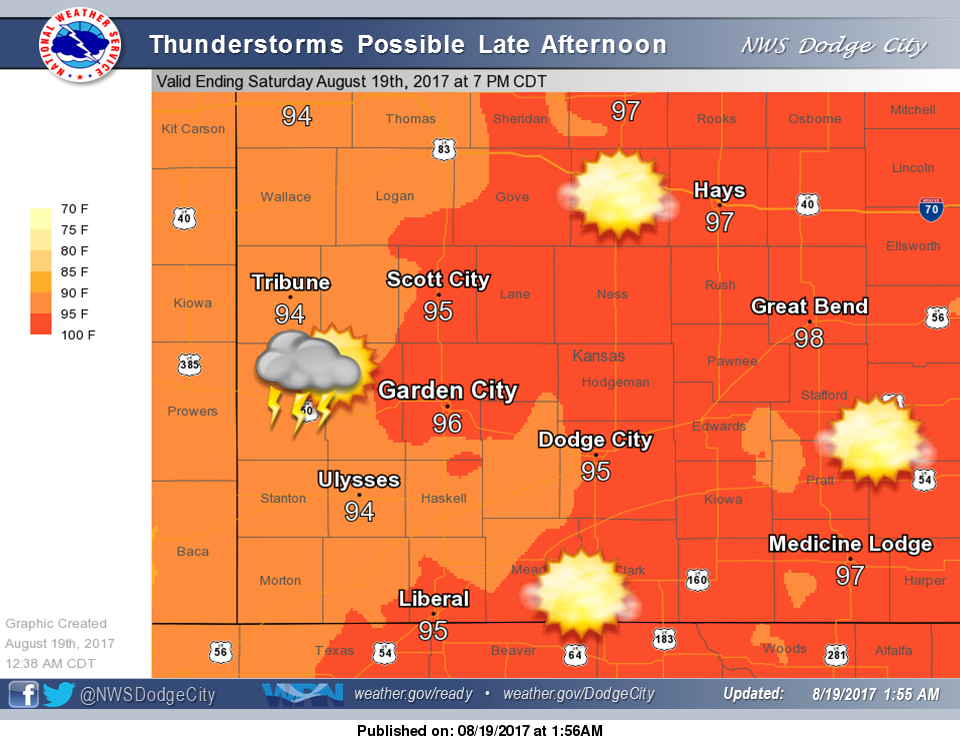
Sunny, with a high near 99. Light south wind increasing to 9 to 14 mph in the morning.
Tonight
A 40 percent chance of showers and thunderstorms, mainly between 11pm and 2am. Partly cloudy, with a low around 69. South southeast wind 9 to 15 mph.
Sunday
Mostly sunny, with a high near 96. South wind 7 to 13 mph.
Sunday Night
A 20 percent chance of showers and thunderstorms. Mostly cloudy, with a low around 71. South wind 8 to 13 mph.
Monday
A 20 percent chance of showers and thunderstorms after 1pm. Partly sunny, with a high near 91. South wind 8 to 14 mph.
Monday Night
A 50 percent chance of showers and thunderstorms. Mostly cloudy, with a low around 67.
Tuesday
A 20 percent chance of showers and thunderstorms before 1pm. Mostly sunny, with a high near 86.
A decade after Kansas unveiled plans to migrate its driver’s license records from an aged mainframe to modern information technology infrastructure, the effort remains incomplete and, auditors say, troubled.
Now five-and-a-half years past the original completion deadline — a goal that has moved repeatedly — legislative auditors revealed in a report published July 31 that ongoing woes could cause the KanDrive project to miss yet another “go live” date, while also going above its original $40 million budget.
Auditors fear, too, for the quality of the final IT product. They cited a February technical review that found gaps in code, limited functionality and existing features that “required workarounds to function.”
More than five years past its original deadline, an information technology project to migrate Kansas driver’s license records to a new system remains incomplete and troubled, auditors say. SUSIE FAGAN / KANSAS NEWS SERVICE
Officials at the Kansas Department of Revenue told auditors that “significant” progress has been made on fixing bugs and that they remain committed to lifting the curtain on the project at the start of 2018.
Lisa Kaspar, the department’s director of vehicles, told a panel of lawmakers receiving the audit results last month that development will be done in time to test the system this fall.
She described private contractor MorphoTrust, a company that specializes in ID services, as the project’s “main risk” and said her team is communicating with MorphoTrust weekly.
“We are holding them very accountable,” Kaspar said. “They did have some delays. We are now back on track with them. I mean, not to the original dates, but we are comfortable that we’ll still be able to go live with our system on Jan. 3.”
The issue of accountability is a sensitive one because past reviews found the department didn’t hold another contractor, 3M, to its commitments or obtain related financial penalties from that company.
Audits indicate MorphoTrust has missed at least two major deadlines. In the most recent case, it delivered equipment “that is not working properly.”
MorphoTrust did not respond to a request for comment.
The Department of Revenue declined to make officials available for an interview ahead of this story.
“We are building strategies for the impending rollout,” spokeswoman Rachel Whitten said. “We are not ready to discuss it publicly at this time.”
‘Critical’ infrastructure
At issue, according to auditors, is one of the Department of Revenue’s “most critical systems” — a platform tracking the driving records of 2 million people that must at all times be accessible to law enforcement agencies.
Plans to migrate the Kansas driver’s license system and other records solidified in 2007 as the DMV Modernization Project. In 2009, 3M landed a contract for the work, worth $25 million of the total $40 million Kansas planned to spend. To help pay for it, the state tacked a $4 fee onto prices Kansans paid at their local treasurer’s offices for vehicle registrations.
Snags in the project began early and persisted past its 2012 deadline. Flawed work by contractors bedeviled it, but independent reviewers also found evidence of problems with project management, office culture, staffing and leadership.
And in the midst of it all, a 2014 audit found that regularly scheduled third-party reviews of the project were discontinued in violation of state policy. Quarterly updates to lawmakers were misleading and incomplete, the audit said, preventing them from knowing the extent of the problems as the project fell year after year behind.
Sen. Laura Kelly, a Topeka Democrat, called for the 2014 audit.
“I wanted to know what had gone wrong,” she recalled.
Kelly remains concerned that a pattern of poor planning and project management, combined with under-resourcing, may be dogging the state’s IT efforts. Though IT can be complex and arcane, the process deserves public scrutiny, she said earlier this month.
“So much government service now is done through technology,” said Kelly, a lawmaker since 2005 who sits on the Legislature’s audit committee. “We have no choice but to keep our eyes on it.”
Separately, the state’s aborted 2013 attempt to wean four state agencies off an IBM mainframe with an in-house IT infrastructure project called GovCloud led to millions of dollars in equipment sitting unused in the basement of Docking State Office Building.
In December, auditors released results of a three-year check into IT security at 20 Kansas agencies that store sensitive information. They found substantive problems at most of them, including unsecure websites and unpatched vulnerabilities that could open the door to hackers.
The cost to taxpayers of the data breach remains unclear. Kansas is on the hook to pay for free credit monitoring for the victims, but the state has redacted pricing information from documents provided to the Kansas News Service — and hasn’t answered questions about whether it has any insurance that will help cover the expense.
Representatives of the Kansas Office of Information Technology Services, under the Office of the Governor, declined to comment on whether there are any overarching problems, such as under-resourcing or poor project management, hurting the state’s IT functions. They deferred comment to the agencies involved in the troubled projects.
However, the office’s 2016-2017 strategic plan lays out a number of issues that need to be addressed, including that IT infrastructure and support are isolated by agency and that infrastructure is out of date. The plan describes the current situation as “fraught with risk” and points to “incidents demonstrating significant data security exposures.”
History of problems
Because of the history of problems with the modernization of the driver’s license database, the Legislature’s auditing staff members now review the project on an ongoing basis, updating lawmakers four times a year.
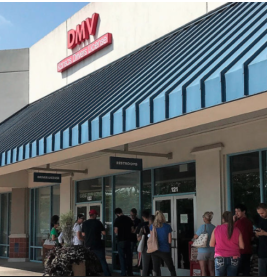
The 2014 audit came after phase one of the DMV Modernization Project — a revamped vehicle title and registration platform — went live in 2012. That launch, 10 months behind schedule, led to hours-long lines for Kansans trying to update their tags in some counties.
Swamped county treasurers brought in extra staff or even closed doors to catch up on backlogged applications.
Rep. Don Schroeder, another member of the Legislature’s audit committee, said he could accept the delays in the implementation of the driver’s license portion of the project if the state has been fixing the bugs to ensure a solid product. The Hesston Republican wants to avoid a repeat of phase one’s rocky launch.
“That’s my biggest concern,” said Schroeder, a lawmaker since 2007. “Just hoping it doesn’t become something like that.”
The 2014 audit estimated counties spent more than $2 million on overtime and other expenses triggered by the 2012 rollout — even though the state had initially predicted it would cost them nothing.
Auditors turned up other concerns, too. They said Kansas paid out 90 percent of the 3M contract before finally canceling it in May 2014. The company had not delivered on key elements of the contract when the work was canceled, according to auditors. (Officials with 3M declined to speak to auditors.)
At the time, Department of Revenue officials said the remaining work would be finished in-house by November 2015, and that it would cost about $2 million.
That didn’t happen. Instead, the project was closed and relaunched as KanDrive, with a $6 million projected price tag.
After Sam Williams was appointed revenue secretary in late 2016, he ordered an independent review that found multiple problems and concluded KanDrive was at risk of missing its deadline and running out of money. The agency moved to reduce the project’s scope and restructure its team.
The project will again go through the bureaucratic hoops to be closed and relaunched with a new name: KanLicense.
In a letter to lawmakers in response to the audit, Williams signaled commitment to the Jan. 3, 2018, deadline and said he has hired a chief information officer to help.
“Although the scope was changed,” he told lawmakers, “the KanDrive project will still have major benefits provided to the Division of Vehicles.”
Auditors expressed appreciation for the department’s efforts to address the KanDrive problems, but they see continued risks for the project’s quality and for further delays.
They were concerned, too, about the project’s overall cost.
Changes to project scope and structure “made it impossible for us to evaluate whether changes in the project’s cost estimates are appropriate,” the auditors wrote.
In 2014 auditors estimated that Kansas had spent $37 million of the original $40 million budgeted for the DMV Modernization Project, including the unanticipated costs to counties in 2012.
Estimates for finishing the project range from $8 million to $10 million in their latest report.
Celia Llopis-Jepsen is a reporter for the Kansas News Service, a collaboration of KCUR, Kansas Public Radio and KMUW covering health, education and politics. You can reach her on Twitter @Celia_LJ.
John Richard Schrock is a professor at Emporia State University.
When the President announced a reversal of policy, preventing transgender individuals from serving in the military, a major reason given was the medical cost. But why would individuals of military age still be receiving transition surgery? This question never arose. That silence speaks loudly to our nationwide ignorance of transgender biology, and to the fact that some in our medical community persist in putting off the decision to transition, encouraging patients to wait until they are “more mature.”
In our society, most citizens still do not know the difference between gender and sexuality. They confuse transsexuals with lesbian and gay individuals because it is the last letter in the LGBT acronym. Being born with a gender identity that does not agree with your anatomy has nothing to do with sexuality.
“Sex” was the only term we used before the 1950s. But it did not explain the variations in behavior and anatomy. Not all male homosexuals were effeminate nor were all lesbians masculine.
Dr. John Money at the Psychohormonal Unit at Johns Hopkins University was the person who borrowed the term “gender” from its usage in language and applied it to the masculine-to-feminine spectrum. His unit was a center for helping parents decide what to do with babies who were born with ambiguous genitalia. Johns Hopkins was the center for conducting the transition surgery for some of the first pioneer sports figures who switched between male and female in the 1950s and 1960s.
Money documented cases where children by age five or six expressed a profound and definite conviction that “I am not a boy; I want to be a girl like my sister is…” despite normal male anatomy. Money’s experiences resulted in a pioneer book with colleague Anke Ehrhardt: “Man and Woman, Boy and Girl” where the sequence of development and differentiation was carefully explained.
The presence of genes on the Y-chromosome (usually) causes the development of fetal testes that provide fetal hormones that (usually) drive the development of fetal male anatomy and affect the brain. A young boy (usually) develops a male body image and (usually) responds as a masculine boy in response to other’s behavior. At puberty, the male anatomy (usually) develops along with masculine behavior and normal male eroticism (sexual attraction to females). The absence of a Y-chromosome (usually) results in the cascade of female anatomy, hormones, femininity and female eroticism. These many cases of “usually” reflect the many exceptions that Money saw at his unit for diagnosis and treatment. I used Money’s book in high school biology starting in 1975. Students left class thankful they were normal.
However, when Money was diagnosed with rapid onset Parkinsons, he remained uncertain if the feeling of masculinity or femininity developed in the first years of childhood or in the last trimester of fetal development during pregnancy. That issue soon became settled by brain anatomy research by Dick Swaab and his associates in the Netherlands: gender identity develops before birth.
Dr. Money died in 2006 and I was one of a few invited to his memorial service. Johns Hopkins Hospital was not represented because they had abandoned this work. The new psychiatrist-in-chief at Johns Hopkins Hospital, Paul R. McHugh considered transgenderism to be a “mental disorder” that needed treatment and considered sex change to be “biologically impossible.” McHugh has now retired. And Johns Hopkins Hospital is returning to sex reassignment surgery.
But the practice of delaying puberty through the age of 18 or 21 by using puberty blocker drugs so a child can be “really certain” continues. It ignores the extensive successful surgeries done when there is solid and strong indication of gender by age of five or six. Hormone therapy and surgery conducted after a person has finished growing do not provide as satisfactory an outcome.
Awaiting adulthood to conduct transition hormones and surgery contradicts the biological need to use hormones and surgery as soon as possible. Treated earlier, trans individuals would enter the armed forces as men or women—no more surgery needed.
To understand these youngsters’ dilemma, the PBS documentary “Frontline: Growing Up Trans” is available from PBS.
This recent controversy did reveal that our armed forces spend far more on Viagra for the troops than they spend for belated transition surgery. If you had your windows open when that hit the news, you could probably hear 150 million women across America scream: “What?!?”
ELLSWORTH COUNTY — A Kansas man was injured in an accident just after 7p.m. Friday in Ellsworth County.
The Kansas Highway Patrol reported a 2015 BMW Motorcycle driven by Jesse C. Goetz, 37, Ellsworth, was eastbound on Interstate 70 six miles east of Wilson in the right lane.
The motorcycle struck a 2015 Dodge Ram pickup pulling a trailer that was slowing with emergency hazards lights on.
Goetz was transported to the hospital in Salina. The driver of the pickup Vincente C. Conley, Cushing, OK., was not injured.
Goetz was wearing a helmet, according to the KHP.
PRATT – The National Shooting Sports Foundation has announced that August is National Shooting Sports Month, celebrating the passion millions of Americans have for target shooting. Recreational shooting is a safe and fun activity enjoyed by people of all ages, whether in competitive venues or target plinking just for fun. Target shooting is also great preparation for the coming hunting seasons.
To learn more about National Shooting Sports Month, go to www.shootingsportsmonth.org, where you’ll find listings of events and promotions by state, promotion type and location. You can also learn more about how to get involved in National Shooting Sports Month, whether you’re in retail, manufacturing, involved with a shooting range or organization or are a shooter.
To find shooting ranges in Kansas, go to www.ksoutdoors.com and click “Activities” then “Shooting Ranges”. There you’ll find a listing of all shooting ranges, which can be searched by county of location. Under “Archery” in the “Activities” drop-down menu, you’ll find a list of archery target ranges located on public land.
There are five Kansas Department of Wildlife, Parks and Tourism (KDWPT) shooting ranges operated by friends groups within state parks or on wildlife areas: Fancy Creek Range in Tuttle Creek State Park, Hillsdale Range and Training Facility in Hillsdale State Park, Cheney Shooting Range on Cheney Wildlife Area, Hollister Shooting Range on the Hollister Wildlife Area, Shawnee State Fishing Lake Hunter Education Range and a soon to open range at El Dorado State Park. KDWPT ranges offer handgun and rifle lanes, and some offer skeet and trap ranges. There are also archery target ranges on the following KDWPT areas: Byron Walker Wildlife Area, Clinton State Park, Eisenhower State Park, El Dorado State Park, Glen Elder State Park, Hillsdale State Park, Historic Lake Scott State Park, Lovewell State Park, Olathe Prairie Center, Prairie Dog State Park, Pratt Operations Office, Tuttle Creek State Park and Webster State Park.
Recreational shooting is a lifelong activity that not only gets you outdoors with family and friends but it also supports state wildlife agencies, which receive funding derived from excise taxes on firearms and ammunition through the Wildlife and Sport Fish Restoration (WSFR) program. WSFR provides match funds to state wildlife agencies to be used for fish and wildlife programs, as well as public shooting range development.
Make time to visit a shooting range near you this month and if you can, take a youngster or new shooter with you: #letsgoshooting.
KANSAS CITY, Mo. (AP) — Corey Kluber put together another Cy Young-worthy performance before leaving with a sprained right ankle Friday night, and Jay Bruce homered twice to help the Cleveland Indians rout the Kansas City Royals 10-1 in the opener of their three-game series.
Kluber (12-3) was cruising along until there was one out in the sixth inning, and Eric Hosmer sent a grounder to the right side of the infield. Kluber winced coming off the mound to cover the bag.
The two-time All-Star faced one more batter before Andrew Miller relieved him. Kluber allowed a homer to Brandon Moss along with five more hits, striking out four and walking one.
Jason Kipnis and Bruce took Ian Kennedy (4-9) deep in the first inning, and Bruce added a three-run shot in the seventh to finish with five RBIs.
Edwin Encarnacion hit the Indians’ fourth homer of the night leading off the ninth.






 Today
Today