The annual fall Horticulture Night will be held Tuesday, September 19th at 6 p.m. This is an open invitation to the public to attend various presentations in the gardens at the K-State Agricultural Research Center in Hays. Daylight in the autumn evenings is short so presentations will be brief.
This is the 20th and last year for the Prairie Star bedding plant trials at K-State and the Hays Research Center due to budget limits. From those years, 1,877 varieties have been trialed at the Hays site with only 421 selected as worthy of being on the Prairie Star List. The Prairie Star List only includes flower varieties available on the market and that perform well throughout Kansas.
A segment of how to collect a representative soil sample for the garden will be presented by Augustine Obour, KSU Ag Research Center soils scientist. He will also discuss the interpretation of test results and soil amendments. Holly Dickman, the new water conservationist for the City of Hays will comment on the program regarding water-smart landscaping. Ellis County Master Gardeners, Pat Phillips and Terry Pfeifer will report preliminary harvest results of the performance vegetable trials. There will be sampling tables. This is the first year for the Backyard Demonstration Garden. Ellis County Master Gardener, Mary Lou Mastin, will share the experience of establishing and maintaining a sustainable garden.
Bring along your friends and neighbors! Property and homeowners are encouraged to attend.
Questions about flowers, vegetable gardening and soil tests will be addressed but it is not limited to these topics. Registration begins at 5:30 p.m. with the program starting at 6 p.m. The Research Center is located south of Hays at 1232 240th Avenue. For more information phone: 785-625-3425 or check Facebook or Twitter.
TOPEKA — The Kansas Supreme Court Friday affirmed a Reno County District Court judge’s order that 41-year-old Joshua Watkins must register as a violent offender under the Kansas Offender Registration Act. The judge found he used a vehicle as a deadly weapon to commit an aggravated assault on a law enforcement officer.
Watkins claimed a jury, instead of the judge, must make the factual finding that he used a deadly weapon. But the majority of the court ruled his argument was lacking because Watkins did not raise the issue until he appealed.
Watkins was convicted of aggravated assault on a law enforcement officer, felony flee and elude, and driving while suspended with the crimes occurring in November 2012. He was sentenced to just over three years for the convictions. He is eligible for parole on those charges next month.
The case involves a shoplifting investigation by Reno County Sheriff’s Deputies. The crime occurred at Heartland Outdoor in South Hutchinson.
Watkins was suspected in the case and fled in a Dodge Durango. A chase with sheriff’s deputies lasted 5-7 minutes. During the chase, Watkins attempted to hit a Kansas Highway Patrol trooper head-on with the SUV.
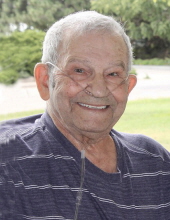
Kenneth LaVern McCoy passed away on Tuesday, September 5, 2017 at the Trego County Lemke Memorial Hospital in WaKeeney, Kansas at the age of 81. He was born on September 6, 1935 on the family farm in Graham County, Kansas to the late Johnie and Matilda “Tillie” (Tegtmeyer) McCoy. He grew up and attended school in WaKeeney. On October 24, 1954 he was united in marriage to Darlene Feezor. They were blessed with two children, Robert and Terry.
Kenneth was a hardworking man most all of his life. For many years he worked construction jobs with Deines Construction Company. He enjoyed hunting and fishing, playing cards and Bingo, and was always up for a challenge on the Snooker table. He loved spending time with his family, especially his grandkids, and great-grandkids.
Kenneth is survived by his wife Darlene of 62 years; children Robert McCoy and wife Mary Jo of WaKeeney and Terry McCoy of Eldorado; sisters Vera Deines of Hays, and Vesta Rohr and husband Dennis of Mandan, ND; six grandchildren Sara Brown and husband Nate, Kerrie Keith and husband Scott, Chad McCoy and fiance Karri, Matthew McCoy and wife Jessica, Jenna Vice and husband Nate and Nicholas; and eleven great-grandchildren; and many nieces and nephews.
He was preceded in death by his parents Johnie McCoy and Tillie Oliver; brother-in-law Donald D. Deines; and great nephew Craig Gasper.
It has been said, “Laughter is simply a smile heard out loud that echoes happiness and love.” Kenneth was a man with a huge heart. He never wasted a day without sharing joy with those closest to him, his family, friends, and neighbors. Indeed, his love and laughter echo forever in our hearts.
A Celebration of Life service is planned for 11:00 a.m. on Thursday, September 14, 2017 at the WaKeeney Church of God with Pastor Jerod Brown officiating. A private family inurnment will be held at a later date in the WaKeeney City Cemetery. Memorials are suggested to the Kenneth McCoy Memorial Fund and may be sent in care of Plumer-Overlease Funeral Home, 723 N. First St., Stockton, Kansas 67669.
Ellis County fire crews spent almost eight hours Saturday fighting a blaze in northwest Ellis County.
According to Ellis County Director of Fire and Emergency Management Darin Myers, crews were called to North County Line Road and 100th Avenue for a fire burning in a heavily wooded area Saturday.
Myers said the fire was burning into the undergrowth and up some trees about 40-feet so had to cut down several trees to help extinguish those fires.
The original cause of the fire is undetermined but Myers said it was most likely caused by a faulty power line.
Fire crews responded from Ellis, Hays, Munjor and Catharine, and were on scene for about 8 hours.
Ellis County Public Works was also called to assist in bringing water to the scene.
Alert! Alert! Alert! The USD 489 School Board has scheduled a vote this November on its humongous $78 million school bond for brick and mortar improvements to Hays schools. It’s slick, glossy four-color mailing advertising the bond election recently hit the mailboxes. The headline “Truth-in-Bonding” alludes to the Truth-in-Lending requirements that were imposed on lenders years ago whenever someone borrows money to buy a home. More on that below.
What every voting property taxpayer living in the USD 489 school district must fully understand is this: In addition to the jumbo $78 million bond, the school board members have bound every property taxpayer to pay an equally gargantuan sum of money for interest over and above bond principal. How much you ask? $75.9 million.
Add those two numbers together and voila, the $78 million bond becomes a whopping $154 million debt for property owners to pay off. Let me repeat – this school bond proposal requires a principal payment of $2.6 million and an interest payment of $2.53 million per year FOR 30 YEARS!
Make no mistake property owners, USD 489 school board members are proposing THE LARGEST PROPERTY TAX INCREASE IN THE HISTORY OF ELLIS COUNTY! And the amounts proposed in previous bond elections aren’t even in the same universe.
In the past when someone borrowed money to buy a home, they were told what the interest rate would be on their loan but not how much extra interest added to their debt over the life of the loan. So, the federal government decided there should be Truth-In-Lending. Full disclosure was necessary so the borrower could make an informed decision before they signed any loan documents. Truth-in-Bonding thus requires the following full disclosure: Property tax owners are not being asked to just approve a bond debt of $78 million, but rather a breathtaking debt of $154 million.
Yet again USD 489 board members are telling us: Just trust us with $154 million of your money because we know best, and don’t ask us where one of the new elementary schools will be located – just trust us to figure it all out after the election. Yet again the school board is assuming that no reasonable person could possibly deny the children the benefit of right sized classrooms and new brick and mortar schools. Yet again the Vision team process the school board set up to produce the bond proposal was flawed from the beginning and the viewpoint of the community at large was essentially dismissed.
How else to explain why the school board members ignored the polling results of their out of town, not disinterested, architects’ robocall poll where 60% of the respondents favored smaller, more frequent bonds and 41% wanted no more than $10 per month increase in property taxes? Or how about the Hays Post poll on June 23, 2017 (well before the school board members voted to push the monster bond forward) where, out of a total of 1,187 responses (better participation than the architect’s robocall survey) 58.37% voted NO on the $78 million bond proposal, 37.55% were in favor and 9.08% were undecided.
The NO vote, not surprisingly, represents that segment of the community of which I have attempted to give a voice over the past few months, obviously to no avail. The yes vote represents the 85% of the individuals that controlled, along with the architects, the Vision Team and the proposed bond. Apparently such facts were mere inconveniences to the school board.
One wonders how much thought, if any, the school board gave to the economic impact of a ginormous $154 million tax increase on our local economy that is staggering under the weight of low oil and ag commodity prices. How will removing $154 million of purchasing power from the local economy affect local car sales, restaurant sales, or retail sales in general (attention Hays City Commissioners!)? How will the largest property tax increase in the history of Ellis County affect seniors who own property and are on fixed incomes?
The ultimate Truth-in-Bonding is simply this: There are absolutely other options and possibilities that the Vision Team and the school board simply didn’t want to take the time to consider and explore that would cost less money to achieve and still make educational sense. The question the school board should answer is this: What harm would have come from further analysis and other options?
Tom Wasinger, Hays
TOPEKA – Approximately 3 percent of all children in Kansas under 18 are living in households where a grandparent provides that child’s primary care. In honor of grandparents who take on this tremendous responsibility, the Kansas Department for Children and Families (DCF) is celebrating them on Grandparents Day, Sept. 10.
A Topeka woman stepped forward to serve as a relative placement when her grandchildren were recently removed from their home. The grandmother says she wanted to keep the siblings together and out of a non-relative foster home. (To protect the privacy of the children, the family is not being identified.)
The Topeka woman attended a proclamation signing ceremony in August, where Governor Sam Brownback designated Sept. 10 as National Grandparents Day.
Approximately 33 percent of children currently in foster care in Kansas are being cared for by relatives, in many instances grandparents. When a child must be removed from his/her home for safety reasons, DCF and its foster care contractors make it a priority to identify relatives or known adults to the children as placement options. Children placed with grandparents or other relatives experience fewer placement moves, are more likely to be placed with siblings, and have fewer behavior problems.
“Whenever a child must be taken from their home, grandparents often provide a safe and loving alternative to reduce the trauma of being removed from their home,” DCF Secretary Phyllis Gilmore said. “As a grandparent myself, I treasure the time I can spend with my grandchildren. I am tremendously grateful to grandparents across the State of Kansas who have volunteered to provide full-time comfort and care for their grandchildren.”
The Kansas Department for Aging and Disabilities (KDADS) provides support to grandparents serving as parents through its Relatives as Parents Program (RAPP). The program was created by several agencies concerned with the welfare of older adults, children and youth.
RAPP offers support groups and referrals to community resources such as legal services, financial assistance, medical assistance, day care, emergency food, housing assistance and recreational activities for children.
For more information about RAPP, contact Sharon Dabzadeh at KDADS, by calling 785-296-4986 or 800-432-3535.
Permanent display of the Kansas Dept. of Wildlife, Parks and Tourism
KDWPT
PRATT – If you have questions about Kansas wildlife, hunting, fishing, camping, state parks, or in-state travel destinations, you’ll find answers at the Kansas State Fair, Sept. 8-17, in Hutchinson. Kansas Department of Wildlife, Parks and Tourism (KDWPT) staff will be on hand at various locations throughout the fair to talk or just hear your story.
The permanent KDWPT display – which includes aquariums full of Kansas fish and terrariums holding various live native snakes and lizards – is at the north end of the Eisenhower building. Information and Law Enforcement staff will be available to answer any question you may have about the Kansas outdoors. You can also pick up regulation pamphlets, hunting and fishing atlases, state park guides and other information materials. And if you’ve ever wondered just how big an American bison bull is, you can stand next to a full-body mount of one the Great Plains’ iconic residents.
If you really like fish, don’t miss the KDWPT mobile aquarium, which will be set up just south of the grandstands at the southeast fairgrounds entrance. Fisheries Division staff will be waiting to answer questions and provide angling tips to anyone interested in Kansas fish and fishing. The 40-foot-long, 3,200-gallon aquarium provides up-close views of many popular Kansas sport fish.
If you’ve ever thought about staying in a state park cabin, you can see the real deal at the fair. A cabin, like those available for rent in our state parks, is located on the north side of Lake Talbot. Drop by, tour the cabin, and visit with state park staff about what’s available at our 26 Kansas state parks.
And finally, step into the Pride of Kansas building and visit the KDWPT Travel and Tourism booth. Department staff will answer questions about popular Kansas destinations, day-trips, scenic byways, unique restaurants and more. You’ll find literature to help you discover places and things to do in Kansas you never imagined existed. It’s true, “there’s no place like Kansas,” or the Kansas State Fair. See you there.
I spent last week in Manhattan for a week of agent training. One amazing fact I heard from current research is that 92% of Kansans don’t eat the recommended amount of vegetables each day and 90% don’t eat enough fruit. Wow– if eating fruits and vegetables was a test, we would be flunking!
But it doesn’t have to be so hard. The specific amount of fruits and vegetables you need to eat depends on your age, sex, and level of physical activity, but an average is 1 ½ -2 cups of fruit and 2 ½ -3 cups of vegetables each day for adults (women generally need the lower amounts; men the higher amounts.)
September is Fruit and Vegetable Month, a good time to be intentional about eating plenty of these healthful foods. Just remember these two simple things which can make it easier to get the servings of fruits and vegetables you need every day– 1) fill half your plate with fruits & veggies at every eating occasion, including snacks, and 2) all forms (fresh, frozen, canned, dried and 100% juice) count toward your daily intake.
Plan to join me on Thursday, September 14 at 6:00 pm at the Hays Public Library gallery for a free program on “Fruits and Vegetables- More Matters!” I will share ways to enjoy more fruits and vegetables, along with fruit and veggie recipes for each season of the year. Learn why it is delicious, nutritious and fun to choose more fruits and vegetables in your daily meals and snacks while contributing to a longer, healthier life. Please RSVP to the Library at 785-625-9014 to ensure adequate supplies.
With over 200 different varieties of fruits and vegetables and a variety of convenient packaging to make them easy to store and serve, there’s bound to be something to please everyone. Consider these tips:
•Most frozen and canned foods are processed within hours of harvest, so their flavor and nutritional value are preserved.
•Studies show that recipes prepared with canned foods had similar nutritional values to those prepared with fresh or frozen ingredients.
•Canned foods are “cooked” prior to packaging, so they are recipe-ready.
•Frozen foods also require little preparation—washing and slicing, for instance, is already done.
So, are you ready to eat more fruits and veggies? In “top ten countdown” style, here are the top ten reasons to increase your intake of fruits and vegetables each day:
10. Color & Texture. Fruits and veggies add color, texture … and appeal … to your plate.
9. Convenience. Fruits and veggies are nutritious in any form, so they’re ready when you are.
8. Fiber. Fruits and veggies provide fiber that helps fill you up and keeps your digestive
system happy.
7. Low in Calories. Fruits and veggies are naturally low in calories.
6. May Reduce Disease Risk. Eating plenty of fruits and veggies may help reduce the risk of many diseases, including heart disease, high blood pressure, and some cancers.
5. Vitamins & Minerals. Fruits and veggies are rich in vitamins and minerals that help you feel healthy and energized.
4. Variety. Fruits and veggies are available in an almost infinite variety so there’s always
something new to try.
3. Quick, Natural Snack. Fruits and veggies are nature’s treat and easy to grab for a snack.
2. Fun to Eat! Some crunch, some squirt, some you peel, some you don’t and some grow right in your own backyard.
1. Fuits & Veggies are nutritious AND delicious!
Especially now, during Fruit and Vegetable Month in September, don’t be a statistic. Make an effort to increase your intake of fruits and veggies– because more matters!
Linda K. Beech is Cottonwood District Extension Agent for Family and Consumer Sciences.
The “Rose standards” have been a central issue to several school finance lawsuits across the country, including the current Gannon v. Kansas case. They refer to a list of seven skill sets that one court ruling said schools should help students attain. CELIA LLOPIS-JEPSEN / KANSAS NEWS SERVICE
As dozens of Kansas school districts spar with the state over funding for public education, the term “Rose standards” has emerged as arcane but critical jargon among lawyers and judges, and surfaced over and over again in court documents.
Though the term has appeared in past school finance lawsuits in the state since a March 2014 Kansas Supreme Court ruling, it is undeniably front and center in the ongoing Gannon v. Kansas wrangling.
The word “Rose” appeared 68 times in that court’s March school finance ruling, which struck down the state’s system as unconstitutional.
Now, attorneys for the state and Legislature await the court’s ruling on whether the Legislature’s $293 million funding increase to be phased in over the next two years is enough.
Below is a primer on where the Rose standards concept came from and what it means.
Where does ‘Rose’ come from?
The term refers to a 1989 ruling by the Kentucky Supreme Court in a case called Rose v. Council for Better Education that focused on whether the state was meeting its constitutional mandates regarding public education.
Scholars of education law have described Rose v. Council as a turning point in school finance litigation — one of three critical cases at the tail end of the 1980s that took a new tack. The issues at the heart of Rose have since emerged repeatedly in cases across the country.
William Thro, the general counsel for the University of Kentucky, reflected on this impact in a 2010 paper.
In other words, the court battles were no longer just about gaps between wealthier and poorer school districts. The door was open for scrutinizing overall resources and whether states were meeting their obligations to provide public education.
What does that have to do with Kansas?
Going back as far as the 1970s, lawsuits have played a key role in shaping the way Kansas funds its schools.
Rose v. Council entered the conversation at least as early as 1991 in a school finance lawsuit called Mock v. Kansas. The case was resolved before reaching trial but spurred a 1992 overhaul of the state’s school funding system.
Rose reappeared in rulings from the early and mid-2000s as part of Montoy v. Kansas. Montoy is the high-profile case that preceded Gannon v. Kansas — the current legal battle — and led to a three-year plan approved by the court in 2006 for boosting annual school funding by more than $750 million.
Like the Gannon case, Montoy wasn’t just about the question of whether poorer school districts had resources akin to wealthier ones. It explored broader obligations.
With the advent of Gannon, Rose v. Council resurfaced. Three-and-a-half years into the Gannon case, which began in 2010, the Kansas Supreme Court issued a rulingmaking clear that the question of whether the state is underfunding its public school system hinges on whether resources for schools are adequate to meet criteria identified in the Rose decision.
In the Rose ruling, the justices included a list of seven skill sets that schools should help children attain at a sufficient level:
Oral and written communication skills to enable them to function in a complex and rapidly changing civilization.
Knowledge of economic, social and political systems to enable them to make informed choices.
Understanding of governmental processes to enable them to understand the issues that affect their community, state and nation.
Self-knowledge and knowledge of their own mental and physical wellness.
Grounding in the arts to enable them to appreciate their cultural and historical heritage.
Training or preparation for advanced training in academic or vocational fields, to enable them to choose and pursue life work intelligently.
Academic or vocational skills to enable them to compete favorably with their counterparts in surrounding states, in academics or in the job market.
The Kansas State Board of Education says these standards guide its work overseeing public schools. In recent years, schools and Kansas state education officials have increasingly turned their focus to helping students acquire life skills and prepare for academics and careers after high school.
Gannon is now in its seventh year, and as recently as March, the Kansas Supreme Court ruled in the case that Kansas continues to fall short of the Rose concepts. Among other problems, the justices slammed the state for cutting the link between student enrollment and funding per school, a move that was part of a state strategy to freeze school budgets.
Kansas lawmakers voted in June to re-establish a funding formula that links dollars to factors like enrollment and phases in a two-year $293 million increase in state aid to schools.
A fresh round of oral arguments over whether this would satisfy the Rose standards took place in mid-July at the Kansas Supreme Court.
The state argued it would. The plaintiff school districts disagreed.
The parties are waiting for the justices to rule. If the plaintiffs win, it could require lawmakers to increase state aid by hundreds of millions of dollars in coming years.
Celia Llopis-Jepsen is a reporter for the Kansas News Service, a collaboration of KCUR, Kansas Public Radio and KMUW covering health, education and politics. You can reach her on Twitter @Celia_LJ.
By DIANE GASPER-O’BRIEN FHSU University Relations and Marketing
It’s not unusual to see high school students on college campuses in the summer as they attend camps ranging from athletics to music to leadership, and everything in between.
Most of those youngsters are trying to learn a little more about their areas of interest and hone their skills to take back to their high school to put into practice the next school year. But one particular camp at Fort Hays State University in 2017 featured a project that could make a big difference globally.
Students from two different countries worked on an energy research project with Dr. Arvin Cruz, associate professor of chemistry, putting in many hours in a week’s time to formulate the data on an energy project.
Now, high school students from the Kansas Academy of Mathematics and Science and the Daejeon Science High School for the Gifted in Daejeon, South Korea, will be co-authors of Cruz’s research project.
Two of those are Amelia Richter from Dodge City and Danica Kostner from Kingman, now in their second year of attending KAMS – the state’s premier residential academic high school program for juniors and seniors – housed on the Fort Hays State campus.
“There’s no way I would have had this kind of research opportunity or the chance to present in such an advanced atmosphere if I hadn’t been at KAMS,” Richter said.
“I am really looking forward to working with Dr. Cruz more,” she said. “This semester, we are going to optimize and perfect (the project).”
Kostner agreed, saying that working on the research project – and her experience in KAMS in general – have “changed my life.”
“I wasn’t very good at speaking up, and I was forced out of my shell here,” she said.
“I have gained so much by being here at KAMS,” added Kostner, who plans to continue her education at FHSU after graduating from KAMS next spring. “Doing research with professors who have done this for a long time is the best thing I could have asked for.”
Richter and Kostner, along with KAMS classmate Alli Depew from Wichita, will join Cruz in presenting initial research findings regarding solar conversion which were derived from work at the summer camp. Their research paper has been personally invited by the organizers of the 2017 Rocky Mountain Regional Meeting of the American Chemical Society in Loveland, Colo., in October.
Dr. Roger Schieferecke, director of KAMS, said that Myunghee Choi, head teacher of the International Relations Department at the Daejeon school, told him that some of the students coming to FHSU for this summer’s trip were interested in chemistry. He knew right where to turn for help.
“I had worked with Dr. Cruz before on some summer camps,” Schieferecke said. “I knew he would be very excited about the project and engaged with the students. I knew he would take it and run with it.”
A second research paper that was part of the research camp on energy is titled “Soxhlet Extraction of Avocado Endocarp and Trituration of Avocado Mesocarp for Biodiesel Production.” In layman’s terms, that means converting the chemicals extracted from the seed and the meat of an avocado into a biofuel.
The primary student author of this project – which will be presented at the 2017 Midwest Regional Meeting of the ACC in Lawrence, also in October – is Marissa Carman, a former KAMS student from Wellsville who now attends FHSU as a biology major. Cruz also added two Korean students who put in an extraordinary amount of work and interest in the project as co-authors.
One of those, Sim Woo Bae, said he would like to major in environmental studies in college and thoroughly enjoyed the summer trip to FHSU. He wants to publish the paper in his school’s newspaper back in Korea.
“I thought this was a great experience,” Woo Bae said during the group’s last night in Hays. “I am really interested in the environment, and Dr. Cruz taught me a lot about environmental issues.”
The week-long event was the fourth of its kind involving students from the Daejeon school and KAMS. Daejeon students also visited FHSU last year, and KAMS students have been to Korea twice.
This partnership is just one of many opportunities available to KAMS students while living on the Fort Hays State campus.
Those attending KAMS have the opportunity to be involved with clubs and organizations on campus. Now, a group of them gets to participate in a global research project.
“This is a chance for students to be exposed to research activities involving chemistry, and they are helping with the presentation,” Cruz said. “We are exposing them to why we are doing what we are doing, the broader impact on the world. Everybody is benefitting here.”
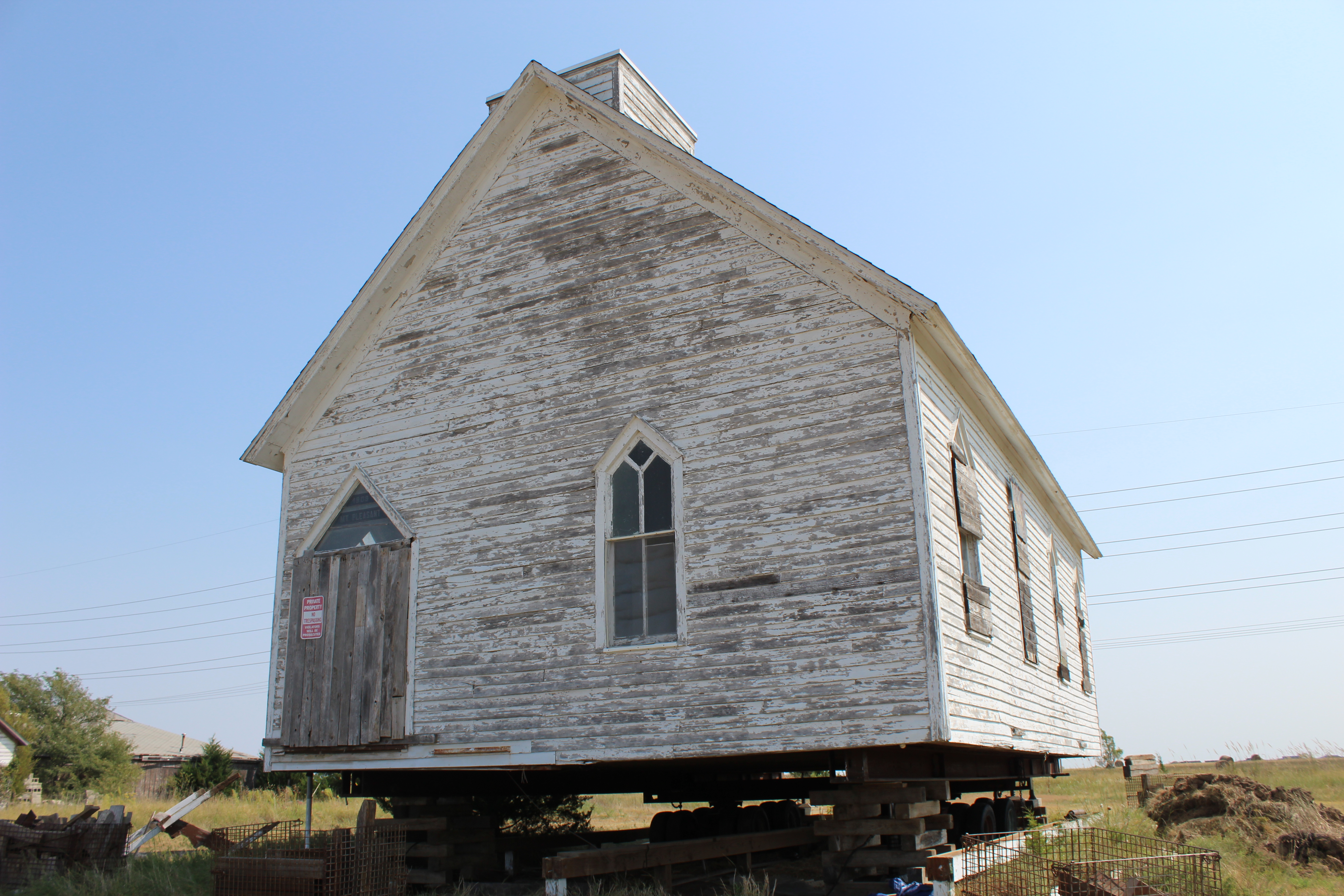
A 108-year-old church located off the Hays bypass is scheduled to be lifted off its foundation and moved on Monday to Rock Haven Spa.
The church is part of a defunct tourist attraction, but before it was located there in 1990, it served as the meeting place for a rural congregation in Graham County.
Dereama Allenbaugh, owner of Rock Haven Spa, said she plans to restore the church if the building survives the 15-mile move to its new location.
The building still retains many of its original features, including hard-wood floors, but has been heavily vandalized over the years.
“It is quite a task to move an old building,” she said. “Once it’s off the main road, I was told it could take three days to bring it through the pastures.”
Midwest Energy Crews will be involved in the move, as power lines will have to be lifted to allow the church to pass. The steeple has already been removed to make this process easier.
Some of the lines may be able to be lifted live. If not, there might be a short-term power outage of about 15 minutes for people in the immediate area while the power lines are taken down and reconnected, according to Midwest Energy.
“I have good thoughts and high hopes and my fingers crossed that it makes it down the highway,” Allenbaugh said. If you want to help, please wish it safe passage.”
Allenbaugh said she will release more information on the plans for the building at Rock Haven once it has arrived and been placed safely on its new foundation.
“It is a charming building,” she said. “I hope it can be used again.”
ANDERSON COUNTY — A Kansas man died in an accident just before 9p.m. Saturday in Anderson County.
The Kansas Highway Patrol reported a 2006 Lincoln Navigator driven by Rebecca L. Brown, 42, Garnett, was westbound on 2000 Road at U.S. 169.
The driver failed to stop at a stop sign and collided with a 2011 Harley Davidson Motorcycle driven by Flint A. Macklin, 42, Kincaid, that was northbound on U.S. 169.
Macklin was thrown from the bike into the southbound lane of the highway. He was pronounced dead at the scene.
Brown was transported to Research Medical Center. A 12-year-old in the SUV was not injured.
Brown was not wearing a seat belt, according to the KHP.



 Kenneth was a hardworking man most all of his life. For many years he worked construction jobs with Deines Construction Company. He enjoyed hunting and fishing, playing cards and Bingo, and was always up for a challenge on the Snooker table. He loved spending time with his family, especially his grandkids, and great-grandkids.







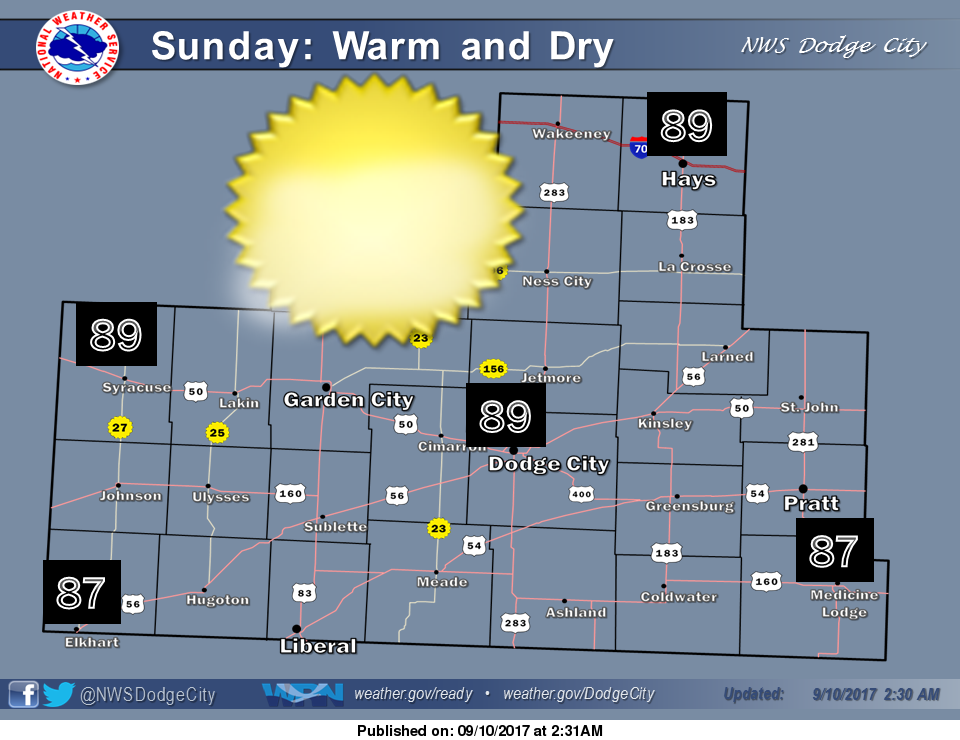
 Today
Today