LIBERAL, Kan.-Hays High came up just short of winning the Western Athletic Conference title for the first time since 1994. The Lady Indians picked up straight set victories over Liberal (27-25, 25-22), Dodge City (25-15, 25-22) and Great Bend (25-15, 27-25). The lone loss for Hays came in a straight set loss to Garden City (20-25, 14-25). The Lady Indians went 3-1 on the day and finished in second place.
Hays High, ranked 7th in Class 4A-DI, improves to 24-7 on the season and will play in Maize on Tuesday before heading to Ulysses for Sub-State next Saturday.
EDWARDS COUNTY — Two people were injured in an accident just before 11a.m. Saturday in Edwards County.
The Kansas Highway Patrol reported a 1999 Buick Century driven by David Castro Vasquez, 27, Dodge City was eastbound on U.S. 56 inside the city limits of Kinsley.
The Buick struck the rear of a camper pulled by a 2010 Dodge pickup and driven by Timothy Faggionato, 57, Willow Alaska.
The Buick fled the scene and Faggionato followed the Buick after calling law enforcement officers.
Authorities located the Buick a residence in Kinsley.
Vasquez and a passenger Sandy Vanessa Gonzalez, 27, Dodge City, were transported to Edwards County Hospital. They were not wearing seat belts at the time of the crash, according to the KHP.
Faggionato was not injured.
The KHP did not release possible charges against the driver for leaving the scene of the accident.
WASHINGTON —President Donald Trump’s decision to end a provision of the Affordable Care Act that was benefiting roughly 6 million Americans helps fulfill a campaign promise, but it also risks harming some of the very people who helped him win the presidency.
An analysis by The Associated Press found that nearly 70 percent of those benefiting from the so-called cost-sharing subsidies live in states Trump won last November.
The number underscores the political risk for Trump and his party, which could end up owning the blame for increased costs and chaos in the insurance marketplace.
The subsidies are paid to insurers by the federal government to help lower consumers’ deductibles and co-pays. To make up for the lost funding, insurers will have to raise premiums substantially, potentially putting coverage out of reach for many.
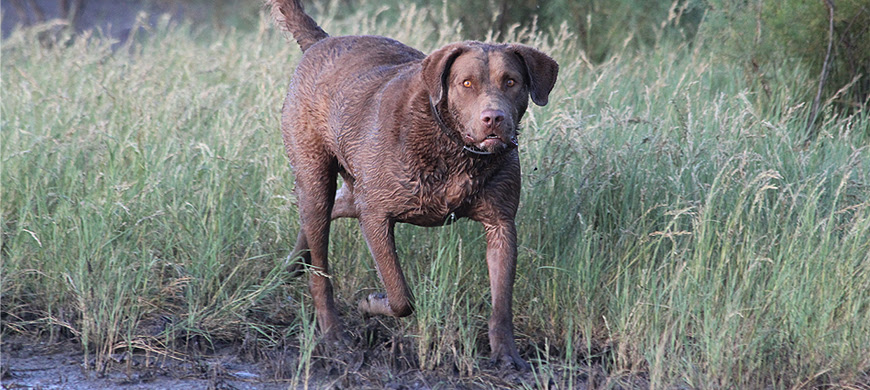
TOPEKA – For duck hunters and their dogs, wading through mucky water is part of the experience, but one type of “muck” can be especially dangerous for four-legged hunting partners – harmful algae blooms (HAB). A HAB may look like foam, scum or paint floating on the water and be colored blue, bright green, brown or red. This season, if the water appears suspicious or there is decaying algae on the shore, hunters are urged to avoid contact and keep their dogs away. Dogs that swim in or drink water affected by a HAB or eat dried algae along the shore can become seriously ill or die.
Blue-green algae are really a type of bacteria called “cyanobacteria,” which occurs naturally in all of our waters. Under the right conditions, the algae can rapidly increase (bloom) and produce toxins. Although HABs typically begin in May, they can occur through October or later. HABs generally coincide with longer days and warm water temperatures and often flourish in nutrient-laden waters. However, dead algae can wash up on shorelines and in marshy areas and persist for long periods – posing a risk to dogs that eat or drink the algae or ingest it while licking their fur.
Dogs are usually exposed to the toxins by drinking the HAB-affected water. However, they may still be exposed if they walk on, roll in or eat decaying algae along the shore or retrieve a bird with algae on its feathers.
The signs of illness in dogs usually occur within 30 minutes of exposure and include vomiting, diarrhea, lethargy, convulsions, difficulty breathing and general weakness. If your dog has ingested algae, or has any of these signs after exposure, contact your veterinarian immediately as HAB poisoning can quickly lead to death.
People may also become ill after contact with algae-produced toxins. Symptoms vary, depending upon the type of exposure (e.g. direct contact, ingestion, inhalation) but can include rash, vomiting, diarrhea, fever, sore throat, and headache. If you, or your dog, come into contact with algae, rinse the area with clean, fresh water.
The Kansas Department of Health and Environment (KDHE) samples publicly-accessible bodies of water for cyanobacteria when the agency is alerted to a potential HAB. When a HAB occurs, KDHE, in cooperation with the Kansas Department of Wildlife, Parks and Tourism and other lake managers where appropriate, responds by informing the public of these conditions. KDHE does not sample private bodies of water such as farm ponds or livestock watering tanks.
For the most up-to-date list of waters currently experiencing HABs, or to report a suspected HAB not currently listed, visit www.kdheks.gov/algae-illness. Hunters and the general public can also access current lake conditions by calling 1-855-HAB-LAKE (1-855-422-5253).
LAWRENCE, Kan. (AP) — A recent cybersecurity breach has a University of Kansas faculty group concerned that it could lead to other attacks, not just at the university, but across higher education.
The Lawrence Journal-World reports that aerospace engineering professor Ron Barrett-Gonzalez says an apparently disgruntled engineering student carried out the hack during the 2016-17 academic year. Barrett-Gonzalez says details of the hack were shared publicly at a School of Engineering Senate meeting last week.
The student in question had allegedly used a keystroke logger to gain faculty members’ login information and passwords and changed his failing grades to As. Keystroke loggers are often used by cybercriminals to steal personal information from public computers and keyboards.
University officials confirmed that a security breach took place but said the attack “was minimal and caught quickly.”
NEW YORK – The global smart food labels market is segmented into technology such as RFID (Radio-Frequency Identification) labels and sensing labels. Additionally, RFID segment is further sub-segmented into low frequency (LF) RFID, high frequency (HF) RFID and ultra-high frequency (UHF) RFID. Moreover, high frequency (HF) RFID segment is projected to showcase a significant growth over the forecast period. Further, the growth of this segment is riding on the back of rising adoption of innovative technology by food industry to provide detail of the food item.
Global smart food labels market is expected to register a 15.2% CAGR over the forecast period. Moreover, the global smart food labels market is projected to expand at a exponential revenue during the forecast period i.e. 2017-2024. The market is expected to expand on the back of rising development of smart infrastructure in developing nations such as China, India and others.
Sensing labels segment by technology is believed to showcase a considerable CAGR during the forecast period. Moreover, North America region accounted the largest market for smart food labels in terms of revenue in 2016. In addition to this, smart food labels market in North America region is expanding due to the presence of major key vendors such as Qliktag. Further, Europe region captured the second largest market of smart food labels owing to rapid urbanization and growing use of digital technology by food manufactures for labeling of food products.
Technological advancement in food labeling
Growing adoption of innovative technology by food industry to provide each and every detail of the food item to its consumer is projected to be the dynamic factor behind the rapid growth of smart food label market. Moreover, rising demand by consumer for proper labeling of food item and growing concern among the consumers regarding food quality are some of the factors propelling the growth smart food label market.
Digitization of Food industry
Spiked penetration of smart technology and robust expansion of smart infrastructure in developed and developing nations are fostering the demand for smart food labels around the globe. Furthermore, guidelines by government to provide labeling on the food item is predicted to bolster the growth of smart food labels market by 2024.
On the contrary, high cost associated with smart food labels is believed to dampen the growth of smart food labels market. Further, less adoption of smart technology in underdeveloped nations is also projected to hinder the growth of smart food labels market.
The report titled “Smart Food Labels Market: Global Demand Analysis & Opportunity Outlook 2024” delivers detailed overview of the global smart food labels market in terms of market segmentation by technology and by region.
Further, for the in-depth analysis, the report encompasses the industry growth drivers, restraints, supply and demand risk, market attractiveness, BPS analysis and Porter’s five force model.
This report also provides the existing competitive scenario of some of the key players of the global smart food labels market which includes company profiling of Qliktag, Smartlabel, Avery Dennison, Labelinsight, Thin Film Electronics ASA, Uwitechnology and ABR. The profiling enfolds key information of the companies which encompasses business overview, products and services, key financials and recent news and developments. On the whole, the report depicts detailed overview of the global smart food labels market that will help industry consultants, equipment manufacturers, existing players searching for expansion opportunities, new players searching possibilities and other stakeholders to align their market centric strategies according to the ongoing and expected trends in the future.
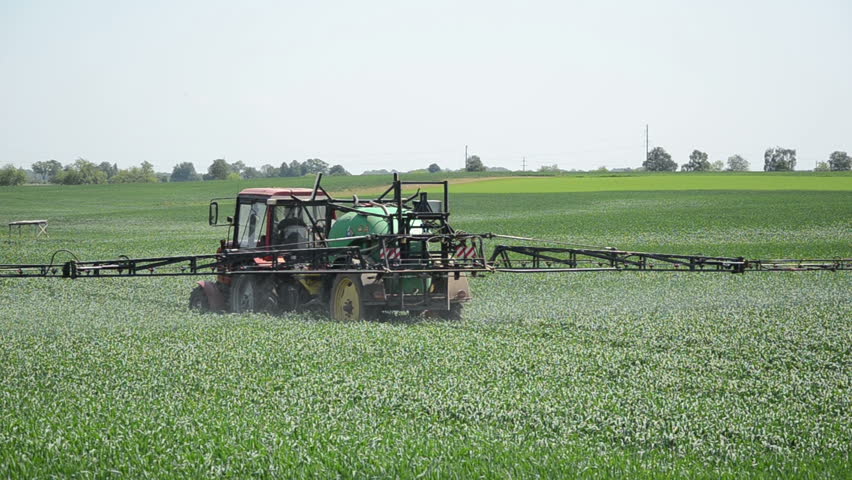
WASHINGTON – EPA has reached an agreement with Monsanto, BASF and DuPont on measures to further minimize the potential for drift to damage neighboring crops from the use of dicamba formulations used to control weeds in genetically modified cotton and soybeans. New requirements for the use of dicamba “over the top” (application to growing plants) will allow farmers to make informed choices for seed purchases for the 2018 growing season.
“Today’s actions are the result of intensive, collaborative efforts, working side by side with the states and university scientists from across the nation who have first-hand knowledge of the problem and workable solutions,” said EPA Administrator Scott Pruitt. “Our collective efforts with our state partners ensure we are relying on the best, on-the-ground, information.”
In a series of discussions, EPA worked cooperatively with states, land-grant universities, and the pesticide manufacturers to examine the underlying causes of recent crop damage in the farm belt and southeast. EPA carefully reviewed the available information and developed tangible changes to be implemented during the 2018 growing season. This is an example of cooperative federalism that leads to workable national-level solutions.
Manufacturers have voluntarily agreed to label changes that impose additional requirements for “over the top” use of these products next year including:
Classifying products as “restricted use,” permitting only certified applicators with special training, and those under their supervision, to apply them; dicamba-specific training for all certified applicators to reinforce proper use;
Requiring farmers to maintain specific records regarding the use of these products to improve compliance with label restrictions;
Limiting applications to when maximum wind speeds are below 10 mph (from 15 mph) to reduce potential spray drift;
Reducing the times during the day when applications can occur;
Including tank clean-out language to prevent cross contamination; and
Enhancing susceptible crop language and record keeping with sensitive crop registries to increase awareness of risk to especially sensitive crops nearby.
Manufacturers have agreed to a process to get the revised labels into the hands of farmers in time for the 2018 use season. EPA will monitor the success of these changes to help inform our decision whether to allow the continued “over the top” use of dicamba beyond the 2018 growing season. When EPA registered these products, it set the registrations to expire in 2 years to allow EPA to change the registration, if necessary.
There’s only one appropriate, spirit-of-freedom response to the “Trump tweet” on Wednesday asking when it’s “appropriate” for the government to punish NBC News for a story the president didn’t like:
Never. And yes, the repetition of “appropriate” and the use of italics are for emphasis.
Trump is disputing an NBC report earlier in the day — based on interviews with three officials in the room at the time — that during a July meeting Trump had proposed a massive increase in the country’s nuclear arsenal, which critics immediately pounced on as evidence he was naive and ignorant of the cost, policy and treaty barriers to such an increase.
“With all of the Fake News coming out of NBC and the Networks, at what point is it appropriate to challenge their License? Bad for country!” the president tweeted.
No — what’s bad for the country is for a president to threaten a news organization over a story that offended him — and about which it should be noted, the White House did not offer evidence or witnesses to discredit.
NBC, to its credit, also reported that no action was taken on Trump’s alleged proposal to increase by tenfold the aging U.S. nuclear arsenal of some 7,000 warheads. Trump supporters said it was likely he was only raising a “provocative” idea to prompt responses from his military advisers — which they said is in line with his combative management style.
True or disputed, style or substance, there’s no room in any president’s vocabulary for words that would try to put a news outlet out of business for a report. Criticize, call out or condemn — all fair game, and all tactics that Trump has used frequently to counter news accounts he does not like, even during his campaign and his previous careers in reality TV and real estate.
So far, Trump’s most heated attacks on journalists or news operations have been more hot air than real fire. But raising the idea of a direct challenge on news networks’ licenses crosses the line from complaint to a threat of government censorship.
It’s not that Trump has no effective means to get his version of things to the public. His tweets regularly reach millions of people, and he has the “bully pulpit” of his office, which means he can grab headlines by simply deciding to do so.
The tweet on challenging licenses is simply a step too far for the leader of a democratic nation, whether he or one of his surrogates takes on the task. Not that he is the first president to consider doing so: Richard Nixon, deep in the pit of the Watergate scandal, discussed going after the licenses of a station owned by the Washington Post Co. and Newsweek because of the Post’s aggressive reporting. Two challenges were later mounted by individuals close to Nixon, but not directly tied to the White House, according to the Post in a story published after Trump’s Wednesday tweet. But, that story noted, “The difference here is that Nixon talked about the scheme only privately.”
We’ve been down this road before, and rejected the idea of a subservient press beholden to government at any level. In 1798, eight years after adopting the Bill of Rights (which includes the First Amendment) Congress passed the Sedition Act, making it a crime to criticize the president or Congress. Some 20 editors were jailed, but the nation recoiled at the crackdown on free speech and the press, even reelecting one editor, Matthew Lyon of Vermont, to Congress while he was behind bars.
The law faded from the books in 1801, and some historians and First Amendment advocates say the experience “inoculated” the country from such overt attempts to muzzle what the nation’s founders protected as the “watchdog on government.”
George Washington is said to have decided against seeking another term because of harsh press criticism, and John Adams suffered from insults ranging from “balding head royalist” to words we hesitate to use publicly today. Lincoln briefly jailed so-called “Copperhead” editors whom he saw as Confederate sympathizers — but the action is considered a stain on the record of the Great Emancipator, even though he said at the time it was because the editors were encouraging riots and attacks on Union troops.
Going after the business and government licenses of news operations in order to silence critics would echo the strong-arm tactics of the worst dictatorial nations today, something that we see in nations such as Turkey and Eritrea. Joel Simon, head of the worldwide press freedom group Committee to Protect Journalists, coined a word several years ago to describe elected leaders who eschewed jailing or murdering journalists they disliked: a “Democrator.”
Trump has every right to respond to critics and stories he thinks are unfair, inaccurate or insulting. But the “licenses” tweet is not merely unpresidential, it’s undemocratic and unpatriotic. We’ve made it as a nation since 1776 without the official licensing of printers and publications that was in place under the English king, so let’s not start now.
A suggestion to Trump: Feeling frustrated and “demeaned?” Why not just tweet about it?
Gene Policinski is chief operating officer of the Newseum Institute and senior vice president of the Institute’s First Amendment Center. He can be reached at [email protected]. Follow him on Twitter: @genefac
COWLEY COUNTY — Law enforcement authorities are investigating a Kansas high school teacher for an alleged unlawful relationship with a student.
On Friday, police arrested 27-year-old Ethan Dane Huff after report of the relationship with a 17-year-old student and an investigation to established probable cause, according to a media release.
He was booked into the Cowley County Jail on a $10,000 Bond on suspicion of unlawful sexual relations.
According to the school newspaper, Huff taught history at Arkansas City High School.
Listen to Mike Cooper interviewing Crystal Parker, P.A. and Terry Siek, R.N. from the Convenient Care Clinic at HaysMed by clicking the link above and then clicking the play button
Developmental Services of Northwest Kansas will host its 50th Anniversary Awards Banquet on Tuesday, October 17, 2017 at 6:00 p.m. The event will take place in the Schenk Building at the Ellis County Fairgrounds in Hays.
This year, DSNWK is proud to announce that former President and CEO James Blume will be the featured speaker.
Awards will be presented to DSNWK employees for years of service with one receiving the Employee of the Year honor. Recognition will also be made for the achievements made by men and women in DSNWK services. These awards will be for employment and independent living accomplishments, with special awards given for individual achievement.
DSNWK will also present awards to several community members for their support of people with disabilities through opportunities in employment and other community support.
For more information contact Steve Keil, DSNWK Director of Development at 785-625-5678.
LAWRENCE— This fall, the Kansas Honors Program, a longstanding tradition of the University of Kansas Alumni Association and KU Endowment, will honor more than 3,600 high school seniors throughout Kansas for their academic excellence and achievement.
The Alumni Association has implemented several changes to the program this year, including reducing the number of ceremonies from 36 to 12. These changes will ultimately provide greater flexibility for students and their families, reduce program expenses, and allow the University and the Alumni Association to create more scholarship opportunities.
“Our national Board of Directors, staff and campus partners spent a great deal of time and effort evaluating the program,” said Heath Peterson, president of the Alumni Association. “Our primary two goals were to preserve the recognition of academic excellence in multiple ways and evolve the program to better position its long-term sustainability.”
Scholars and their families are invited to attend any of the 12 regional ceremonies that is most convenient in terms of date and location. Ceremonies will occur in:
All Kansas Honor Scholars are invited to visit KU on Crimson & Blue Day on Friday, Oct. 13, and attend the Lawrence Kansas Honor Scholar ceremony at 4 p.m. at the Lied Center. The featured speaker will be Chancellor Douglas A. Girod.
Ceremonies will include speakers, recognition of the scholars, and a reception for scholars, families, school administrators and alumni. During the ceremony, students will receive distinctive Kansas Honor Scholar medallions that can be worn at their local graduations or recognition events. In addition, the Alumni Association will mail certificates to all high schools for distribution to all 3,600 Kansas Honor Scholars. For more information and to register online, visit kualumni.org/khs.
Since 1971 the Alumni Association has honored more than 135,000 high school seniors for ranking academically in the top 10 percent of their class. The Kansas Honors Program is made possible by KU Endowment, alumni donations and proceeds from the Alumni Association’s Jayhawk license plate program.













 Listen to Mike Cooper interviewing Crystal Parker, P.A. and Terry Siek, R.N. from the Convenient Care Clinic at HaysMed by clicking the link above and then clicking the play button