We have a brand new updated website! Click here to check it out!

KBI investigating death of SW Kansas toddler

GRANT COUNTY– Law enforcement authorities are investigating the death of a toddler.

The Kansas Bureau of Investigation (KBI), the Ulysses Police Department, and the Grant County Sheriff’s Office are investigating the circumstances surrounding the death of a one-year-old from Ulysses.

Just before 11:30 a.m. Monday, Oct. 2, police received a call reporting an unresponsive male toddler at 819 N. Stever, in Ulysses, according to a media release.

After law enforcement and EMS responded, Jaxon Silva, age 13 months, was transported by ambulance to Bob Wilson Memorial Grant County Hospital in Ulysses. He was later flown to Wesley Medical Center in Wichita.

The KBI responded after the Ulysses Police Department requested assistance with the investigation at approximatley 1:30 p.m. Monday, Oct. 2.

On Friday night, Oct. 6, Jaxon Silva was declared brain dead as a result of his injuries. An autopsy will be conducted early this week.


Girl Scouts to have sign up, fall activities at Hays Market Saturday

Hays Post

The Girl Scouts of the Kansas Heartland will have an onsite sign up between 7:30 and 11 a.m. Saturday at the Downtown Hays Market.

Girl Scout representatives will be on hand to walk parents and their daughters through the online sign up. There is a $25 membership fee, but scholarships are available for families in need.

Girls and their parents will be able to choose the troop they wish to be paired with at sign up.

This year’s Scouting theme is “Stand Up, Stand Out.”

For more information or to sign up online, go to kansasgirlscouts.org. You may also contact Alma at 785-625-5671.

The Girl Scouts will also have games and activities at the market on Saturday.

Police: Kansas man jailed for fatal DUI crash

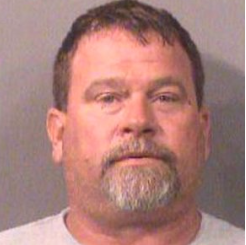
Omar -photo Finney Co.

FINNEY COUNTY — Law enforcement authorities are investigating a fatal accident and have made an arrest.

Just before 7 p.m. Sunday,  police were called to the 2400 block of Fleming Street in Garden City. for a reported injury accident involving a car and a motorcycle. When Officers arrived on the scene, they located Robert Becker, 67, of Garden City deceased, according to a media release.

The investigation revealed that Becker was driving a blue 2009 Kawasaki motorcycle southbound on Fleming Street.

Traveling south behind Becker was a black 2002 Jeep Liberty driven by Bashir Omar, 31, of Garden City.

Witnesses on scene observed the Jeep rear end the motorcycle as they both traveled south causing the motorcycle to crash.

After contact with Bashir, he showed signs of impairment, according to police. He was arrested and booked into the Finney County Jail on for alleged 2nd Degree Murder (reckless), Driving Under the Influence, and Reckless Driving.

Police believed there were multiple witnesses to this incident. The Garden City Police Department is requesting assistance from the community. If you witnessed this incident, or have information related to this incident, you should call the Garden City Police Department (620) 276-1300, If you wish to remain anonymous you can call Crime Stoppers (620) 275-7807, or text your tip to Garden City PD, text GCTIP and your tip to Tip411 (847411).

Baby Red Panda at Kansas zoo has died

photo courtesy Lee Richardson Zoo

FINNEY COUNTY — Southwest Kansas residents and staff at the Lee Richardson Zoo are mourning the loss of a red panda cub.

On Friday, veterinary and animal care staff at Lee Richardson Zoo made the painful decision to euthanize the smallest of the three red panda cubs born August 12, according to a social media report.

On October 2 while monitoring the cubs, animal care staff noted that one was losing weight rather than gaining and lagging substantially behind his brothers. Staff planned supplemental feedings and prepared formula. But when staff were next able to separate the cubs from their mother to provide the first extra feeding on Tuesday, the smallest cub was in crisis. He was moved to the veterinary clinic for tube feeding and attention to a an injury.

“The littlest red panda gave all he had as did veterinary and animal care staff but it just wasn’t enough,” said Sarah Colman, General Curator.

“The littlest one may have only been with us for a little while, but it hurts to have lost him. The two other cubs are doing well. One is big for his age, and the other is gaining weight more quickly than he was, since there’s less competition.”

Mother and cubs are indoors, where they will most likely stay until later this month or early November based on when Ember has elected to go outside with her previous litters.

Until then, footage of mom and cubs will be on the zoo’s website, the zoo Facebook page and YouTube channel, as well as local cable channel 8 in southwest Kansas.

Tiger football jumps into top 10 of AFCA Poll

WACO, Texas – Fort Hays State continued its ascent in the latest AFCA Division II Poll, released on Monday (Oct. 9). The Tigers moved up three more spots, now in the top 10 at No. 8. Fort Hays State is out to a 6-0 start on the season after pulling out a thrilling 21-17 win over Pittsburg State on Homecoming this past weekend in Hays.

The Tigers are now approaching their highest ranking ever in an official NCAA Division II Poll. The highest mark was a No. 6 ranking in the September 16th poll of 1996, organized by the NCAA Football Committee at that time. The AFCA Poll did not take over as the official poll until 2000. This is the highest ranking for the Tigers since holding the No. 8 ranking in the preseason poll of the 1996 season.

Continuing their rise in the poll will not be easy for the Tigers with a 5-1 Washburn team coming to Hays this weekend. The Ichabods remain among the top receiving vote teams in the poll. Northwest Missouri State continued its reign at No. 1 with a 36th consecutive victory. The two-time defending national champs defeated Central Oklahoma 17-10 this past Saturday. Both FHSU and Northwest Missouri are 6-0, with Washburn one game back in third place in the MIAA standings. Central Missouri is also receiving votes in the poll, with its two losses to Fort Hays State and Northwest Missouri.

Below is the AFCA Poll for October 9.

Rank School (1st votes) Rec. Pts. Prev.
1. Northwest Missouri St. (34) 6-0 850 1
2. Shepherd (W.Va.) 5-0 797 3
3. Indiana (Pa.) 6-0 780 4
4. Minnesota St. 6-0 750 5
5. Indianapolis (Ind.) 6-0 688 7
6. Midwestern St. (Texas) 4-0 682 10
7. Grand Valley St. (Mich.) 5-1 615 8
8. Fort Hays St. (Kan.) 6-0 600 11
9. Slippery Rock (Pa.) 6-0 516 12
10. Central Washington 6-0 507 13
11. Texas A&M-Commerce 4-1 483 2
12. Colorado St.-Pueblo 5-1 417 14
13. Winona St. (Minn.) 6-0 367 22
14. Bowie St. (Md.) 6-0 358 19
15. Ferris St. (Mich.) 4-1 356 15
16. Ashland (Ohio) 5-1 319 18
17. Assumption (Mass.) 5-0 306 20
18. Sioux Falls (S.D.) 5-1 287 6
19. Southeastern Oklahoma St. 6-0 223 23
20. Colorado Mesa 5-1 216 21
21. Delta St. (Miss.) 5-1 206 9
22. West Georgia 5-1 175 25
23. West Alabama 5-1 172 NR
24. Wingate (N.C.) 5-0 88 NR
25. Humboldt St. (Calif.) 4-1 82 17

Others Receiving Votes: California (Pa.), 43; Virginia St., 39; Washburn (Kan.), 35; Central Missouri, 22; West Chester (Pa.), 22; Azusa Pacific (Calif.), 18; Eastern New Mexico, 17; Catawba (N.C.), 10; Notre Dame (Ohio), 3; Arkansas Tech, 1.

🎥 Tiger Village dedication includes national award for fraternity

FHSU Tiger Village

By BECKY KISER
Hays Post

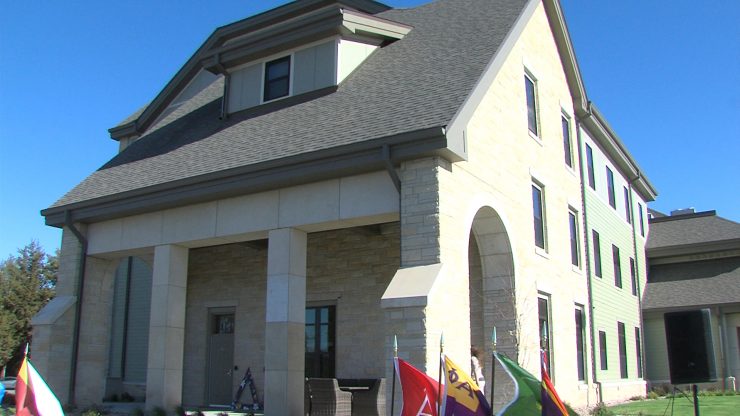
Another new building was dedicated Saturday morning on the campus of Fort Hays State University.

Tiger Village is the new home to two sororities, Delta Zeta and Sigma Sigma Sigma, the Sigma Phi Epsilon fraternity and the Second Year Experience Learning Community for sophomore students.

During Saturday’s dedication as part of Fort Hays State homecoming, an announcement was made by Dr. Joey Linn, vice-president for Student Affairs on half of the Sigma Phi Epsilon national headquarters. Reading from a letter, Linn told the crowd the FHSU fraternity has received the national Cornerstone Award from Sigma Phi Epsilon.

“The award is given to both the alumni and the undergraduate chapter together. With the leadership of the university, they found a creative solution to their local housing needs,” Linn read.

“During the 2011 Sig Ep conclave in Phoenix, Arizona, several alumni discussed the situation and realized that the model learning community being developed by the university was closely aligned with Sig Ep’s ‘Balanced Man’ program and residential learning community concept. The alumni were seeking to build a chapter house that would be a substance-free home with a dedicated study space that administrators, alumni, parents and students could all be proud of.

The audience at the dedication of FHSU Tiger Village included local sorority and fraternity members, Greek alumni, and regional and national officers.

“The brothers, many of who happened to be faculty, staff and administrators at this great university, approached the FHSU officials, donors and alumni who also saw the parallels between their goals and the fraternity’s. And so the groups decided to partner to develop a new facility.

Steve Shields, Manhattan, co-chair of FHSU Journey fundraising campaign and member of Sigma Phi Epsilon fraternity.

“A few of the Sig Eps at Fort Hays State that were instrumental in turning this dream into reality were then-university-president Ed Hammond, Foundation President Jason Williby, former director of the Center for Student Involvement Vince Bowhay, and Steve Shields, co-chair of the Journey Campaign.

“Sig Ep is proud to be a valued partner in higher education and is honored to be partnering with Fort Hays State University. It is important to Sig Eps of all ages that new housing projects be substance free and conducive to upholding our core values of virtue, diligence and brotherly love. This facility reinforces that we are not ‘Animal House’, but through the ‘Balanced Man’ program we are building values-driven young men into community leaders,” Linn concluded.

Hammond, Williby and Shields were in the audience for the dedication.

Dane Murzy, Denver

Sophomore Dane Murzy, Denver, is majoring in organizational leadership and is a member of the Sigma Phi Epsilon. Murzy spoke to the crowd, saying the new house has made him and his fraternity brothers better.

“Not only has it made us grateful for the generous donations and work that helped make this building a reality, it has helped us live our virtues to a greater extent and therefore become better ‘Balanced Men.’ My brothers in my chapter have shown this by helping with services projects with the sororities in our building, and by being gentlemen when involved in campus activities, among other things.”

Murzy explained some brothers in the house are “tasked with room checks, making sure we are as tidy as we can be,” which drew a gentle laugh from the audience. “And we make sure to remind each other to clean and put away the dishes after each use.” The crowd laughed again. “That last example may need some work,” Murzy admitted with a smile, “but we have constantly been improving.” The Sig Eps also have study nights in the house.

Raenee Patterson, Norton

Other student speakers were Raenee Patterson, a Norton sophomore majoring in organizational leadership, who is a member of Delta Zeta; Reilly Frank, Elbert, Colorado, a junior majoring in social work and political science and a member of Sigma Sigma Sigma; and Liberal sophomore Preston Pittman, a criminal justice major, and member of the Second Year Experience Learning Community.

The flags of each Greek community were flying behind the speaker podium. “Why don’t we have a flag?” Pittman joked as he began his speech.

Reilly Frank, Elbert, Colorado

Construction of the 31,000-square-foot, three-story building began in the spring of 2016 and the project was completed in July 2017.

Each of the four communities has a private entrance, lounge, kitchen, beds for 24 residents, private bathrooms and storage space. All residents share meeting rooms and laundry facilities.

Preston Pittman, Liberal

Tiger Village is located on the south end of Lewis Field Stadium.

5 Reasons The Kan. Supreme Court Found The State’s School Funding Unconstitutional

Last week the state lost again at the Kansas Supreme Court, which unanimously ruled that Kansas is underfunding its public schools, with repercussions for academically struggling children across the state — and especially for students and taxpayers who live in resource-poor school districts.

Because it’s just the latest in a string of similar decisions, the ruling means Kansas, in the eyes of its courts, has been unconstitutionally funding public schools for most of the past decade and a half.

Here are five key messages the justices had for the Legislature and the state of Kansas in the decision.

You can’t give extra money to Blue Valley and De Soto but no one else. 

This spring Kansas lawmakers added nearly $300 million to spending on public schools, to be phased in over the next two years. Tucked into that was a combined $2 million for Blue Valley and De Soto school districts to serve more children from low-income families than those districts actually enroll.

So why did the two Johnson County districts get money for nonexistent students while other districts didn’t? The state argued that districts with a low percentage of children from low-income backgrounds still have their share of kids who are struggling academically. Hence, they should get a cushion of extra funding to serve those academically struggling kids.

That didn’t fly with the justices, who pointed out that districts across the state may face similar situations — there are nearly 40,000 Kansas public school students who are academically struggling yet don’t come from low-income families.

The implication: If Blue Valley and De Soto get extra money for kids in that category, other districts should too.

You can’t let some school districts hike the amount of money they raise through property taxes but make other districts face public protest petitions and elections before they can do the same thing. 

During recent repeated revisions to school finance laws, the Legislature allowed some districts to enlarge one part of their budgets that comes primarily from local taxpayers — without having to face protests from those taxpayers. Not all the districts fit the Legislature’s criteria for doing so, but among those that did, dozens jumped at the opportunity.

Then the Legislature closed this window and grandfathered in those districts.

That’s not fair, the justices concluded. It denies the rest of the state’s schools equal access to funding.

Your new rules for paying electricity and insurance bills are unfair to the state’s poorer school districts. 

The Legislature has a history of tweaking its school finance legislation in ways that school boards argue shift the costs of education away from state coffers and onto local taxpayers. And the justices have repeatedly agreed with the school boards.

Why do they care? Because when the state does this, poorer school districts — meaning those in areas of Kansas where local property isn’t worth as much, so taxing it doesn’t raise as much — have a hard time keeping up.

This spring lawmakers suggested school districts could start paying their utilities and some of their insurance bills with a specific local property tax fund that is otherwise meant for things like building construction and computer purchases. A key feature of this fund is that the amount of money poorer and richer school districts have in it varies — a lot.

Take Kansas City Kansas and Blue Valley. Each district serves around 21,000 students, and each charges local taxpayers the same tax rate to fuel that construction fund. But because Blue Valley is property-rich, this raised $22.7 million. Kansas City Kansas ended up with just $9.2 million — even after the state kicked in money to account for the fact that the district’s property values are lower.

So the state Supreme Court slapped lawmakers on the wrist for changing the rules about utility and insurance bills.

You can’t calculate how much money to give poorer school districts based on older data. 

This spring the Legislature decided to change how it calculates some of the money it gives to poorer districts. Instead of taking into account current data from local school budgets, it decided to start using data from a year earlier.

The state argued this offers budget stability and predictability. It makes it easier to see just what the state’s financial obligations will be.

That didn’t convince the court. The tweak cuts an estimated $16 million from the state’s aid to schools in 2017-18 — savings that come from reducing payments to districts with weaker tax bases.

One thing is clear in the history of school finance rulings: Kansas courts don’t like it when lawmakers rejigger the rules in a way that disproportionately cuts money from poorer schools.

The biggie: You need to put enough money into schools to help a lot of kids do a lot better. 

The school districts that are suing Kansas accuse the state of cutting deep into school funding when the recession hit, failing to fix the situation and pursuing income tax cuts instead — all while schools reeled under the effects of increasing costs and inflation, and taxpayers and students paid the price.

In this context, the plaintiffs argued, adding $300 million isn’t enough, and ongoing inflation will eat up half of it anyway.

Read the latest Kansas Supreme Court ruling in Gannon v. Kansas.

So how much money is needed? The justices didn’t say. What they really want is for the Legislature to put effort into figuring out what amount is needed and then show the court how it came up with it. And the court wants reasoning and calculations that make sense.

The court calls this “showing your work,” a phrase math teachers can no doubt appreciate.

Yet in the years-long saga of Gannon v. Kansas, the justices have repeatedly seemed unconvinced the Legislature is doing much more than coming up with a politically expedient figure and filing legal briefs that say, “There. We’re done.”

The problem, as the court sees it, is that a quarter of Kansas public school students are struggling with basic proficiency in math and reading. The state and Legislature have a duty to try to fix that by digging into the problem and passing reasonable legislation, the justices say.

So did Kansas show its work this time? Not according to the court.

The Legislature offered up a four-page statistical analysis of how much money schools need in order to be successful. The justices spent 14 pages complaining about its shoddy documentation, methodology and reasoning — effectively painting the memo as at best sloppy and at worst numerically manipulative. And, they noted, the Legislature didn’t end up actually following the results of the memo.

Read the legislative research memo on school funding in 41 Kansas districts.

They contrasted what appeared to them to be a cursory job with two school finance studies the Legislature commissioned more than a decade ago. Each of those studies took analysts at least half a year to complete. One resulted in more than 340 pages of analysis and supporting documentation. The other had more than 160 pages.

The justices found similar weaknesses in the state’s other arguments — on topics ranging from funding for kindergarten to spending on academically struggling kids.

So in their eyes, the state didn’t make a convincing case for why it concluded that an extra $300 million was needed for schools and not, say, $200 million, $400 million or $800 million.

And that’s a problem, because the legal burden of proof was on the state.

Celia Llopis-Jepsen is a reporter for the Kansas News Service, a collaboration of KCUR, Kansas Public Radio, KMUW and High Plains Public Radio covering health, education and politics. You can reach her on Twitter @Celia_LJ.

Affidavit: Suspect in tax office shooting admitted he "killed a guy"

Wirths -photo Sedgwick Co.

WICHITA, Kan. (AP) — Court records say a man accused of walking into a tax office in Wichita and shooting a seizure agent told an acquaintance in a phone call that he’d “lost it” and “just killed a guy.”

The arrest affidavit for Ricky Wirths says the call was one of two that the 52-year-old made after the Sept. 19 shooting that wounded Cortney Holloway. The affidavit says Wirths also asked the acquaintance to care for his employees and children. In a second call to an employee, he’s accused of confessing that he’d “just shot somebody.” Wirths also expressed thanks for the employee’s “hard work.”

Wirths is jailed on $500,000 bond after pleading not guilty to attempted first-degree murder. Wirths owed nearly $400,000 in outstanding tax warrants.

Hays student earns 27th annual Ex.C.E.L. Award from KU

Sana Cheema
LAWRENCE — Two University of Kansas students, Sana Cheema of Hays and Zoya Khan of Overland Park, are winners of the 27th Annual Excellence in Community, Education and Leadership (Ex.C.E.L.) Awards. The award presentation during halftime of the KU-Texas Tech football game Oct. 7 in Memorial Stadium concluded KU’s 105th Homecoming celebration.

Cheema, a senior who is majoring in biology, is vice president of the Pre-Medical Society and founder and president of KU Friends of Pakistan. She is a University Honors Scholar and serves as the historian for Mortar Board honor society. She is a member of Student Senate and vice president of membership for the Student Alumni Leadership Board.

Khan, a senior who is majoring in political science and global and international studies with a minor in Middle Eastern studies, has served as president of the Muslim Student Association. She chaired the Student Senate Multicultural Affairs Committee, and she has been a member of KU Students for Refugees, the Dole Institute Student Advisory Board and International Student Services.

The Ex.C.E.L. Award provides an annual $250 scholarship to two students. The winners will present at the Blueprints Leadership Conference next spring in conjunction with KU’s Student Involvement and Leadership Center.

The theme for this year’s Homecoming was “Jayhawks of the Galaxy.” Students and alumni participated in several activities throughout the week, including competitions, community service opportunities and reunions. Members of the KU and Lawrence communities collected more than 3,300 cans of non-perishable food for Just Food of Douglas County during the CANstellation competition. They also donated more than 1,500 office supplies for Community Village Lawrence, which was sponsored by the Homecoming steering committee and the United Way of Douglas County.

The annual event was organized by the KU Alumni Association and a student-led Homecoming steering committee, directed by Nellie Kassebaum, a Burdick junior in the College of Liberal Arts & Sciences. She worked with Alumni Association adviser Jacey Krehbiel, assistant director of membership and business development. Homecoming sponsors were Crown Toyota Volkswagen, PepsiCo and Kansas Athletics.
The Homecoming parade was Oct. 6 on Massachusetts Street in downtown Lawrence and featured retired NASA astronauts and KU alumni Joe Engle and Steven Hawley as grand marshals. A meet and greet with Kansas Athletics preceded the parade at South Park.

Other 2017 Homecoming event and award winners are:
Jennifer Alderdice Homecoming Award
Anna Perrone, a junior from Modesto, California, majoring in strategic communications and business

Rich and Judy Billings Spirit of 1912 Award
Larry Stoppel, 1973 College of Liberal Arts & Sciences alumnus, and his wife, Nancy Tade Stoppel, a 1973 School of Education alumna, from Washington, Kansas

Overall Winners
Greek Life

1st place: Alpha Delta Pi and Triangle
2nd place: Sigma Delta Tau, Delta Delta Delta, Alpha Tau Omega, Beta Sigma Psi
3rd place: Delta Gamma, Delta Tau Delta, Pi Kapa Phi, Alpha Kappa Lambda

Student Life
1st place: Engineering Student Council
2nd place: Beta Upsilon Chi
3rd place: Sellards Scholarship Hall
For more information and a complete list of competition winners, visit homecoming.ku.edu.

— Office of Public Affairs

Kansas boy whose town gave him a special Christmas dies

Christian Risner-photo courtesy Van Arsdale Funeral Home

LEBO, Kan. (AP) — A 3-year-old boy whose fight with cancer prompted his small southern Kansas hometown to celebrate Christmas in September has died.

Christian Risner of Lebo died Saturday in Emporia. Christian’s family announced his death on a Facebook page they established after the boy was diagnosed with Rhabdoid kidney cancer in April 2016.

Christian began hospice care in August.

He loved Christmas, so Lebo — a town of about 940 people — put on a special celebration Sept. 10, with Santa, a horse-drawn sleigh and homes throughout the town decorated for the holiday.

The Jones-Vans Arsdale Funeral Home says his funeral will take place Saturday at Lebo High School, with visitation before the service.

He is survived by his parents, two brothers and paternal grandparents.

Jolynne Hutton

Jolynne Hutton, of Hays, KS, passed away on Sunday, October 8, 2017 at HaysMed at the age of 78.

Services are pending and will be announced at a later date.

Arrangements are by Brock’s-Keithley Funeral Chapel & Crematory, 2509 Vine St., Hays, KS 67601.

UPDATE: KBI assisting investigation of Kansas house fire

Photo Great Bend Fire and EMS

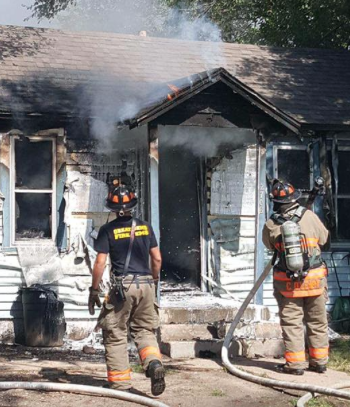
GREAT BEND —Officials are investigating the cause of a fire at a home in Great Bend.

The Kansas Bureau of Investigation, Kansas Fire Marshal’s Office and Great Bend Police are assisting with the investigation, according to Great Bend Fire Chief Luke McCormick.

On Friday afternoon the Great Bend Fire Department responded to the 2700 block of 19th Street to battle a house fire.

There were no injuries reported. Check Hays Post for additional details as they become available.

SCHLAGECK: Uncommon courtesy today

John Schlageck writes for the Kansas Farm Bureau.

In a month the Kansas fields, hills and woods will awaken to the sound of booming shotguns and barking dogs. Nov. 11 is the official opening day of upland game hunting. Hunters and their canines will once again swarm the countryside searching for pheasants, quail and prairie chicken. Duck and turkey season is already in full swing.

Farms and ranches have always been a handy, ready-to-use outlet for many urban dwellers who travel outside their city homes in search of recreational hunting. On opening day of the upland game season, the interstate and U.S. highways will be a steady stream of pickups, SUVs and cars headed for central and western Kansas.

If you plan to hunt on private land remember one key word as you embark on this season’s sojourn. That word is consideration. It means thoughtful and sympathetic regard.

In this country, wildlife belongs to the people, but landowners (farmers and ranchers) have the right to say who goes on their land. If you are interested in hunting, make arrangements before you hunt.

Don’t wait until the day you plan to hunt someone’s land and then knock on the door at 6 a.m. By now you should have already asked to hunt.

After you’ve secured permission, here are some suggestions to follow that will ensure a lasting relationship between you and the landowner.

Agree on who, and how many, will hunt on the land. Specify number and furnish names. Talk about specific times and dates you plan to hunt.

Contact the landowner each time before you plan to hunt, and let the landowner know of your intentions. The landowner may have forgotten about your original conversation. It’s just common courtesy to say hello before hunting and ask again for the opportunity – or privilege, as I consider it – to hunt on someone’s property.

Determine the exact location on the land you have permission to hunt. Some areas may be off-limits because of livestock or crops.

Always, and I can’t stress this enough, leave gates the way you find them. If they are open, leave them that way. If they are closed, shut them after you pass through.

If you ever leave a gate open and a farmer’s cow herd gets out of the pasture, “Katy bar the door.” You’ll never be invited back to hunt. Don’t even ask.

Once you’ve enjoyed a successful hunt, stop by to thank the landowner for his generosity. Offer to share the game you bag.

After the season, write a note expressing your appreciation for the opportunity to hunt. Consider offering a gift as a token of your gratitude.

Leasing of land by the hunter from the landowner is becoming more popular in Kansas. Such agreements allow a hunter a guaranteed hunting site. It also provides the landowner income necessary to recoup some of the investment he needs to leave habitat suitable for wildlife to survive and prosper.

If you enter into such a lease, make sure it is written and includes all provisions both parties deem necessary. This should include a clause for the landowner and his/her family to hunt on the land.

Always remember that the hunter and landowner should discuss the terms of the hunt before hunting begins. This is extremely important. Hunters never forget, you are a guest and it is a privilege to hunt on the owner’s land.

John Schlageck, a Hoxie native, is a leading commentator on agriculture and rural Kansas.

Copyright Eagle Radio | FCC Public Files | EEO Public File